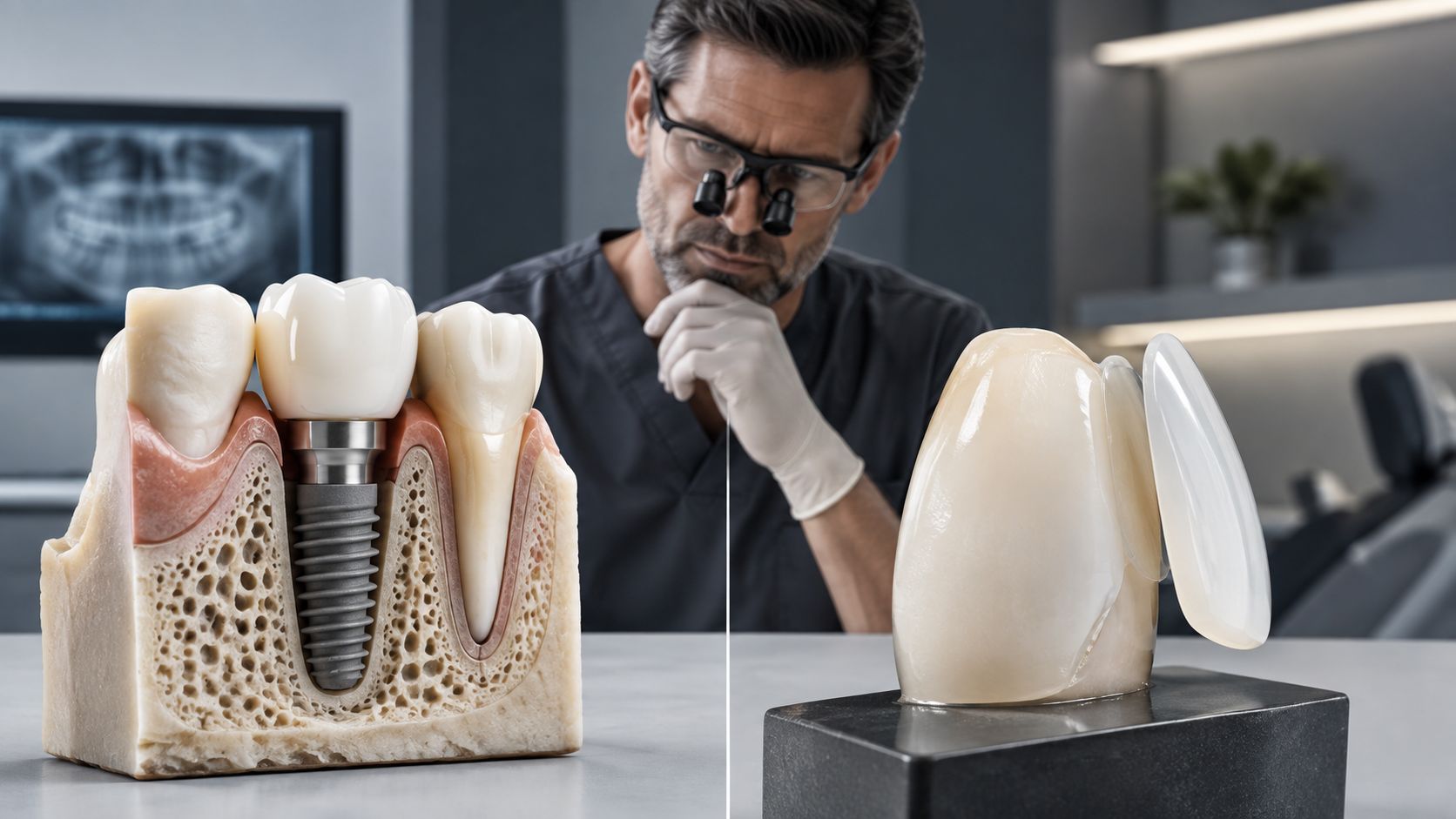
A tooth that keeps throbbing at dinner, wakes you up at night, or sends a sharp jolt when you sip coffee can make everything feel urgent. Those who search for a dentist near me, an emergency dentist, or a dentist in Chattanooga, TN aren't casually browsing. They want the pain to stop, and they want to know they're making the right choice.
That's where this decision gets hard. You may have been told you need either a root canal or a tooth extraction, and those two words can feel very different emotionally. One sounds like saving something that's in trouble. The other sounds final. In real life, though, the better way to think about root canal vs. extraction is this: one option is often a one-step fix to keep your natural tooth, while the other is usually the first step in a longer replacement journey.
That Nagging Toothache Deciding Between Saving or Removing a Tooth
Maybe your pain started as something easy to ignore. A little sensitivity on one side. A dull ache when you chew. Then one day it's no longer subtle. You're chewing on the other side, avoiding cold drinks, and wondering whether you need an emergency dentist in Chattanooga or Cleveland, TN.
That kind of uncertainty wears people down. It's not just the pain. It's the worry about cost, the fear of treatment, and the bigger question underneath it all: Can this tooth be saved, or is it time to take it out?

Early in that conversation, many patients assume extraction must be simpler because it removes the problem. Sometimes that's true. But often, extraction solves the immediate pain while creating a new issue you still have to manage later. A missing tooth can affect chewing, appearance, bite balance, and the need for future restorative dentistry such as bridges or dental implants near me.
Here's a quick comparison before we go deeper:
| Factor | Root Canal Therapy | Tooth Extraction + Replacement |
|---|---|---|
| Main goal | Save the natural tooth | Remove the damaged tooth, then plan how to replace it |
| Treatment path | Usually a contained treatment with restoration | Often a multi-step process |
| Natural chewing feel | Preserved when the tooth can be restored well | Depends on the replacement chosen |
| Effect on nearby teeth | Usually minimal | May require a bridge or spacing changes if not replaced |
| Long-term planning | Focuses on protecting the treated tooth | Focuses on healing, then rebuilding function |
Practical rule: If a tooth is still structurally and periodontally salvageable, the conversation usually shouldn't stop at “Can we remove it?” It should start with “Can we predictably keep it?”
For anyone looking for a dentist in Chattanooga, TN or nearby care in Cleveland, this decision should feel clear, not rushed. Good dentistry starts with understanding what failed, what can be repaired, and what each path really involves.
Understanding Why Your Tooth Is in Trouble
A tooth usually doesn't reach this crossroads overnight. In most cases, the problem begins when bacteria get through the outer layers of the tooth and reach the soft center inside. That center is called the pulp. It contains the nerve and blood supply. This inner core keeps the tooth alive while it develops.
Once that space becomes inflamed or infected, the tooth can become very sensitive, painful, or swollen. Sometimes the pain is obvious. Sometimes the tooth just feels “off,” especially when you bite down. Deep decay, a crack, trauma, or repeated dental work can all create that opening for bacteria.
Common ways a tooth gets to this point
- Deep decay: A cavity that keeps spreading can move from enamel into deeper tooth structure.
- A crack or fracture: Even a small crack can allow bacteria to travel inward.
- Past dental stress: Large fillings or repeated procedures can weaken the tooth over time.
- Injury: A hit to the mouth can damage the pulp even if the tooth doesn't look badly broken.
If you're unsure whether your symptoms fit that pattern, this guide on recognizing signs of a root canal can help you connect common symptoms with what may be happening inside the tooth.
Why the choice becomes root canal or extraction
Once the pulp is infected or badly inflamed, the tooth usually needs one of two things. Either the inside of the tooth is cleaned, sealed, and restored so you can keep it, or the whole tooth is removed because it can't be predictably repaired.
That's why dental x-rays, a careful exam, and sometimes more advanced imaging matter so much. Pain alone doesn't tell the full story. A tooth can look calm on the outside and still have serious damage inside.
The goal isn't just to stop pain today. It's to choose the path that leaves your mouth healthier and more stable months and years from now.
For patients searching for dental care, new patient exams, or urgent treatment in Chattanooga or Cleveland, understanding the “why” behind the diagnosis often makes the decision much less frightening.
The Case for Saving Your Tooth with Root Canal Therapy
When a tooth can be saved, root canal therapy is often the most direct way to keep your bite intact and end the infection without removing the tooth. That matters more than many people realize. Your natural tooth root helps maintain normal function, and keeping it usually means less disruption to the rest of your mouth.
One reason patients dread root canals is the old reputation. Modern treatment is very different from the stories people still repeat. With local anesthetic, careful technique, and the right comfort approach, most patients describe the visit as far more manageable than they expected.
What the procedure actually does
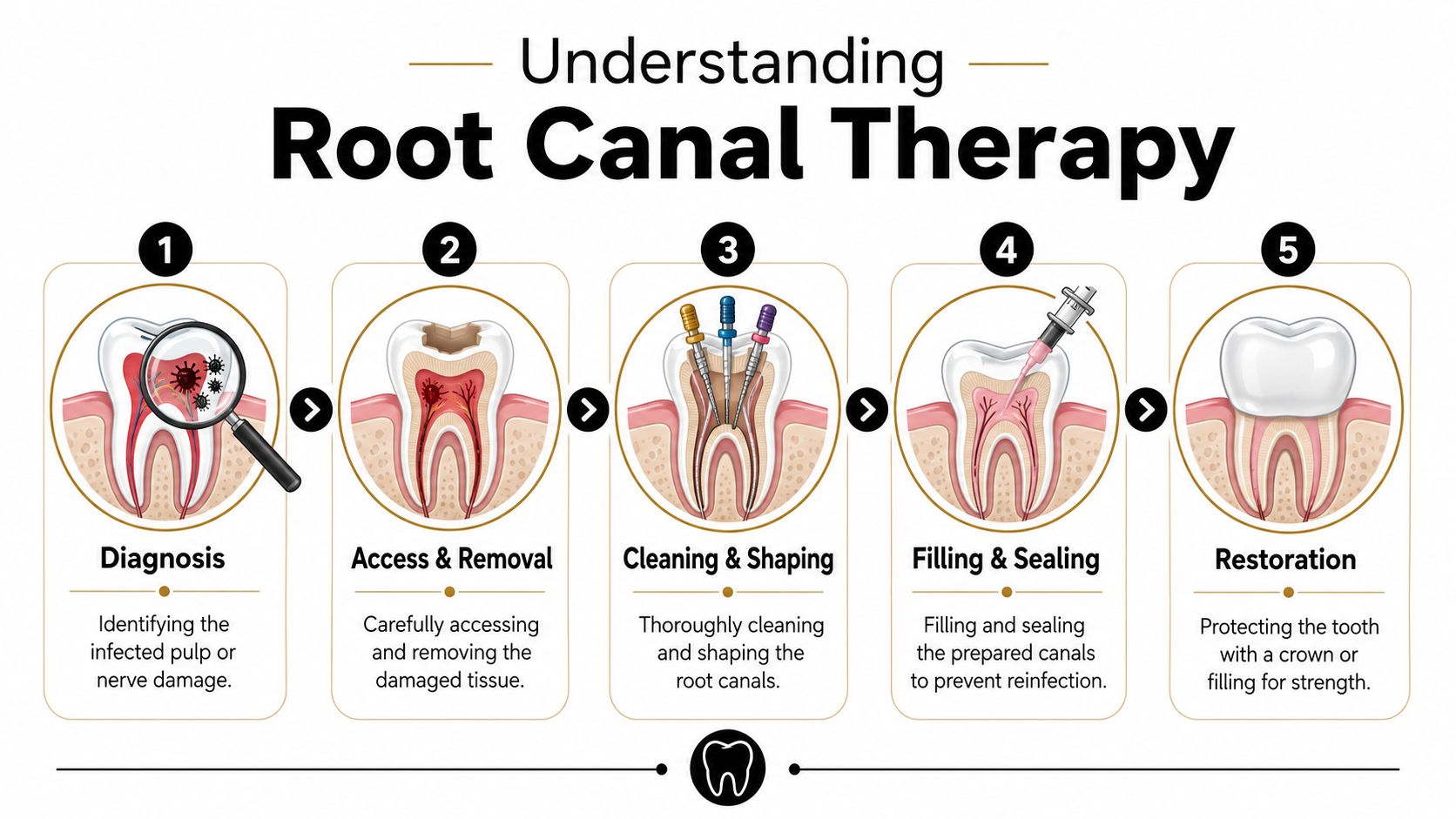
A root canal removes infected or damaged tissue from inside the tooth. The canals are cleaned, shaped, filled, and sealed. After that, the tooth is restored so it can handle normal chewing again.
That final restoration matters. In many cases, especially for back teeth, a crown gives the tooth the protection it needs after treatment.
Why saving the tooth is often worth it
Long-term function: You keep the tooth that's already in your mouth, which helps preserve a more natural feel when chewing.
A more contained treatment path: Instead of removing the tooth and then deciding how to replace it, root canal therapy is designed to solve the infection and preserve the tooth in one coordinated plan.
Predictable longevity: Long-term outcome data suggest that root canal treatment has a high success rate, with approximately 85–90% of professionally treated teeth still functioning 10 years or more after treatment (Aspen Dental overview of root canal vs extraction).
Patients with dental anxiety often want to know what comfort choices exist before they commit. If that's part of your concern, this overview of sedation options for root canals is a useful patient-friendly resource.
Later in the process, a visual explanation also helps many people feel more comfortable with what's happening step by step.
The restoration is part of the treatment
A root canal isn't only about cleaning the inside of the tooth. It's also about protecting what remains on the outside. That's why treatment planning should include the final restoration from the beginning, not as an afterthought.
For patients comparing options, root canal treatment is one way to address infection while preserving the natural tooth rather than moving straight to removal.
When Tooth Extraction Is the Necessary Path
Sometimes the healthiest decision is to remove the tooth. If the tooth is too broken down, split in a way that can't be repaired, or affected by severe periodontal damage, extraction may be the most sensible option. In those cases, trying to save the tooth can mean more procedures without a reliable long-term result.
That's an important point for nervous patients. Choosing extraction doesn't mean you failed to save the tooth. It means the tooth no longer offers a sound foundation to build on.
When removal makes more sense
A dentist may recommend extraction when the remaining tooth structure is too compromised to hold a restoration well, when the crack extends too far to be managed predictably, or when surrounding bone and gum support are too weak. In those situations, removing the source of infection and pain can be the cleaner clinical decision.
If you want a general sense of what that type of care can involve, this page on dental extraction services gives a straightforward overview for patients.
Extraction is usually step one, not the finish line
Many overlook that the procedure to remove the tooth may be only the beginning. After the extraction, you still need to decide whether the space will stay empty or whether you'll restore it with a bridge, denture, or implant.
That choice matters because a missing tooth changes the mouth. Choosing extraction can lead to long-term biomechanical trade-offs. Leaving a tooth missing for months can increase the risk of bone resorption and bite instability, potentially making future replacement with a dental implant more complex and costly (review of extraction-related bone and bite changes).
Removing a tooth can end pain quickly. It doesn't automatically restore normal chewing, spacing, or long-term stability.
Recovery is also only one part of the process. Patients usually need guidance on healing, eating, cleaning the area, and knowing when replacement planning should begin. For a practical overview, this article on how to recover from tooth extraction helps explain what the healing period often involves.
For people searching tooth extraction, dental implants near me, or restorative dentistry in Chattanooga and Cleveland, this is the key distinction. Extraction may be the right treatment, but it's rarely the whole treatment story.
A Side-by-Side Comparison of Your Two Options
The easiest way to compare root canal vs. extraction is to stop thinking only about the first appointment. The question is what each option asks of you over time. One route aims to keep what you already have. The other removes the tooth and shifts the focus to replacing what was lost.
Root Canal vs. Extraction at a Glance
| Factor | Root Canal Therapy | Tooth Extraction + Replacement |
|---|---|---|
| Purpose | Remove infection while preserving the natural tooth | Remove the tooth, then rebuild function with a replacement plan |
| Number of decisions | Usually one main treatment path plus restoration | Often several decisions about timing and replacement |
| Healing focus | Calming the treated tooth and protecting it | Healing the socket, then planning a bridge, denture, or implant |
| Bite feel | More natural because the original tooth remains | Depends on whether and how the tooth is replaced |
| Cosmetic planning | Usually focused on restoring one tooth | Often includes replacement design and tissue changes |
| Long-term complexity | Lower when the tooth is restorable and protected | Higher because treatment often continues after extraction |
What works well with root canal therapy
The strongest version of a root canal plan is not “clean the tooth and hope for the best.” It is root canal plus proper final restoration. That's the difference between saving a tooth in theory and giving it a solid long-term chance in daily life.
A large-scale study found that over 90% of root-filled teeth survive for at least 5 years, but only if they are properly restored with a permanent restoration like a crown. Teeth left without a crown were over 3 times more likely to be extracted (Swedish registry study on restoration and survival of root-filled teeth).
That's why same-day crowns, when clinically appropriate, can make a practical difference. They help patients move from diagnosis to protected restoration with fewer delays and fewer chances for the tooth to remain vulnerable.
What patients often miss about extraction
Extraction can feel simpler because the painful tooth is gone. But if the tooth matters for chewing, appearance, or bite support, replacement planning still needs to happen. That can involve healing periods, additional appointments, and choices about bridges, removable options, or implants.
Here are the trade-offs that matter most:
- Immediate relief versus complete restoration: Extraction often handles the urgent problem fast, but replacing the tooth may take much longer.
- Lower upfront treatment versus broader total treatment: The first procedure may be more straightforward, while the full replacement pathway can become more involved.
- Removing the source versus preserving function: Pain may stop with either choice. The bigger difference is whether you keep your natural tooth in service.
How to think about cost and time
Patients often compare only the first bill or the first visit. That's understandable, but it can be misleading. A root canal plus crown is typically a single restorative strategy. Extraction can be less involved at the beginning, yet it frequently opens the door to additional treatment if you want the space restored.
Key point: In many cases, the fairest comparison isn't root canal versus extraction. It's root canal plus restoration versus extraction plus full tooth replacement.
For someone searching for a dentist near me, emergency dentist, or cosmetic dentist near me because a visible tooth is involved, that bigger comparison is the one that leads to fewer surprises later.
Your Decision Checklist Questions to Ask Your Dentist
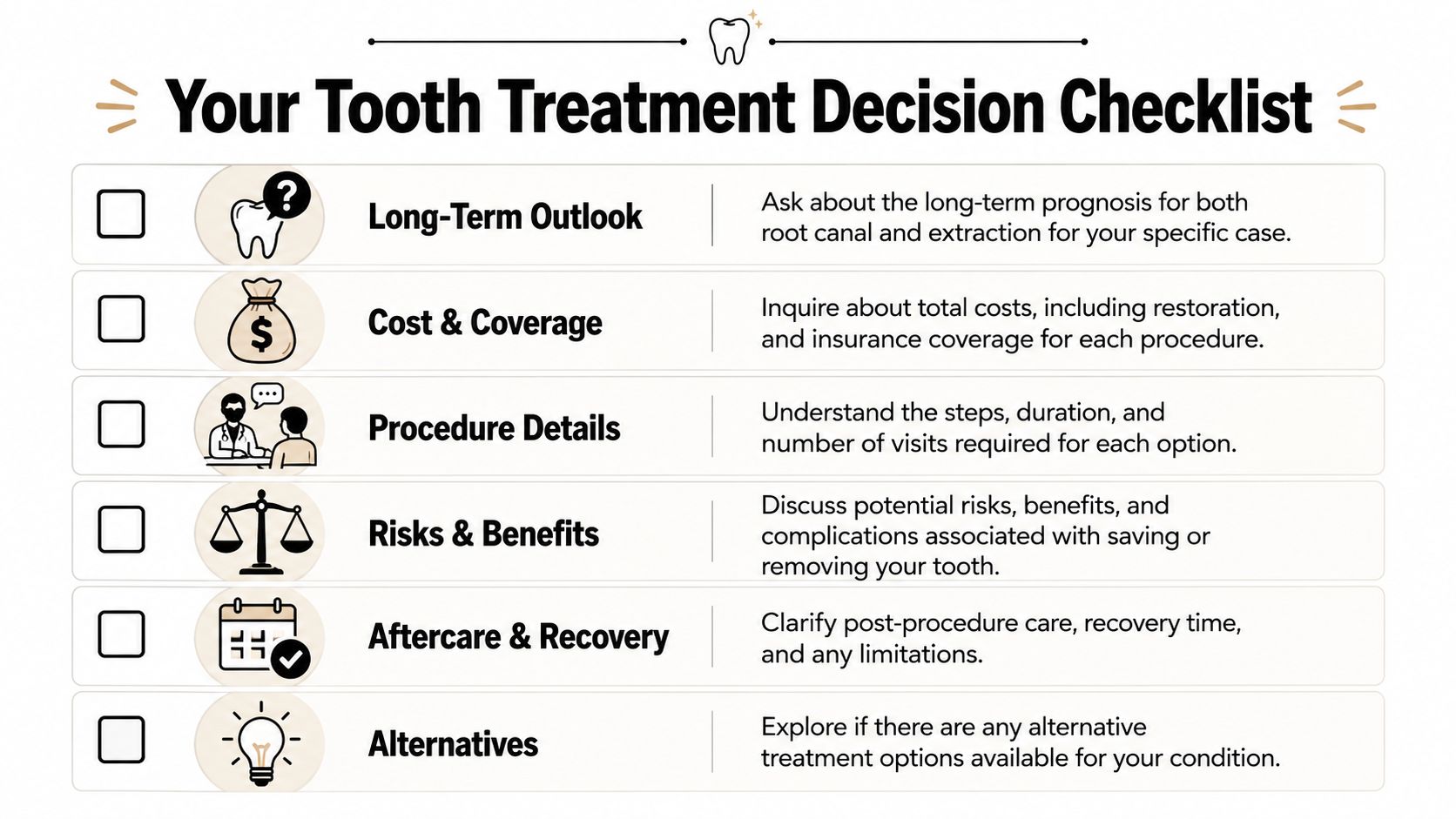
A good dental consultation should leave you calmer and more informed, not more confused. The best decisions happen when the patient understands not only the x-ray and diagnosis, but also what daily life will look like after treatment. That matters even more when fear is already part of the picture.
Recent data shows that when patients with dental anxiety receive a structured decision-aid, including visual models, they are more likely to choose to save their tooth with a root canal, reporting less long-term regret about their choice (American Association of Endodontists patient guidance).
Questions worth bringing to the appointment
- Ask about prognosis: “If I keep this tooth, what makes it a good or poor candidate for long-term success?”
- Ask for the full version of each option: “If I choose extraction, what would replacement likely involve for my bite and appearance?”
- Ask what the restoration plan is: “Will this tooth need a crown or another final restoration to protect it?”
- Ask about comfort: “What can you do if I'm anxious about the procedure?”
- Ask about timing: “How many visits should I expect, and what happens between those visits?”
- Ask about consequences of waiting: “What could change if I delay treatment?”
The emotional side matters too
Some patients feel safer removing the tooth because it sounds final and decisive. Others strongly want to preserve every natural tooth possible. Neither feeling is wrong. What matters is whether the choice matches the actual condition of the tooth and your long-term goals.
A useful conversation should include more than diagnosis. It should also cover:
| Topic | Why it matters |
|---|---|
| Chewing function | Back teeth and front teeth affect daily life differently |
| Appearance | A missing tooth can change confidence, especially in visible areas |
| Anxiety level | Comfort planning can change which treatment feels manageable |
| Future dental goals | Your plans for implants, cosmetic dentistry, or restorative care matter |
Bring your questions written down. People forget details when they're nervous, especially during an emergency visit.
For patients in Chattanooga and Cleveland looking for new patient exams, dental x-rays, or urgent guidance, this checklist can make the consultation more productive and less overwhelming.
The Winn Smiles Difference in Chattanooga and Cleveland
Choosing between a root canal and an extraction is rarely about one appointment. Patients need to know what will solve the pain now, what protects their oral health later, and what the full treatment path will ask of them.
Winn Smiles provides general and emergency dental services, root canals, extractions, same-day crowns, and dental implants. That range matters in this decision. A root canal is often a one-step fix to keep a natural tooth in service. An extraction can be the right choice, but it is usually the first step in a longer process that may include healing, replacement planning, and added restorative work.

What patients can expect during a visit
A good consultation starts with one question. Can this tooth be saved predictably?
That answer usually comes from the exam, imaging, and the condition of the tooth above and below the gumline. I also want patients to understand the practical side of the decision. If a tooth can be treated well with a root canal and restored properly, that can be the shorter path. If the tooth is too damaged, extraction may protect your health better, but the conversation should also cover what comes next if you do not want to leave the space empty.
Comfort matters too. If dental anxiety has kept you from coming in sooner, sedation and other comfort measures should be part of the plan from the beginning, not an afterthought.
Why that helps with this specific decision
- Same-day crowns: If a treated tooth needs protection, faster final restoration can reduce delays and help you get back to normal function sooner.
- Sedation options and comfort support: Fear changes decisions. Patients often choose more confidently when they know pain control and anxiety support are available.
- Broader restorative planning: If extraction is necessary, replacement options can be discussed early, including timing, healing, and how the missing tooth may affect nearby teeth.
- Second opinions and consultations: Clear explanations help patients weigh the trade-offs without feeling rushed toward one procedure.
For families looking for a dentist in Chattanooga, TN, a cosmetic dentist near me, cleaning and exams, or urgent pain relief in Chattanooga and Cleveland, the most helpful visit is one that addresses the immediate problem and lays out the full path ahead.
Frequently Asked Questions About Root Canals and Extractions
Will the root canal procedure itself hurt?
With modern numbing techniques, most patients do well. The goal is to treat the source of pain, not add to it. Anxiety support can also make a big difference.
What happens if I get an extraction and don't replace the tooth?
The empty space can affect chewing, spacing, and bite balance over time. Depending on the tooth and its location, replacement may become important for both function and appearance.
Can a tooth with a root canal get infected again?
Yes, it can happen. A treated tooth can still have problems later if it isn't restored properly, if decay develops, or if the seal breaks down. That's one reason follow-up and final restoration matter.
Is extraction ever the better option?
Yes. Some teeth are too damaged to restore predictably. In those cases, extraction may be the healthier and more realistic choice.
Should I see an emergency dentist if the pain comes and goes?
Yes. Intermittent pain can still mean infection, inflammation, or a crack. If a tooth is changing how it feels, it's worth getting checked before the problem becomes more complicated.
If you're weighing root canal vs. extraction and want clear guidance from a local team, schedule a consultation with Winn Smiles. Whether you need an emergency dentist, a second opinion, restorative dentistry, or planning for dental implants near me in Chattanooga or Cleveland, the next step is getting a careful exam and a treatment plan that fits your health, comfort, and long-term goals.