Getting a tooth pulled can feel like a big deal, and it’s natural to be a little anxious about what comes next. But a smooth, comfortable healing process is completely within your control, especially during that first critical day. At Winn Smiles, we are the trusted local dentist for patients in Chattanooga and Cleveland, TN, helping you navigate every step of your dental care journey with confidence.
A fast recovery all comes down to knowing what to do in the first 24 hours. This initial window is your golden opportunity to protect the extraction site, keep discomfort to a minimum, and sidestep potential issues like dry socket. If you've been searching for a "dentist near me" who prioritizes patient comfort and clear communication, you've come to the right place.
Your Tooth Extraction Recovery Starts Now
Following a tooth extraction at our Chattanooga practice, your body’s natural healing instincts kick in immediately. The very first thing it does is form a blood clot in the empty socket. Think of this clot as nature’s perfect bandage—it protects the underlying bone and nerves from bacteria and food debris. Your main job on day one is simple: protect that clot at all costs.
This guide is your personal roadmap for healing, starting with the immediate steps that set the foundation for a successful recovery from your tooth extraction.
Setting Expectations for Your First Few Days
It helps to know what a typical recovery looks like so you can plan ahead. Most of our patients feel up to resuming their normal, non-strenuous activities within 1–3 days. Of course, everyone’s experience is unique, and the complexity of the extraction can play a role. Whether you needed an emergency dentist or a planned procedure, our team is here to support you.
It’s completely normal to have some minor swelling or feel a bit awkward when talking for the first day or two. The great news is these symptoms are temporary, and most people are thrilled with the outcome once everything has healed. For more detailed post-procedure guides, you can always explore our online patient resources.
First 24 Hours Quick Recovery Checklist
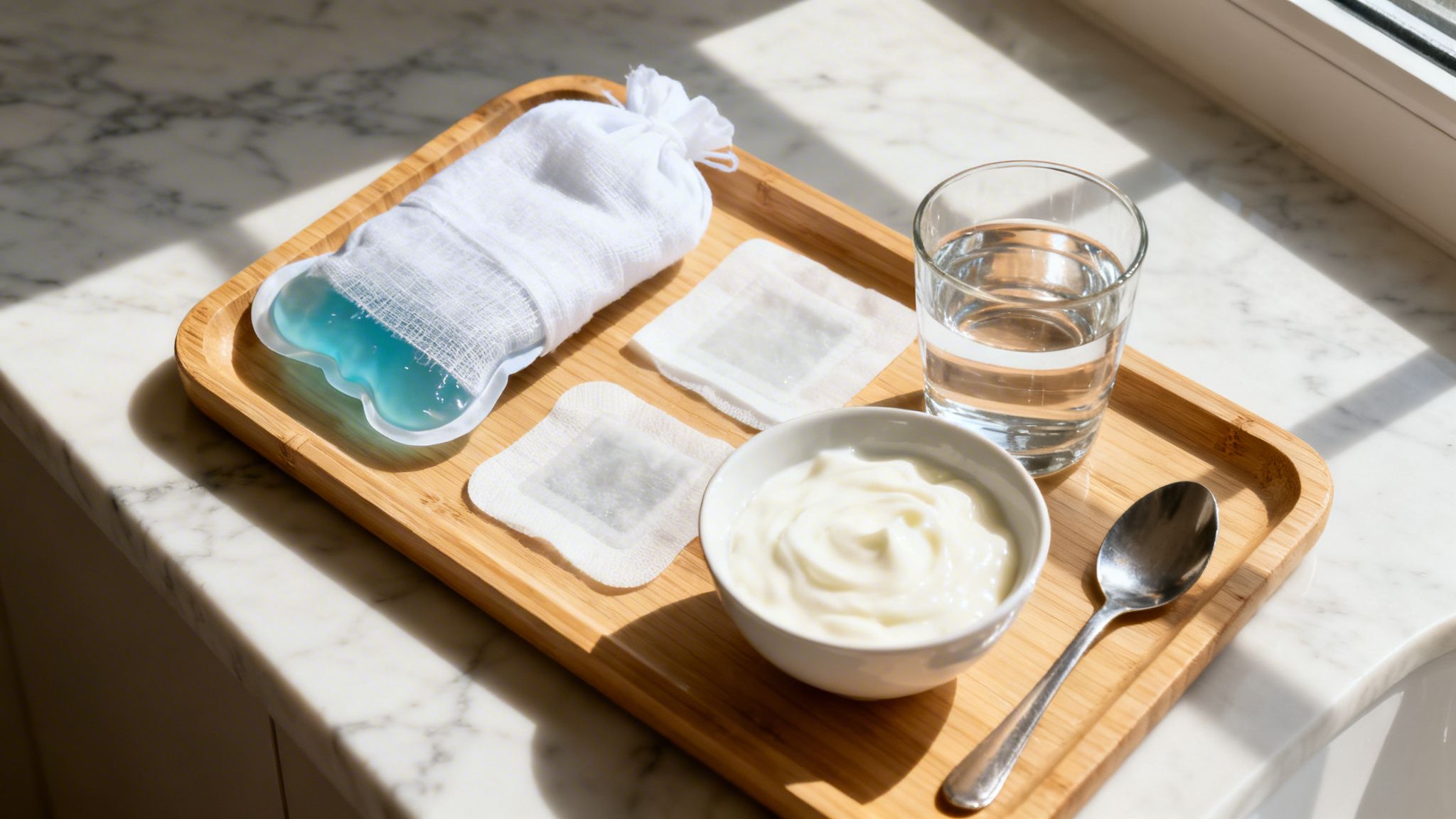
We created this quick checklist to make your first day of aftercare as simple as possible. Follow these essential actions in the first 24 hours post-extraction to set yourself up for a smooth healing process.
Following these initial steps correctly is the single most important thing you can do for your recovery.
Winn Smiles Pro Tip: If you run out of gauze, a moistened black tea bag is a fantastic substitute. The tannic acid in the tea is a natural astringent that helps constrict blood vessels and promote clotting. Just fold it, place it over the site, and bite down like you would with gauze.
While some minor discomfort and swelling are normal parts of healing, this focused approach will minimize any disruption to your life. Our goal at Winn Smiles is to make your entire journey, from the procedure to full recovery, as comfortable and straightforward as possible. And if you ever have any concerns, our team is always just a phone call away.
What To Expect During Your First Week Of Healing
After your tooth extraction at our Chattanooga or Cleveland office, your body gets to work on healing right away. Knowing what to expect day-by-day can bring a lot of peace of mind, helping you tell the difference between what’s normal and what might need a call to our office. Think of this as your personal guide for that first critical week.
The healing journey happens in stages. The first couple of days are all about managing the initial symptoms and protecting the extraction site. Later in the week, you’ll start to see some real improvement as your body begins to repair itself.
This visual breaks down your top three priorities for the first 24 hours: getting bleeding under control, protecting that all-important blood clot, and staying ahead of any discomfort.
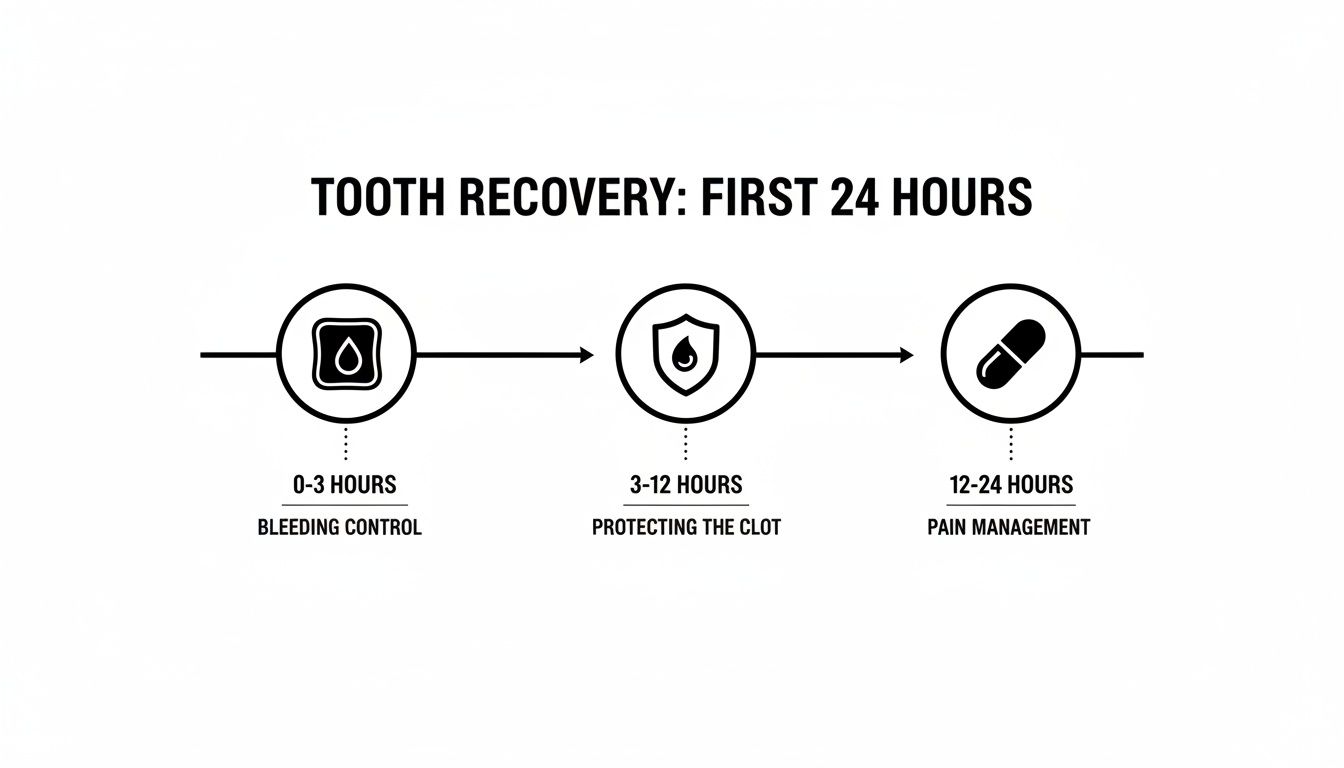
Nailing these three things right from the start sets the stage for a much smoother, faster recovery.
The First 48 to 72 Hours
This is when you'll feel the most post-op effects. It’s completely normal for swelling and discomfort to hit their peak around the second or third day. This is just your body’s natural response kicking into gear.
During this time, your diet needs to be exclusively liquids and super soft foods. Think smoothies (no straws!), yogurt, lukewarm soups, and applesauce. The goal is to avoid any chewing near the extraction site, which keeps the fragile blood clot safe.
That protective blood clot is the hero of your recovery. It forms a natural bandage over the underlying bone and nerves. If it gets dislodged, you can end up with a painful condition called dry socket. This is exactly why we stress avoiding straws, smoking, and any forceful spitting.
A little bit of oozing or pink-tinged saliva is also perfectly normal. For some general tips, this is a helpful guide on treating bleeding gums at home. However, if you see steady, bright red bleeding that doesn't stop with firm gauze pressure, please call our Chattanooga or Cleveland, TN, office right away.
Days 3 to 7: A Noticeable Turnaround
Once you get past the 72-hour mark, you should really start to feel better. Any swelling will begin to go down, and your discomfort should drop off significantly. These are great signs that you’re on the right track.
Now you can start adding some "soft-solid" foods back into your diet. Things like scrambled eggs, oatmeal, mashed potatoes, and well-cooked pasta are great options. Just be sure to keep chewing on the side opposite the extraction site to avoid irritating the area.
This is also when you can resume your oral hygiene routine, but with care. Brush your other teeth normally, but be extremely gentle around the extraction site itself.
We also recommend starting gentle saltwater rinses at this point. Here’s the right way to do it:
- Mix 1/2 teaspoon of salt into an 8-ounce glass of warm water.
- Gently swish the solution around in your mouth for about 30 seconds.
- Don’t spit! Just tilt your head over the sink and let the water fall out of your mouth.
Do these rinses 2-3 times a day, especially after you eat, to keep the site clean and help prevent infection. By the end of this first week, the gum tissue over the socket should be mostly closed.
Healing In Week Two And Beyond
By the second week, most of our patients feel pretty much back to normal. The gum tissue will continue to heal and remodel itself, and any soreness should be gone. You can typically go back to your normal diet, though it’s smart to steer clear of anything really hard or crunchy (like popcorn or hard nuts) near the site for another week or so.
Underneath the gums, your bone will be busy regenerating in the socket for the next several months. If you’re thinking about a long-term replacement like a dental implant, this bone healing is a critical first step. At Winn Smiles, we can talk about the timeline for restorative options like dental implants near me once your initial healing is complete.
Practical Ways to Manage Pain and Swelling
Feeling some soreness and seeing a bit of swelling after a tooth extraction is completely normal. It’s your body’s natural response to the procedure and a sign that the healing process has officially begun. But knowing how to manage these symptoms puts you in the driver's seat, turning what could be a few tough days into a smooth and comfortable recovery.
For our patients at Winn Smiles in Chattanooga and Cleveland, we have a clear plan to help you stay ahead of any discomfort right from the very start.

Using Cold Compresses Correctly
For the first 24 to 48 hours, a cold pack is going to be your best friend. Applying cold to the outside of your cheek helps constrict the blood vessels, which works wonders for minimizing swelling and gently numbing the area to ease pain.
Think of it as first aid for your face. Here's how to get the most out of it:
- Wrap an ice pack or a bag of frozen veggies in a thin towel. Never apply ice directly to your skin.
- Hold it on your cheek for 20 minutes.
- Take it off for 20 minutes to give your skin a break.
- Repeat this on-and-off cycle as often as you can during that first day or two.
This rhythm is the key. It delivers the anti-inflammatory benefits without causing any irritation or damage to your skin from over-cooling.
The Role of Pain Medication
Staying on schedule with your pain medication is probably the single most effective thing you can do for a comfortable recovery. We have a simple but powerful tip for all our patients: take your first dose of pain reliever before the local anesthetic wears off. This proactive move helps you stay ahead of the pain so it never gets a chance to really take hold.
For most extractions, over-the-counter medications are all you'll need.
- Ibuprofen (Advil, Motrin): This is usually our top recommendation because it’s an anti-inflammatory. That means it fights both pain and swelling at the same time.
- Acetaminophen (Tylenol): If you can't take ibuprofen for any reason, this is another excellent option for pain relief.
Always follow the dosage instructions on the bottle, and make sure you let us know about any other medications you’re taking. For more complex surgical extractions, we may provide a prescription for stronger pain relief. At Winn Smiles, we also offer sedation dentistry, which helps manage discomfort from the very beginning and often leads to an easier recovery period.
After the first 48 hours, you can switch from cold packs to warm, moist compresses. Heat helps increase circulation to the area, which promotes faster healing and can soothe any lingering muscle stiffness in your jaw.
When to Contact Our Chattanooga or Cleveland Office
While some discomfort is expected, certain kinds of pain are not. You should give our dental practice a call if you experience pain that:
- Is severe, throbbing, or seems to be getting worse after the third day.
- Radiates from the socket up toward your ear or eye.
- Isn’t getting better with your recommended pain medication.
These could be signs of a complication like a dry socket, which needs our immediate attention. Our team at Winn Smiles is here to support you through every step of your healing. Never hesitate to reach out with any concerns—your comfort and health are always our top priorities.
Your Post-Extraction Diet What to Eat and Avoid
Okay, the extraction is over. Now what? Your main job for the next few days is simple: rest and let your body heal. A huge part of that healing process comes down to what you eat and drink, which can either help you recover quickly or cause painful setbacks.
Think of it this way: your body needs fuel to repair itself, but the extraction site is incredibly delicate. The goal is to provide that fuel without disturbing the essential blood clot that’s forming in the socket. At Winn Smiles, we guide our Chattanooga and Cleveland patients through this crucial phase with a clear and practical plan.
Your Go-To Soft Foods for the First Few Days
For the first 24 to 48 hours, your diet needs to be all about liquids and foods that require absolutely no chewing. This is when the site is most vulnerable, so sticking to things that are easy to swallow is key. You want to avoid leaving any food particles behind.
Here are some of the best choices for your initial recovery:
- Yogurt and Kefir: These are smooth, packed with protein, and the cool temperature can feel amazing on your gums.
- Smoothies and Milkshakes: A fantastic way to pack in nutrients. Just remember the number one rule: do not use a straw. The suction can dislodge the blood clot and cause serious pain.
- Lukewarm Soups: Broth-based or creamy, pureed soups are perfect. Just make sure they aren't hot, as heat can increase bleeding.
- Applesauce and Puddings: These require zero effort to eat and are incredibly gentle on the surgical site.
When you're looking for comforting, easy-to-swallow meals, you might find some great ideas in easy-to-make soups like Italian Penicillin Soup that are both delicious and recovery-friendly. Once you start feeling a bit better around day three, you can slowly work in other soft-solid foods like scrambled eggs, mashed potatoes, and oatmeal.
Foods and Habits to Avoid for a Safe Recovery
What you don’t eat is just as critical as what you do. Certain foods and habits can actively disrupt the healing site, leading to significant pain and complications like the dreaded dry socket.
For at least the first week, you must steer clear of the following:
- Hard or Crunchy Foods: Things like chips, nuts, popcorn, and tough bread can easily get stuck in the socket, causing irritation or even an infection.
- Spicy or Acidic Foods: These will sting and burn the sensitive gum tissue, which only slows down your recovery.
- Sticky or Chewy Foods: Candy, caramel, and tough meats require too much jaw movement and can pull on the healing site.
- Alcohol and Smoking: Both of these dramatically impair your body's ability to heal. Smoking, in particular, is a major risk factor for developing a dry socket.
The most common cause of dry socket we see in our Chattanooga and Cleveland dental offices is from suction. This is why avoiding straws and smoking is non-negotiable for the first 72 hours. When you need to rinse, don't spit—just let the liquid fall gently from your mouth.
By following this simple food guide, you’re giving your body the best possible chance to heal quickly and without any bumps in the road. It’s the fastest way to get back to feeling like yourself and enjoying all your favorite foods again. If you have any questions at all about your diet or recovery, our Winn Smiles team is always here to help.
How to Prevent Dry Socket and Spot Warning Signs
Of all the questions we get from our patients in Chattanooga and Cleveland, concerns about "dry socket" are right at the top of the list. It’s a term that sounds intimidating, but the good news is that it’s almost entirely preventable. When you know what to watch out for, you’re in the driver's seat of your own healing.
A dry socket, clinically known as alveolar osteitis, is what happens when the protective blood clot that forms in the extraction site gets dislodged or dissolves too soon. This leaves the underlying bone and nerve endings exposed to air, food, and everything else in your mouth, which can lead to significant pain.

A Simple Checklist for Preventing Dry Socket
The single most important goal after your extraction is to protect that blood clot. Everything comes back to that one principle. We’ve put all our best tips into a quick checklist to make it easy.
- Avoid All Suction: For at least the first 72 hours, this is non-negotiable. Don’t use a straw, don't smoke, and avoid spitting forcefully. The negative pressure created by any sucking motion is the #1 reason a clot becomes dislodged. When rinsing, just open your mouth and let the water gently fall out into the sink.
- Stick to Soft Foods: For the first few days, give the site a break. Hard, crunchy, or chewy foods can easily get stuck in the socket or disrupt the clot. Popcorn, nuts, and seeds are notorious offenders.
- Practice Gentle Oral Hygiene: Keeping the area clean is crucial, but it requires a delicate touch. Follow our instructions for saltwater rinses, but be extremely gentle. When you brush your other teeth, be careful not to accidentally bump the extraction area with your toothbrush.
- Rest and Take It Easy: An increase in blood pressure can disrupt the clot that's trying to form. Avoid any heavy lifting or strenuous workouts for the first couple of days. This gives your body the best chance to establish a stable, healthy clot.
Recognizing the Warning Signs
While following these steps makes a dry socket unlikely, it’s still smart to know what to look for. The symptoms don't usually show up on day one. They tend to appear around 3 to 5 days after your procedure, often right when you expect to be turning a corner and feeling much better.
Keep an eye out for these tell-tale signs:
- Severe, Throbbing Pain: This is the hallmark. We're not talking about a dull ache that medication can handle. This is a deep, intense, and persistent pain.
- Pain That Radiates: The discomfort often travels from the socket up toward your ear, eye, or temple on the same side of your face.
- A Visibly Empty Socket: If you gently look at the site with a light, you might see a whitish color, which is exposed bone, instead of the dark red clot that should be there.
- Bad Breath or a Foul Taste: An unpleasant odor or taste coming from your mouth that you can't get rid of can also signal a problem.
If you start experiencing these symptoms, it’s not a sign you did anything wrong—it’s just a signal to give us a call. We have more information on what constitutes a real dental emergency in our detailed guide.
What to Do If You Suspect Dry Socket
The most important thing is this: if you think you might have a dry socket, call Winn Smiles immediately. Please don’t try to tough it out or wait for it to get better on its own. The pain can be quite intense, but the treatment is straightforward and provides almost instant relief.
At our Chattanooga or Cleveland, TN, office, we treat a dry socket by gently cleaning the site and placing a special medicated dressing inside. This dressing soothes the exposed nerves and promotes healing, bringing you comfort almost instantly. We'll have you back on the path to recovery in no time.
While dry socket gets a lot of attention, other postoperative infections are quite rare. In a study analyzing over 1,800 tooth extractions, only 1.4% of cases resulted in an infection. Interestingly, the research found that the complexity of the extraction was the biggest factor, not the use of antibiotics. You can read more about the low risk of post-extraction infection in this detailed study. Ultimately, your diligent care at home is the most powerful tool for ensuring a smooth, uneventful recovery.
Your Top Recovery Questions, Answered
Once you’re settled back at home after your procedure, a dozen new questions might start popping into your head. That’s completely normal. We believe a confident patient is a comfortable patient, so we’ve gathered answers to the most common questions we hear from our patients right here in Chattanooga and Cleveland.
When Can I Go Back to Work or School?
Most people feel up to returning to a desk job or school within 1 to 3 days following a simple extraction. The key is to listen to your body.
However, if your job is physically demanding—think construction, landscaping, or anything that involves heavy lifting—we strongly urge you to take an extra day or two. Any activity that spikes your blood pressure can dislodge the crucial blood clot and cause the site to start bleeding again.
For surgical extractions, like removing impacted wisdom teeth, you’ll want to plan for a bit more downtime. Giving yourself 3 to 5 days of real rest is a much safer bet. The goal isn’t to rush back to your routine; it’s to have a smooth, uneventful recovery.
When Can I Resume Exercise?
We get it. It’s tough to skip a workout you love. But for the first few days, it’s absolutely critical. We advise all our patients to steer clear of any strenuous exercise for at least 72 hours. Activities like running, HIIT, and weightlifting get your heart rate up, which puts that fragile blood clot at risk.
After about three days, you can usually start easing back into light activity, like a gentle walk. For your normal, more intense workouts, it’s best to wait at least a full week. If you feel any throbbing or pulsing in your jaw when you start moving, that’s your body’s way of saying, "Not yet!" Stop and give it a little more time.
A common question we get is about swimming. We recommend staying out of pools, lakes, and hot tubs for at least a week. These bodies of water are full of bacteria that could easily cause an infection in an open socket.
Is Recovery Different for Wisdom Teeth?
Yes, it definitely can be. Recovering from a surgical wisdom tooth extraction is typically a bit more involved than a simple extraction. That’s because wisdom teeth are often impacted, meaning they’re stuck under the gums or growing in at an awkward angle.
Removing them often requires an incision in the gum tissue, and sometimes a small amount of bone has to be removed to get the tooth out. This just means the site needs a little more time and care to heal properly.
Here’s a quick look at how the two recovery experiences generally compare.
Wisdom Tooth Extraction vs Simple Extraction Recovery
Don't let the word "surgical" intimidate you. Wisdom tooth removal is one of the most routine procedures in modern dentistry. In fact, as of 2025, about 5 million Americans have their wisdom teeth removed each year. The average recovery time to get back to normal activities is just over 2 days, which shows that even with a more complex procedure, the downtime is pretty manageable. You can learn more about how routine wisdom tooth removal has become from these insightful statistics.
When Will I Feel Completely Normal Again?
This is the big question everyone wants to know! For a simple extraction, you’ll likely feel almost 100% back to yourself within 7 to 10 days. By then, the gum tissue has had a chance to close over the socket, and any lingering soreness should be gone.
With a surgical extraction, it might take closer to two weeks to feel completely in the clear. The initial healing—what you see and feel—happens in that first week. But under the surface, the deeper bone healing continues for several months. You might notice a slight indentation where the tooth was, but that's perfectly normal and will gradually fill in over time.
Remember, everyone’s healing journey is a little different. Our team at Winn Smiles is here to support you at every single stage. We want you to ask questions and keep us in the loop on how you’re feeling. A successful recovery is a team effort, and we’re proud to be on your team.
Ready to experience a different kind of dental care right here in Chattanooga and Cleveland, TN? Whether you need routine dental care like cleaning and exams, are considering cosmetic dentistry, or need an emergency dentist, the friendly team at Winn Smiles is here to help you achieve a healthy, beautiful smile with comfort and confidence. Schedule your appointment online today!