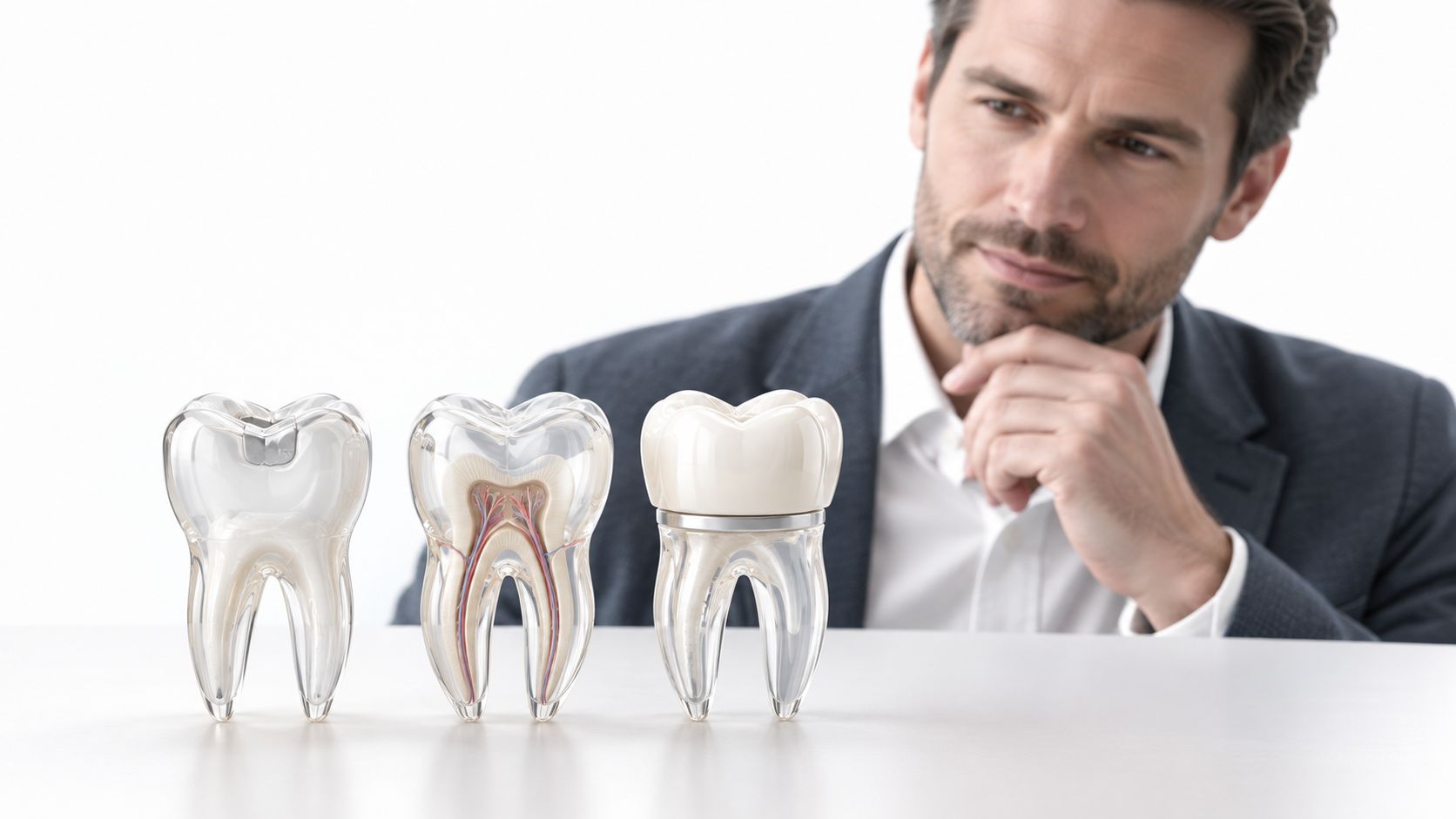
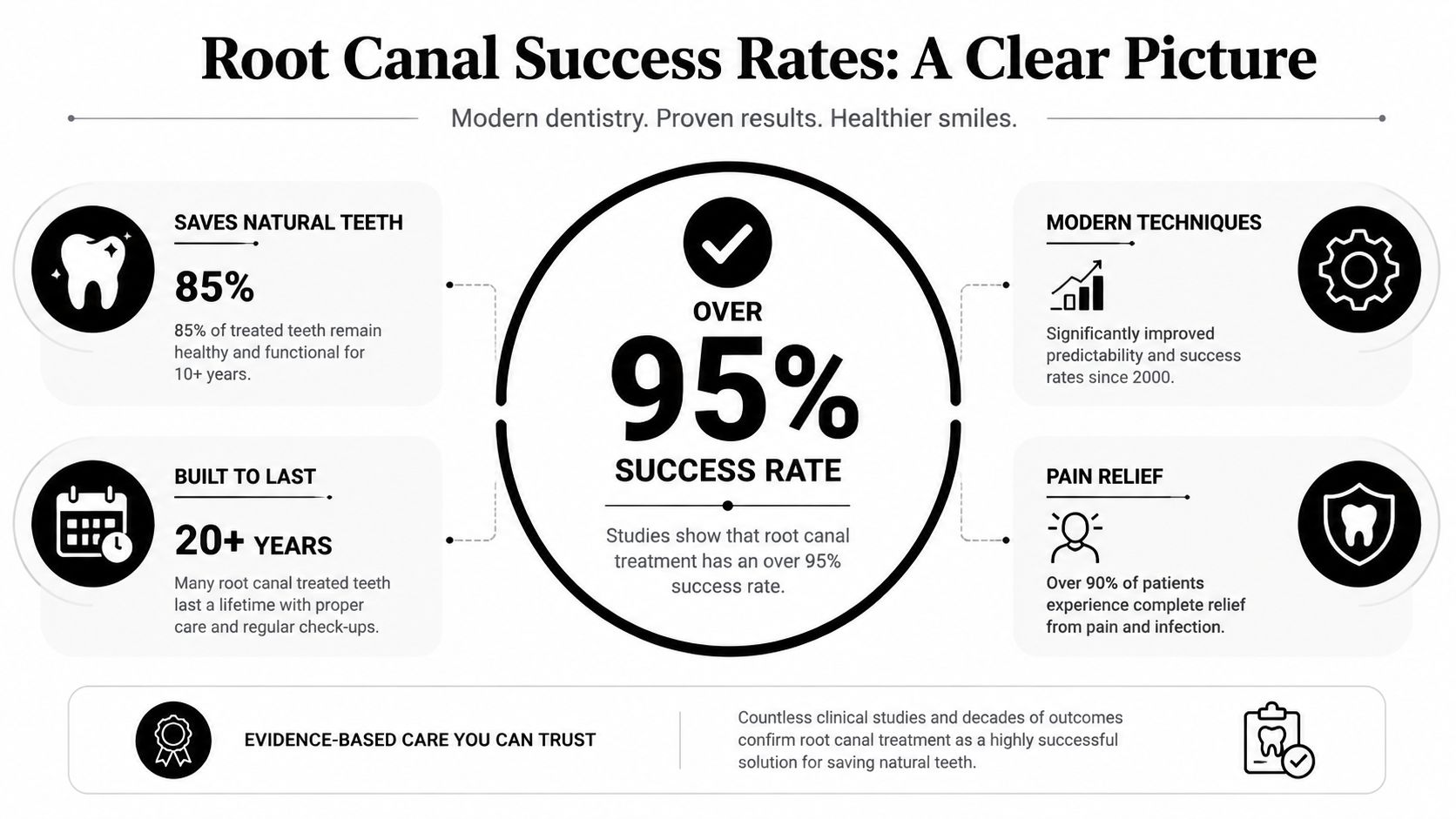
Modern root canals are highly successful, with success rates typically over 90%. Research places the initial root canal success rate between 85.2% and 92.6%, and under a broader definition of healing it reaches 92.6%.
If you're reading this with a throbbing tooth, pain when you bite, or a lingering ache that won't let you focus, you're probably not thinking about statistics. You want to know one thing. Can this tooth be saved, and is treatment likely to work?
For many patients in Chattanooga and Cleveland, TN, the answer is yes. A root canal is often the treatment that stops infection, relieves pain, and helps you keep your natural tooth instead of moving straight to tooth extraction. That matters not just for comfort today, but for chewing, appearance, and long-term oral health.
Patients who search for a dentist near me, an emergency dentist, or a dentist in Chattanooga, TN are usually dealing with a problem that's already affecting daily life. The good news is that modern dental care is far more precise and comfortable than many people expect. When root canal treatment is planned carefully, completed thoroughly, and followed by the right restoration, it can be one of the most dependable procedures in dentistry.
Why You Might Need a Root Canal in Chattanooga
A patient will often sit down and tell me, "The tooth doesn't hurt all the time, but something isn't right." That is a common start to a root canal conversation. The inside of the tooth contains soft tissue called the pulp, and once that tissue becomes inflamed or infected, the tooth can shift from mildly irritated to intensely painful in a short time.
Deep decay is a common cause. So are cracks, repeated dental work on the same tooth, and injuries that damage the nerve even if the outer tooth still looks intact. In many cases, the goal of root canal treatment is straightforward. Remove the infected tissue, disinfect the inside of the tooth, and seal it so the tooth can stay in function.
Signs that shouldn't be ignored
Some teeth announce the problem clearly. Others are more subtle.
Common warning signs include:
- Persistent tooth pain that doesn't settle down
- Sensitivity to hot or cold that lingers
- Pain with biting or pressure
- Swelling or tenderness in the gums
- Darkening of a tooth
- A pimple-like bump on the gum near the tooth
If any of those sound familiar, it helps to review these signs you may need a root canal.
A root canal is usually not the source of the pain. The infected tooth is.
Why acting early helps
Waiting usually gives the infection more time to spread inside the tooth and into the surrounding bone. The tooth can weaken. Pain can become harder to predict. A problem that may have been manageable with a more straightforward visit can turn into swelling, loss of sleep, or an emergency dental appointment.
That timing matters in our office. At Winn Smiles, careful diagnosis is the first step in protecting the tooth. Digital imaging helps show the extent of the problem. Laser dentistry can improve disinfection in selected cases. Sedation can make treatment much easier for anxious patients who have been putting off care. If the tooth needs full coverage afterward, same-day crowns can help us restore and protect it without dragging treatment out longer than necessary.
For patients in Chattanooga, Cleveland, and nearby communities, the right question is not just "Do I need a root canal?" It is "Can this tooth be saved predictably, and what is the best way to do it?" Sometimes the answer is root canal treatment. In other cases, a tooth may need tooth extraction, restorative dentistry, or another solution. A precise diagnosis, done early, gives you the best range of options.
Understanding the Root Canal Success Rate
A patient sits in the chair after a rough night of tooth pain and asks the question I hear often: "How often do root canals work?" The short answer is that root canal treatment has a strong track record. The longer answer is that the number depends on what a dentist means by "success."
What the numbers actually mean
Modern root canal therapy has a high initial success rate, with research showing 85.2% to 92.6%, and the procedure is performed on over 14 million teeth annually in the United States, according to this root canal success summary.
You may also see success discussed in two different ways:
| Definition of success | Reported result |
|---|---|
| Loose criteria. The area around the root is improving, even if healing is not yet complete | 92.6% |
| Strict criteria. Complete resolution with no detectable radiolucency | 82.0% |
Both numbers can be reasonable, depending on the standard being used. A tooth may feel normal, function well, and show clear healing before every sign on an X-ray has fully resolved.
Why patients see different percentages online
That difference matters in real life. One office may focus on whether the tooth is comfortable, usable, and free of active infection. Another may count success only after complete radiographic healing is visible.
Neither approach is automatically wrong.
For patients in Cleveland and Chattanooga dealing with tooth pain, this should be reassuring. A root canal is a well-established way to save a natural tooth, not a last effort with unpredictable odds. In practice, the goal is straightforward: remove infection, keep the tooth comfortable, and restore it well enough that it can serve you for years.
At Winn Smiles, we take those published success rates seriously, but we do not treat them like a ceiling. Careful diagnosis, laser-assisted disinfection in selected cases, sedation for patients who have delayed treatment out of fear, and same-day crowns when a tooth needs prompt protection all support the kind of conditions that help good outcomes hold up over time. Statistics matter. How the treatment is performed matters just as much.
Key Factors That Influence Your Treatment Outcome
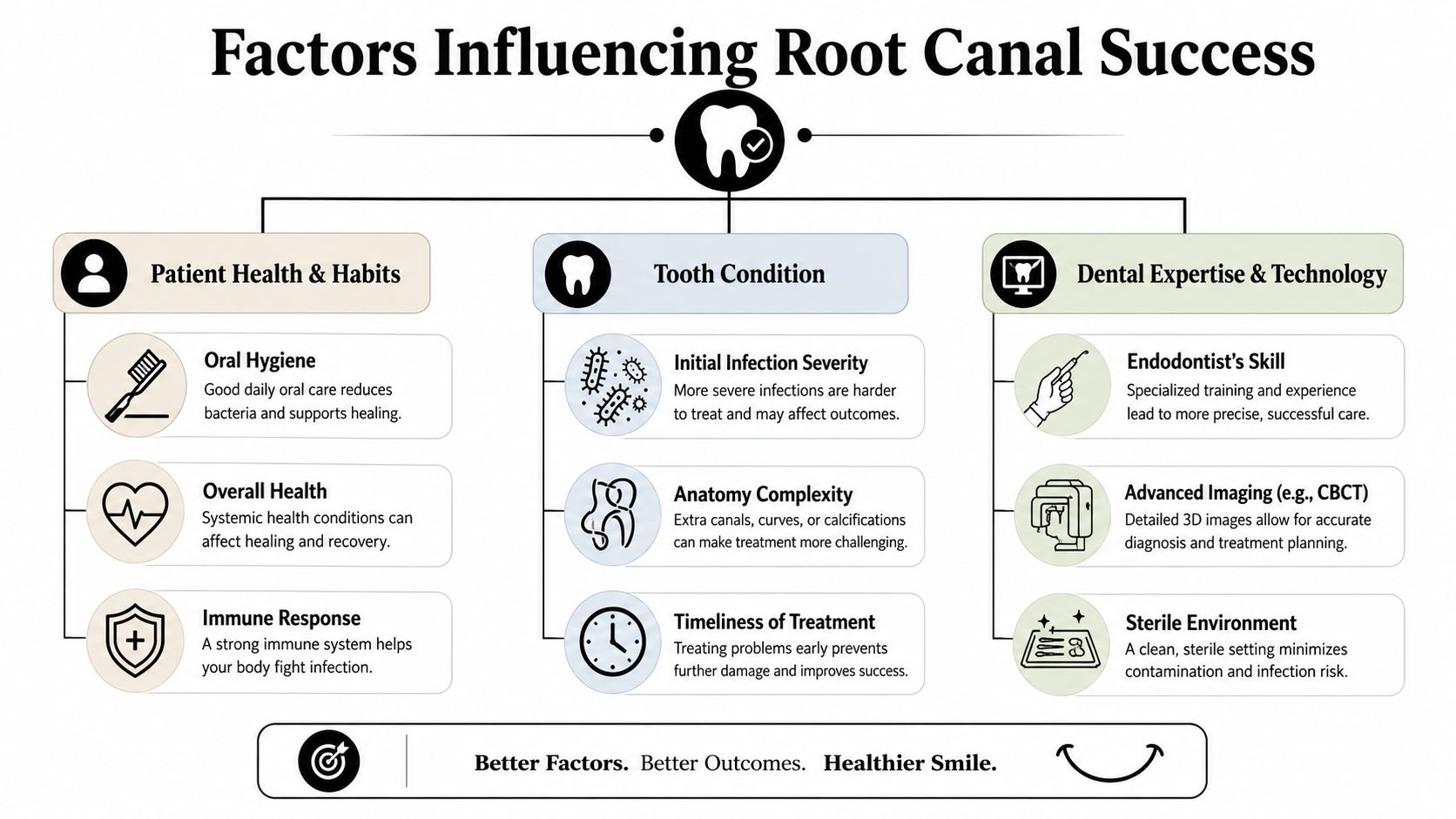
A good root canal outcome isn't luck. It's the result of case selection, careful technique, and follow-through after treatment. Two patients can both need a root canal and still have very different risk profiles based on the tooth involved, the extent of infection, and how the tooth is restored afterward.
The tooth itself matters
Front teeth are often more straightforward because they usually have simpler anatomy. Molars can be more challenging because they have more complex root systems and take heavier chewing forces. A tooth with deep decay but solid surrounding structure presents a different situation than a tooth that's already cracked or heavily broken down.
The timing matters too. Earlier treatment usually gives the tooth a better chance because infection has had less time to spread and damage the supporting tissues.
A helpful overview of outcome drivers notes that endodontist-performed treatments have 10% to 15% higher success rates in complex cases, and that a tooth restored with a high-quality crown can see success rise to approximately 95% or higher, as described in this discussion of root canal success factors and technology.
Here's a short video that gives patients a visual sense of what treatment involves:
Your health and habits play a role
Healing doesn't happen in a vacuum. Smoking, grinding, delayed treatment, and inconsistent follow-up all make success harder to achieve. Good oral hygiene, regular cleanings and exams, and quick attention to changing symptoms all support a stronger long-term result.
A few factors patients can actively control include:
- Keeping follow-up visits so the tooth can be evaluated and restored properly
- Avoiding hard chewing on a temporary restoration until the permanent one is placed
- Managing habits like smoking or clenching when possible
- Staying current with dental care including exams and dental X-rays
A technically good root canal can still have a poor long-term outcome if the tooth isn't protected afterward.
That point often surprises patients. They assume the root canal itself is the entire treatment. In many cases, it isn't. The final restoration is what protects the tooth from fracture and reinfection.
How Winn Smiles Maximizes Success for Our Patients
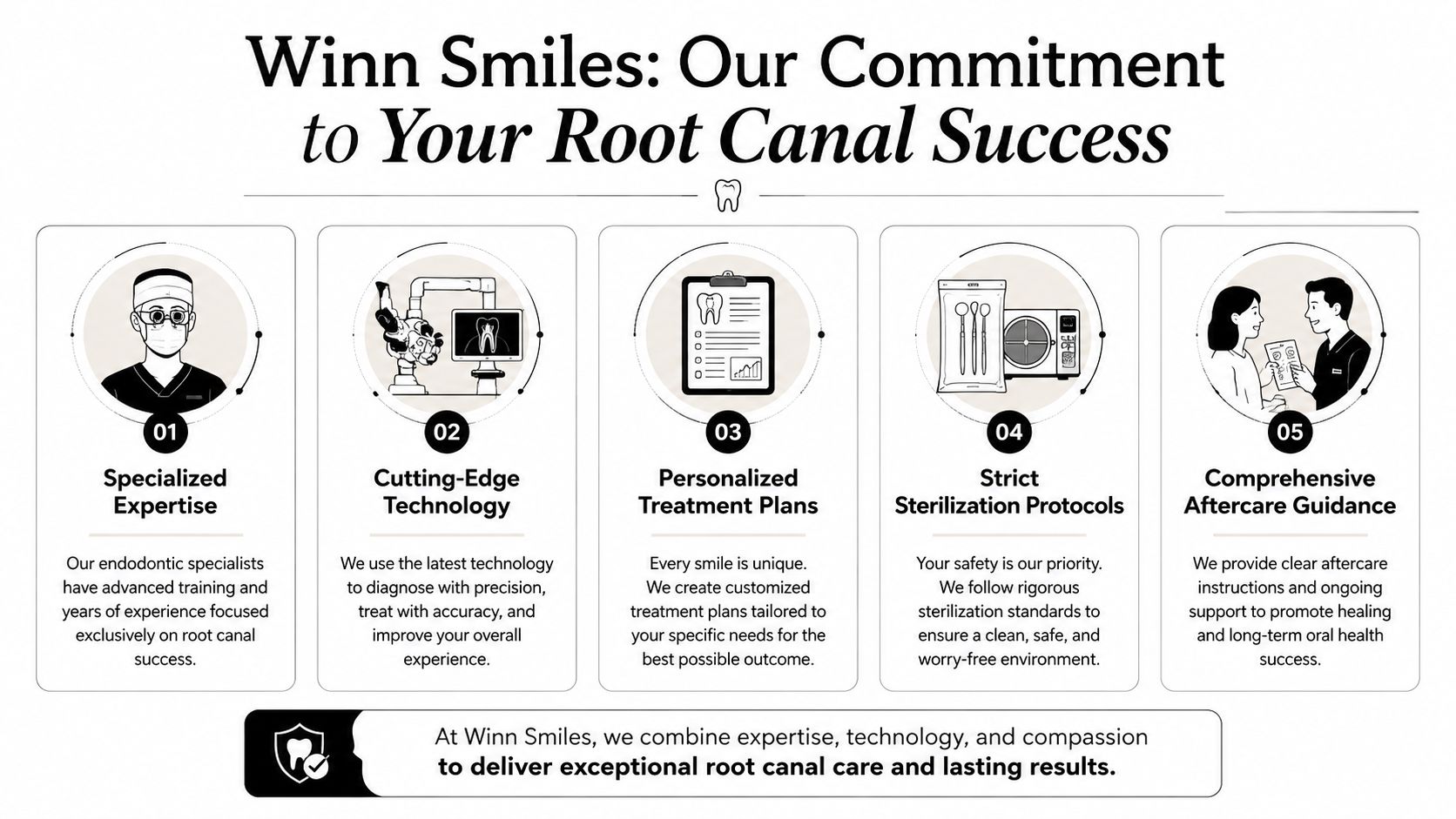
Technology doesn't replace good judgment, but it does make precise care easier to deliver. In a practice that focuses on comfort and details, the tools and systems around a root canal can improve the patient experience and support the conditions that lead to better outcomes.
Better diagnosis leads to better planning
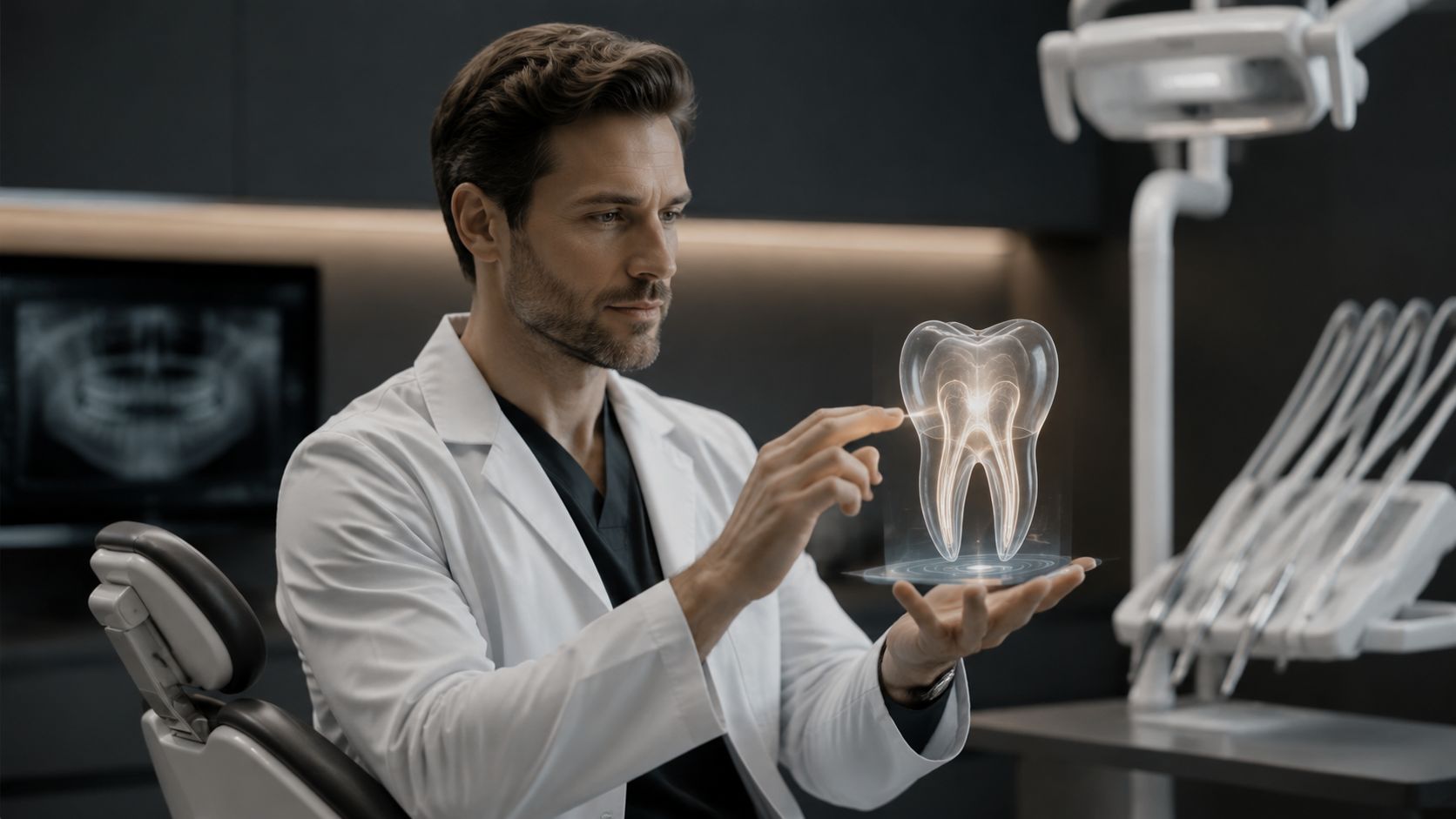
One of the biggest challenges in endodontic care is seeing the full anatomy of the tooth and surrounding area clearly enough before treatment starts. Standard dental X-rays are useful, but complex cases sometimes call for a more detailed view. When imaging is more precise, treatment planning is more precise.
That matters most in teeth with unusual root shapes, prior treatment, or symptoms that don't fully match a simple picture. A practice that invests in modern diagnostics can identify problems earlier and plan more confidently, whether the answer is a root canal, a crown, or another restorative option.
Comfort supports cooperation and quality
Anxious patients often delay care until pain forces the issue. That's understandable, but it can make treatment more complicated than it needed to be. A patient-centered environment helps break that cycle.
Practices that think seriously about comfort tend to build care around communication, pacing, sedation options, and reducing the stress of the visit itself. This broader focus aligns with widely discussed strategies for better patient experience, especially when people need treatment they already feel nervous about.
Several features make a practical difference:
- Sedation options can help patients who are fearful, sensitive, or overwhelmed by the idea of treatment.
- Laser dentistry can support gentler, more precise care in selected procedures and reflects a broader commitment to modern technique.
- Clear explanations reduce uncertainty, which often lowers tension before and during care.
- A comfort-focused setting helps patients stay still, relaxed, and engaged enough to complete treatment efficiently.
Sealing and restoring the tooth without delay
The long-term health of a treated tooth depends on more than cleaning the inside of the canal. It also depends on protecting the tooth above the gumline. That's where a well-fitting final restoration becomes critical.
Same-day crown technology can be especially helpful because it shortens the gap between treatment and protection. Instead of leaving a vulnerable tooth in a temporary state longer than necessary, the practice can move more efficiently toward a durable restoration that supports chewing and lowers the risk of fracture or leakage.
For local patients searching for an emergency dentist, cosmetic dentist near me, or dental care that combines comfort with advanced restorative dentistry, those details matter. They don't just make the visit easier. They help create the conditions for a stronger outcome.
Your Role in Long-Term Success and Aftercare
The root canal may be completed in the chair, but the long-term result depends on what happens next. The first few days are about healing and comfort. The years that follow are about protection, maintenance, and not leaving the treated tooth unfinished.
What to do right after treatment
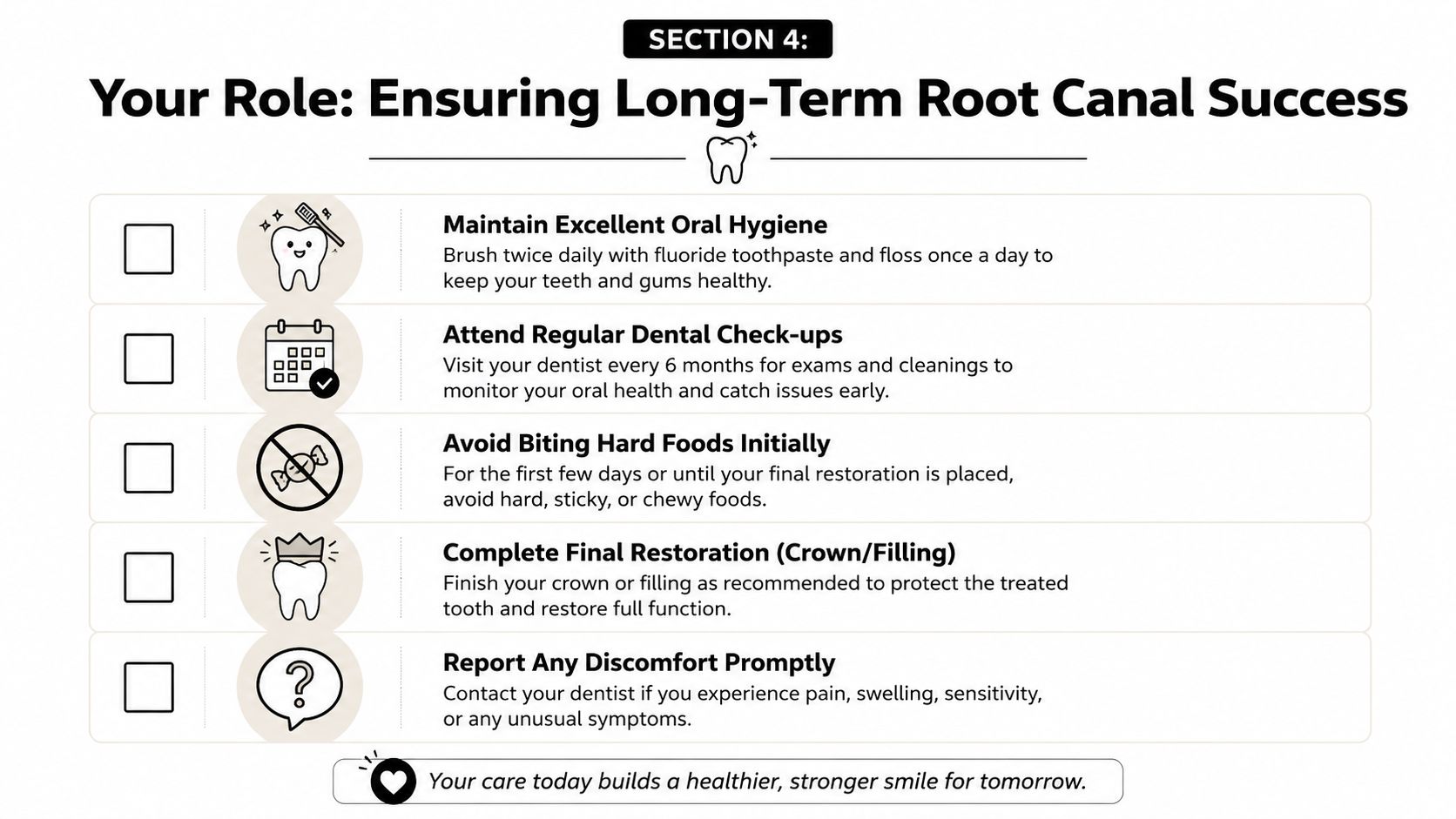
Most patients do well when they keep the aftercare simple and consistent:
- Take post-op instructions seriously and follow them exactly
- Chew carefully at first if the tooth has a temporary restoration
- Keep the area clean with normal brushing and flossing unless told otherwise
- Call if something feels wrong such as swelling, worsening pain, or a bite that feels uneven
Those steps help the short-term healing phase go smoothly, but they are only part of the picture.
Why the final crown or filling is not optional
Long-term durability depends heavily on restoration. Teeth that receive a root canal followed by a filling and a crown last about 20 years on average, while teeth with no final restoration have a median survival time of only 6.5 years, according to this review of long-term survival after root canal treatment.
That difference is clinically important. Once the pulp is removed, the tooth no longer hurts from nerve inflammation, but it can still crack if it's left structurally exposed. Back teeth in particular take heavy force every day.
The root canal removes infection. The final restoration protects the tooth from everything that comes after.
The partnership that keeps the tooth healthy
Long-term success also depends on regular dental care. Cleanings and exams allow a dentist to check the crown, the bite, the surrounding gum tissue, and any early signs of wear. If you clench or grind, a protective appliance may also be part of keeping that tooth intact.
For many patients in Chattanooga and Cleveland, general dentistry and restorative dentistry work together during root canal treatment. The root canal saves the tooth. Ongoing care helps you keep it.
When a Root Canal Fails Retreatment vs Dental Implants
Even a strong treatment doesn't come with an absolute guarantee. A tooth can develop persistent infection, hidden anatomy may have been difficult to manage, or the tooth may fracture later. If symptoms return, the situation needs evaluation, not panic.
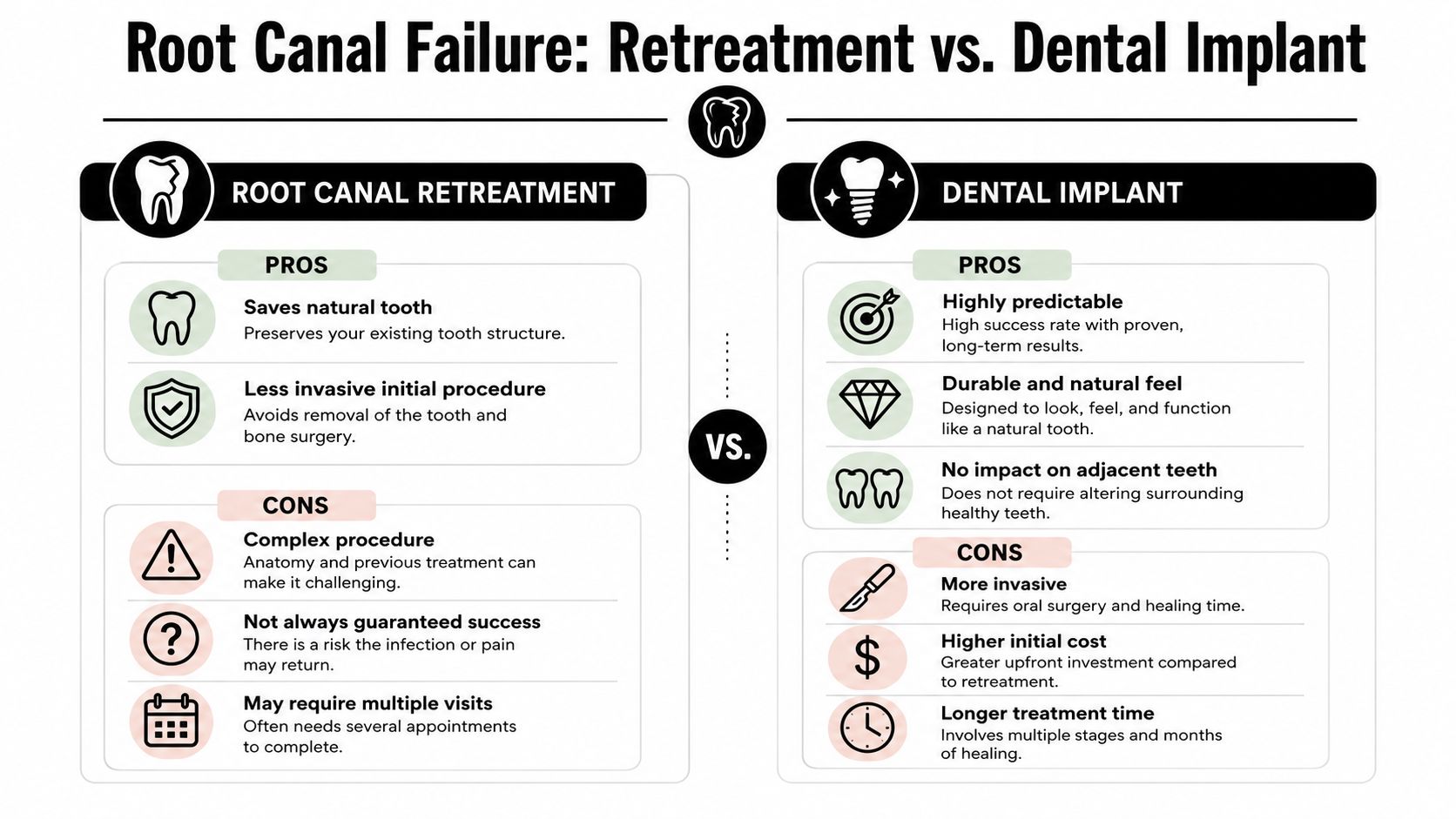
When retreatment makes sense
If the tooth is restorable and the surrounding structure is still healthy enough, retreatment may be the best next step. That approach aims to save the natural tooth again by reopening the canal system, cleaning it further, and resealing it.
Nonsurgical retreatment remains a meaningful option, with a pooled weighted success rate of 76.6% to 78%, and survival of retreated teeth reaching 89% at 5 years, according to this summary of retreatment success rates.
In some cases, a surgical endodontic procedure may also be discussed. Patients who want to understand that option can read about apicoectomy care near you.
When an implant may be the better path
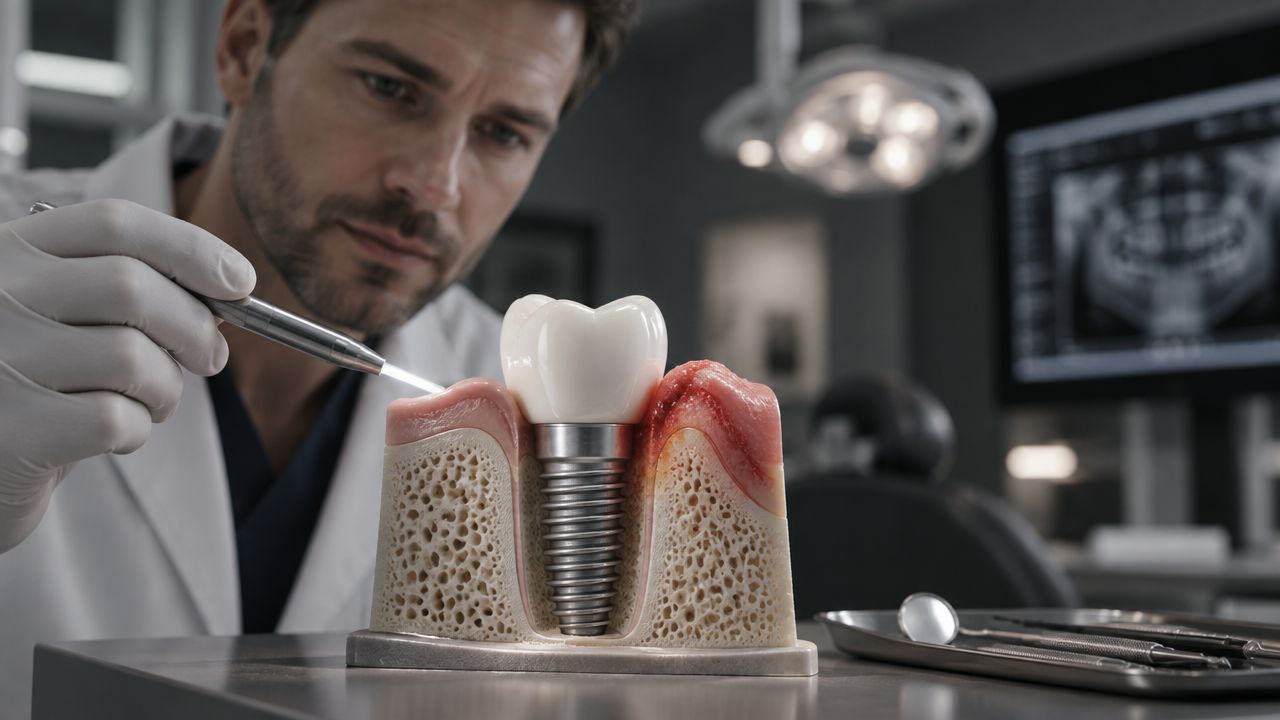
If the tooth has a severe crack, too little remaining structure, or a prognosis that no longer supports saving it predictably, extraction followed by replacement may be more sensible. That's where patients often start searching for dental implants near me.
A simple side-by-side view helps:
| Option | Best fit when | Main advantage | Main trade-off |
|---|---|---|---|
| Retreatment | The tooth is still structurally savable | Preserves the natural tooth | Can be technically complex |
| Dental implant | The tooth can't be predictably preserved | Replaces a lost tooth without relying on neighboring teeth | Involves extraction and a replacement process |
Good dentistry isn't about forcing one treatment. It's about choosing the option that gives the patient the most predictable result for that specific tooth.
Shared decision-making matters here. Patients often benefit from plain-language education before deciding between saving a compromised tooth and replacing it. Resources on shared decision-making in healthcare from Patient Talker LLC can help patients understand how these conversations should work.
Your Local Root Canal Questions Answered
Does a root canal hurt
Most patients are relieved to find that treatment feels much more manageable than the pain that brought them in. With local anesthetic, a careful approach, and sedation options when needed, the goal is to make the visit comfortable and controlled.
How long does it take
That depends on the tooth and how complex the anatomy is. Some teeth are straightforward. Others need more time because the canals are harder to access or the tooth also needs a crown and additional restorative work.
Will I need a crown afterward
Very often, yes. Back teeth especially usually need that extra protection because they handle strong chewing forces. A dentist will evaluate how much healthy tooth structure remains before recommending the right restoration.
Should I ever choose extraction instead
Sometimes yes, especially if the tooth is badly cracked or not restorable. In that situation, tooth extraction and replacement with an implant may be the better long-term choice. The right answer depends on the condition of the tooth, not just the presence of infection.
What if I also want cosmetic care
That's common. Many patients looking for relief from pain are also interested in a brighter, healthier smile. Complete care can include teeth whitening, cosmetic dentistry, new patient exams, and ongoing preventive treatment once the urgent issue is under control.
If you're dealing with tooth pain, swelling, or a tooth that may need endodontic treatment, Winn Smiles offers modern dental care for patients in Chattanooga, Cleveland, TN, and nearby communities. Whether you need an emergency dentist, restorative dentistry, same-day crowns, dental implants, cleaning and exams, or a second opinion on treatment, the team can help you understand your options clearly and schedule the next step with confidence.