You finally got the braces off, and now that straight smile is looking like a real payoff. The next question usually comes fast, how do you make those teeth look as bright as they feel? In Chattanooga and Cleveland, TN, that's where a thoughtful cosmetic dentist can help you choose the right next step, so your smile looks even, healthy, and ready for photos, work, and everyday life.
Braces do the hard part by lining up the teeth. Whitening is the finishing touch, but timing is often underestimated. A local dentist can look at your enamel, your gum tissue, and any white spots or uneven color before recommending a plan that fits your smile instead of forcing a one-size-fits-all product on it.
For patients who also care about facial freshness beyond dentistry, some people like to explore skin rejuvenation procedures alongside smile improvements. That kind of broader self-care mindset makes sense, because a bright smile often feels part of the same overall confidence update.
Your New Smile Is Here So What Is Next
Braces coming off feels like crossing the finish line. Then you notice the little details, a slight yellow cast in spots, maybe a few white areas, and suddenly the question becomes whether whitening should happen right away or after your mouth settles down.
Why the finish line is not the finish of care
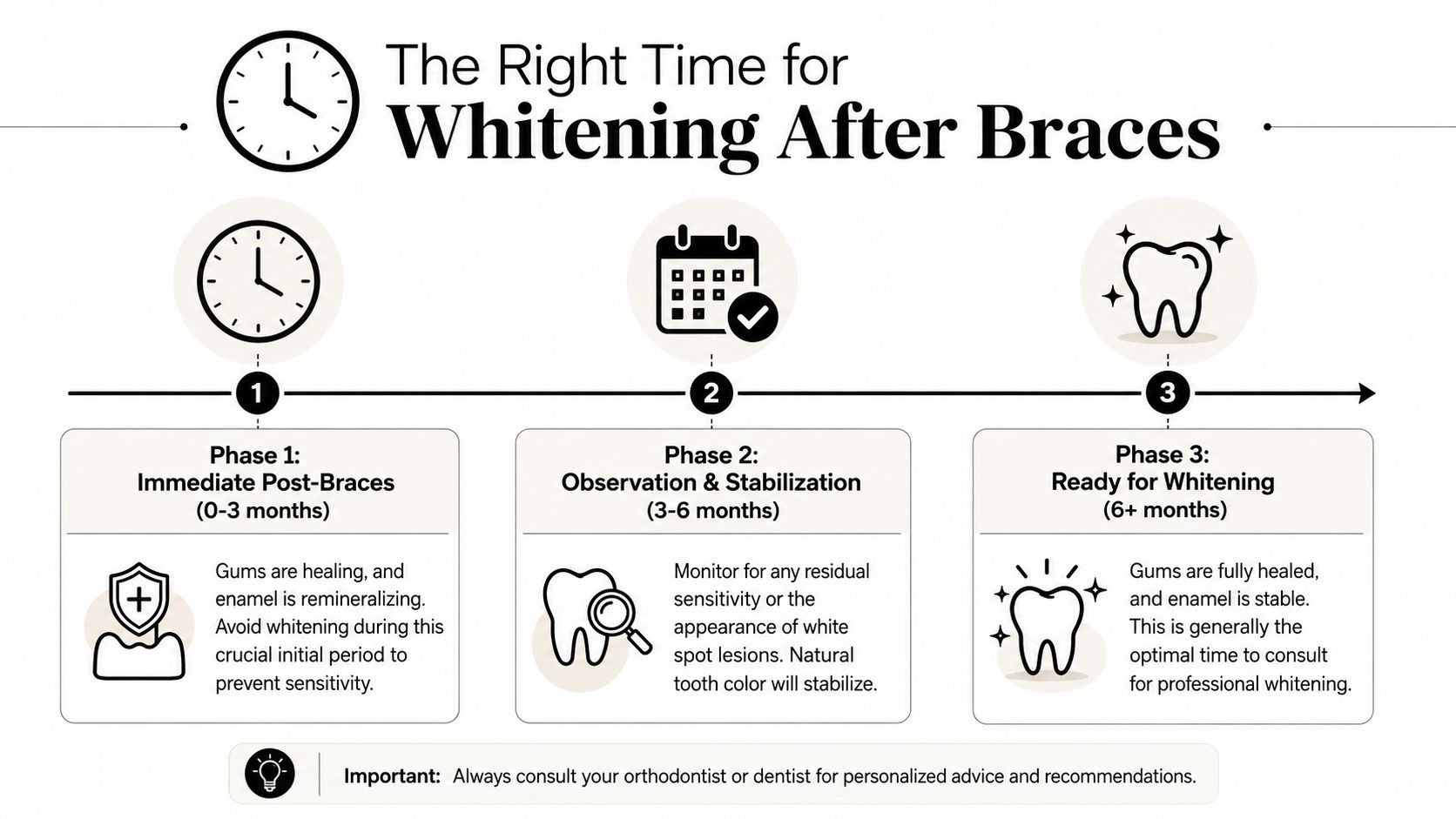
After orthodontic treatment, the teeth and gums are still adjusting. A systematic review found whitening after bracket removal was done anywhere from 7 to 90 days later, with a mean of 40.2 days, and the authors still recommended waiting at least 30 days before starting whitening so enamel, pulp, and periodontal tissues can recover (systematic review). That same review also said the evidence was low quality, which is another reason a careful, exam-based approach beats guessing.
In practice, that means the next step is not just buying strips and hoping for the best. It's checking whether the color issue is general dullness, post-braces sensitivity, or white spot lesions that need a different fix.
Practical rule: if the teeth just came out of braces, don't rush whitening before the tissues have had time to calm down.
Winn Smiles works with patients in Chattanooga and Cleveland who want that final, polished look after orthodontics. The goal is simple, a smile that looks bright without looking patchy, overdone, or uncomfortable.
The Right Time for Whitening After Braces
The best time to whiten after braces is usually after a short recovery window, not immediately when the brackets come off. Orthodontists know that the mouth needs time to settle, and most of them lean toward waiting until the tissues have had time to recover.
What waiting actually protects
A 2022 survey of orthodontists reported that 80% recommend whitening only after brackets are removed and with a wait of at least 1 month. In the same survey, 50% preferred waiting 1 to 3 months after debonding, while 39.6% favored waiting more than 3 months (survey). That lines up with the broader orthodontic literature, which favors post-debonding whitening over whitening during active treatment because there isn't enough evidence to support in-treatment bleaching.
The reason is straightforward. After braces, enamel needs time to re-stabilize, gums can still feel tender, and leftover bonding changes how shade looks in the mirror. If whitening starts too early, patients are more likely to chase a result before the teeth are ready for a predictable one.
What I tell patients in the chair
The safe answer is usually patience. A short delay helps you judge the natural tooth color more accurately, and it gives any lingering sensitivity a chance to settle before whitening begins.
Dentist's takeaway: the most reliable whitening decisions happen after the mouth has recovered enough to show its true baseline color.
Comparing Your Whitening Options in Chattanooga
Once the timing is right, the decision is how to whiten. Some patients want the fastest in-office change, others want a gradual take-home option, and a few are tempted by over-the-counter strips because they seem easy and inexpensive. The right choice depends on how sensitive your teeth feel, how even the color is, and how much supervision you want.
The three common paths
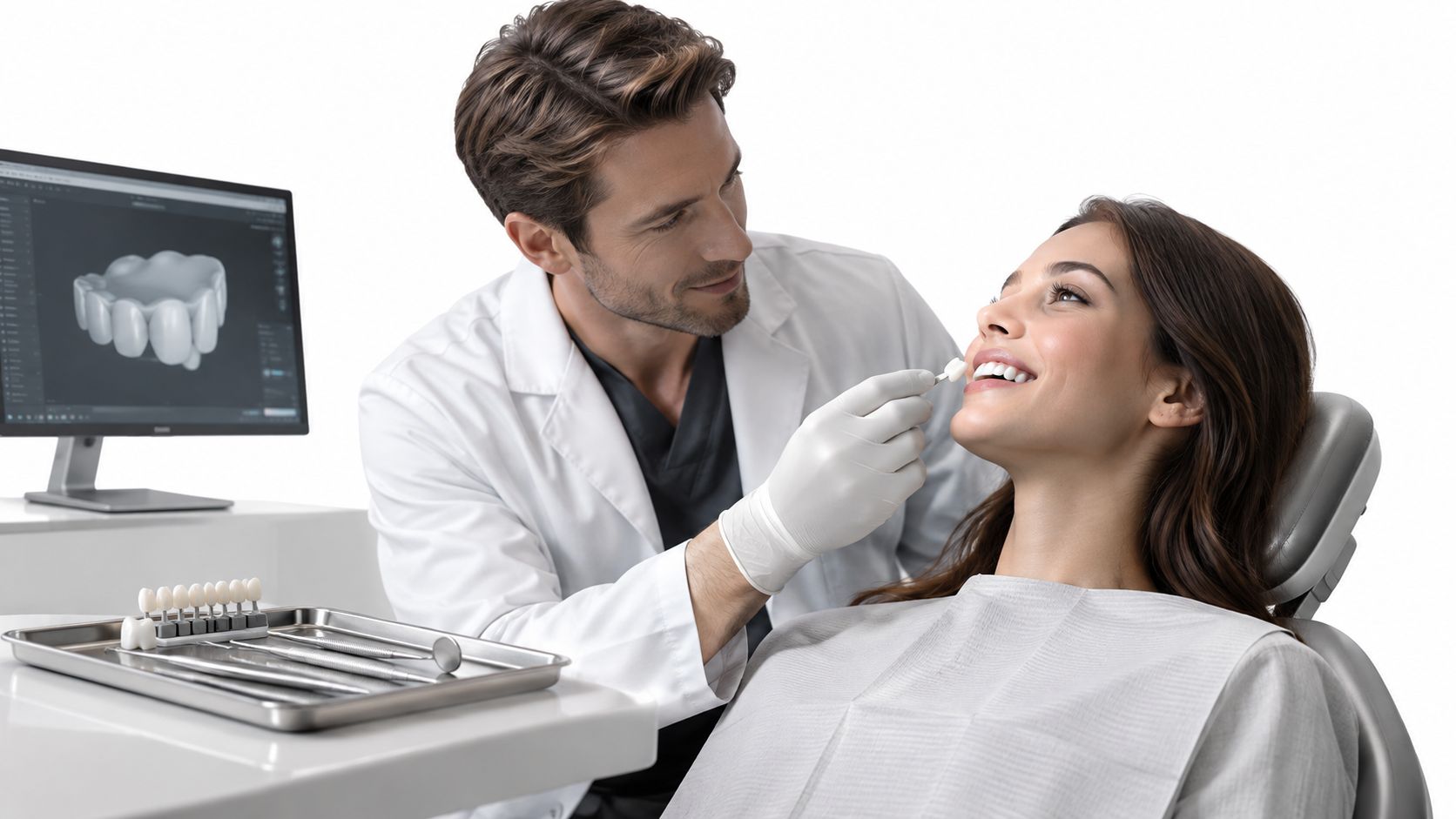
Professional in-office whitening gives the fastest change and the most controlled environment. Randomized clinical evidence found that both home bleaching and laser-assisted in-office bleaching produced strong color improvement, while laser-assisted treatment had the lowest tooth sensitivity over 24 hours (trial). That makes it a strong benchmark when you want speed and comfort to both matter.
Custom take-home trays are a good middle ground. They're dentist-prescribed, shaped to fit your teeth, and useful when you want gradual whitening with more control over sensitivity. For a lot of post-braces patients, that slower approach feels easier on already-reactive teeth.
Over-the-counter products are the least precise option. They can help with mild surface staining, but they're not custom fitted and they don't account for the uneven color that often follows orthodontics.
| Whitening path | Main strength | Main limitation |
|---|---|---|
| Professional in-office treatment | Fast and supervised | Can be more intense if sensitivity is already present |
| Custom take-home trays | Gradual and controlled | Takes longer than chairside whitening |
| Over-the-counter products | Convenient and accessible | Less predictable after braces |
If you want a deeper breakdown of treatment selection, the practice's guide on best teeth whitening options is a useful place to compare what tends to work in real mouths, not just in ads.
For a style comparison outside dentistry, some patients use Skin Revision's guide to injectables to see how different cosmetic treatments are matched to different goals. Smile whitening works the same way in principle, the treatment should fit the outcome you want.
Addressing White Spots and Other Post-Braces Concerns
White spots are one of the most misunderstood post-braces concerns. Patients often think they just need stronger whitening, but that can make the overall shade brighter while the spots stay visible or even stand out more.
White spot lesions usually reflect areas where enamel has lost minerals during treatment. That's why the right answer isn't always bleaching. One orthodontic source notes that whitening is often not the primary solution for white spots, because many patients are really trying to fix uneven color, which may call for other specialized treatments (orthodontic source).
That distinction matters in a cosmetic consult. A tooth can be whitened and still look patchy if the underlying issue is texture or mineral loss. In those cases, a dentist may talk through alternatives that blend the enamel more effectively rather than merely making everything lighter.
What uneven color can mean
Not every post-braces shade problem is the same. Some teeth just need a little brightening, while others need a more targeted cosmetic fix. That's why a careful exam matters before anyone reaches for whitening gel.
A visit can also uncover whether the issue is limited to a few teeth or spread across the smile line. Once that's clear, the plan can be developed accordingly instead of guessed.
Realistic Expectations and Managing Sensitivity
Whitening after braces can work very well, but it's not magic. The result depends on the original tooth shade, the amount of staining, and whether white spots or demineralized areas are part of the picture.
A meta-analysis of dentist-prescribed, home-applied whitening found an average improvement of 6.4 shade guide units, compared with 0.7 in placebo controls. It also found that 93% of bleached patients achieved at least a 2-shade-unit change versus 20% in placebo, and about 50% may need retreatment to maintain results beyond 6 months (meta-analysis). That gives patients a realistic picture, whitening can make a meaningful difference, but upkeep may be part of the long game.
How to keep sensitivity manageable
Sensitivity is common enough that it should be planned for, not feared. Before whitening, many patients do better with a desensitizing toothpaste, gentle brushing, and a short delay if the teeth still feel tender from brace removal.
During treatment, the safest approach is to follow the exact schedule your dentist gives you. That matters more than trying to push for a faster result.
After whitening, avoid stacking hot, cold, or acidic foods on teeth that are already adjusting. If sensitivity shows up, it usually settles with the right product choice and a more conservative schedule.
Comfort matters as much as color. A whitening plan should brighten teeth without making everyday eating or drinking miserable.
For patients who already know their teeth are sensitive, teeth whitening for sensitive teeth is worth reading before choosing a product or appointment type.
Your Whitening Consultation at Winn Smiles
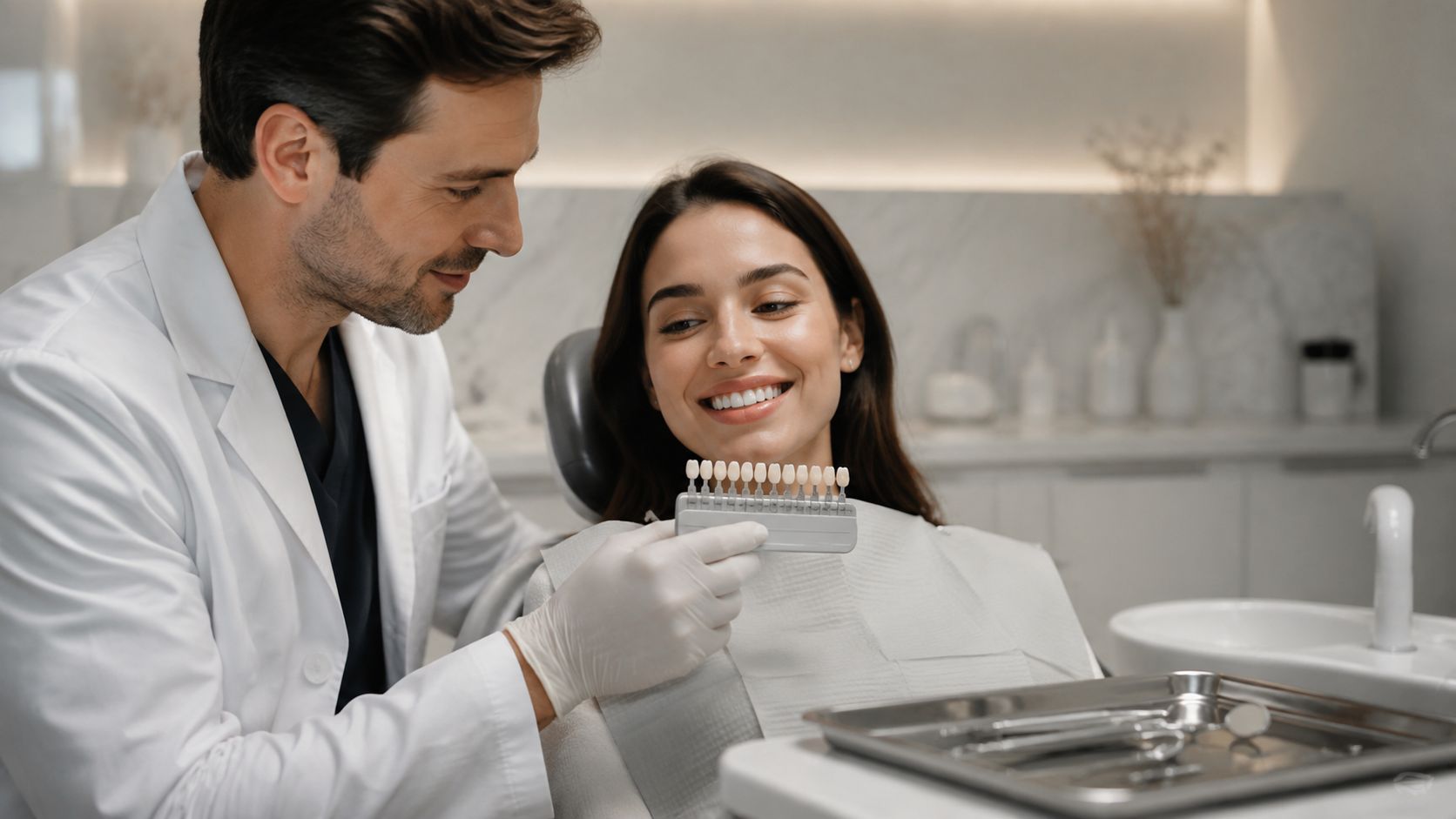
A good whitening visit starts with a conversation, not a sales pitch. At Winn Smiles in Chattanooga or Cleveland, the first step is usually a look at the teeth and gums, followed by a discussion about whether the primary issue is shade, white spots, or sensitivity.
That exam helps the dentist decide whether in-office whitening, take-home trays, or a different cosmetic option makes the most sense. It also gives room to talk about expected results, timing, and any trade-offs before treatment begins.
What patients usually want to know
- How bright can I realistically get? The answer depends on your starting shade and whether the color is even.
- Will it hurt? Sensitivity can happen, but the plan can be adjusted to reduce it.
- Do I need whitening at all? Sometimes the better solution is treating white spots or restoring enamel appearance another way.
If you're searching for a dentist near me in Chattanooga or Cleveland, this kind of consult is the easiest way to stop guessing. It's also the right time to ask about related care, from cosmetic dentistry to restorative options, if your smile needs more than whitening alone.
If you're ready to make your post-braces smile look brighter and more even, schedule a visit with Winn Smiles. The team can look at your teeth, talk through whitening timing, and help you choose the safest path for a confident finish.