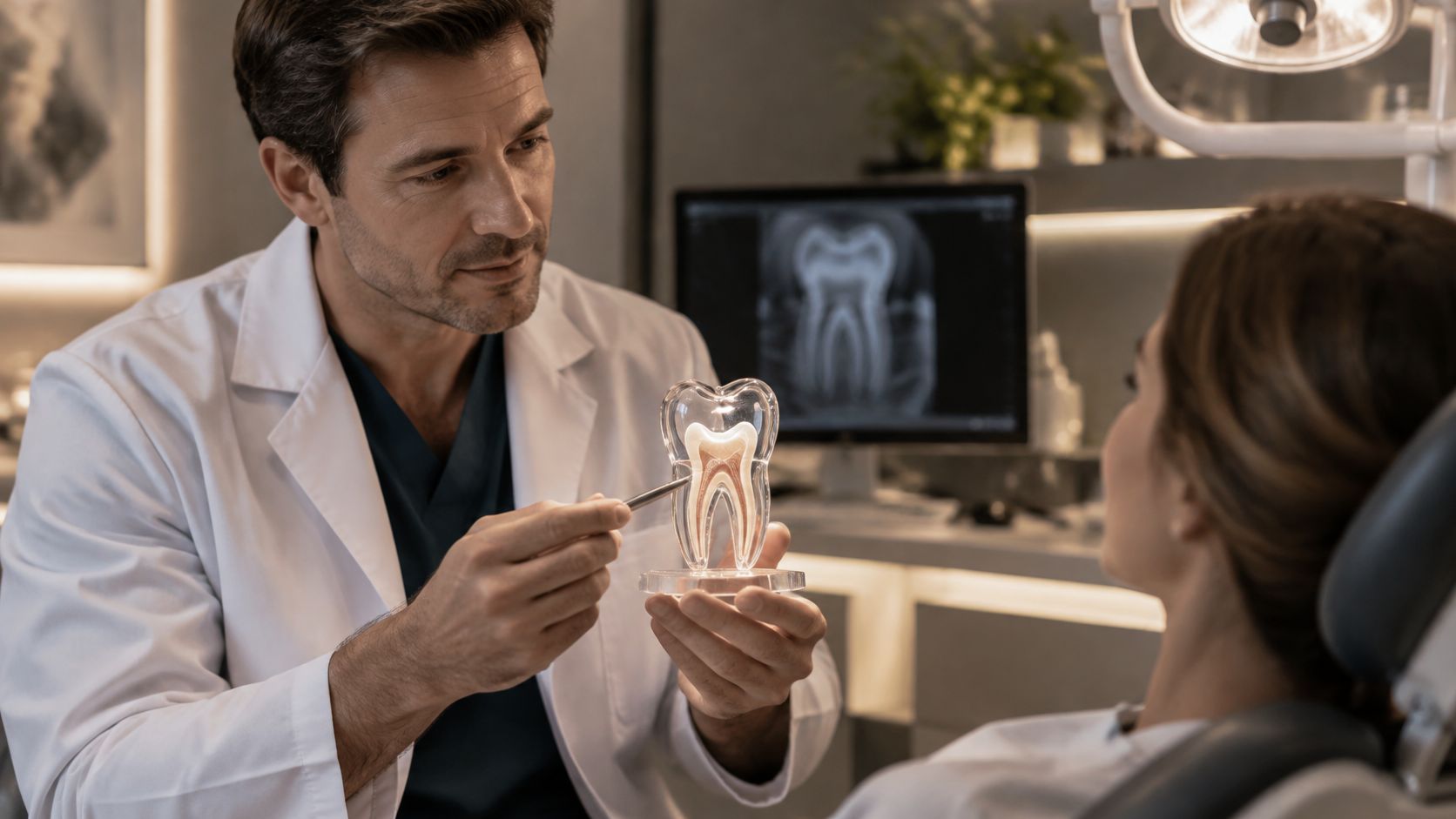
Porcelain veneers average about $1,455 per tooth nationally, with reported prices from $1,020 to $2,506, according to CareCredit's national veneer cost guide. Composite veneers generally cost less. Prices in Cleveland and Chattanooga vary, so request a written estimate to see what your proposed treatment includes.
The more useful comparison is cost per year of service. A lower upfront fee may offer less value if the restoration needs earlier replacement or the estimate excludes important care.
Winn Smiles offers porcelain veneers and dental bonding in Cleveland and Chattanooga, Tennessee, as well as free veneer consultations and second opinions. Veneers can address staining, uneven spacing, or minor misalignments. At a consultation, you can discuss whether veneers or another option fits your goals before deciding.
Veneer Prices at a Glance for Cleveland and Chattanooga
Veneer fees are usually quoted per tooth. The total depends on how many teeth are treated and what the quoted fee includes.
CareCredit's national veneer cost guide reports the prices below. It also puts the average porcelain-veneer total at approximately $8,730 for six teeth and $11,640 for eight teeth. These figures are national planning benchmarks, not local quotes, and they exclude potential consultation fees, diagnostic work, replacement, or other treatment.
Veneer prices and lifespans per tooth
| Option | Average price per tooth | Reported range | Expected lifespan |
|---|---|---|---|
| Porcelain veneer, national average | $1,455 | $1,020–$2,506 | 10–15 years |
| Composite veneer, made in office | $751 | $541–$1,220 | 5–7 years |
| Composite veneer, laboratory-made | $1,068 | $783–$1,760 | 5–7 years |
| Veneers, national market summary | Not reported | $925–$2,500 | 5–15 years |
| Veneers, Midwest and South regional summary | Not reported | $900–$1,900 | 5–15 years |
Medical News Today's national market summary gives a broad price range across veneer types. Joyce the Dentist's regional summary places Midwest and Southern porcelain veneers at approximately $900–$1,900 per tooth. That range offers regional context, not a guaranteed fee for an office in Cleveland or Chattanooga. Lifespans vary by material; the ranges in the table reflect the material-specific estimates.
Why nearby estimates can look different
Search results for dental veneers cost near me may compare different procedures. An office-made composite restoration and a custom porcelain veneer are different treatments, even if both improve the appearance of a front tooth.
The number of veneers also depends on your smile and bite. Your dentist should assess which teeth show when you smile, how the proposed shapes meet your lower teeth, and whether treated teeth will blend with untreated ones. A larger package is not automatically a better fit.
Budgeting rule: Compare the total treatment plan, not just a per-tooth fee multiplied by the number of teeth you expect to treat.
A useful written estimate identifies the material, the teeth being treated, and what the fee covers. Check whether preparation, laboratory work, temporary restorations, placement, and follow-up are included or billed separately. Those details make it easier to compare local quotes on cost per year of expected service, rather than headline price alone.
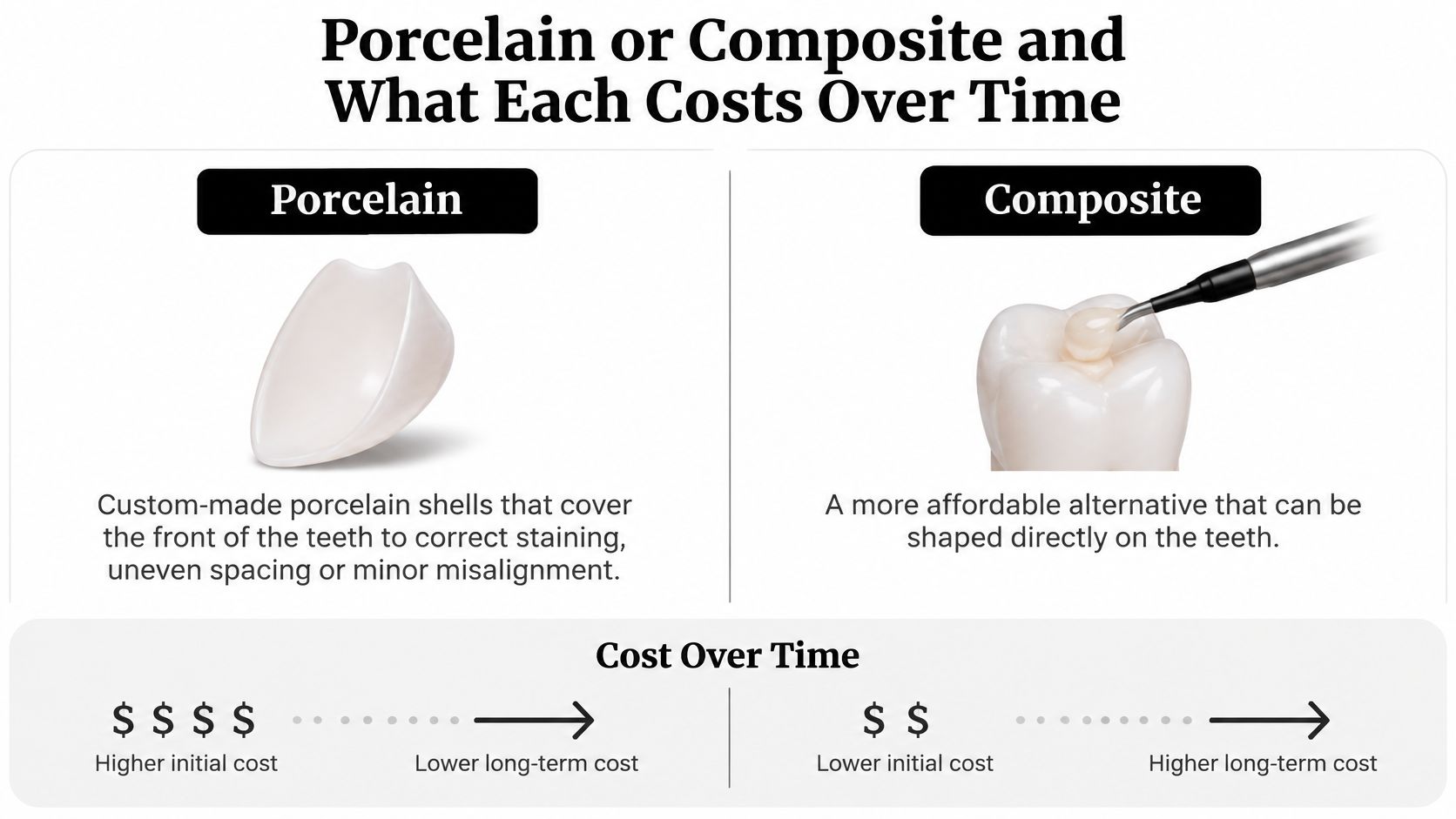
Porcelain or Composite and What Each Costs Over Time
Porcelain and composite solve similar cosmetic problems, but they involve different compromises. Choosing between them means considering appearance, repairability, tooth preparation, and the possibility of future treatment.
Our porcelain veneers are custom-made shells that cover the fronts of teeth to correct staining, uneven spacing, or minor misalignments. Porcelain is stain-resistant and usually fabricated outside the mouth, while composite is tooth-colored resin that can be shaped directly onto teeth or made in a laboratory.
This comparison highlights the differences to discuss during treatment planning.
Compare the years of service, not just the purchase
Aflac's veneer guidance describes approximately 10–15 years of service for porcelain and 5–7 years for composite with appropriate care; using the national average prices as an illustration, a $1,455 porcelain veneer lasting 10 years equates to $145.50 annually, while a $751 office-made composite veneer lasting 5 years equates to $150.20 annually.
Those calculations divide the initial fee by an assumed service life. They don't include maintenance, repairs, financing charges, or eventual replacement, and they aren't predictions for your teeth.
| Feature | Porcelain veneer | Composite veneer |
|---|---|---|
| Approximate yearly cost | About $145.50 with a 10-year life | About $150.20 with a 5-year life, office-made |
| Repairability | A substantial fracture may require replacement | Easier to repair by adding resin |
| Best fit | Visible front teeth where stain resistance and long service matter | Tighter budget, a single small chip, or a tooth you may change later |
Match the material to your habits
Porcelain can make sense when you want coordinated changes across visible front teeth and place a high priority on color stability. Composite may be preferable when you want a more affordable initial treatment or a conservative correction that can be modified later.
Neither material makes bite problems irrelevant. Tell your dentist if you clench, grind, bite your nails, or have chipped previous dental work. The location of the tooth and the way your teeth contact can matter as much as the cosmetic goal.
I would choose the material only after discussing how it will be maintained and what happens if it breaks. A restoration that suits your habits and can be managed within your budget is more useful than the option with the lowest advertised fee.
When Bonding or a Crown Makes More Sense
A small chip doesn't automatically need a veneer, and a badly damaged tooth may need more protection than a veneer can provide. The right choice starts with the amount of healthy tooth remaining.
We offer dental bonding, which uses tooth-colored resin to correct minor chips, gaps, or discoloration. We also offer same-day crowns designed to fit naturally with your smile. With a same-day crown, the tooth is prepared, the crown is designed and milled, and the final restoration is placed in a single appointment.
Veneers, bonding and crowns by best-fit case
| Treatment | Best fit | Expected lifespan | Cost note |
|---|---|---|---|
| Porcelain veneer | Stains, uneven spacing, or minor misalignment across front teeth | Commonly 10–15 years with proper care | Priced per tooth; material and preparation affect the estimate |
| Composite bonding | Small chips, gaps, or discoloration | Assessed according to repair size, location, and bite | Request a fee for the specific repair |
| Same-day crown | Damaged tooth needing full coverage | Assessed according to tooth condition, bite, and care | Generally comparable to a traditional crown |
The lifespan for an individual bonding repair shouldn't automatically be treated as identical to a full composite veneer. A small addition to an edge and a restoration covering the whole front surface face different stresses.
Match your concern to the treatment
A chipped front tooth: A small enamel chip may be suitable for bonding. If the fracture extends far or the tooth has extensive existing restorations, the dentist needs to assess whether a crown offers more appropriate coverage.
A small gap: Bonding may close a modest space without covering the entire tooth surface. If closing it would make the teeth look disproportionately wide, orthodontic treatment may be a better way to address the spacing.
A stained front row: Teeth whitening may be the simplest starting point when the concern is color alone. Porcelain veneers become more relevant when you want to change color and shape together, or when staining won't respond adequately to whitening.
Our comparison of dental veneers and bonding can help you prepare questions about the extent of correction you're considering.
Choose the treatment that solves the actual problem while preserving appropriate healthy tooth structure.
Cosmetic treatment doesn't cure active decay, gum disease, or infection. If you have pain, swelling, or a newly broken tooth, arrange an examination rather than waiting for a cosmetic appointment; an emergency dentist may need to address the cause first.
A missing tooth requires a different conversation about dental implants or other replacement options, not veneers. Tooth extraction is considered only when clinically appropriate, not as a shortcut to cosmetic improvement. The examination, not the price, decides which treatment makes sense.
Hidden Costs and How to Compare Quotes
A systematic review of porcelain laminate veneers estimated 95.5% cumulative survival at 10 years; separately analyzed complication-specific survival estimates were 96.3% for fracture, 99.2% for debonding, 99.3% for secondary decay, and 99.0% for endodontic treatment. These figures describe survival outcomes, not the percentage of patients experiencing each complication.
Survival doesn't mean problem-free. A veneer can remain in place while requiring assessment, adjustment, or other care. The same review cautions that evidence beyond 20 years isn't conclusive, so a description such as permanent shouldn't be interpreted as lifetime, replacement-free treatment.
The following visual summarizes those outcomes.

Use the same quote routine at each consultation
Identify exactly what's proposed. Request the material, the teeth involved, and whether the fee is per tooth or per arch. Confirm that competing estimates describe the same scope of treatment.
Separate the clinical charges. Have the estimate distinguish the veneer fee from the examination, dental X-rays, temporary veneers, and follow-up visits. A bundled fee is fine if its inclusions are clear.
Discuss enamel preservation. Ask how much tooth surface must be removed and whether the preparation can remain primarily in enamel. Removing more tooth structure can limit future treatment options.
Check the fabrication and finishing fees. Confirm whether laboratory charges, digital planning, and post-placement adjustments are included. Ask how the dentist checks shape and bite before final placement.
Understand repairs and remakes. Request the written policy for a veneer that chips, loosens, or doesn't meet the agreed treatment plan. Clarify what is covered and what would generate a new charge.
Plan for underlying conditions. Ask whether decay, gum disease, bite problems, or grinding require treatment first, and whether a recommended night guard is included.
Medical News Today's veneer overview reports a national range of approximately $925–$2,500 per tooth and identifies material, laboratory fees, preparation, geography, and treatment size as pricing factors. That broad range reinforces why an itemized consultation estimate is more useful than an advertisement.
What a lower fee can leave unresolved
A cheaper quote may describe a less extensive treatment, which can be entirely appropriate. The concern is an estimate that omits necessary care or doesn't explain the preparation and protection plan.
Bonding technique matters too. Discuss how the dentist keeps the tooth dry during placement and checks the forces against the finished veneer. These aren't cosmetic extras; they're part of planning a restoration that functions in your mouth.
We offer free consultations and second opinions for veneers, Invisalign, dentures, implants, and sleep apnea therapy. If a same-day crown is the more suitable treatment, we provide a detailed crown cost breakdown during the consultation.
Financing and Insurance for Veneers
A veneer quote is only one part of the cost. Check what your dental plan may cover, how you would pay any remaining balance, and whether the total fits your budget over the years you expect the veneers to serve.
Separate insurance questions from financing questions
Cosmetic veneers are generally elective, so a dental plan may contribute little or nothing toward them. Coverage for preventive or restorative care is separate: an examination, filling, and cosmetic restoration may be treated differently. Request a written benefits estimate before authorizing treatment, and remember that an insurer's estimate does not guarantee payment.
Financing addresses how you pay the balance, including any interest or fees. Ask the office during your consultation which payment arrangements, if any, are available for your specific treatment. The dental veneer payment-plan guide can also help you prepare questions.
Before accepting a financing arrangement, check:
- Total repayment: Add the deposit, scheduled payments, interest, and fees, then compare the total with the treatment estimate.
- Payment timing: Confirm when deposits and remaining balances are due.
- Promotional conditions: Check when any promotional period ends and what happens if a balance remains unpaid.
- Separate care: Find out whether maintenance, repairs, or replacement would cost extra.
Keep future care in the budget
A monthly payment can make treatment feel manageable while obscuring the full commitment. Compare the total cost with the expected years of service, and leave room in your budget for regular dental care and unexpected work.
Financial safeguard: Keep necessary dental care in your budget alongside elective cosmetic treatment.
If the proposed treatment exceeds your budget, discuss that before treatment begins. A smaller correction or a different service may suit your goals, provided it is clinically appropriate. Avoid choosing a partial treatment solely to meet a payment target. Ask how staging treatment could affect shade matching, the appearance of untreated teeth, and the overall plan. You should understand the clinical and financial commitment before deciding.
What Happens at a Veneer Consultation Near You
Say you're considering veneers because your front teeth look uneven in photos, but you're nervous about having healthy teeth altered. Your consultation should begin with that concern, not with selecting a package.
Bring photos that show what bothers you and, if helpful, examples of smiles you like. The goal isn't to copy someone else's teeth; it's to explain your preferences for shape, color, and how noticeable you want the change to be.
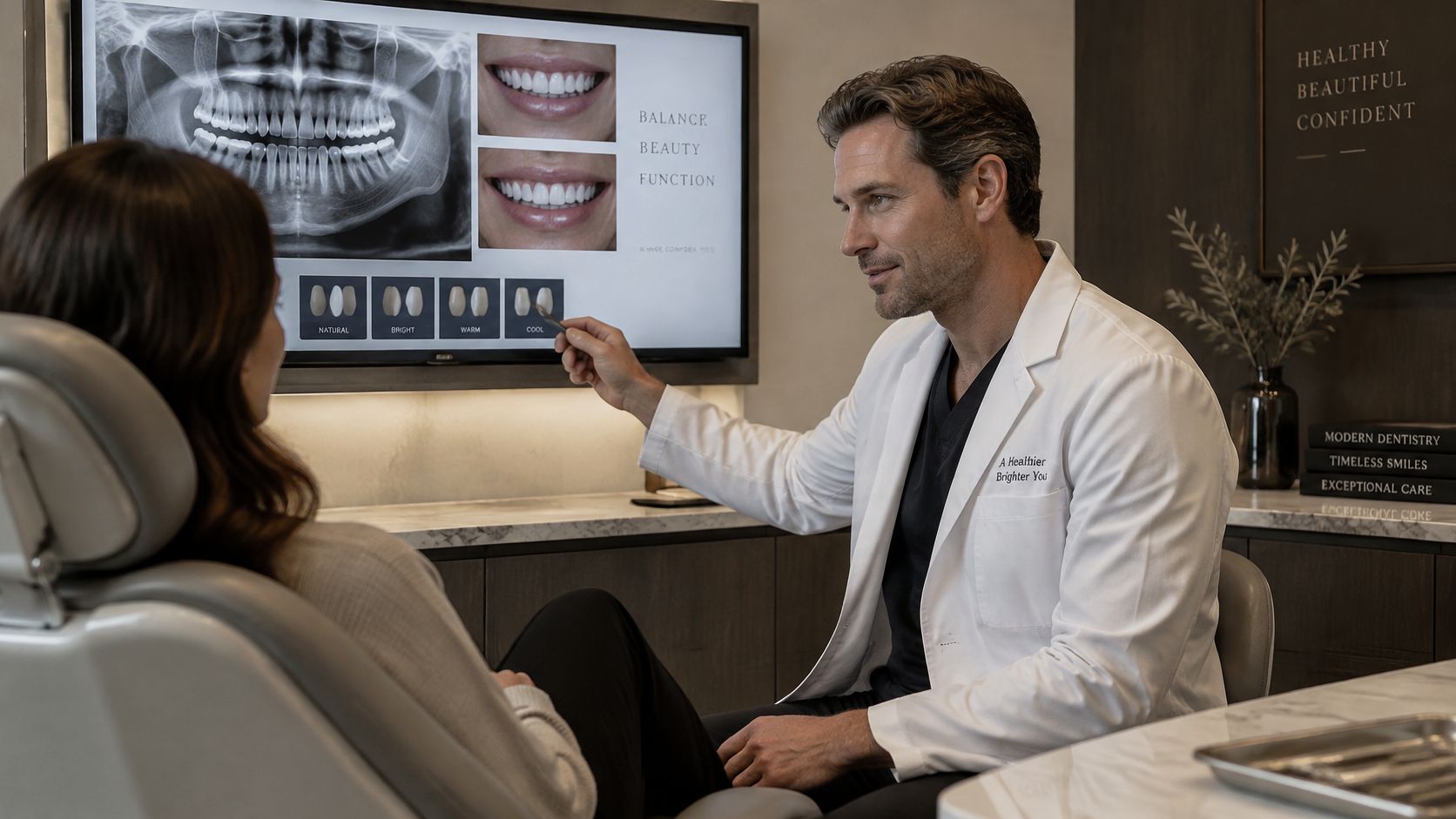
A shade discussion helps connect those preferences to your natural smile.
From your concerns to a clinical plan
The dentist examines your teeth and gums, reviews existing restorations, and checks how your teeth meet. Dental X-rays and photographs may be needed to assess health and plan treatment, rather than choosing a whiter shade.
We use 3D imaging and the Sirona CEREC prime mill to create fully custom, natural-looking restorations in our practice. The fabrication method for your particular restoration should be explained during planning; having in-office crown technology doesn't mean every veneer follows the same process.
Your discussion should address whether porcelain, composite, bonding, whitening, or Invisalign best fits your concern. Veneers change the visible surfaces of teeth, while orthodontic treatment moves teeth, so the distinction matters when alignment is the main issue.
This video offers another way to become familiar with the treatment conversation.
Leave with a plan you can understand
Before treatment, you should understand the proposed preparation, the expected appearance, and the financial estimate. If you proceed with laboratory-made veneers, the teeth are prepared as planned, temporary restorations may be used, and the finished veneers are assessed and bonded at a later appointment.
Tell us when booking if dental anxiety is a concern. Our offices offer a comfort menu and individualized sedation options, and the team can discuss what may be appropriate for your care.
- Bring your records: Previous dental records can help clarify existing treatment and concerns.
- List your medications: Include current prescriptions and relevant health information.
- Name your priorities: Explain whether appearance, preserving tooth structure, comfort, or budget matters most to you.
You don't have to agree to treatment during the consultation. Taking the written plan home is a reasonable way to make a considered decision.
Book a Veneer Consultation in Cleveland or Chattanooga
A search result can help you find a nearby dentist, but only an examination can determine whether veneers suit your teeth and goals. Book a consultation with Winn Smiles in Cleveland or Chattanooga, TN to discuss your options. You can call or request an appointment online, and you may bring an existing estimate for a second opinion.
If you're comparing quotes, bring the full documents, not just the totals. Material, tooth preparation, included services, and repair terms can all affect the price and what the estimate covers.
Bring your questions, not a commitment
You don't need to arrive certain that veneers are right for you. Ask whether bonding could address a small flaw or whether a damaged tooth may need a crown. A useful consultation considers the treatment that fits your concern, rather than assuming every cosmetic issue calls for a veneer.
You can also review AI search optimization for dental offices to learn about the practice-facing side of online visibility. For your treatment decision, focus on the dentist's examination and a clear discussion of the proposed care.
Choose a time when you can explain your concerns and review the recommendation without rushing. If you want to decide at home, request a written estimate and ask whom to contact with follow-up questions before scheduling preparation.
Winn Smiles offers porcelain veneers and dental bonding, with free veneer consultations and second opinions in Cleveland and Chattanooga. Visit Winn Smiles to request a consultation and ask for a personalized written cost estimate before treatment begins.