You want a whiter smile, but you also know what happens when your teeth get irritated. A sip of cold water can sting. Breathing in winter air can feel sharp. So when you see whitening strips, gels, or ads for a brighter smile, your first thought isn't excitement. It's whether the pain will be worth it.
That hesitation makes sense. Sensitive teeth change how you make decisions about cosmetic dentistry. Many people in Chattanooga and Cleveland put off whitening for that exact reason. They don't want to trade one problem for another.
A careful whitening plan can make a big difference. The right approach isn't just about choosing a product. It's about understanding why your teeth react, checking for hidden issues first, and matching the whitening method to your comfort level. If you've been searching for a cosmetic dentist near me or a dentist in Chattanooga, TN or dentist in Cleveland, TN because you want safe options, you're asking the right question.
Your Guide to a Brighter Smile Without the Discomfort
A lot of patients start in the same place. They've thought about whitening for months, maybe longer. They notice coffee stains in photos or feel self-conscious before a wedding, interview, or family event. Then they remember how sensitive their teeth already are, and the whole idea gets pushed aside again.
That's a reasonable response, not an overreaction. If your teeth already complain when you eat ice cream or drink hot coffee, whitening can sound like something meant for other people.
Why nervous patients often wait too long
Some readers have already tried whitening strips once and regretted it. Others have never started because they've heard stories from friends about zingers, soreness, or a dull ache after treatment. Looking through other people's experiences can be helpful when you're trying to sort out what's normal and what feels avoidable, which is why some patients like to examiner les avis sur le blanchiment before deciding what questions to ask a dentist.
What matters most is this. Sensitive teeth don't automatically rule out whitening. They usually mean the process should be slower, more customized, and more carefully supervised.
Sensitive teeth need a plan, not a guess.
A more personal path to cosmetic care
The goal isn't to force your teeth through the strongest treatment possible. The goal is to brighten your smile in a way your mouth can tolerate. That often starts with a conversation about your sensitivity triggers, your dental history, and the kind of result you're hoping for.
For patients looking for a dentist near me who can combine cosmetic results with comfort-focused care, that personalized approach matters. A whitening consultation should feel less like buying a product and more like building a roadmap. You need to know what your teeth can handle, what to expect, and what to do if sensitivity shows up.
That's the part many people miss when they try to manage everything on their own.
Why Whitening Can Cause Sensitivity
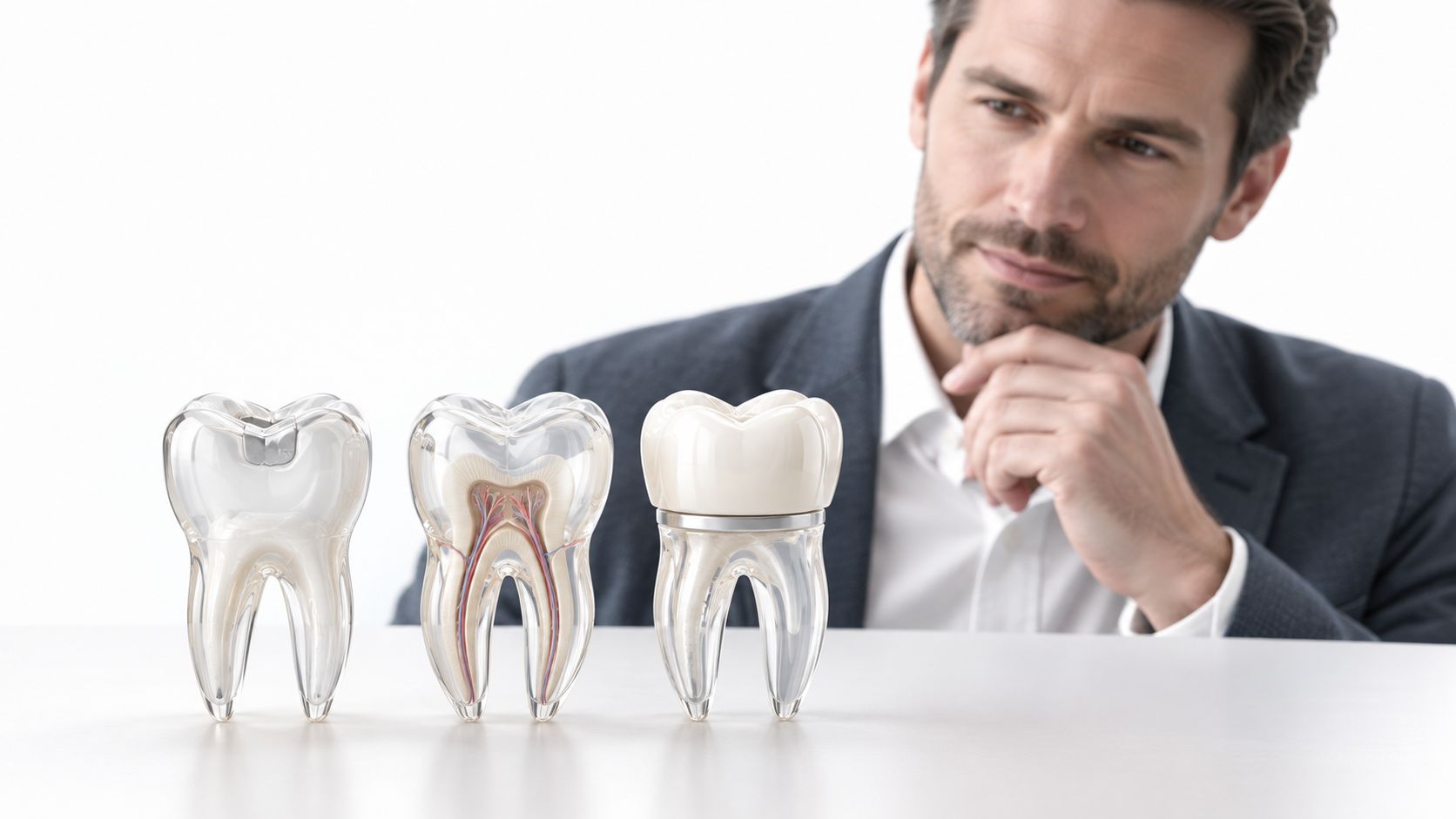
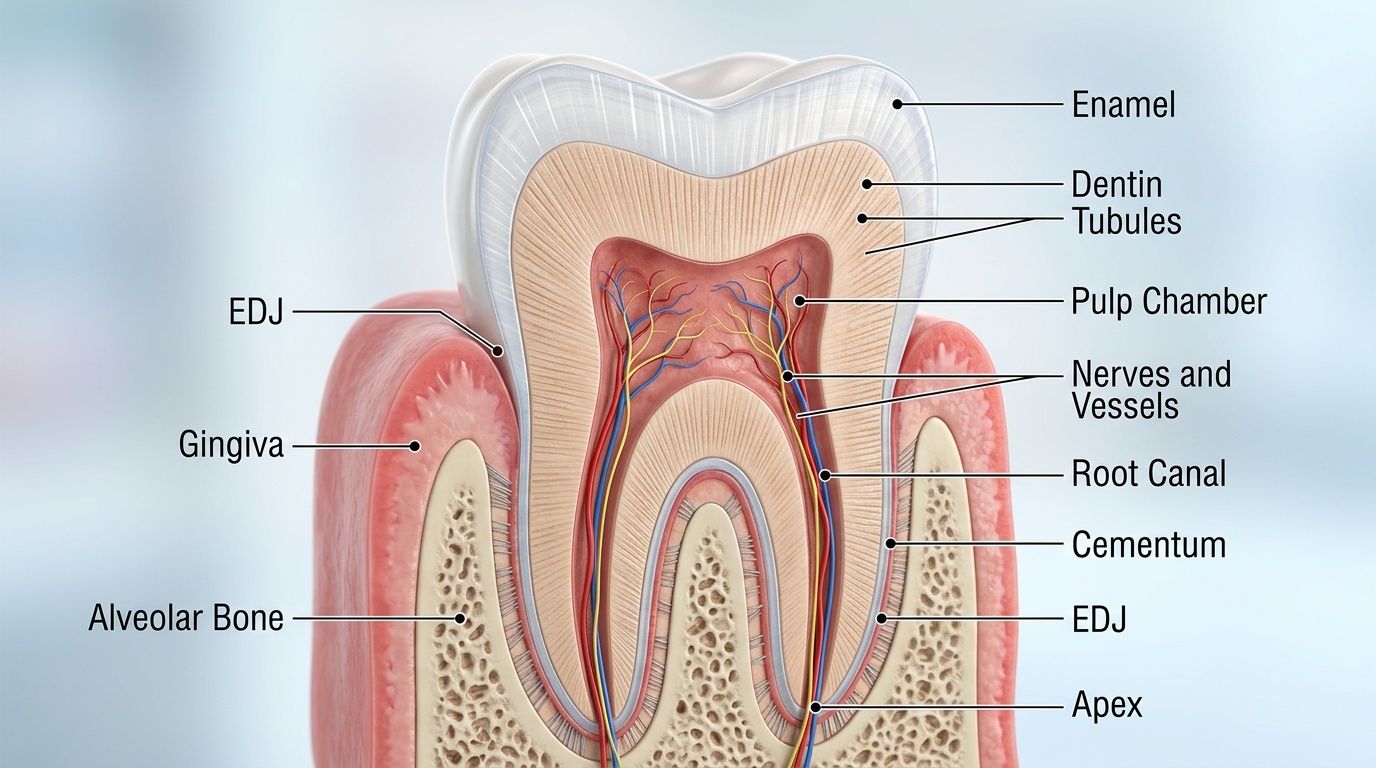
To understand why whitening can bother sensitive teeth, it helps to know a little about how a tooth is built. The outer layer is enamel. It's the hard shell you see. Under that is dentin, which has tiny pathways that carry sensation inward. In the center is the pulp, where the tooth's nerve and blood supply live.
If enamel is thin, worn, or interrupted, the dentin underneath becomes easier to stimulate. That's when cold drinks, sweet foods, or even air can trigger discomfort.
Where sensitivity starts
Several everyday issues can make a tooth more reactive:
- Worn enamel from grinding, acidic foods, or brushing too hard
- Gum recession that exposes root surfaces
- Cracks or small defects that let temperature changes reach deeper areas
- Old fillings or other dental work that change how a tooth responds
If you already deal with cold sensitivity, it's worth reading more about what causes tooth sensitivity to cold, because whitening often builds on sensitivity that was there first.
What whitening gel does inside the tooth
Most whitening systems use hydrogen peroxide or carbamide peroxide. These ingredients work by moving through the outer tooth structure and breaking apart stain compounds. That's how teeth get lighter. It's also why some people feel temporary sensitivity during or after treatment.
A major review of the dental literature notes that sensitivity is a common side effect of whitening, especially with higher-concentration products. In one randomized clinical trial involving restored teeth, a 35% hydrogen peroxide product caused tooth sensitivity in all cases. The same review also notes that lower concentrations tend to cause less sensitivity, and many professional products include desensitizing agents such as fluoride and potassium nitrate (clinical review in the dental literature).
Practical rule: The stronger and longer the exposure, the more likely sensitive teeth are to react.
Why this matters before you whiten
This is why whitening isn't just a cosmetic choice. It's also a comfort decision. A person with healthy enamel and no gum recession may tolerate a stronger approach. A person with exposed roots, thin enamel, or existing sensitivity may need a lower-strength option and more recovery time between applications.
That isn't a compromise. It's good treatment planning.
Preparing for a Comfortable Whitening Treatment
A comfortable whitening experience usually starts before any whitening gel touches your teeth. Preparation matters because sensitivity rarely appears out of nowhere. It usually shows up when whitening is layered on top of enamel wear, gum recession, untreated decay, or irritation that was already there.
Start with a calmer baseline
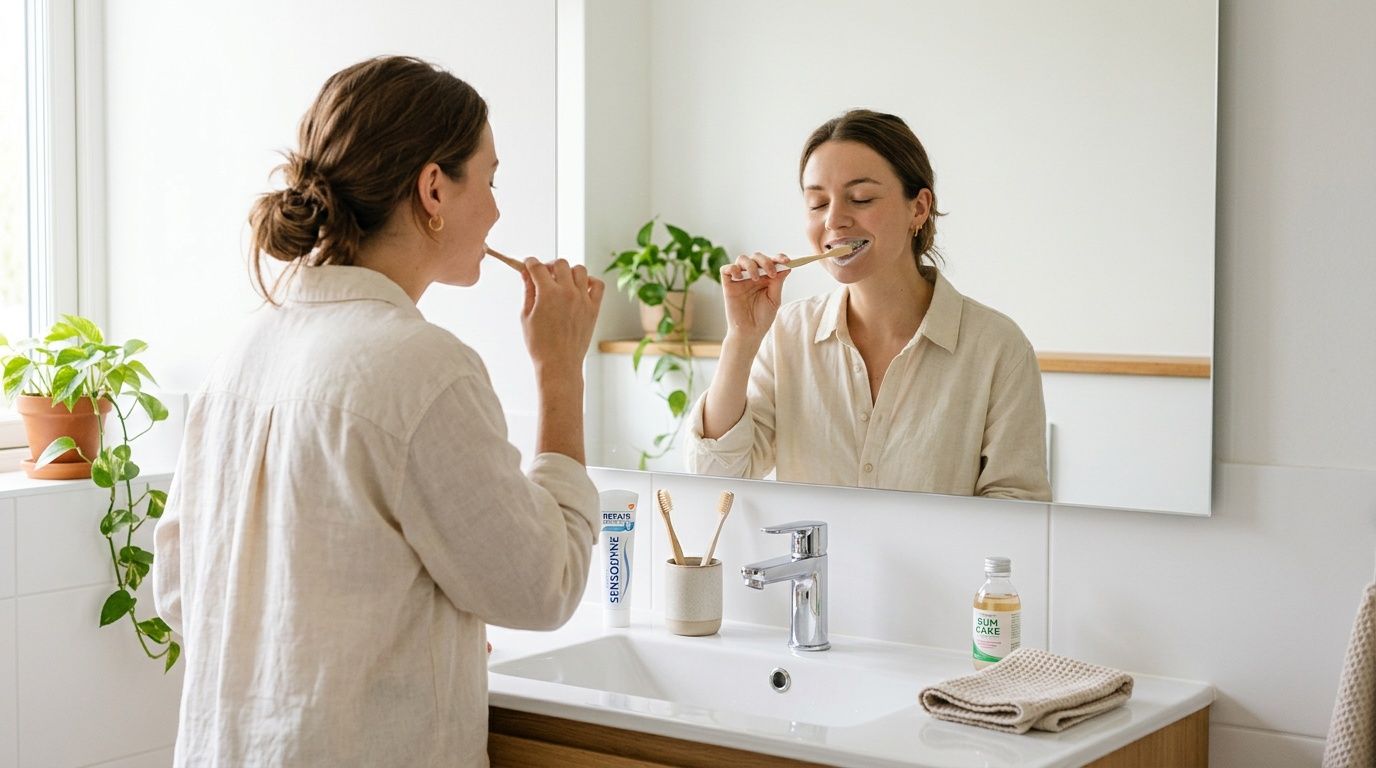
If your teeth are reactive now, the first job is lowering that reactivity before treatment. Many dentists recommend using a desensitizing toothpaste for a period before whitening, especially one formulated with potassium nitrate or fluoride support. The point isn't instant whitening. The point is getting your teeth into a more stable, less irritable state.
A few simple habits also help:
- Use a soft-bristled toothbrush so you're not scrubbing enamel and gums harder than necessary.
- Avoid very acidic snacks and drinks if they tend to leave your teeth feeling sore afterward.
- Pause whitening ideas if something already hurts because active pain should be examined, not covered up.
Let an exam guide the plan
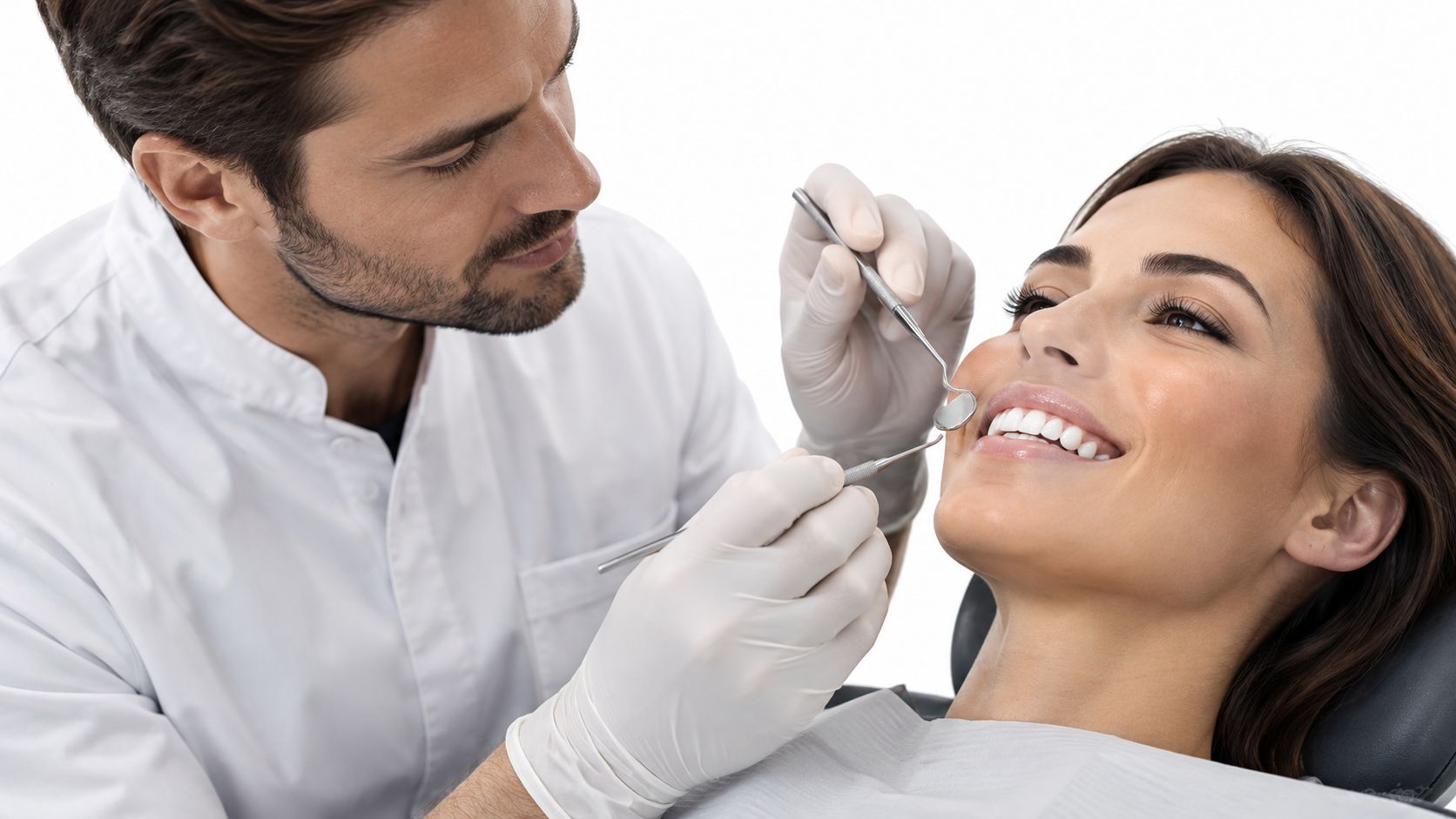
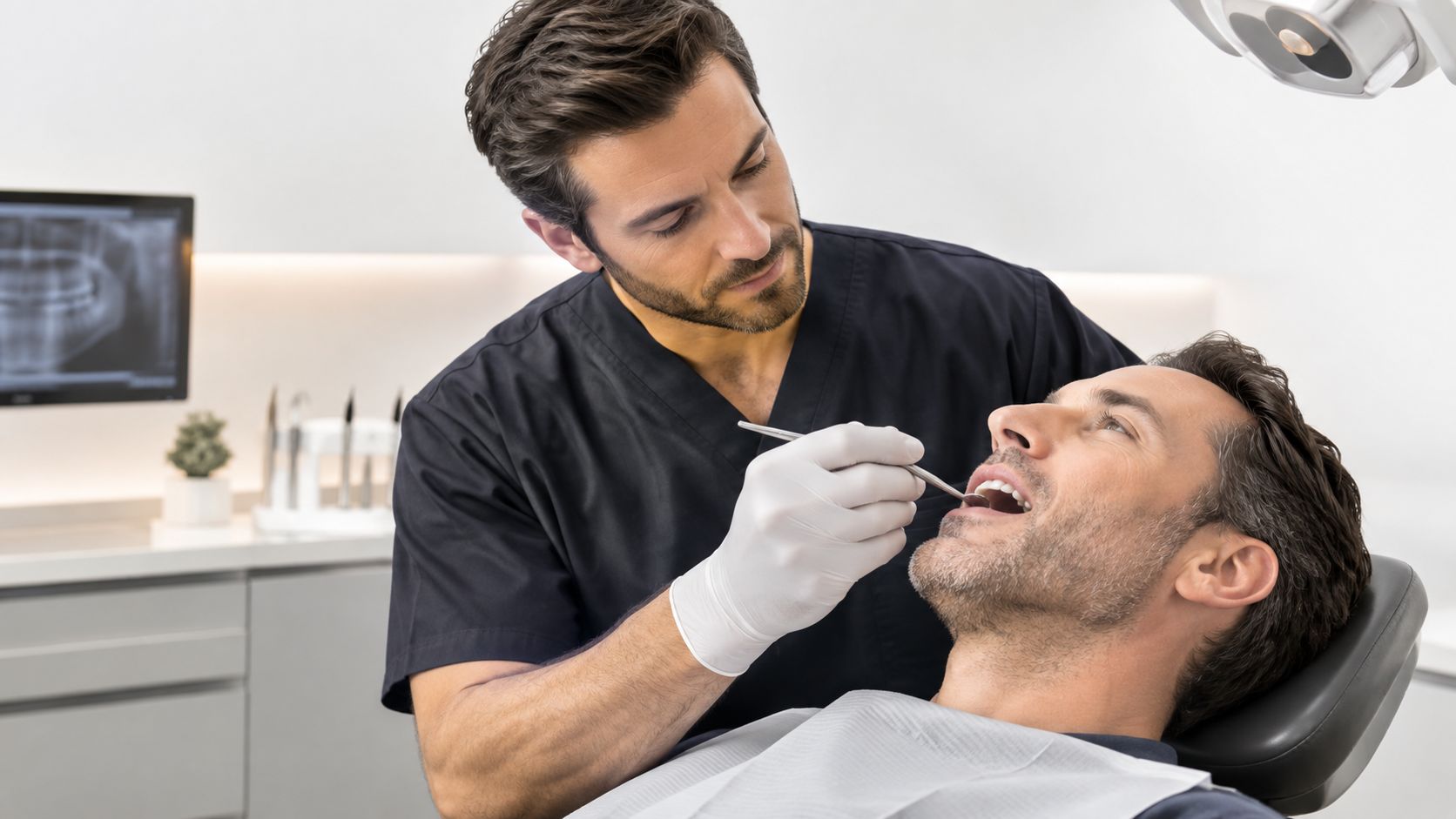
An exam and cleaning are often the most useful first step for adults searching for teeth whitening for sensitive teeth. Whitening works best on clean tooth surfaces, but just as important, your dentist can check for cavities, gum recession, leaking fillings, and tiny cracks that may explain why your teeth feel vulnerable.
That kind of visit also helps answer a question people rarely ask out loud. Is whitening even the right cosmetic solution for the color concern you have? Some stains respond well to whitening. Others may not.
A short video can help you think through whitening with a little more context before your visit.
Think of whitening as a partnership
The safest results usually come from shared decision-making. You tell your dentist what makes your teeth react, how quickly you want results, and whether you'd rather go slower if it means better comfort. Your dentist uses that information to shape the treatment schedule, the whitening strength, and the aftercare plan.
That's very different from grabbing a one-size-fits-all box off a store shelf and hoping for the best.
Choosing the Right Whitening Method for You
If you have sensitive teeth, the best whitening method usually isn't the strongest one. It's the one that balances visible improvement with a level of sensitivity you can comfortably manage. That balance looks different for each person.
What the clinical research shows
One study comparing three whitening regimens found that tooth sensitivity rose from baseline to one day after whitening in all groups. Mean sensitivity scores increased from 1.4 to 6.2 with 40% hydrogen peroxide in-office bleaching, from 1.9 to 3.0 with 16% carbamide peroxide at-home bleaching, and from 1.7 to 2.2 with 10% carbamide peroxide at-home bleaching. The highest post-treatment sensitivity occurred with 40% hydrogen peroxide, while the lowest occurred with 10% carbamide peroxide. The same study found that 10% carbamide peroxide and 16% carbamide peroxide produced the same mean ΔEab color change of 2.0, while 40% hydrogen peroxide achieved 3.3 (study comparing in-office and at-home whitening systems).
That's useful because it shows a practical trade-off. Lower peroxide concentrations can reduce short-term discomfort, even when the whitening process is more gradual.
Comparing your main options
| Feature | Professional In-Office (Winn Smiles) | Professional Take-Home (Winn Smiles) | Over-the-Counter Strips/Gels |
|---|---|---|---|
| Speed | Faster visible change | More gradual brightening | Varies widely |
| Sensitivity control | Dentist monitors contact time and comfort | Easier to pause or space out applications | Limited personalization |
| Fit | Professionally managed application | Custom trays can improve gel placement | Generic fit |
| Strength selection | Chosen based on sensitivity and goals | Lower-strength approaches may be used more comfortably | One-size-fits-many |
| Best for | People who want close supervision | People who want flexibility at home | Mild cases or maintenance |
How each choice feels in real life
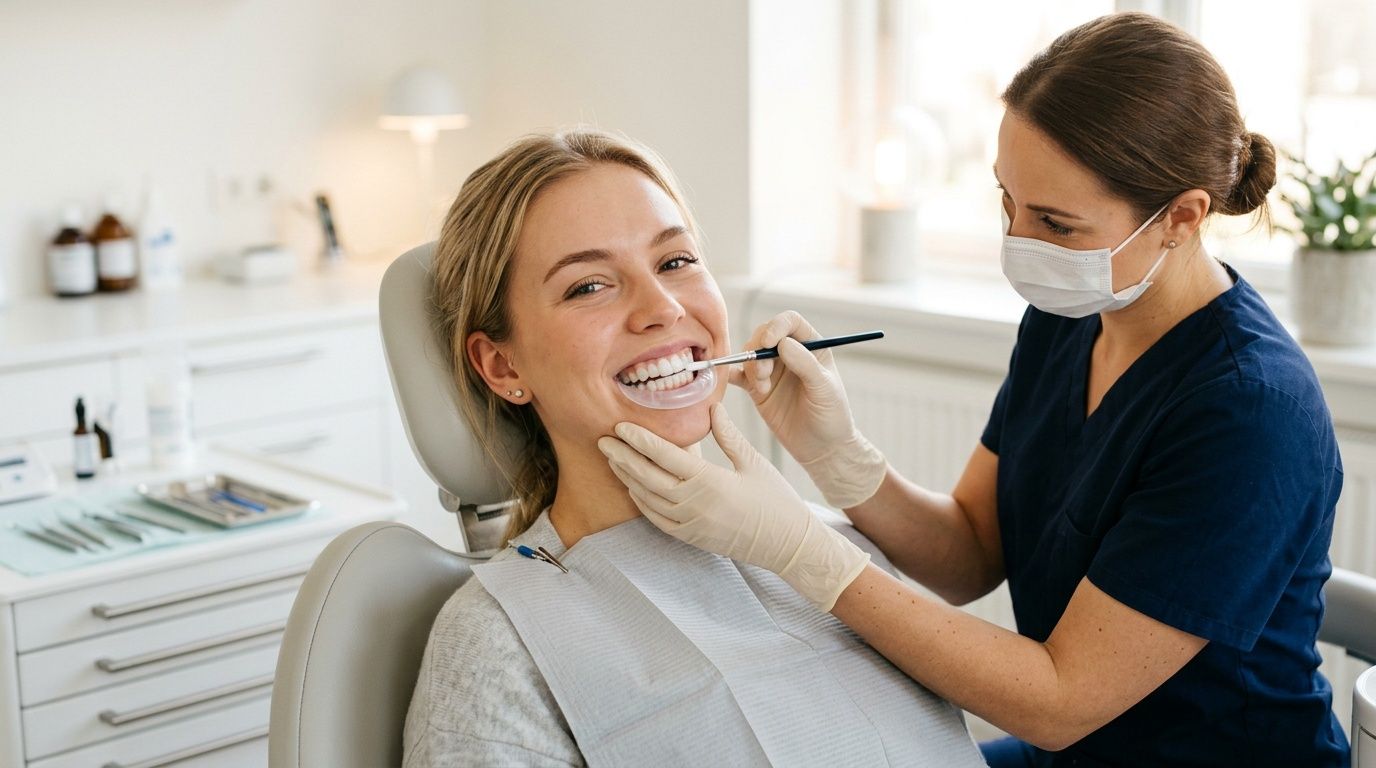
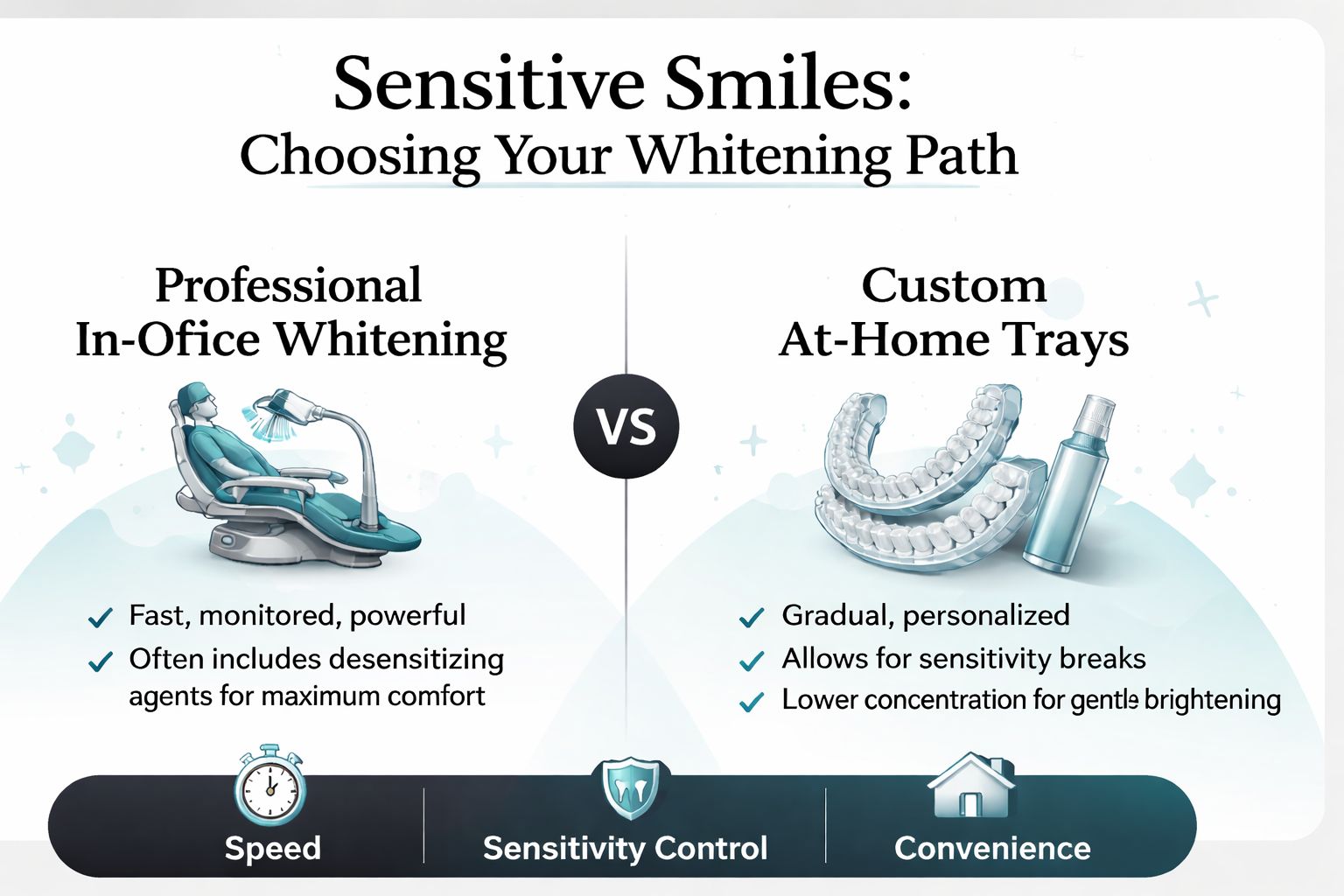
Professional in-office whitening appeals to patients who want faster results and direct monitoring. This can be a good option if you're nervous and want a dental team watching your response closely. Professional systems may also include desensitizing support and shorter, controlled exposure.
Professional take-home trays often make more sense for patients whose teeth need a gentler pace. Custom trays fit better than generic strips, and they make it easier to shorten sessions, skip a day, or adjust the schedule if your teeth start talking back. Patients who want a more controlled home routine sometimes explore options such as professional at-home teeth whitening guidance before deciding what level of supervision they need.
Over-the-counter strips and gels are easy to buy, but they don't account for your enamel, gum recession, filling margins, or sensitivity history. That doesn't mean they never work. It means they ask you to make clinical decisions without much information.
What about newer gentle products
Lower-peroxide formulas, PAP-based products, and other “gentle whitening” options are getting more attention. They may be useful for some patients, especially those who want a milder approach. But the evidence comparing long-term sensitivity, whitening durability, and enamel effects across these newer systems is still limited, so they're better viewed as possibilities to discuss rather than automatic answers.
Whitening for sensitive teeth works best when the method matches the mouth, not the marketing.
Your Whitening Aftercare and Long-Term Success
The hours after whitening matter almost as much as the treatment itself. This is when patients start paying close attention to every sensation and wondering what's normal. A little sensitivity can feel bigger than it is if no one has explained the recovery pattern clearly.
A common experience goes like this. You finish whitening, your teeth look brighter, and later that day you notice brief zings with cold air or a chilled drink. That can be unsettling, especially if you've been worried about sensitivity from the start.
What normal recovery usually feels like
Whitening-related sensitivity is common, affecting up to 78% of patients, but it's usually mild and temporary, peaking early and often resolving within 24 to 72 hours. If pain continues beyond a few days, that's not considered a normal whitening reaction and deserves follow-up with your dental team (patient-friendly summary of whitening sensitivity patterns).
That short window is important because it gives you a realistic expectation. Temporary doesn't mean imaginary. It means your teeth may need a brief recovery period.
The first days after treatment
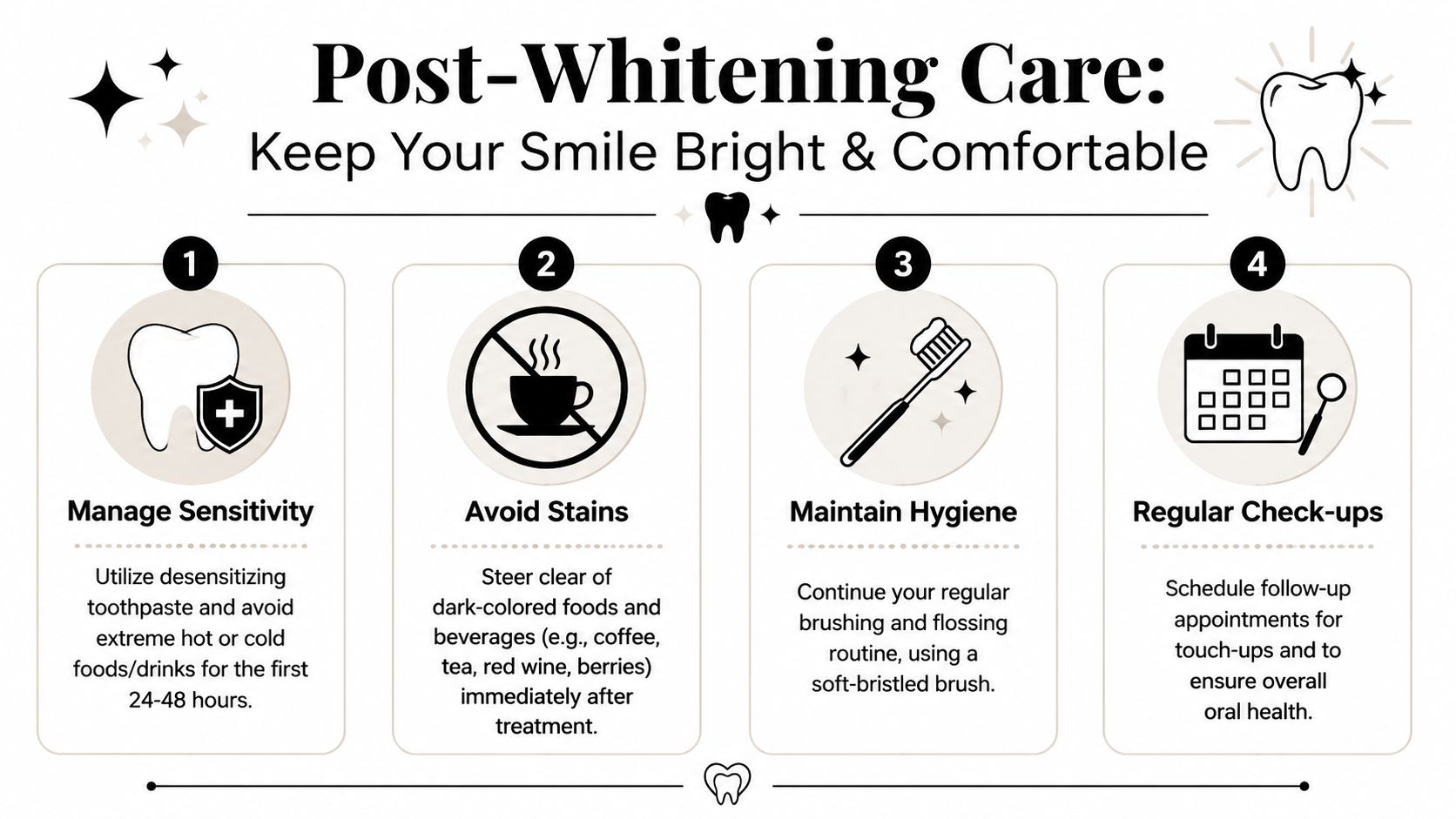
These practical habits can make the post-whitening period easier:
- Choose mild temperatures and skip very hot or very cold foods if your teeth feel reactive.
- Use desensitizing toothpaste if your dentist recommends it.
- Avoid dark staining foods and drinks right away because freshly whitened teeth are more vulnerable to picking up new discoloration.
- Keep brushing and flossing gently instead of scrubbing harder because your teeth “just got cleaned up.”
If discomfort is getting worse instead of better, call your dental office rather than trying to tough it out.
Protecting the result you just paid for
A bright smile lasts longer when aftercare becomes routine, not a temporary burst of discipline. That means good home hygiene, regular dental visits, and touch-ups only when they make sense for your specific whitening method.
For many patients, the emotional relief is just as important as the cosmetic result. Once they realize the sensitivity was manageable and short-lived, whitening stops feeling like a risky gamble. It starts feeling like something they can do thoughtfully and repeat carefully when needed.
Schedule Your Whitening Consultation in Chattanooga or Cleveland
If you've been holding off because your teeth are sensitive, the main takeaway is simple. Whitening may still be possible, but it should start with an exam, not a guess. The right treatment depends on the condition of your enamel, whether your gums have receded, what kind of staining you have, and how your teeth usually respond to temperature and pressure.
That's why a consultation is useful even if you're not ready to commit to treatment right away. It gives you answers. You learn whether your sensitivity looks manageable, whether another issue needs treatment first, and whether in-office whitening or custom take-home trays make more sense for your comfort.
What a whitening visit should include
A thoughtful cosmetic consultation usually covers:
- A dental exam to look for cavities, cracks, gum recession, and other causes of sensitivity
- A conversation about your goals so the plan matches the result you want
- A review of options including whether a gradual approach is safer for your mouth
- A comfort plan for before, during, and after whitening

A local option for patients who want comfort and clarity
Patients in Chattanooga and Cleveland often start by looking for a cosmetic dentist near me, but what they really want is a dentist who will listen, explain the trade-offs, and avoid pushing them into a treatment their teeth may not tolerate well. That matters for whitening, and it matters for every other part of dental care too, from cleanings and exams to restorative dentistry, emergency dentist visits, tooth extraction decisions, and long-term cosmetic planning.
Sensitive teeth don't mean you have to give up on a brighter smile. They mean your smile deserves a more careful roadmap.
If you're ready to find out which whitening option fits your comfort level, schedule a consultation with Winn Smiles. Our team serves Chattanooga and Cleveland, Tennessee, and can help you explore a personalized plan for teeth whitening for sensitive teeth with clear guidance, realistic expectations, and support at every step.