You're probably staring at a photo, noticing one chipped front tooth, a small gap, or stains that whitening hasn't touched, and wondering whether veneers vs bonding teeth is the smarter move. That's a normal question in a real life moment, especially if you're trying to look polished for a wedding, a new job, or just everyday confidence in Cleveland or Chattanooga. The choice isn't only about appearance. It's about enamel preservation, how permanent you want the change to be, and whether you want the lowest upfront cost or the lowest maintenance burden over time.
| Feature | Porcelain Veneers | Composite Bonding |
|---|---|---|
| Tooth change | Subtractive, usually needs enamel reduction | Additive, little to no enamel removal |
| Appointment style | Multiple steps, often lab-fabricated | Usually completed chairside in one visit |
| Reversibility | Not reversible because enamel doesn't grow back | Often repairable or removable with minimal permanent change |
| Durability | Stronger long-term performance | Better for smaller fixes, but less durable over time |
| Best use | Larger smile changes | Small chips, tiny gaps, isolated repairs |
Choosing the Right Smile Upgrade in Cleveland and Chattanooga
A lot of people walk into a cosmetic consultation feeling stuck between two good options. They want to fix a front-tooth chip, close a tiny gap, or brighten a smile that shows up in every photo, but the internet keeps giving mixed messages about what lasts and what's worth the money. In that moment, the right guide matters as much as the treatment itself.
That's where a local practice like Winn Smiles comes in for patients in Cleveland, TN and Chattanooga, TN. The conversations here should be calm, practical, and focused on your real goal, not a one-size-fits-all sales pitch. If you're comparing care models and office systems too, how to optimize dental workflows is a useful read on why smooth scheduling and clear communication matter in a busy practice.

A good cosmetic plan starts with the tooth in front of us, not the trend on a screen. If the concern is small and isolated, bonding may solve it with less tooth change. If the concern is broader, veneers may make more sense because they're built for bigger visual corrections and longer service life.
Practical rule: when the fix is tiny, think about convenience and repairability. When the change is bigger, think about long-term structure and how much enamel you're willing to commit.
How Porcelain Veneers and Composite Bonding Actually Work
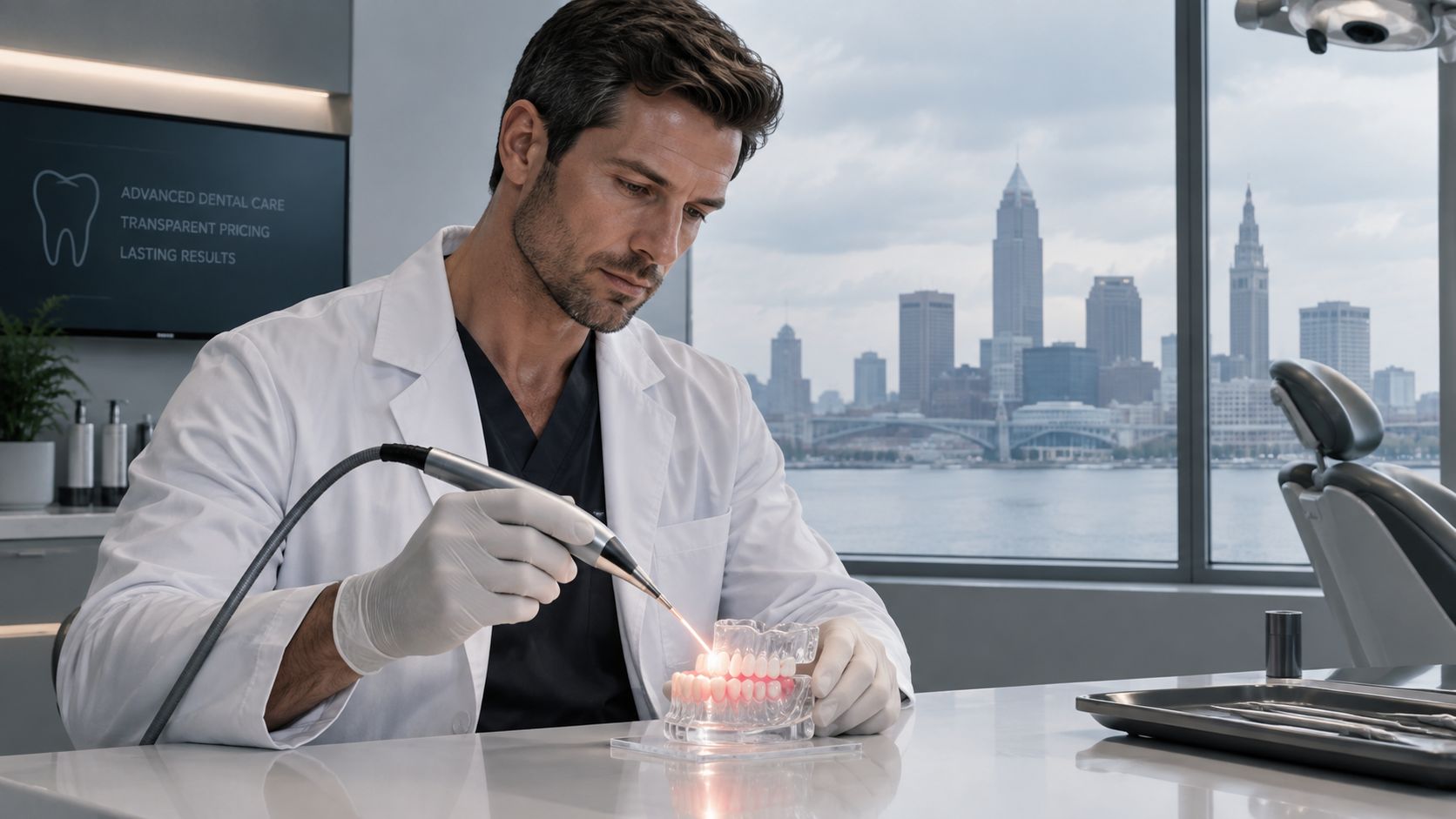
Composite bonding is a chairside repair. The dentist places tooth-colored composite resin directly on the tooth, shapes it, hardens it with light, and polishes it until it blends in. Because it usually needs little to no enamel removal, the tooth stays largely intact, which is why bonding is often the more conservative option for a small chip or edge correction.
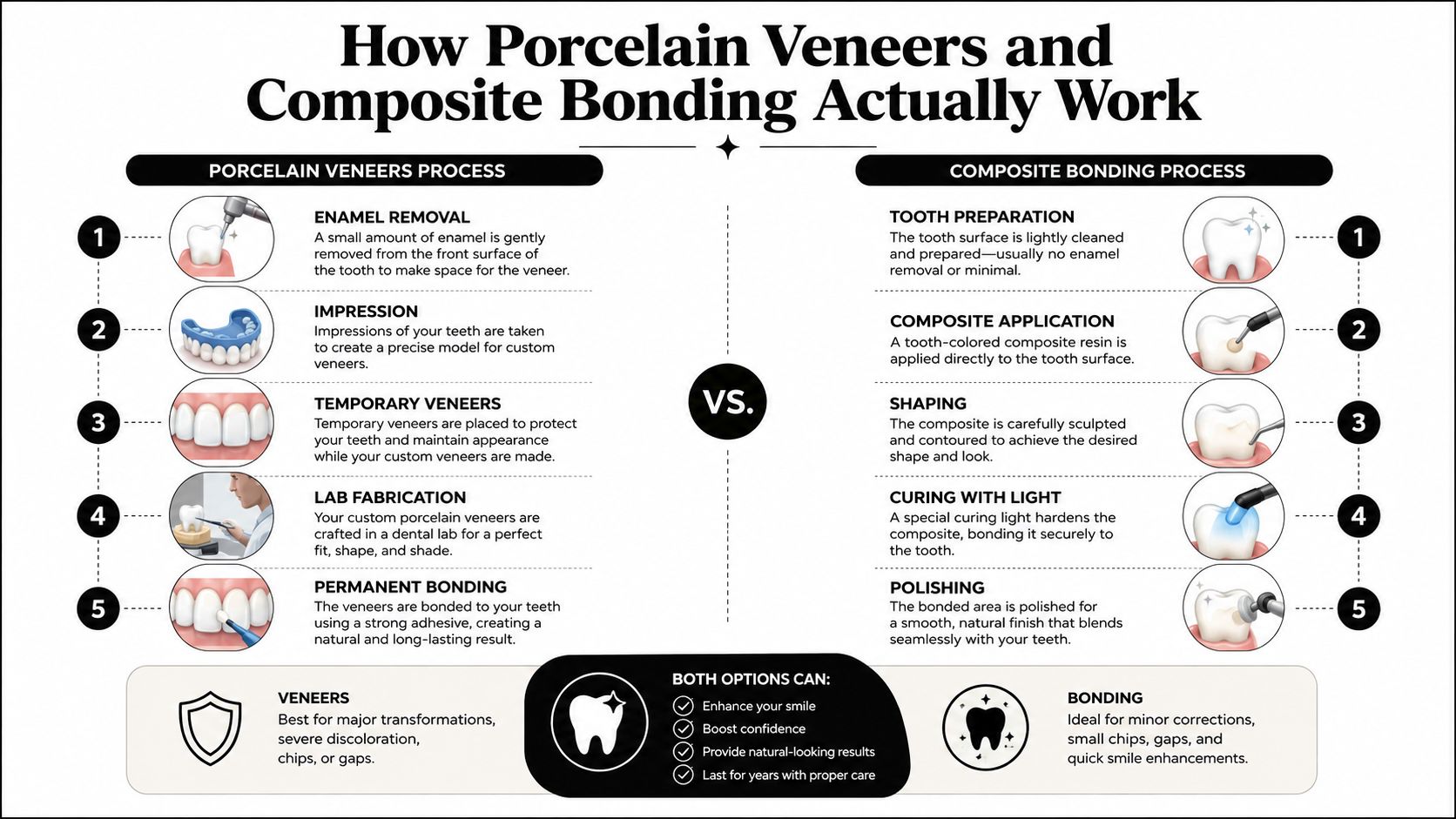
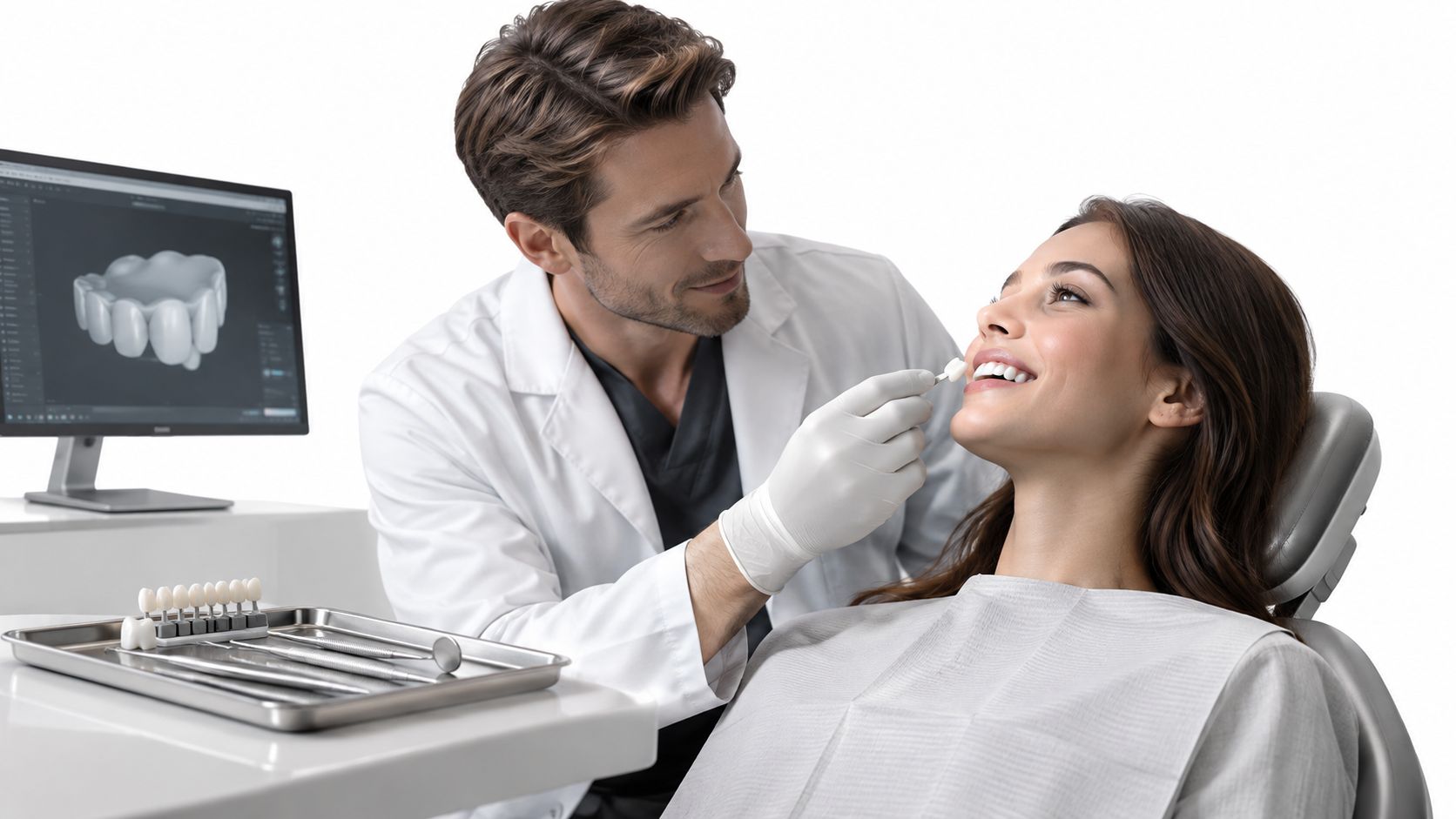
Porcelain veneers follow a different path. The tooth is prepared by removing a thin layer of enamel, typically about 0.3–0.7 mm (Klinika MDO), so the shell can sit flush and look natural. Then the dentist takes impressions, the lab fabricates the veneer, and the final piece is bonded in place at a later visit. That's why veneers are generally a multi-step process, while bonding usually happens in a single appointment (Aspen Dental).
The practical difference is simple. Bonding is additive, veneers are subtractive. Once enamel is removed for a veneer, it doesn't grow back, so the decision carries a permanent treatment commitment. Bonding can often be repaired or replaced with less permanent change, which matters a lot if you're still deciding how much cosmetic change you really want.
For patients who want to see how one cosmetic path is built from start to finish, how do veneers work gives a useful visual on the veneer sequence.
Veneers are not just a different material. They're a different plan for the tooth's future.
Durability and Lifespan Compared Side by Side
Durability is where the decision gets real. If you want the most stable long-term result, porcelain veneers usually hold up better than direct composite bonding, especially when the work is bonded well to enamel. A long-term evidence base favors veneers for staying power. In a 10-year study of 1,459 veneer restorations, annual failure rates were 2.8%–2.9% for ceramic veneers versus 9.1%–10% for composite veneers, and the same evidence set estimated a 95.5% cumulative survival rate at 10 years for porcelain veneers (The Dental Guide).
That pattern is echoed in enamel-bonding follow-up research. One prospective study reported 96% survival at 10 years and 91% at 20 years when veneers were bonded to enamel, and a 21-year outcome study of feldspathic porcelain veneers bonded to prepared enamel reported 96% cumulative survival (Dr. Vigoren). More recent clinical evidence also found enamel-bonded ceramic veneers with survival and success rates of about 99%, with a range of 98%–100% in the cited literature.
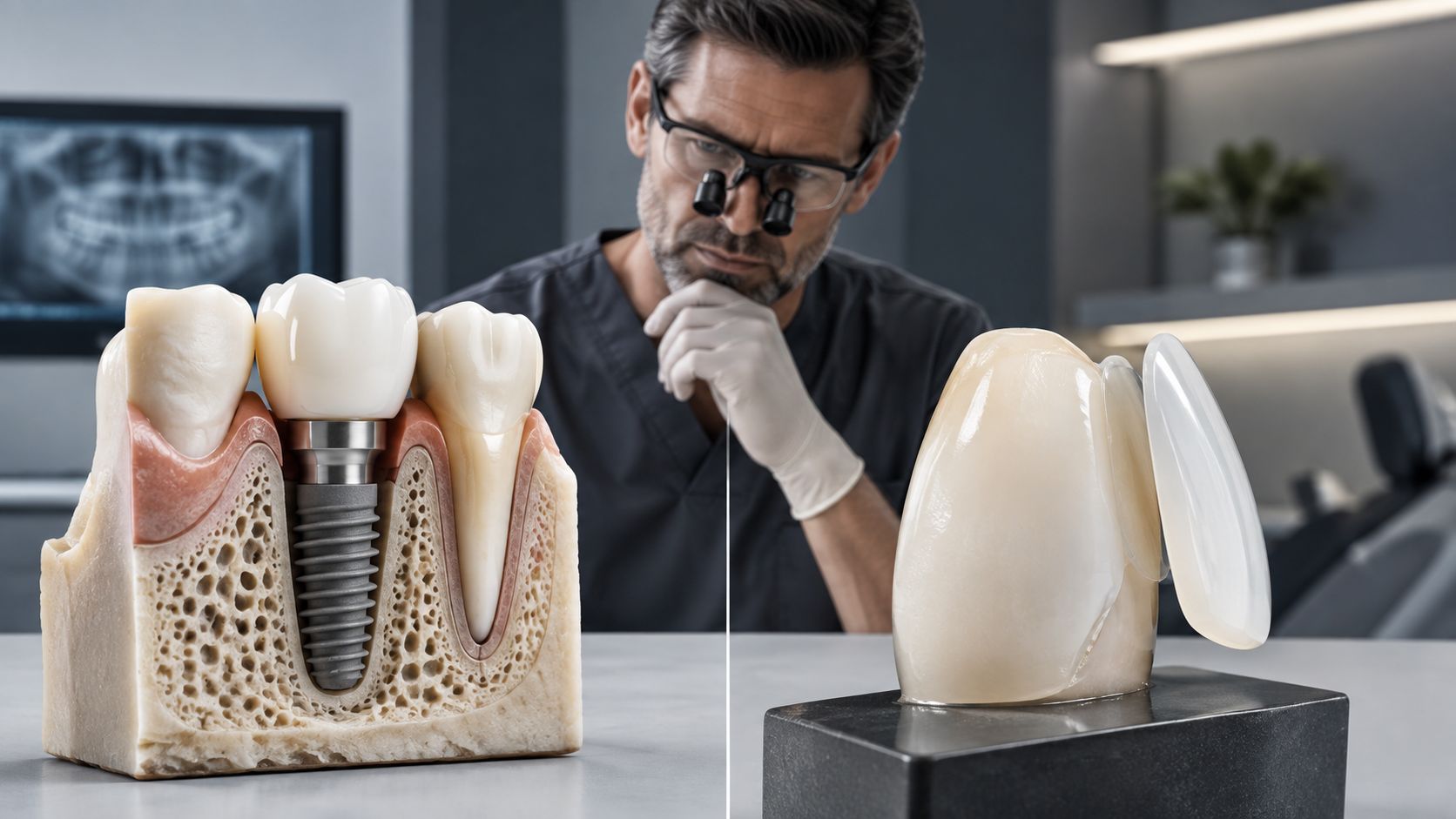
For patients, the practical takeaway is straightforward. Veneers usually ask for a bigger enamel commitment up front, and that commitment is part of why they tend to last longer. Bonding keeps more of the natural tooth intact and gives you a more reversible path, but it is more vulnerable to wear, chipping, and color change as time goes on.
Here's the side-by-side view patients usually want.
| Feature | Porcelain Veneers | Composite Bonding |
|---|---|---|
| Long-term survival | Strong evidence base at 10 years | Shorter survival and higher failure in the literature |
| Annual failure rate | 2.8%–2.9% in the cited 10-year study (The Dental Guide) | 9.1%–10% in the cited 10-year study |
| Mean observational period | 7.8 years in one review summary | 4.8 years in one review summary |
| Stain resistance | More resistant to discoloration | More prone to discoloration over time |
| Maintenance | Usually less frequent replacement | More likely to need touch-ups or replacement |
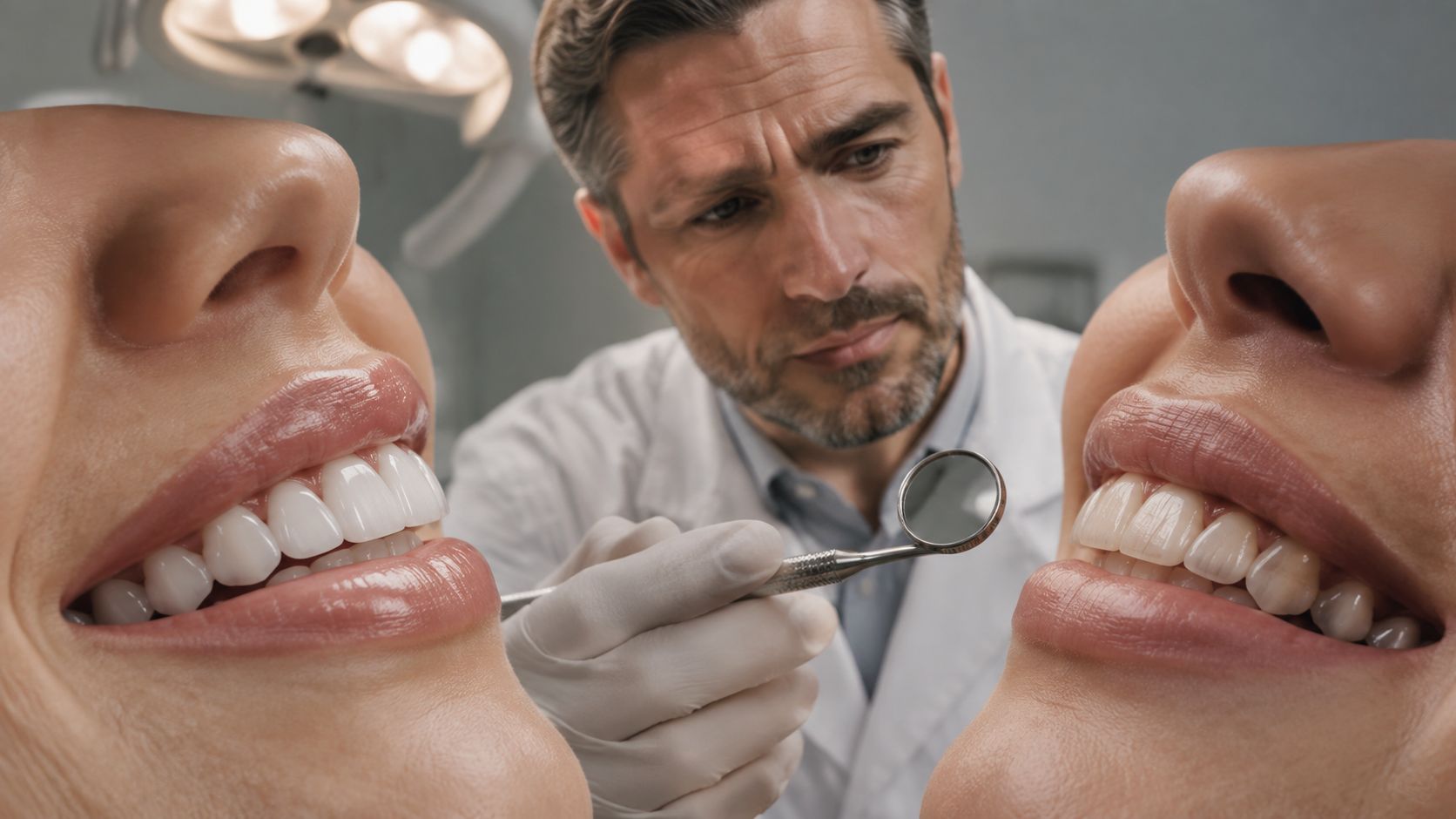
Porcelain also keeps its color better. Composite can stain more easily, especially with coffee, tea, and tobacco, while porcelain is more resistant to wear and discoloration. That does not make bonding a poor choice. It means the two materials age differently, and that difference matters if you want a result that stays close to day one for as long as possible.
Understanding the True Cost Over Time
The upfront quote is only part of the story. Bonding usually costs less at the start, but it can need repair or replacement sooner. Veneers cost more initially, yet they often last longer, so the replacement cycle may be lower over time.
That's why the right question is not, “Which is cheaper today?” It's, “What do I want this tooth to cost me over the next several years?” For a single chipped tooth, bonding can be the sensible move if you want a fast repair and low immediate spend. For a broader smile makeover, the higher initial investment in veneers may make more sense because you're buying a longer service life with fewer maintenance interruptions.
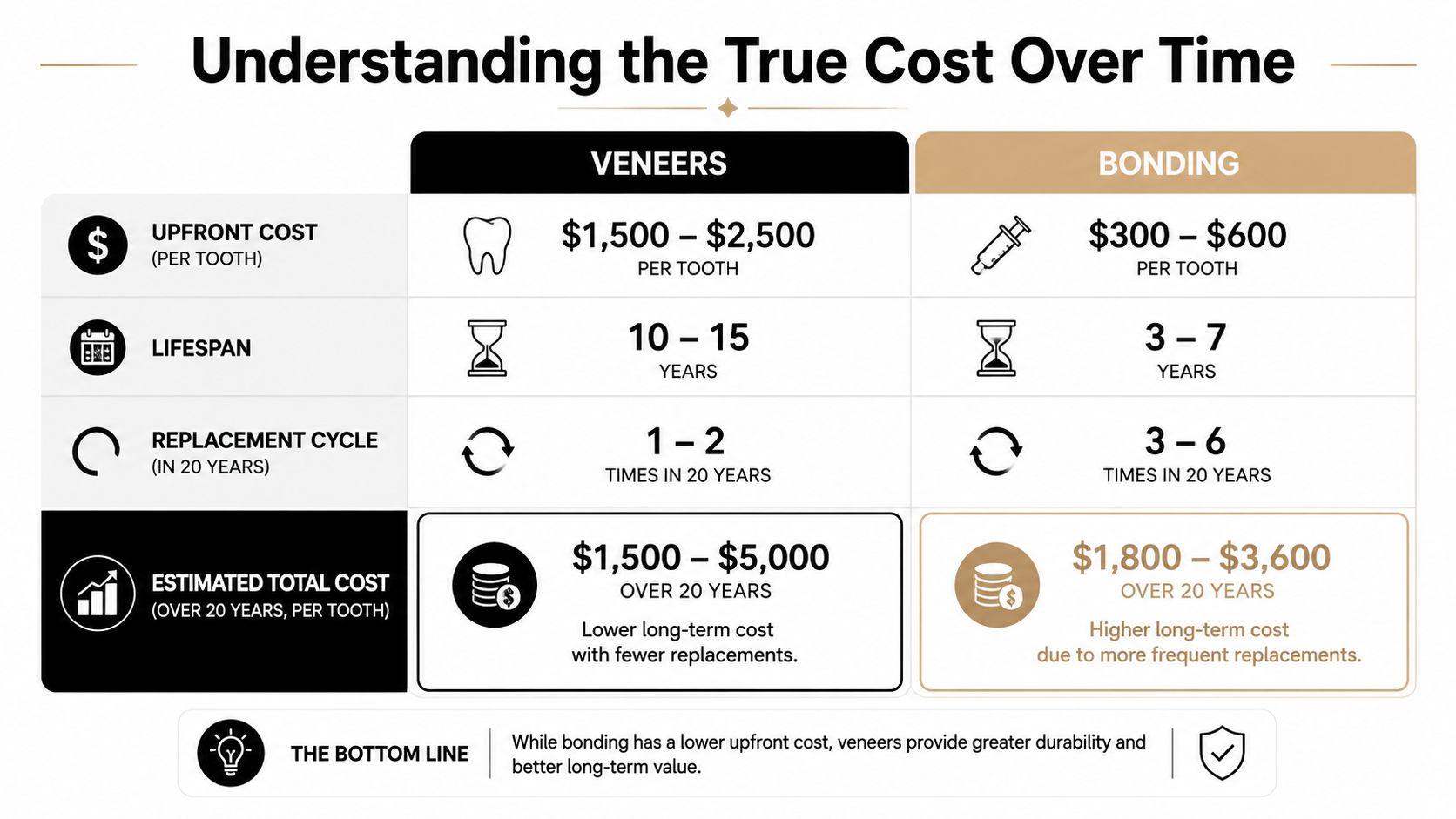
The long-term value question is especially important for one-tooth or two-tooth fixes. If you only need one small repair, bonding may be the better value because you're not paying for a more permanent solution than the problem requires. If you're changing several front teeth, veneers can become the more rational investment because they're built to hold up longer and preserve the shape you paid to create.
Cost rule of thumb: compare the quote, then compare the likely replacement cycle. The cheapest procedure today isn't always the least expensive plan over time.
When to Choose Veneers and When Bonding Makes More Sense
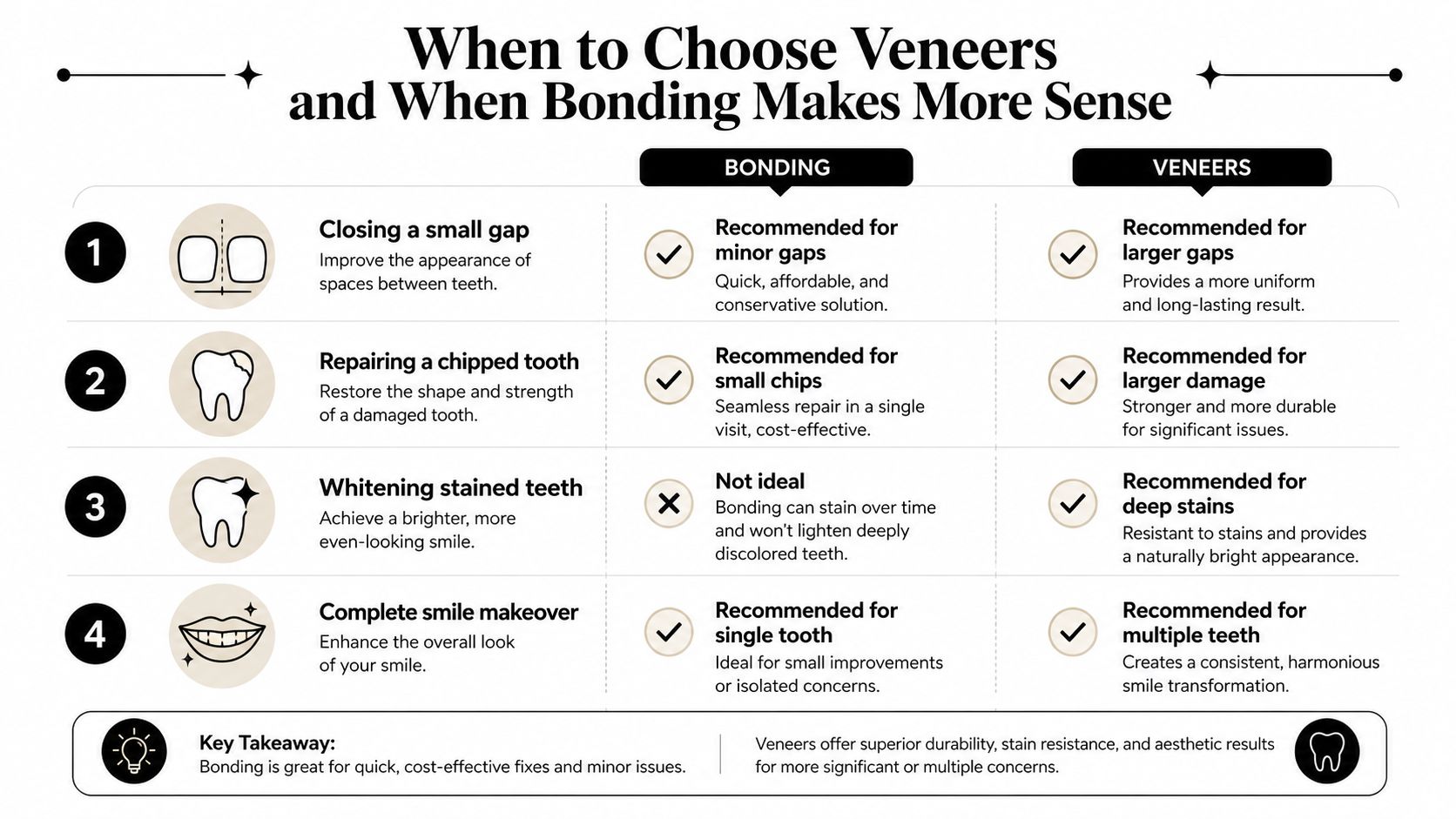
The decision gets clearer when you match the treatment to the problem. Bonding is often the right answer for a small chip, a tiny gap, a short edge repair, or a tooth that needs a modest cosmetic correction without much structural change. It's also the more comfortable choice for patients who want to keep as much enamel as possible.
Veneers tend to make more sense when the problem is wider than one isolated spot. They're a stronger fit for multiple teeth, deeper discoloration, uneven shapes, or a smile makeover that needs a uniform result. Because they're designed to cover the front surface, they can create a more consistent look across several teeth without repeated patchwork repairs.
The question of reversibility matters too. For younger adults, or for anyone who isn't sure how permanent they want their cosmetic work to be, bonding can feel safer because it usually leaves the tooth structure more intact. Veneers, by contrast, commit the tooth to ongoing coverage after enamel reduction, so the choice should feel deliberate, not rushed.
If you're comparing the two options in Cleveland, the local bonding page at dental bonding in Cleveland is a helpful place to review where a conservative repair fits. Value of that comparison is not marketing language, it's helping you decide whether your smile needs a small repair or a more permanent transformation.
What to Expect at Your Winn Smiles Consultation
A good consultation should feel unhurried and specific. At Winn Smiles in Cleveland or Chattanooga, that usually means a comfortable visit, a review of your smile goals, and a look at the teeth themselves so the recommendation fits your enamel, bite, and timeline. If you're anxious about treatment, the office's comfort menu and sedation options can make the appointment easier to handle.
You'll also want the dentist to look beyond cosmetics. Digital imaging and smile design discussions help connect the front-tooth concern with the bigger plan, especially if you're also thinking about professional teeth whitening, Invisalign, same-day crowns, or other restorative dentistry needs. Sometimes the best answer isn't a single treatment, it's sequencing the right treatments in the right order.

If you're comparing different ways local practices communicate and respond, the article on dental clinic WhatsApp chatbot ROI is a useful reminder that fast, clear answers reduce friction for patients who are ready to book. That same principle matters in cosmetic dentistry, because people usually don't need more theory. They need a clear plan they can trust.
Bring your questions, your past dental history, and one or two photos of the smile you want to improve. That makes the consultation more useful than a generic internet quiz ever will.
Common Questions About Veneers and Bonding
Can bonding or veneers be whitened after placement? No, not in the same way natural teeth can. If whitening is part of your plan, it's usually better to whiten first, then match the restoration to the new shade.
What happens if a veneer chips or bonding cracks? Bonding is often easier to repair chairside. A damaged veneer usually needs a more involved repair or replacement plan, which is another reason the long-term decision matters.
Are people who grind their teeth good candidates? Sometimes, but only after a careful exam. Grinding changes the wear pattern and can shorten the life of either option, so the bite has to be considered before anyone commits to cosmetic work.
What if you already have crowns or implants? That doesn't rule out cosmetic treatment, but it does change the planning. Existing dental work affects color matching, contour, and how the new tooth surfaces blend with the rest of the smile.
If you're weighing veneers vs bonding teeth and want a plan that respects your enamel, your budget, and how permanent you want the change to be, schedule a visit with Winn Smiles. The team can review bonding, veneers, whitening, Invisalign, and restorative options in Cleveland or Chattanooga and help you choose the path that fits your smile instead of forcing a one-size-fits-all answer.