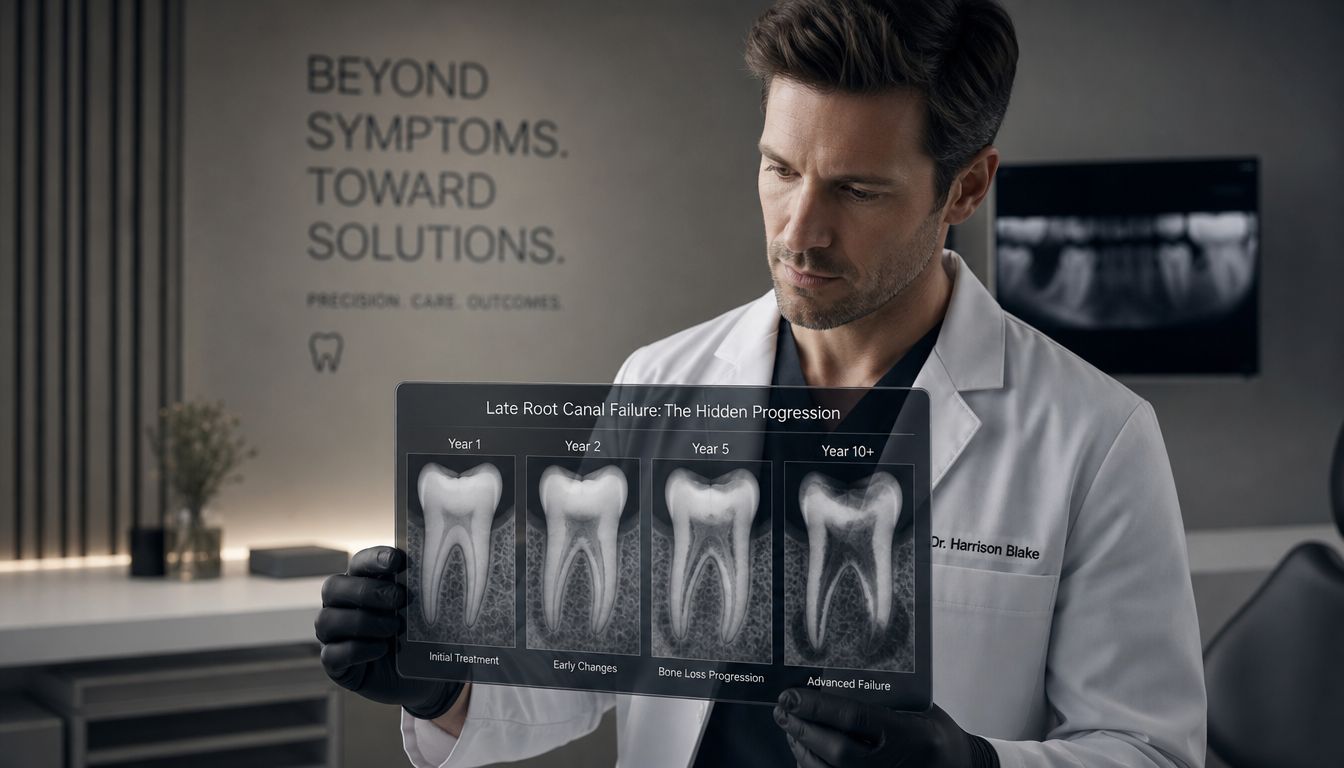
You had a root canal years ago, the tooth felt normal, and life moved on. Now it hurts when you bite, feels tender near the gum, or produces a dull ache that keeps returning. Searching for a dentist near me or an emergency dentist in Chattanooga, TN may be your first step, but pain alone doesn't prove that the root canal has failed.
A previously treated tooth may still be salvageable. The important questions are what caused the new symptoms, whether infection is present, and whether the tooth can be restored. Winn Smiles serves patients in Chattanooga and Cleveland, TN, with diagnostic exams, dental X-rays, restorative dentistry, and treatment planning designed to answer those questions clearly.
Introduction to Late Root Canal Failure
A tooth can remain comfortable for years and then develop a problem because bacteria persisted in a difficult part of the root canal system, a crown or filling began leaking, or the tooth developed new damage. Sometimes the issue isn't the root canal at all. A neighboring tooth, a crack, or bite pressure can create similar symptoms.
That's why a careful evaluation matters before choosing tooth extraction, a dental implant, or another procedure. A late symptom deserves attention, but it doesn't automatically mean the natural tooth must be removed.

At Winn Smiles, patients in Chattanooga can discuss returning pain, swelling, chewing discomfort, or changes visible on an X-ray with a dental team before making a treatment decision. The evaluation may lead to monitoring, nonsurgical retreatment, surgical care, or replacement with an implant, depending on the evidence.
Understanding Late Root Canal Failure
Late root canal failure generally refers to disease that appears or returns after a treated tooth initially healed. One cited clinical threshold says that a lesion detected after four years may be considered post-treatment disease rather than an early healing failure, although timing is only one part of diagnosis. Your symptoms, examination, restoration, and imaging all matter. This clinical discussion of post-treatment disease/141/1) provides additional context.
Long-term survival research helps explain why a tooth can look successful for years and still develop trouble later. One study reported survival of 97% at 10 years, 81% at 20 years, 76% at 30 years, and 68% at 37 years. The pattern shows that risk can accumulate over decades, rather than ending after the first few symptom-free years. The long-term survival study indexed by PubMed documents those findings.
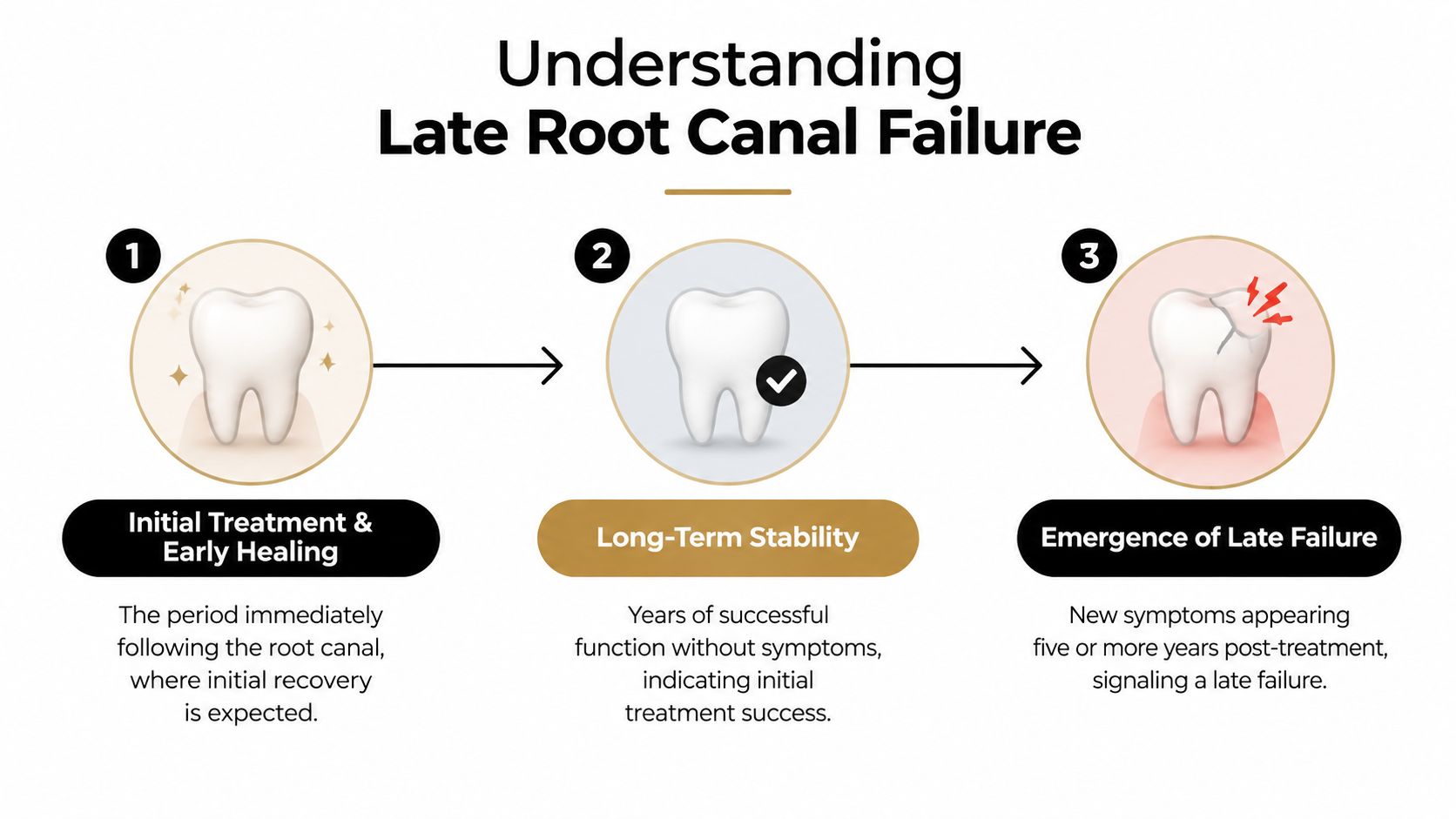
Early healing and long-term function
Immediately after treatment, the tissues around the root may need time to settle. Later, the tooth may function normally without pain, which is reassuring but not a permanent guarantee. A change on a routine dental X-ray can sometimes appear before the patient notices anything.
The key distinction is between a symptom that needs observation and evidence of active disease. A dentist may compare current dental X-rays with older images, check whether the bone around the root is changing, and examine the crown or filling for leakage.
For readers who want a broader explanation of how treatment and the final crown work together, this guide on understanding root canal and crown offers useful background.
Common Causes of Failure Years Later
The leading cause is usually residual infection inside the root canal system. A tooth's canals can be narrow, curved, branched, or difficult to locate. If a canal was missed, if cleaning didn't reach all infected spaces, or if aseptic control was inadequate, microorganisms may remain and later contribute to inflammation around the root.
A leaking restoration creates a second route for trouble. The crown or filling sits above the root canal and helps seal the tooth from saliva and bacteria. If that seal breaks down, new decay develops, or the restoration becomes loose, bacteria may reenter the treated space. The review on persistent intraradicular infection and post-treatment disease identifies residual microbes in the apical root canal system as the major cause of post-treatment apical periodontitis.
Less common explanations
Not every persistent lesion comes from infection inside the canal. A smaller group of cases may involve infection outside the root, including periapical actinomycosis, or irritation from material pushed beyond the root.
Other possibilities include:
- Foreign-body reaction: Extruded filling material may irritate surrounding tissues.
- Cholesterol crystal irritation: Tissue reactions can maintain inflammation around the root.
- True cyst: A cystic lesion may not resolve through the same approach as routine inflammation.
- Scar tissue: Healing can leave a radiographic appearance that resembles persistent disease.
- Structural damage: A crack or fracture may allow bacteria to enter through a route that retreatment can't correct.
The cause changes the solution. A missed canal may point toward nonsurgical retreatment, while a problem limited to the root tip may make apicoectomy worth discussing. A vertical root fracture or a tooth that can't support a restoration may lead to tooth extraction and replacement planning.
Recognizing Symptoms of Late Failure
A root canal tooth that hurts years later deserves an examination, especially if the symptom is new, persistent, or getting worse. The discomfort may be mild rather than dramatic. Some patients notice only pressure when chewing, tenderness when tapping the tooth, or an ache that comes and goes.
Look for changes that involve the tooth or nearby gum:
- Biting pain: Pain with chewing can reflect inflammation around the root, a bite problem, or a crack.
- Gum tenderness: Soreness beside the treated tooth may indicate inflammation in the supporting tissues.
- Swelling: A raised area on the gum or swelling of the cheek needs prompt dental attention.
- Drainage or bad taste: Fluid, an unpleasant taste, or odor can signal a draining infection.
- Gum bump: A pimple-like spot may form where an infection drains through the gum.
- Color change: Dark discoloration can reflect changes within the tooth, although it doesn't confirm root canal failure by itself.
- Temperature sensitivity: A treated tooth shouldn't have normal pulp tissue, so temperature sensitivity may come from a nearby tooth, leakage, a crack, or bite trauma.
Symptoms don't tell the whole story
Pain isn't a perfect guide. A tooth can show a concerning area on an X-ray without causing discomfort, while a painful tooth may have a problem unrelated to the original root canal. The dentist must identify the specific tooth and separate it from neighboring teeth, gum tissues, jaw muscles, and the bite.
Practical rule: New pain after years of comfort isn't a reason to panic, but it is a reason to arrange an evaluation rather than waiting for the symptom to disappear.
A dental exam becomes more urgent when swelling, fever, drainage, rapidly worsening pain, or facial tenderness appears. Difficulty swallowing or breathing requires immediate medical attention because swelling can extend beyond the tooth area.
Diagnosis Process for Root Canal Failure
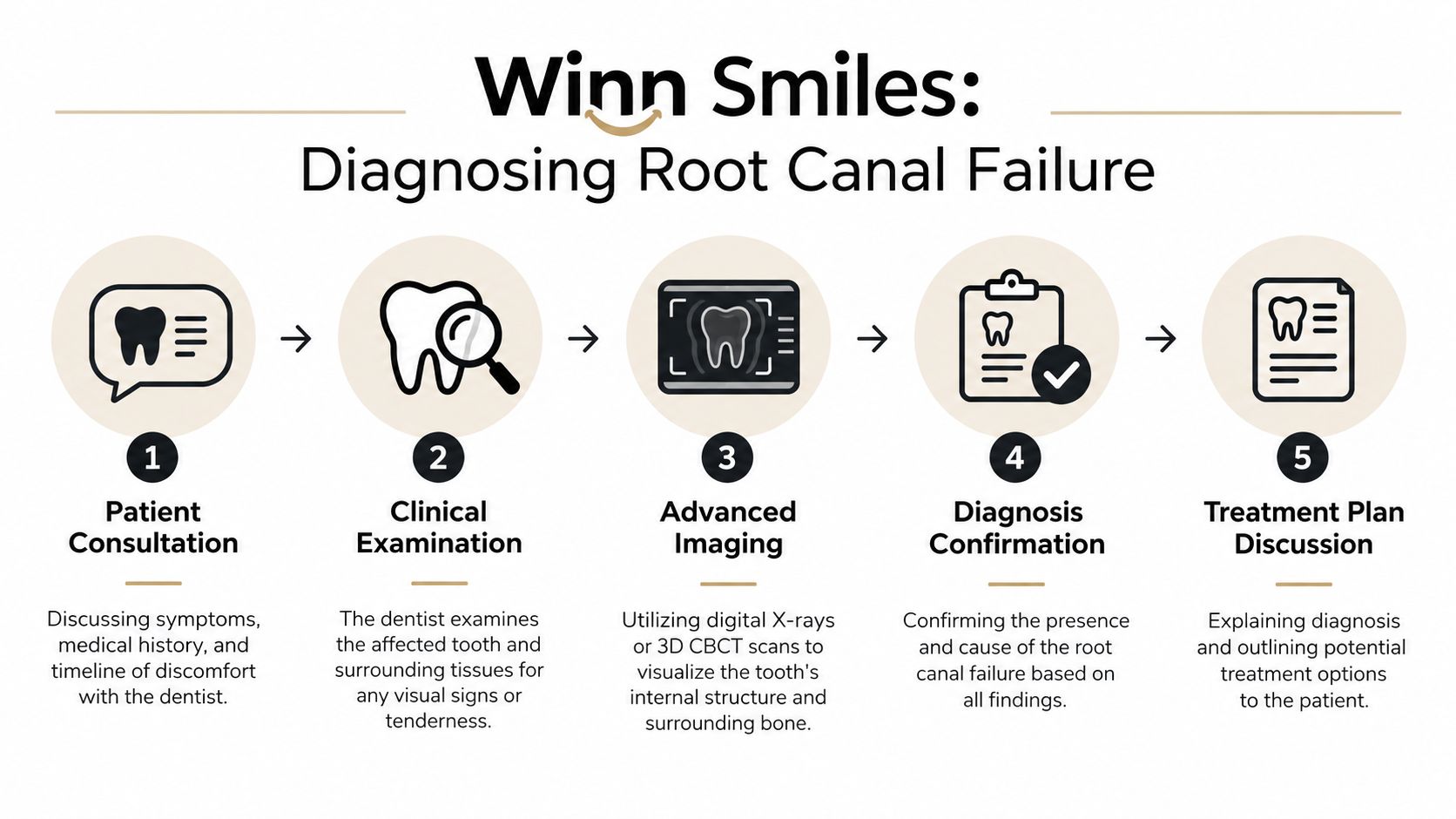
A visit for suspected failure begins with your story. At Winn Smiles in Chattanooga, the dentist would ask when the discomfort started, whether it followed a biting incident, whether the tooth has a crown, and whether the symptom is triggered by chewing, temperature, or pressure. The timeline helps distinguish a returning problem from a new one.
The clinical examination then narrows the source. The dentist may inspect the restoration, look for decay or a fracture, gently test the tooth and surrounding teeth, assess the gums, and examine the bite. These steps matter because a nearby tooth or bite strain can imitate infection in a root canal tooth.
Imaging and confirmation
Digital dental X-rays can show the root filling, the surrounding bone, and changes near the root tip. When the anatomy is complex or a fracture is suspected, the dentist may discuss three-dimensional CBCT imaging. Imaging doesn't replace the examination. It adds detail that can help reveal missed anatomy, bone changes, or a structural concern.
The final diagnosis combines the history, clinical findings, imaging, and restoration assessment. That prevents a patient from committing to extraction before the team knows whether retreatment or monitoring is reasonable.
Comfort is part of the process, too. Patients with dental anxiety can discuss local anesthetic, sedation options, and breaks before treatment begins. A calm appointment makes it easier to complete the testing needed for a precise plan.
Treatment Options for Failed Root Canals
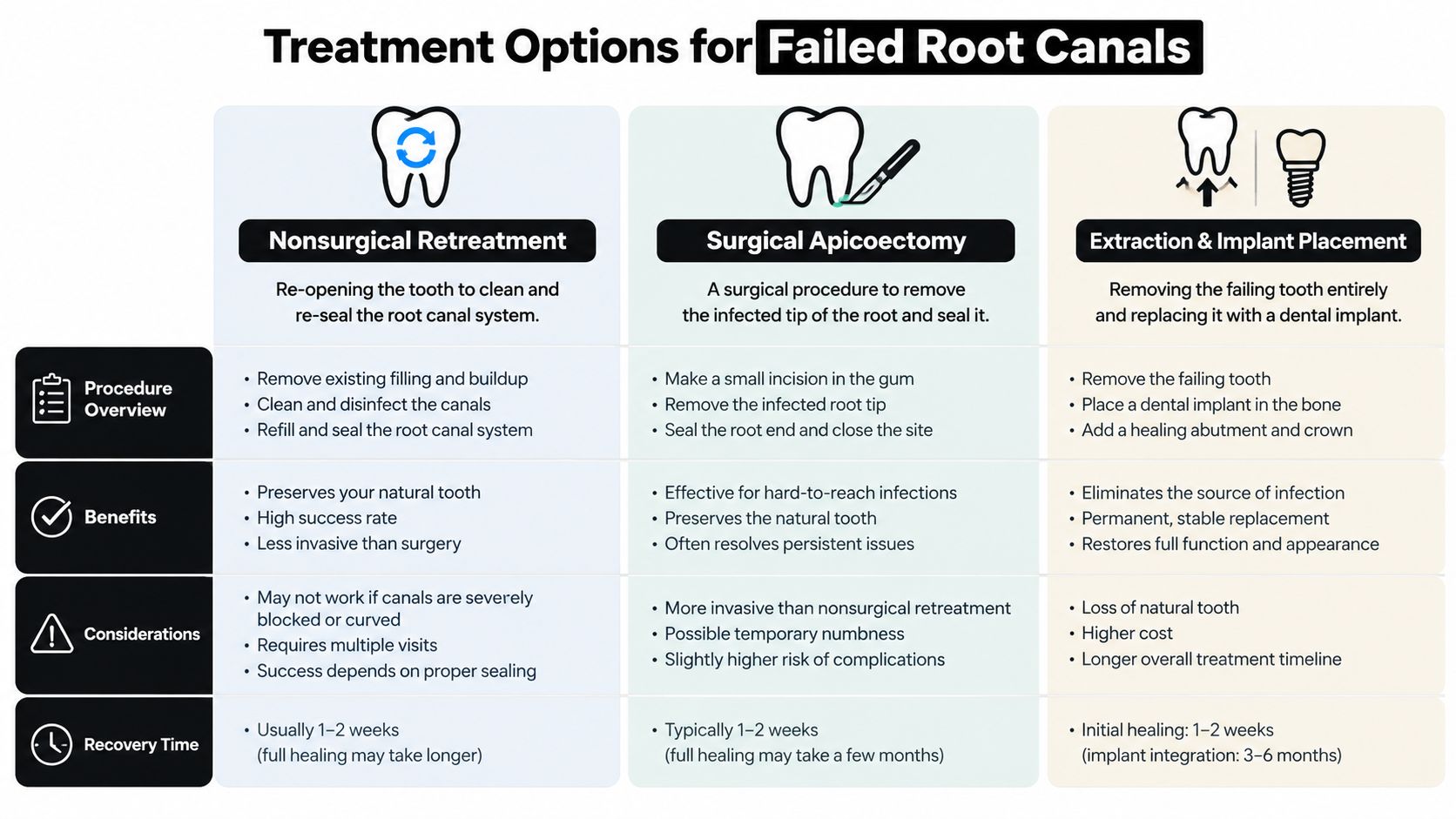
Treatment depends on whether the tooth is restorable, where the disease is located, and what happened to the original seal. The main choices are nonsurgical retreatment, surgical apicoectomy, and extraction followed by replacement, often with a dental implant.
Nonsurgical retreatment
Retreatment reopens the tooth, removes existing filling material, cleans and disinfects the canal system again, and seals it. The dentist may need to locate a hidden canal or assess whether the crown, post, or filling must be removed to access the tooth.
This option preserves the natural tooth when enough healthy structure remains. A systematic review found modern endodontic retreatment had an approximately 86% success rate over one to five years, while an orthograde retreatment study reported 89% of teeth retained at five years. The retreatment evidence summarized by the University of California supports discussing this path when the tooth remains suitable for restoration.
Surgical apicoectomy
An apicoectomy approaches the problem through the gum near the root tip. The surgeon removes inflamed tissue and the infected end of the root, then seals the root from that direction. It may be useful when a post or crown makes conventional access difficult, or when disease remains concentrated near the root tip after other considerations are reviewed.
Patients can learn more about this procedure through Winn Smiles' apicoectomy treatment information. Surgical care involves a different recovery experience, so the dentist should explain the expected tenderness, tissue healing, and follow-up.
Extraction and dental implant placement
Extraction removes the tooth when a crack, severe structural loss, or another condition makes saving it unpredictable. Replacement may involve a dental implant, which uses an implant fixture and a restoration to replace the missing tooth. Patients searching for dental implants near me should ask how the tooth, bone, bite, and final crown would be evaluated together.
An implant can restore chewing and appearance, but it requires removal of the natural tooth and a separate replacement plan. A same-day crown may be available in selected restorative situations, but candidacy depends on the clinical findings rather than a promise that every case can be completed in one visit. Winn Smiles can also discuss restorative dentistry, tooth extraction, and implant planning for patients in Chattanooga and Cleveland.
Prognosis and Preventing Future Failures
Long-term results are encouraging, but they're not permanent guarantees. One review reported 97% success at 10 years and 76% after 30 years, showing why a treated tooth still needs protection and monitoring. The review available through PubMed Central connects long-term prognosis with the need for prevention.
The most useful prevention plan protects both the tooth and the seal above it. Brush and floss consistently, attend cleaning and exam visits, and tell your dentist about changes before discomfort becomes severe.
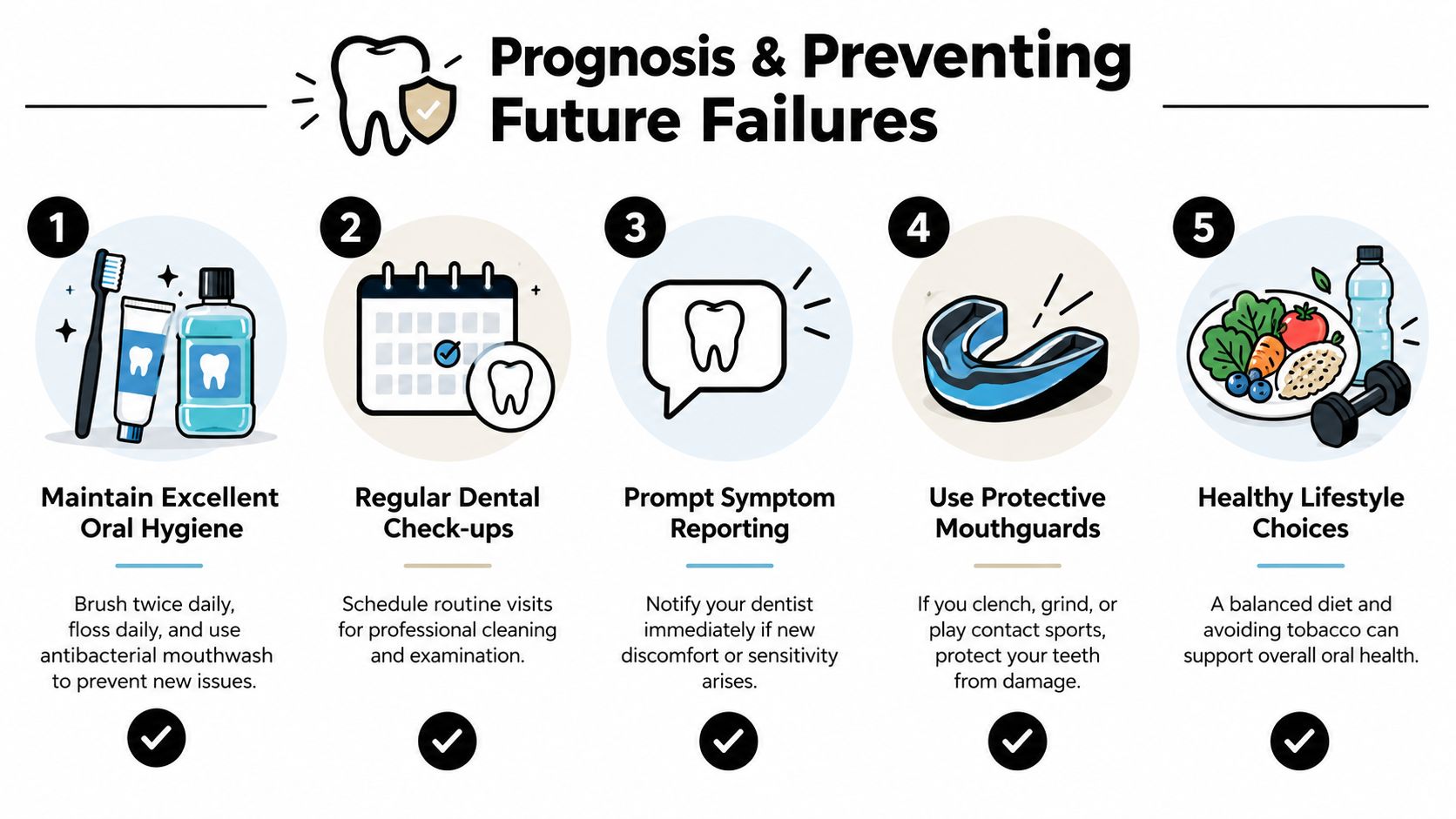
Habits that protect a treated tooth
A final crown or strong restoration helps reduce exposure to leakage and everyday stress. Don't use a root canal tooth to chew ice or other unusually hard objects, and ask about a protective mouthguard if you clench, grind, or play contact sports.
Regular visits also give the dentist a chance to check the restoration, compare dental X-rays when appropriate, and identify decay or changes around the root. The prevention guidance in Winn Smiles' root canal success rate resource can help patients prepare questions for those visits.
Tobacco avoidance and a balanced diet support overall oral health, while prompt care for a loose, cracked, or damaged crown helps preserve the seal. No prevention plan eliminates every biological or structural risk, but it can reduce avoidable pathways for reinfection and fracture.
When to Seek Urgent Care and Next Steps
Contact an emergency dentist promptly if a treated tooth causes acute pain, swelling, fever, drainage, or rapidly worsening symptoms. Trouble swallowing or breathing requires immediate medical attention. At Winn Smiles in Chattanooga, an urgent evaluation can include an examination, dental imaging, comfort measures, and a discussion of sedation options when appropriate. Don't choose tooth extraction or an implant before a dentist determines whether the tooth can be saved.
If you're experiencing root canal failure years later, schedule an evaluation with Winn Smiles in Chattanooga or Cleveland, TN. The practice can assess persistent pain, swelling, restoration concerns, and possible retreatment, apicoectomy, extraction, or dental implant care, then help you choose a clear next step.