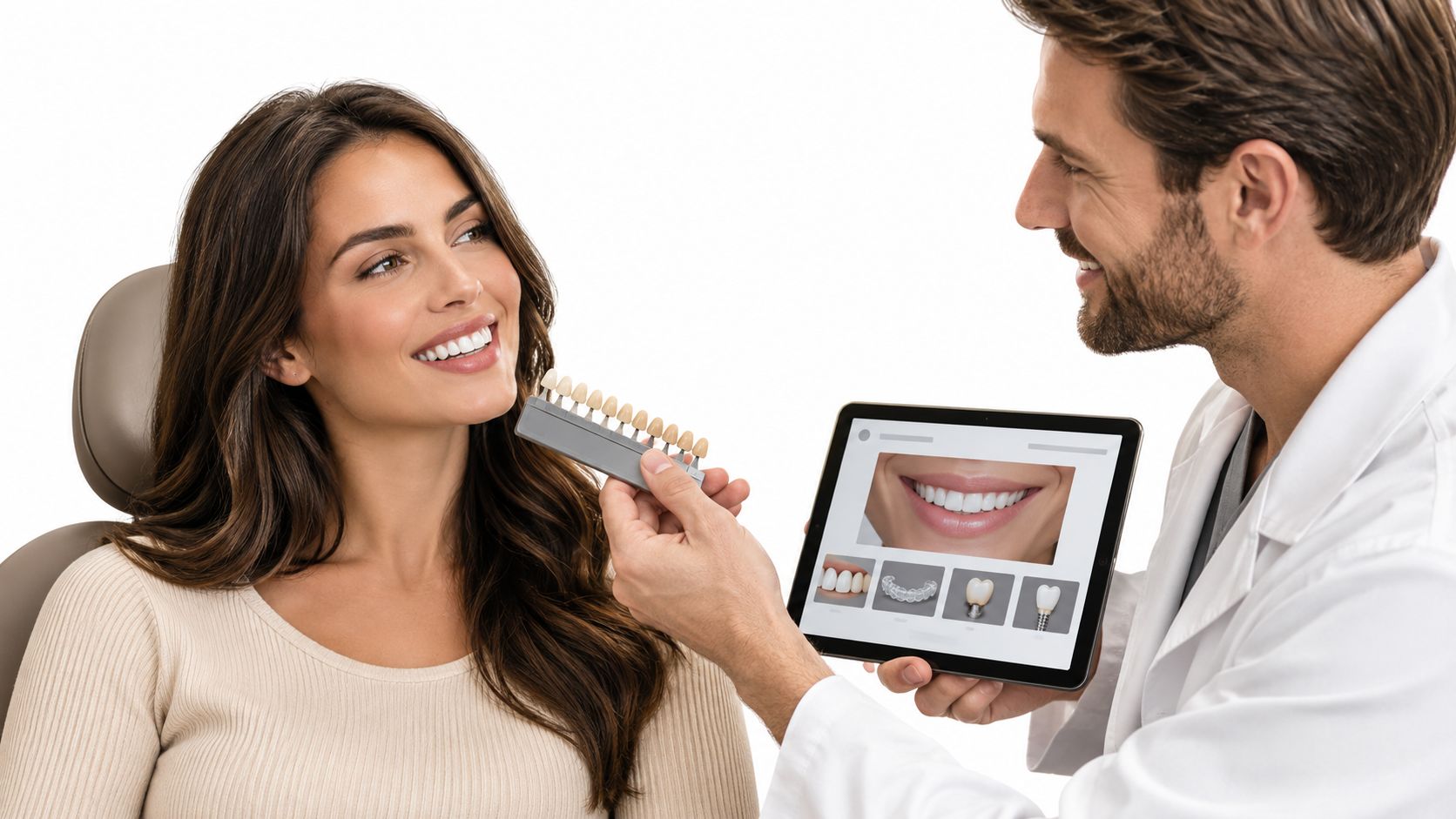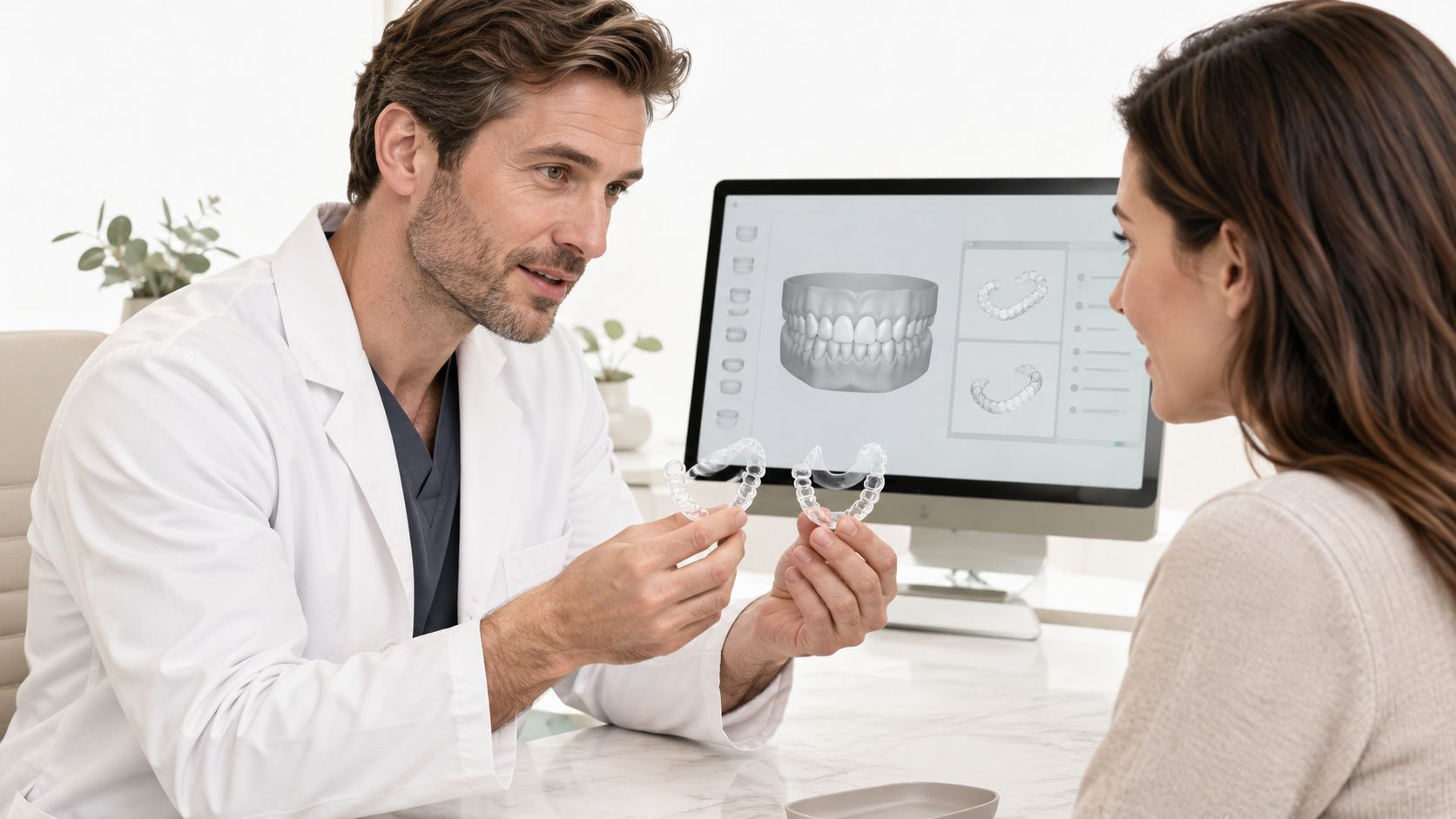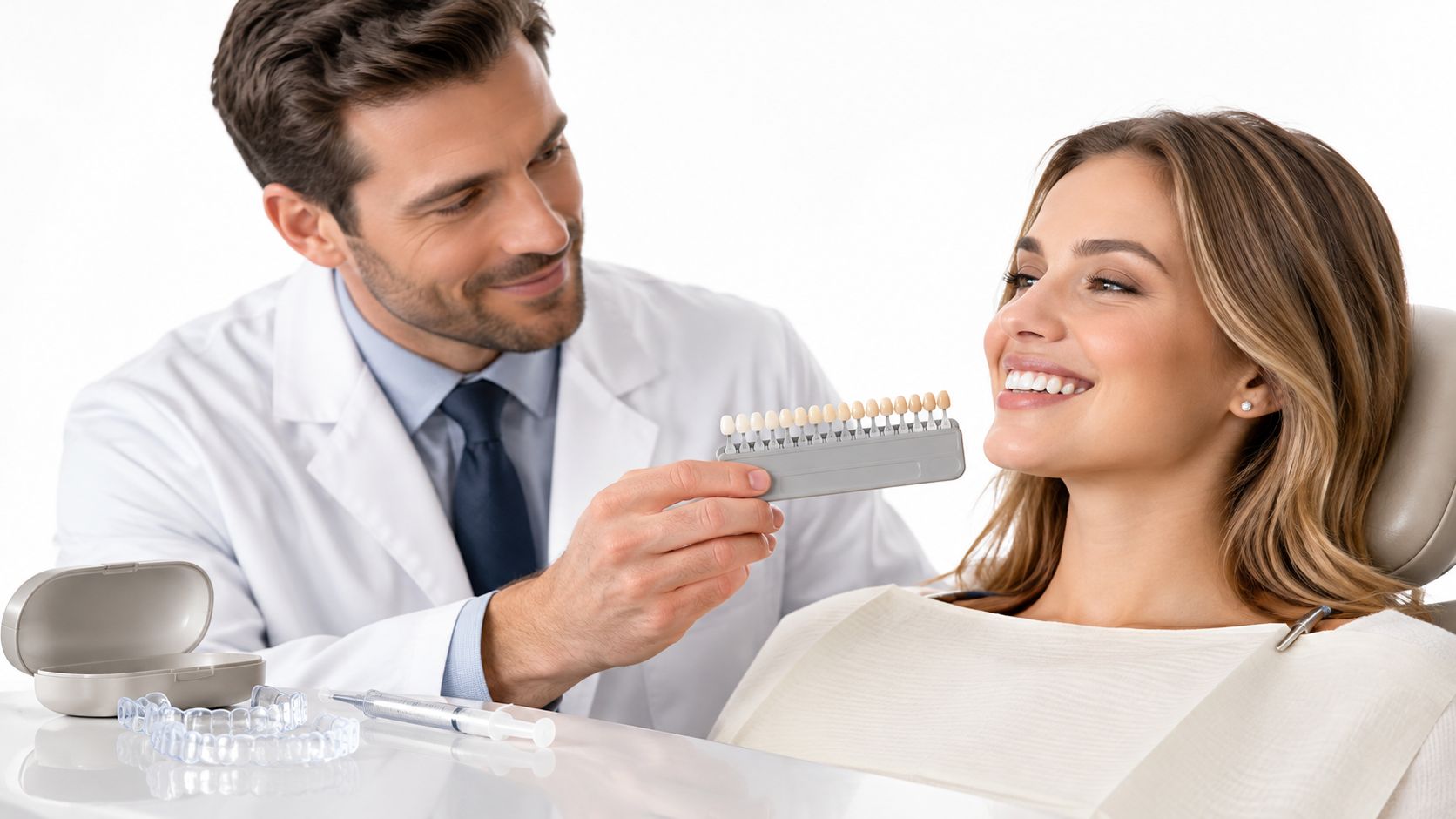
If you drink coffee or tea in Cleveland, TN, you may have noticed your smile looking duller over time. Drugstore strips can seem promising, then leave you disappointed when the change fades or your teeth feel sensitive. It's reasonable to want a brighter smile without guessing which product to use or how long to leave it on.
Professional whitening isn't a surface scrub. It uses peroxide to change stain molecules within natural teeth, with a dentist checking your oral health and helping choose an approach that suits your goals and sensitivity. At Winn Smiles, patients in Cleveland and Chattanooga can discuss what whitening may realistically do, what a visit involves, and how to care for their smile afterward.
Why Cleveland TN Patients Are Asking About Professional Whitening
Coffee and tea are part of many daily routines, but their pigments can contribute to tooth discoloration. Age and other causes can affect tooth color, too, so two people with similar habits may not see the same changes. If whitening strips haven't given you the result you hoped for, it doesn't necessarily mean your teeth can't brighten. It may mean the cause of the discoloration, the product, or the way it was used wasn't a good match.
That's one reason people searching for a dentist in Cleveland, TN, or a cosmetic dentist near me often want more than a whitening product. They want to know whether the treatment can address their stains, whether it will affect existing dental work, and what to expect if their teeth are sensitive. Those are practical questions, not vanity concerns. A clear answer can make the difference between feeling prepared and feeling unsure.
A brighter smile without the guesswork
The key distinction is that professional whitening uses peroxide chemistry rather than scrubbing stain from the outside of a tooth. A dentist can first check whether the discoloration is likely to respond, assess your gums and teeth, and discuss your desired shade. That conversation helps set a realistic plan before treatment begins.
The visit also gives you a chance to mention previous sensitivity, dental work, or past whitening attempts. If you have crowns, veneers, or fillings in visible areas, those details matter because whitening won't change their color in the same way it changes natural teeth. Knowing that early can help avoid an uneven-looking result.
A calmer appointment starts with a clear plan. Ask what's causing the discoloration, what the treatment can change, and how your comfort will be managed.
Whether you're looking for teeth whitening in Cleveland or Chattanooga, understanding the process makes it easier to choose between treatment in the office and supervised trays at home. The chemistry explains why those options work, while an evaluation helps connect the science to your own smile.
The Chemistry Behind a Brighter Smile
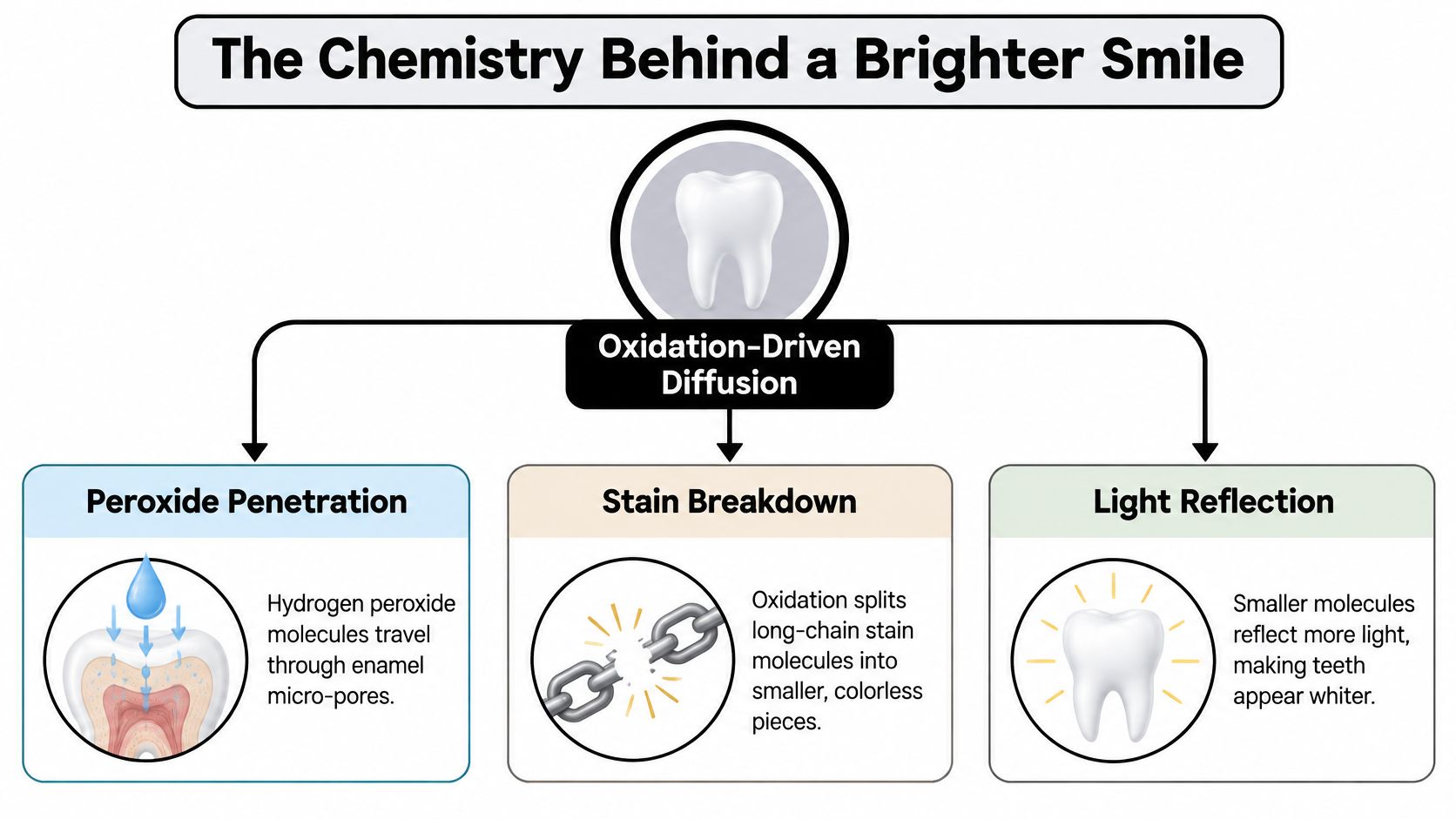
Professional whitening works through oxidation and diffusion, not surface scrubbing. Hydrogen peroxide moves through tiny spaces in enamel and into dentin, the layer beneath it. There, reactive oxygen-containing molecules interact with chromophores, the pigmented molecules that contribute to darker tooth color. By disrupting bonds within those pigments, peroxide changes how they absorb light, which can make the tooth appear lighter. The process can reach dentin and the pulp within approximately 15 minutes of exposure, as described in this clinical review of whitening mechanisms30811-5/fulltext).
A simple way to picture it is to think of stain pigments as long-colored chains inside the tooth. Peroxide helps break those chains into smaller pieces, changing how the tooth's color appears. It isn't sanding the enamel or brushing away a layer of the tooth.
Why the active ingredient and the stain matter
The established whitening ingredients are hydrogen peroxide and carbamide peroxide. Carbamide peroxide first breaks down into urea and hydrogen peroxide, so it releases the active peroxide more gradually. Dental guidance commonly treats carbamide peroxide as yielding about one-third of its stated concentration as hydrogen peroxide. For example, 18% carbamide peroxide is approximately equivalent to 6% hydrogen peroxide, according to the American Dental Association's whitening guidance.
The kind of discoloration matters, too. Extrinsic stains are on the tooth's outer surface, while intrinsic discoloration involves color changes within tooth structure. Peroxide whitening can affect natural teeth, but the cause and depth of discoloration influence the result. It also won't change the color of fillings, crowns, veneers, or other tooth-colored restorations.
That's why no single concentration or schedule suits everyone. Results depend on the peroxide concentration, how long it contacts the teeth, how many applications are used, the patient's age, and whether the discoloration is extrinsic or intrinsic. A dentist can consider those factors before recommending a plan.
In-Office Whitening vs Take-Home Trays
In-office whitening and dentist-supervised trays use peroxide, but they fit different schedules and preferences. In-office systems commonly use approximately 15% to 43% hydrogen peroxide, while prescribed home trays commonly use 10% to 16% carbamide peroxide, according to this review of professional whitening concentrations. Stronger in-office formulas can produce a faster visible change, often during one appointment. Tray treatments use repeated applications over a longer period.
Faster doesn't automatically mean a better final color. Concentration is only part of the picture: contact time, tray fit, application schedule, and monitoring also affect how treatment works. A randomized clinical trial involving 90 patients found that a home protocol using 10% carbamide peroxide produced a degree of bleaching similar to an in-office protocol using 35% hydrogen peroxide. The trial also found no added improvement in bleaching rate, sensitivity intensity, or durability from adding light irradiation, as detailed in this clinical trial review.
In-Office vs Take-Home Whitening at a Glance
| Feature | In-Office Whitening | Take-Home Trays |
|---|---|---|
| Active ingredient | Hydrogen peroxide | Carbamide peroxide |
| Typical concentration | Approximately 15% to 43% hydrogen peroxide | Commonly 10% to 16% carbamide peroxide |
| Pace | Faster visible change, often after one appointment | Gradual change with repeated applications |
| Routine | Treatment is delivered at the dental office | The patient follows a dentist-directed home schedule |
| Comfort planning | The team can monitor soft-tissue protection and exposure | A slower routine may suit patients who prefer gradual whitening |
| Best fit depends on | Schedule, goals, and sensitivity history | Schedule, goals, and sensitivity history |
The best choice depends on your calendar and how your teeth usually respond to dental care. Someone preparing for an event may value a more concentrated office visit, while someone who prefers gradual change may favor trays. If sensitivity is a concern, tell the dentist before choosing; a lower concentration used for longer can approach the effect of a higher concentration for some patients.
A consultation at Winn Smiles can help match the method to your needs rather than treating one option as right for everyone.
What Your Whitening Visit at Winn Smiles Looks Like
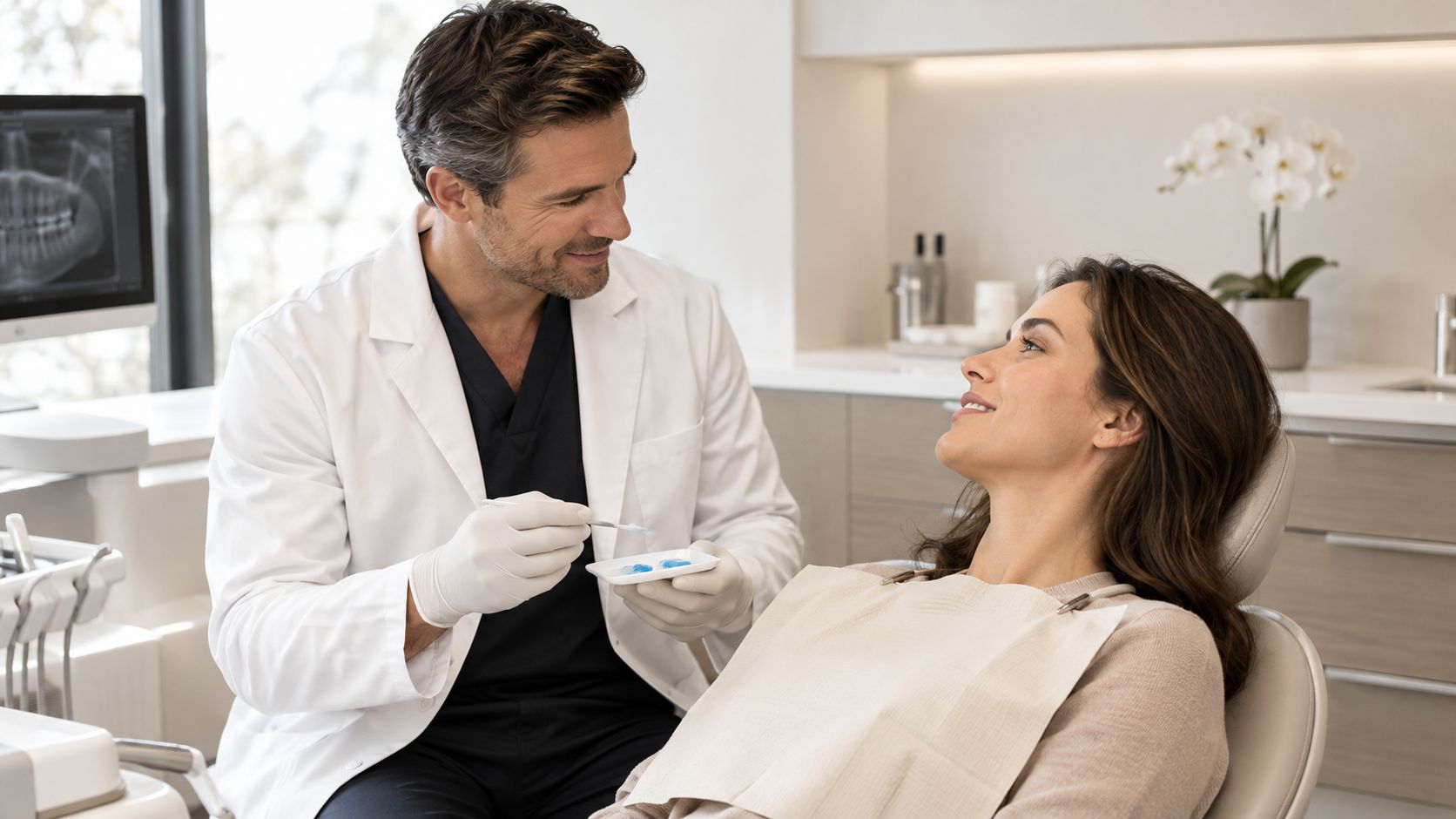
At a whitening visit, the first conversation is about your goals and your teeth, not applying gel right away. You can explain what you'd like to change, what you've already tried, and whether you've experienced sensitivity. The team can also discuss whether in-office treatment or dentist-supervised take-home trays better fit your schedule.
Before the gel goes on
The dentist checks your teeth and gums for concerns such as untreated decay, cracks, gum recession, or exposed dentin. They'll also look at existing restorations and discuss how those areas may appear next to whitened natural teeth. If a cleaning is appropriate, it can help remove surface buildup before treatment.
This assessment matters because whitening only changes natural tooth structure in the expected way. A filling or crown won't lighten to match newly whitened enamel. If an underlying dental issue needs attention, the dentist can discuss that before proceeding with cosmetic treatment.
When appropriate, the team protects your gums and other soft tissues before applying whitening gel. Exposure is controlled, and the team checks in rather than leaving you to manage the process alone. After the gel application, the dentist can compare your shade with the starting point and talk through next steps. The precise plan and number of visits depend on your teeth, treatment choice, and goals.
For a patient who feels nervous, being able to ask questions and receive updates can make the appointment feel more manageable. Winn Smiles describes light, airy offices, a comfort menu, and sedation options for anxious patients; you can bring up any concerns before treatment.
You can also watch this overview of a whitening appointment and treatment:
A clear visit is about more than the final shade. It's also about understanding what the treatment can change, what it won't change, and how the team will account for your comfort.
Sensitivity, Safety, and Who Needs a Gentler Plan
The concern many patients raise first is straightforward: “Will it hurt?” Whitening can temporarily make teeth sensitive because peroxide travels through enamel and dentin and may stimulate nerves inside the tooth. If gel touches the gums or other soft tissue, it can also cause irritation. These are the most commonly reported short-term effects when professional products are used under dental supervision, as outlined in this professional teeth-whitening policy.
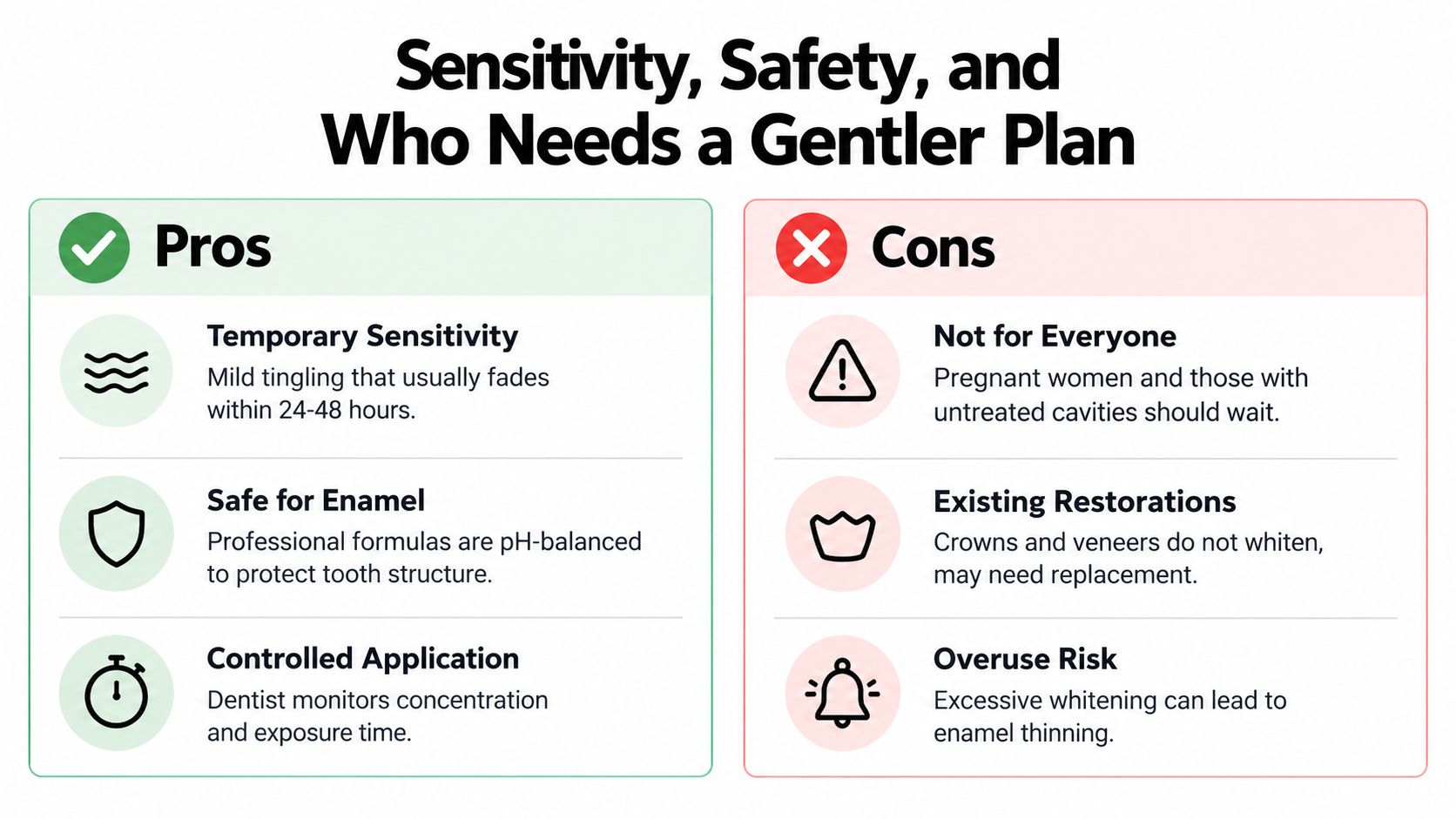
Sensitivity doesn't mean you have to rule out whitening. It does mean your dentist needs to know about it. If you have exposed dentin, cracks, untreated decay, gum recession, or extensive restorations, bring that up during your assessment. The dentist can decide whether to treat a separate concern first or adjust the whitening plan.
Comfort is part of the protocol
Higher concentration can shorten treatment time, but it doesn't automatically produce a superior final color. A dentist can reduce concentration or exposure intensity, separate applications, or recommend a slower carbamide-peroxide routine. Lower concentrations with longer exposure can approach the effect of stronger formulas for some patients, while potentially being easier to tolerate.
Professional protocols also limit exposure and protect the gums. The aim isn't to use the strongest gel. It's to choose a controlled approach that accounts for the condition of your teeth and your sensitivity history. Overuse or poorly controlled bleaching may contribute to enamel erosion or changes in tooth structure, which is why dental assessment matters.
If sensitivity is already a regular concern, this patient-friendly guide to understanding enamel erosion triggers may help you prepare questions for your dentist. You can also read more about professional whitening options for sensitive teeth before your appointment.
Tell the team what you feel, when it starts, and what usually triggers it. That information helps the dentist decide whether to adjust the treatment or choose a gentler approach.
Keeping Your Smile Bright After Treatment
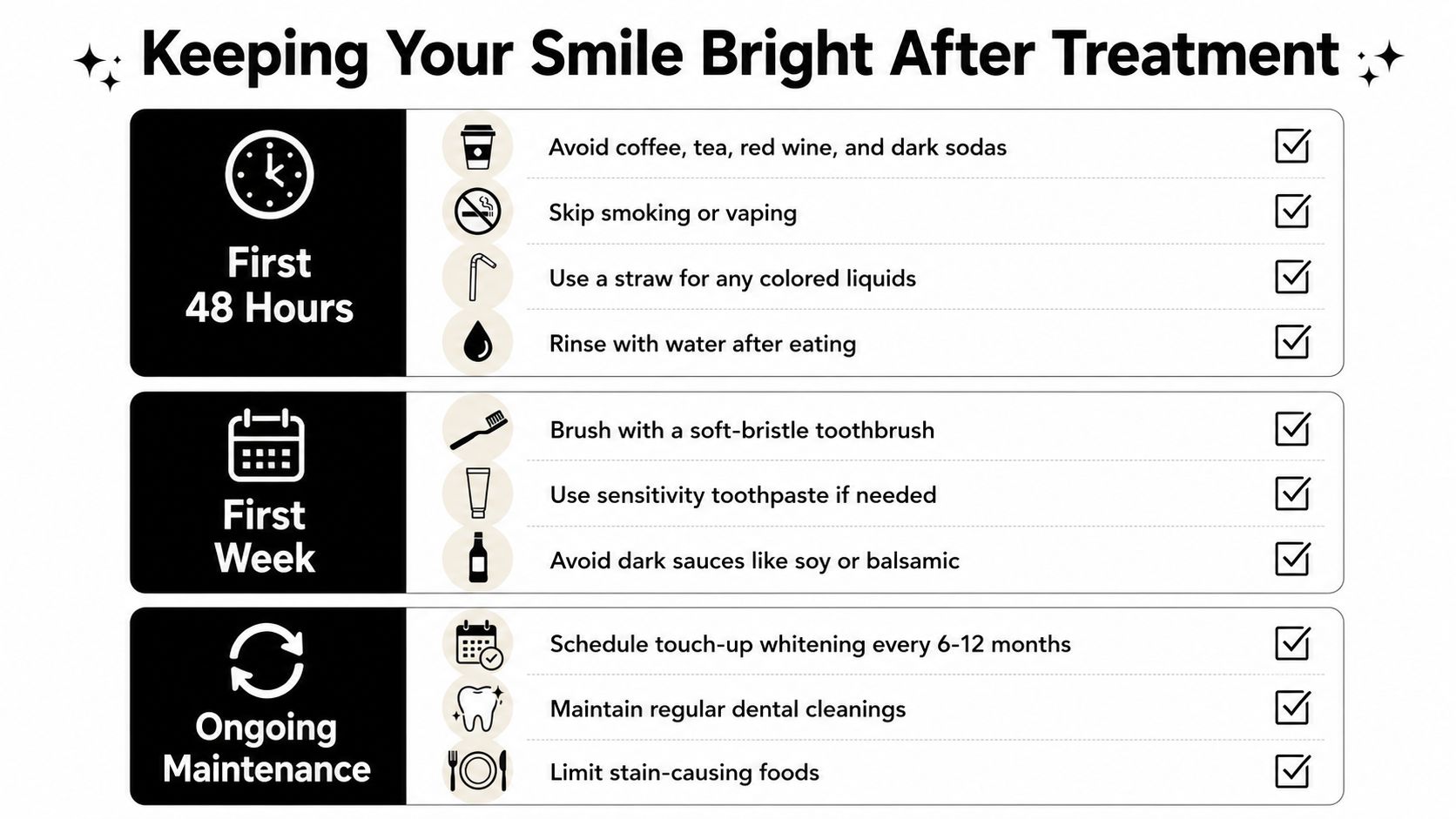
After whitening, your daily choices can affect how quickly new stains build up. The first couple of days are a useful time to be thoughtful about dark foods and drinks, especially if your teeth feel sensitive. Choose lighter-colored foods, avoid coffee, tea, red wine, and dark sodas, and skip tobacco. Your dentist can give you instructions suited to the treatment you received.
A simple maintenance plan
For the first 48 hours: Avoid dark beverages and tobacco. Choose white or clear foods, and rinse with water after eating. If you do have a colored drink, using a straw can reduce contact with your front teeth.
During the first month: Brush gently with a soft-bristle toothbrush. If your teeth feel sensitive, consider a sensitivity-friendly toothpaste, and keep up with your regular cleaning and exam schedule. Ask the dental team which products fit your needs rather than layering on whitening treatments.
Over the longer term: Rinse with water after meals, use a straw for staining drinks when practical, and keep up with professional cleanings. If your smile starts to look dull again, ask whether a touch-up or supervised take-home trays are appropriate instead of restarting an over-the-counter routine on your own.
A maintenance plan should fit your habits, not make every meal feel like a test. The team in Cleveland or Chattanooga can help you think through coffee, tea, and other everyday choices alongside your oral health. For additional practical guidance, see the Winn Smiles advice on caring for teeth after whitening.
Why Whitening at Winn Smiles Feels Different
A whitening consultation is a chance to discuss more than a shade. You can ask whether your discoloration is likely to respond, how existing dental work may affect the appearance, and what approach fits your sensitivity and schedule. That conversation helps make the decision feel informed rather than rushed.
Winn Smiles serves patients in Cleveland and Chattanooga, Tennessee, with general and cosmetic dentistry, including professional whitening, veneers, Invisalign, and same-day crowns. The practice also offers restorative care and dental implants, including full-arch implant solutions. If your main search was for a dentist near me, dental implants near me, a tooth extraction, or an emergency dentist, the team can help direct you to the appropriate service.
Care that considers the whole smile
Whitening is one cosmetic option, not the right answer for every concern. A dentist can discuss other possibilities when tooth color, alignment, or existing restorations affect the result you want. Winn Smiles also offers free consultations and second opinions for select services, along with transparent cost discussions and convenient hours.
If dental visits make you anxious, let the team know when you contact the office. Winn Smiles describes a comfort menu and sedation options, so you can talk through what may help you feel at ease. The goal is to understand your options and choose a plan that fits your smile, rather than to push you toward a treatment you don't need.
Whether you're considering professional whitening, want to know how to manage sensitivity, or are exploring cosmetic dentistry, a conversation with a local dental team is a practical next step. Ask about the expected process, how your existing dental work may look afterward, and how to maintain the results at home.
Winn Smiles offers professional teeth whitening and can help you compare an in-office approach with dentist-supervised take-home trays based on your goals and sensitivity. Schedule a consultation in Cleveland or Chattanooga, or contact Winn Smiles to talk through a plan for your smile.