
A tooth that throbs at night can make everything feel urgent. You try cold water, avoid chewing on one side, and hope the pain settles down. Then it flares again, sometimes with swelling or sharp sensitivity, and the search starts for an emergency dentist in Chattanooga or Cleveland, TN who can effectively fix the problem.
That's usually the moment people ask the same question: what is a root canal procedure, really, and is it going to hurt? The short answer is simple. A root canal is a treatment designed to remove infection from inside a tooth and save that tooth instead of losing it.
For many patients, the fear comes from the unknown more than the treatment itself. Once you understand what's happening inside the tooth, what the visit feels like, and how the tooth is protected afterward, the process becomes much easier to face.
Root Canals in Chattanooga and Cleveland TN
A patient may walk in after a rough night with one hand on their jaw and one question on their mind. Can this tooth be saved without turning the visit into something worse?
In many cases, yes.
Across Chattanooga and Cleveland, I see the same pattern. Pain starts as an annoyance, then begins to control the day. Meals get cut short. Sleep gets lighter. Patients stop chewing on one side and hope the problem settles down on its own. If you have noticed signs you may need a root canal, it helps to get the tooth evaluated before the pain and infection have more time to build.
When tooth pain stops being something to wait out
Some sore teeth calm down with a simple filling or a bite adjustment. Others keep throbbing because the irritation is deeper, closer to the nerve.
Common warning signs include:
- Lingering pain: The tooth keeps aching even after you stop eating or drinking.
- Temperature sensitivity: Hot or cold triggers discomfort that does not fade quickly.
- Swelling or tenderness: The gums around the tooth feel puffy, sore, or irritated.
- Pain when biting: Pressure on the tooth feels sharp or unsettling.
- A tooth that feels different: Patients often describe it as heavy, sore, or hard to ignore.
Severe tooth pain often means the inside of the tooth is inflamed or infected. Waiting usually leads to more discomfort, not less.
Pain medicine may take the edge off for a few hours. It does not remove infected tissue or solve the reason the tooth keeps flaring up.
A calmer way to think about treatment
Root canal treatment exists to relieve pain and save a tooth that would otherwise keep causing trouble. For a nervous patient, that point matters. The goal is not to put you through a difficult visit. The goal is to remove the source of the pain, protect the tooth, and let you get back to eating and sleeping normally.
Patients in Chattanooga and patients in the Cleveland area often want the same thing when they call. Clear answers, prompt care, and a plan that makes sense. Sometimes the right next step is a root canal. Sometimes it is a crown, an exam with x-rays, or, if the tooth cannot be saved, an extraction and replacement plan. Good care means choosing the treatment that gives the tooth the best long-term outlook.
Saving a natural tooth usually gives you the most comfortable bite and the most familiar function. That is why root canals remain such a valuable treatment option when the tooth is still restorable.
Why Your Tooth Hurts and When a Root Canal is Needed
You may feel fine at breakfast, then notice one tooth throbbing by lunch and keeping you up that night. That kind of pain often means the problem has moved deeper than the surface.
Inside every tooth is a small chamber called the pulp. It contains nerves, blood vessels, and soft tissue. If deep decay, a crack, repeated dental work, or an injury irritates that space, pressure builds inside the tooth. Once that tissue becomes badly inflamed or infected, the tooth usually does not heal on its own.
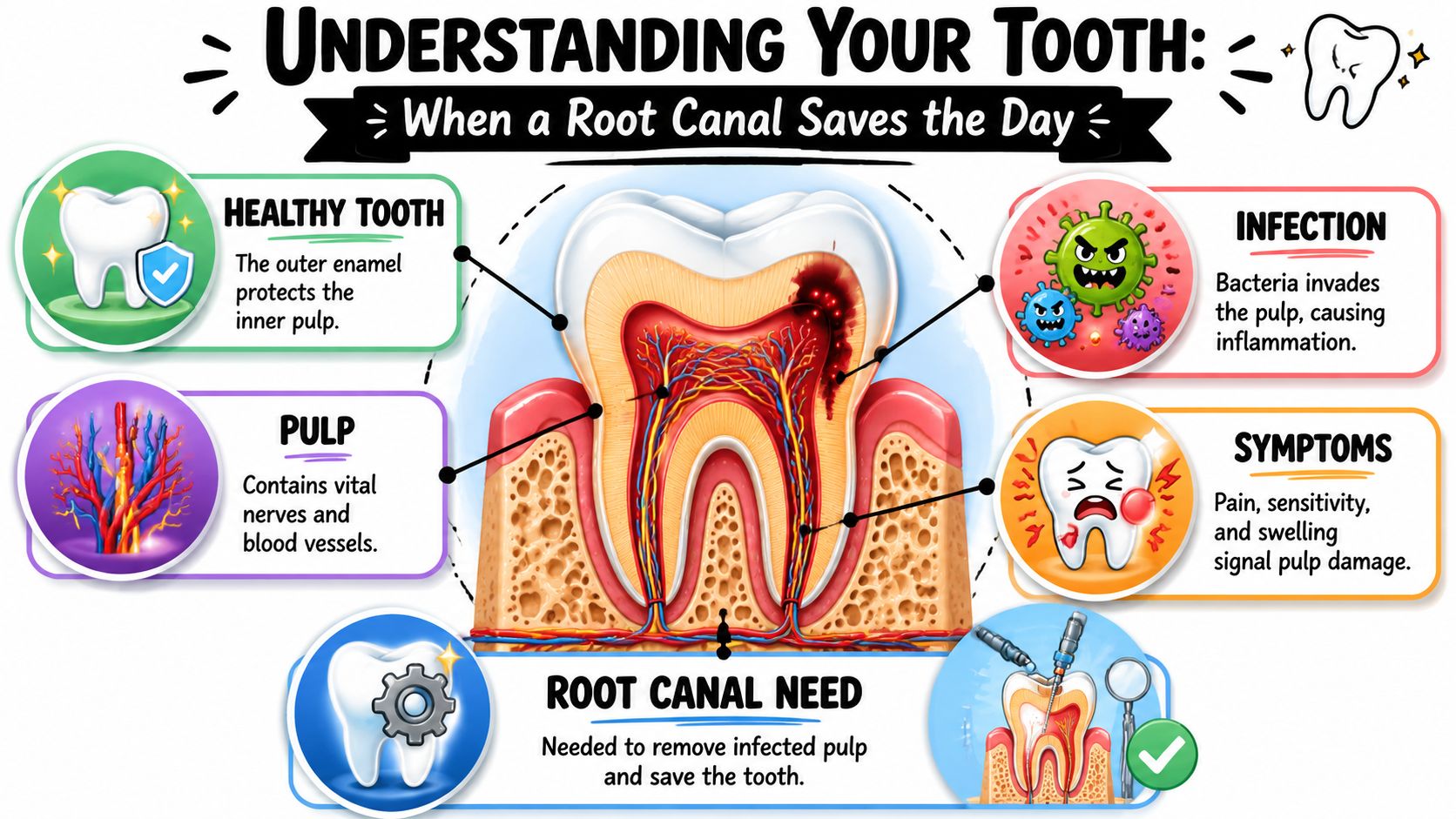
What a root canal procedure actually is
A root canal procedure is a treatment used to remove damaged pulp from inside the tooth, clean the root canal spaces, and seal them so the tooth can stay in place and function with less risk of ongoing infection.
For nervous patients, that explanation usually helps. The procedure is not about doing something extra to the tooth. It is about removing the tissue that is already causing the pain and protecting the part of the tooth you still want to keep.
In practice, I recommend a root canal when the inside of the tooth has reached a point where a simple filling will not solve the problem. If the pulp is inflamed beyond recovery or infected, the choices usually narrow to saving the tooth with root canal treatment or removing it.
When the problem has reached the inside of the tooth
Some teeth send mixed signals. Others are more direct.
You may need closer evaluation if you notice:
- Pain that lingers or keeps returning: Especially pain that wakes you up, hangs on after hot or cold foods, or flares without much warning.
- Tenderness near one tooth: Swelling, gum irritation, or a pimple-like spot can mean infection is draining through the gums.
- Pain when you bite down: That often points to inflammation around the root.
- A cracked, broken, or decayed tooth: Even a small opening can let bacteria reach the pulp.
- A tooth that suddenly feels different: Patients often describe it as high, sore, heavy, or difficult to chew on.
Not every toothache leads to a root canal. Sinus pressure, gum irritation, a cracked filling, or bite problems can cause similar discomfort. That is why an exam and x-rays matter. The goal is to identify the true source of pain, not assume every sensitive tooth needs endodontic treatment.
If you are trying to sort out whether your symptoms match a deeper tooth infection, this guide on signs you may need a root canal can help you know when it is time to have the tooth checked.
Practical rule: If pain is persistent, pressure-sensitive, or paired with swelling, it is time to stop waiting and get an evaluation.
What Happens During Your Root Canal Treatment
For many patients, the hardest part is the hour before the appointment. They expect a painful, complicated procedure. What usually happens is far more controlled than they imagined.
A root canal follows a clear sequence. Each step is done to remove infection, protect the tooth, and keep you comfortable while we work.
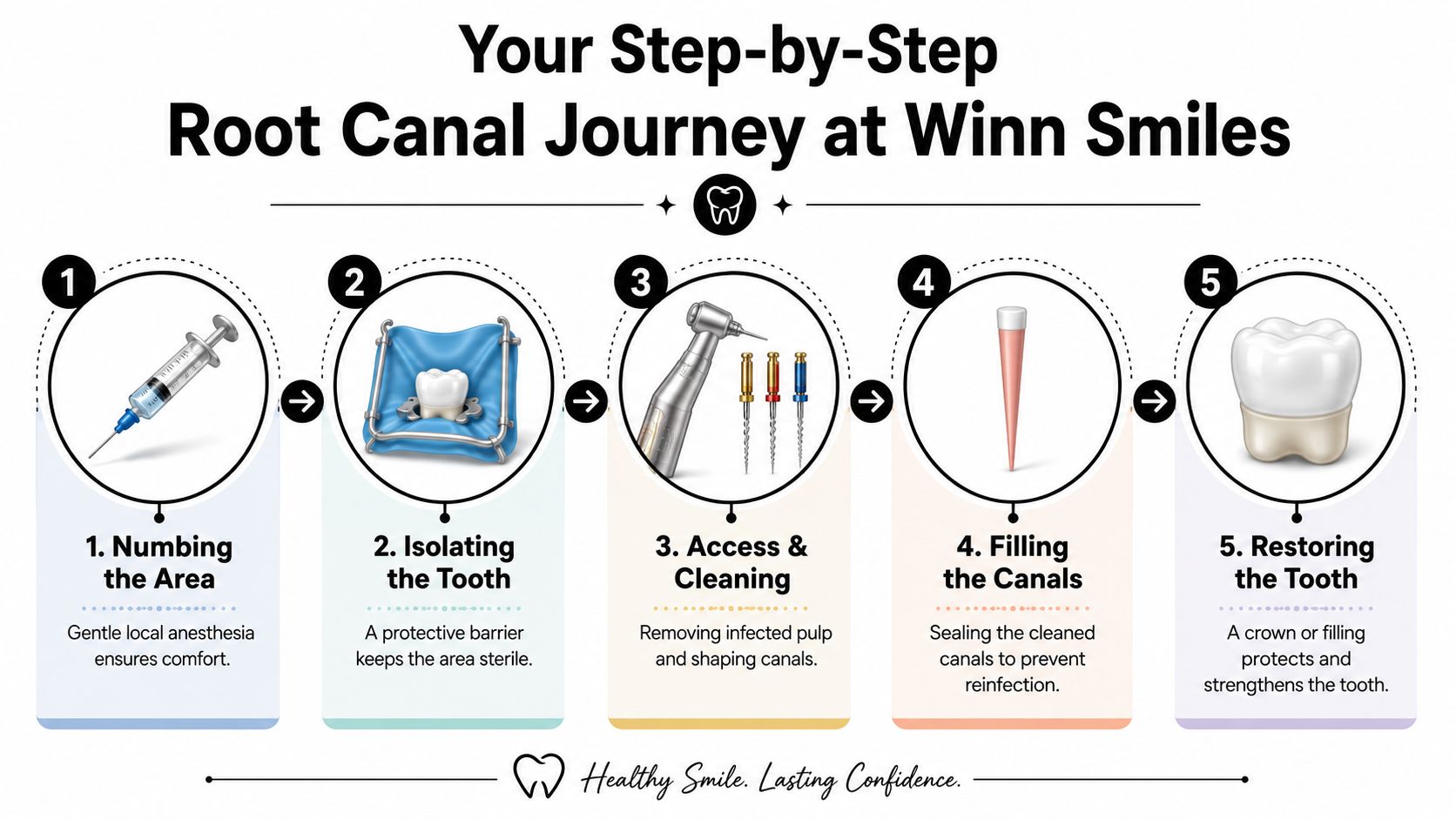
Getting the area numb and protected
Treatment starts with local anesthesia. We numb the tooth and the surrounding tissue thoroughly, then give it time to take full effect before doing anything deeper. Patients who come in tense are often relieved by how little they feel once that numbness sets in.
Next, the tooth is isolated so saliva and bacteria stay out of the area. Keeping the tooth clean and dry matters because the goal is not just to remove irritated tissue. It is to disinfect the inside of the tooth well enough that it can be sealed and kept stable for the long term.
Cleaning the inside of the tooth
After that, a small opening is made through the top of the tooth. Through that opening, the inflamed or infected pulp is removed from the canals inside the roots. Fine instruments and cleaning solutions are used to shape and disinfect those narrow spaces with precision.
This part is usually much quieter and gentler than patients expect. Modern root canal treatment is careful work. The focus is on cleaning a confined internal space thoroughly, not on aggressive drilling.
A helpful overview of the general process is below.
Sealing the tooth and planning the restoration
Once the canals are cleaned, they are filled and sealed so bacteria cannot move back in. In plain terms, the sequence is straightforward. Numb the tooth, create access, clean and disinfect the canals, seal the space, then restore the tooth so it can function again.
That last step matters more than many patients realize.
A tooth that has had root canal treatment can still serve you well for years, but it needs the right restoration afterward. Depending on how much healthy tooth structure remains, that may be a filling or a crown. The trade-off is simple. Saving your natural tooth usually gives you better chewing comfort and helps maintain normal bite function, but the tooth still needs protection so it does not crack under daily use.
Here's the usual flow in simple terms:
- Numb the tooth: Sharp pain should be controlled before treatment begins.
- Open and clean the canals: The damaged tissue is removed and the inside is disinfected.
- Seal the inside: The canal space is filled to reduce the chance of reinfection.
- Restore the tooth: A filling or crown protects the tooth during normal use.
How long the appointment usually takes
The appointment is often completed in one or two visits. Simpler teeth can move faster. Molars often take longer because they have more canals and more complex anatomy. If there is significant infection or inflammation, treatment may be staged so the tooth can settle before the final restoration is placed.
That variation is normal and does not mean something is going wrong. It means the treatment is being matched to the tooth in front of us.
For nervous patients, it helps to view the visit as a series of small, predictable steps. That is what it is in the chair. Calm, methodical care aimed at getting you out of pain and keeping your natural tooth.
Ensuring a Comfortable and Pain-Free Experience
You may walk into a root canal appointment expecting a long, painful ordeal. What patients usually feel instead is relief once the tooth is numb and the pressure inside that tooth is addressed. The pain that keeps people up at night usually comes from the inflamed or infected nerve, not from the treatment itself.
That difference matters, especially if you are already anxious.
A comfortable visit starts before any work begins. Patients do better when they know they can raise a hand for a pause, ask what a sensation means, and trust that we will not start until the tooth is fully numb. In my experience, that sense of control lowers stress almost as much as the anesthetic does.

What helps anxious patients most
The details that improve comfort are practical, not fancy. Clear communication helps you know what to expect. Reliable local anesthesia keeps the procedure from feeling sharp. Sedation can help if your fear is high or you have trouble sitting through dental care. A steady pace with short check-ins often makes the visit feel far more manageable.
Nitrous oxide or oral sedation can be a good fit for some patients. The trade-off is that sedation helps with anxiety, but it does not replace getting the tooth profoundly numb. Local anesthesia still does the main job of pain control. Sedation helps your body stay calmer while treatment is being done.
Comfort also depends on how the team responds if you are tense, tired, or embarrassed about being nervous. Good care is not just technical. It includes noticing when a patient needs a break, explaining the next step in plain language, and adjusting the pace so the appointment feels manageable rather than overwhelming.
Comfort is also about technique
Gentle treatment comes from planning and precision. Careful diagnostics, modern instruments, and a conservative approach can reduce surprises and help the visit go more smoothly. Patients in Chattanooga and Cleveland, TN often ask about options like laser dentistry, same-day crowns, and other tools that may reduce extra appointments or make follow-up restoration more convenient. Those are reasonable questions because comfort is not only about what happens in the chair. It is also about how disruptive the whole process feels to your week.
Winn Smiles is one local option for patients who need root canal care, sedation discussions, and restorative follow-up in one place. For nervous patients who need restorative dentistry and a team that can manage their anxiety, that kind of continuity can make the process feel simpler and less intimidating.
A comfortable root canal starts when the patient feels heard, informed, and fully numb.
After Your Root Canal Recovery and Lasting Results
Most patients feel relief that the deep, pressure-like tooth pain is gone. What remains afterward is usually a short recovery period while the area settles. The tooth may feel tender for a bit, especially when chewing, but that's very different from the original pain that brought you in.
Recovery is also where many people ask the next important question. Is this a temporary fix, or does the tooth last?
What to expect after the appointment
In the first phase after treatment, the goal is to protect the tooth and let the area calm down. Your dentist may recommend avoiding heavy chewing on that side until the final restoration is in place.
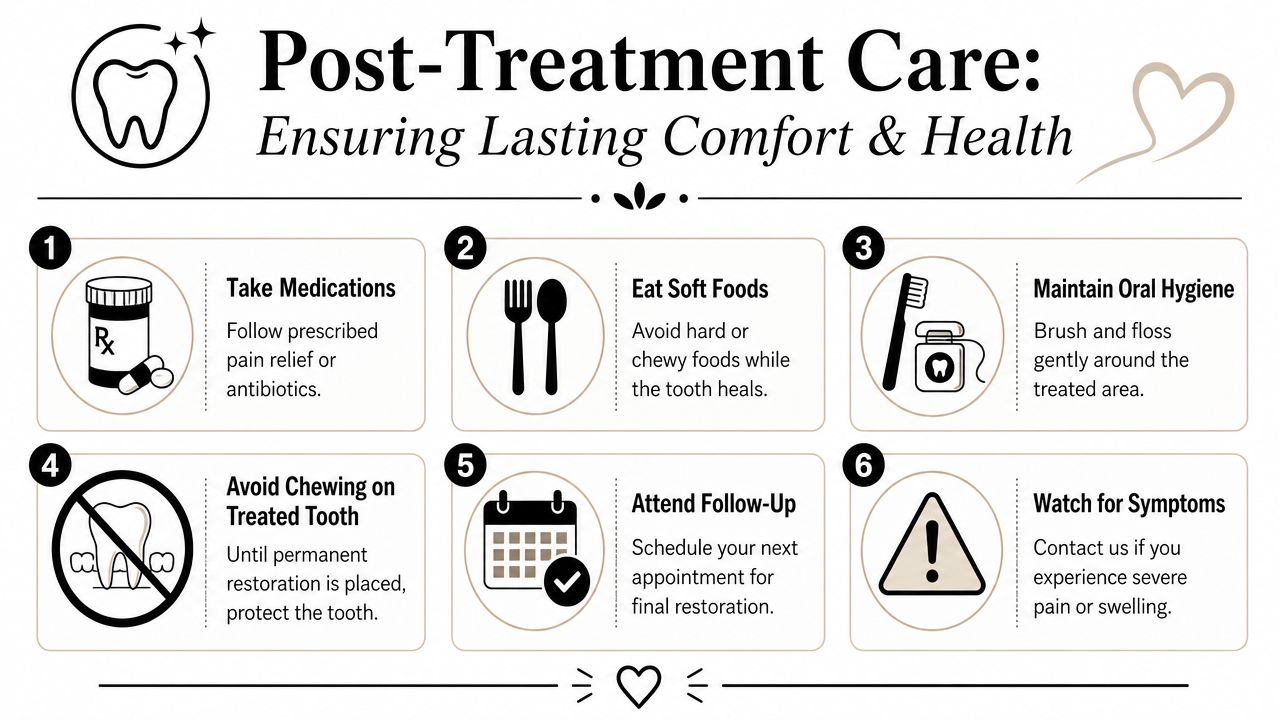
A simple recovery checklist looks like this:
- Be gentle with chewing: Don't test the tooth with hard or sticky foods right away.
- Keep the area clean: Brush and floss carefully, just as you would around any healing dental work.
- Take medications as directed: Follow the instructions you were given for soreness or infection management.
- Pay attention to changes: Call if swelling worsens or the bite feels off.
Why the crown or filling matters so much
A root canal treats the inside of the tooth. It doesn't automatically make the outside strong again. That's why the final restoration matters.
Harvard Health notes that a common question is whether root canal treatment is long term, and that when restored with a crown, a root canal-treated tooth can last a lifetime with proper care in its article on what to expect if you need a root canal. The same discussion also makes an important point: the tooth stays in place, but it's still vulnerable to decay or gum disease like any other tooth.
That's the trade-off patients need to understand. The tooth is saved, not made invincible. A well-made crown or filling protects structure, but daily hygiene still matters.
Long-term success depends on normal habits
The patients who do best after root canal treatment usually keep the routine simple:
| Habit | Why it matters |
|---|---|
| Brushing well | Keeps decay from forming around the restored tooth |
| Flossing consistently | Protects the gums that support the tooth |
| Regular dental visits | Helps catch bite issues, wear, or new decay early |
| Following through on the final restoration | Reduces the risk of fracture |
If the tooth needs a crown, don't put that off. A treated tooth without proper protection is much more likely to become a problem again. For patients interested in restorative dentistry in Chattanooga or Cleveland, this is often where same-day crown technology becomes especially convenient because it helps complete the tooth's protection without dragging treatment out.
What to Expect at Your Winn Smiles Appointment
The first part of the visit usually isn't treatment. It's conversation. You arrive with a painful tooth, a lot of questions, and sometimes a bad memory from an old dental experience. The appointment should slow that spiral down, not add to it.
A typical visit begins with an exam, imaging if needed, and a clear explanation of what the tooth is doing. Patients don't need a sales pitch when they're hurting. They need an honest answer about whether the tooth can be saved, whether a root canal is the right move, or whether another treatment such as tooth extraction makes more sense.
The visit should feel straightforward
A patient experience often follows this kind of path:
- First contact: You call with pain, sensitivity, or swelling and explain what's going on.
- Assessment: The team checks the tooth, reviews symptoms, and explains the findings in plain language.
- Options discussion: You talk through treatment, restoration, and practical details like timing.
- Follow-through: The plan includes what happens after the root canal, not just the procedure itself.

Details that make patients feel prepared
Patients searching for a dentist in Chattanooga, TN or dentist in Cleveland, TN aren't only looking for clinical skill. They're also looking for predictability. They want to know whether the office will explain costs clearly, whether insurance questions can be discussed up front, and whether they'll be treated like a person instead of a procedure.
For patients who like to feel ready before they come in, this article on how to prepare for a root canal is a useful starting point.
Good appointments also connect the dots between services. A patient may come in for emergency dental care and later return for cleanings and exams, cosmetic dentistry, or restorative work like crowns and implants. That continuity matters because a painful tooth is rarely just about one day. It's part of your long-term oral health.
Common Questions About Root Canal Therapy
Is a root canal better than an extraction
If a tooth can be saved with a good long-term outlook, I usually recommend saving it. Keeping your natural tooth helps you chew normally, keeps nearby teeth from shifting, and avoids the added time and cost of replacing the tooth later with a bridge or implant.
There are times when extraction makes more sense. A tooth that is badly fractured, too weak to restore, or affected by advanced bone loss may not be a good candidate for root canal treatment. The right choice depends on what will serve you well a few years from now, not just what solves today's pain.
Will I be in pain during the procedure
This is the question anxious patients ask first, and for good reason. In a well-managed appointment, the tooth and surrounding area are numbed so treatment can be done comfortably. For many patients, the hardest part is arriving with an already inflamed, painful tooth.
Once the area is fully anesthetized and the infected tissue is removed, treatment is designed to provide relief from the existing pain. Patients often tell me the visit felt easier than the toothache that brought them in.
Can I drive myself home afterward
Often, yes. If your appointment involves local anesthesia alone, many patients drive themselves home and return to work or normal routines the same day.
Sedation changes that plan. If you receive sedation for anxiety or comfort, you may need a driver and a quieter rest of the day. Ask ahead of time so there are no surprises.
How do costs and insurance usually work
Cost depends on the tooth involved, how difficult the treatment is, and what kind of final restoration the tooth needs afterward. A front tooth is often simpler than a molar. A tooth that needs a crown adds a different cost than one that does not.
Insurance varies from plan to plan, so clear estimates matter. Patients should know what applies to the root canal itself, what applies to the restoration, and whether follow-up visits are included.
Is a root canal a long-term fix
It can be a very good long-term solution.
The result depends on two things. The canal system needs to be treated well, and the tooth needs to be sealed and protected afterward, often with a crown on back teeth. Once that is done, normal brushing, flossing, and regular checkups go a long way toward helping the tooth last.
If you're dealing with severe tooth pain, swelling, or sensitivity and need answers from a local dental team, Winn Smiles serves Chattanooga, TN, Cleveland, TN, and nearby communities with root canal treatment, emergency dental care, same-day crowns, and ongoing restorative support. Schedule a consultation to find out whether your tooth can be saved and get a clear plan for relief.