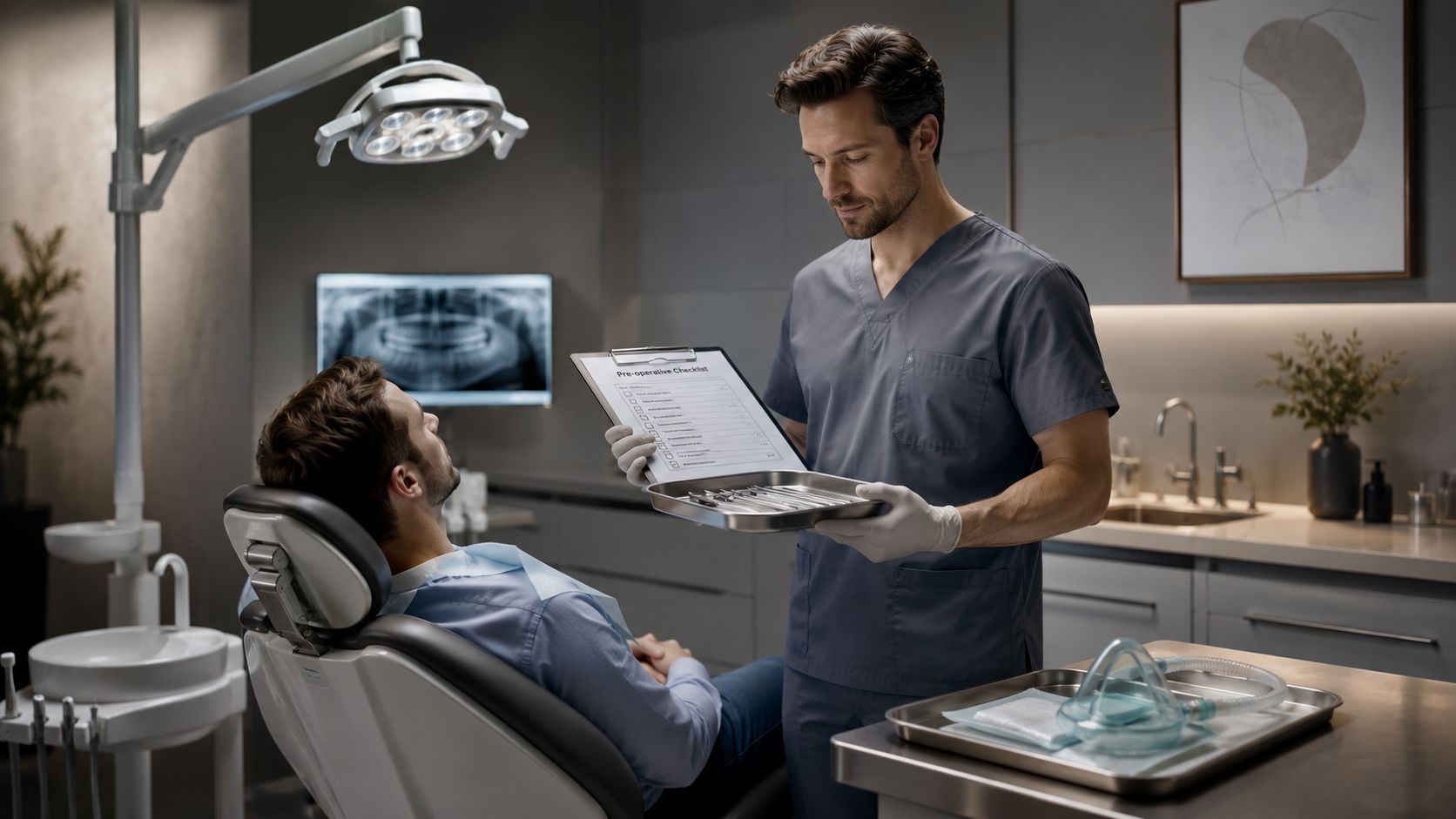
You're probably reading this because the extraction is tomorrow, or because the tooth is already sore enough that you don't want to guess anymore. That feeling is normal. The good news is that how to prepare for tooth extraction is usually less complicated than people think, and the steps that matter most are the ones that protect your airway, reduce bleeding, and keep the clot in place after the tooth comes out.
If you're looking for a dentist in Cleveland, TN or dentist in Chattanooga, TN, the right prep should leave you calmer, not more confused. Good extraction planning is part medical safety, part comfort, and part common sense, especially when the goal is to get through the appointment smoothly and heal without setbacks.
Why Preparation Matters More Than You Think
The night before an extraction, many people focus on whether they should eat, how much discomfort to expect, or whether they need to say anything special when they arrive. Those worries are normal. The bigger issue is simpler. Good preparation protects anesthesia safety, helps with bleeding control, and supports the first clot that forms in the socket. That clot is what helps guard against dry socket and a longer recovery.
For the patient, the work begins before you sit in the chair. In Cleveland, Chattanooga, and nearby communities, the details that matter most are usually practical ones. Arrange a ride if sedation is planned, wear clothing that lets the team work comfortably, and follow fasting instructions only when they are part of your care plan.
The part people miss most
A lot of advice online stays focused on food. In real practice, the better question is whether you have reduced the chance of disturbing the clot on the way home and during the first day after surgery. That is what keeps bleeding more controlled and recovery more predictable.
Practical rule: if a prep step helps the team monitor you safely or helps the clot stay undisturbed, it belongs on your checklist.
The small things matter here. A calm arrival, a sensible ride home, and clothes that do not get in the way can make the appointment easier on everyone. For patients looking for a dentist in Cleveland, TN or dentist in Chattanooga, TN, that kind of planning often does more for comfort than worrying over one meal or trying to guess what the appointment will feel like.
If you are comparing care options, resources like medical practice Google rankings can also show how much trust patients place in clear, practical guidance before treatment.
Medical and Medication Checks Before Your Appointment
The safest extraction starts with an accurate health review. Tell the office about blood thinners, diabetes, heart conditions, allergies, past reactions to anesthesia, and every medication or supplement you take on a regular basis. Those details can change bleeding risk, shape the anesthesia plan, and affect the instructions you receive after the procedure.
The same anesthesia principles mentioned earlier apply here. Numbness should be tested before starting. For patients who want a fuller explanation of sedation choices, types of sedation dentistry can help you understand why one plan fits a simple extraction while another is better for a more anxious patient.
What to tell the dentist
Bring up anything that could affect bleeding, healing, or comfort. Prescription drugs, over-the-counter pain relievers, and supplements all belong on that list, because a small detail can matter more than people expect. If you have ever needed special precautions for dental care, mention that early so the team can plan around it.
Patients often hesitate to share these details because they do not want to seem difficult. Speak up anyway. It helps the dentist choose the right anesthesia, reduce avoidable bleeding, and keep the visit predictable. That is the kind of preparation that makes the appointment feel calmer and less rushed.
Clear patient education online builds the same trust that transparent communication in the office does. That is one reason resources tied to medical practice Google rankings often focus on plain, practical explanations instead of polished marketing language.
If you take a blood thinner or have a condition that affects healing, do not wait until you are in the chair to mention it.
Fasting Rules and Sedation Options Explained
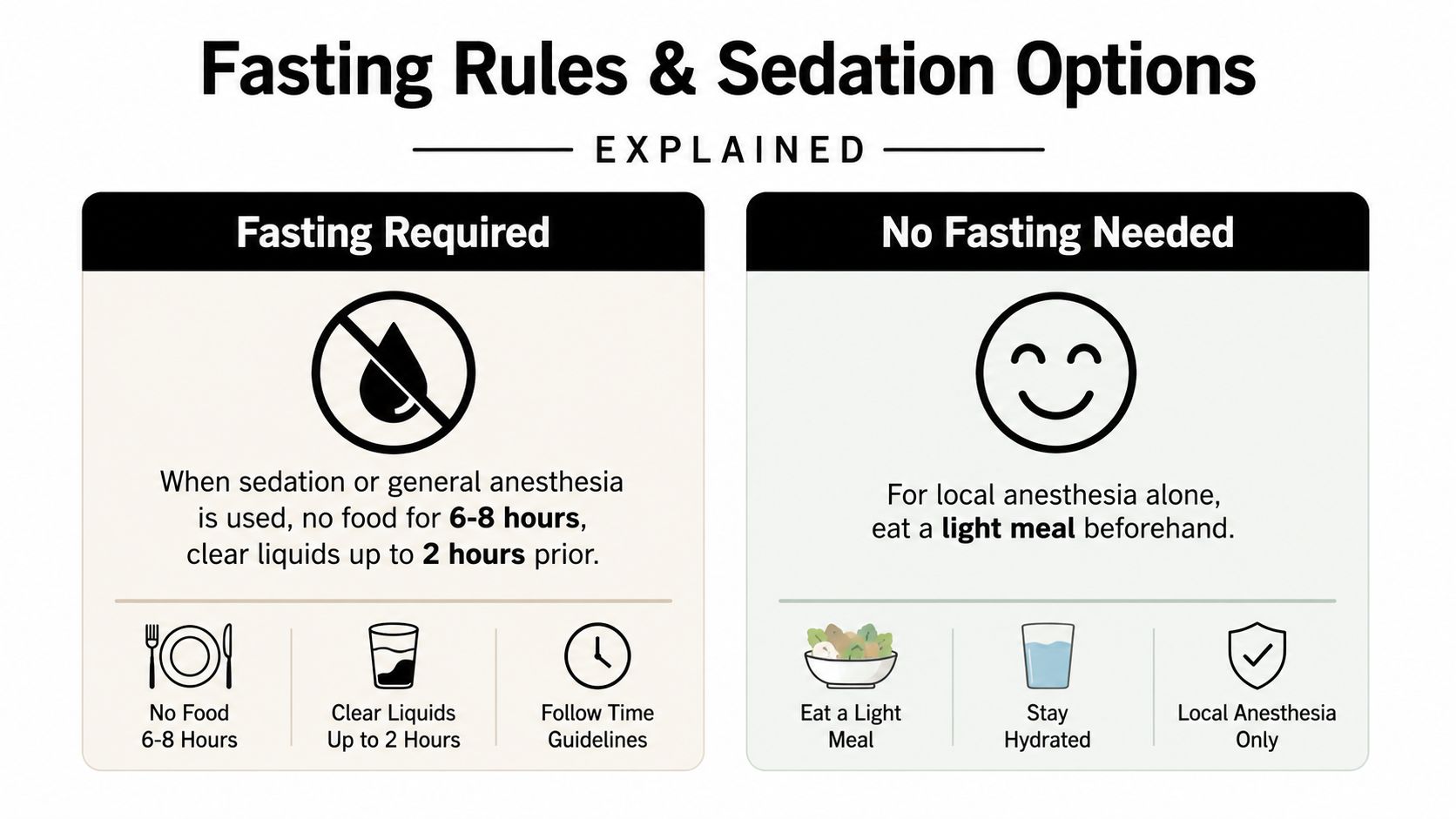
Fasting only becomes a big issue when sedation or general anesthesia is planned. If the extraction is being done with local anesthesia alone, many patients can eat a light meal beforehand, which often helps with steadier energy and less jitters. When sedation is involved, instructions vary by protocol, but clinical guidance commonly falls in the 6 to 12 hour range, and the safest rule is always to follow the dentist or anesthesia team exactly. One clinical guide cites 6 to 8 hours for sedation, while a general medical guide cites 8 to 12 hours, which is why there isn't one universal rule. Tooth extraction preparation and fasting guidance
How sedation changes the day
Sedation isn't one-size-fits-all. Some patients only need light anxiety control, while others need deeper comfort because the procedure is longer or their dental fear is higher. If your practice offers oral conscious sedation or IV sedation, the practical difference is how relaxed you feel, how closely you need to follow fasting rules, and whether you'll need someone else to bring you home.
The internal guide on types of sedation dentistry is a helpful reference point if you want to compare comfort options before your visit.
A simple way to think about it
- Local anesthesia only: a light meal is often fine.
- Oral conscious sedation: fasting rules may apply, so confirm timing with the office.
- IV sedation or general anesthesia: expect stricter fasting and a required ride home.
If you're unsure which category you're in, ask the team to spell it out in plain language. That conversation is more valuable than guessing, because the safest fasting plan depends on the actual sedation method, not on a generic internet rule.
Your Day of Extraction Checklist
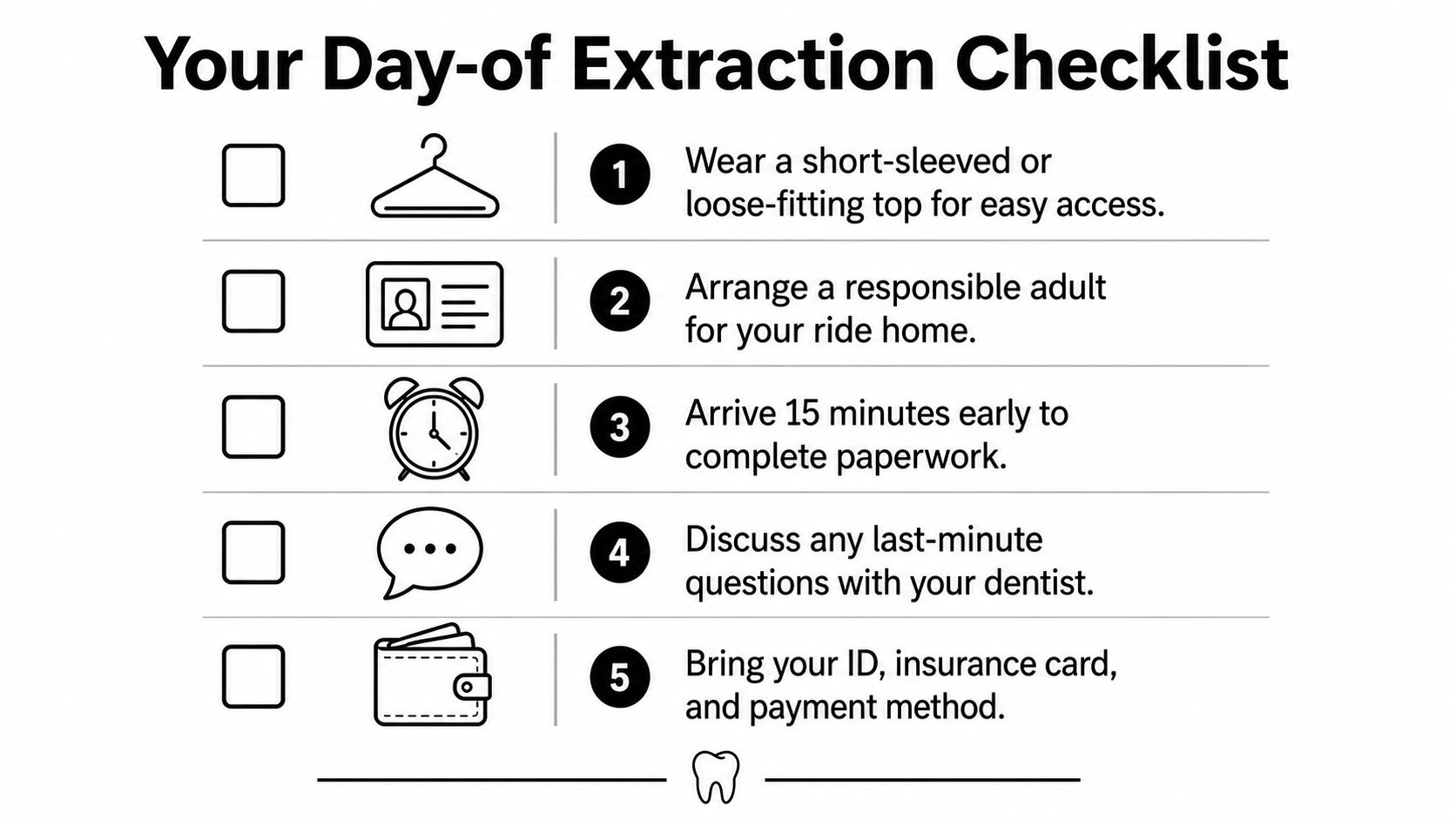
The day-of details are where a lot of stress either disappears or multiplies. A short-sleeved or loose-fitting top helps with blood-pressure monitoring and IV access if sedation is being used. If you're having sedation, you also need a responsible adult to drive you home, because you won't be in shape to handle traffic or make quick decisions.
Keep the morning simple
A busy morning makes the visit feel harder than it needs to be. Leave extra time, bring your ID, insurance card, and payment method, and arrive a little early so paperwork doesn't feel rushed. That leaves more room for the part that matters, asking last-minute questions and making sure the plan still feels right.
Set up home before you leave
Soft foods are easier to manage after the appointment, so having them ready helps. Think beyond the fridge, too. A recovery space with water, pillows, gauze, and an ice pack within reach makes the first few hours easier, especially if you're tired or sore.
The most useful prep on extraction day is often logistical, not medical. A calm ride home and a ready recovery spot reduce stress more than most people expect.
If you're nervous about the procedure itself, say so before you go back. A good dental team wants that information early, because small adjustments in pacing or comfort planning can change the whole experience.
Immediate Aftercare and Protecting the Blood Clot
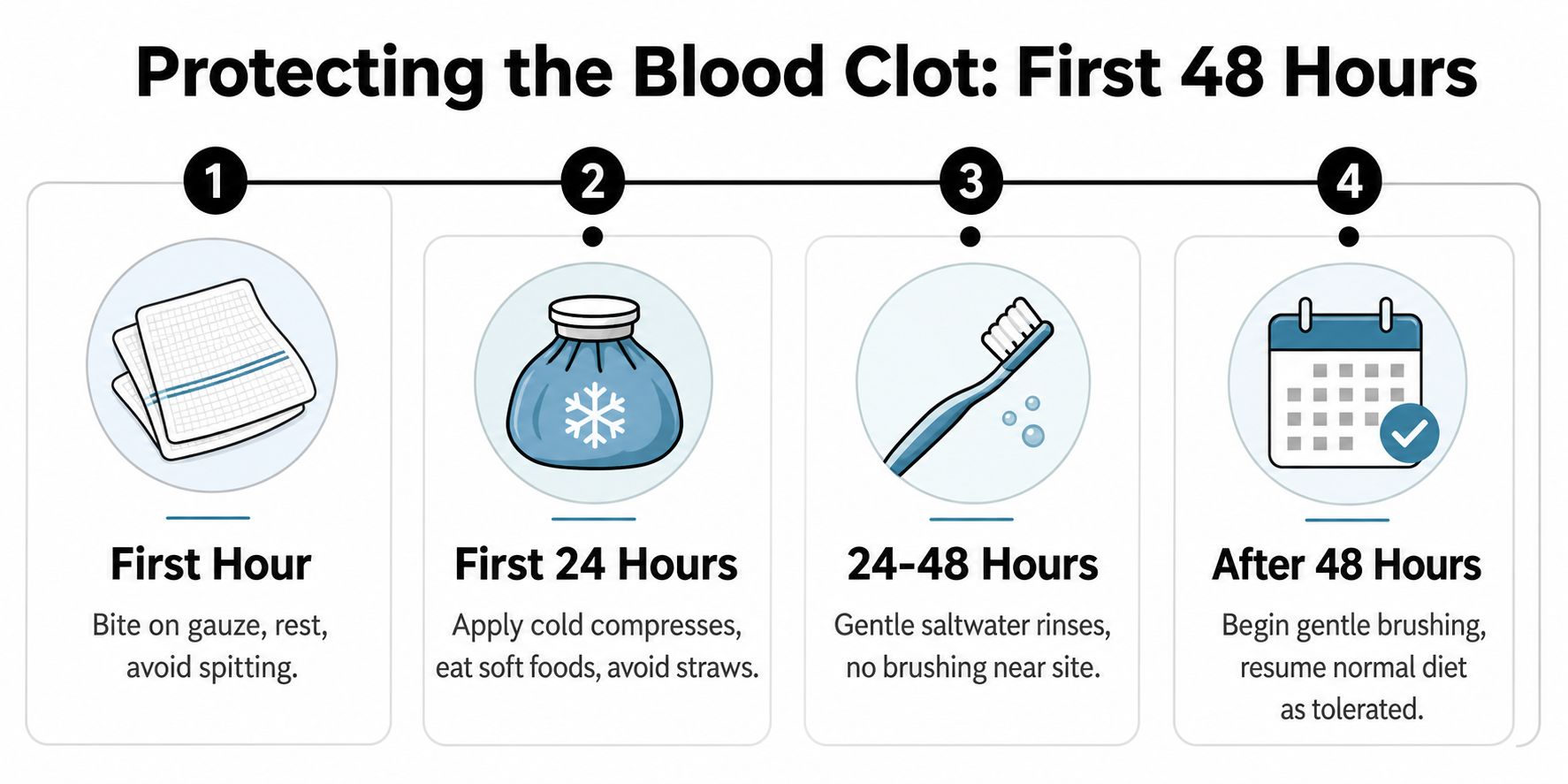
The first priority after an extraction is protecting the blood clot. That clot seals the socket while healing gets started, so the first hours after treatment matter more than many patients expect. In general, you can expect to bite on gauze for 30 to 45 minutes to help control bleeding, and many dentists use ice packs in 20-minute-on, 20-minute-off cycles during the first 24 to 36 hours to limit swelling. Mayo Clinic wisdom tooth extraction care
What to do right away
Once the gauze comes out, leave the socket alone. Do not keep checking it with your tongue, and do not spit or rinse hard. Those habits can loosen the clot and turn a routine recovery into a longer, more painful one.
Gentle warm saltwater rinses usually come later. Mayo Clinic advises gentle saltwater rinses every 2 hours and after meals for a week following wisdom tooth removal. That advice applies to wisdom tooth removal, and it reflects the main goal of early aftercare, let the area stabilize without unnecessary disturbance. Mayo Clinic wisdom tooth extraction care
A practical first-48-hours rhythm
- Bleeding control: keep steady pressure on gauze.
- Swelling control: use cold packs in short intervals.
- Rinsing: wait before starting gentle saltwater rinses.
- Brushing: clean the rest of the mouth carefully and protect the extraction site.
If you want a simple recovery reference to keep nearby at home, the guide on how to recover from tooth extraction lays out the basics in a clear way.
The clot is fragile at first. Treat it like the part of the procedure you cannot see, but still have to protect.
That mindset makes recovery easier. The goal after the extraction is not to do more. It is to avoid the habits that interfere with normal healing.
Behaviors That Sabotage Healing and How to Avoid Them
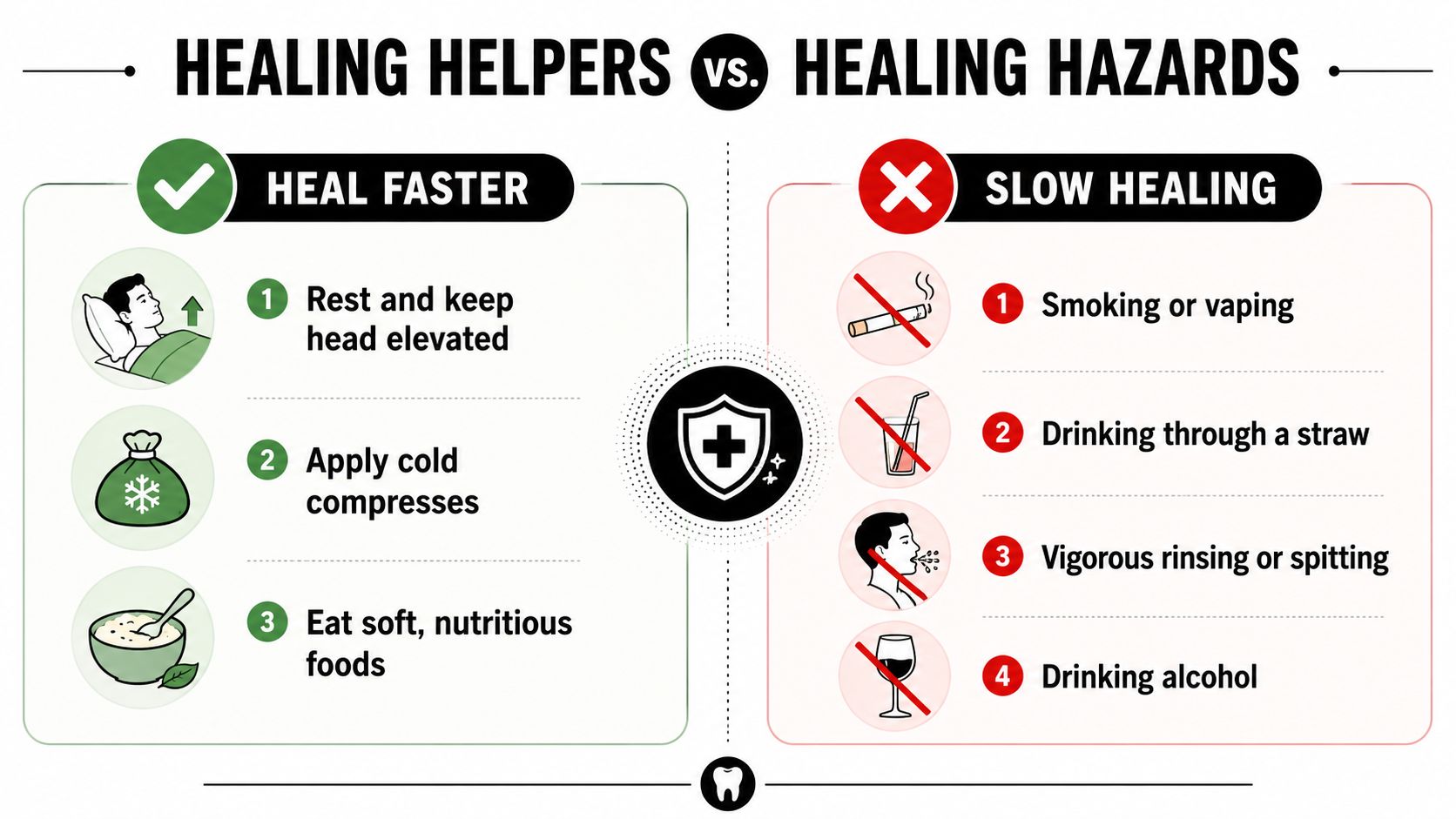
A lot of patients focus on soft foods and forget the habits that protect the socket. The biggest risks are smoking, vaping, drinking through straws, vigorous rinsing, and spitting, because each one can disturb the clot and raise the chance of dry socket. The ADA's MouthHealthy recommends not smoking, not rinsing vigorously, and avoiding straws for 24 hours, along with following the diet your dentist recommends. ADA MouthHealthy extractions
That is why the most useful prep is often behavioral. If you smoke or vape regularly, plan your first day around protecting the clot, not around convenience. Cleveland Clinic gives the same practical warning about avoiding suction, forceful rinsing, and smoke exposure after extraction. Cleveland Clinic tooth extraction guide
What to avoid and why
- Smoking or vaping: can interfere with clot stability and slow healing.
- Straws: the suction can pull at the socket.
- Vigorous rinsing: can dislodge the clot before the tissue seals.
- Spitting: creates pressure changes that are not helpful early on.
Different offices give different timelines for these restrictions, so follow the instructions your dentist gives you rather than guessing. If you have questions before surgery, ask them before you leave the office. Clear instructions are easier to follow than a painful recovery is to fix.
If you smoke or vape, the smartest move is to plan ahead rather than decide in the moment. That may mean arranging a ride home, removing cigarettes or vape devices from reach, and setting up the rest of your day so you are not tempted to test the socket. Patients who want a practical local office that explains those details clearly can find tailored business growth services and use that as one sign of how well the practice communicates before the visit.
Scheduling Your Extraction and Follow-Up Care in Cleveland and Chattanooga
The best extraction experience starts before the appointment and continues after it. In Cleveland and Chattanooga, a good dental office should make the next step straightforward, from the first evaluation and dental X-rays to the extraction itself and any follow-up care you may need. If you also need restorative treatment later, such as dental implants, same-day crowns, or other tooth replacement options, it helps to have one team that can plan the full sequence instead of treating each step in isolation.
Patients also deserve clear communication about comfort options and cost discussions. If a practice publishes helpful patient resources or local service pages, find tailored business growth services can be a useful lens for understanding how strong local dental communication supports trust before the first visit. In real life, that trust is what makes it easier to show up, ask questions, and follow the plan without hesitation.
What matters most is simple. You want a team that explains the procedure, gives you clear fasting and aftercare instructions when needed, and makes the return visit feel easy if a check or restoration is part of the plan. That's especially reassuring for patients looking for an emergency dentist or a dentist near me who can handle both pain relief and long-term repair.
If you're preparing for a tooth extraction and want care that feels calm, clear, and personal, visit Winn Smiles to schedule your appointment in Cleveland or Chattanooga. The team can walk you through your extraction plan, sedation options, and follow-up care so you know exactly what to expect.