Laser dentistry uses focused light to cut, vaporize, reshape, or disinfect oral tissue, and more than 20 indications are approved in the United States. The result depends on the wavelength and the procedure, rather than on replacing every drill or scalpel.
You might be in Cleveland or Chattanooga right now with a sore gumline, a tooth that needs careful repair, or the old dread of a drill. You searched for a dentist near me because you want the visit to feel calmer, and you are not sure whether a laser is gentler care or only a newer name for the same treatment.
That doubt is reasonable. A beam can help with some soft-tissue work and some hard-tissue work. It can also be no better than the usual method, especially when the goal is a whiter smile. The rest of this guide sorts those cases so the question you ask is specific.
What Laser Dentistry Means for Local Patients
Maya in Cleveland had delayed a small filling for months. The drill bothered her more than the toothache. A relative in Chattanooga described a laser visit and made it sound as if every needle and numb lip would vanish. Plenty of adults show up with that hope after typing dentist near me, or dentist in Cleveland, TN, because a gumline aches or a tooth needs a careful fix.
For that reader, laser dentistry means a narrow beam picked for one job. It might trim gum tissue, disinfect a small area, or take out a limited patch of decay. It isn't a single setting you aim at every problem in the mouth.
The worries people actually bring
The questions are concrete. People ask about needles, bleeding, a long numb lip, and whether the tool is only a marketing phrase. Some appointments are quieter. Others still need anesthetic, a hand instrument, or a conventional drill for part of the tooth. A newer device doesn't erase diagnosis, x-rays, or the cleaning and exam that show what is wrong.
Winn Smiles is a local practice in Cleveland and Chattanooga that uses laser dentistry among broader general, cosmetic, and emergency care. You might arrive for a chipped tooth, a new patient exam, or a cosmetic dentist near me search that turns into a real plan. The laser is one option on that plan, not the whole office.
Practical rule: Ask which procedure the beam is meant to help, not whether the practice simply owns one.
Soft-tissue work and hard-tissue work are different jobs. Evidence is solid for some uses and mixed for others. Before you book, you should know what the light replaces, what it only adds, and what result your dentist expects for your tooth or gums.
How Soft-Tissue and Hard-Tissue Lasers Work
Dental lasers aren't interchangeable flashlights. Common systems sit near 532 to 1,340 nanometers, 2,780 to 2,940 nanometers, and 10,600 nanometers, and the tissue reacts according to what soaks up the light, as described in wavelength guidance on soft-tissue laser use. The usual absorbers are water, hemoglobin, melanin, and the mineral in tooth structure.
Think of a dark shirt and a pale shirt in the same sun. The dark shirt heats faster because it takes in more energy. A laser is useful when the target soaks up that wavelength. If the tissue barely absorbs it, you get weak cutting or heat in the wrong place.
Why the target decides the tool
Erbium lasers in that mid-infrared band are strongly absorbed by water, so they can selectively remove enamel, dentin, and decay. Diode and Nd:YAG systems fit pigmented or blood-rich soft tissue better. Carbon-dioxide light is another soft-tissue option because water in gum tissue takes it up readily. Power, pulse length, energy per pulse, spot size, cooling, and the operator's training all change the result. Poor settings can mean weak cutting, excess heat, charring, or injury beside the target.
Water spray, high-volume suction, eye protection, and a trained hand aren't extras. They're how the visit stays controlled. If you are sorting laser care from everyday prevention, it still helps to explore routine dentistry services such as exams and cleanings, because a beam doesn't replace those visits.
| Tissue focus | Typical laser family | What the light targets | What it doesn't replace |
|---|---|---|---|
| Gums and other soft tissue | Diode, Nd:YAG, or CO2 | Blood pigment, melanin, or water in soft tissue | A diagnosis, a scaling plan, or every incision |
| Enamel, dentin, and decay | Erbium lasers | Water in tooth structure and decay | Every drill, especially a complex prep |
| Mixed contouring and surgery | The laser cleared for that exact use | The chromophore that matches the wavelength | Follow-up, sutures when they're still needed, or a hand instrument |
Judge a recommendation by the tissue and the cleared use. The word laser, by itself, doesn't tell you whether a drill, a scalpel, or a hand instrument still belongs in the appointment.
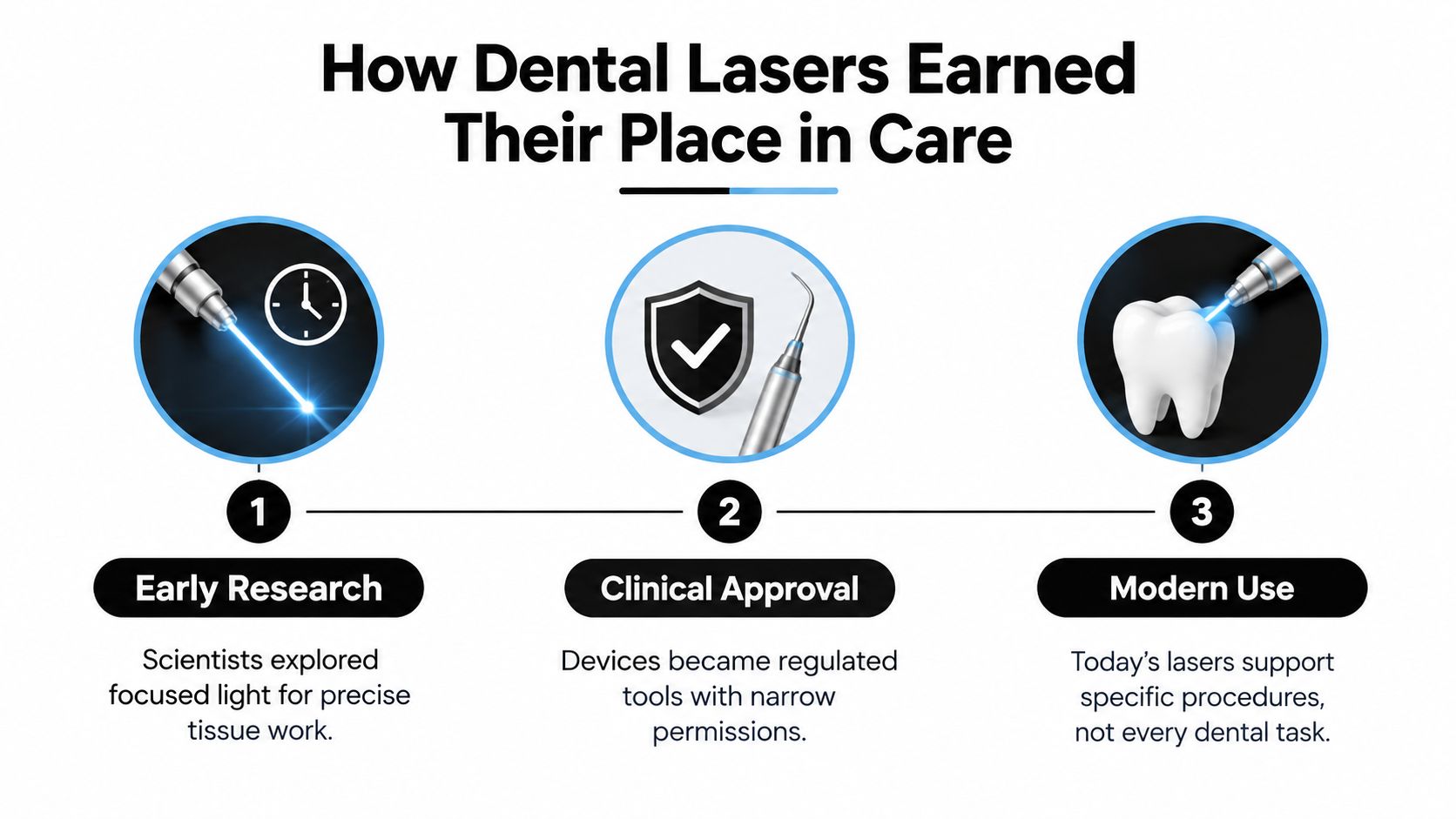
How Dental Lasers Earned Their Place in Care
Today's devices are regulated tools with narrow permissions, not one gadget that does every dental task. The timeline below is the short version of how that happened.
From a lab beam to a cleared use
Focused-light research in dentistry followed the first working ruby laser in 1960. In 1964, researchers reported that ruby lasers could make exposed enamel less open to acid damage, an early link to prevention. The toolbox then widened. Carbon-dioxide lasers arrived in 1964, Nd:YAG lasers in 1968, and clinical soft-tissue use grew in the 1980s. In 1985, CO2 lasers were used for procedures such as gingivectomy, the trimming of gum tissue. Those dates come from the history of dental lasers for clinicians.
Regulation is the part that should change how you listen in the chair. In 1995 the FDA cleared argon, Ho:YAG, CO2, and Nd:YAG lasers for soft-tissue use. In 1997 it cleared the Er:YAG laser for hard tissue, including removal of some decay and some restorative material. Clearance belongs to a product and a stated use. A laser cleared for gum contouring isn't automatically cleared for every cavity or every root-canal step.
A clearance is a permission slip for a named job, not a blanket approval for the whole mouth.
If you are comparing a dentist in Cleveland, TN, with care in Chattanooga, ask which wavelength is planned and which indication it is cleared for. Settings and tissue type still decide the effect. That is why a benefit you read about for one procedure may not show up in yours.
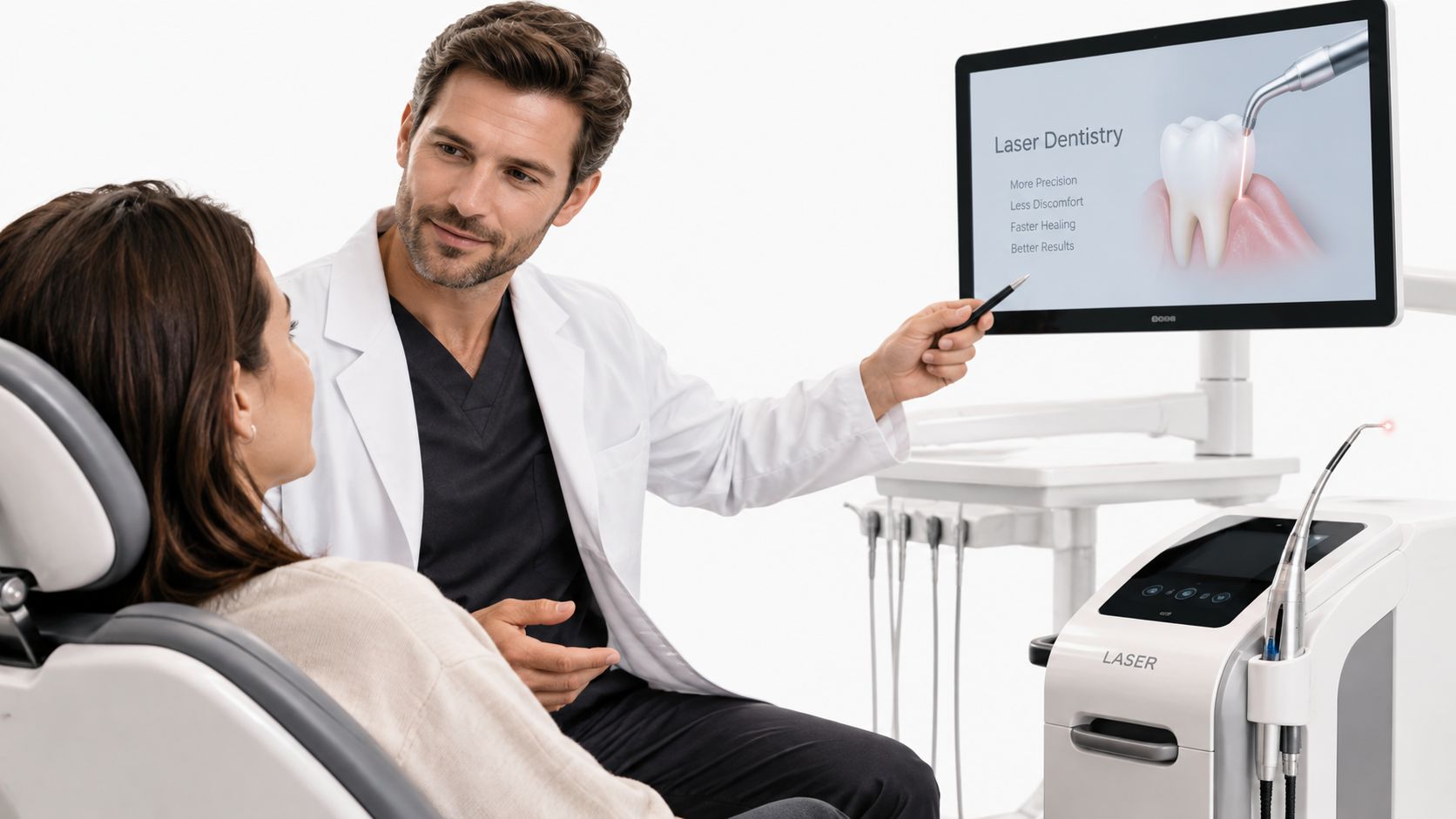
A short clinical overview can make the handpiece easier to picture before you talk through your own tooth.
Benefits and Limits Patients Should Weigh
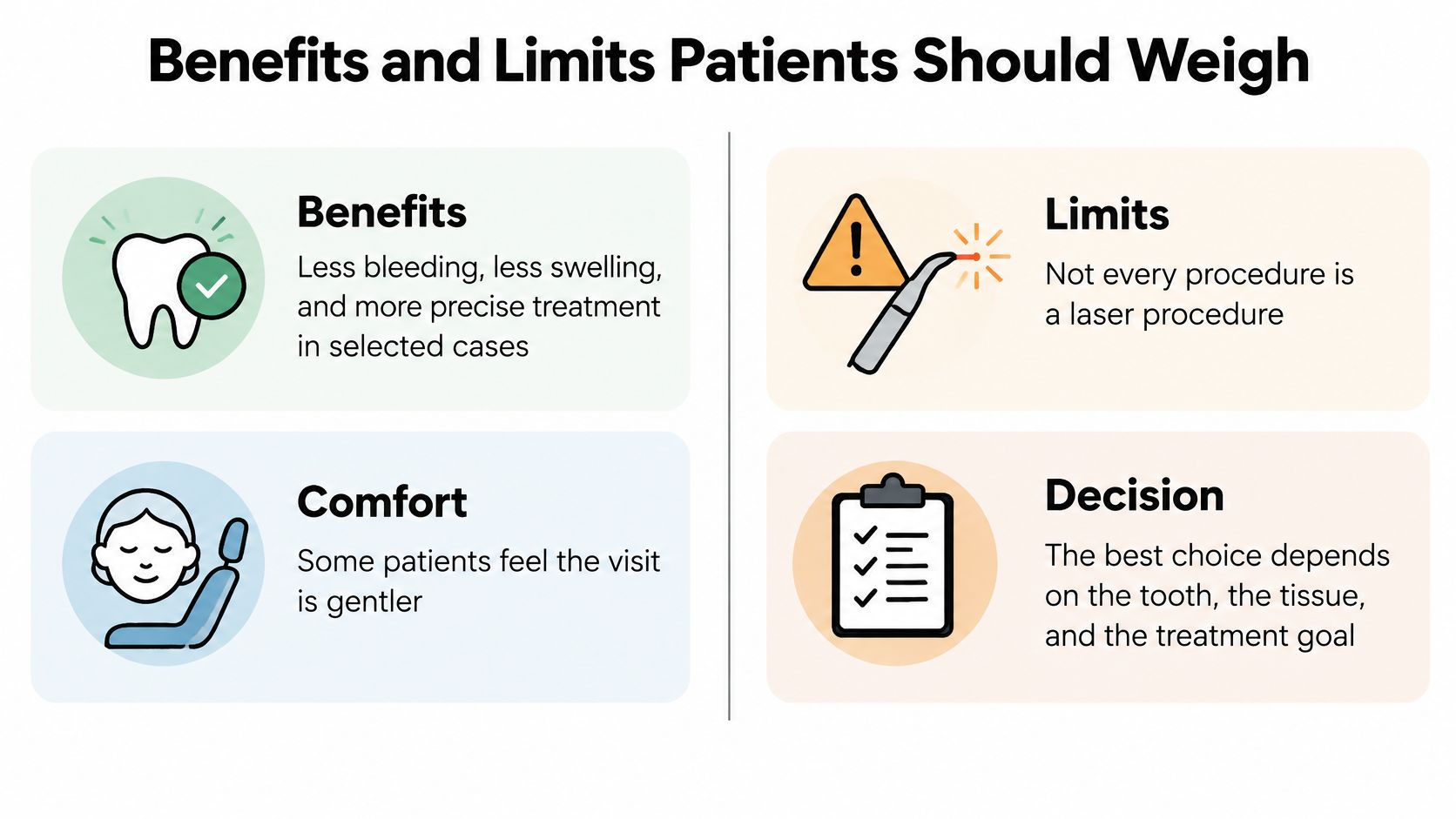
Is laser dentistry better, or only different? The honest answer changes with the procedure. A 2025 review points to precision, less tissue damage, and the possibility of less bleeding or less anesthesia, and it also flags equipment cost, training, and safety. The American Association of Endodontists position on lasers says laser-assisted root-canal preparation hasn't been shown to beat mechanical shaping, and the effect of laser disinfection on root-canal outcomes is still uncertain.
Where the evidence helps
The American Dental Association notes that more than 20 dental-laser indications are approved in the United States, and that each product and each intended use needs its own clearance. Prevention research is one place the numbers are specific. In permanent teeth, Er:YAG combined with topical fluoride-type agents reduced caries compared with untreated teeth, with a risk ratio of 0.44 (95% confidence interval 0.20 to 0.97). CO2 laser plus those agents had a risk ratio of 0.39 versus the agents alone (95% confidence interval 0.22 to 0.71). The same evidence scan on lasers in periodontics found no consistent extra benefit when lasers are added to nonsurgical care for chronic periodontitis.
A lower risk ratio here means fewer new cavities in that comparison, not a promise that a laser prevents decay by itself. The fluoride-type agent is still doing part of the work. Gum disease is a different story. If nonsurgical cleaning is already the right base treatment, adding a laser hasn't shown a steady extra gain for chronic periodontitis.
What to ask before you say yes
Bring the comparison back to your diagnosis.
- Name the problem. Is it a cavity, a gum pocket, a root canal, or a shade change?
- Ask what the laser replaces. Does it stand in for the usual method, or only add a step?
- Ask for the expected result. Comfort, bleeding, healing, and how success will be checked all belong in that answer.
- Keep the conventional option on the table. Liking the technology and requesting the standard comparison can both be true.
People who want a calmer visit can also read about sensitive care dentistry and then ask how that approach fits the specific procedure, not the equipment list.
Procedures and Recovery You Can Expect
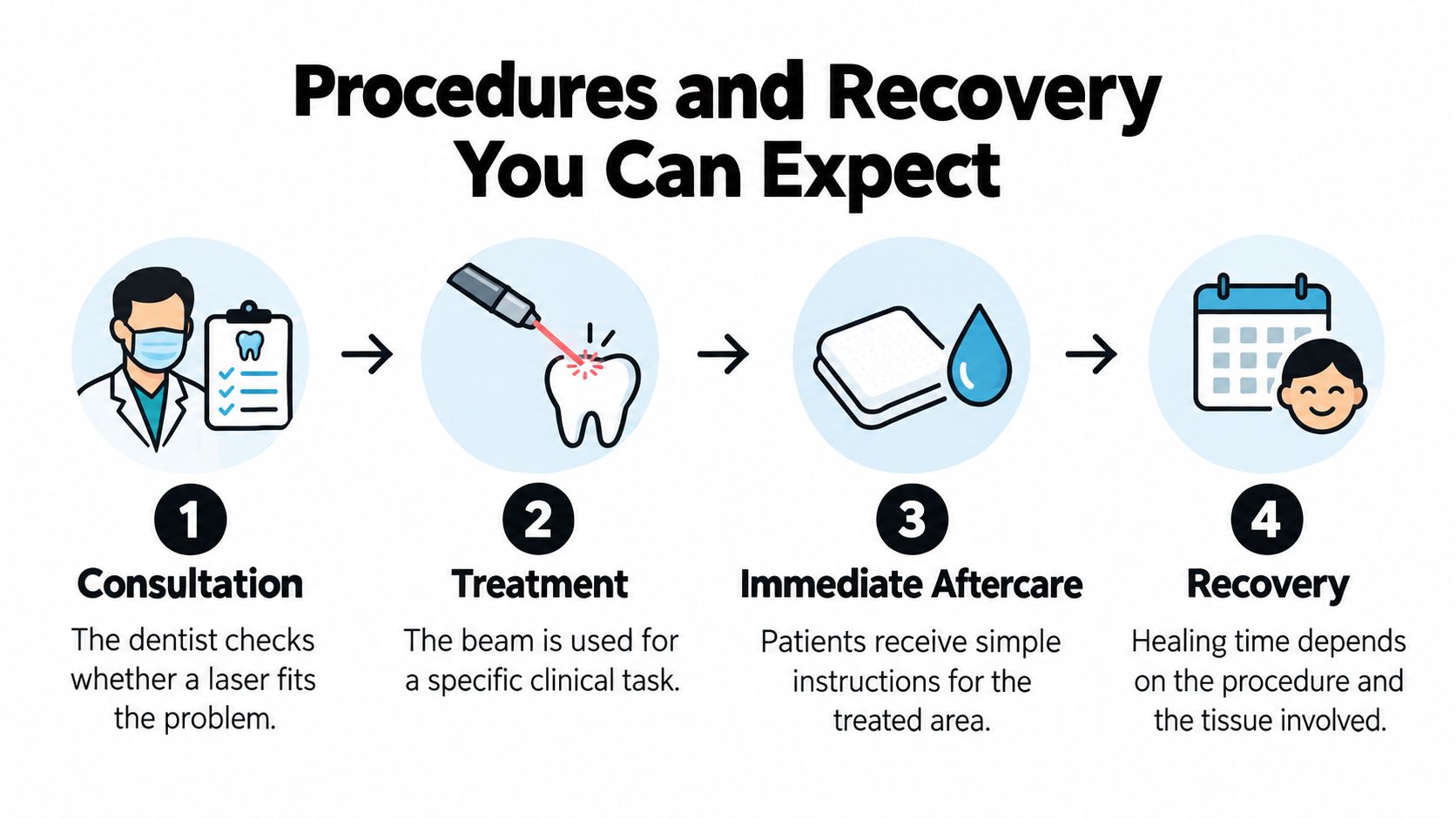
A laser visit isn't one script. The same office might use light to shape gum tissue on Monday and to support comfort after a root canal on Thursday. The handpiece, the settings, and the healing are not the same.
What an erbium visit can include
An FDA-cleared Er:YAG laser may be indicated for soft-tissue incision, excision, ablation, and coagulation. The same FDA device summary for an Er:YAG dental laser lists caries removal, cavity preparation, enamel roughening, sulcular debridement, and selected root-canal access, cleaning, and preparation steps. It also includes removal of fibromas, granulated tissue, and leukoplakia, plus pulpotomy as an adjunct when a root canal is being retreated. That list is a menu of cleared jobs, not a promise that your tooth needs all of them, and it isn't a guarantee you will skip anesthetic.
Cutting and disinfection are different from light used only for comfort. Reviews of dental laser protocols describe photothermal removal, photoacoustic disruption, photochemical antimicrobial effects, and photobiomodulation, and they stress that results swing with wavelength, pulse mode, energy, time, and cooling, according to a clinical review of laser protocols. Laser-activated irrigation, for example, stirs irrigant inside a root canal. Low-level red or near-infrared light is meant to influence pain and repair without ablating tissue.
Comfort after treatment, without skipping the treatment
A systematic review of low-level laser therapy for pain after root-canal treatment included nine randomized trials. A meta-analysis of five found less pain than placebo after one day, with a visual-analog-scale mean difference of -0.56 (95% confidence interval -0.74 to -0.38). The review of low-level laser therapy after endodontic treatment rated that evidence as moderate certainty and called the therapy a possible adjunct at 24 hours, not a substitute for diagnosis or the canal treatment itself.
Recovery stays modest. Some gum procedures bleed less. Numbness and soreness still vary by person and by how much tissue was touched. Aftercare is still ordinary. Keep the area clean, use what you were given for discomfort, and call if swelling or pain climbs instead of settling. Fees depend on the procedure, and a plain look at what laser gum treatment can cost is a better starting point than assuming the technology sets one price.
You should be able to say your visit back in plain words. "The laser trimmed gum," "it removed a small area of decay," or "it was only for comfort afterward" are three different appointments.
Safety Risks and Laser Whitening Limits
Safety and benefit depend on energy, cooling, wavelength, and the procedure itself. Whitening is the clearest place where a light can add complexity without adding a predictable result.
Whitening without a reliable extra gain
An umbrella review of in-office bleaching found no consistent improvement in final whitening when laser or light activation was compared with protocols that weren't activated. Sensitivity wasn't reliably lower, and it was worse with some high-energy approaches. The same umbrella review of in-office bleaching reported that poor cooling or weak temperature checks can raise the temperature inside the tooth toward levels linked with irreversible pulp damage. Broader laser safety guidance in that review also calls for wavelength-specific eyewear, controlled access, warning signs, and removal of reflective surfaces.
A brighter shade can still be a fair goal. Activation just isn't automatically safer, or automatically better. Ask four things before you agree to a light-activated whitening visit.
- Is activation necessary for the shade you want, or does a non-activated gel reach a similar result?
- How are the gums and the pulp protected while the gel and the light are on?
- Is exposure or temperature watched, and what happens if the tooth heats up?
- What is the backup plan if sensitivity shows up during or after the visit?
Controls you can see, and problems that can't wait
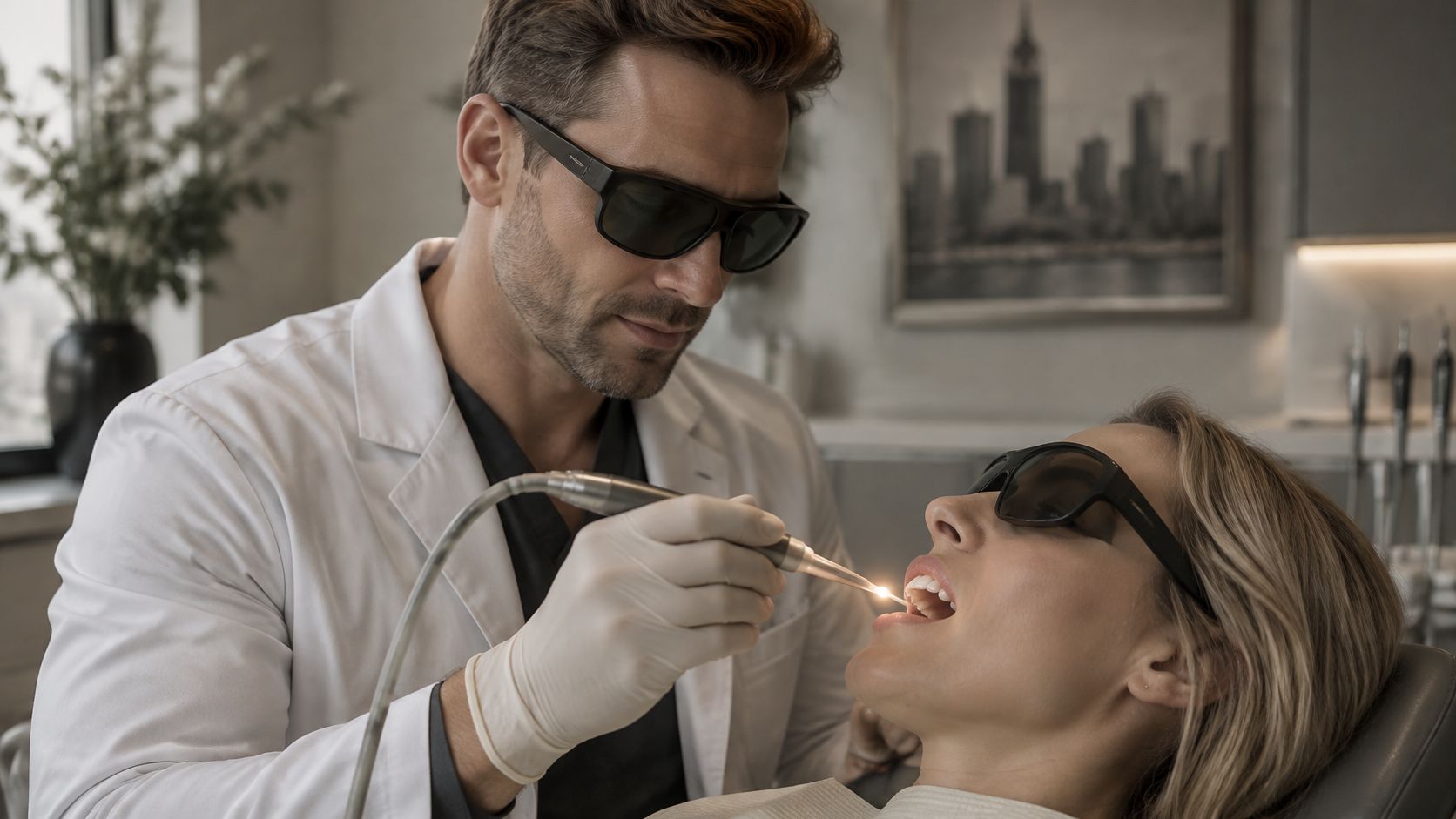
The same caution belongs in surgery and gum care. You should see protective eyewear matched to the wavelength, limited access to the room, a warning sign while the laser is on, and reflective surfaces moved out of the beam path. A laser isn't automatically painless, and it isn't risk-free. Training and the learning curve matter because the wrong device or the wrong settings can injure tissue instead of helping it.
Urgent problems follow a different path. The American Dental Association flags uncontrolled bleeding, cellulitis or diffuse swelling that may threaten the airway, and facial trauma that could affect breathing as potentially life-threatening. Its urgent examples also include a painful tooth fracture that injures soft tissue, and trauma with a tooth knocked out or badly displaced, in ADA guidance on dental emergencies. Significant swelling, trouble breathing or swallowing, uncontrolled bleeding, or a knocked-out tooth needs an emergency dentist and, when the airway is at risk, emergency medical care. Don't wait for a cosmetic laser visit.
Laser Dentistry at Winn Smiles Near You
Once you know the beam is procedure-specific, the next step is a conversation, not another gadget tour. At Winn Smiles in Cleveland and Chattanooga, the rooms are light and airy, and a comfort menu plus sedation matched to your needs are there for people who feel anxious before they sit down. The team explains choices in plain language, including when a laser is a fit and when a conventional instrument is the better tool.
How laser care sits next to the rest of the visit
Laser dentistry is used here to make selected procedures gentler and more precise. It doesn't stand in for the rest of dentistry. A same-day crown can restore how a tooth looks and works in one visit when that is the right fix. People comparing a cosmetic dentist near me often ask about teeth whitening, veneers, or Invisalign in the same plan as gum care. Restorative needs, root canals, and periodontal care stay on the table when the diagnosis calls for them.
Tooth replacement is separate from the laser question. If you are looking for dental implants near me, or a full-arch replacement after tooth extraction, the implant plan is about stability and healing, not about whether a handpiece uses light. Emergency visits are for pain, swelling, and broken teeth that shouldn't wait. Sleep apnea can be reviewed with therapeutic options when an oral appliance is appropriate. None of those services become a laser service just because the office owns the technology.
Hours are set for people who work, and cost is discussed in plain numbers before you commit. Two locations serve Cleveland, Chattanooga, and nearby communities. Free consultations and second opinions for select services give you a low-pressure way to ask which wavelength, which goal, and how that plan compares with conventional care.
If you are unsure about a recommendation you already heard, bring it. A second look should tell you whether laser care fits your tooth, your gums, or your smile goal, and what happens if it doesn't.
Winn Smiles offers laser dentistry alongside general, cosmetic, restorative, and emergency care for adults in Cleveland and Chattanooga who want a clear explanation before treatment. You can ask which wavelength fits your tooth or gums, how it compares with conventional care, and whether whitening, a crown, or another option is the better match. Schedule an appointment or request a consultation at Winn Smiles.