You may be thinking about braces or Invisalign because you’re tired of crowded teeth, bite problems, or a smile that doesn’t feel like you. Then one search turns up a phrase like braces bone loss, and the excitement quickly turns into worry.
That concern is understandable. Individuals aren’t afraid of straightening their teeth. They’re afraid of damaging the bone and gums that support those teeth for life.
If you’re in Chattanooga or Cleveland, TN, the safest way to approach orthodontic treatment is to stop guessing and start with a careful exam. Bone loss is a real dental topic, but it’s also one that gets oversimplified online. The important question isn’t “Do braces always cause bone loss?” It’s “What kind of bone changes are normal, what signals risk, and how do you choose treatment that protects your long-term oral health?”
A local dentist in Chattanooga, TN should help you answer that clearly. If you’re also searching for a dentist near me, cosmetic dentist near me, or a practice that can coordinate Invisalign, periodontal care, dental implants, and restorative dentistry under one roof, that kind of complete evaluation matters even more.
Concerned About Braces and Bone Loss in Chattanooga
A lot of adults ask some version of the same question. “I want straighter teeth, but could braces make my gums recede or weaken the bone around my teeth?” That’s not overthinking. That’s a smart question.
The confusion starts because people use bone loss to describe several different things. Sometimes they mean the normal bone changes that allow teeth to move. Sometimes they mean damage from untreated gum disease. Sometimes they mean small, localized changes seen on imaging. Those are not all the same problem.
Why this fear is so common
Orthodontic treatment changes more than the position of a tooth. It also affects the bone and gum tissue around that tooth. So when people hear that braces “move bone” or “cause bone loss,” it can sound alarming.
What matters is context. Healthy orthodontic treatment uses controlled force and careful monitoring. Risk rises when someone starts treatment with hidden gum disease, poor home care, smoking habits, or thin supporting bone that hasn’t been evaluated closely.
What patients deserve to hear: Concern about bone loss shouldn’t stop you from asking about treatment. It should lead to a more thorough exam and a more personalized plan.
For many adults in Chattanooga and nearby communities, this issue comes up alongside other needs. Some are already dealing with gum inflammation. Some have missing teeth and are also exploring dental implants near me. Others want cosmetic dentistry, teeth whitening, or a healthier bite after years of wear.
A safer way to think about treatment
A responsible dental team doesn’t treat straight teeth as the only goal. Instead, the goal is a stable, healthy smile that still has strong support years from now.
That’s why a thorough orthodontic evaluation should include more than a quick look at alignment. It should consider:
- Current gum health so active inflammation isn’t ignored
- Dental x-rays and imaging to assess the bone around the teeth
- Bite patterns and tooth position to avoid pushing teeth beyond their natural support
- Long-term planning if you may need restorative dentistry, tooth extraction, or implants later
If you’ve been putting off care because you’re nervous, you’re not alone. Many adults in Chattanooga and Cleveland want a straight smile, but they want it done carefully. That’s the right instinct.
The Truth About Tooth Movement and Bone Remodeling
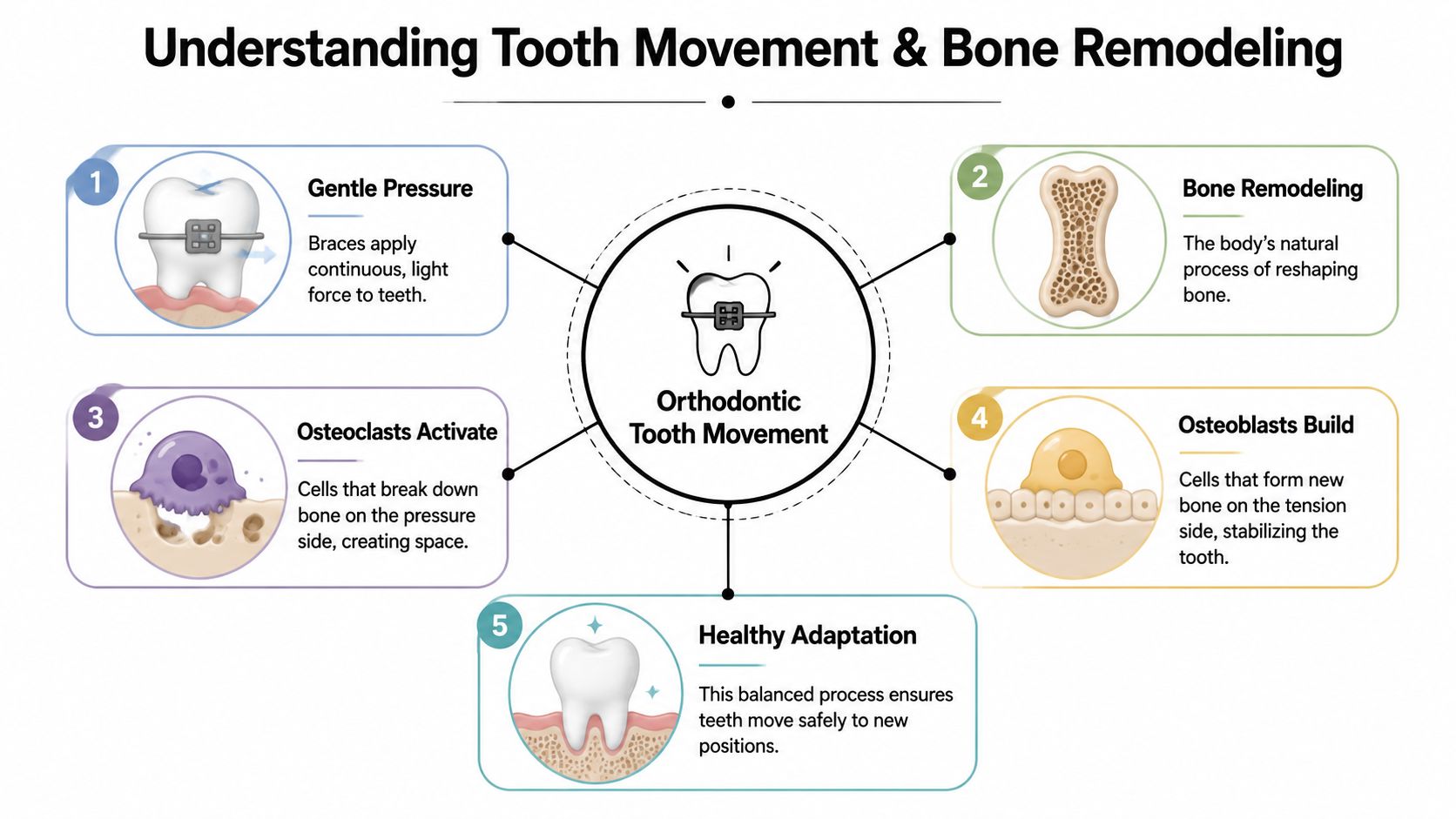
Braces don’t work by dragging teeth through solid bone like a nail through wood. Teeth move because your body remodels the bone around them in a controlled way.
A simple way to picture it is this. Think of a fence post set in packed, damp soil. If you want to reposition it slightly, the soil on one side has to give a little while new support firms up on the other side. Teeth move in a similar way. The supporting bone adjusts so the tooth can shift safely.
What’s happening around the tooth
When gentle orthodontic pressure is applied, your body responds in two directions at once:
- On the pressure side, bone is resorbed so the tooth has space to move.
- On the tension side, new bone is deposited to support the tooth in its new position.
That process is called bone remodeling. It’s not a treatment mistake. It’s how treatment works.
A landmark CBCT study found that bone density temporarily decreased by about 23% during active orthodontic treatment, then rebounded during retention. By the time researchers compared the pre-treatment scan to the post-retention scan, the overall mean change was only about 0.75% and was statistically nonsignificant, which supports the idea that most of this temporary loss is reversed over time with proper management (longitudinal CBCT study on alveolar bone density).
Why the word loss can be misleading
The phrase braces bone loss makes many people think of permanent destruction. In healthy, well-managed cases, that usually isn’t what’s happening. During active movement, the bone is adapting. Then it continues to reorganize and strengthen as treatment finishes and retention begins.
That doesn’t mean every tooth site responds identically. Biology isn’t perfectly uniform. But it does mean the normal process of orthodontics should be understood as remodeling first, not automatic damage.
Bone changes during orthodontic treatment are expected. The real concern is whether those changes stay within healthy limits.
Where patients often get confused
People usually mix up three separate ideas:
| Concern | What it usually means |
|---|---|
| Normal remodeling | Temporary bone change that allows tooth movement |
| Periodontal bone loss | Damage caused by gum disease and inflammation |
| Localized defects | Small site-specific changes that need monitoring |
That distinction matters because the solution changes with the cause. A patient with healthy gums and careful treatment planning is in a very different situation from a patient starting with active periodontal disease.
If you’ve heard that braces “eat away bone,” that’s too simplistic to be useful. The better question is whether your teeth, gums, and bone can support the planned movement safely.
Who Is at Higher Risk for Complications
Not everyone carries the same risk during orthodontic treatment. Some people can move forward with routine monitoring. Others need gum treatment, closer imaging, or a gentler plan before any aligner or bracket goes on a tooth.
The biggest warning sign is untreated periodontitis. When active gum disease is already breaking down the structures that hold teeth in place, adding orthodontic force can create a compounding problem rather than a healthy adaptation.

The highest-risk situation
The clearest risk factor is periodontal disease that hasn’t been stabilized. Significant bone loss during orthodontic treatment most often follows that pathway. Poor oral hygiene can also raise the chance that gingivitis progresses to periodontitis by 40% to 60% because plaque builds up around brackets and wires (bone loss risk factors during braces treatment).
That’s why a patient with bleeding gums, loose teeth, bad breath, or deep gum pockets shouldn’t jump straight into cosmetic tooth movement. The foundation has to be treated first.
Other factors that can change the picture
Some risks are local to the mouth. Others come from overall health and habits.
- Smoking: It can impair healing and make gum problems harder to control.
- Diabetes that isn’t well managed: Blood sugar issues can complicate inflammation and tissue response.
- A history of bone density problems: This can affect how the supporting structures respond.
- Past gum recession or existing bone loss: These patients often need more cautious tooth movement.
- Adults with slower remodeling: Treatment may still work well, but planning often needs to be more conservative.
If your gums bleed easily now, that’s not a reason to give up on orthodontics. It’s a reason to get the gums healthy before treatment starts.
Small changes can still matter
Even healthy patients can show small, site-specific changes when teeth are moved close to the edge of their natural bony housing. That doesn’t mean treatment is unsafe. It means treatment needs supervision, especially around teeth with thinner support.
A practical way to think about risk is to ask three questions at your exam:
- Are my gums healthy enough to start now?
- Do any teeth have thin bone support or recession risk?
- Would braces, clear aligners, or staged treatment be safer for my mouth?
Those questions turn fear into a real treatment conversation. For many people in Chattanooga and Cleveland looking for a dentist in Chattanooga, TN, cleaning and exams, or a new patient evaluation before cosmetic dentistry, that conversation is where good care begins.
How We Prevent and Manage Bone Loss at Winn Smiles
The safest orthodontic plan starts before the first tray or bracket. If a patient is worried about braces bone loss, the answer isn’t reassurance alone. The answer is diagnosis, risk sorting, and a treatment plan built around the condition of the bone and gums today.
Start with the foundation
Before tooth movement, the supporting tissues need a full review. That means looking at gum health, recession, plaque retention, bite forces, and radiographic bone support. If there’s active periodontal disease, that problem comes first.
That may include a focused gum evaluation, more frequent cleanings, or treatment through periodontal care. Straightening teeth on an unhealthy foundation is like remodeling a house while the base is still shifting.
A safer plan often includes:
- Updated imaging: Dental x-rays help reveal bone levels and root position.
- Periodontal screening: Bleeding, pocketing, and recession need to be identified early.
- Home-care coaching: Brushing and flossing technique become more important once treatment begins.
- Bite review: Some tooth movements are lower risk than others, depending on anatomy.
Choosing the right force and the right system
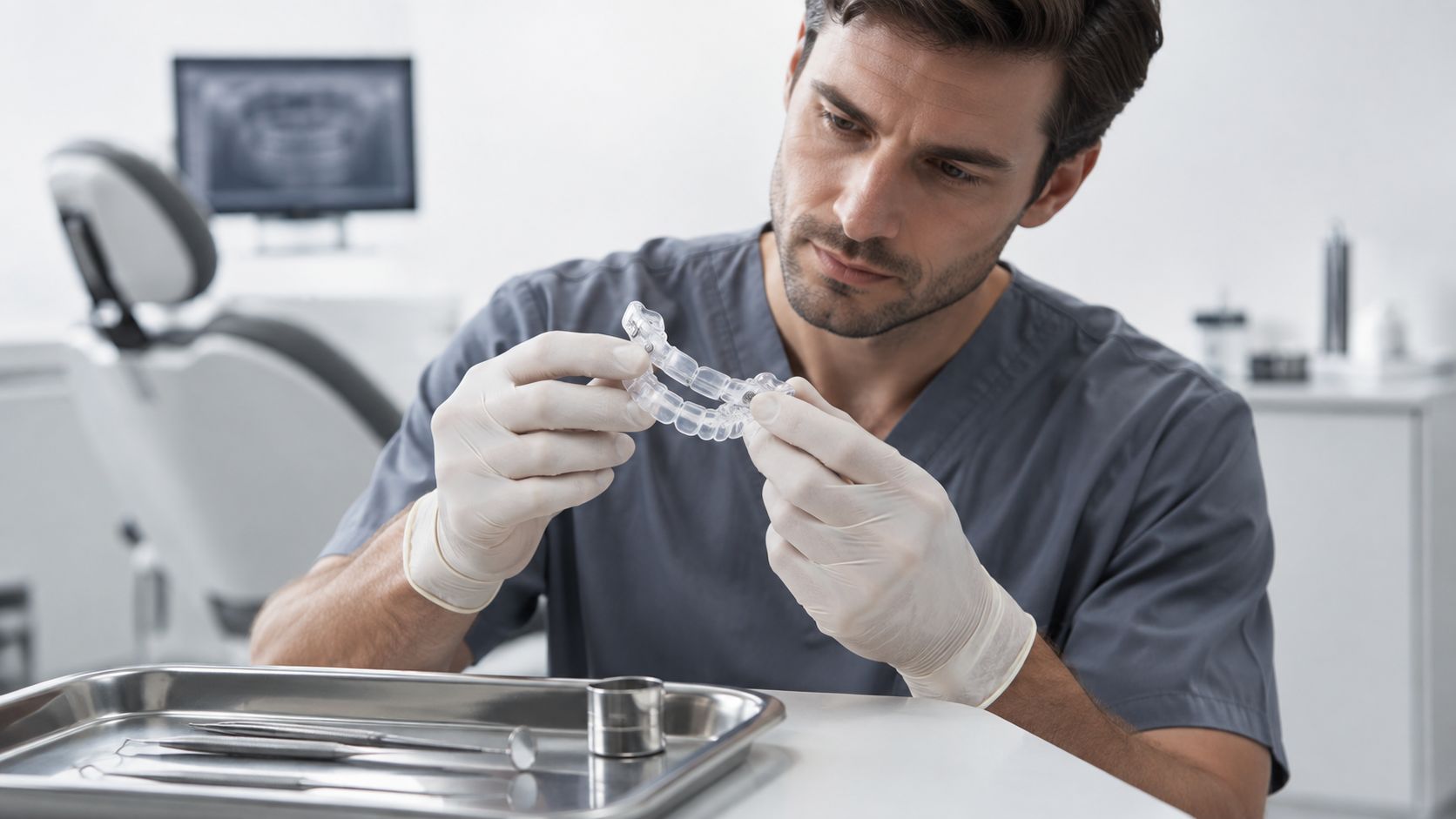
Orthodontic treatment should work with your biology, not against it. Some patients are good candidates for braces. Others may benefit from a system that allows more controlled, staged movement.
For patients with a history of gum disease, clear aligners may be a preferable option. A 2025 meta-analysis indicated that aligners caused 12% less detrimental bone remodeling in periodontitis cases than traditional braces, and aligners can exert up to 30% less peak pressure, which may be gentler on supporting bone and gums (comparison of aligners and braces in periodontal-risk patients).
That doesn’t mean aligners are automatically right for everyone. It means treatment choice should match the patient’s risk profile, anatomy, and ability to keep the teeth clean.
Practical rule: The best orthodontic system is the one your mouth can support safely, not the one that sounds most appealing online.
A short visual explanation can help if you’d like to see how these forces are managed in real treatment planning.
Monitoring matters as much as planning
Even a good plan needs follow-up. During treatment, the dental team watches for inflammation, recession, hygiene problems, discomfort patterns, and tooth movement that may be outpacing the body’s ability to adapt.
In practical terms, that can mean slowing movement, improving home care, coordinating gum treatment, or changing the sequence of tooth movement. Patients sometimes think the major decision is whether to choose braces or Invisalign. In reality, the bigger issue is whether your provider is watching the bone and gums closely enough throughout treatment.
That same careful approach also matters if your care plan includes restorative dentistry. If a tooth is already compromised, or if missing teeth are part of the larger picture, future planning for bridges, same-day crowns, or dental implants should be considered while orthodontic decisions are being made.
Achieving a Healthy and Beautiful Smile for Life
Straight teeth are often treated like a cosmetic goal only. In real life, alignment affects how you clean your teeth, how your bite functions, and how evenly pressure is distributed when you chew.
That’s why safe orthodontic treatment can support more than appearance. When teeth are less crowded and easier to reach with a toothbrush and floss, daily home care gets simpler. That can make it easier to protect the gums and maintain the bone over time.
Why good alignment supports long-term oral health
Modern 3D imaging studies show that small, localized vertical bone loss of around 1.2 to 1.3 mm can occur around certain teeth even in healthy patients during orthodontic treatment. Those findings are exactly why professional monitoring matters. They help clinicians catch minor site-specific changes before they become a larger issue, while patients still benefit from the long-term health advantages of a properly aligned bite (3D imaging findings on localized vertical bone changes).
That kind of careful oversight is one reason orthodontics can be both safe and worthwhile. The goal isn’t to pretend no biological change happens. The goal is to keep expected changes controlled and healthy.
A straighter smile can fit into a bigger care plan
For some adults, orthodontics is only one piece of treatment. You may also need:
- Restorative dentistry if older fillings, worn teeth, or cracked teeth are affecting your bite
- Tooth extraction if a damaged or non-restorable tooth is interfering with oral health
- Dental implants near me if you’re replacing a missing tooth and want stable support
- Cosmetic dentistry such as teeth whitening after alignment is complete
A missing or failing tooth changes how your bite works. In those cases, an implant can provide a strong foundation for function as well as appearance. If the teeth are healthy but stained or uneven after alignment, cosmetic finishing touches may make the final result feel complete.
A healthy smile isn’t only straight. It’s cleanable, comfortable, stable, and supported by healthy gums and bone.
Patients often start by searching for a cosmetic dentist near me, but the best outcomes usually come from planning that blends appearance with prevention. That’s especially true for adults in Chattanooga and Cleveland who want to improve their smile without creating new problems later.
Your First Orthodontic Consultation in Cleveland or Chattanooga
Most first visits feel easier once you know what’s going to happen. If you come in worried about bone loss, gum recession, or whether you’re even a candidate for treatment, the appointment should slow things down, not pressure you into a decision.

What the visit usually feels like
You arrive, check in, and have time to settle into a comfortable setting. Many adults who look for an emergency dentist, a family dentist, or a new dentist near me haven’t had a fully positive dental experience in the past. A calmer environment helps.
The conversation usually starts with your goals and concerns. Maybe you want straighter front teeth. Maybe you’re worried about crowding getting worse. Maybe another office mentioned gum recession, and now you’re unsure whether braces or Invisalign is safe.
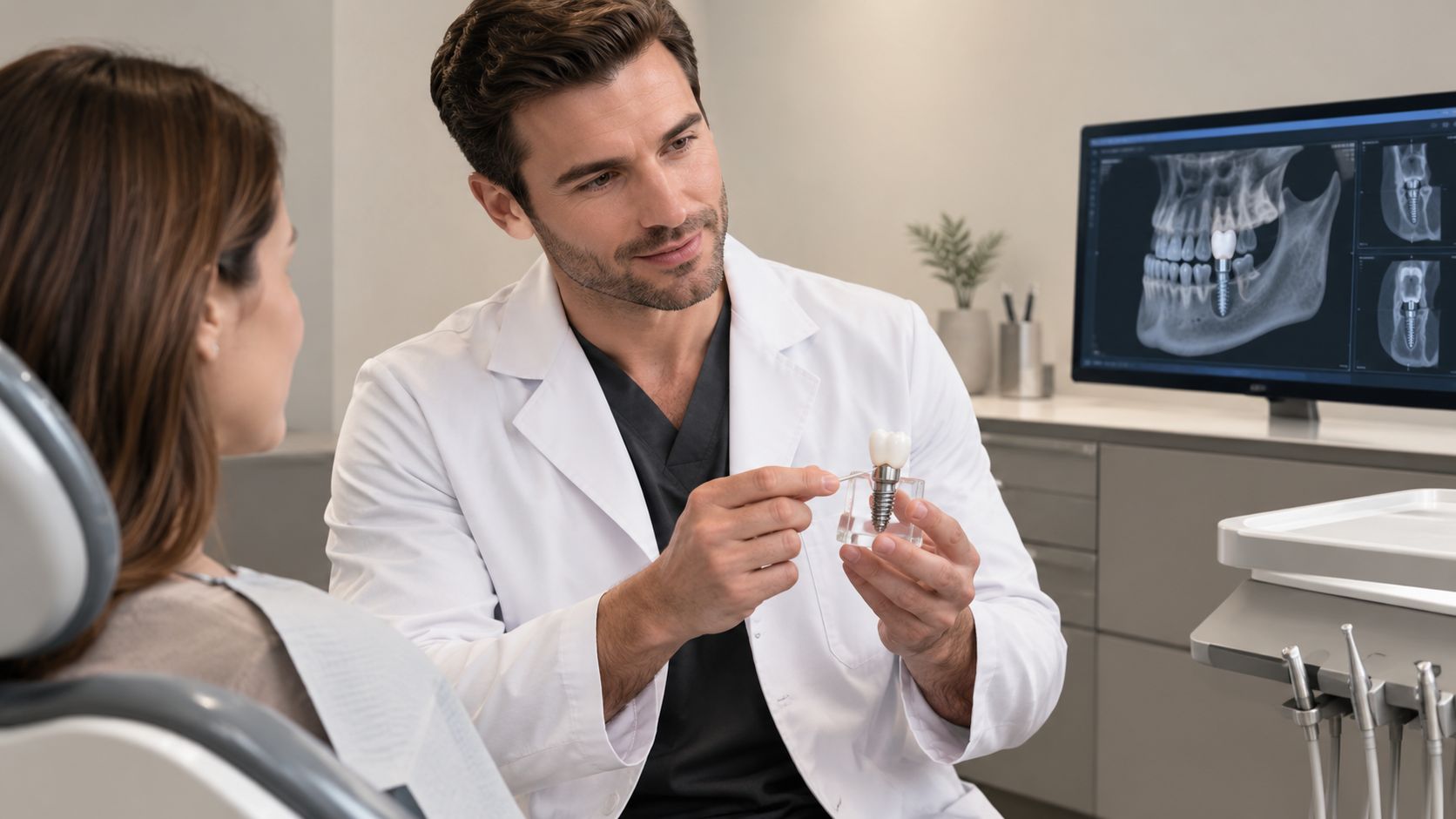
Then comes the clinical part. Digital x-rays and an exam help show the position of your teeth, roots, and supporting bone. Periodontal health is checked so any inflammation or existing bone concerns can be identified before treatment decisions are made.
How treatment decisions are made
Orthodontic movement depends on controlled biology. Pressure causes a temporary 24% decrease in bone density to allow tooth movement, and treatment is safest when that force stays within physiologic limits. That’s why force protocols need to be customized to protect long-term dental health (bone remodeling dynamics and force control in orthodontics).
You should leave the consultation understanding your options in plain language. That may include braces, aligners, periodontal treatment first, or a phased plan if restorative work is also needed. If you want to compare systems before your visit, this overview of Invisalign vs traditional braces can help you start that discussion.
Some patients also want reassurance before choosing a new office. Looking at patient reviews can help, and if you want a broader perspective on how dental feedback shapes trust, this guide to online reputation for dentists gives useful context on what reviews can and can’t tell you.
What to bring up at your appointment
Bring the questions you’ve been carrying around, especially the uncomfortable ones.
- Ask about your gum health: If you’ve noticed bleeding or recession, say it directly.
- Mention missing teeth or old dental work: This affects bite planning and future restorations.
- Talk about anxiety: Comfort options matter, especially if you’ve delayed care.
- Be honest about home care and smoking: Good planning depends on accurate information.
A good consultation should feel collaborative. You’re not there to be sold a smile. You’re there to learn what your mouth can support safely, and what path gives you the best chance of lasting results.
If you’re worried about braces bone loss and want clear answers from a local team, Winn Smiles offers consultations for patients in Chattanooga, Cleveland, TN, and nearby communities. Whether you’re exploring Invisalign, periodontal treatment, cosmetic dentistry, restorative care, or dental implants, the next step is a careful exam and a personalized plan built around your long-term health. Schedule your visit and get the information you need to move forward with confidence.