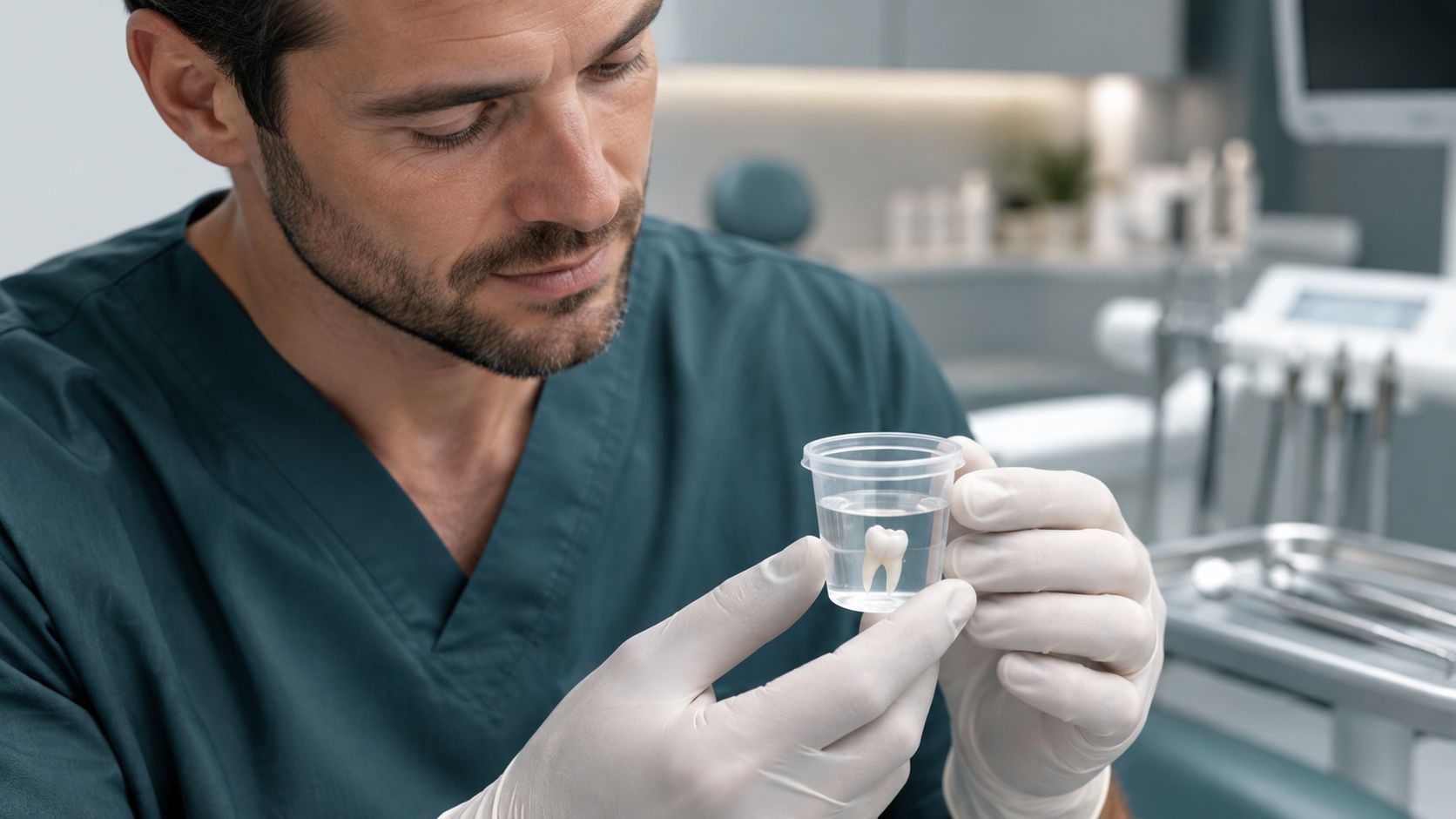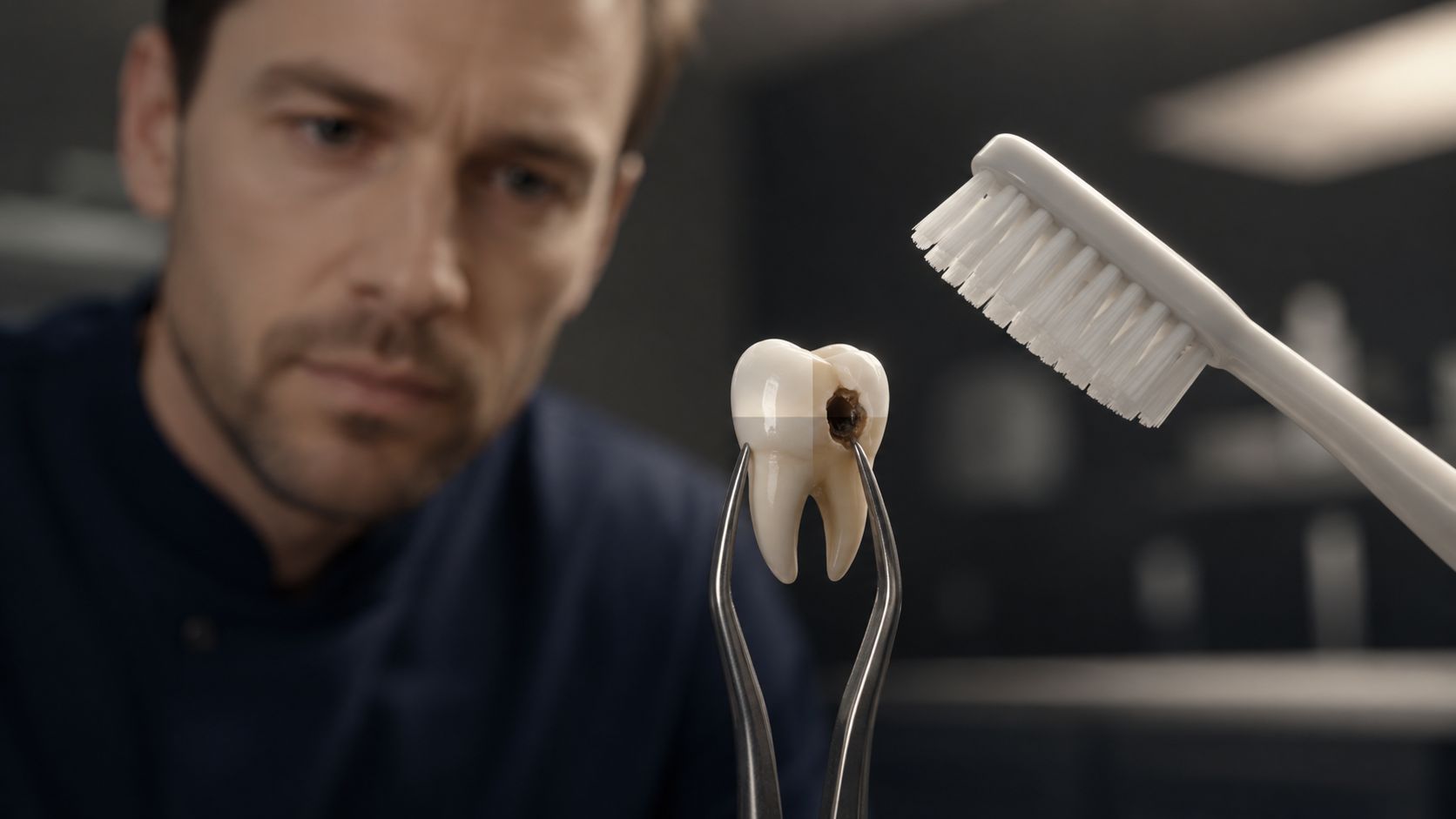
Brushing can't remove an existing cavity, but it plays a major role in stopping new ones from forming and can even help reverse the earliest stage of tooth decay before a true hole develops. In prevention, fluoride matters: the CDC notes that fluoride varnish reduces cavities in primary teeth by one-third and that sealants on back teeth prevent 80% of cavities when used appropriately in preventive care (CDC cavity guidance).
You may be here because you noticed a dark spot, a rough area on a tooth, or a little sensitivity when you drink something cold. A lot of people in Chattanooga and Cleveland ask the same question: Can brushing get rid of cavities? It's a reasonable question, especially if you're trying to fix the problem early and avoid more treatment than you need.
The reassuring part is that you do have control over a lot of this. What matters is knowing which stage of decay you're dealing with. If the enamel is only starting to weaken, better home care and fluoride can help. If a hole has already formed, brushing still helps protect the rest of your mouth, but it won't close that defect.
Your Guide to Cavities from a Dentist in Chattanooga TN
You notice a spot on a tooth one morning while brushing. It is not painful, but it was not there last week. Now you are wondering whether better brushing will fix it or whether you need to have it checked.
That question comes up often in our Chattanooga and Cleveland offices because tooth decay does not always announce itself with a toothache. Early changes can look small and feel easy to ignore. The good news is that you still have useful options at each stage. The key is knowing what brushing can control at home and what needs a dentist's help.
What brushing can do
Brushing with fluoride toothpaste helps in three practical ways. It removes the sticky plaque film that feeds cavity-causing bacteria. It lowers how long acids sit on the enamel. It also brings fluoride into contact with the tooth surface, which supports enamel that is starting to weaken.
A tooth works a lot like a wall with paint on it. If the surface is only starting to wear, you can protect it and slow further damage. Once there is an actual hole in the wall, cleaning the area still matters, but cleaning alone does not fill the missing space.
That is why brushing is powerful for prevention and for very early enamel damage. It does not erase a formed cavity.
Where people often get mixed up
A dark line is not always decay. Sensitivity to cold is not always decay either. On the other hand, a rough spot that keeps catching floss, food trapping in the same place, or a visible opening in the tooth can mean the structure has broken down and needs treatment.
This is also why guessing at home can be frustrating. Two teeth can look similar in the mirror and need very different care. One may need fluoride, monitoring, and better daily habits. Another may need a filling because the enamel has already opened up.
If you want a clearer picture of the habits that lead to decay in the first place, this guide on what causes tooth decay in adults explains the process in plain language.
What you can control today
You have more control than you may think.
- Brush twice a day with fluoride toothpaste. This supports enamel and helps slow the conditions that let decay progress.
- Pay attention to changes. A new white spot, stain, rough edge, or sensitivity is worth noticing early.
- Get the tooth evaluated if something seems off. A local dentist can tell whether the area is an early weak spot, a stain, or a cavity that needs repair.
- Act based on the stage, not the worry. Early enamel changes may respond to fluoride and home care. A true hole needs professional treatment to stop it from getting larger.
When you need to find a local dentist for a new concern or a painful tooth, the goal is simple. Find out what stage the tooth is in, then choose the treatment that fits that stage. That approach gives you the best chance to protect the tooth with the least treatment necessary.
Understanding Tooth Decay The Journey to a Cavity
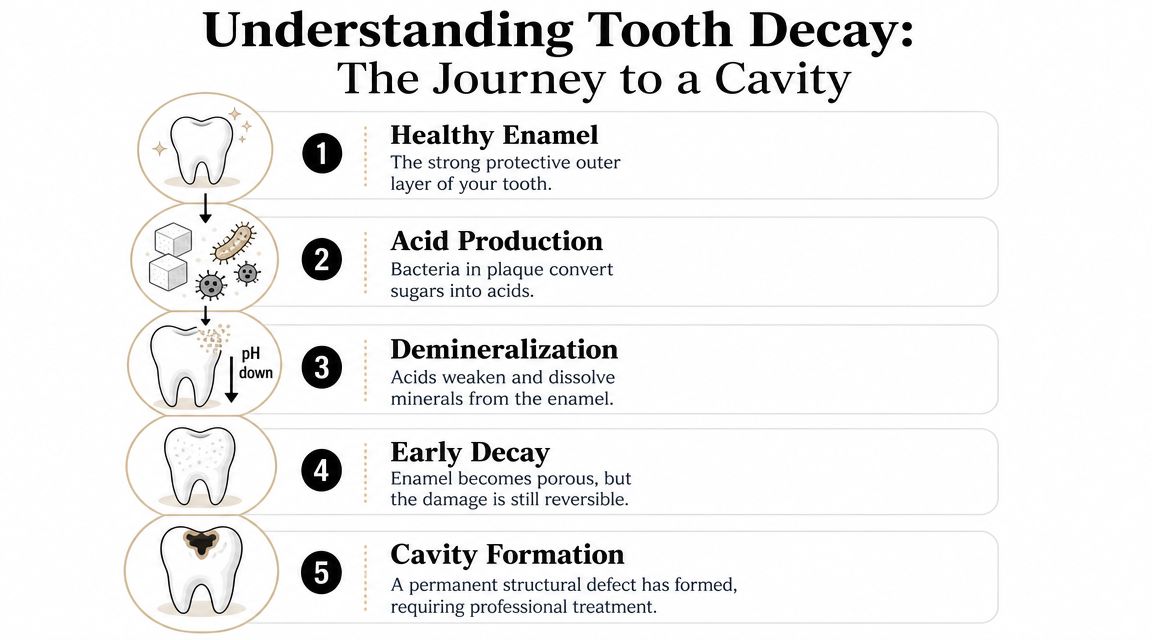
Tooth decay is a process, not a single event. It's comparable to slow erosion on a stone surface. Nothing dramatic happens on day one. Instead, small acid attacks happen over and over, and the tooth gradually loses minerals.
How decay begins
Bacteria in plaque feed on sugars and produce acids. Those acids pull minerals out of enamel. Dentists call that demineralization.
At first, the tooth may still look almost normal. Sometimes you'll see a faint white area. Sometimes you won't notice anything at all. If you want a closer look at the habits and causes behind this process, this overview of what causes tooth decay in adults is a helpful starting point.
The stages that matter most
The reason this topic feels confusing is that people use the word “cavity” for every stage of decay. Clinically, that isn't quite right. There's an important line between early weakening and structural breakdown.
| Stage | What's happening | Can home care still help? |
|---|---|---|
| Healthy enamel | The outer layer is intact and strong | Yes, keep protecting it |
| Demineralization | Minerals are leaving the enamel surface | Yes, this stage may improve |
| Early decay | Enamel becomes porous and weaker | Sometimes, if no hole has formed |
| Cavity formation | The surface breaks and a hole appears | No, this needs professional treatment |
The key question isn't “Do I have any decay at all?” The key question is “Has the tooth surface broken down yet?”
Why this matters for your next step
If the enamel surface is still intact, your daily routine can make a real difference. If decay has moved deeper, the tooth needs repair because the body can't grow that missing tooth structure back.
That's why cleaning and exams, dental x-rays, and regular checkups are so useful. They help catch the problem before it becomes a larger restorative issue, and they help patients avoid letting a small concern become a toothache, a crown, or even a tooth extraction.
The Limits of Your Toothbrush Why Brushing Cant Erase Cavities
A toothbrush is a cleaning tool. It isn't a repair tool.
That sounds obvious when you say it out loud, but it answers the whole question. If a cavity is already a physical defect in the tooth, brushing can clean around it, reduce the bacteria feeding it, and help protect nearby enamel. What it can't do is rebuild the missing structure.
A helpful comparison
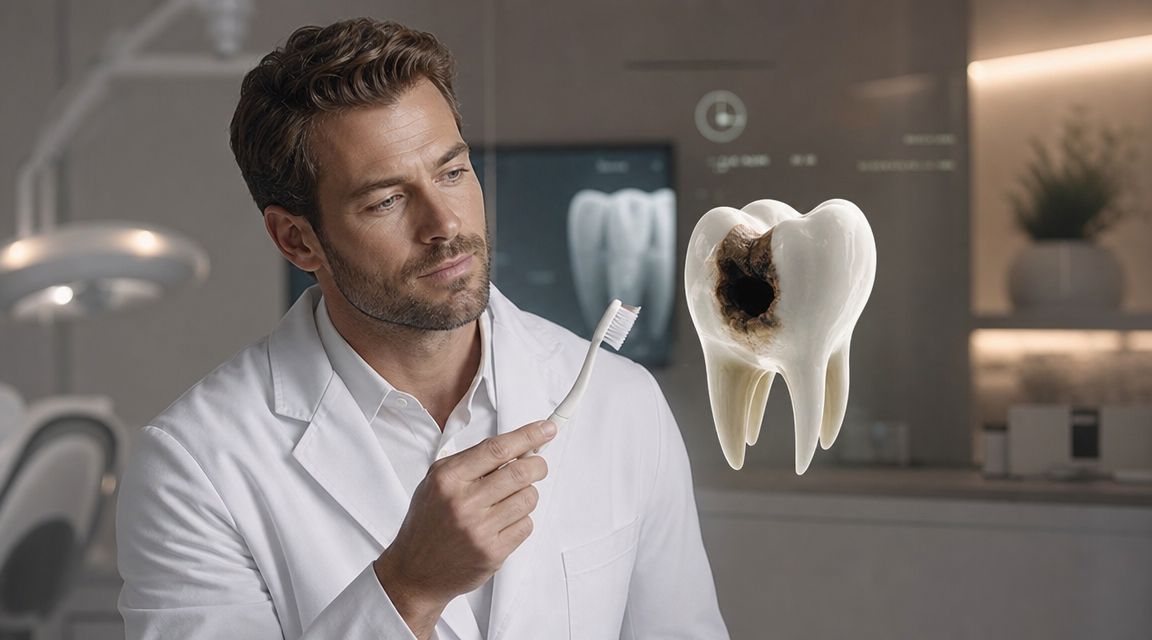
Think of a toothbrush like a broom. A broom can sweep dust off a garage floor. It can't fill a crack in the concrete.
A cavity works the same way. Once decay creates a hole, the enamel and tooth structure are gone from that spot. The bristles can't patch it. The toothpaste can't fill it. The surface has to be restored.
The line between early decay and a true cavity
This distinction matters more than almost anything else in dentistry. A non-cavitated enamel lesion may still be reversible. A true cavity is not.
That point is explained clearly in this pediatric dentist explanation of brushing away a cavity, which notes that once the tooth surface is broken and a hole has formed, brushing alone cannot reverse the defect.
If you've been trying to improve your routine, refining your technique still matters. This guide to better tooth brushing techniques can help you clean more effectively, especially along the gumline and hard-to-reach areas.
What happens if you wait
An established cavity tends to collect more plaque and food debris. That makes the area harder to keep clean. Over time, the defect can deepen and move into softer inner tooth layers.
You don't need to panic if you suspect decay. But you also don't want to rely on brushing alone once a tooth has already cavitated.
- If it's a rough spot or white area: it may still be an early problem.
- If you can see a hole: schedule an exam.
- If you have swelling or pain: look for an emergency dentist right away.
Brushing is still worth doing even when you already have a cavity. It helps prevent that cavity from worsening faster and helps protect the rest of your teeth.
The Power of Fluoride How to Reverse Early Tooth Decay
This is the part that gives people back some control. Not every suspicious area on a tooth is a lost cause.
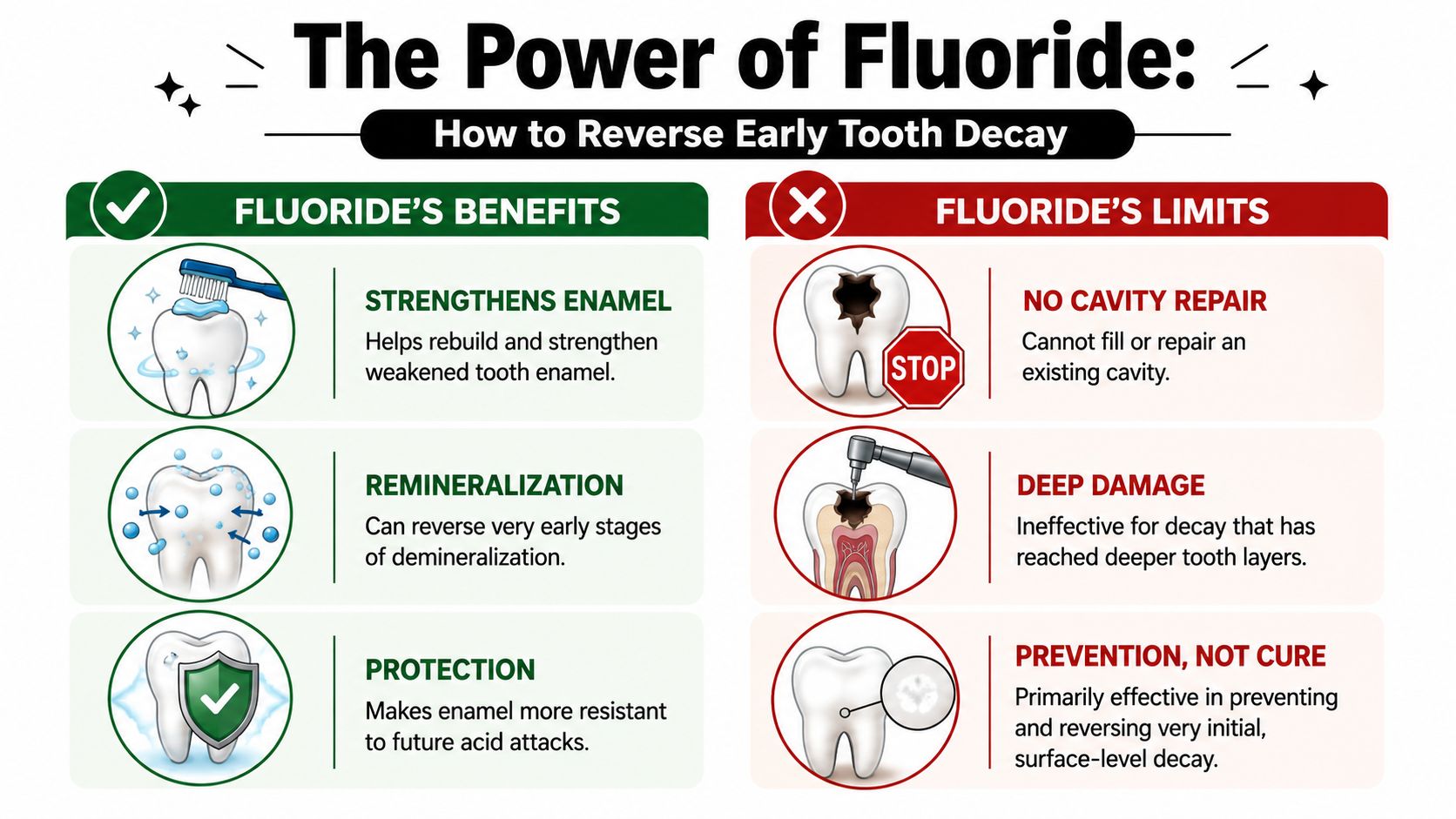
When decay is caught at the earliest non-cavitated stage, fluoride can help shift the balance back toward remineralization. That means minerals return to weakened enamel before a real hole forms.
What fluoride actually does
Fluoride doesn't act like glue or putty. It doesn't plug a cavity. What it does is support enamel that has started to lose minerals but hasn't collapsed.
The National Institute of Dental and Craniofacial Research explains in its tooth decay process guide that fluoride can prevent decay from progressing and can even reverse or stop early tooth decay. It also recommends brushing with fluoride toothpaste twice daily.
What you can do at home
If your dentist sees early enamel changes and the surface is still intact, your home routine becomes very important. At this stage, consistency matters more than intensity.
- Use fluoride toothpaste morning and night. The goal is regular exposure, not aggressive scrubbing.
- Be gentle but thorough. Hard brushing can irritate gums and wear surfaces without improving results.
- Keep plaque from sitting on teeth all day. Brushing and flossing reduce the acid-producing bacteria involved in decay.
- Don't miss follow-up visits. Early lesions need monitoring to see whether they're stabilizing.
A practical mindset: You're not trying to “brush away” early decay. You're trying to create the conditions that let enamel recover before a cavity forms.
What fluoride cannot do
Fluoride is powerful, but its role has limits. If the enamel has already broken open, remineralization can't rebuild that missing wall of tooth structure.
That's when dental care shifts from prevention to restorative dentistry. A filling, crown, or other treatment becomes the right answer because the tooth now needs repair, not just protection.
This is one reason routine visits to a dentist in Chattanooga, TN or Cleveland, TN matter so much. They help identify whether a tooth is in the “watch and strengthen” stage or the “repair it now” stage.
Professional Cavity Treatment at Winn Smiles
When a cavity has already formed, treatment is about restoring the tooth so you can chew comfortably, clean the area properly, and avoid deeper damage. The exact option depends on how much tooth structure is involved and whether the nerve inside the tooth has been affected.

Common treatments for established cavities
Some cavities are straightforward. Others need more support because more of the tooth has been damaged.
| Treatment | When it's commonly used | Main purpose |
|---|---|---|
| Filling | Small to moderate cavity | Replaces decayed tooth structure |
| Crown | Larger defect or weakened tooth | Covers and protects the tooth |
| Root canal | Decay reaches the inner tissue | Removes infection and saves the tooth |
| Tooth extraction | Tooth can't be predictably restored | Removes the damaged tooth |
A filling is often enough when the decay is limited and the tooth still has solid structure. A crown may be a better choice when a large portion of the tooth is weakened. In some cases, same-day crowns can restore function and appearance without a long gap between visits.
When decay goes deeper
If bacteria reach the inner part of the tooth, pain can become sharper, lingering, or more intense with pressure and temperature changes. That situation may call for a root canal to remove the inflamed or infected tissue and seal the tooth.
Sometimes the best option is tooth extraction, especially if the tooth is too damaged to support a reliable restoration. If that happens, the next conversation usually involves replacement options such as dental implants or other restorative choices.
Here's a short overview that helps many patients understand the repair side of cavity care:
What a visit may look like
At Winn Smiles, treatment planning may include a visual exam, dental x-rays, and a discussion about what the tooth needs now and what will protect it long term. Some patients come in because of pain. Others come in during a routine cleaning and exam and find a cavity before it starts hurting.
The goal is straightforward. Remove the damaged area, restore the tooth, and make future care easier. In many cases, that also improves comfort, chewing, and appearance. If the damaged tooth sits in a visible area, cosmetic dentistry options can sometimes be part of the restoration conversation too.
If you're searching for a dentist near me, cosmetic dentist near me, or emergency dentist, the right office should help you understand both the problem and the least invasive solution that fits your situation.
Your Partner for Lifelong Dental Health in Cleveland & Chattanooga
Good dental care isn't only about fixing what hurts today. It's about giving you a clear plan for keeping your mouth healthier over time.
A patient looking for a dentist in Chattanooga, TN or Cleveland, TN often wants more than a filling. They want a team that explains things in plain language, uses modern tools well, and makes appointments feel manageable. That matters whether you need new patient exams, dental x-rays, preventive care, teeth whitening, restorative dentistry, or help with a sudden dental problem.
What many patients want from a local dental office
People usually feel more comfortable when they know what to expect. A thoughtful dental visit often includes a warm front office experience, a careful exam, clear discussion of findings, and options that match both oral health needs and comfort level.
For practices that want to improve how they educate and connect with patients online, this guide to dental patient acquisition offers useful background on how educational content supports patient decision-making before that first appointment is ever booked.
A steady approach to oral health
The best long-term results usually come from simple consistency.
- Stay current on cleanings and exams. Early findings are easier to manage.
- Address pain promptly. Waiting often turns a small problem into a more involved one.
- Ask questions. Good dental care should feel understandable, not mysterious.
If you've been wondering whether brushing can get rid of cavities, the short answer is no for a true cavity and yes for helping stop the earliest damage before a hole forms. Knowing that difference can save you time, discomfort, and unnecessary guesswork.
If you're ready to get answers about a suspicious tooth, schedule a visit with Winn Smiles. Whether you need a new patient exam, preventive dental care, cavity treatment, cosmetic dentistry, or help from an emergency dentist in Chattanooga or Cleveland, the next step is a professional evaluation and a plan that fits your health.