A missing tooth can affect more than your smile. You may catch yourself chewing on one side, covering your mouth when you laugh, or searching online for a dentist near me because you want a replacement that feels natural and looks like it belongs there.
Many adults in Chattanooga and Cleveland, TN reach the same point. They want something secure and long-lasting, but they also hesitate when they hear the word “metal.” That hesitation is understandable. If you're comparing options for dental implants near me, ceramic implants often come up as a modern, metal-free choice.
This guide gives you the honest version. Ceramic implants can be an excellent fit for some patients, especially when appearance, metal sensitivity concerns, and a non-metal approach matter. At the same time, they deserve a careful conversation, not a sales pitch. If you're looking for a dentist in Chattanooga, TN or dentist in Cleveland, TN who can help you think through replacement options alongside routine dental care, cleaning and exams, cosmetic dentistry, restorative dentistry, or even urgent needs like tooth extraction or an emergency dentist visit, it helps to understand the full picture first.
Your Metal-Free Smile Solution in Chattanooga and Cleveland
Many people initiate their search for a solution by focusing on the symptoms. They don't always say, "I need an implant." They say they're tired of the gap, tired of food catching there, or tired of worrying that their smile looks unfinished in photos.
For some, the concern isn't only replacing the tooth. It's replacing it in a way that feels more natural to them. They may have read about titanium implants, then paused and wondered if there's another option that doesn't involve metal at all. That's often where ceramic implants enter the conversation.
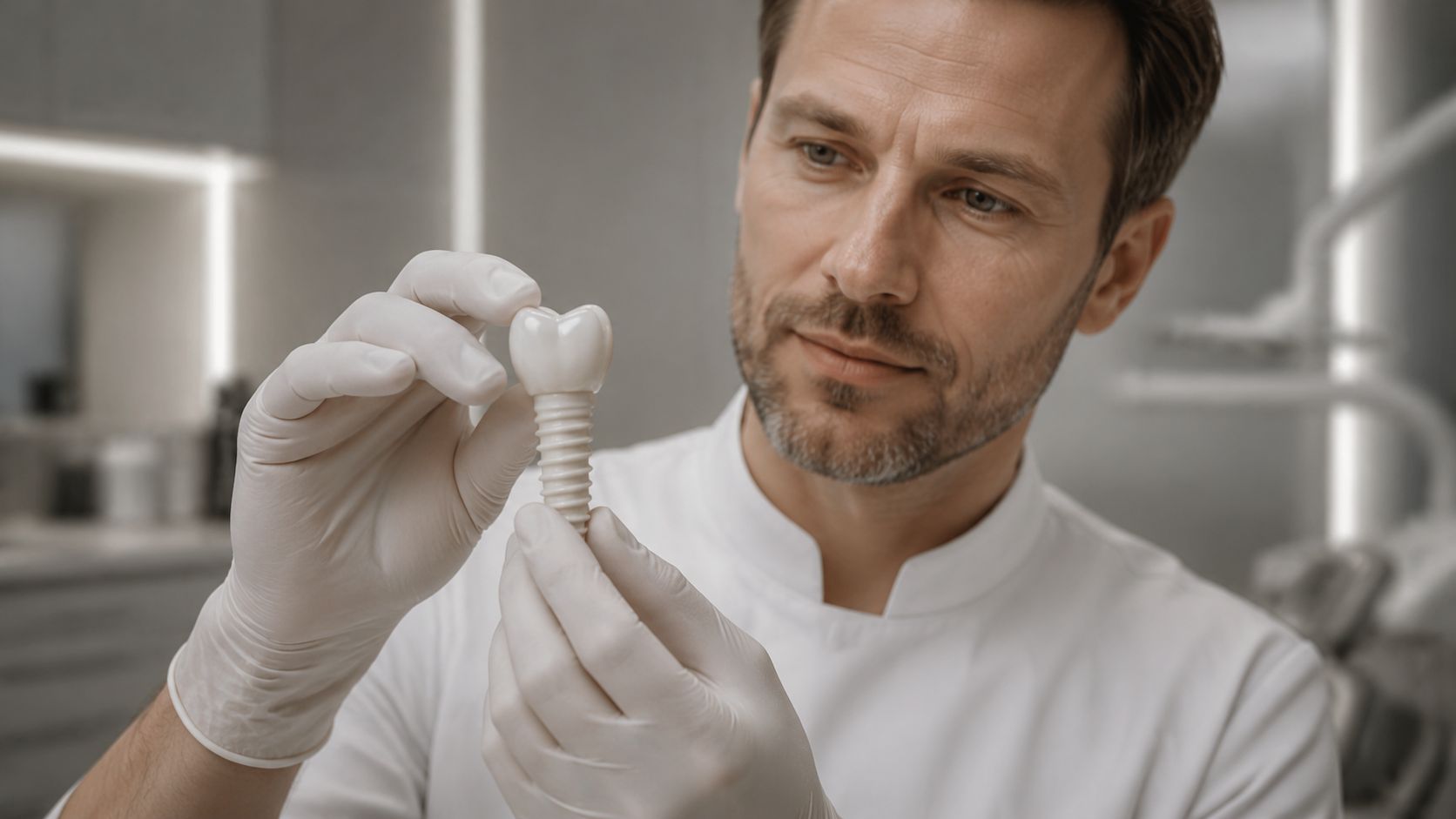
A ceramic implant is designed to replace the root of a missing tooth, much like other implant systems. The difference is the material. For patients who want a bright, non-metal solution, this can feel like a better match for their goals, especially in visible areas of the smile.
Local reality: Many patients looking for a cosmetic dentist near me are also trying to solve a functional problem. They want to chew comfortably, protect their bite, and feel confident when they smile.
Ceramic implants are no longer a fringe idea. In one report focused on clinical practice in top-tier dental networks that have adopted zirconia implants, ceramic implants accounted for approximately 50% of the implant volume used, with an average loading phase of 2.1 years. That same report notes that survival and success rates matched established titanium implants under comparable surface topographies, and biofilm accumulation was significantly lower on ceramic than on titanium surfaces for long-term peri-implant health (ZERAMEX clinical practice discussion).
If you're still deciding whether a metal-free option makes sense, this overview of metal-free dental implant care is a helpful next read. For many patients in Chattanooga, Cleveland, and nearby communities, the best first step is getting clear, pressure-free information.
What Exactly Are Ceramic Dental Implants
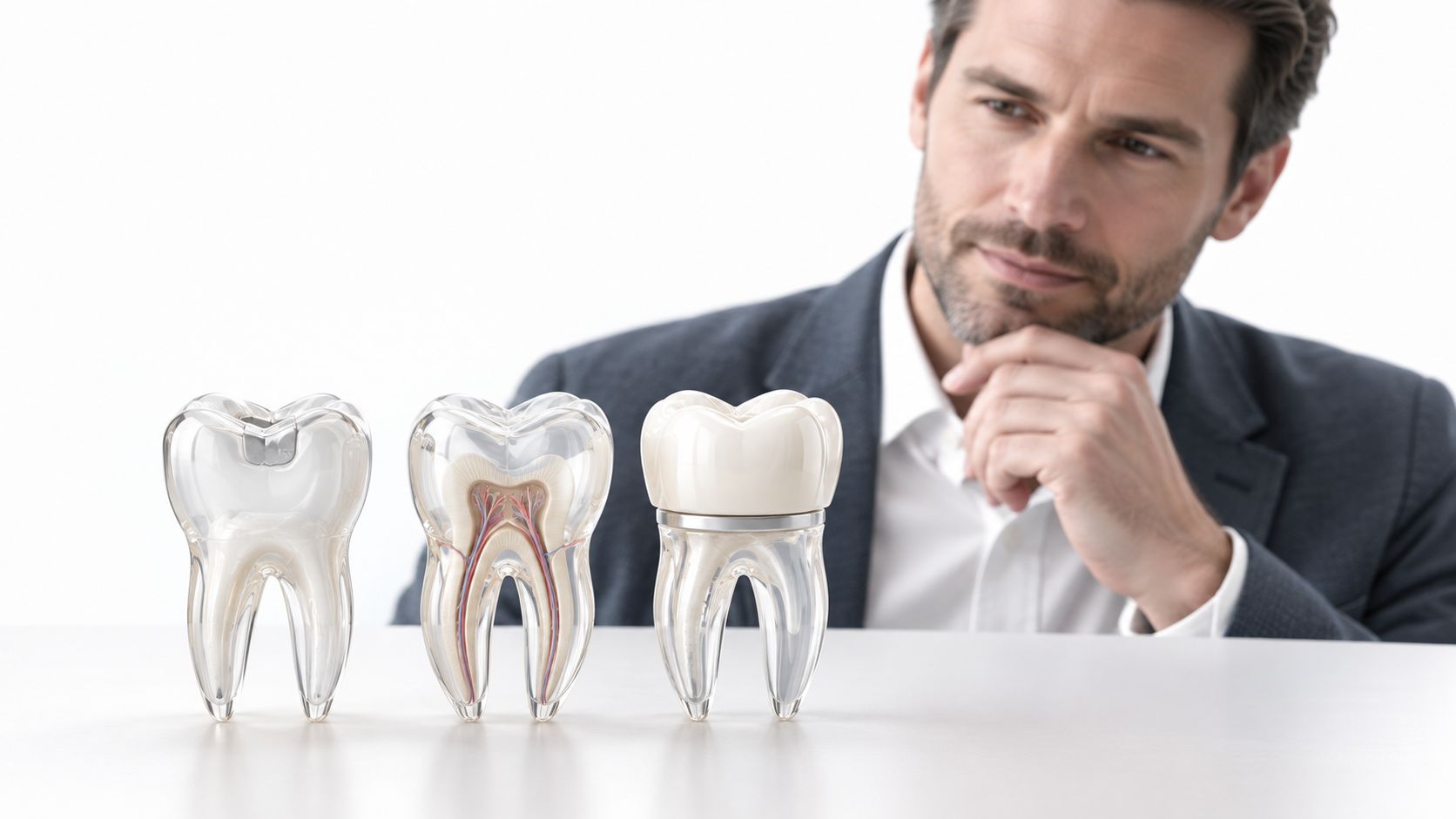
Ceramic implants sound delicate if you only think of ceramic as something like a coffee mug or tile. In dentistry, that's not what this means. These implants are typically made from zirconium dioxide (ZrO₂), often called zirconia, which is an advanced ceramic used for strength, stability, and biocompatibility.
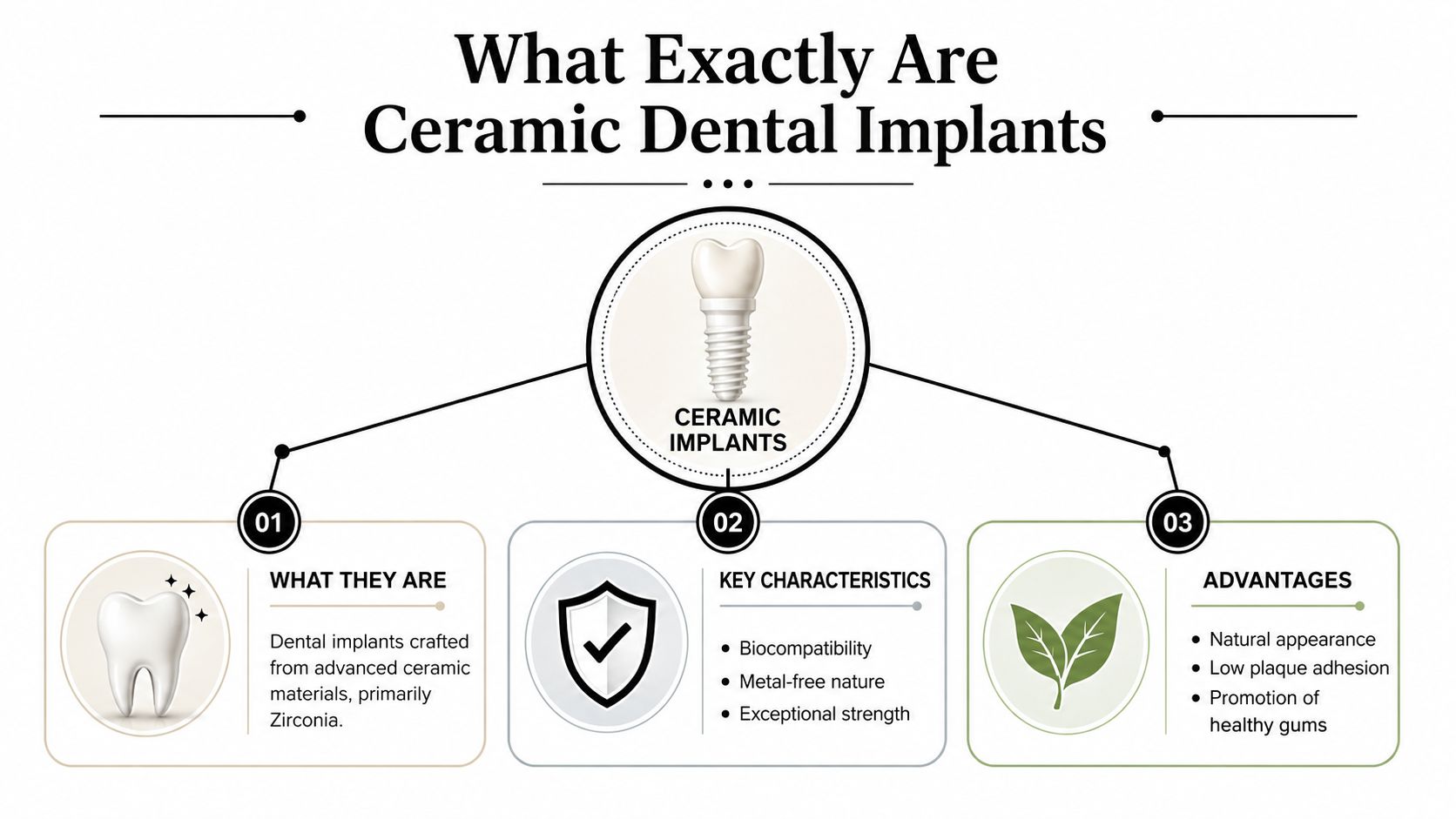
Think high-tech ceramic, not fragile ceramic
A simple way to think about zirconia is this. It's a carefully engineered material chosen because it can handle real functional demands in the mouth while also offering a tooth-colored appearance. It isn't the chalky or brittle material many people imagine when they first hear the word ceramic.
Ceramic implants are placed in the jawbone to act like an artificial tooth root. Once healing takes place, they support a crown so the final tooth looks and functions more naturally. In everyday terms, the implant is the anchor below the gums, and the crown is the part you see above the gums.
Why the metal-free part matters
One reason patients ask about ceramic implants is sensitivity to metals or a general preference for a non-metal restoration. According to an overview published by CDEWorld, ceramic implants are made from zirconium dioxide (ZrO₂), a bio-inert material that prevents electrical currents in the body, unlike some metal alloys. Studies show its surface allows for bone integration rates comparable to titanium, leading to excellent biocompatibility and a reduced inflammatory response (CDEWorld overview of ceramic implant materials and applications).
“Bio-inert” is one of those phrases that can sound more complicated than it is. In plain language, it means the material is designed to be calm in the body rather than reactive. That's a big part of why zirconia interests patients who want a more health-focused or metal-free approach.
A good dental material doesn't just fill space. It needs to work well with bone, gums, bite forces, and the patient's comfort level.
What patients usually notice first
Most patients don't ask about molecular structure. They care about practical questions:
- How it looks: Ceramic is white, which can be appealing in visible parts of the mouth.
- How it feels mentally: Some people feel better knowing their implant is metal-free.
- How it fits their goals: If appearance and material choice both matter, ceramic can check both boxes.
That doesn't automatically make it the best option for every case. It does make it an option worth understanding clearly.
Ceramic vs Titanium Implants An Honest Comparison
When patients compare implants, they usually want a straight answer. Which one is better? The honest answer is that better depends on the case. Ceramic and titanium can both be successful. The right choice depends on smile location, anatomy, bite forces, esthetic priorities, and how much value you place on a metal-free material.
Ceramic vs. Titanium Implants at a Glance
| Feature | Ceramic (Zirconia) Implants | Titanium Implants |
|---|---|---|
| Appearance | White, tooth-colored material | Darker metallic material beneath the restoration |
| Material preference | Metal-free option | Metal-based option |
| Gumline esthetics | Often appealing in visible areas, especially when patients are concerned about show-through | Often performs well, though some patients worry about color in thin gum tissue |
| Surface behavior | Lower biofilm accumulation has been reported in clinical studies | Excellent long history of use |
| Clinical history | Promising and growing, but long-term human evidence is still developing | Longer track record in routine use |
| Treatment planning | Case selection matters carefully | Broadly used across many implant situations |
| Best fit for some patients | Those prioritizing metal-free care or esthetics | Those prioritizing the longest-established implant history |
Where ceramic can stand out
For front teeth and other smile-zone areas, color matters. Some patients have thinner gum tissue, and they want every part of the final result to look bright and natural. That's one reason ceramic implants get attention from patients looking for cosmetic dentistry as well as tooth replacement.
Clinical discussion has also highlighted a hygiene-related advantage. As noted earlier, studies in clinical practice confirm that biofilm accumulation is significantly lower on ceramic implant surfaces compared to titanium, which may support long-term gum health. If you want more detail on how metal compares with modern alternatives, this guide to dental implants and metal considerations adds useful context.
Where titanium still has an edge in history
Titanium has been used in implant dentistry much longer, and many dentists value that depth of clinical experience. That longer history can matter when a case is more complex or when a patient wants the option with the most established routine use over time.
There's another nuance patients deserve to hear. A review summarized on one patient-education page noted that some marketing around ceramic implants can overstate certainty. That discussion points out that published conclusions have sometimes been mixed, and long-term evidence has not always been strong enough to support routine use in every situation (balanced discussion of ceramic implant evidence and durability questions).
What matters most: A material isn't “best” in the abstract. It's best when it suits your bone, your bite, your gumline, and your priorities.
How a patient might decide
A patient replacing a front tooth after an accident may care most about color and gum appearance. A patient replacing a back molar may focus more on force, restoration design, and long-term planning. Someone dealing with a broken tooth who first came in for tooth extraction may have very different priorities from someone exploring a smile upgrade after years of patchwork dentistry.
That's why a real implant consultation should feel more like decision-making than sales. If you're also searching for a dentist near me for new patient exams, dental x-rays, restorative dentistry, or emergency care, this same principle applies. Good treatment planning starts with the individual, not the trend.
The Real Benefits of Choosing Ceramic Implants
For the right patient, ceramic implants offer benefits that feel personal, not just technical. The conversation usually comes down to confidence, comfort, and how natural the final result feels day to day.
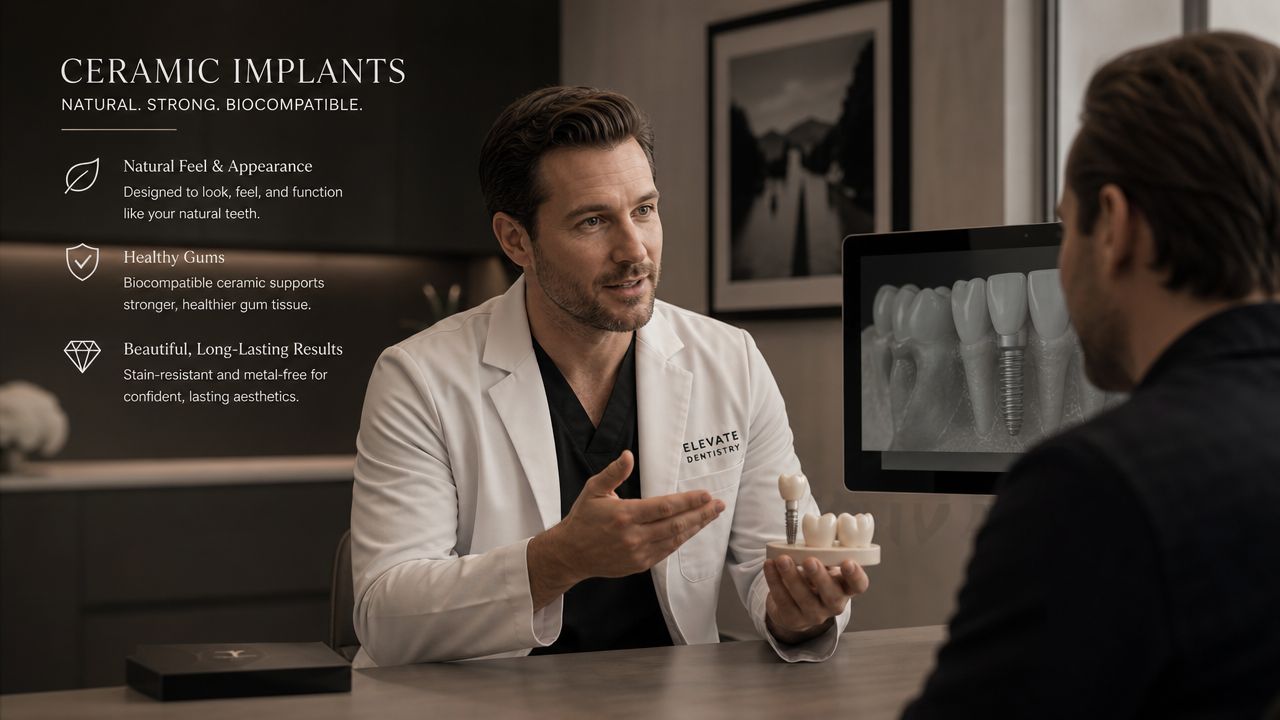
A more natural look in visible areas
If your missing tooth is toward the front, appearance tends to move to the top of the list quickly. Ceramic implants are white, and that can be reassuring for people who worry about dark show-through at the gumline. The goal isn't just replacing a tooth. It's helping the replacement blend in with the rest of your smile.
That esthetic benefit has support from long-term clinical data. In a published follow-up on one-piece zirconia implants, researchers reported an 89.6% overall success rate after 8 years and a 100% survival rate in the study, with significantly more favorable pink esthetic scores in the immediate implant group (8-year clinical outcomes for one-piece zirconia implants). For patients with high cosmetic expectations, that's meaningful.
Peace of mind for metal-free care
Some people are drawn to ceramic implants because they want the entire restoration path to be as metal-free as possible. Others have a history of sensitivity concerns and feel more comfortable exploring a non-metal option.
That emotional comfort matters. Dentistry isn't only about x-rays and materials. It's also about whether you can move forward feeling calm and informed.
Choosing an implant material can be part health decision, part esthetic decision, and part personal values decision. All three are valid.
Gum health and long-term comfort
Patients often ask whether ceramic is “better for the gums.” The most careful answer is that ceramic has qualities that make it attractive from a tissue-health perspective, but your daily home care and professional maintenance still matter just as much.
A ceramic implant won't replace the need for brushing, flossing, cleanings, and regular exams. If you're already coming in for cleaning and exams, dental x-rays, or new patient exams, that prevention mindset carries directly into implant success.
Here's a short visual explanation that many patients find helpful before a consultation.
Why benefits need context
Ceramic implants can be attractive because they combine esthetics with material preference. Still, a benefit only matters if it applies to your case. If your bite is heavy, your bone shape is limited, or your restoration needs are more complex, the conversation may shift.
The strongest reason to choose ceramic implants isn't hype. It's fit.
Are You A Good Candidate for Ceramic Implants
Some patients know right away why they're interested in ceramic implants. They want a metal-free option. Others come in thinking mainly about replacing a missing tooth and only learn later that ceramic is even available.
Patients who often ask about ceramic first
Ceramic implants tend to appeal most to a few groups:
- Patients with metal concerns: They may have sensitivities, allergies, or a strong preference to avoid metal in the mouth.
- Patients focused on esthetics: This is common when the missing tooth is visible while smiling or speaking.
- Patients seeking alternative care choices: They want to understand material options in detail before deciding.
Aesthetics can matter even more than people expect. If you're also exploring teeth whitening, veneers, or other cosmetic dentist near me searches, you may already know that tiny details in color and gum appearance can change how confident a smile feels.
General implant requirements still apply
Even if ceramic sounds ideal philosophically, you still need the basics for implant success. Healthy gums, enough supporting bone, and reliable home care all matter. Your dentist will also look at your bite, clenching habits, and the exact location of the missing tooth.
For some people, treatment may involve related services first. That can include periodontal care, restorative planning, or replacing a hopeless tooth after tooth extraction. For others, an implant discussion begins after a chipped, broken, or infected tooth leads to an emergency dentist visit.
The best implant candidates aren't just interested in implants. They're ready to protect the result after treatment.
The honest research conversation
Patients deserve clarity here. A lot of marketing language around ceramic implants sounds more settled than the science indicates. One patient education resource puts this plainly: long-term human data on ceramic implants is still developing, and consultation is important because some ceramic systems involve cementation, where cement remnants can be a risk factor for inflammation if not managed carefully (clinical nuance around ceramic implants and cement-related risk).
That doesn't mean ceramic implants are a poor choice. It means they should be recommended thoughtfully. A careful dentist should talk with you about what's exciting, what's proven, and what still calls for case-by-case judgment.
Good candidate does not mean automatic candidate
You might be a strong candidate for ceramic implants and still choose titanium after reviewing your anatomy and goals. You might also begin convinced that titanium is your only practical option and find out that ceramic could work beautifully.
That's why the evaluation matters so much. A thorough exam, digital imaging, and a clear conversation should leave you with a treatment plan that makes sense medically and personally.
The Ceramic Implant Process at Winn Smiles
The implant process usually feels less intimidating once you know the steps. Most patients do better when they can see the path ahead, especially if they've been putting off care because of anxiety or uncertainty.
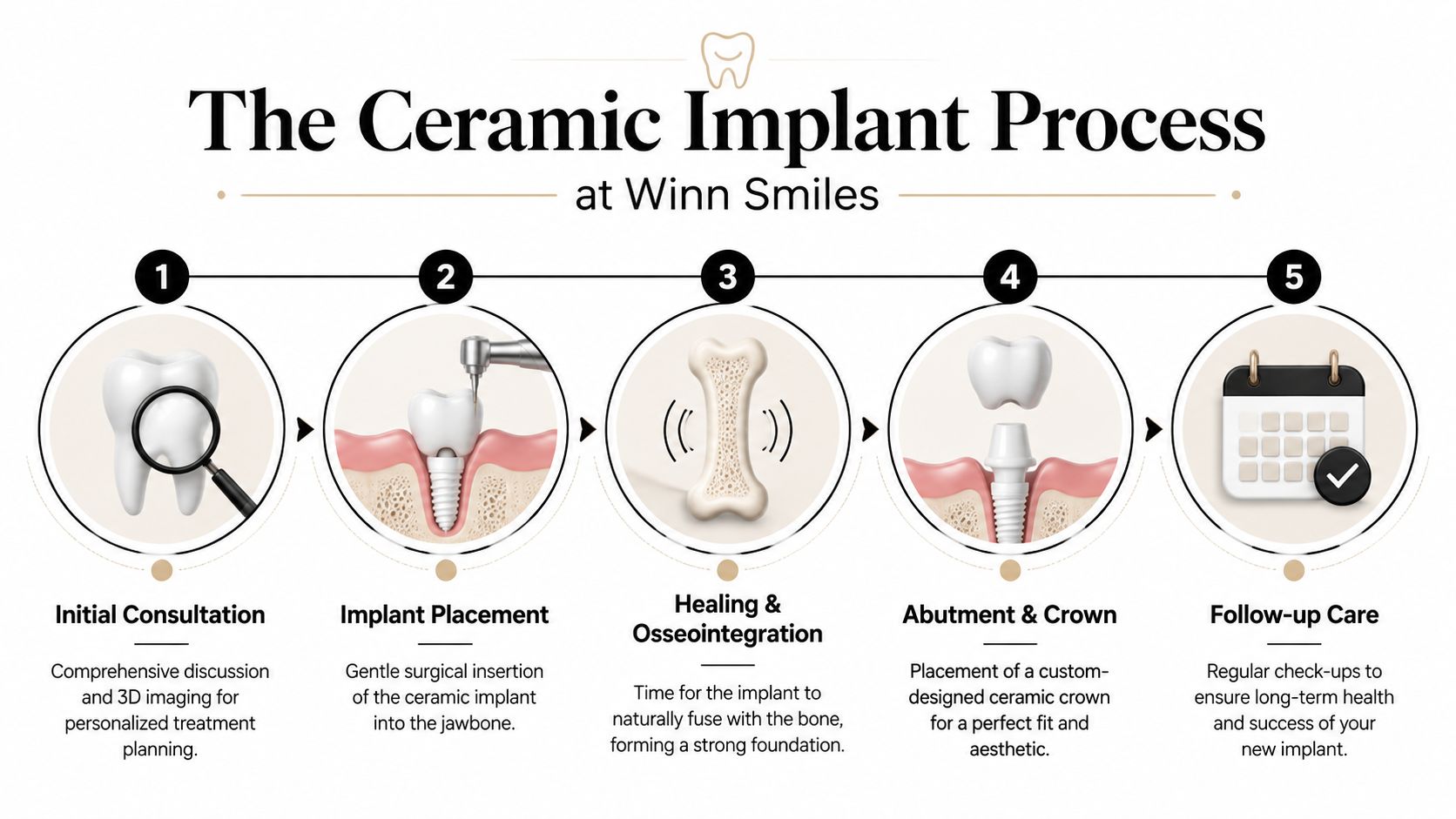
Step one starts with planning
The first visit is about understanding the whole situation, not rushing into treatment. Your dentist checks the missing-tooth area, evaluates your gums and bite, and uses imaging to see the bone underneath. If you've been searching for a dentist in Chattanooga, TN or dentist in Cleveland, TN because you want advanced restorative care, this diagnostic phase is where confidence starts.
This is also the time to bring up everything that matters to you. If you have dental anxiety, if you've had a difficult extraction in the past, or if you want to combine implant care with other services like same-day crowns, cosmetic dentistry, or broader restorative work, those details shape the plan.
Placement day is more comfortable than many expect
Once planning is complete, the implant is placed into the jawbone. The procedure is done with local anesthesia, and many practices also offer sedation options for patients who feel tense about surgery. Comfort matters here. So does communication.
A lot of patients are surprised that implant placement often feels more manageable than they feared. Most anxiety comes from the unknown, not the procedure itself.
Practical rule: If fear has been the main reason you've delayed treatment, ask about comfort options before your procedure date, not after.
Healing creates the foundation
After placement, the bone needs time to heal around the implant. This process is called osseointegration. It's the stage that turns an implant from a placed device into a stable anchor for your new tooth.
That healing period is also why follow-up matters. During this phase, your dentist monitors progress, checks the soft tissue, and makes sure everything is moving in the right direction.
The final tooth is where function meets appearance
When healing is complete, the final restoration is attached. This is the part patients usually think of first because it's the visible tooth, but it only works well if the foundation is solid.
The crown is designed to fit your bite, match your surrounding teeth, and feel natural when you chew and speak. If you've come in first for general dental care, dental x-rays, or even urgent treatment through emergency dental services, reaching this stage often feels like the moment things finally feel whole again.
Your Questions About Ceramic Implants Answered
Patients usually end with practical questions, and that makes sense. Once you understand the concept, you want to know what it means for daily life, budget, and recovery.
Do ceramic implants cost more?
Cost depends on the complexity of your case, the restoration involved, and whether additional treatment is needed before implant placement. Insurance coverage varies too. Some plans may help with parts of care, while others may not. The most useful next step is getting a personalized treatment estimate after an exam.
How long do ceramic implants last?
Longevity depends on planning, placement, bite forces, and aftercare. Ceramic implants can perform very well, but no implant material should be treated like a set-it-and-forget-it solution. Regular checkups, healthy gums, and consistent home care matter.
Is the procedure painful?
Most patients say the experience is easier than they expected. Local anesthesia keeps the area numb during treatment, and many offices provide sedation options for extra comfort. Recovery instructions are usually straightforward, and your dentist will guide you on eating, cleaning, and healing.
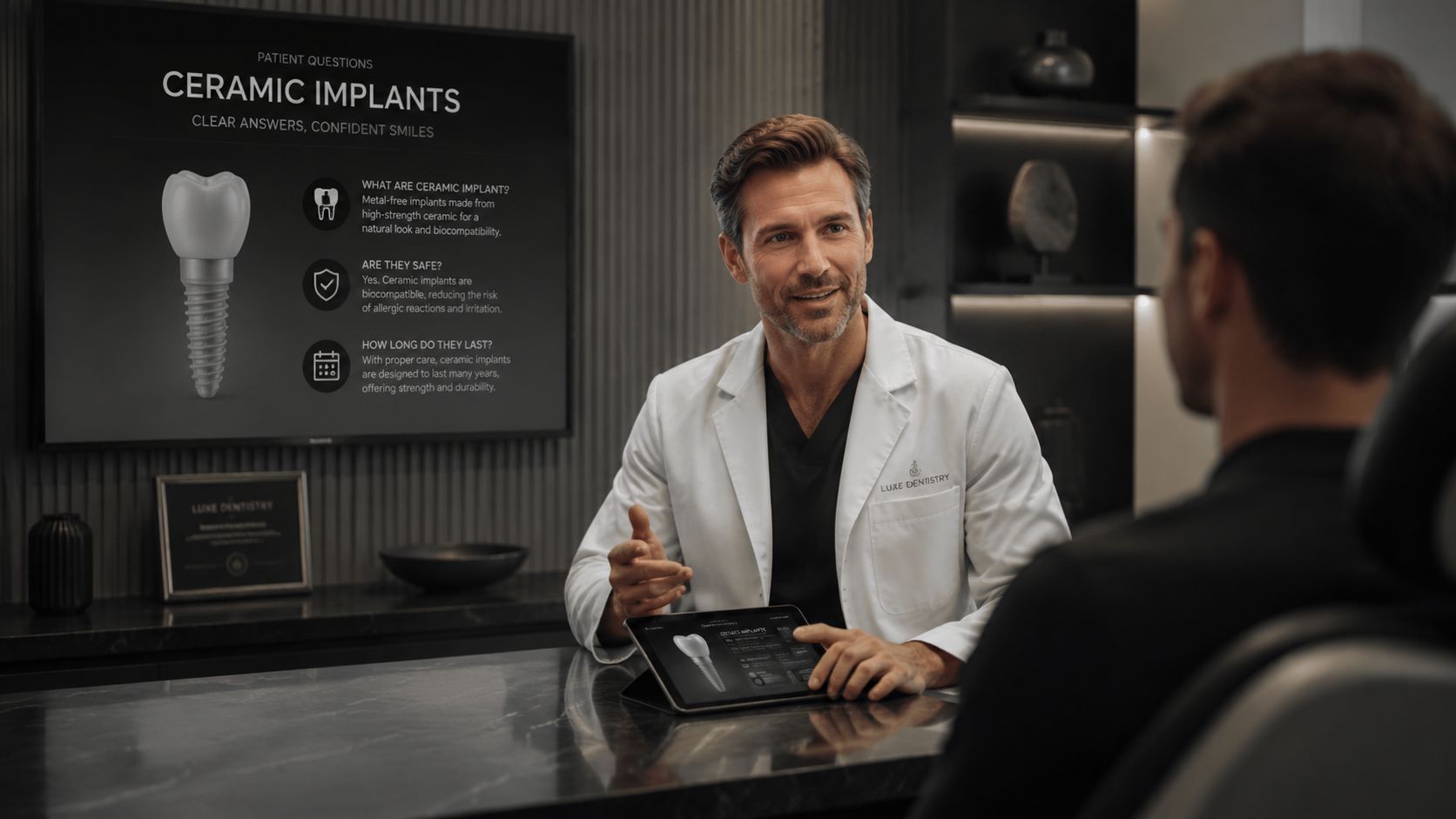
How do I care for a ceramic implant?
Care is similar to caring for the rest of your mouth. Brush well, clean carefully around the implant, and keep up with professional visits. If you already value preventive dental care, cleaning and exams, and early treatment for problems before they turn into emergencies, you're already thinking the right way.
Ceramic implants can be a strong option for the right patient. If you want a metal-free tooth replacement that looks natural and feels thoughtfully planned, the best move is a one-on-one consultation where your goals, anatomy, and concerns are all part of the decision.
If you're looking for honest guidance on ceramic implants, restorative dentistry, cosmetic dentistry, or even urgent care from an emergency dentist in Chattanooga or Cleveland, Winn Smiles offers a patient-first approach with modern technology, clear answers, and comfort-focused care. Schedule a consultation to find out whether ceramic implants are the right fit for your smile and your long-term goals.