You're lying awake wondering whether dental implants hurt, searching for an honest answer before you book a consultation. Maybe you need to replace one missing tooth, or you've been told that a tooth extraction and implant may be the next step. The fear is understandable, especially if you're looking for a dentist near me in Cleveland or Chattanooga who will explain the process without brushing off your concerns.
The short answer is that implant placement is usually performed while the area is numb, while recovery often brings temporary soreness. The right question isn't only whether implants hurt. It's what you'll feel, when you'll feel it, and which symptoms deserve a call to your dental team. This guide walks through those details so you can approach care at Winn Smiles with clearer expectations.
The Honest Answer About Dental Implant Pain
A patient considering implants often imagines the sound of surgery and assumes the pain will be severe. In reality, modern clinical evidence points to a more manageable experience for the typical patient. Implant placement can cause discomfort, but the strongest soreness is generally concentrated in the early recovery period rather than lasting indefinitely.
One prospective study of 71 patients found that average pain immediately after surgery was 0.57 on a 10-point scale, and 81.75% reported no pain right away. By 24 hours, the average score was 2.16, while 49.64% still reported no pain. The same study recorded mild, moderate, and severe pain among the remaining patients, showing that experiences vary, but the typical pattern is not relentless pain. The prospective implant pain study provides useful context for anyone worried that the procedure automatically means extreme suffering.
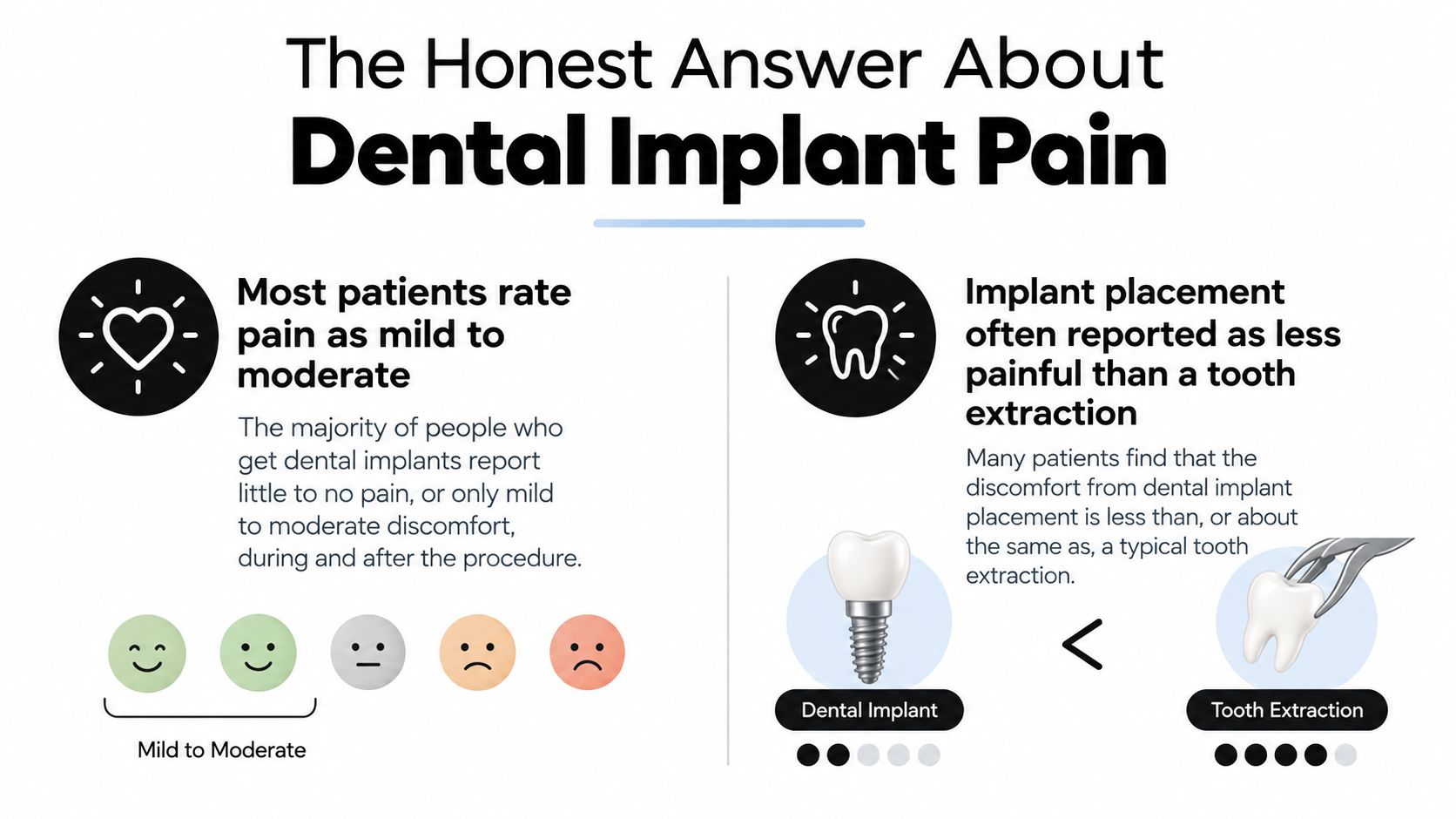
The practical answer: You may feel pressure during treatment and soreness afterward, but you shouldn't assume that implant surgery will feel like severe, ongoing pain.
A separate study found that some patients experienced severe pain at some point on the first postoperative day, but that proportion fell by the second and third days. Swelling and normal mouth function also generally improved within the early recovery period. That's why a careful Cleveland or Chattanooga implant consultation should discuss both comfort during placement and your plan for the first few days at home.
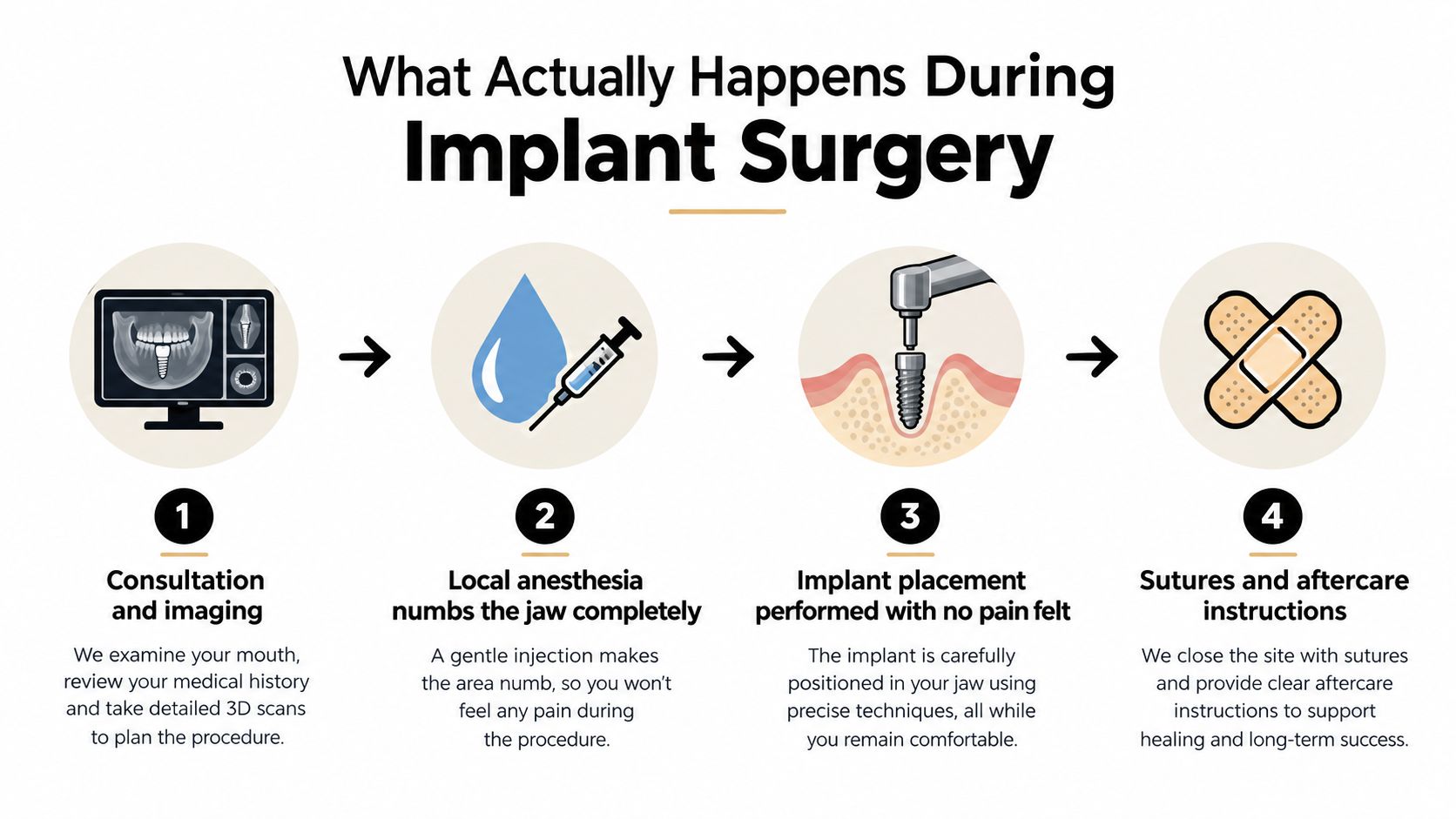
What Actually Happens During Implant Surgery
The easiest way to understand implant discomfort is to separate the appointment into phases. The surgical phase is numbed. The recovery phase is where soreness usually appears.
Before placement
Your dentist reviews your health history, examines your mouth, and uses dental imaging to assess the tooth area and supporting bone. This planning matters because a straightforward implant and a more involved procedure may require different preparation. If a tooth needs removal first, the team can coordinate tooth extraction and replacement planning rather than treating each decision in isolation.
During placement
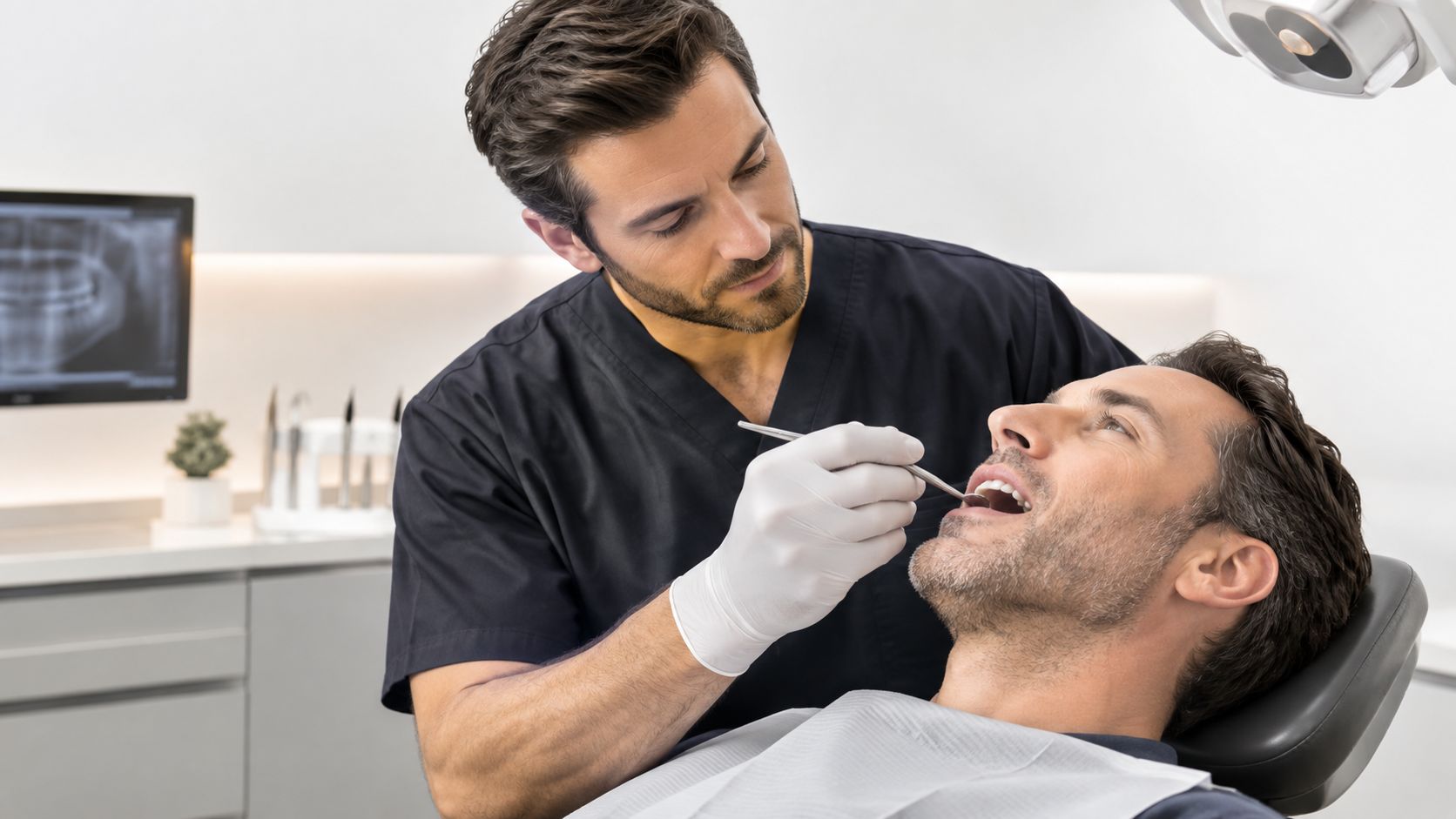
Local anesthesia numbs the treatment area before the procedure begins. You shouldn't feel sharp pain while the implant is placed, although you may notice pressure, vibration, or movement. Patients with dental anxiety can also discuss sedation options, which can help them remain calm while the clinical team monitors comfort throughout the appointment.
The implant itself is positioned in the jaw as a replacement tooth root. A small number of sutures may be used, and the team provides instructions for protecting the site while the gum begins to heal. Once the anesthetic fades, tenderness can become more noticeable. That change doesn't mean something went wrong. It reflects the transition from a numb surgical site to normal early healing.
Modern implant treatment has developed substantially from its early days. Per-Ingvar Brånemark placed the first titanium dental implant in a human volunteer in 1965, and by 1978 he had introduced a two-stage threaded titanium root-form system. That development helped make implant treatment more predictable and less traumatic than earlier tooth-replacement methods. This historical review of implant dentistry explains why current treatment focuses so heavily on controlled placement, anesthesia, and structured aftercare.
A Realistic Healing Timeline After Implant Surgery
Recovery isn't identical for every patient, but you can plan around a short period of soreness followed by steady improvement. The first few days usually require the most attention, while the later biological process often happens in the background.
Days 1 through 3
The anesthetic wears off, and the implant site may feel tender. Swelling can be present, particularly after a more involved procedure. You may prefer cool, soft foods and less chewing near the treated area. Follow the medication instructions from your dental team rather than waiting until discomfort becomes difficult to control.
Research on patient-reported outcomes found that 41.3% had discomfort for less than one day, 67.8% for less than three days, 85.8% for less than seven days, and 100% for less than fourteen days. The implant recovery outcomes study supports a realistic expectation of short-lived discomfort, although individual recovery can differ.
Days 4 through 7
Most patients should look for a gradual downward trend in soreness. You may still notice sensitivity while eating or brushing near the site, but daily activities often become easier. If your work is physically demanding, ask your dentist how to plan activity around your procedure.
For a more detailed planning guide, review Winn Smiles' dental implant recovery time guide. It can help you think through meals, work, appointments, and follow-up care without relying on frightening online anecdotes.
Weeks 2 through 6
The gum tissue continues to mature, while the implant begins its deeper integration with the jaw. This process, called osseointegration, usually isn't experienced as active pain. You may feel little from the implant itself during this stage, but you still need to follow instructions about chewing and oral hygiene.
What Makes Some Implant Cases Hurt More Than Others
Two people can receive implants and have noticeably different recoveries. The difference often comes from the procedure, not from one person being “good” at handling pain and another being “bad” at it.
A single, straightforward implant may involve less tissue manipulation than a full-arch treatment or a case requiring bone augmentation. When bone needs additional support, the surgical plan becomes more complex and the recovery may bring more soreness. Multi-stage treatment can also create a different experience from a single appointment.
Surgical technique matters
A systematic review found that excess injected local anesthetic volume worsened postoperative pain, swelling, and patient satisfaction. The same evidence reported more postoperative pain with higher insertion torque of 50 to 80 N than with standard torque of 30 to 45 N. The review of surgical factors and implant pain shows that technique can influence recovery, not just the patient's personal pain threshold.
Operative time, tissue pressure, and the amount of manipulation all matter. A technology-focused practice may use careful imaging, measured placement, and techniques such as laser dentistry when appropriate. These tools don't eliminate every sensation, but thoughtful planning can reduce unnecessary trauma.
Your health and habits play a role
Pain can also be higher when a case includes bone augmentation, when discomfort occurred during surgery, or with factors such as older age and alcohol consumption. Those details don't automatically rule out implants. They help the dental team build a safer, more individualized plan.
Good planning is a comfort measure. The more clearly your dentist understands the anatomy, treatment stages, medications, and concerns, the less likely you are to face surprises.
How Pain Is Controlled From Numbing to Recovery
At the consultation, your dentist matches anesthesia and sedation choices to the implant procedure, your medical history, and your comfort level. Local anesthesia numbs the treatment area, so you should feel pressure and movement rather than sharp pain. Sedation can make the appointment feel calmer for patients who are tense, fearful, or overwhelmed by dental care. The team should explain what you will feel and how long each effect may last.
Medication timing also shapes the first hours after surgery. Evidence reviewed in The systematic review of analgesics for implant surgery found that several pain medicines reduced postoperative discomfort more effectively than placebo. A preemptive dose may work like putting a cushion in place before pressure builds. Take medication only as directed by your dental team, rather than waiting for soreness to become difficult to control.
Pain-control methods used during and after implant surgery
| Phase | Method | What It Does | Typical Duration |
|---|---|---|---|
| Before and during surgery | Local anesthesia | Numbs the surgical area and blocks sharp pain | During the procedure and while the anesthetic lasts |
| Before or during surgery | Sedation | Helps reduce anxiety and promotes a calmer experience | During treatment, with recovery depending on the option used |
| Early recovery | Dentist-recommended medication | Reduces soreness as numbness fades | As directed by the dental team |
| First days at home | Cold therapy | Helps limit swelling and soothe the cheek | Short applications repeated as advised |
| Early healing | Soft-food planning | Reduces chewing pressure around the implant site | While the area is tender |
For broader context, chronic pain management basics explains why an organized plan can be easier to follow than reacting to discomfort as it appears. That general information does not replace instructions for your implant site.
Winn Smiles provides a comfort-focused setting for patients in Cleveland and Chattanooga, where sedation options can be discussed during treatment planning. Patients who feel anxious can review how sedation dentistry works before the consultation and bring questions about medication, monitoring, and recovery.
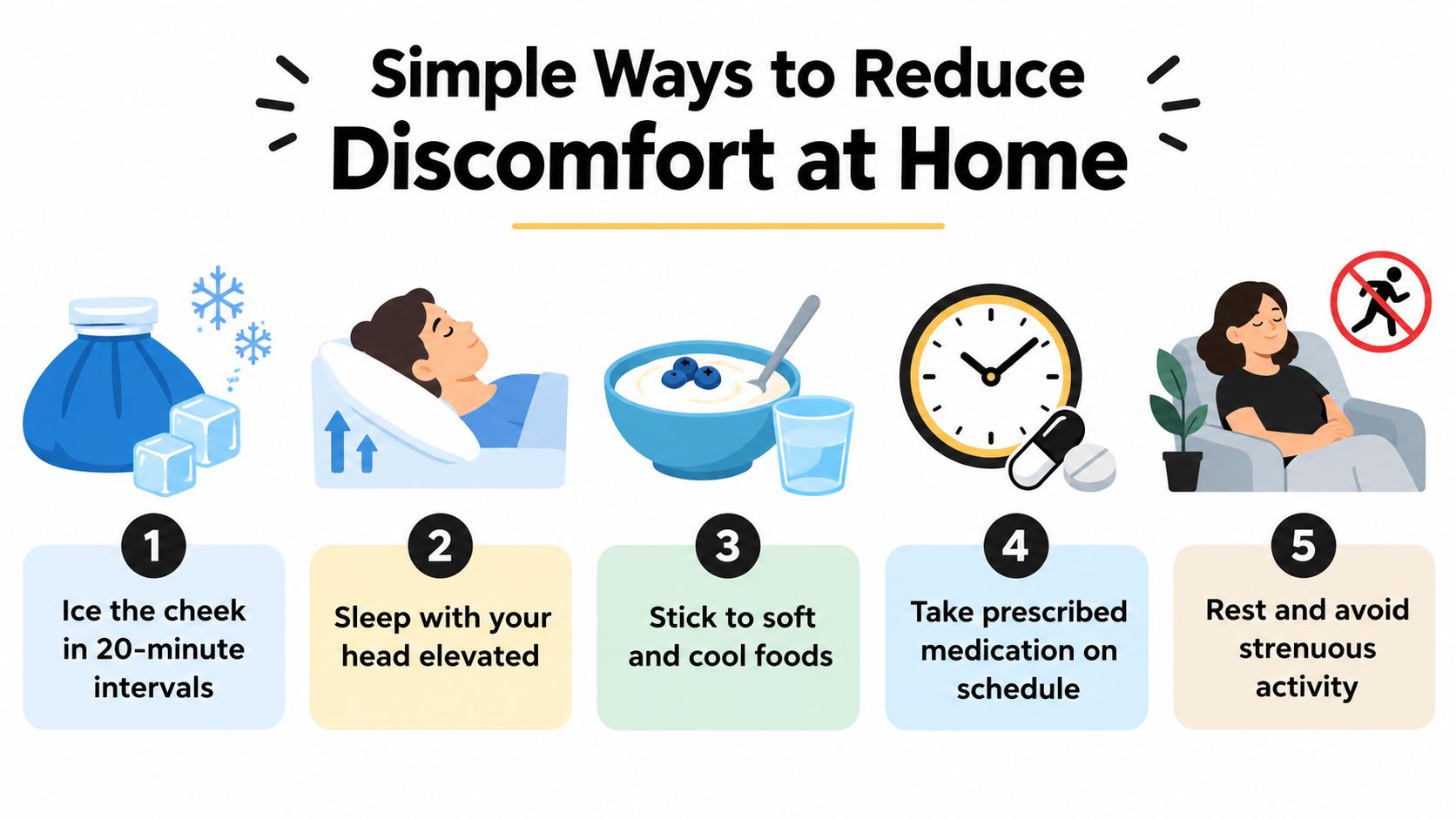
Simple Ways to Reduce Discomfort at Home
The first day at home is easier when you prepare before leaving the office. Have approved medication available, choose foods that don't require vigorous chewing, and arrange a quiet place to rest. Reputable guidance describes temporary implant-site discomfort as a normal part of recovery and notes that patients may need pain medicine and sometimes antibiotics after surgery. Mayo Clinic's overview of dental implant surgery reinforces that at-home care is part of the treatment plan.
During the first 72 hours
- Use cold therapy: Apply an ice pack to the cheek in 20-minute intervals, with breaks between applications.
- Lift your head: Sleep with your head raised to help reduce pressure and throbbing.
- Choose gentle foods: Soft, cool options can limit irritation while the area is sensitive.
- Follow the medication schedule: Take prescribed or dentist-recommended medicine as directed, especially during the early recovery window.
- Avoid suction and smoke: Don't use straws or smoke, because both can interfere with the healing site.
- Protect the area: Avoid strenuous activity when your dental team advises rest.
You can also review this guide to post-surgery home recovery for general preparation ideas. Implant instructions take priority, particularly for brushing, rinsing, medication, and activity.
Ask when to resume gentle brushing around the site. Keeping your mouth clean matters, but aggressive brushing directly over a fresh surgical area can irritate tissue. Small decisions, repeated consistently, often make the difference between a manageable recovery and an unnecessarily uncomfortable one.
When Soreness Becomes a Warning Sign
Normal healing should generally move in the direction of improvement. Tenderness after surgery isn't automatically concerning, but pain that intensifies rather than settles deserves attention.
Call your dental practice promptly if you notice:
- Increasing pain after the early peak: Pain that becomes stronger after the first few days can require evaluation.
- Persistent throbbing or radiating pain: Pain spreading beyond the immediate site shouldn't be ignored.
- Worsening swelling: Swelling that increases after the first week is a reason to contact the office.
- Possible infection signs: Fever, pus, or a foul taste should be reported.
- A loose-feeling implant: The FDA advises patients to tell their provider right away if an implant feels loose or painful. The FDA's dental implant guidance supports prompt communication instead of waiting.
- Numbness that doesn't resolve: Ongoing or spreading numbness should be assessed by your dental team.
A published review of 150 implant cases reported infection as the most common postoperative complication at 15.3%, followed by peri-implantitis at 12.0% and implant failure at 8.0%. The review of implant complications doesn't mean that every sore implant is failing. It does show why persistent or worsening symptoms need professional attention.
Don't diagnose the implant from home. Call the practice, describe what changed, and let the clinical team decide whether you need an examination.
What to Expect at a Comfort-Focused Implant Visit
At Winn Smiles, a first visit in Cleveland or Chattanooga can begin with a conversation about your missing tooth, symptoms, anxiety, goals, and medical history. The team then evaluates the area and uses appropriate dental imaging to understand the bone and plan the treatment stages.
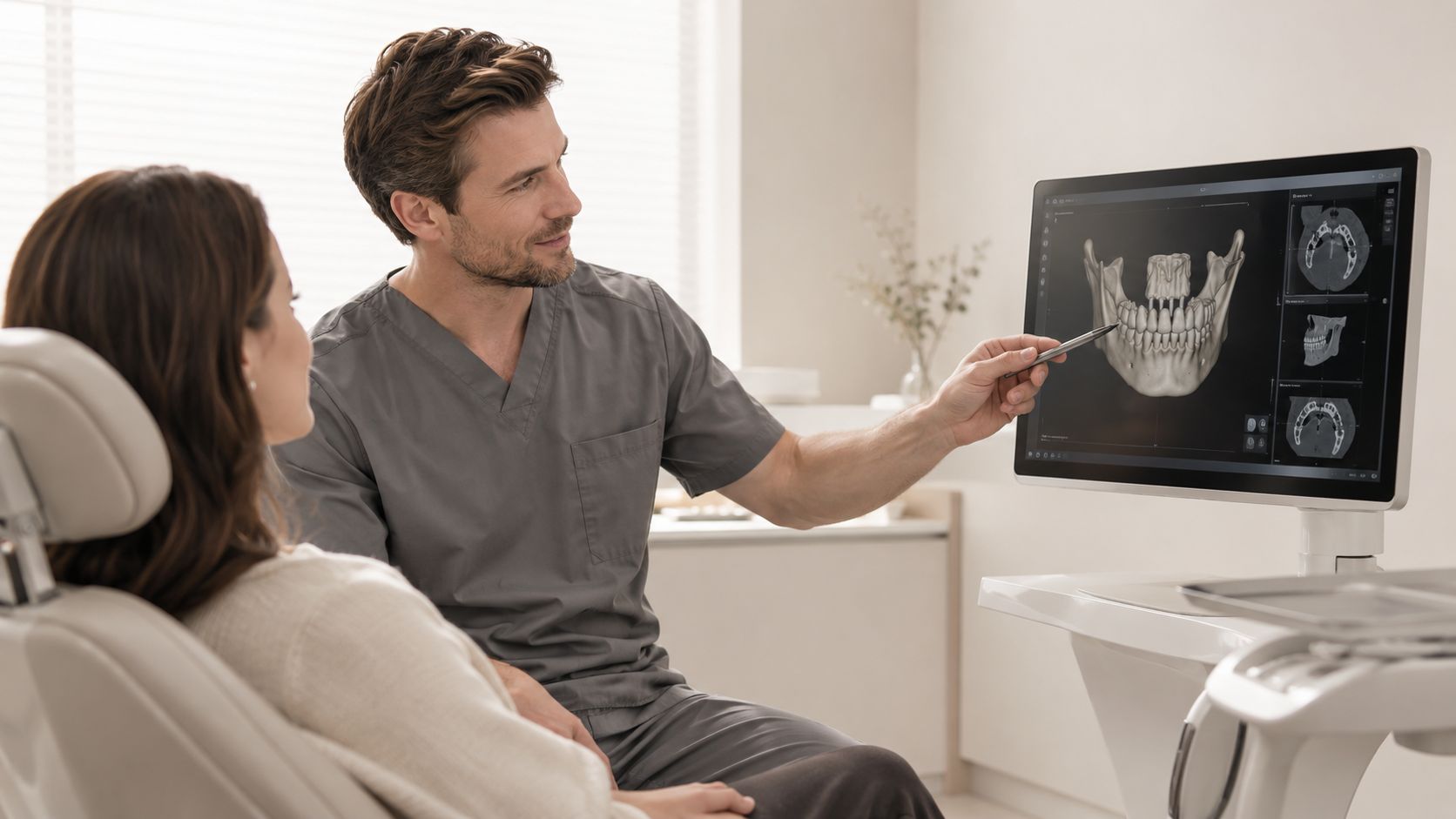
A clear consultation should explain whether you need an extraction, a single implant, a crown, or a more involved full-arch solution. Studies show that pain tends to be higher when treatment is more complex, especially with bone augmentation or multi-stage surgery, so detailed planning helps set realistic expectations before treatment begins.
On the procedure day, you can discuss local anesthesia, sedation, medication timing, and the practical comfort measures available in the office. Winn Smiles also provides transparent cost discussions, convenient Cleveland and Chattanooga locations, and free consultations or second opinions for select services. Those details give you an opportunity to make a decision without guessing about logistics or recovery.
When looking for dental implants near me, a cosmetic dentist near me, an emergency dentist, or broader dental care such as cleanings, dental X-rays, teeth whitening, restorative dentistry, and family exams, start with a visit that addresses your immediate concern and your longer-term oral health.
Winn Smiles offers dental implants, full-arch solutions, local anesthesia, personalized sedation options, and practical recovery guidance for patients in Cleveland and Chattanooga. Schedule a consultation with Winn Smiles to discuss your pain concerns, treatment choices, and the next step toward a stable, healthy smile.