If you're researching dental implants recovery time, you're probably in a familiar spot. You want your smile back, you want to chew comfortably again, and you may already be searching for a dentist near me, a dentist in Chattanooga, TN, or dental implants near me. But one question keeps slowing people down: how long will recovery really take, and how disruptive will it be?
That hesitation makes sense. Many patients in Chattanooga and Cleveland worry less about the implant itself and more about pain, swelling, work, eating, and whether they'll be out of their normal routine for weeks. The good news is that recovery is usually more manageable than people expect. The important part is understanding that there are two different timelines involved: when you start feeling better, and when the implant is fully bonded to the bone.
Considering Dental Implants in Chattanooga Here Is What to Expect
A lot of adults start this process after living with a missing tooth for longer than they planned. Some are tired of hiding a gap in photos. Others are frustrated that one side of the mouth does all the chewing. Some have already dealt with a cracked tooth, a past tooth extraction, or a denture that never felt secure.
The first question is often simple and direct: “How long am I going to be down?”
Typically, the early recovery period is short. The confusion happens because many online articles blur together the time it takes to feel normal again and the time it takes for the implant to become fully stable in the jaw. Those are not the same thing. If you understand that difference from the beginning, the whole process feels a lot less confusing.
What patients usually worry about first
Most concerns fall into a few categories:
- Pain and swelling: Will it be worse than a filling, crown, or extraction?
- Work and family life: Can I go back to the office, school pickup, or errands quickly?
- Eating: When can I stop babying that side of my mouth?
- Safety: How do I know what's normal healing and what isn't?
Those are practical questions, not cosmetic ones. They matter whether you're searching for a cosmetic dentist near me to rebuild your smile or a restorative option after losing a tooth.
Practical rule: Dental implant recovery time feels much easier when you plan for the first week carefully and stay patient during the bone-healing phase that you can't see.
Why the timeline feels confusing
People often hear “a few days” and “several months” in the same conversation. Both can be true. You may be back to your normal routine quickly, yet the implant still needs more time beneath the gums. That's why experienced implant care always includes detailed aftercare, regular follow-up, and clear instructions about diet and activity.
If you're in Chattanooga, Cleveland, or nearby communities, it's smart to choose a practice that can handle the full picture. That includes diagnostics, restorative planning, comfort options, and related services like dental x-rays, new patient exams, restorative dentistry, cleaning and exams, and help if you ever need an emergency dentist after unexpected dental pain or implant concerns.
Your Dental Implant Recovery Timeline Explained
A common Chattanooga or Cleveland scenario goes like this. A patient feels much better within a week, then assumes the implant is basically healed. Comfort improves early. Bone healing takes much longer.
That difference matters because dental implant recovery has two separate timelines. One is the short-term recovery you feel. The other is the biological healing you cannot see yet.
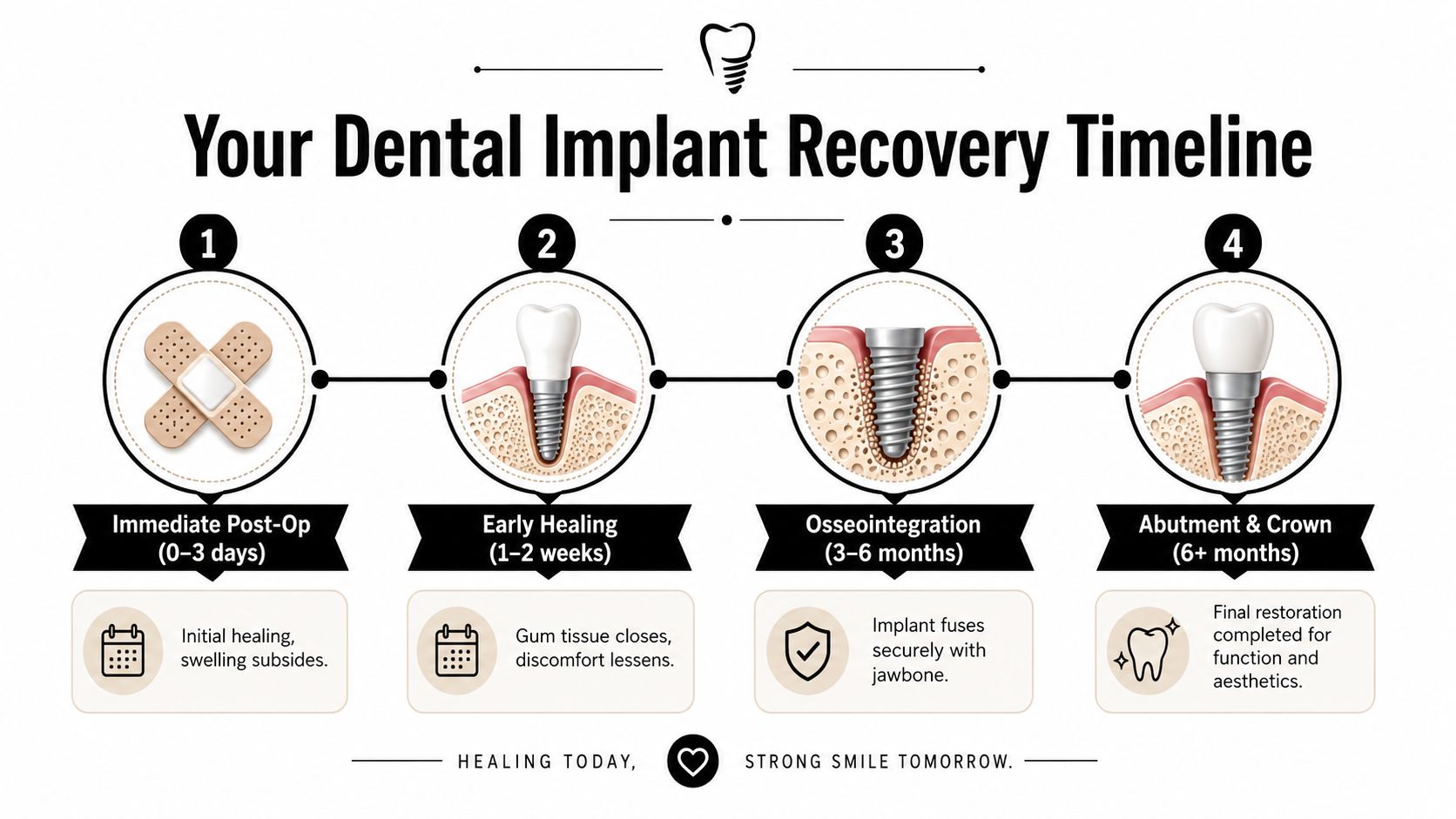
The first few days
Right after surgery, the main goals are controlling swelling, staying comfortable, and protecting the site. Mild bleeding, soreness, and facial swelling are typical early on. Many patients are able to rest the day of surgery, take it easier for a short period, and speak and function more normally within a few days.
I tell patients to judge this phase by comfort, not by confidence. Feeling decent on day three does not mean the implant is ready for normal chewing.
The first week
During the first week, daily life usually gets easier. Swelling often starts to settle, tenderness becomes more manageable, and soft foods feel less like a chore. Many patients return to work, school pickup, desk routines, and other light responsibilities during this window.
That is the "feeling better" phase.
You still need to avoid testing the area with crunchy foods, hard chewing, or anything that puts pressure on the implant site. Good early habits support the body's normal wound repair process, and resources such as EkagraHealth AI offer a helpful general overview of how healing progresses in stages.
Weeks two through four
By this point, the gum tissue is usually closing and strengthening. The area often looks much better than it did right after surgery, and many patients tell me this is when the procedure starts to feel less intimidating in hindsight.
This is also where confusion starts. Soft tissue healing can make it seem like everything is finished. It is not. The implant still depends on quiet, stable bone healing under the gums.
The three to six month phase
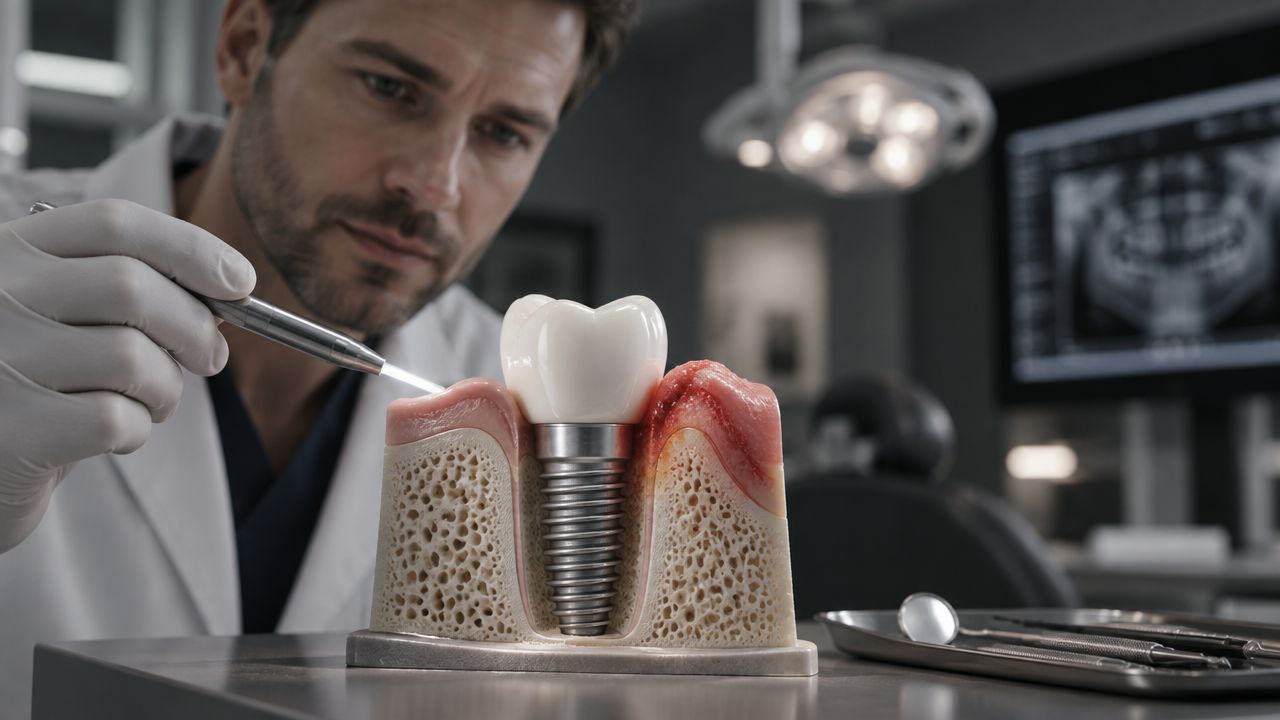
The longer phase is called osseointegration. During this period, the jawbone bonds to the implant surface and creates the support the final tooth will rely on. Dental Specialists of West Plains explains that soft tissue often heals in 1 to 2 weeks, while full biological integration usually takes 3 to 6 months.
That distinction is one of the most important parts of implant treatment. Patients usually care about when they will feel normal again. Dentists also have to care about when the implant is biologically ready to handle long-term function. Those dates are rarely the same.
If bone grafting or other site development was needed, this phase may take longer. The mouth can feel comfortable while the bone is still doing careful, slow work in the background.
Feeling better is the first milestone. Being biologically healed enough for the final tooth is a separate milestone.
Dental Implant Recovery at a Glance
| Recovery Phase | Typical Duration | Key Focus & Activities |
|---|---|---|
| Immediate post-op | 0 to 3 days | Rest, protect the site, control bleeding and swelling, use medications as directed |
| Early comfort recovery | 1 to 2 weeks | Gum tissue improves, soft foods continue, careful cleaning, return to light routine |
| Osseointegration | 3 to 6 months | Bone bonds to implant, avoid risky pressure, attend follow-up visits |
| Final restoration | 6+ months | Abutment and crown placement once healing is confirmed |
How Different Implant Procedures Affect Healing Time
Not every implant case follows the same path. Two neighbors in Chattanooga may both say they “got implants,” but one may have had a straightforward single tooth replacement while the other needed grafting or a full-arch plan. Their recovery experience won't match.
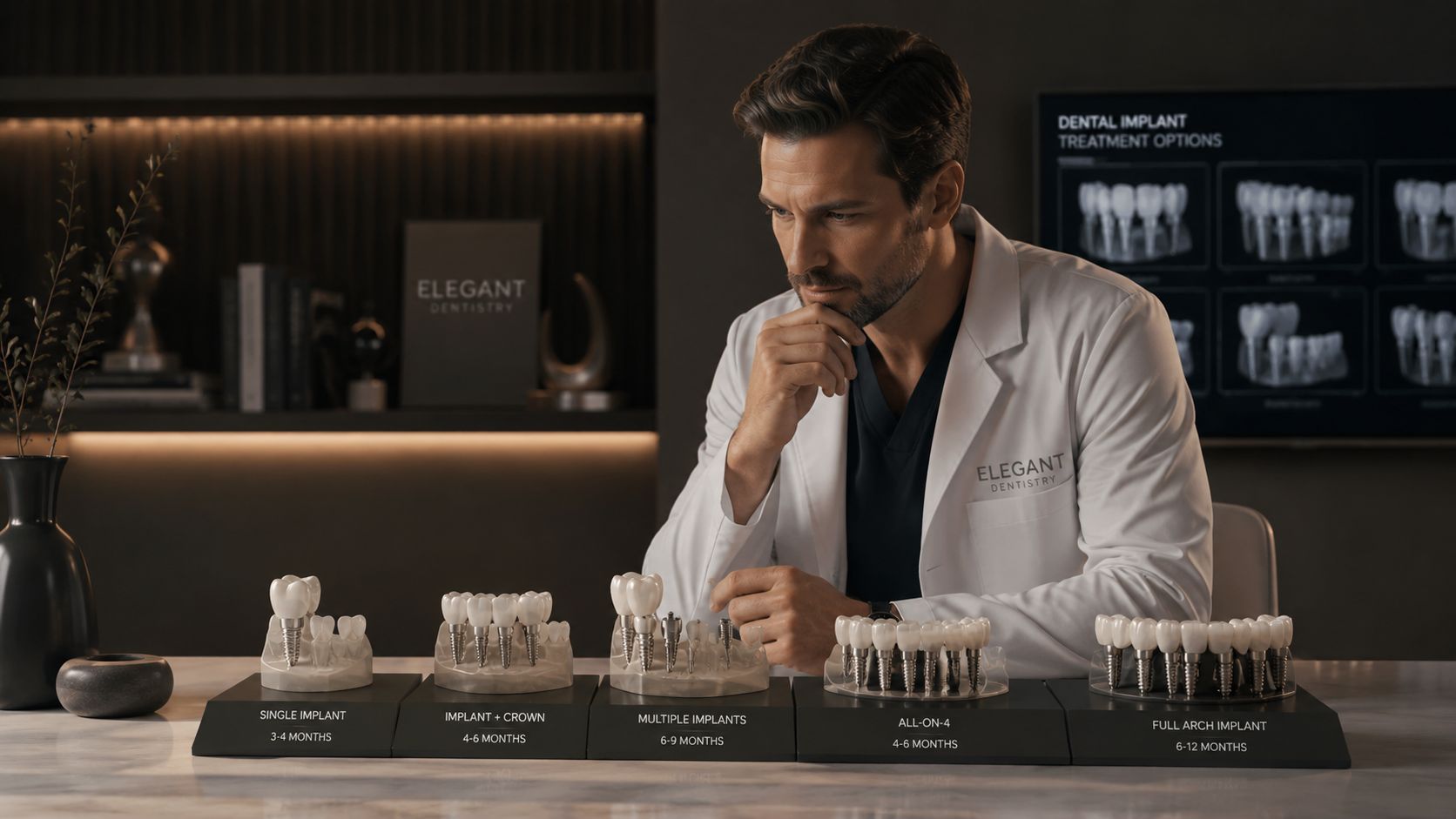
Single implant versus more involved treatment
A standard single implant is usually the simplest recovery path. The surgery itself is efficient. Envision Dental Implant Center notes that placement typically takes 1 to 2 hours per implant, while the full process from surgery to final restoration averages 3 to 6 months because biological healing still has to happen.
If a temporary tooth is placed early for appearance, patients often feel encouraged because the smile looks more complete sooner. But appearance and final strength are not the same. Temporary restorations are helpful in selected cases, yet they don't change the biology underneath.
When grafting changes the timeline
Bone grafting creates a different recovery conversation. The implant site may need additional healing support before it can handle pressure. That's why one patient may return to soft, easy foods quickly while another has to be much more cautious for much longer.
For a broad overview of how surgical wounds heal in phases, some patients find EkagraHealth AI on the wound-healing process timeline helpful. It isn't dental-specific treatment advice, but it does give a useful picture of why tissue repair and deeper healing don't happen on the same schedule.
Full-arch treatment and activity expectations
Full-arch implant treatment involves multiple implants and a more detailed plan. Patients often do well with function and appearance early on, but the aftercare instructions matter even more because there are more surgical sites and more forces involved.
A simple comparison helps:
- Single tooth implant: Usually the most direct recovery path.
- Implant with a temporary crown: Faster cosmetic improvement, but the implant still needs protected healing.
- Implant with bone grafting: Longer caution period, especially with chewing.
- Full-arch treatment: Broader recovery plan, with close attention to diet and follow-up.
The practical takeaway is this: don't compare your recovery to someone else's unless the procedure was the same. The type of treatment matters as much as the implant itself.
Factors That Influence Your Recovery Speed
Some parts of healing are built into the biology of implant dentistry. Other parts depend heavily on your habits, health history, and how carefully you follow instructions at home.
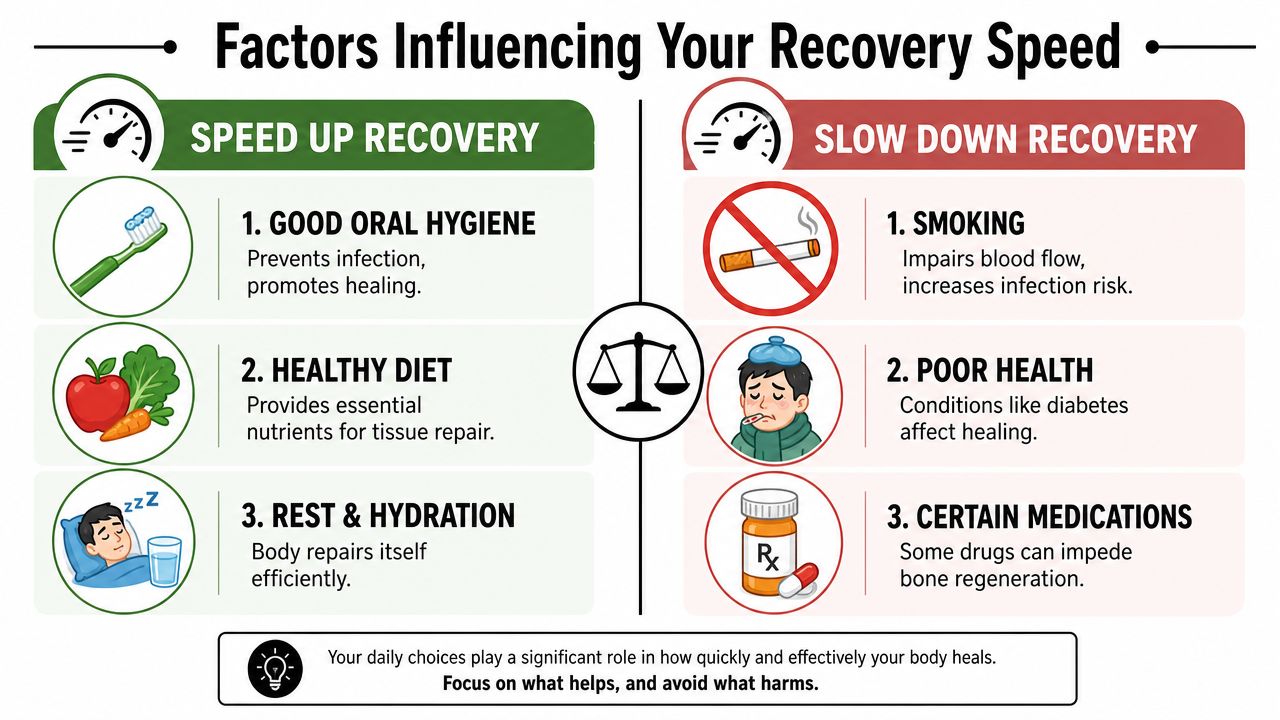
The factors you can control
The site needs to stay clean, protected, and undisturbed. That sounds basic, but it matters more than patients expect.
A few habits make a meaningful difference:
- Excellent oral hygiene: Gentle cleaning lowers irritation around the surgical area and supports healthy gums.
- Smart food choices: Soft foods protect the site while tissues are vulnerable.
- Rest and hydration: Healing works better when your body isn't stressed.
- Following instructions exactly: The little details, such as rinsing gently and avoiding pressure on the area, often separate smooth recoveries from frustrating ones.
For general post-surgical habits that support healing, some patients also like this practical guide from MedAmerica Rehab Center on recovering from surgery faster.
The factors that slow healing
Smoking and tobacco use are major concerns because blood flow matters during recovery. Medical conditions can also change healing speed, especially when they affect circulation or the body's ability to repair tissue. Certain medications may affect bone healing as well, which is why your medical history needs to be reviewed carefully before implant treatment.
Bone grafting is another major variable. According to Northwest Oral Surgeons on implant recovery timelines, initial soft-tissue healing occurs in about 2 weeks, but patients who have had bone grafts may need to wait 6 to 9 months before eating very hard foods and should wait up to 6 weeks before resuming high-impact sports to avoid jeopardizing healing.
Hard foods and early impact aren't just uncomfortable. In the wrong phase, they can place force on an implant before the surrounding bone is ready.
What this means for everyday life
If you're active, travel often, or have a demanding job, planning matters. A patient who follows directions and adjusts their routine for the right amount of time usually has a smoother experience than the patient who “felt fine” and pushed too soon.
This is one reason people looking for dental implants near me should think beyond location alone. Good implant care includes proper planning, clear expectations, and aftercare that fits real life in Chattanooga or Cleveland.
Practical Aftercare for a Smooth and Comfortable Recovery
The first evening after implant surgery is usually the point when patients ask the same question. “What should I do so I heal well and stay comfortable?” The answer is straightforward. Protect the site, keep your mouth clean, and avoid putting pressure on an implant that may feel better long before the bone has finished healing around it.
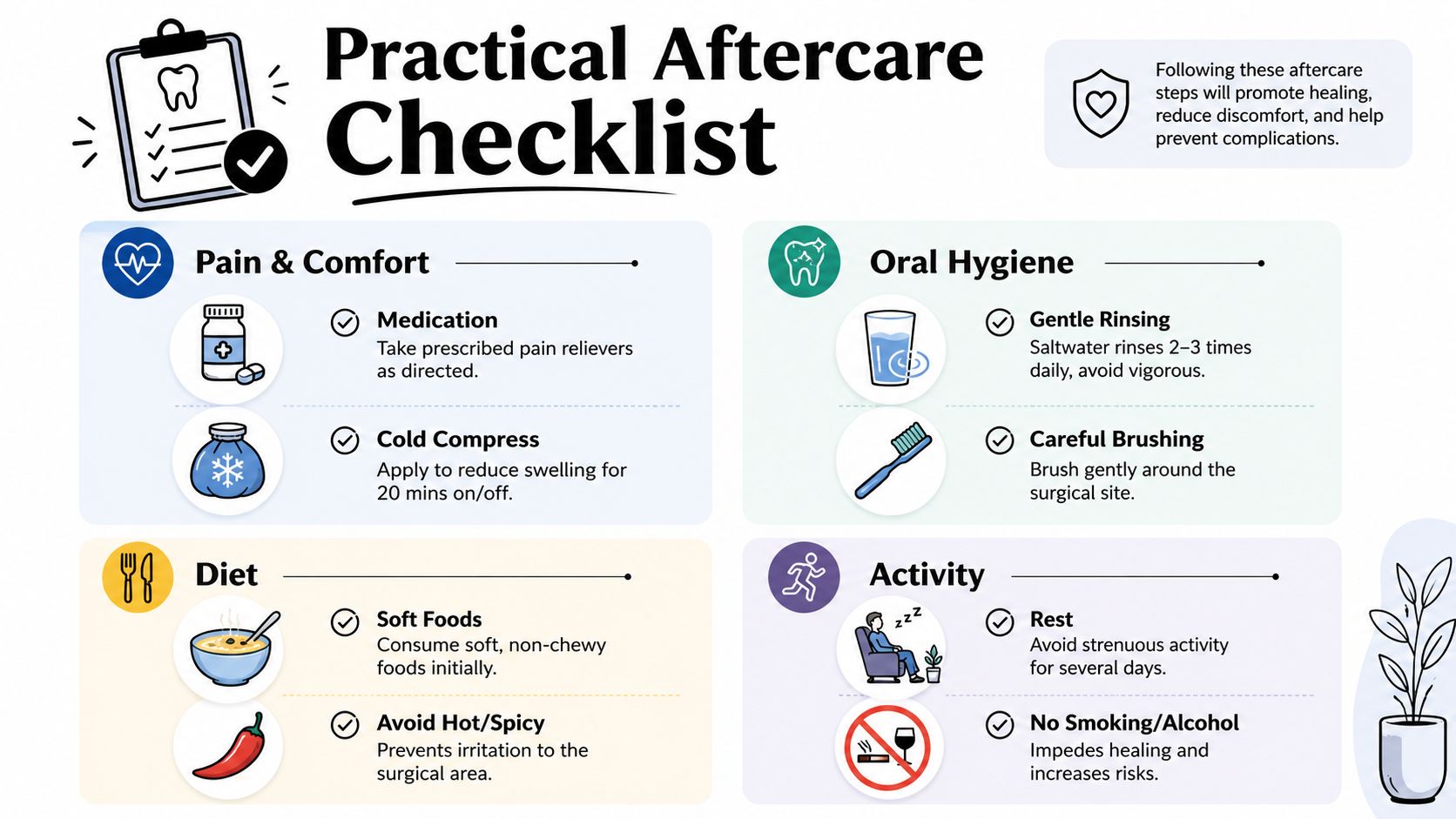
Keep the first days simple
The early goal is comfort and protection. In my office, I tell Chattanooga and Cleveland patients to make the first few days boring on purpose. Quiet routines tend to heal better.
- Take medication exactly as directed: Stay ahead of soreness instead of waiting until you are uncomfortable.
- Use cold compresses: Short intervals can help reduce early swelling.
- Rest with your head slightly propped up: That often helps with both pressure and bleeding control.
- Avoid smoking and alcohol: Both can irritate the area and slow the healing response.
Most patients start feeling noticeably better within the first week or two. That does not mean the implant is ready for normal chewing. The bone is still attaching to the implant below the surface, and protecting that phase is what supports long-term success.
Food choices matter more than people expect
A lot of avoidable setbacks happen at mealtime. Chips, crusty bread, nuts, tough meat, and very hot foods can irritate the site or place force where you do not want it yet.
Choose foods that are easy to chew and easy to control:
- Smooth options: Yogurt, pudding, applesauce, mashed potatoes
- Soft proteins: Scrambled eggs, cottage cheese, flaky fish
- Gentle meals: Warm soup, oatmeal, soft pasta, rice
If you want practical ideas for the first several days, our guide on what to eat after dental implant surgery gives simple meal options patients use at home.
Some patients also like having a broader step-by-step home recovery plan for rest, hydration, and day-by-day support after any procedure.
Here's a quick video many patients find helpful before surgery:
Clean the area gently
Good home care helps healing. Aggressive brushing does not.
I usually give this instruction in simple terms. Keep the area clean without scrubbing it. A practical routine often looks like this:
- Brush carefully: Use a soft toothbrush and avoid direct pressure on the surgical site at first.
- Rinse gently: Saltwater rinses can be helpful if they are done without forceful swishing.
- Follow your written instructions: If you were given a medicated rinse, use it exactly as prescribed.
- Keep follow-up visits: An implant can look fine to a patient but still need a closer clinical check.
Aftercare works best when it matches the biological stage of healing. Feeling better is the short phase. Biological healing takes much longer, especially if your treatment included grafting. That distinction is why we give clear limits on food, cleaning, and activity, even after the soreness has started to fade.
Warning Signs and When to Call Your Cleveland Dentist
A common call to our office sounds like this: “I felt a little better yesterday, but today the area is more swollen and more sore.” That change matters. After implant surgery, normal healing usually trends in the right direction. You may still have tenderness, bruising, and mild swelling, but each day should feel a little calmer, not more intense.
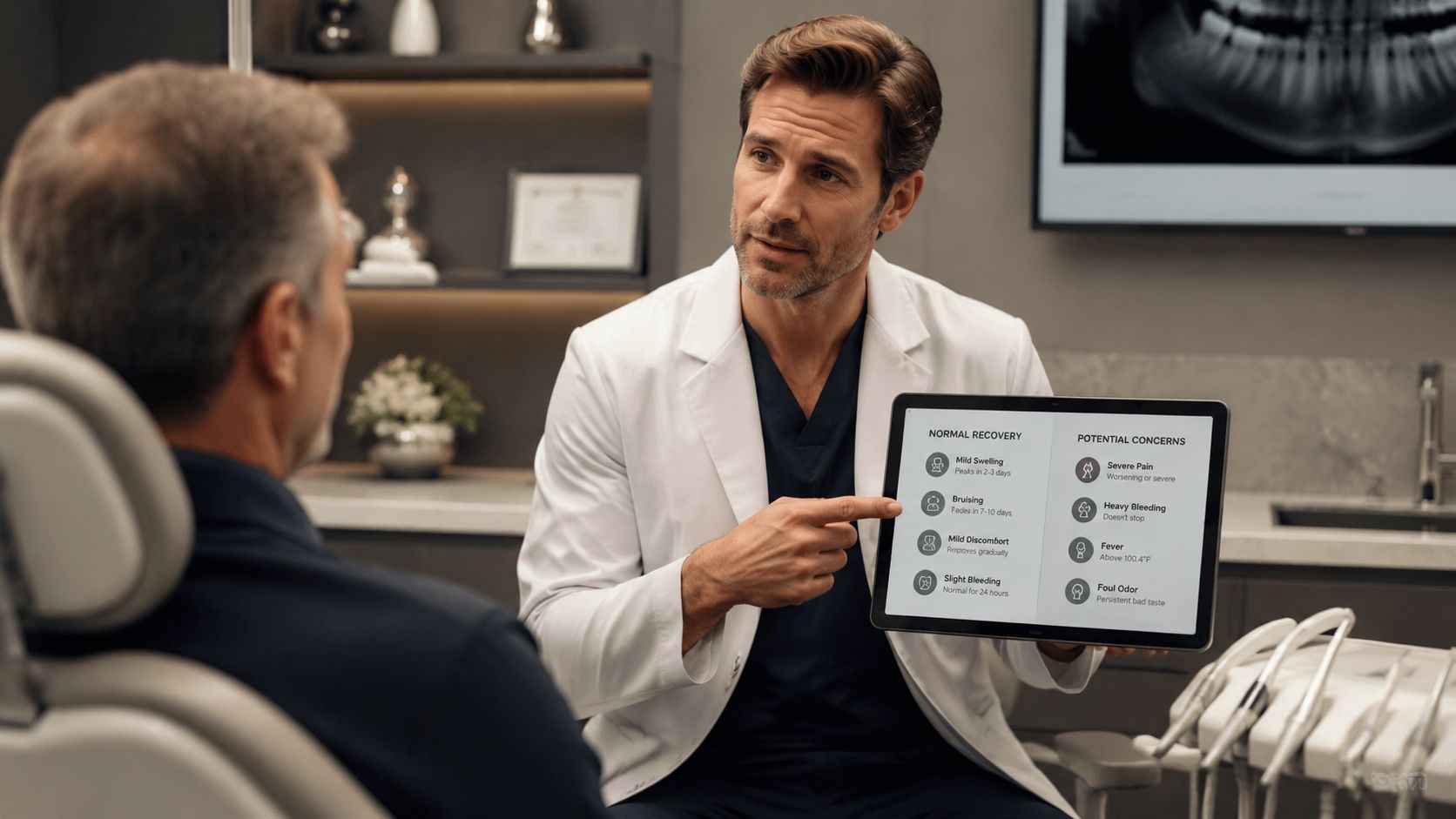
Normal symptoms versus concerning symptoms
Early discomfort and biologic healing are not the same thing. Many Chattanooga and Cleveland patients feel noticeably better within the first week or two, even though the implant is still in the months-long phase of bonding with the bone. Because of that, new pain, new swelling, drainage, fever, or movement at the site should not be brushed off as “part of the process.”
Call your dental office if you notice:
- Pain that is getting worse instead of easing
- Swelling that increases after the first few days
- Bleeding that continues or becomes hard to control
- A bad taste, drainage, or visible pus
- Fever or feeling sick overall
- Any looseness or movement near the implant area
- Trouble biting that suddenly feels different
Bone grafting can make recovery less predictable. That does not mean something is wrong, but it does mean changes in pressure, swelling, or discomfort deserve a closer look. I would much rather hear from you early and confirm things are on track than have you wait until a small issue becomes harder to treat.
A quick call is often enough to sort out what is normal, what needs an adjustment, and what should be seen the same day. If you want practical guidance on protecting the area long term, our guide on how to care for dental implants is a helpful next step.
Some patients also like using a broader step-by-step home recovery plan to stay organized with rest, hydration, and daily healing habits at home.
If something feels off, call your dentist promptly in Cleveland or Chattanooga. Fast evaluation protects your comfort and gives the implant its best chance to heal well.
Your Implant Journey with Winn Smiles
Good implant care should feel organized from the first visit forward. That means careful planning, clear imaging, honest discussion of the treatment steps, and comfort options that reduce anxiety before the procedure even begins. It also means looking at the full picture of your oral health, not just the missing tooth.
Patients often expect implant treatment to interrupt life more than it does. According to Saline Oral Surgery and Implant Center, most patients are ready to resume normal school or work activities within 1 to 2 days after surgery, with discomfort that is generally manageable with medication. For many adults balancing work, family, and errands in Chattanooga and Cleveland, that's reassuring.
What support should look like
A strong implant experience includes:
- Thoughtful diagnostics: Careful imaging and planning before surgery
- Comfort options: A calmer visit for patients with dental anxiety
- Clear follow-up: Knowing when you'll be seen again and what to watch for
- Long-term maintenance: Protecting the implant after it has healed
Once your restoration is complete, daily home care becomes the key to protecting your result. This guide on how to care for dental implants is a helpful next step for understanding maintenance after recovery.
Whether you started your search with dentist near me, cosmetic dentist near me, or dental implants near me, the right plan is the one that restores function, protects bone, and gives you confidence in your smile again.
If you're ready to replace a missing tooth, talk through implant options, or get answers about recovery, schedule a consultation with Winn Smiles. With convenient locations serving Chattanooga, TN, Cleveland, TN, and nearby communities, the team provides modern dental care, advanced imaging, comfort-focused treatment, and guidance you can trust from your first visit through final restoration.