A dental emergency usually doesn't happen when life is quiet. It happens during a weekend game, after dinner, late at night, or right before school. A chipped front tooth, a lost crown, or sudden swelling can leave you trying to make decisions fast while someone you love is in pain.
That's why having an emergency dental kit matters. It won't replace a dentist, but it can help you control bleeding, protect an injured tooth, reduce discomfort, and avoid mistakes that make the situation worse. For families in Chattanooga and nearby Cleveland, a little preparation can turn panic into a clear plan.
Why Every Chattanooga Family Needs a Dental Emergency Plan
A child takes an elbow to the mouth at soccer. A parent bites down on something hard and feels a filling give way. A teenager with braces wakes up with a wire poking into the cheek. These are common moments, and they feel bigger when they happen outside office hours.

Many individuals don't keep dental supplies at home until they've needed them once. The problem is that the first few minutes matter. If a tooth is knocked out, if soft tissue is bleeding, or if a broken edge is cutting the tongue, what you do right away can affect pain, healing, and sometimes whether a tooth can be saved.
The goal is stabilization, not home treatment
An emergency dental kit is a first-response tool. It helps you bridge the gap between the injury and professional care. It is not a license to do dentistry at home.
That distinction matters because dental problems often need diagnosis, not just symptom relief. A lost filling may look minor but could involve decay or fracture underneath. A toothache can come from a deep infection, a crack, gum inflammation, or trauma. Good first aid buys time. It doesn't solve the underlying cause.
Practical rule: If a home step reduces pain or protects the area, that's useful. If it delays proper evaluation, that's a problem.
Families also benefit from planning the non-medical side of an emergency. Keep your dentist's number saved. Make sure a spouse, grandparent, babysitter, or coach knows where the kit is. If your child is at school or sports often, it also helps to review good habits for managing school emergency contacts so the right person can act quickly when an injury happens.
Dental emergencies are common enough to plan for
In the United States, tooth disorders accounted for an annual average of 1,944,000 emergency department visits during 2020 to 2022, according to the CDC data brief on tooth-related emergency department use. That matters because many people end up in settings that can address pain and immediate medical concerns, but not provide definitive dental treatment.
A calm plan at home changes that experience. When you already have gauze, a storage container, pain reliever, and temporary protective materials in one place, you're less likely to improvise with the wrong item or wait too long to get help.
Your Complete Emergency Dental Kit Checklist
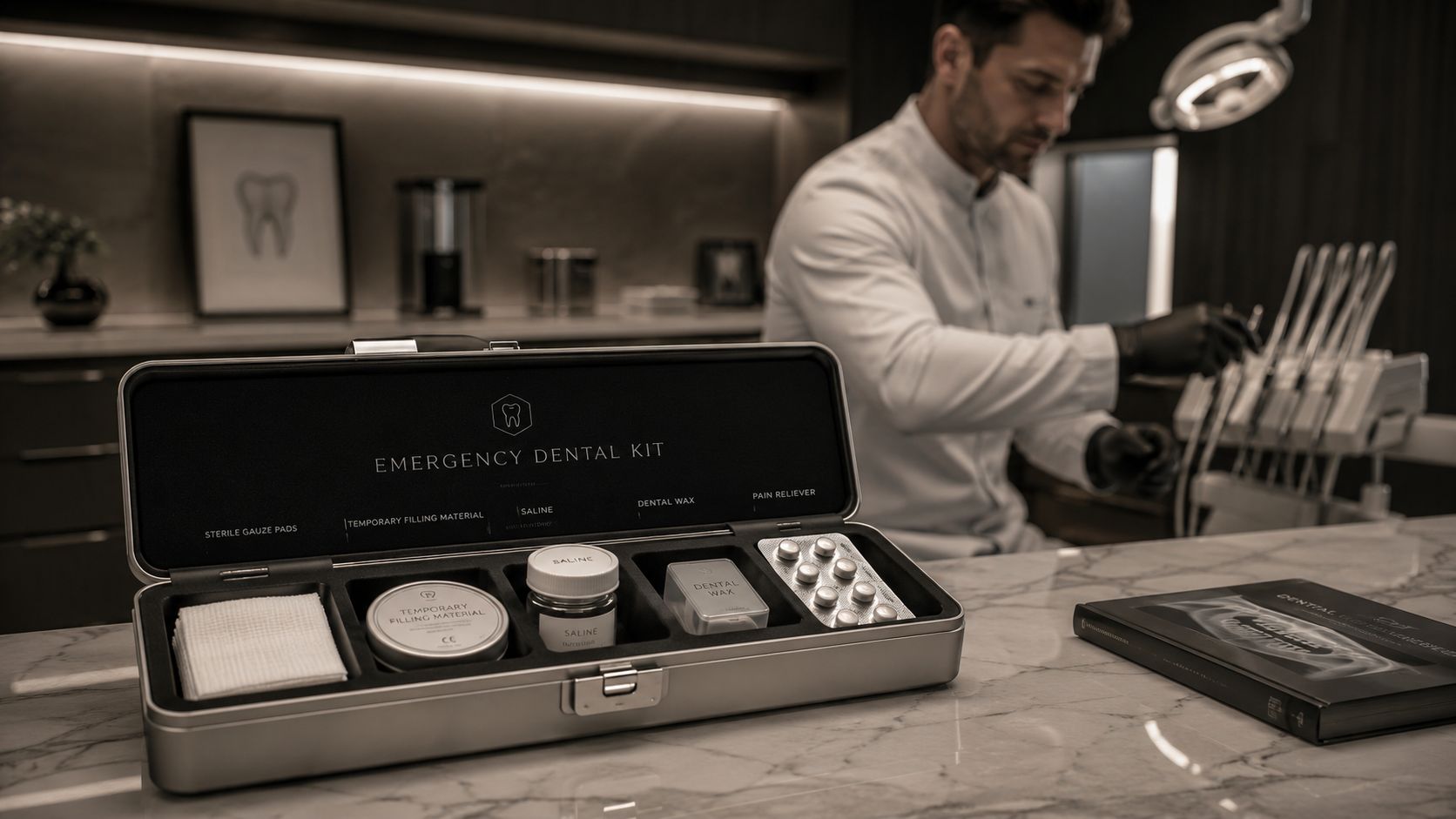
A useful emergency dental kit should be simple enough that you'll maintain it, but complete enough to handle the problems families see most often. Build it around pain control, temporary protection, and safe handling of dental injuries.
Pain and swelling basics
Start with the items people reach for first.
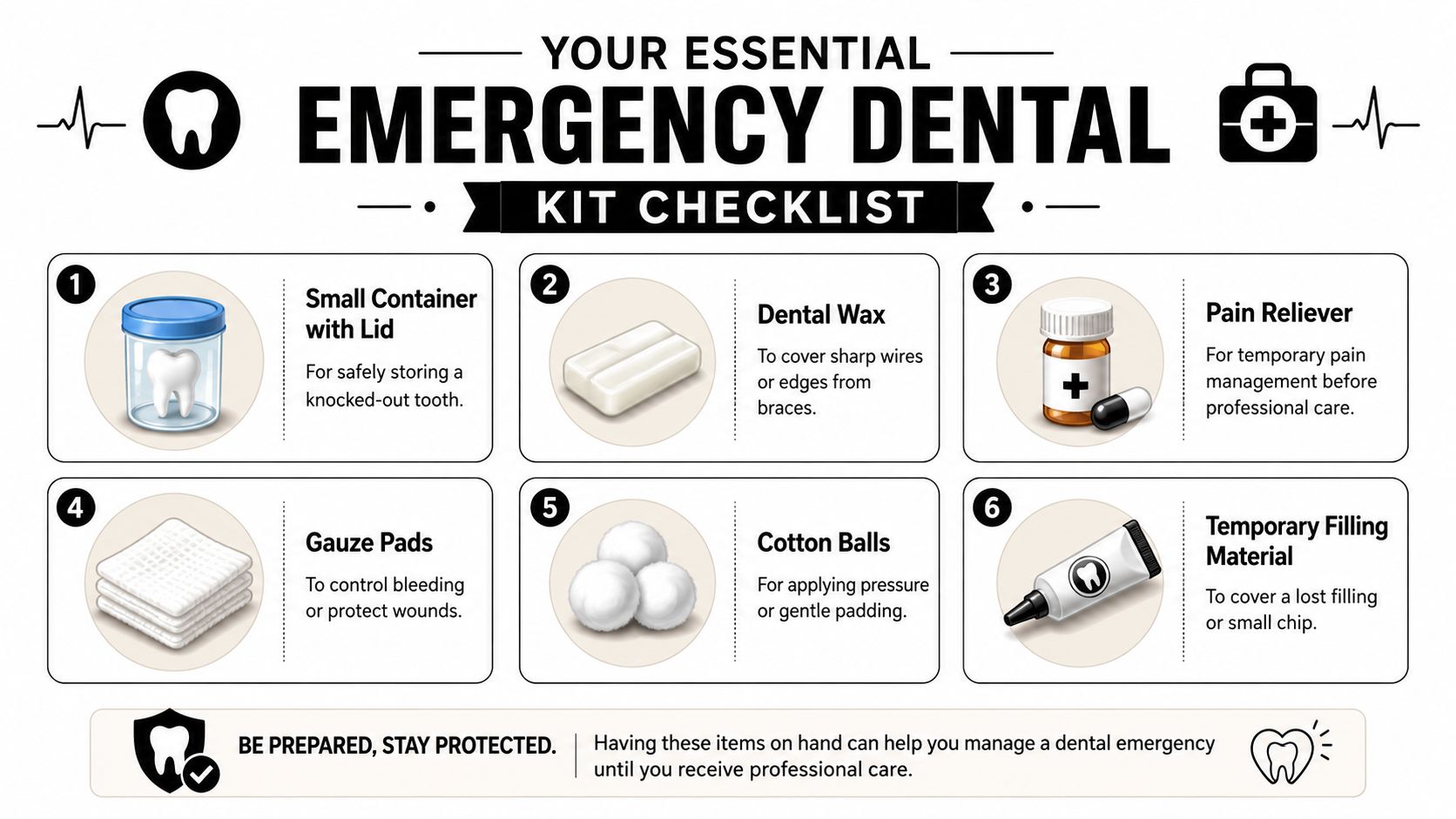
- Ibuprofen or acetaminophen helps with temporary pain management until you can be seen.
- Cold pack helps reduce swelling when applied to the outside of the cheek.
- Oral numbing gel can provide short-term relief for irritated soft tissue, though it shouldn't replace an exam if pain is persistent.
Keep these items together and easy to identify. In a stressful moment, no one wants to search through multiple drawers.
Tools for protection and temporary repairs
This part of the kit protects the tooth or surrounding tissue from getting worse.
- Temporary filling material or dental cement can cover a lost filling or protect a small exposed area for a short period.
- Dental wax is especially helpful for braces, broken retainers, or sharp tooth edges that are rubbing the cheek or tongue.
- Small lidded container is necessary if a tooth is knocked out.
- Saline solution or access to milk matters because a knocked-out tooth needs a preservation medium, not a dry paper towel.
For a knocked-out tooth, the kit should include a small lidded container and a preservation medium like milk or saline solution. Guidance on building a family dental emergency kit notes that contacting a dentist within an hour is critical, because proper storage right away gives the tooth the best chance.
A quick visual can help when you're assembling supplies at home.
Wound care and cleanup supplies
These items are easy to overlook, but they matter in real emergencies.
| Item | Why it helps |
|---|---|
| Sterile gauze pads | Controls bleeding and protects injured areas |
| Cotton balls | Adds gentle padding or helps apply light pressure |
| Disposable gloves | Keeps handling cleaner during bleeding or trauma |
| Dental floss | Removes trapped food gently when pressure is the problem |
| Small flashlight | Helps you see cracks, bleeding, or a lost filling in low light |
Keep the kit in one container, not scattered between the bathroom, kitchen, and sports bag.
If your family spends a lot of time camping, hiking, or traveling for sports, it's smart to compare your dental kit with broader medical kits for outdoor enthusiasts. That kind of planning helps you avoid duplicate supplies while still making sure dental-specific items are covered.
Using Your Kit A Guide to Common Dental Emergencies
Most home mistakes happen when people try to “fix” the tooth instead of protecting it. The safest use of an emergency dental kit is usually gentle, temporary, and limited. Your job is to reduce harm and get professional help when needed.
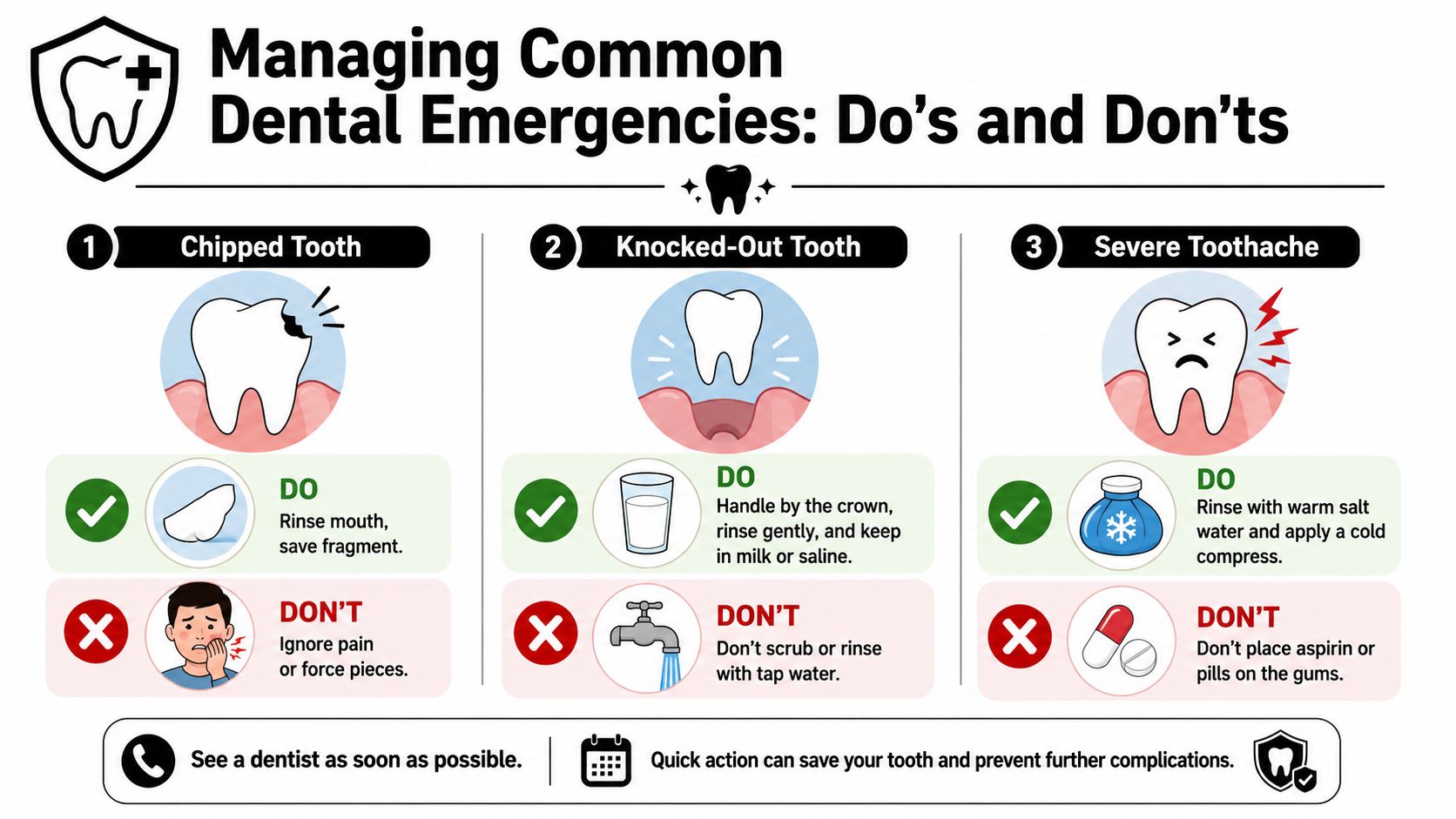
Knocked-out tooth
This is one of the most time-sensitive situations.
- Pick the tooth up by the crown, not the root.
- If it's dirty, rinse it gently. Don't scrub it.
- Place it in milk or saline in a small lidded container.
- Control bleeding with gauze.
- Call for urgent dental care immediately.
What doesn't work is just wrapping the tooth in tissue, letting it dry out, or cleaning it aggressively. Dry storage and rough handling are common reasons a tooth can't be successfully managed later.
Chipped or broken tooth
A small chip may not be dangerous, but it can still cut the lips or tongue.
- Rinse the mouth gently.
- Save any broken fragment if you can find it.
- Use gauze if there is bleeding.
- Apply a cold pack on the outside of the face for swelling.
- If there's a sharp edge, dental wax can protect nearby tissue temporarily.
If the break exposes a sensitive inner area, causes significant pain, or changes your bite, it needs prompt professional evaluation. A same-day repair, crown, or other restorative treatment may be the right next step depending on the damage.
Lost filling or crown
People often overestimate what home materials can do.
Temporary filling material can cover a lost filling briefly, but it should be used carefully and only as a short-term measure. A crown that has come off may or may not be reusable, depending on why it loosened and whether the tooth underneath is intact.
A key boundary matters here. A study in the Journal of Emergency Medicine found that 42% of patients who used temporary dental cement without professional evaluation developed secondary infections. That's why the safest approach is temporary protection followed by follow-up, not repeated self-treatment.
A temporary fix should reduce exposure and discomfort. It should not become your long-term plan.
For practical at-home guidance before you can be seen, these dental emergency tips from Winn Smiles are a useful companion to a stocked kit.
Severe toothache
A toothache can come from decay, infection, grinding, trauma, a cracked tooth, or gum irritation. The kit can help with comfort, but not diagnosis.
Try this:
- Rinse gently with warm salt water
- Use floss carefully if food is trapped
- Take an over-the-counter pain reliever as directed
- Apply a cold pack externally if swelling is present
Do not place aspirin directly on the gums. Do not keep adding numbing products all day without seeking care. If pain is severe, persistent, or accompanied by swelling, don't wait.
Soft tissue injury inside the mouth
Cuts to the lips, gums, cheeks, or tongue can bleed a lot because the mouth has a rich blood supply.
Use clean gauze and apply steady pressure. Keep the pressure consistent instead of checking every few seconds. A cold compress on the outside can also help.
Seek prompt care if bleeding continues, the cut is deep, or the injury came with tooth trauma.
Keeping Your Kit Ready Pediatric and Maintenance Tips
A neglected emergency dental kit gives people false confidence. It looks prepared until the moment you open it and find dried-out materials, expired medication, or missing pieces. That happens more often than most families expect.
Data suggests that up to 68% of household first aid kits contain expired medications or compromised sterile materials. That's a practical warning. If you haven't checked your kit in a long time, assume something in it needs attention.
A maintenance routine that's easy to follow
Don't treat the kit like a one-time purchase. Treat it like a seasonal household task.
Use this checklist when you review it:
- Check expiration dates on pain relievers, numbing products, saline, and temporary materials.
- Replace opened or damaged packaging on gauze, gloves, and any sterile items.
- Inspect dental wax and temporary repair products for drying, hardening, or contamination.
- Restock after every use so the kit is ready for the next problem.
- Update contact information for your dentist, pediatrician, and emergency contacts.
A simple habit works best. Tie your kit check to something you already do, like changing smoke detector batteries, packing for a school season, or cleaning out the medicine cabinet.
The best emergency kit is the one that still works on the day you need it.
Pediatric details parents shouldn't skip
Children have different needs, and sports injuries are common. If you're building a family kit, make sure the contents fit younger patients too.
Keep in mind:
- Child-appropriate pain relief should match your child's age and the package directions.
- Smaller gauze pads are easier to use in a child's mouth.
- Orthodontic wax is especially helpful for kids and teens with braces.
- A labeled container makes it easier for another caregiver to act quickly.
Children also need simpler instructions. In a stressful moment, “bite gently on this gauze” works better than a long explanation. If your child plays sports, keeping a duplicate mini kit in the gear bag is often more practical than expecting everyone to remember the full home kit.
When to Call Your Emergency Dentist in Chattanooga or Cleveland
An emergency dental kit is for immediate support. It is not the finish line. The primary question in many situations isn't “Can I do something at home?” It's “Is this still safe to watch?”
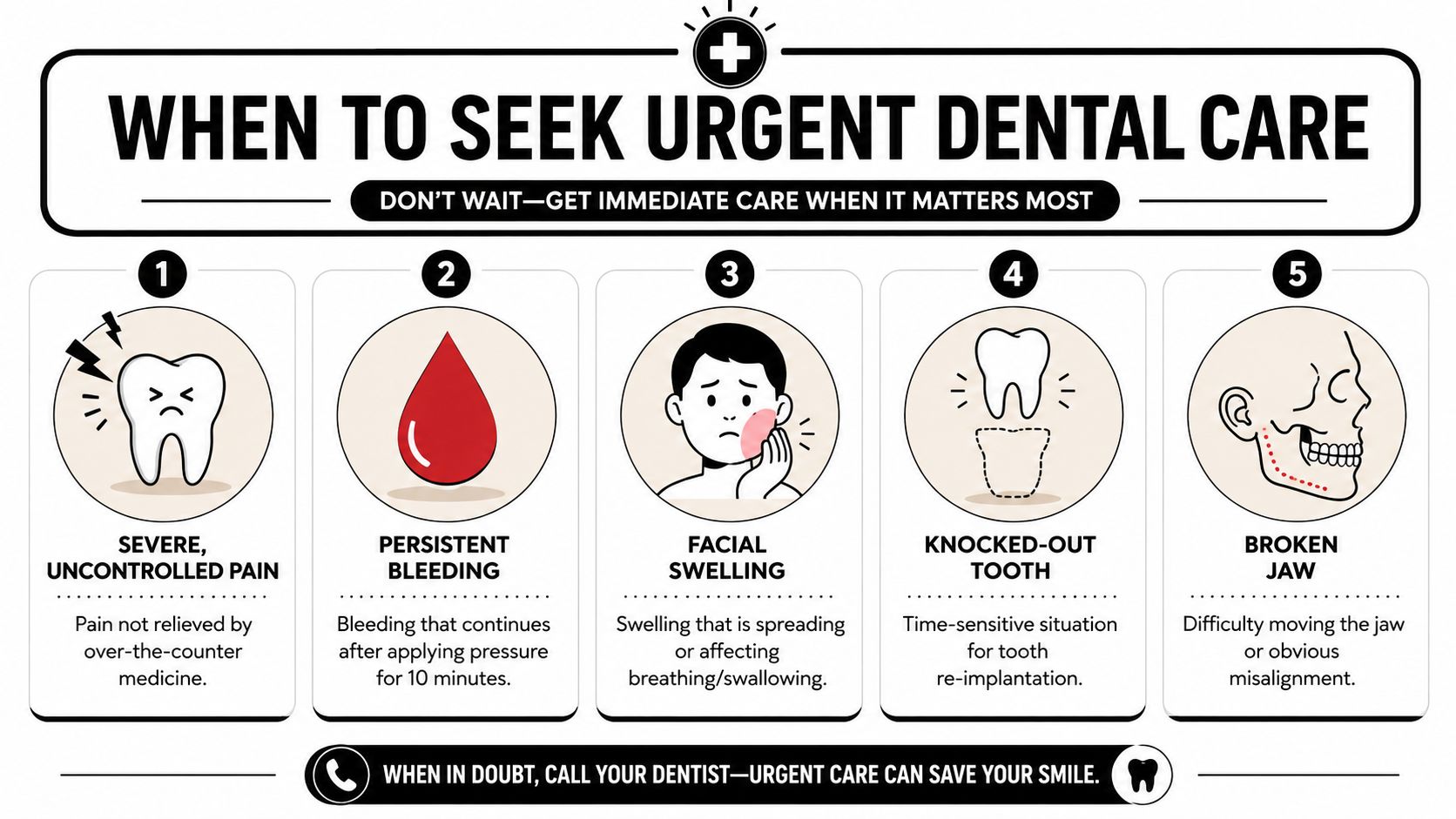
Red flags that mean stop and call now
If any of these are happening, home care has reached its limit:
- Severe pain that isn't settling down with over-the-counter pain medicine
- Bleeding that continues after steady pressure
- Facial swelling, especially if it seems to be spreading
- A knocked-out permanent tooth
- A broken jaw or clear bite misalignment
- Fever, bad taste, pus, or swelling near the gums
- A broken tooth with visible inner tooth structure or major sensitivity
In 2020, there were 776 dental emergency department visits per 100,000 people in the U.S., according to the AHRQ utilization summary on dental emergency visits. Many of those situations are better handled by a dedicated dental office than a hospital emergency room, especially when the issue is a tooth fracture, lost restoration, infection, or acute dental pain.
What urgent dental care may involve
The right treatment depends on what caused the emergency and how much damage is present. That might mean:
| Situation | Possible professional treatment |
|---|---|
| Broken or fractured tooth | Smoothing, bonding, or crown placement |
| Severe decay or infection | Evaluation, medication planning, or root canal |
| Unsalvageable tooth | Tooth extraction |
| Missing tooth after trauma | Stabilization and future replacement planning |
| Lost restoration | Recementation or replacement |
If you need prompt help, emergency dentistry in Chattanooga is designed for exactly these situations. The goal is to relieve pain, assess the real problem, and prevent the emergency from becoming a bigger one.
Your Local Partner for Urgent and Routine Dental Care
When people are in pain, they don't just need treatment. They need clarity. They need to know what to do next, whether the situation can wait, and what kind of care will solve the problem.
That's why local access matters. If you're searching for an emergency dentist, a dentist near me, or a dentist in Chattanooga, TN who can also help with long-term care, the relationship matters as much as the procedure. The same office that helps with urgent visits can also support your routine exams, dental x-rays, restorative dentistry, cosmetic dentistry, tooth extraction needs, same-day crowns, and planning for options like dental implants if a damaged tooth can't be saved.
A strong emergency plan should leave you feeling calmer, not more intimidated. Keep the kit stocked. Keep expectations realistic. Use it to protect the situation, not to postpone proper care. For anxious patients, that clear line between safe self-care and professional treatment often makes emergencies feel much more manageable.
Whether you're in Chattanooga, Cleveland, or nearby service areas, being prepared at home is smart. Knowing where to turn next is even smarter.
If you need help with sudden tooth pain, a broken tooth, a lost crown, or another urgent dental problem, contact Winn Smiles. Save the number in your phone before you need it, and reach out as soon as something feels wrong.