You catch your reflection in a Cleveland shop window, or notice your smile in a photo taken along Chattanooga's riverfront, and something looks different. Your porcelain veneers seem a little duller than you remember. You may wonder whether coffee, tea, aging, or a whitening product caused the change, and whether you need new veneers.
The practical answer is reassuring. Porcelain veneers can't be bleached like natural teeth, but a dull-looking smile can often be improved with professional evaluation, cleaning, careful polishing, margin care, or a planned replacement. This guide explains how to whiten porcelain veneers in the sense that matters clinically, keeping them clean, smooth, well matched, and as bright-looking as possible.
When Your Veneers Stop Looking as Bright as You Remember
A patient in Cleveland may notice the change while checking a reflection in a car window after work. Someone in Chattanooga may see it first in a family picture. The veneers haven't necessarily failed, and the ceramic may not have changed its intrinsic shade. A film of plaque, surface deposits, staining near the gumline, or a change in the natural teeth beside the veneers can alter the way the smile reflects light.
That distinction matters because the right solution depends on the cause. If the problem is a removable deposit, a professional cleaning may restore brightness. If the margin looks dark, the bonding material, cement, gumline, or tooth beneath the veneer may need closer attention. If the ceramic itself has an intrinsic shade that no longer suits your smile, stronger whitening products won't solve it.
The main idea: Existing porcelain usually needs assessment and maintenance, not more powerful bleach.
Patients often search for a cosmetic dentist near me after trying whitening strips, peroxide gel, baking soda, charcoal, or abrasive whitening toothpaste. These products may affect eligible natural teeth, but they won't chemically lighten the porcelain. In some cases, whitening the natural teeth around veneers creates a new mismatch and makes the veneers appear darker by comparison.
At Winn Smiles, patients in Cleveland and Chattanooga can discuss the appearance of their veneers without assuming that replacement is the first answer. A dentist can determine whether the issue involves deposits, surface texture, the veneer margin, adjacent enamel, or the restoration itself. From there, you can choose a realistic path that protects your teeth and your investment.
Why Bleaching Gel Does Not Whiten Porcelain Veneers
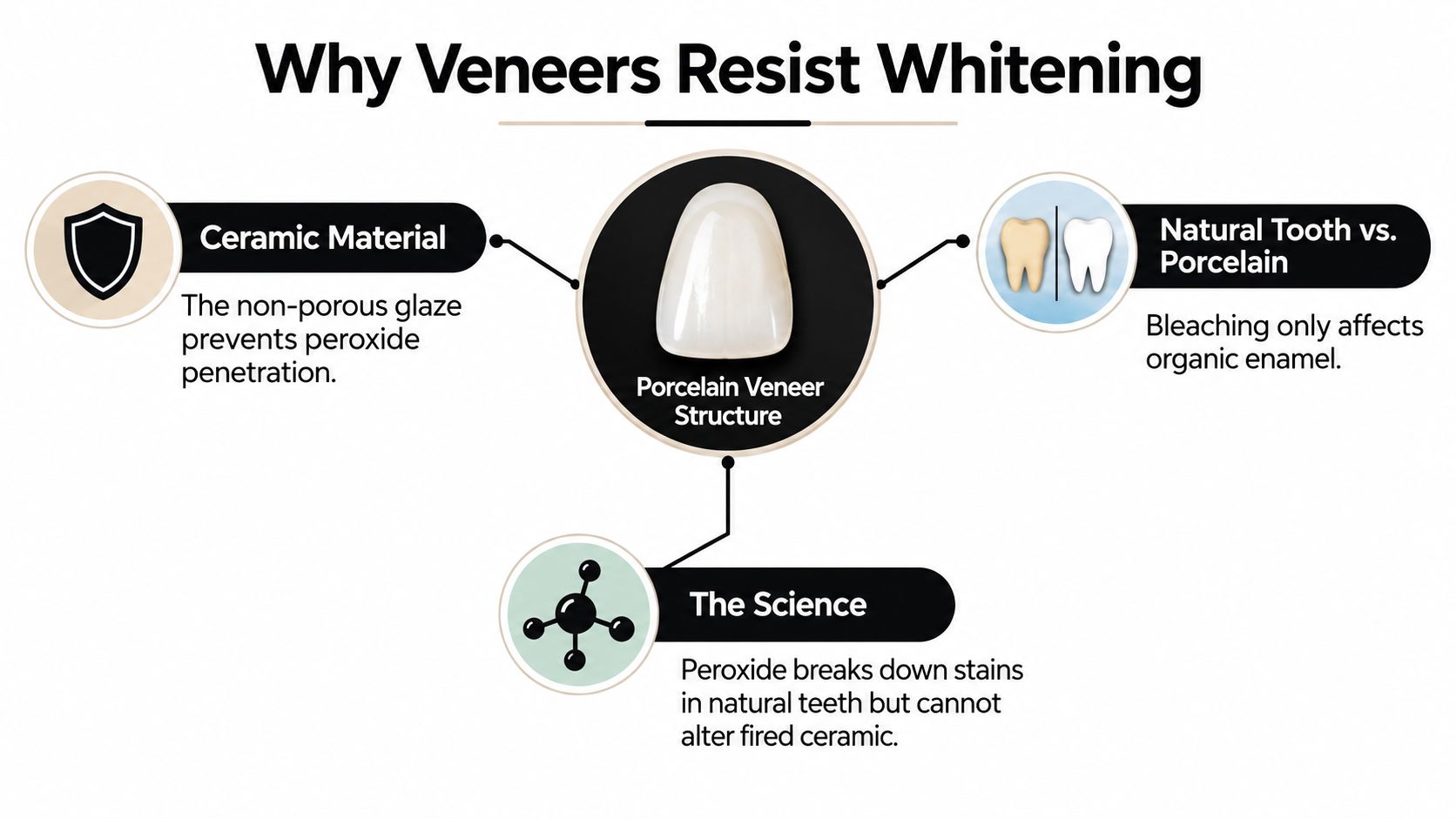
Peroxide-based whitening changes the color of natural tooth structure. It doesn't recolor fired ceramic in the same way. The American Dental Association's guidance on tooth whitening explains that restorations such as crowns and implants don't change color during bleaching. The same principle applies to porcelain veneers.
What determines a veneer's visible shade
A veneer isn't visually independent from the tooth beneath it. Its appearance depends on several optical factors:
- Ceramic thickness: A thinner veneer may allow more of the underlying tooth color to influence the result.
- Resin cement shade: The bonding cement can affect the final appearance.
- Underlying tooth color: Natural tooth structure may show through translucent porcelain.
- Surface condition: A smooth, glazed surface reflects light differently from a rough or damaged one.
A laboratory study examining veneer thickness, resin-cement shade, and simulated aging found a statistically significant difference between cement shades at an alpha level of 0.05. Opaque cement produced a lower mean color difference, expressed as ΔE, than bleach-shade cement, indicating stronger masking of a discolored underlying tooth. The study also evaluated specimens through 5,000 thermocycling cycles. These findings are reported in the laboratory study on veneer color and resin cement.
That helps explain why bleaching after placement isn't equivalent to changing the veneer. Whitening may lighten natural enamel visible beside or beneath a veneer, while the ceramic stays the same. The smile can then look less even, even though the veneer hasn't become darker.
Aggressive treatment isn't a safer shortcut. The same research summary reports that a 2022 laboratory study found laser-assisted bleaching significantly increased surface roughness in two feldspathic porcelain groups, with P < 0.001 for conventional porcelain and P = 0.004 for CAD-CAM porcelain. Existing restorations deserve dentist-supervised care rather than repeated attempts to bleach the ceramic.
What Actually Brightens Veneers and What to Avoid
The most useful question isn't, “Which whitening gel should I buy?” It's, “What is making the veneer look less bright?” Professional cleaning and suitable polishing can remove plaque and external deposits. They can't change the intrinsic ceramic shade, but they may restore the smooth surface and light reflection that make a veneer look glossy.
Common drinks can still affect the visible appearance around a restoration. Laboratory evidence found measurable color changes in CAD-CAM ceramic veneers after exposure to beverages, with coffee and Coca-Cola producing particularly notable staining effects. The spectrophotometric study of beverage exposure and ceramic veneers supports a careful maintenance approach, not peroxide bleaching.
A simple comparison for daily care
| Safe for Veneers | Avoid on Veneers |
|---|---|
| Professional cleaning and appropriate polishing | Peroxide products intended to bleach the porcelain |
| A soft-bristled toothbrush | Hard brushing or abrasive scrubbing |
| Non-abrasive fluoride toothpaste | Rough “whitening” toothpaste, charcoal, or gritty powders |
| Flossing around the veneer margins | Baking soda scrubs and aggressive home stain removal |
| Rinsing with water after dark drinks | Stronger gels used to chase a shade change the ceramic can't make |
A toothpaste that feels powerful because it contains abrasive particles may remove some surface film from natural teeth, but it can also dull or roughen a glazed ceramic surface. Once the surface becomes less smooth, it may hold onto deposits more readily. That can make a product marketed for brightness work against the finish you want to preserve.
Practical rule: If a product promises to scrub, scour, or chemically bleach porcelain, don't use it on your veneers without asking your dentist first.
Baking soda, charcoal, whitening strips, and stronger peroxide gels aren't substitutes for diagnosis. They may lighten natural teeth next to the veneers, while leaving the porcelain unchanged. If one veneer looks yellow near the gumline, the issue may be the margin or an external deposit rather than the ceramic body.
An evaluation is especially important when you see a dark line, feel a rough edge, notice a chip, or observe that one veneer reflects light differently from its neighbors. A dentist can decide whether cleaning, polishing, margin correction, repair, or replacement makes sense.
How a Cosmetic Dentist Evaluates and Refreshes Veneers
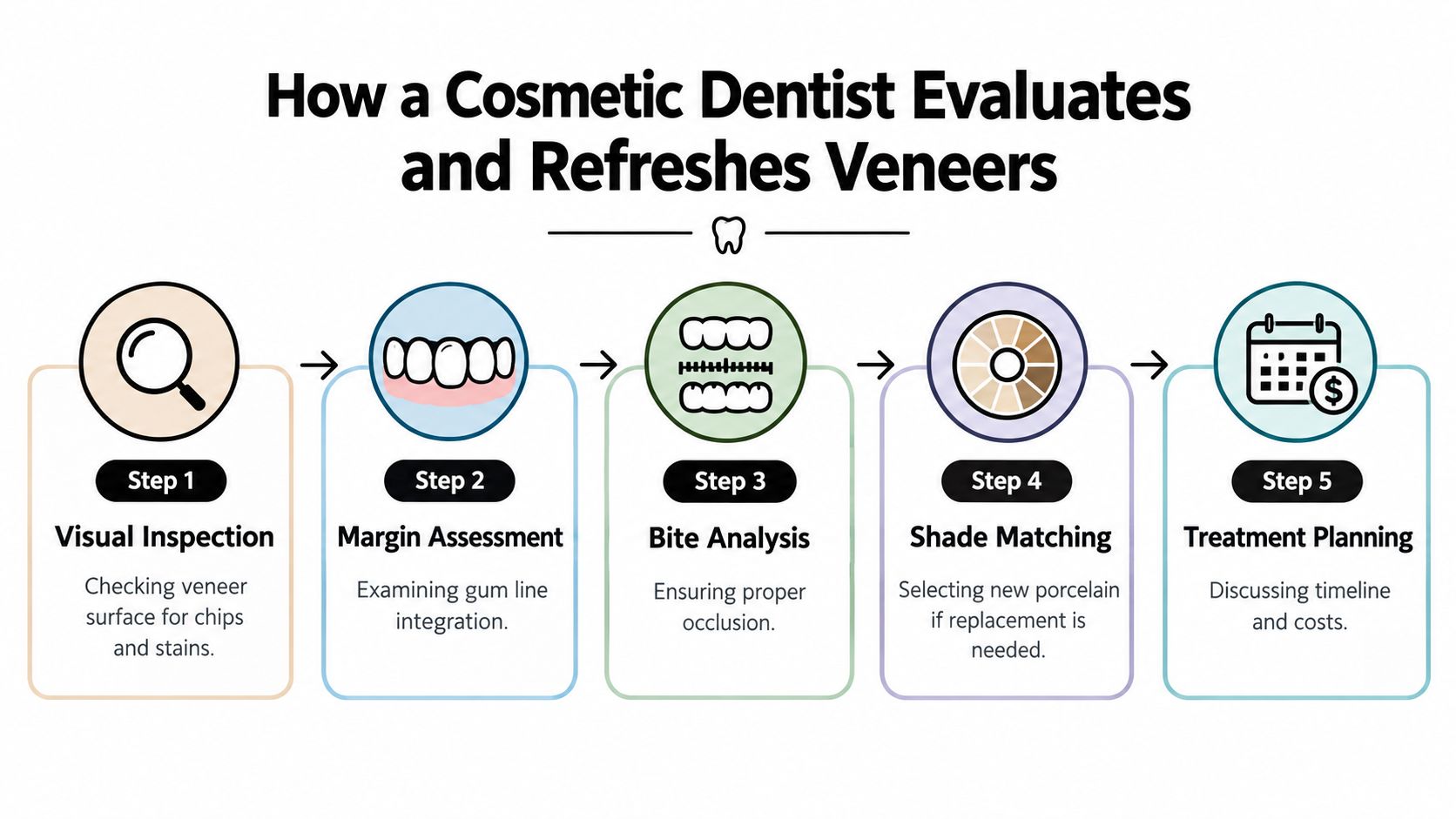
A veneer consultation at Winn Smiles in Cleveland or Chattanooga starts with observation, not a sales pitch. The dentist examines the visible surface, gumline margins, bite, adjacent teeth, and the way the veneers fit together when you close and move your jaw. Photographs and shade documentation help distinguish a true color concern from a lighting or contrast issue.
Finding the source of the discoloration
The dentist may look for:
- Plaque, tartar, or surface deposits that professional cleaning can remove.
- A stained margin or exposed bonding material near the gumline.
- Changes in the natural teeth beside or beneath a translucent veneer.
- Roughness, chips, cracks, or an intrinsic ceramic shade that polishing can't correct.
- Bite pressure that contributes to wear, edge damage, or discomfort.
Cleaning comes before a final shade judgment when deposits are present. After the teeth and margins are clean, gentle polishing may improve luster if the ceramic surface is suitable for it. The clinical guidance on assessing and managing dull veneers emphasizes that cleaning and polishing may address deposits, while bleaching won't intrinsically recolor porcelain.
A small dark line doesn't always require a new veneer. Depending on the cause, margin repair, bonding correction, or rebonding may be appropriate. If the ceramic has an intrinsic shade mismatch, significant wear, or damage that can't be predictably corrected, replacement or refinishing may be the more honest recommendation.
Your bite also matters. If pressure from clenching or grinding is contributing to veneer wear, your dentist may assess whether an occlusal adjustment is appropriate. For a plain-language resource on this related concern, review dental bite realignment from Pain and Sleep Therapy Center.
Patients with dental anxiety can ask about Winn Smiles' comfort menu and sedation options before treatment. The purpose of the visit is to clarify what is happening and what choices are reasonable, whether you need a cosmetic consultation, restorative dentistry, dental x-rays, or another form of dental care.
Getting the Shade Right Before Replacement
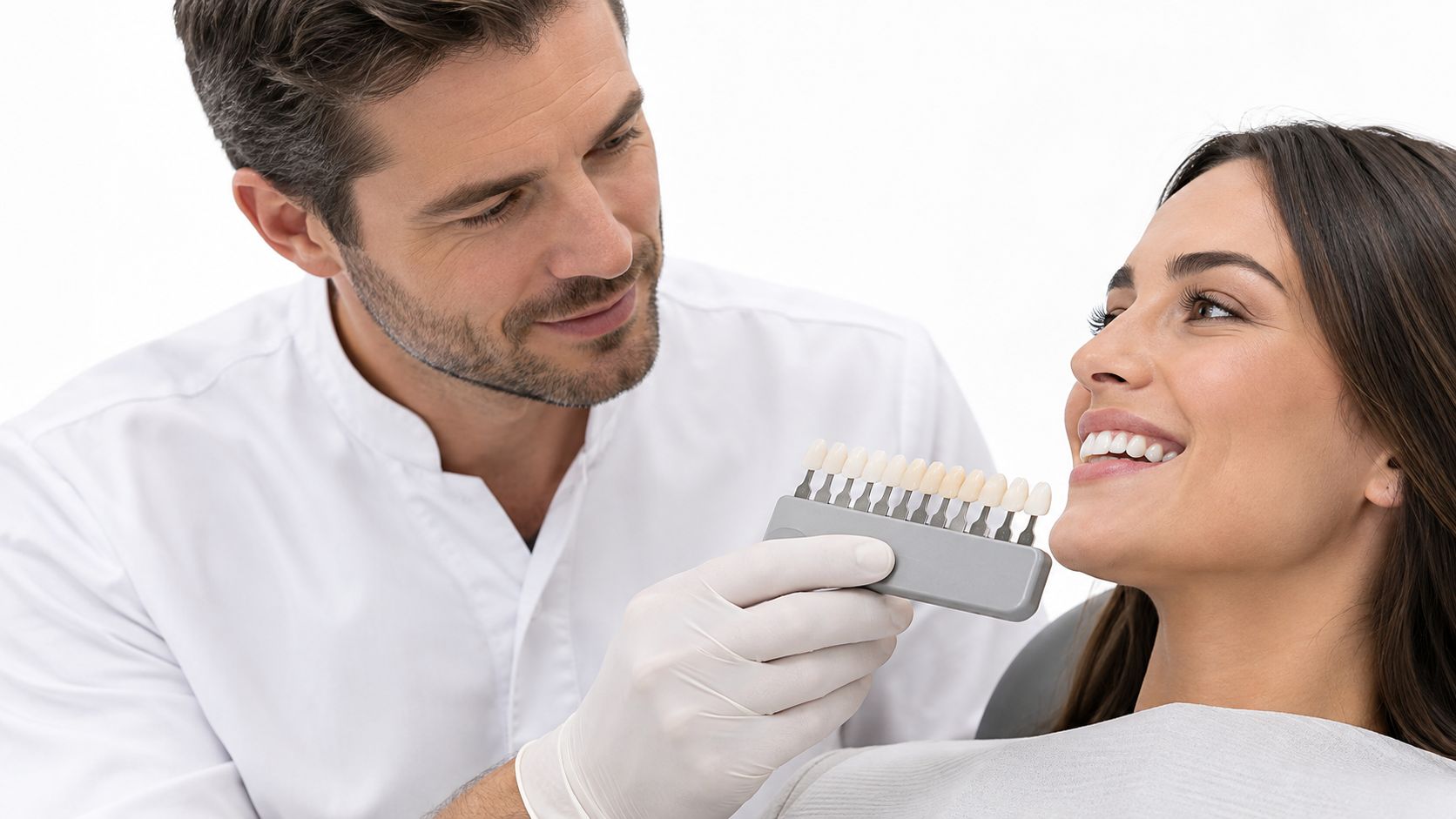
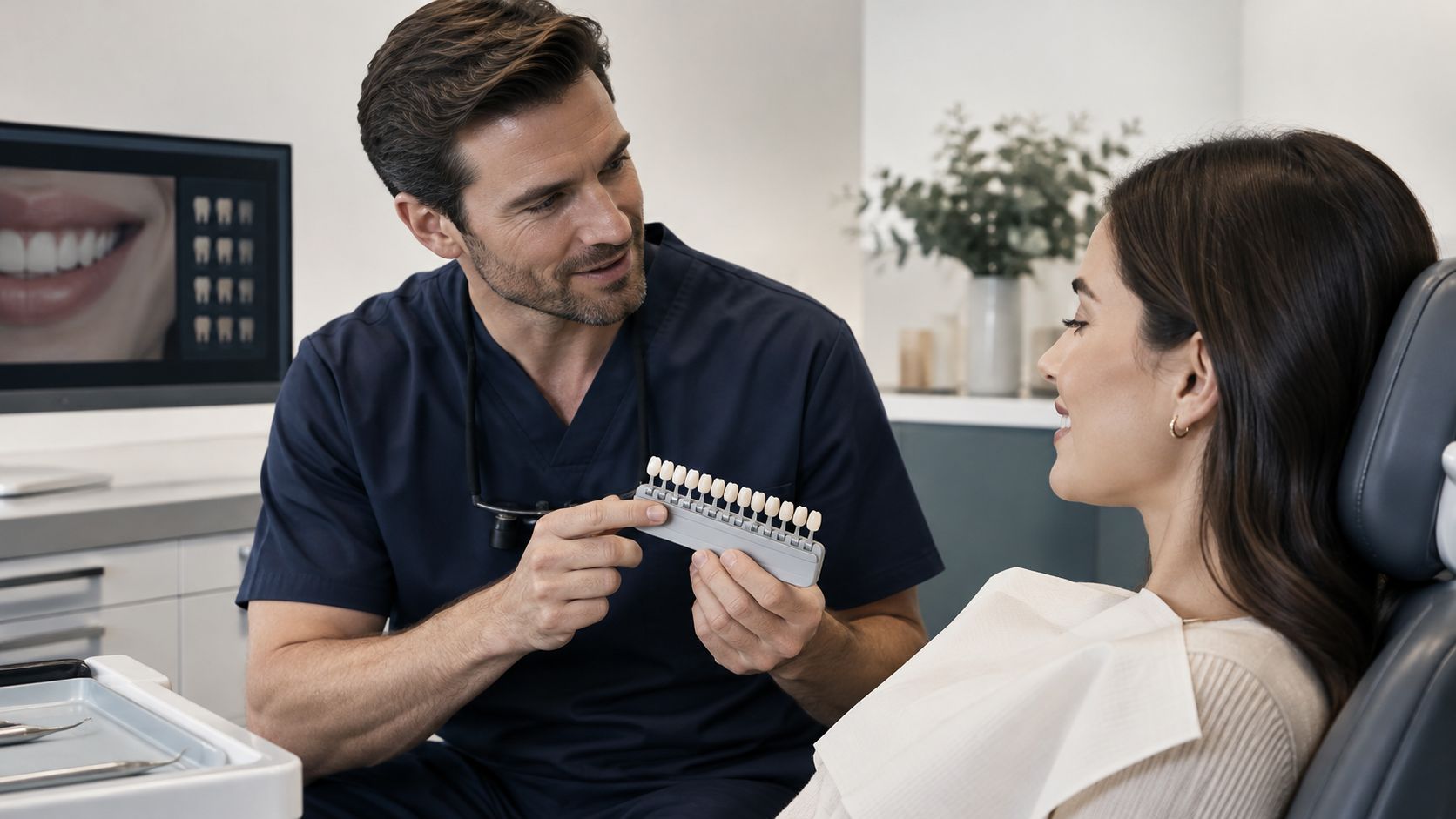
If you want a brighter smile and some of your teeth are natural, the predictable sequence is to whiten eligible natural teeth before new veneers are designed. The laboratory can then match the porcelain to the shade you intend to keep, rather than matching it to teeth that may become lighter afterward.
A clinical report using 10% carbamide peroxide for nine months found that the apparent veneer-color change came from whitening the underlying tooth, not the porcelain. The report supports the practical recommendation to whiten natural teeth before replacing veneers, so new restorations can be matched to the final tooth shade. You can review the clinical report on bleaching beneath existing porcelain.
Why shade stabilization matters
One professional source recommends allowing approximately two to three weeks for shade stabilization before fabrication. This gives the dentist and laboratory a more dependable reference for the final color. The exact timing and whitening approach should be determined by your dentist, especially if you have sensitivity, gum concerns, restorations, or untreated decay.
Already having veneers creates a different decision. If the natural teeth beside them are darker, whitening those teeth could increase the mismatch. If the veneers look dull, the possible paths include:
- Cleaning: Useful when deposits or plaque film are responsible.
- Polishing: Helpful when the surface can safely regain luster.
- Margin treatment: Appropriate when bonding or cement discoloration is localized.
- Replacement: Considered when the intrinsic shade, damage, or fit can't be corrected predictably.
- No immediate treatment: Reasonable when the veneers are healthy and the appearance remains acceptable.
The right choice depends on the examination, not a photograph or a product label. A cosmetic dentist can help you decide whether you need brighter surrounding teeth, refreshed margins, or entirely new porcelain.
Everyday Habits That Keep Veneers Looking Their Best
A veneer can look a little less bright even when the porcelain itself has not changed much. In day-to-day life, the usual culprits are buildup at the edges, changes in the natural teeth nearby, clenching, smoking, or a small rough area that catches stain more easily. That is why the goal is not to "whiten" porcelain at home, but to keep veneers as clean, smooth, and well-supported as possible.
The guidance on living with and maintaining aesthetic dental work explains that drinks such as coffee and Coca-Cola can create visible staining effects around ceramic restorations, even though the ceramic surface itself is generally resistant to absorbing pigment. In practical terms, if a veneer looks darker, the color change may be on the surface, at the cement line, or in the neighboring natural tooth.
Habits that support a bright, comfortable smile
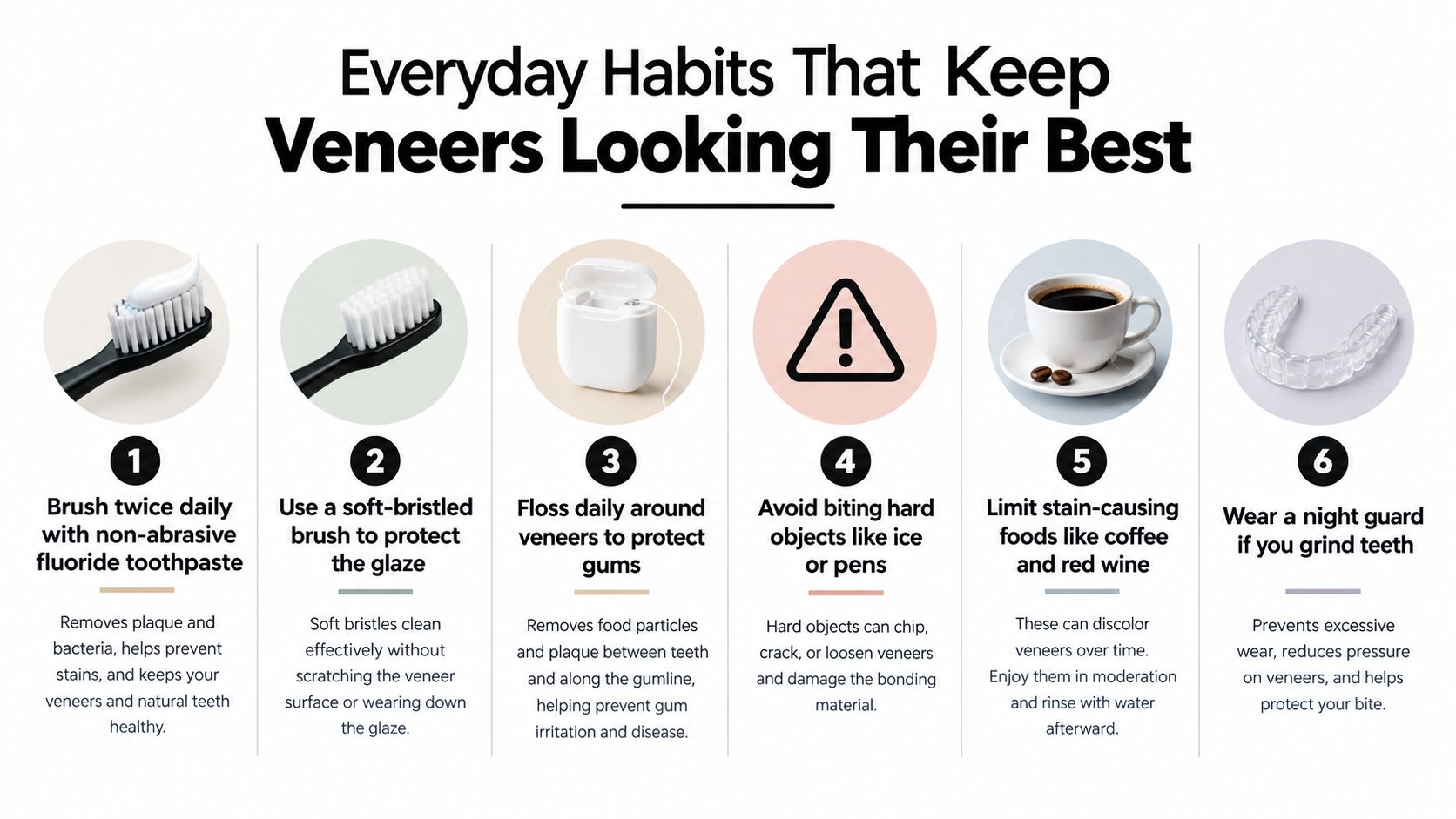
- Limit tobacco: Smoke and smokeless tobacco can leave residue on teeth and around veneer margins.
- Protect against grinding: Ask about a nightguard if you clench or grind during sleep. Repeated pressure can wear opposing teeth, stress the bonding, and dull the overall look of the smile.
- Avoid hard objects: Ice, pens, fingernails, and package tearing put unnecessary force on ceramic.
- Pay attention to small changes: If one veneer starts looking duller, feels rough, or the gumline around it stays irritated, have it checked before the issue spreads or becomes harder to polish.
- Schedule professional care: Routine cleanings and appropriate polishings remove deposits that home care may leave behind. For a fuller day-to-day routine, see our veneers maintenance guide.
A regular visit at Winn Smiles can catch a rough edge, a stained margin, or irritation early. Small changes over time are common. They do not automatically mean replacement is needed.
Talk With a Cosmetic Dentist Near You in Cleveland or Chattanooga
You don't need to guess whether a dull veneer needs whitening, polishing, repair, or replacement. A consultation at Winn Smiles can identify the cause and explain what is realistically possible for your specific smile. The practice offers free consultations and second opinions for select services, along with comfort options and sedation for patients who feel anxious about dental care.
Patients searching for a dentist near me, a cosmetic dentist near me, or a porcelain veneers dentist in Cleveland can request an evaluation at a convenient Cleveland or Chattanooga location. Veneers can't be chemically whitened, but they can be kept bright, smooth, and attractive with the right maintenance plan.
Winn Smiles offers veneer evaluations, professional cleaning, cosmetic consultations, and restorative care for patients in Cleveland and Chattanooga. Schedule an appointment to learn whether your veneers need polishing, margin care, shade planning, or replacement, and visit Winn Smiles to request a consultation.