A child falls on a Chattanooga playground, an adult takes an elbow during a game, or a slip in the kitchen sends a front tooth onto the floor. The shock is immediate, and so is the question: what do you do with a knocked out tooth?
The answer depends first on whether the tooth is permanent or a baby tooth. A knocked-out permanent tooth is a time-critical emergency, but the right handling can protect the delicate cells on its root while you reach an emergency dentist. Winn Smiles serves families in Chattanooga and Cleveland, TN, with urgent dental evaluations and practical guidance when an accident disrupts your smile.
If the injury also involves a deep cut, uncontrolled bleeding, facial trauma, or a suspected head or jaw injury, seek emergency medical help. For background on caring for injuries that affect skin and soft tissue, the Vein and Wound Institute's resource on managing traumatic wounds offers useful general information. Keep the dental injury moving toward professional care rather than waiting to see whether discomfort improves.
A Dental Emergency in Chattanooga Your First Response
When a tooth lands outside the mouth, panic often creates the wrong priorities. People may search for a towel, scrub away dirt, or spend too long deciding whether the tooth is really lost. The first response should be calmer and more direct: find the tooth, identify whether it's permanent, protect the root surface, and contact an emergency dentist in Chattanooga or Cleveland immediately.
A permanent tooth can sometimes be replanted and stabilized, but its outlook depends heavily on how it's handled before professional treatment. The periodontal-ligament cells covering the root begin to deteriorate rapidly when they're exposed and dry. That's why a tooth sitting in a pocket, wrapped in tissue, or left on a counter is at greater risk than one kept properly moist.
Practical rule: The tooth may look like an ordinary hard object, but the root surface is living tissue. Treat it gently and keep it wet.
Winn Smiles provides emergency dentistry for patients who need prompt evaluation after a fall, sports injury, collision, or other accident. If you're searching for an emergency dentist near me, tell the office that a permanent tooth has been knocked out and explain when the injury happened. That information helps the team understand the urgency.
Protect the person before the tooth
Check the patient before focusing entirely on the tooth. Severe bleeding, trouble breathing, loss of consciousness, suspected jaw fracture, or a tooth that may have been inhaled requires immediate medical attention. A frightened child who can't safely cooperate may also need an emergency department rather than an attempt at reinsertion.
If the patient is alert and stable, move quickly to the next steps. Correct action matters more than perfect action, and finding the tooth after some delay still warrants urgent dental care. Don't assume treatment is pointless because the tooth has been out for a while.
Immediate Steps to Save a Knocked Out Permanent Tooth
The following sequence applies to a permanent tooth, not a primary baby tooth. If you can't confidently identify the tooth, don't force it into the socket. Keep it moist and let a dentist determine the safest course.
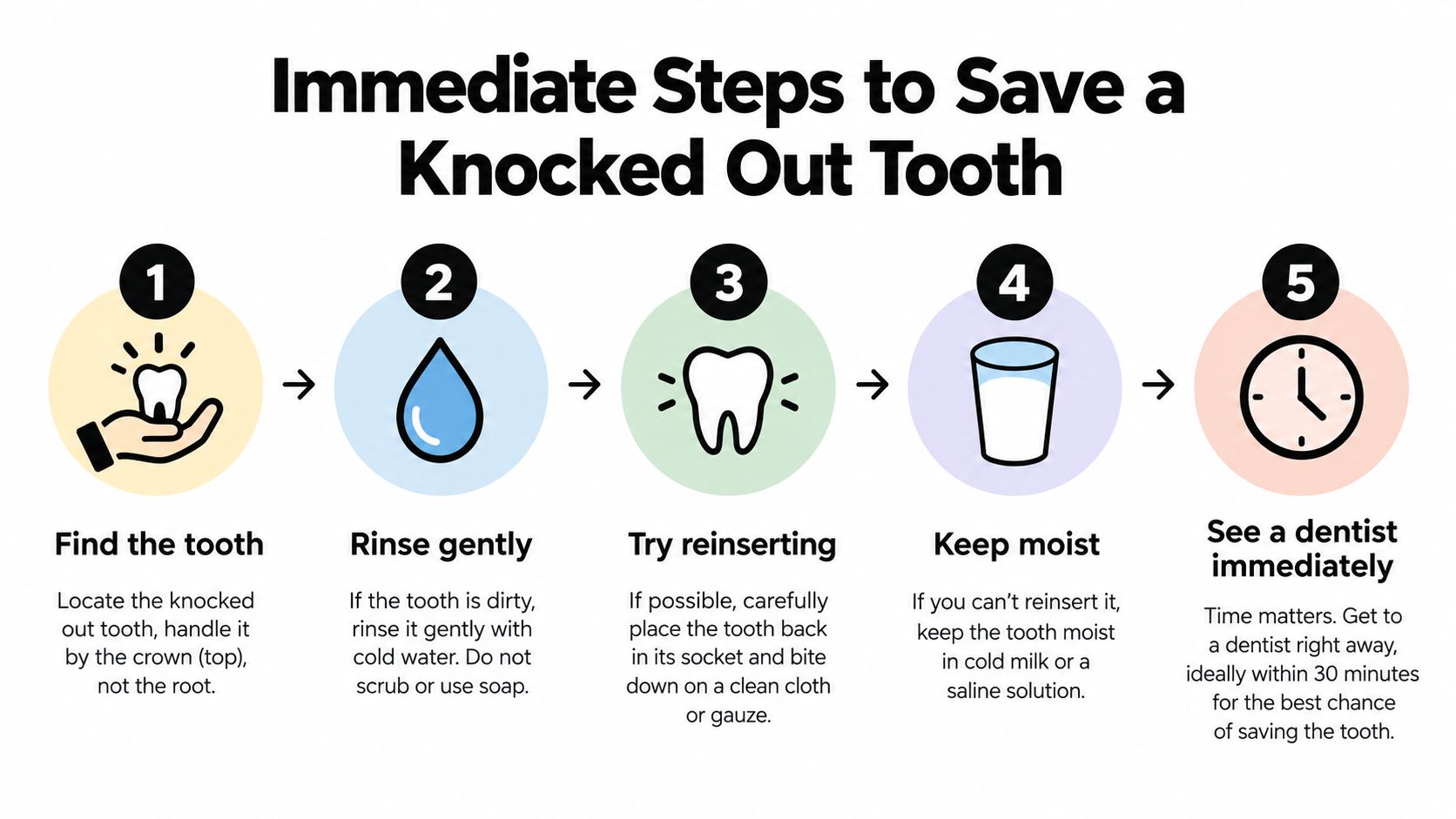
Find the tooth and pick it up by the crown. The crown is the visible white portion. Hold that part only. Never grasp the root, even if the tooth is covered in blood or dirt.
Rinse only when necessary. If visible contamination is present, gently rinse or agitate the tooth in milk, saline, or saliva. Don't scrub, scrape, brush, use soap, apply peroxide, or use alcohol. Those actions can injure the periodontal-ligament cells that may help the tooth heal after replantation.
Try immediate reinsertion when it's safe. If the tooth is permanent, the patient is cooperative, and there's no suspected jaw fracture, severe bleeding, or aspiration risk, gently guide the tooth back into its socket. It should settle naturally and in the correct orientation. Never force it, especially if the socket looks fractured or the tooth doesn't fit easily.
Keep it moist if reinsertion isn't possible. Place the tooth in an appropriate liquid and go directly for emergency dental care. Don't wrap it in tissue or allow it to dry while arranging transportation.
Call a dentist immediately. Clinical guidance identifies the first 30 minutes as especially important, and the American Association of Endodontists reports that a tooth replanted within 30 minutes has a favorable prognosis, while a tooth left dry for more than 60 minutes is unlikely to retain viable cells on its root (American Association of Endodontists guidance).
A compact tooth injury kit for hikers may be useful during outdoor activities, but it shouldn't delay professional treatment or replace careful handling. The priority remains the same: crown only, gentle cleaning if needed, moisture, and immediate dental care.
How to Transport the Tooth to Your Dentist
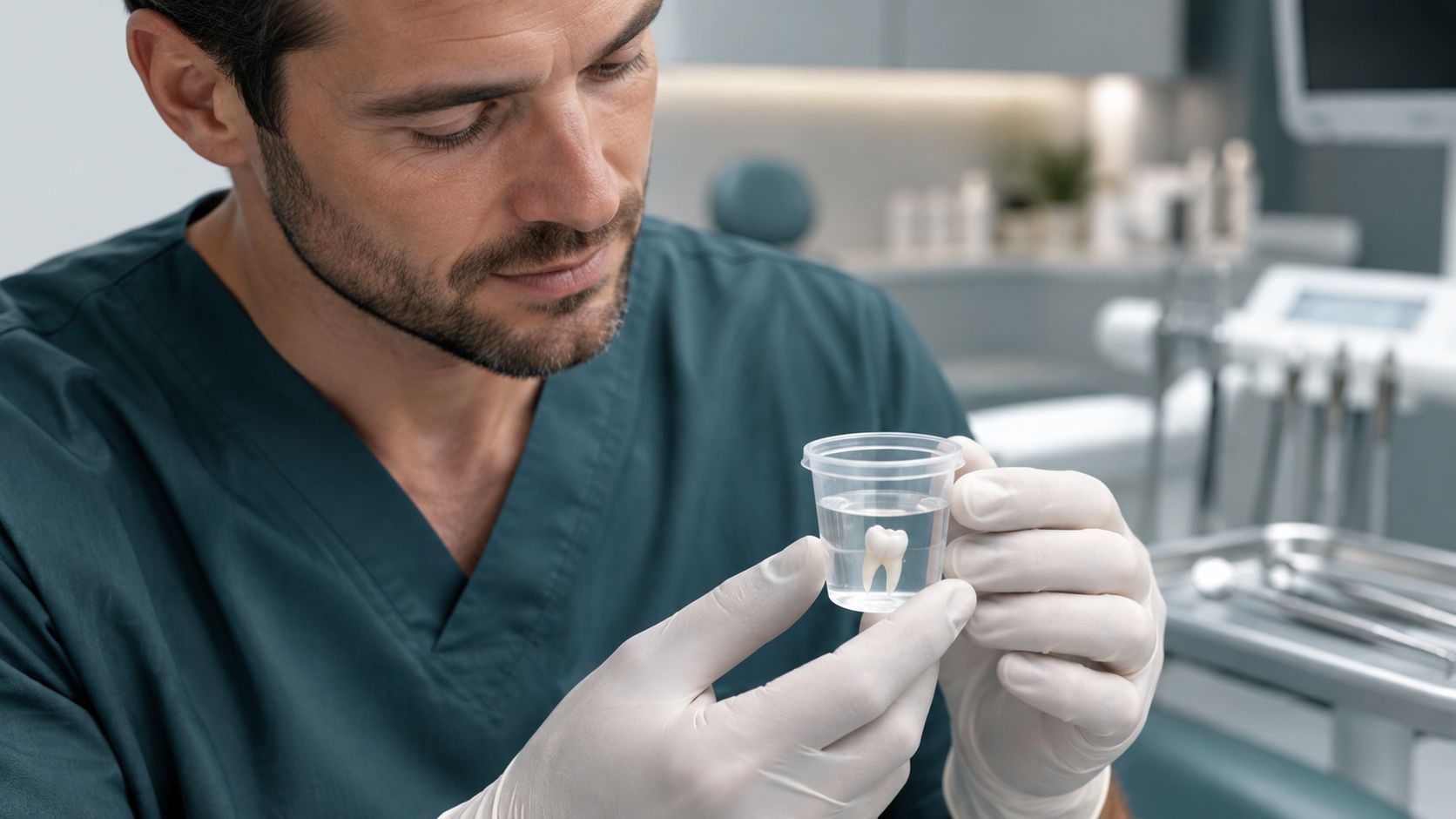
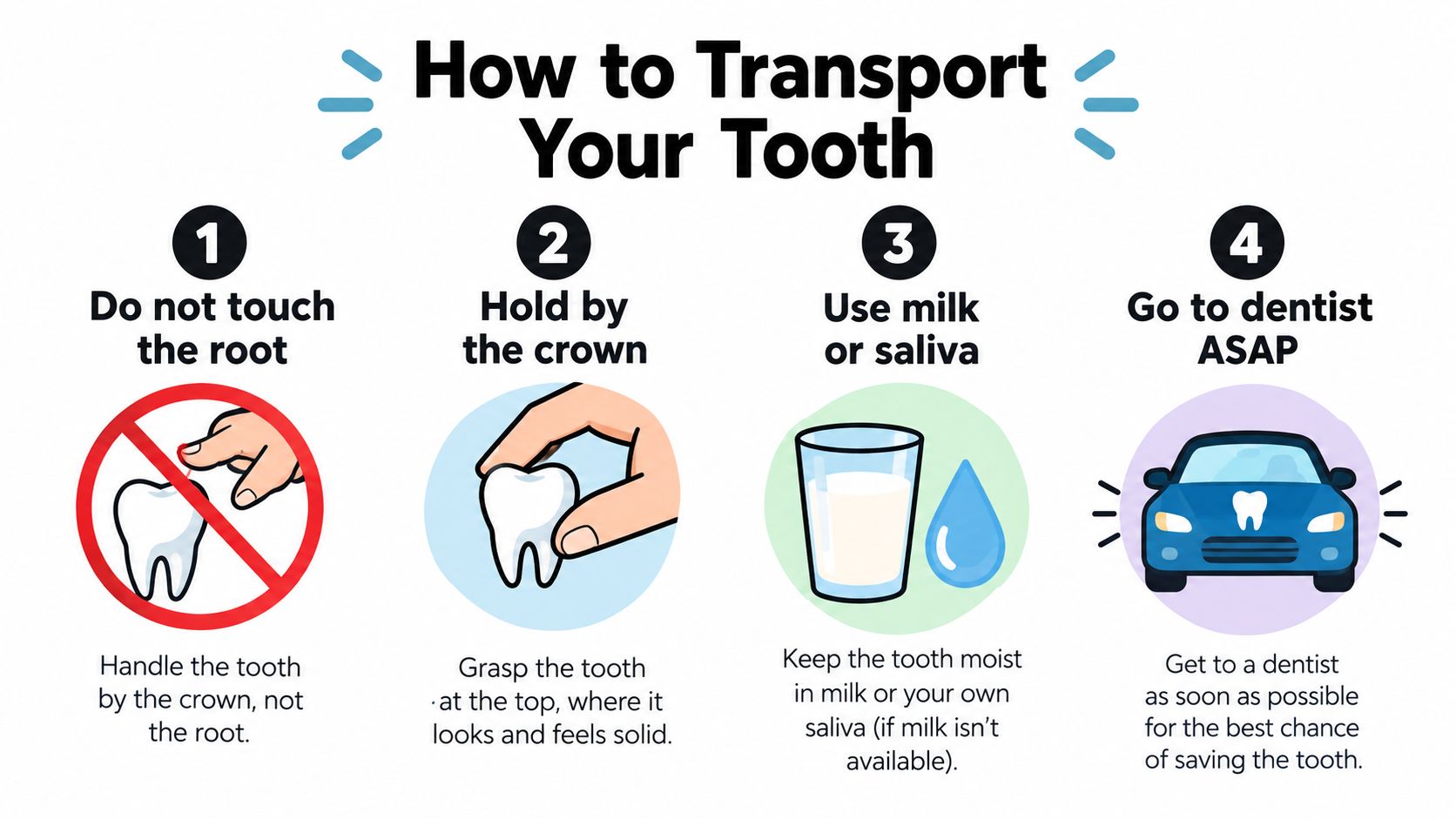
If reinsertion isn't safe or practical, transport the tooth in a liquid that helps protect the root surface. Milk, saline, and Hank's Balanced Salt Solution, often called HBSS, are appropriate choices. Saliva can also keep the tooth moist when better options aren't available, although the tooth shouldn't be stored in a way that creates a swallowing risk.
Plain water is less suitable. Its low osmolality can damage the periodontal-ligament cells on the root, which is why water isn't the preferred storage medium. If water is the only option available, keeping the tooth wet is still preferable to leaving it exposed to air, but switch to milk or saline as soon as possible.
Choose preservation over cleaning
The tooth doesn't need to look spotless before you leave. Attached tissue and root-surface cells are more important than removing every visible particle. A brief, gentle rinse is enough. Never scrape the root, wrap the tooth in paper, or disinfect it with household products.
Place the crown upward when possible, keep the container secure, and bring the tooth with the patient. Note the approximate injury time so the dental team can assess the period outside the socket and the storage conditions.
The Winn Smiles emergency dental kit guide can help families prepare for common dental problems, but preparation doesn't replace a prompt examination. A dentist must evaluate the socket, surrounding teeth, gum injury, bite, and possible bone damage.
Don't delay because the tooth looks damaged
A contaminated, cracked, or delayed tooth may still require urgent assessment. The 2020 International Association of Dental Traumatology approach emphasizes using the same basic emergency priorities even when the tooth has been outside the mouth longer than expected. That doesn't guarantee the tooth can be saved, but it means you shouldn't self-triage it as hopeless.
For patients traveling from Cleveland, Chattanooga, or nearby communities, call an emergency dentist while heading to care. The office can help you decide whether reinsertion is appropriate and direct you to medical care if the injury includes concerns beyond the tooth.
A Critical Warning for Knocked Out Baby Teeth
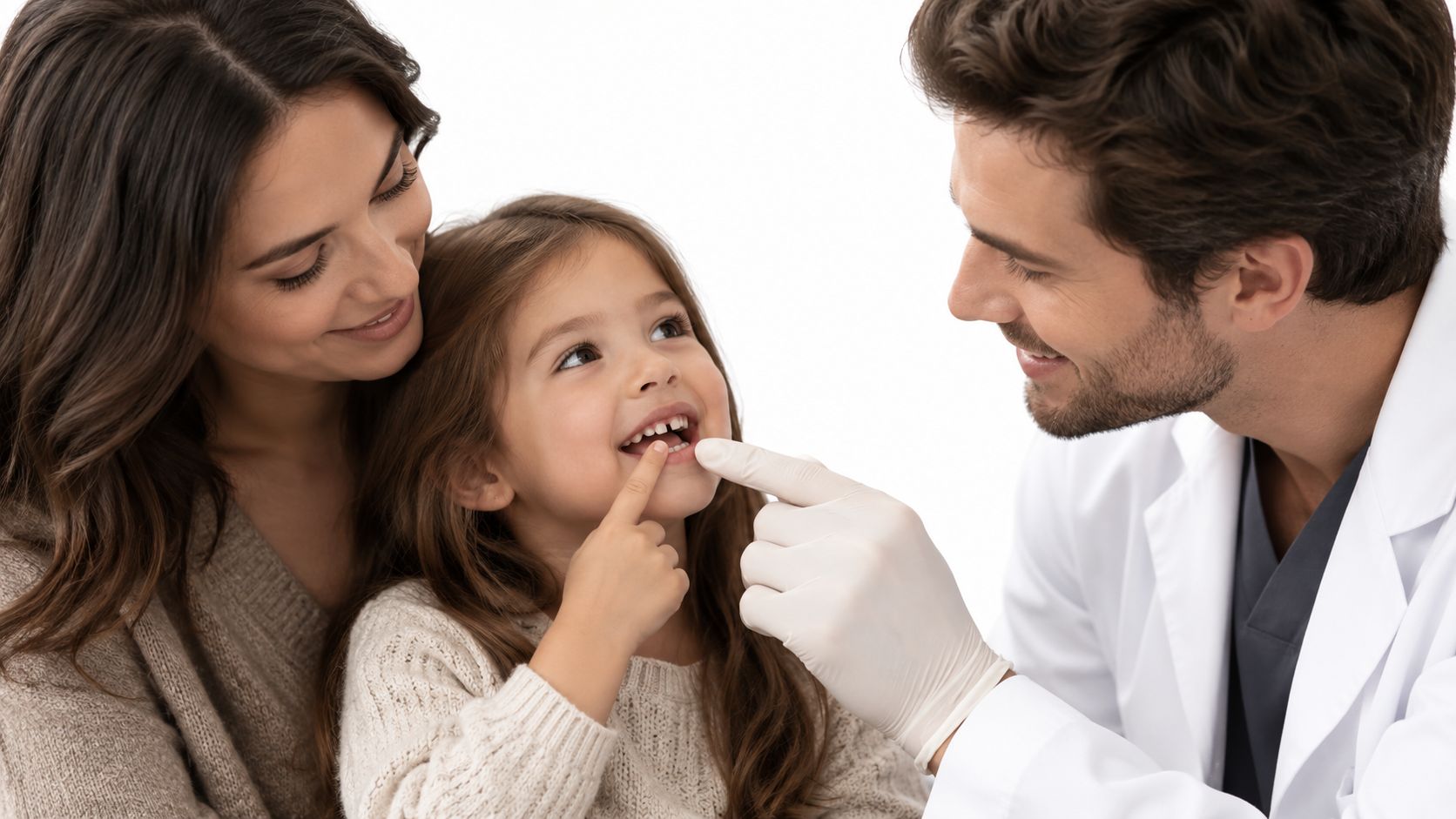
Never replant a primary baby tooth. The advice to put a knocked-out permanent tooth back into its socket doesn't apply to a baby tooth. Replanting a primary tooth can injure the developing permanent successor beneath it.
This distinction can be difficult during a stressful accident. A child's mouth may contain both baby and permanent teeth, and blood can make the fallen tooth hard to identify. Baby teeth are generally smaller, while permanent teeth tend to appear larger and have a more substantial root, but parents shouldn't rely on appearance alone when the choice could affect the developing adult tooth.
When you're unsure, pause before reinserting
If you can't tell whether the tooth is permanent, don't force it into the socket. Place it in milk or saline, keep it moist, and seek urgent assessment. Speed still matters, but speed must be combined with correct identification.
A baby tooth injury also deserves an examination even when the tooth appears completely lost. The dentist can assess the socket, nearby teeth, soft tissue, and the developing permanent tooth. If the child has facial swelling, uncontrolled bleeding, signs of a head injury, or trouble breathing, medical evaluation takes priority.
Parents looking for guidance on a child's injury can review emergency dental care for kids at Winn Smiles. The most important rule remains simple: baby teeth are not replanted. Bring the child and the tooth for evaluation rather than attempting a home repair.
What to Expect at Your Emergency Visit to Winn Smiles
Arriving at a dental office with a knocked-out tooth can feel overwhelming, but the visit follows a focused clinical process. The team will first review what happened, when it happened, how the tooth was handled, and whether the patient has other injuries. The examination may include dental X-rays to evaluate the socket, neighboring teeth, and surrounding bone.
If the tooth is a suitable permanent tooth and replantation is appropriate, the dentist will carefully manage the socket and position the tooth. The goal isn't just to put the tooth back. The clinician must also check the bite, look for alveolar or jawbone injury, and plan stabilization and follow-up.
Why flexible stabilization matters
A replanted tooth commonly needs a passive, flexible splint for about two weeks. Current guidance favors slight physiologic movement because it supports periodontal and pulp healing. A splint that is too rigid or left in place unnecessarily can increase complications, including abnormal fusion between the root and surrounding bone (clinical guidance on avulsed-tooth stabilization).
A more extended period of stabilization may be considered when the injury includes an alveolar or jawbone fracture. That decision belongs to the treating dentist after examination and imaging. Patients shouldn't try to stabilize the tooth at home with household materials.
Comfort is part of emergency care
Winn Smiles' Cleveland and Chattanooga practices provide a comfort-focused setting, modern dental technology, and sedation options designed around the patient when appropriate. The team can explain each step before treatment, discuss dental X-rays and likely follow-up, and help anxious patients remain comfortable while the injury is addressed.
Emergency treatment may also reveal related needs, such as a chipped neighboring tooth, a damaged filling, or gum trauma. Addressing those problems early supports a healthier bite and reduces the chance that a second issue gets overlooked while attention remains on the missing tooth.
Aftercare and Restoring Your Smile's Health
Replantation is the beginning of treatment, not the end. The dentist will monitor the tooth clinically and with follow-up radiographs because complications can appear later, even when the tooth initially looks stable. The tooth's root development, the condition of the pulp, the time outside the mouth, and the storage medium all influence the next decision.
Many replanted teeth need root-canal treatment, particularly when the root is fully developed. Teeth with immature roots may sometimes be monitored for possible revascularization, so treatment isn't identical for every patient. Follow the dental team's instructions for oral hygiene, eating, medications, and return visits rather than assuming the tooth is healed once the splint is removed.

When the natural tooth can't be retained
A delayed or severely injured tooth may not remain healthy despite careful emergency treatment. If extraction becomes necessary, restorative dentistry can replace the missing tooth and protect the surrounding smile. Options may include a dental implant, a bridge, or another restoration selected according to bone health, age, overall dental condition, and treatment goals.
For someone searching for dental implants near me, the immediate emergency appointment is still the right starting point. The dentist must first assess healing, infection, bone, and the condition of neighboring teeth before recommending implant treatment. Winn Smiles also provides restorative dentistry, same-day crowns, cosmetic dentistry, teeth whitening, cleaning and exams, and new patient evaluations for broader smile needs.
Follow-up care protects more than appearance. It helps preserve chewing function, speech, gum health, and the position of nearby teeth. Whether the tooth is replanted, monitored, treated with a root canal, or replaced through restorative care, timely professional supervision gives you a clearer and safer path forward.
Winn Smiles provides emergency evaluations for knocked-out teeth at its Chattanooga and Cleveland locations, including guidance on replantation, stabilization, follow-up, and replacement options when needed. Contact the practice promptly after an injury, or visit Winn Smiles to request care for your emergency, restorative, cosmetic, or general dental needs.