You're two weeks out from veneer placement, still catching your reflection in shop windows and smiling at your own smile. Everything looks smooth, bright, and effortless. Five years later, without a night guard and with a few skipped cleanings, you notice a fine line in veneer number eight and wonder how something that felt so strong became vulnerable.
That change usually doesn't begin with a dramatic accident. Veneers maintenance is a protection plan, not just a cleaning routine. The porcelain is bonded to prepared enamel, and the bond line, where veneer meets tooth, must withstand bite force, saliva, plaque, shifting gums, and everyday habits. If you're searching for a cosmetic dentist near me in Cleveland or Chattanooga, ask how the practice monitors those interfaces, not only how it polishes the porcelain.
Long-term clinical evidence shows why this matters. A systematic review found a 10-year estimated cumulative survival rate of 95.5% for porcelain laminate veneers, with estimated survival remaining high for isolated failure categories including fracture, debonding, secondary caries, and endodontic treatment needs (clinical systematic review). Those outcomes depend on more than the ceramic itself. Grinding can cause fractures, skipped interdental cleaning can contribute to decay at the margin, and missed recall visits can allow a small defect to become a replacement.
Why Veneers Need a Real Maintenance Plan
A veneer isn't an indestructible porcelain shell. It's a bonded restoration sitting on natural tooth structure, and its long-term performance depends on how well that tooth, gum tissue, and adhesive interface are protected.
I often explain the first recall this way: the visible surface is only one part of the restoration. The more important area is the margin, where the veneer ends and your tooth begins. Plaque can collect there, gum recession can expose the edge, and excessive bite force can stress the bond even when the front of the veneer still looks flawless.
Practical rule: Protect the bond line as carefully as you protect the porcelain surface.
A long-term clinical review found that the proportion of veneers remaining clinically acceptable without intervention fell from an average of 92% at 5 years to 64% at 10 years, although only 4% required replacement at the 10-year recall (KU Leuven clinical review). That distinction matters. A veneer can still be present while needing polishing, adjustment, or a small repair.
Your daily care also supports broader oral health. This Healtsy resource on oral health is useful if you want to understand why healthy gums and teeth matter beyond appearance. For a practical discussion of expected lifespan, see this guide to how long veneers last.
Maintenance is the bridge between your investment and its longevity. The right routine won't make veneers permanent, but it can reduce avoidable stress, identify early problems, and help preserve the natural teeth supporting your smile.
Your Daily Veneer Care Routine
Your morning and evening routine can stay simple. The technique matters more than using an expensive collection of products.
Brush gently. Use a soft-bristled manual brush or an oscillating electric toothbrush with a non-abrasive fluoride toothpaste. Avoid whitening pastes containing abrasive particles or products with a high relative dentin abrasivity, which can dull the glaze over time. Brush for about two minutes, paying particular attention to the gumline.
Clean between the teeth once daily. Waxed tape, PTFE floss, interdental brushes, or a water flosser can work well. Slide floss through the contact rather than snapping it down, then curve it around the tooth and clean along the veneer margin.
Rinse thoughtfully. An alcohol-free fluoride mouthwash can support the enamel at the edge of the veneer. It shouldn't replace brushing or interdental cleaning, but it can be useful after your evening routine.
Rinse after acidic drinks. After coffee, wine, or another acidic beverage, use plain water. Brushing immediately while enamel is softened by acid combines abrasion with a vulnerable surface.
Replace worn tools. A toothbrush with frayed bristles can scour surfaces rather than clean them efficiently. Replace it when the bristles flare, and keep the two-minute brushing target consistent.
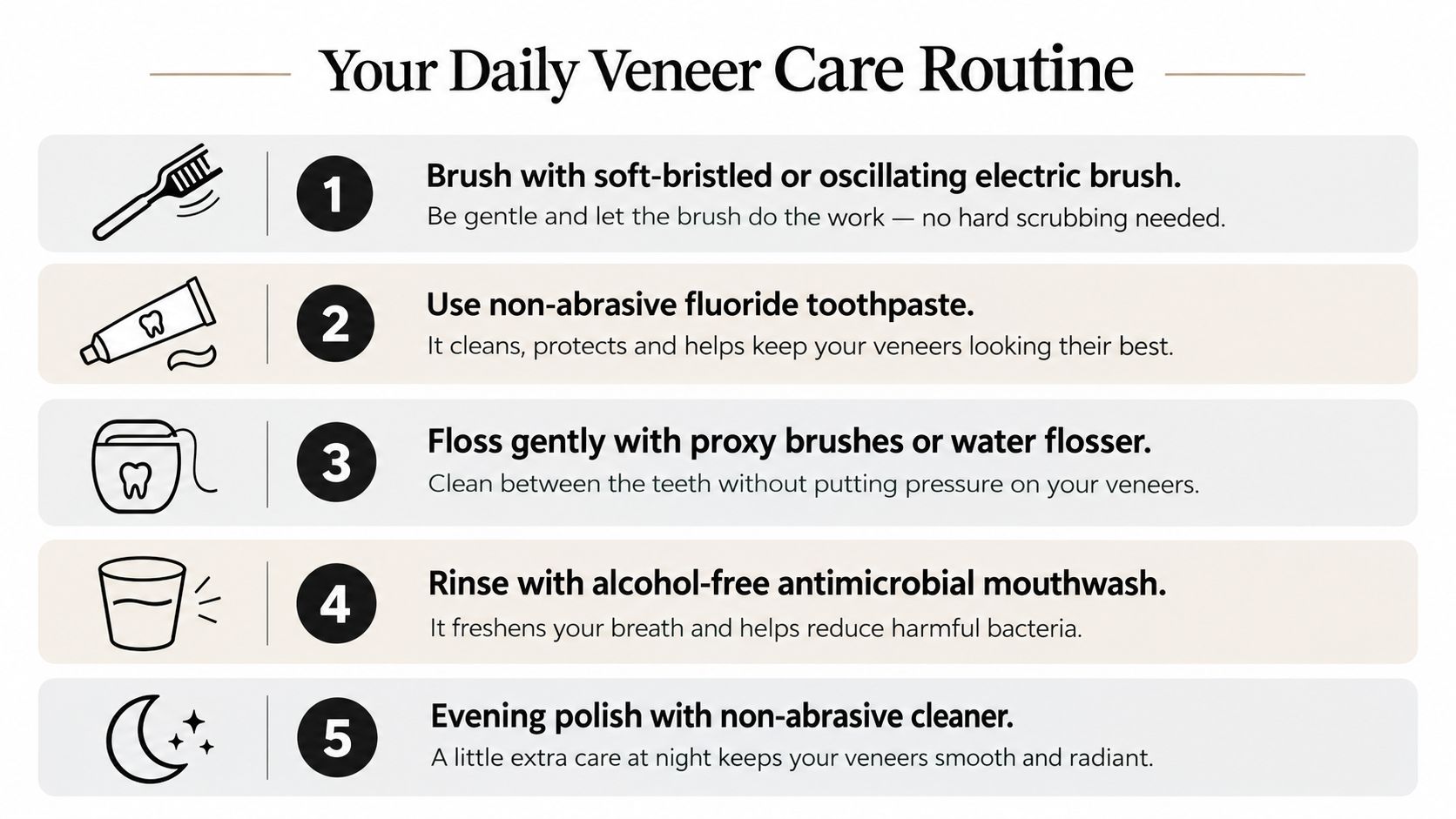
Cleveland Clinic lists twice-daily brushing, once-daily flossing, and routine dental exams and cleanings as core veneer care steps (Cleveland Clinic veneer guidance). Choose products labeled non-abrasive or safe for veneers, and don't use charcoal powders, gritty polishing products, or aggressive brushing as shortcuts.
Foods and Habits That Put Veneers at Risk
Veneer-friendly eating isn't about banning every enjoyable food. It's about understanding which habits concentrate force on the front teeth and which ones give plaque or pigment more time to affect the margins.
Bite-force hazards
Don't bite directly into whole apples, bagels, corn on the cob, or ice with veneered front teeth. Cut firm foods into pieces and use your back teeth. Ice is especially unforgiving because it creates a sudden, concentrated load rather than the controlled pressure of normal chewing.
The same warning applies to fingernails, pen caps, bottle tops, and packaging. Using teeth as tools directs force onto the incisal edge and can create a chip that never would have occurred during an ordinary meal.
Stain-heavy consumables
Coffee, tea, red wine, tobacco, and frequent dark beverages can discolor the resin cement or collect at the gumline. Smoking and vaping also expose the surrounding tissues to irritants, while sugary gum can feed bacteria around the veneer margin.
Hidden threats
Rapidly alternating very hot coffee with ice water may create repeated thermal stress over time. You don't need to develop anxiety around temperature, but avoiding extreme, repeated temperature changes is a sensible precaution.
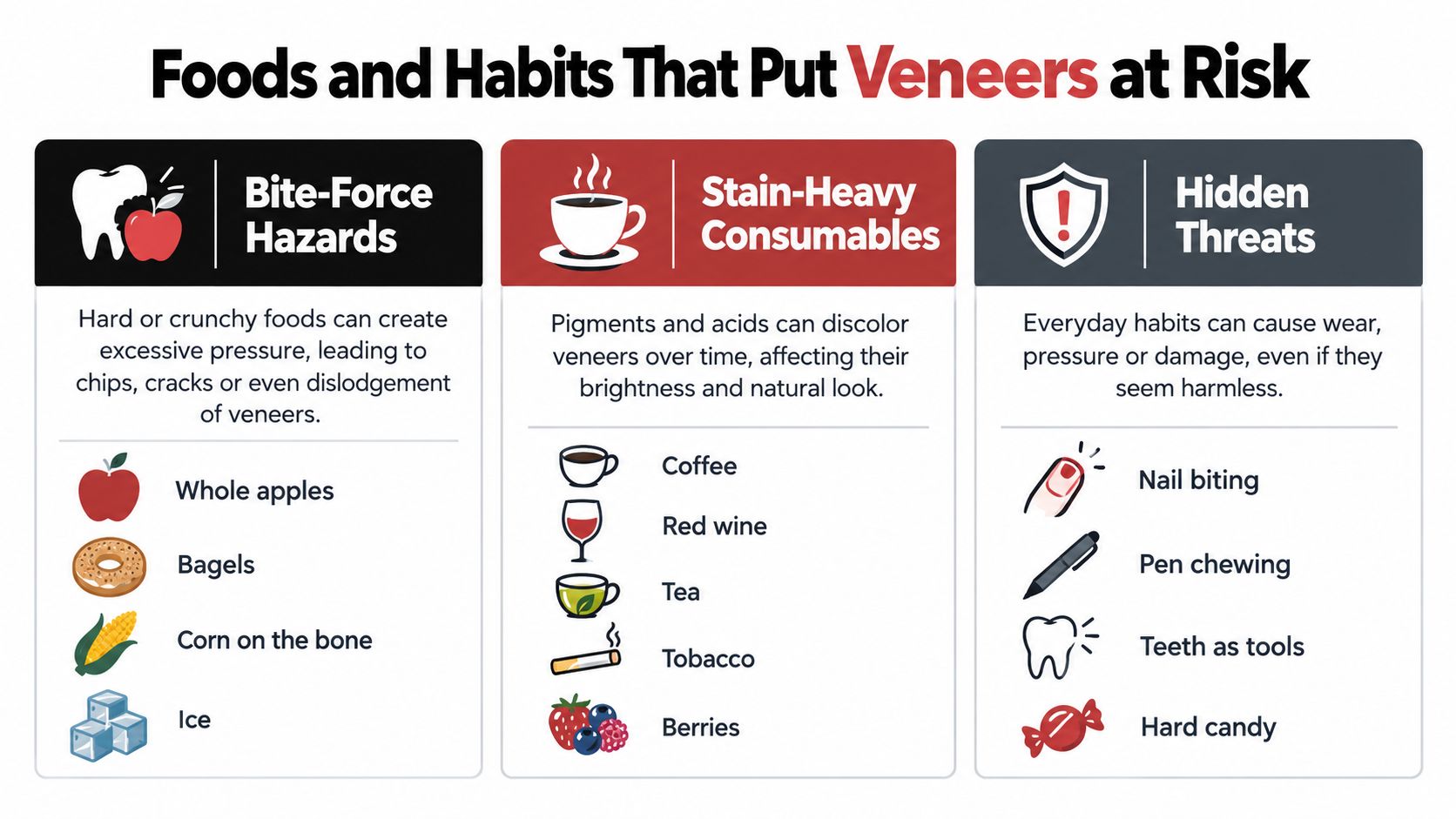
Dark berries in moderation aren't a reason to restrict your diet. Rinse with water after eating them and keep plaque away from the margins. The aim is informed choice, not a list of rules that makes you resent your veneers.
Managing Staining and Keeping the Shade Bright
Patients often ask why the porcelain still looks bright while a yellow or brown line appears near the gums. The answer is usually the difference between the ceramic surface and the material underneath or beside it.
Porcelain resists deep absorption, but resin cement at the gum margin can pick up chromogens from coffee, tea, red wine, and tobacco more readily. Plaque and marginal inflammation can make that color shift more noticeable. The edge may darken even when the visible ceramic remains relatively stable.
Use practical habits rather than relying on whitening products:
- Rinse promptly: Swish with plain water soon after coffee, tea, wine, or another acidic drink. This reduces the time pigments and acids remain in contact with the teeth.
- Use a straw when practical: For iced coffee and other dark beverages, a straw can reduce contact with the front teeth.
- Avoid sipping continuously: Letting coffee or tea sit in the mouth between sips gives pigments more repeated exposure.
- Limit tobacco: Tobacco can darken margins and contributes to gum problems that threaten the supporting tooth structure.
- Choose gentle products: A non-abrasive whitening toothpaste can help with surface stain, but charcoal powders and unsupervised bleaching gels can affect natural teeth, margins, and surface texture differently.
Professional polishing at a recall visit can lift surface stain with a paste selected for ceramic. It won't correct deep marginal discoloration, decay, or a compromised bond, so a dentist should inspect the area rather than just polish it repeatedly.
Your natural teeth will continue to change shade over time. If they darken while the veneers remain stable, the mismatch may eventually require a cosmetic review, polishing, or discussion of replacement rather than another round of whitening.
Night Guards and Bite Protection for Veneers
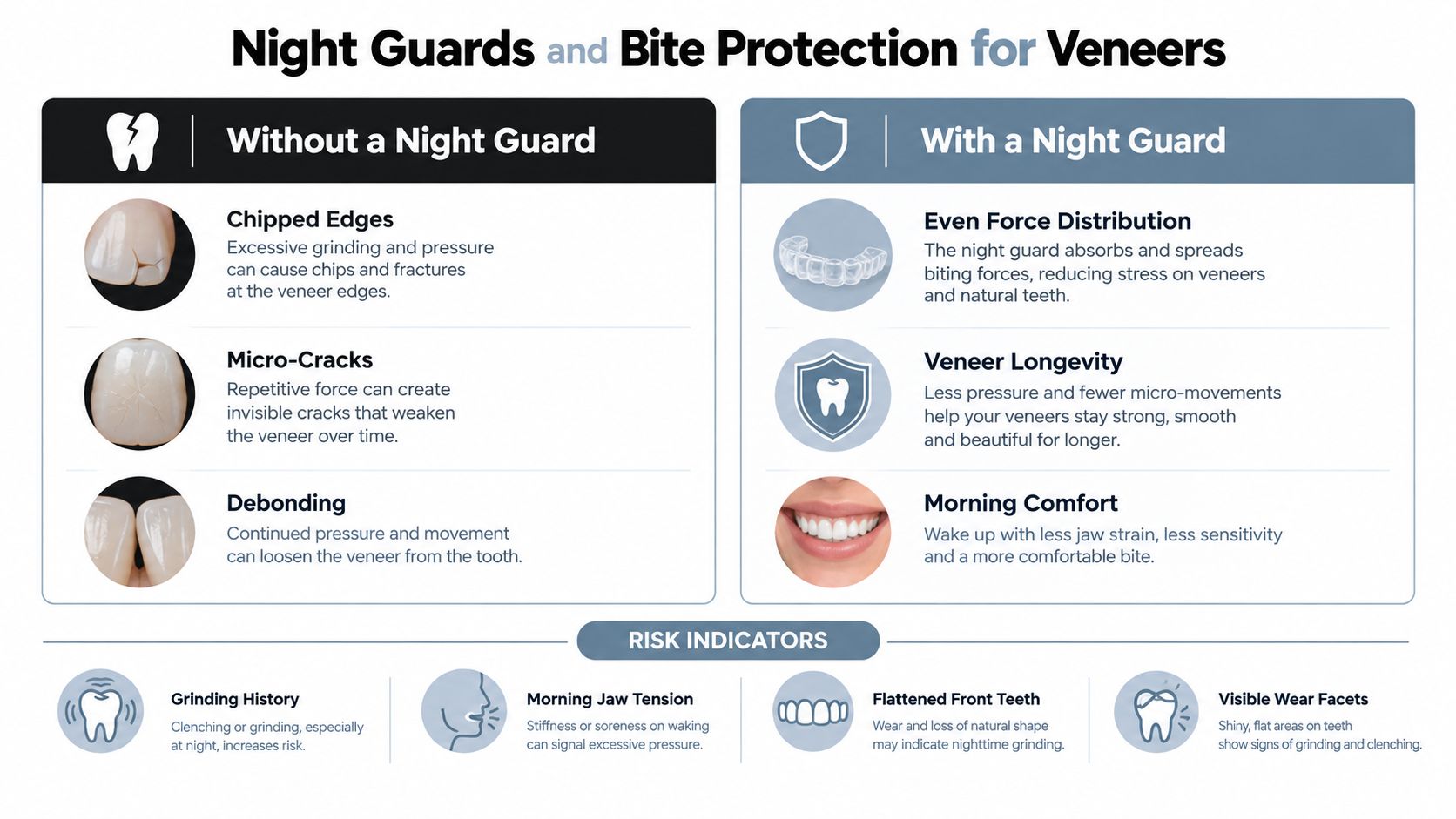
For a patient who clenches or grinds, a custom night guard is often the most important protection tool in the entire maintenance plan. The risk is higher if you wake with jaw tension, notice flattened front teeth, see wear facets, or have visible craze lines.
Grinding and clenching aren't the same as normal chewing. Chewing applies controlled force for a short period. Sleep-related clenching can hold the teeth together, while grinding adds sideways movement. Porcelain may chip under that lateral stress even when your natural enamel would have tolerated the same meal.
A clinical analysis reported sharply different outcomes between veneer groups in its specific study design, including 100% survival for one no-prep or minimal-prep cohort and a mean survival rate of 9.67% for conventional veneers, while a cited systematic review reported 87% overall cumulative survival for conventional feldspathic porcelain veneers (comparative veneer analysis). Those figures shouldn't be used to predict an individual result, but they reinforce the importance of case selection, bite control, and maintenance.
A veneer that looks perfect at bedtime can still be exposed to damaging force while you sleep.
A hard acrylic guard may suit heavier grinders because it provides a durable, stable biting surface. A dual-laminate soft-hard guard may feel easier to adapt to. The correct design must be fitted to your bite and restorations, not purchased as a generic boil-and-bite product. Athletes and daytime stress clenchers may also need a separate protective approach.
If facial pain, morning headaches, or jaw symptoms are part of your experience, a resource on facial pain and sleep-related concerns can provide useful background. You can also read Winn Smiles' guidance on teeth grinding and night guards before discussing a custom device with a dentist.
Recall Visits and Professional Monitoring
A routine recall every six months is a practical starting point for many veneer patients, with earlier review if you notice sensitivity, looseness, bleeding, a rough edge, or a change in your bite. Patients with complex cases, gum concerns, active grinding, or a history of restoration problems may need a different schedule.
The first review, often around 3 to 6 months after placement, deserves special attention. Your dentist can refine a high contact, evaluate how the gums have settled, and check whether your night guard fits correctly before a minor issue becomes a fracture or debonding event.
At a monitoring visit, the team should look beyond surface shine:
- Photographs: Standardized lighting helps compare shade and surface changes over time.
- Margins: The dentist checks for early debonding, marginal staining, plaque retention, and decay where veneer meets tooth.
- Occlusion: Articulating paper can reveal a contact that is too heavy or a bite that has shifted.
- Interproximal contacts: Floss that catches, shreds, or can't pass smoothly may signal excess material or a rough edge.
- Opposing teeth: Wear on the teeth that contact the veneers can reveal an unrecognized bite-force problem.
- Polishing: A non-abrasive prophy paste can remove surface stain without roughening ceramic glaze.
- Night guards: Bring the appliance so the dentist can assess fit, wear, and whether it still protects the intended surfaces.
| Appointment | Time frame | Key checks |
|---|---|---|
| Early post-placement review | Around 3 to 6 months | Bite refinement, gum response, margin integrity, guard fit |
| Routine recall | Every 6 months as a starting point | Cleaning, photographs, margins, contacts, occlusion, opposing wear |
| Symptom-led visit | Earlier when a concern appears | Chip, looseness, pain, sensitivity, bleeding, or bite change |
| Complex or higher-risk review | Personalized | Grinding, periodontal health, extensive veneer work, recurrent repairs |
A recall visit isn't just a polish. It is the appointment where your dentist decides whether the veneer is stable, needs a small adjustment, or requires closer observation.
Warning Signs and Your Next Steps
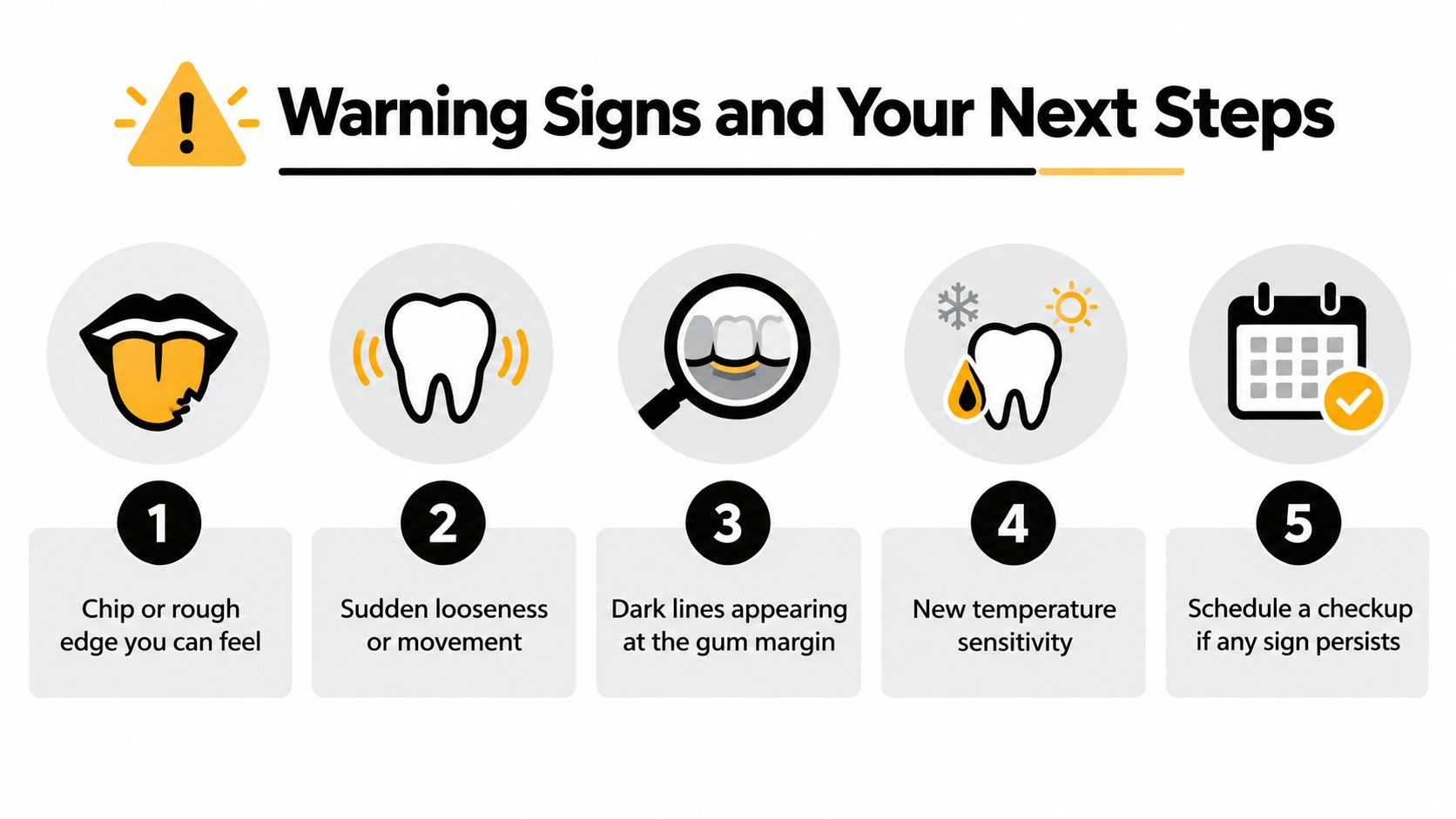
Most veneer problems give you something observable before they become urgent. Run your tongue over the edges occasionally, notice whether floss passes normally, and pay attention to changes in pressure or temperature.
A rough edge or small chip
A chip may feel sharp against your tongue even when it is difficult to see. Don't file it, sand it, or try to glue it. Orthodontic wax can temporarily cover a sharp area that irritates your lip or tongue, but call the office within a week so the dentist can determine whether smoothing, bonding repair, or replacement is appropriate.
Sudden looseness or movement
A veneer that feels loose can debond further during chewing. Avoid biting with that tooth, keep the restoration if it comes off, and contact the dental office promptly. Sudden looseness is a same-day concern, especially if the underlying tooth is exposed or the veneer is at risk of being swallowed.
A dark line at the gumline
A new dark line may reflect marginal staining, gum recession, plaque accumulation, decay, or a change in the cement interface. It shouldn't be dismissed as a cosmetic issue. A dentist needs to probe the margin and inspect the supporting gum and tooth.
Sensitivity or pain
New or persistent sensitivity to cold, sweetness, or biting pressure deserves evaluation. Pain on biting is a same-day concern, particularly when it follows a chip, impact, or sensation of looseness. The dentist may assess the veneer, the underlying tooth, the bite, and the pulp before deciding on treatment.
Swollen or receding gums
Bleeding, swelling, tenderness, or recession around a veneered tooth can expose the edge and create a plaque-retentive area. Improving home care helps, but persistent inflammation needs professional assessment. Gum health is part of veneer longevity, not a separate cosmetic detail.
A changed bite
If your upper and lower teeth no longer meet as they did after placement, arrange a review. A small occlusal change can concentrate force on one veneer, and early adjustment may be simpler than repairing a fracture later.
At the appointment, the dentist will examine the margins, check the bite, evaluate the gums and underlying tooth, and decide whether the problem can be polished or repaired or whether full replacement is safer. If you're looking for a dentist near me, an emergency dentist, a cosmetic dentist near me, or broader care such as a tooth extraction, dental implants near me, cleaning and exams, dental X-rays, teeth whitening, restorative dentistry, or emergency dental services in Cleveland or Chattanooga, choose a practice that can assess the whole mouth rather than treating the veneer in isolation.
Winn Smiles provides veneer consultations, preventive cleanings, cosmetic dentistry, bite protection, and restorative care for patients in Cleveland and Chattanooga, TN. Schedule an appointment through Winn Smiles to have your veneers, margins, gums, and bite evaluated and to build a maintenance plan that fits your smile.