You may be searching “IV sedation dentistry what to expect” after putting off a filling, tooth extraction, dental implant, or full-mouth treatment because the thought of the appointment feels overwhelming. Maybe you're worried about needles, the drill, gagging, pain, losing control, or remembering a difficult dental visit from the past. If you're looking for a dentist near me in Cleveland, TN, or dental care serving Chattanooga and nearby communities, understanding the entire day can make the decision feel much more manageable.
IV sedation isn't only about what happens in the dental chair. You'll need to plan transportation, fasting, childcare, work, meals, and a quiet evening afterward. This guide walks through that full-day experience in clear language, so you can approach a consultation with better questions and a realistic recovery plan.
Walking Into Winn Smiles for an IV Sedation Visit
A nervous patient may pause before opening the front door of Winn Smiles in Cleveland or Chattanooga. The concerns can arrive all at once: fear of a needle in the mouth, worry about losing control, the sound of a dental drill, a strong gag reflex, or memories of a previous visit that went badly.
The first few minutes should feel different from the experience you're dreading. A team member greets you, confirms your appointment, and gives you room to explain what makes dental care difficult. You can ask whether a quieter room is available and discuss comfort options such as headphones, a warm blanket, or a stress ball before the clinical conversation begins.
A useful expectation: You shouldn't have to hide your anxiety to receive respectful care. Tell the team what you fear, even if it seems small or embarrassing.
The staff also confirms that your responsible adult escort is available for the ride home. They'll review your fasting instructions, ask about any changes in your health, and give you time to raise a last-minute question. If you're unsure whether a medication, supplement, or recent illness matters, mention it rather than guessing.
Your visit starts before treatment
The pacing matters. A calm appointment gives you time to understand why the team needs your medical information, what monitoring will be used, and how the sedation plan fits the dental procedure. IV sedation is one comfort option, not a replacement for communication, local numbing medicine, gentle explanations, or the ability to pause when needed.
The history of intravenous conscious sedation in dentistry reaches back to 1945, when dentist Niels Bjorn Jorgensen introduced the Jorgensen Technique, the first recorded use of a mixture of intravenous agents for conscious sedation in dentistry. Professional oversight developed further when the American Academy of Pediatrics and the American Academy of Pediatric Dentistry published joint sedation guidance in 1985, after about five years of work, helping establish expectations for safety, monitoring, and patient management. The historical background is documented in the AAPD sedation guideline archive.
That long development explains why a modern sedation appointment follows a planned pathway. The team assesses you, adjusts medication carefully, monitors your response, and observes you before discharge. You won't be expected to figure out the process alone.
What IV Sedation Actually Feels Like
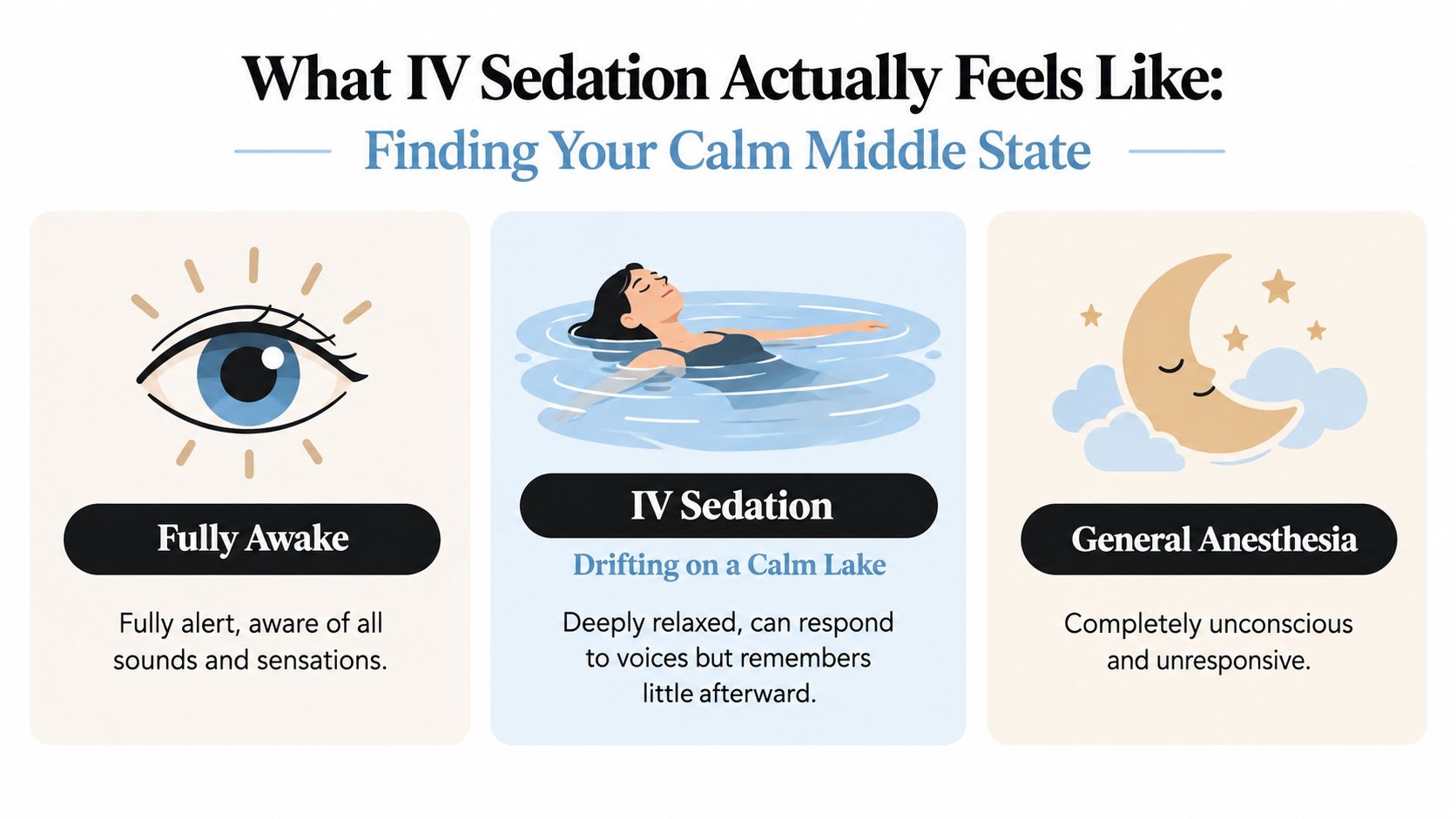
IV sedation sits between being fully awake and receiving general anesthesia. You're relaxed and may drift in and out of a light sleep, but you can usually respond to a dentist's voice or a simple request. It isn't the same as being completely unconscious.
A helpful comparison is drifting on a calm lake. You can hear someone speaking nearby, but the sounds feel distant. Your limbs may feel warm and heavy, your thoughts slow down, and time can seem compressed. Many patients remember little or nothing about the procedure afterward, although the exact experience varies.
What you may notice first
The IV catheter is usually placed in the hand or arm. You may feel a brief pinch, followed by pressure as the catheter is secured. Once the medication enters the bloodstream, relaxation can develop quickly. Some patients describe a floating feeling, a warm face, heavy arms, or drowsiness.
Your breathing continues on its own during conscious sedation, and you remain responsive enough to follow simple cues. The dentist may ask you to open wider, turn your head, or answer a short question. Local anesthetic is still used to numb the treatment area, because sedation reduces fear and awareness but isn't the same as numbing the tooth or gum.
How it differs from other options
Nitrous oxide, often called laughing gas, is inhaled and generally produces a lighter sense of relaxation. Oral sedation uses a medication taken by mouth, so the timing and depth can be less adjustable once the dose has been taken. IV sedation enters the bloodstream directly, allowing the dental team to titrate the medication while observing your response.
General anesthesia is a different level of care. A patient under general anesthesia is completely unconscious and unresponsive, while many IV sedation patients can still respond when spoken to. Your consultation should focus on your health, anxiety, and procedure, rather than treating every form of sedation as “going to sleep.”
Who Is a Good Candidate for IV Sedation
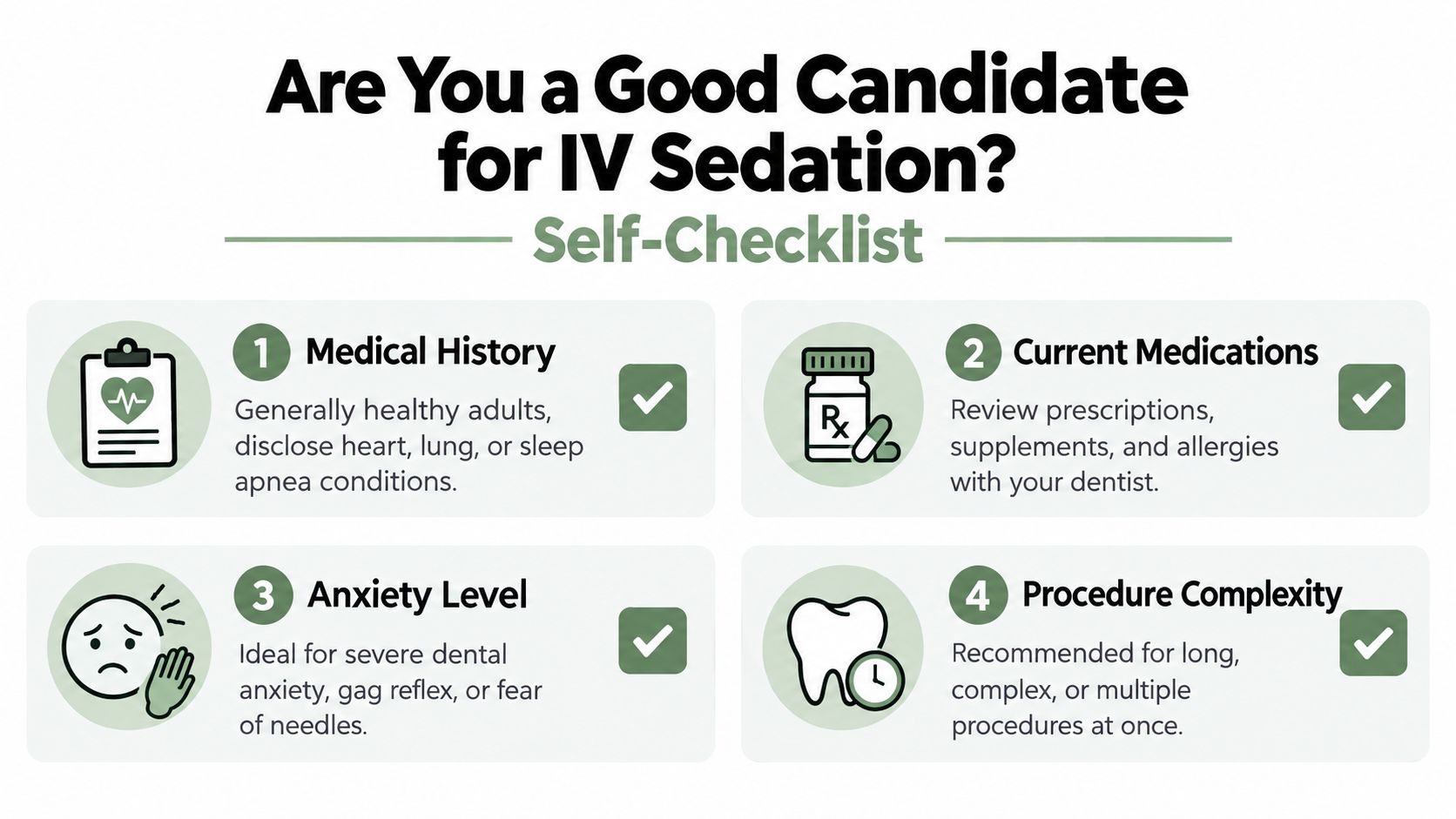
The right question isn't just, “Am I nervous enough?” Candidacy depends on four practical areas: your medical history, current medications, anxiety level, and the complexity of the planned dental work.
Start with your health history
Generally healthy adults with significant dental fear may be appropriate candidates, but the consultation must include a complete medical review. Tell the dentist about heart or lung conditions, breathing concerns, sleep apnea, allergies, previous reactions to anesthesia, and any recent changes in your health.
Pregnancy, certain respiratory conditions, uncontrolled sleep apnea, and medication interactions may affect whether IV sedation is appropriate. That doesn't mean you should decide against a consultation. It means the dental team needs accurate information before recommending a safe approach.
Review every medication
Bring a current list of prescriptions, over-the-counter products, vitamins, and supplements. Some medicines can change how sedation affects your breathing, blood pressure, alertness, or recovery. Don't stop or change a prescribed medication on your own. The dentist and your medical providers can explain what to take, what to postpone, and how to handle essential medicines on the day of treatment.
Consider your anxiety and the procedure
IV sedation may be worth discussing if you have severe dental anxiety, a strong gag reflex, fear of needles, difficulty sitting still, or a prior traumatic dental experience. It can also make a long or complex appointment feel more manageable.
Patients may ask about sedation for wisdom tooth removal, a difficult tooth extraction, complex dental implant placement, full-mouth restoration, or several deferred treatments planned together. A dental implants near me search often leads to questions about whether implant surgery can be completed comfortably. The answer depends on the treatment plan and your health, so request a sedation consultation before booking the procedure itself.
How to Prepare in the Days Before Your Appointment
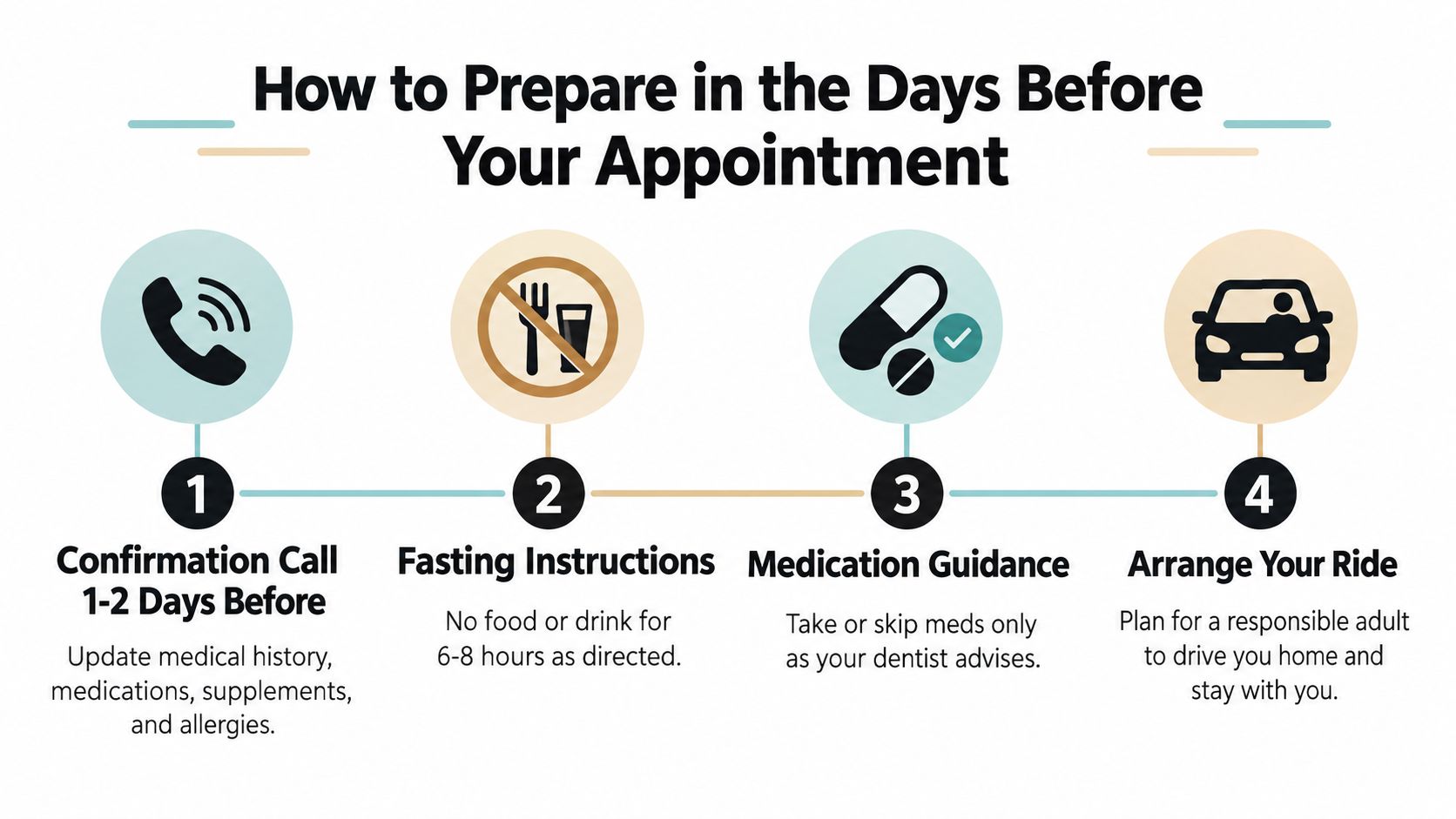
Preparation begins with a confirmation call, often a day or two before the appointment. Use that conversation to update your medical history, report a recent illness, review allergies, and confirm every medication and supplement you take. Ask when you should take regular medicines, because the answer depends on the medication and your dentist's instructions.
Fasting is one of the most important safety steps. Your office may direct you to avoid food for roughly six to eight hours before sedation and allow only small sips of clear liquids up to two hours before the appointment. The exact cutoff depends on your scheduled time and the instructions from your clinical team, so follow their written plan rather than using a generic internet schedule.
Make the morning simple
Choose loose clothing with short sleeves or sleeves that can be pushed above the elbow. Flat shoes are easier than anything requiring balance or complicated fastening. Leave jewelry and valuables at home, and avoid heavy makeup, contact lenses, and anything that could make monitoring or treatment less convenient.
Bring your photo ID, insurance information, and a written medication list. A light blanket may help if the weather is cool, but ask the office whether it supplies one.
Transportation requires more than finding someone who can drive. Arrange for a responsible adult escort to bring you to the appointment, pick you up, and stay with you for the first part of recovery at home. Plan backup childcare and pet care, because you won't be able to supervise children, manage pets, or make important decisions reliably while groggy.
Protect the evening before
Avoid alcohol the night before unless your medical team gives different guidance, and confirm the morning ride before going to bed. Set a phone reminder for the fasting cutoff. If you're receiving an extraction, implant, or restorative procedure, ask what foods will be comfortable afterward and prepare them in advance.
What Happens During the Appointment
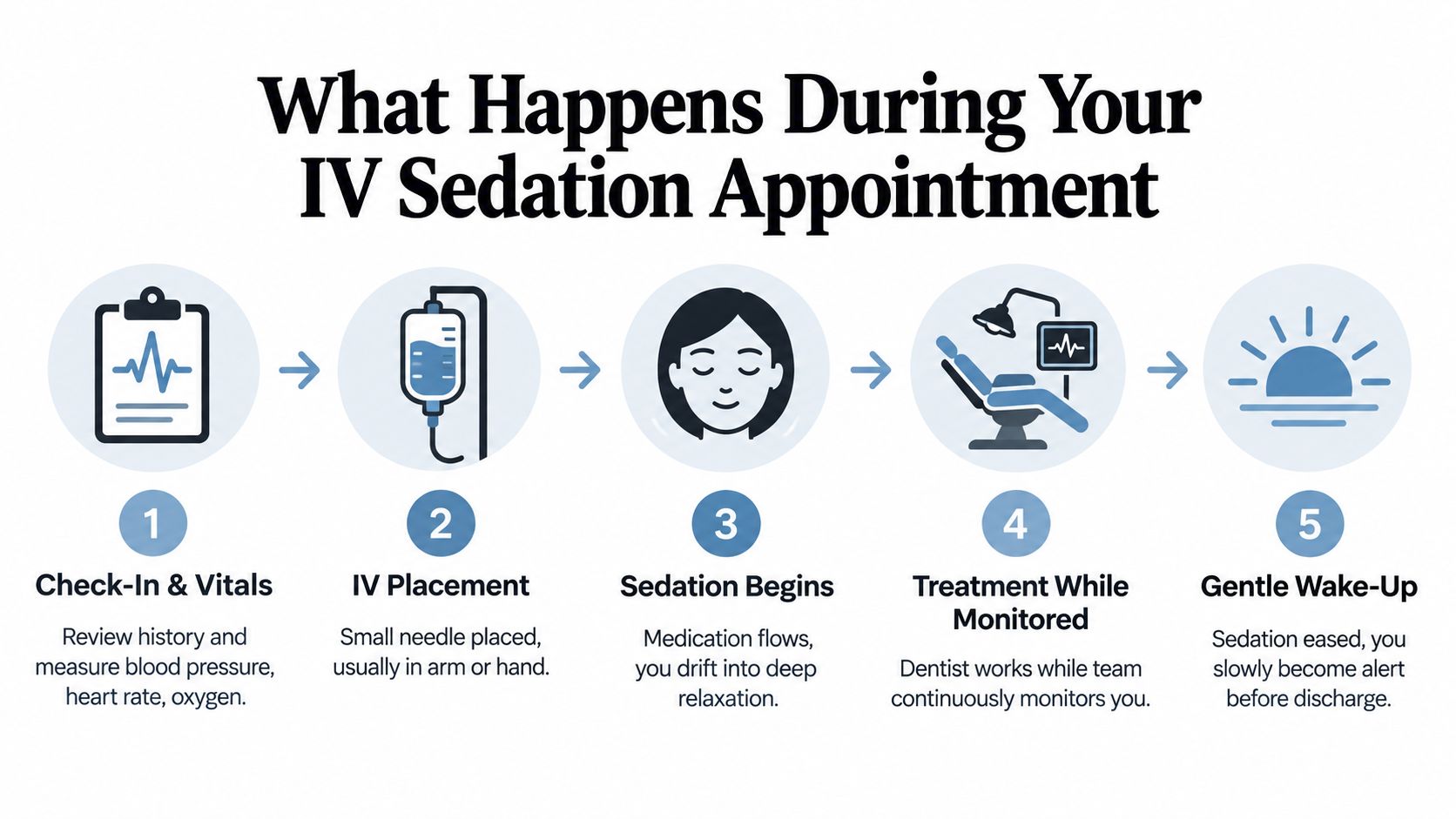
You arrive, check in, and sit down for a final review. The team confirms your medical history, asks about fasting, checks your vital signs, and invites you to ask anything that still feels unclear. You then speak with the sedation dentist about the planned treatment and the point at which the team will begin.
In the treatment room, a small blood pressure cuff goes around your arm. A pulse oximeter clips onto a finger to measure oxygen saturation, and the team uses additional monitoring to track your heart rate and response. A trained dentist or staff member remains involved in monitoring rather than leaving you unattended.
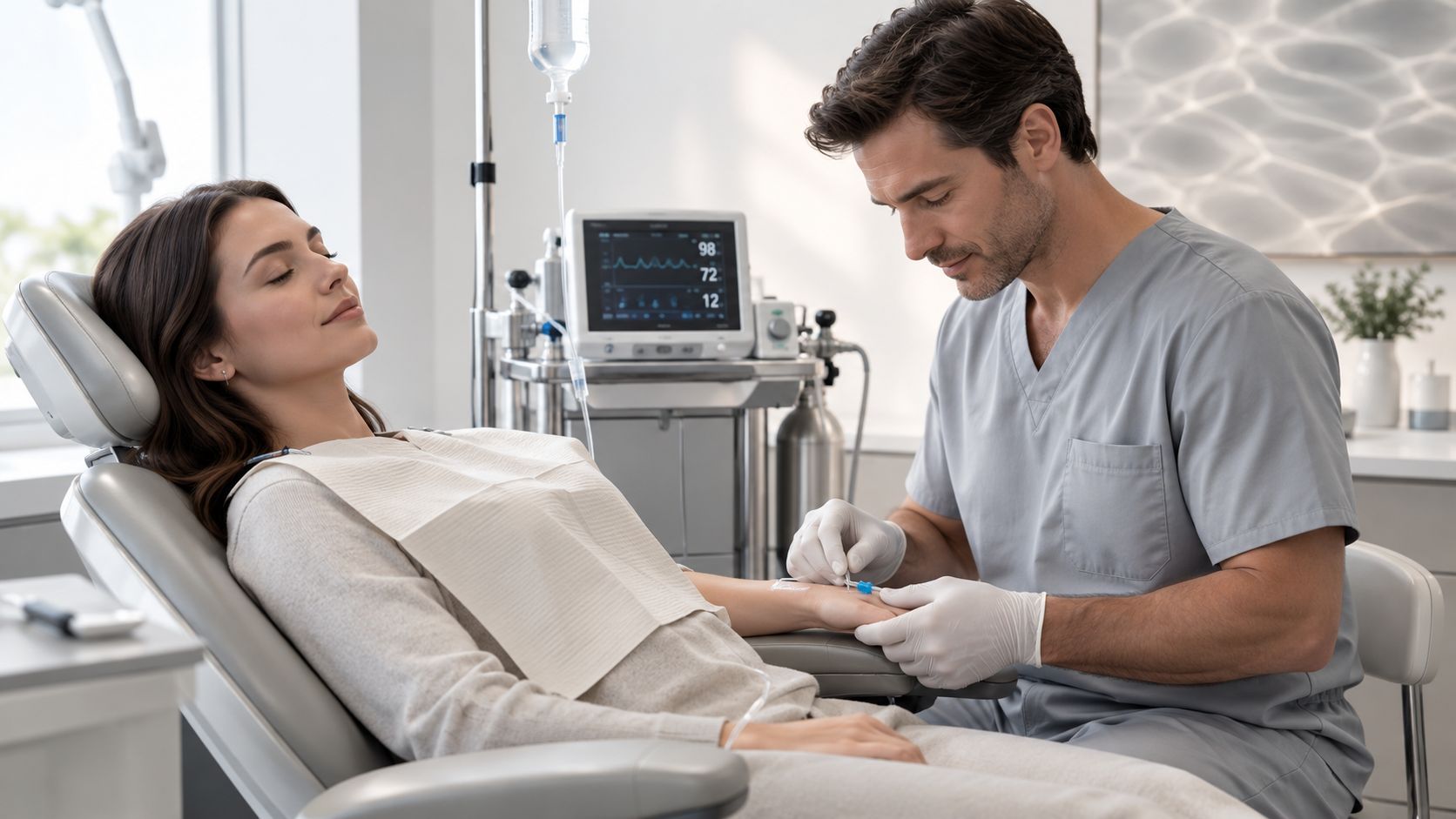
The IV catheter is placed in the back of the hand or near the inner elbow. Depending on the office protocol, a numbing patch or local numbing method may be used first, so the placement feels like a brief pinch rather than a major event. The catheter stays in place while medication is delivered and adjusted.
Relaxation happens gradually
Medication is titrated slowly while the team watches your breathing, oxygenation, blood pressure, heart rate, and responsiveness. You may feel warm, heavy, or drowsy. Oxygen may be delivered through a small nasal cannula, and the dentist can respond if your sedation becomes deeper than intended.
Once you're relaxed and the team confirms that treatment can begin, the dentist uses local anesthetic to numb the mouth. You may hear voices or equipment, but the sounds generally feel less important. You can respond to simple requests, and the team can pause if you need to communicate.
The appointment length depends on the work being completed. Some dental procedures take one to three hours, but that range should be treated as a planning example, not a promise. Ask the office how long your specific treatment and recovery may take.
What many patients remember: They may recall the IV placement, a few words from the team, and then feel as though only a short time has passed.
At the end, the medication is reduced or stopped. The team helps you become more alert, checks your response, and continues monitoring before discussing discharge. For a visual overview of the patient experience, you can watch this short explanation:
Recovery After IV Sedation and the Rest of Your Day
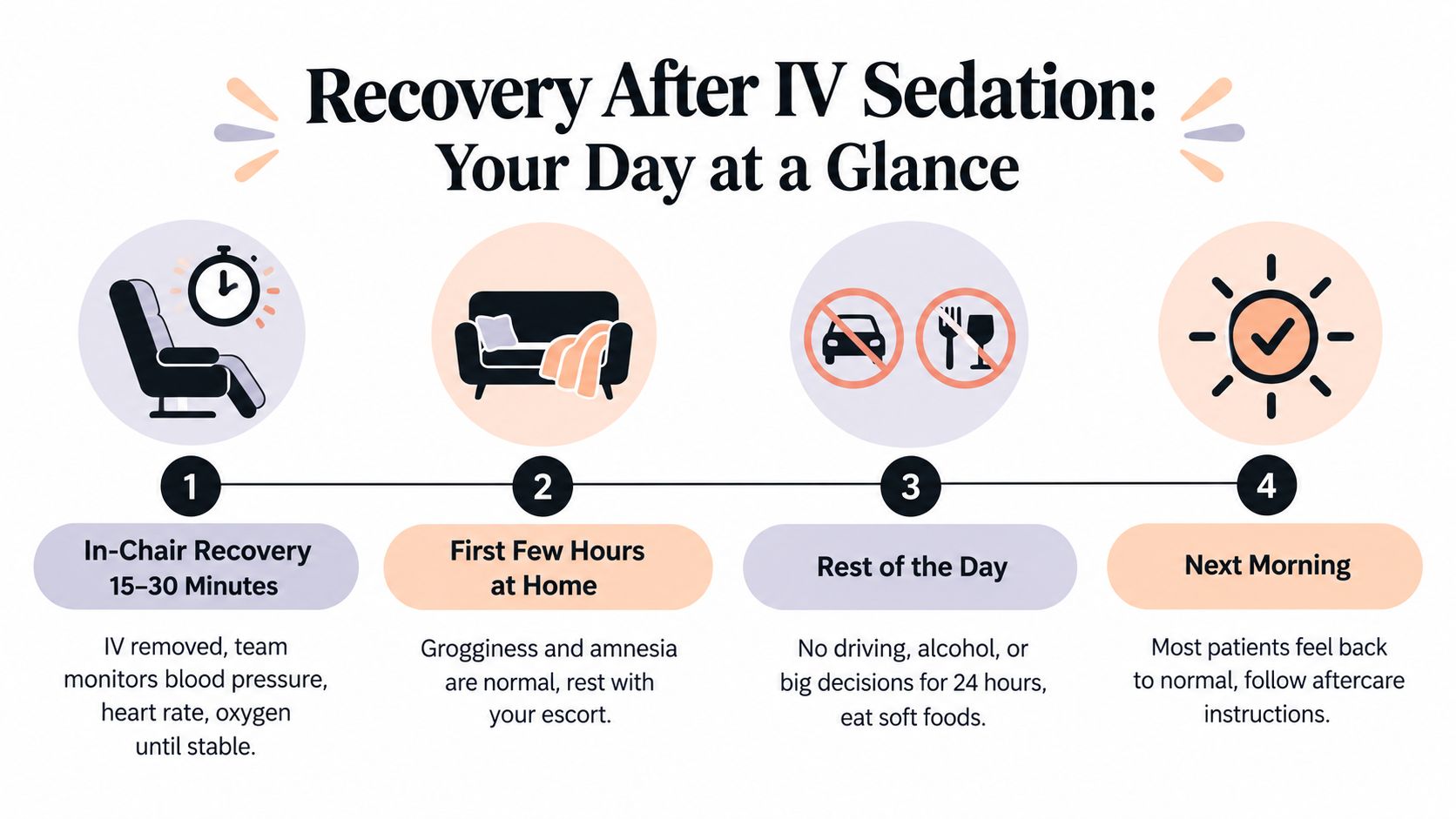
Recovery is part of the appointment, not an afterthought. Immediately after treatment, the team removes the IV and continues checking your blood pressure, heart rate, oxygen level, and alertness. You may move to a recliner with a warm blanket while the medication wears off.
A standardized intravenous sedation study involving 85 patients reported an average recovery time of 19 minutes, with recovery time not associated with the type or length of the dental procedure. That figure is a useful clinical benchmark, but your own recovery may differ based on your health, medication, procedure, and response. The study is available through this peer-reviewed report on intravenous sedation recovery.
Leaving the office safely
Before discharge, the team looks for stable vital signs, acceptable alertness, and the ability to respond appropriately. You should be able to walk with minimal assistance, tolerate clear fluids if permitted, and leave with a responsible adult who has agreed to take over supervision.
Your escort should drive you home. Independent guidance advises avoiding driving for 24 hours after IV sedation, along with machinery, alcohol, and important decisions. That includes signing significant documents, handling complex finances, returning to demanding work, or posting something you may regret while your judgment is still affected. The Cleveland Clinic guide to sedation dentistry explains why patients commonly remain drowsy or groggy for the rest of the day and need an adult escort.
Your afternoon and evening
At home, settle somewhere comfortable and let your escort stay nearby. Take small sips of water, then choose soft, cool foods if your dental aftercare permits them. Soup that isn't hot, yogurt, applesauce, or another dentist-approved soft meal may be easier than crunchy or chewy food.
Expect sleepiness, fuzzy short-term memory, dizziness, or mild nausea during recovery. Don't drink alcohol, exercise heavily, operate equipment, or make important decisions. Keep the evening quiet, with a trusted person available to help you follow medication and oral-care instructions.
For more detail about the post-appointment timeline, see sedation recovery time after dental treatment. Many patients feel much more like themselves the next morning, but you should follow your dentist's instructions and contact the office if your recovery doesn't follow the expected pattern.
Risks, Safety, and How the Team Protects You
IV sedation is generally low-risk when a properly trained team selects the patient carefully and monitors them continuously. In one PubMed-indexed study of anxious dental patients receiving intravenous midazolam, complications occurred in 3% of patients, and 11 of the 12 events were minor. The findings are reported in this study of complications during intravenous midazolam sedation.
Most concerns involve temporary respiratory or blood-pressure changes, nausea, bruising where the IV was placed, dry mouth, or longer-lasting grogginess. The main preventable hazard is oversedation with breathing depression, which is why the monitoring process matters more than a reassuring label such as “twilight sleep.”
Monitoring continues until discharge
The American Dental Association guidance calls for continuous oxygen-saturation assessment with pulse oximetry and repeated documentation of vital signs. Depending on sedation depth and applicable guidance, end-tidal carbon dioxide monitoring may also be recommended or required. A dentist or trained staff member stays in the operatory during active treatment and continues observation until formal discharge criteria are met.
At Winn Smiles, the planned safety conversation should include your medical history, medication review, oxygen monitoring, blood pressure and heart rate checks, supplemental oxygen when appropriate, and access to emergency equipment and reversal medication. You should also know who is monitoring you and what signs would cause the team to adjust or stop sedation.
Safety is an active process: You aren't simply given medication and left alone. The team watches your response so it can address a change early.
Call 911 for serious symptoms such as difficulty breathing or chest pain. For concerns that arise after you get home, contact the dental office promptly and follow the emergency instructions provided at discharge. A fuller explanation of the safety process appears in is sedation dentistry safe.
Practical Tips and Booking Your Consultation
Use the night before to remove avoidable decisions from your morning. Confirm your escort, set a fasting reminder, lay out loose clothes and slip-on shoes, and prepare a soft-food dinner for afterward. Silence work notifications for the day so you aren't tempted to answer messages while your judgment and coordination are still returning.
Write down every prescription, supplement, allergy, and previous reaction to dental or medical sedation. Bring prior dental records or dental X-rays if you have them. That information can help the dentist plan treatment for everything from a new patient exam and dental X-rays to an emergency visit, tooth extraction, restorative dentistry, or dental implants.
You can ask for a pause, request an explanation, or discuss starting with a smaller consultation before scheduling treatment. If you're comparing a cosmetic dentist near me, an emergency dentist, or a provider for dental implants near me, ask whether the office offers IV sedation for the procedure you need and how the plan changes for your health history.
Patients researching ways to make a dental practice easier to find may also benefit from this resource on dental practice advertising tools. For your own care, the next step is more direct. Call Winn Smiles in Cleveland or Chattanooga and request a sedation consultation, then ask specifically about IV sedation candidacy, pricing, and insurance coordination.
Winn Smiles offers comfort-focused dental care for patients considering IV sedation, along with general, cosmetic, restorative, emergency, and implant dentistry in Cleveland and Chattanooga. Visit Winn Smiles to request a consultation and talk with the team about a calm treatment plan that fits your health, schedule, and recovery needs.