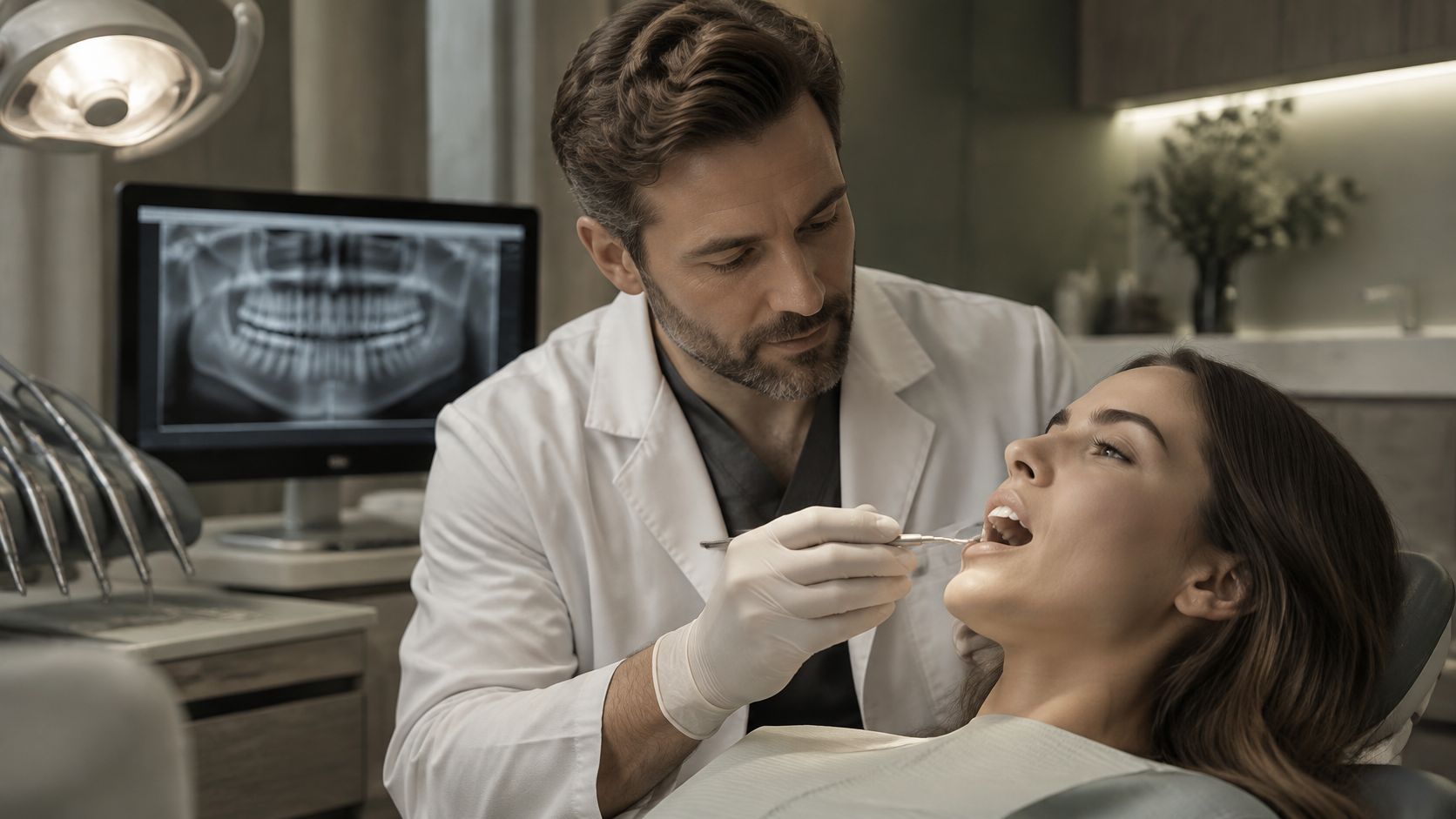
A complete dental exam is a full evaluation of your teeth, gums, bite, jaw, and soft tissues, combined with your medical and dental history, that identifies existing problems, assesses risk, and develops a care plan.
If your teeth don't hurt, how would you know whether you need more than a cleaning? That's the gap a complete examination fills, especially when you're joining a new practice or returning after time away.
For adults searching for a dentist near me in Cleveland, TN, or Chattanooga, TN, the visit should offer more than a list of procedures. You deserve an explanation of what's healthy, what needs attention and what can safely be monitored, without feeling rushed or judged.
What a Comprehensive Dental Exam Includes
A thorough dental exam creates a baseline record of your mouth's health, not just a snapshot of whether you have a cavity today. Your dentist combines what you report with what they see, feel and measure to decide what care is appropriate.
The examination covers connected structures. A worn tooth might relate to grinding, bleeding gums may need a closer periodontal assessment, and a damaged filling may change the plan for restoring a tooth.
Components of a Comprehensive Dental Exam
| Component | What the dentist checks | Why it matters |
|---|---|---|
| Medical and dental history | Medications, conditions, symptoms and past treatment | Changes your risk and which tests are needed |
| Oral cancer and soft-tissue screening | Lips, cheeks, tongue, gums, throat and floor of the mouth | Helps identify sores, lumps and patches that need evaluation |
| Periodontal (gum) assessment | Gum inflammation, pocketing, recession and bone levels | Gum disease may develop without noticeable pain |
| Teeth and restoration exam | Cavities, cracks, old fillings, crowns and missing teeth | Helps identify decay and damage before painful complications develop |
| Bite and jaw analysis | Bite alignment, jaw movement and signs of grinding | Identifies concerns associated with tooth wear, jaw pain and damage |
| Dental x-rays | Hidden decay, bone changes and root problems when indicated | Shows areas the eye cannot see |
| Cleaning and hygiene review | Plaque, tartar and home-care habits | Helps set the cleaning schedule and prevention plan |
Why Your History Changes the Exam
Bring up symptoms even if they seem minor: gums that bleed while brushing, a filling that catches floss or a tooth that feels different when you bite. Tell the dentist about medication changes, tobacco use and previous treatment difficulties, too.
The FDA's guidance on selecting patients for dental radiographic examinations supports reviewing history and clinical findings before deciding which images are justified. A complete exam doesn't mean every patient needs every x-ray, and an advanced scan isn't automatically part of the appointment.
Cleaning and hygiene review belong in the overall care plan, but removing buildup is a separate service from diagnosing disease. Your dentist may recommend a different kind of cleaning if the examination identifies gum disease.
Bring a useful starting point: A current medication list, details of past dental work and a short symptom note help the team understand your needs.
Ask which parts of the examination apply to you and why. For example, a sore spot on your tongue that hasn't healed deserves a different discussion from sensitivity around an older crown.
Why a Full Exam Catches Problems Before Pain Starts
Feeling comfortable doesn't always mean your mouth is healthy. Decay, gum problems and abnormal tissue changes can develop before you notice enough discomfort to seek treatment.
Seeing the findings can make that distinction easier to understand.
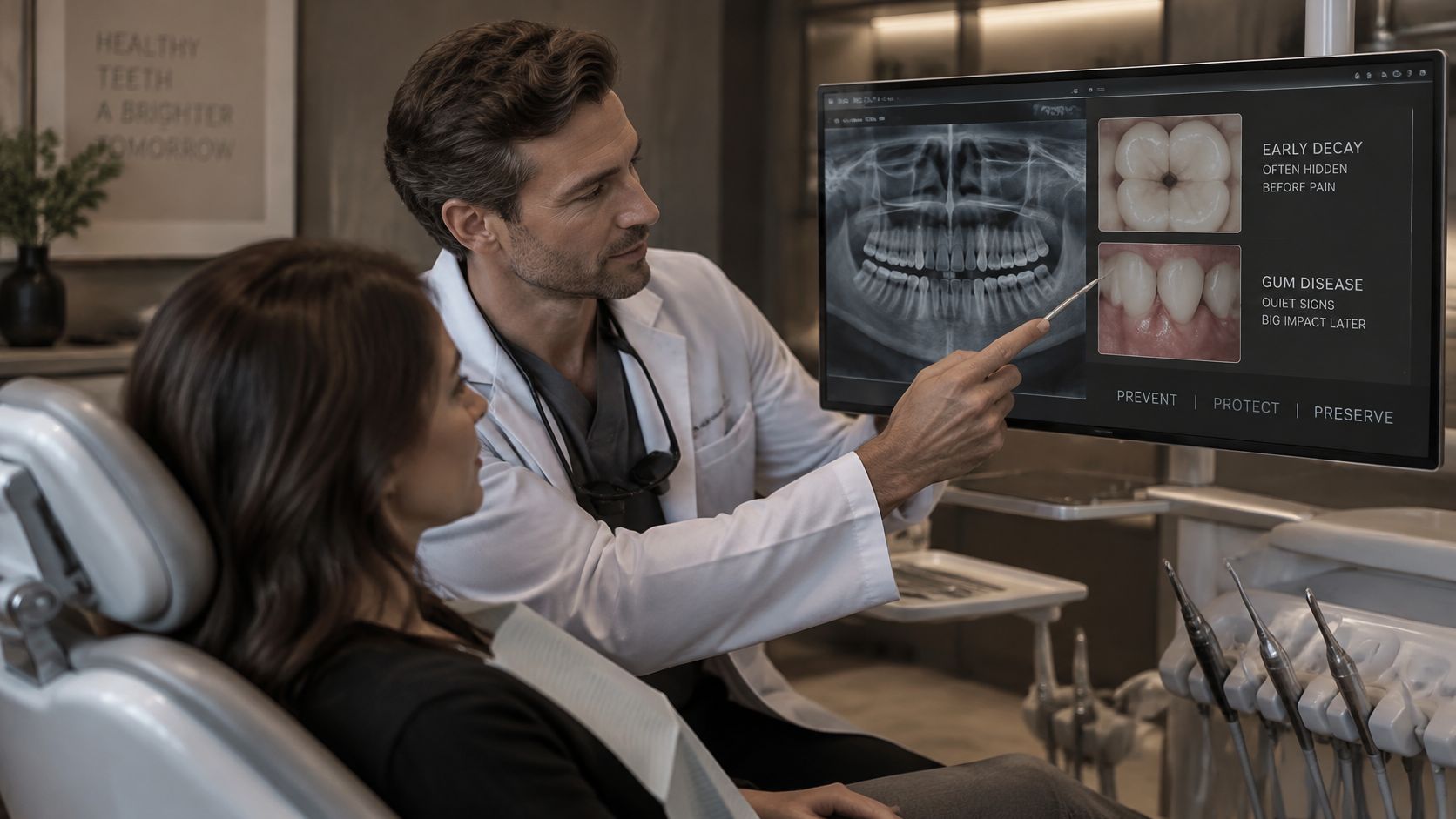
According to CDC information on cavities and tooth decay, nearly 21% of U.S. adults aged 20–64 had at least one permanent tooth with untreated decay; prevalence was 41.4% among current smokers and 39.6% among adults in high-poverty households. These population figures don't predict what your dentist will find, but they show why waiting for a toothache can leave problems undiscovered.
A thorough evaluation looks beyond visible holes in teeth. Your dentist also considers gum health, existing dental work, tobacco exposure and symptoms that might warrant monitoring or referral.
A Baseline Makes Changes Easier to Recognize
Think of the visit as a physical for your mouth, though it doesn't impose an annual schedule on everyone. The dentist records the condition of your teeth and supporting tissues so future examinations can distinguish a stable finding from a new change.
For example, a tooth with a large filling might be comfortable today. Recording a crack, checking the bite and evaluating the surrounding tooth structure helps the dentist decide whether to monitor it or discuss restorative dentistry.
Earlier care may keep treatment more limited and help avoid the expense of managing complications. It isn't a guarantee that every problem will be simple, but it gives you a chance to make decisions before pain forces the issue.
The accompanying video offers another way to explore the examination process.
Prevention That Fits Your Situation
A useful prevention plan addresses your actual findings. That might mean working on cleaning around a bridge, treating gum inflammation or watching an area that hasn't changed enough to require treatment.
The goal isn't to find a reason to treat every tooth. It's to separate what needs care from what needs observation.
New patients, people with gum concerns, smokers and anyone returning after a long gap particularly benefit from a thorough assessment. It's also an important starting point before crowns or dental implants, when the condition of surrounding teeth and gums can influence the plan.
For help understanding ongoing appointment timing, review how often you should visit the dentist and discuss your own risk factors at the visit.
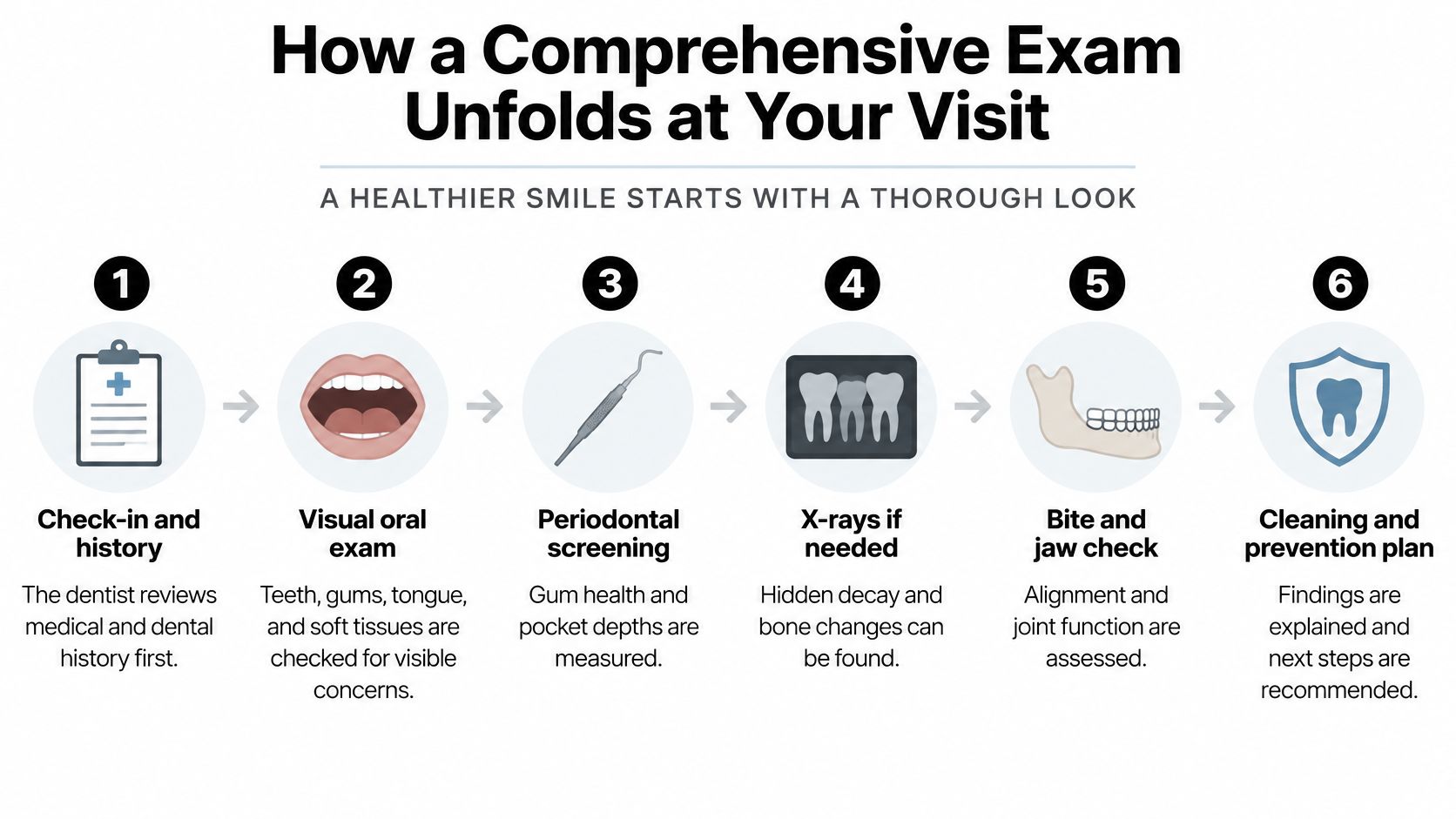
How a Comprehensive Exam Unfolds at Your Visit
At a new-patient appointment in Cleveland or Chattanooga, you should know what the clinician is doing before an instrument goes into your mouth. The order can change to accommodate discomfort or a pressing concern, but the examination generally follows a deliberate sequence.
Tell the team at the start if you're nervous, have a sensitive tooth or find it difficult to keep your mouth open. You can agree on a hand signal for a pause rather than trying to speak during the examination.
The Examination Step by Step
Check-in and history. The dentist and hygienist review medical conditions, medications, allergies, current symptoms and previous dental work. Describe when a symptom started and what brings it on, such as chewing, cold drinks or waking in the morning, because those details help guide testing.
Face, neck and jaw. The clinician feels areas under your jaw and around your neck, observes jaw movement and checks the joint in front of your ear for tenderness or clicking. You may be asked to open slowly or move your jaw from side to side.
Soft-tissue screening. Using a light and mirror, the dentist examines your lips, cheeks, tongue, throat and the floor of your mouth for unusual changes. You may be asked to lift or move your tongue so areas that aren't easily visible can be checked.
Gum charting. A slim measuring instrument called a periodontal probe checks the spaces between teeth and gums, while the clinician records bleeding and recession. Tell the team if an area feels tender so they can adjust their approach while gathering the measurements they need.
Tooth and bite check. Each tooth is assessed for decay, cracks, looseness and the condition of fillings or crowns. Biting together and moving your jaw helps the dentist evaluate how your teeth contact one another.
Imaging decision. If images are needed, the dentist explains the clinical question they're meant to answer. Previous usable x-rays can help inform that decision, so ask about transferring records before your appointment.
Review and plan. The dentist explains the findings in everyday language and separates urgent needs from preventive care, elective options and areas suitable for observation. You should leave knowing the proposed next step and why it matters.
The visual below groups related activities into a simplified overview; your clinical team may perform them in a different order.
Before You Leave the Chair
Ask the dentist to show you any area they recommend treating. A photograph, mirror or radiograph can help explain the difference between a damaged filling, a gum concern and a cosmetic issue.
A thorough exam often takes longer than a routine cleaning because the team is collecting and interpreting information, not only removing deposits. If cleaning is included, its timing and type should reflect what the examination finds.
You can ask questions at every stage. Before leaving, make sure you understand what to do at home, which appointment comes next and whether any symptoms should prompt an earlier call.
Comprehensive Exam Versus a Routine Cleaning
A cleaning removes buildup; an exam evaluates health and establishes diagnoses. An emergency visit has another purpose: addressing a specific urgent problem rather than completing every element of long-term planning.
These services may overlap during an appointment, but they aren't interchangeable. Booking the right visit helps the team reserve appropriate time and prepare for your concern.
Comprehensive Exam, Routine Checkup and Emergency Visit Compared
| Visit type | Main purpose | Typical scope | Usual timing |
|---|---|---|---|
| Comprehensive exam | Baseline and risk assessment | History, full oral and jaw exam, x-rays when indicated | New patients and periodic reassessment |
| Routine checkup and cleaning | Maintain health and remove buildup | Monitoring exam, cleaning and review of changes | At an interval set according to clinical risk |
| Emergency visit | Address urgent pain, infection or trauma | Focused exam and treatment of the immediate concern | Promptly, with same-day assessment when clinically needed and available |
The CDC's dental-visit summary reports that 65.5% of U.S. adults ages 18–64 had a dental visit during 2019. That figure describes attendance, not a schedule every patient should follow.
How Often Should You Return?
A new patient, or someone returning after a long break, will usually benefit from a thorough full-mouth exam before settling into routine recall care. The dentist then considers previous cavities, gum disease, home-care habits, age, medical conditions and tobacco use when recommending follow-up.
Someone with stable oral health and low risk may be seen less often than someone with active gum disease or frequent cavities. The interval should be reviewed as circumstances change, rather than treated as a permanent calendar rule.
Scheduling rule: A new symptom is a reason to contact the practice, even when your next checkup is already booked.
If you're unsure what your first appointment includes, the guide to a new-patient dental cleaning can help you prepare questions about examination, imaging and cleaning arrangements.
For adults choosing a dentist in Cleveland, TN, or Chattanooga, TN, the useful outcome is a shared plan. You and the dentist should agree on treatment priorities, understand the cleaning recommendation and know what will be reassessed at the next visit.
Warning Signs That Mean Book Sooner
Pain or swelling shouldn't wait for a routine appointment. Contact the dental team and describe your symptoms so they can determine how urgently you need assessment.
The NHS guide to urgent and emergency dental care identifies uncontrolled pain, swelling and persistent mouth changes as reasons to seek help. Call promptly for concerns such as:
- Disruptive pain: Severe tooth or mouth pain that interferes with sleep or daily activities and isn't relieved by ordinary pain relievers.
- Swelling or a persistent lump: Facial or mouth swelling, or a lump that's growing or not going away.
- An ongoing mouth patch: A red or white area that doesn't resolve.
- Possible infection: Toothache with gum or facial redness, a bad taste, hot or cold sensitivity, difficulty opening your mouth, swollen glands or fever.
- Dental injury: A knocked-out, cracked or newly loose tooth after an accident.
When to Seek Emergency Medical Care
Swelling involving the lips, tongue, throat or neck that affects breathing or swallowing requires emergency medical care immediately. Don't wait for a dental callback or a scheduled cleaning.
For less acute jaw discomfort, noting whether pain occurs with chewing, clenching or waking can help your clinician assess the problem. The Pain and Sleep Therapy Center jaw guide offers background on possible causes, but it shouldn't replace an examination or delay urgent care.
What an Urgent Dental Visit Can Do
An emergency dentist first evaluates the immediate problem and explains appropriate treatment. Depending on the findings, that might involve repairing damage, treating infection or discussing whether a tooth extraction is necessary.
Practices may be able to assess urgent cases the same day, but availability isn't guaranteed, so call rather than assuming you can walk in. A full examination can follow once the immediate concern is stable.
Book Your New Patient Exam in Cleveland or Chattanooga
Choosing a dental home should feel like choosing a team you can talk to. Whether you're looking for a dentist in Chattanooga, TN, or Cleveland, TN, your first visit is an opportunity to explain your priorities, not just answer questions on a form.
You might want comfortable chewing, help with bleeding gums or reassurance after years without care. If your search began with cosmetic dentist near me or dental implants near me, say so when booking, because your goals belong in the conversation alongside your clinical needs.
Make the Appointment Useful for You
Bring a current medication list, any available dental records or previous x-rays, and a short note about concerns you don't want to forget. Include changes since your last visit, even if they come and go.
The team will review your history, examine your teeth, gums, bite and soft tissues, and recommend imaging when needed. Ask for an explanation of proposed treatment and an open discussion of costs before agreeing to proceed, so you understand the expected expense rather than facing avoidable surprises.
If anxiety has kept you away, mention it when scheduling. The practice offers a comfort menu and sedation options suited to your needs, and the team can explain which accommodations may suit your visit.
Start With Health, Then Discuss Your Goals
You don't need to know whether you require a crown, periodontal care or cosmetic dentistry before you arrive. The examination helps distinguish disease treatment from elective choices such as teeth whitening, and it gives you a place to discuss both.
The same team can help with regular cleanings, ongoing care and urgent problems when they arise. That continuity makes it easier to maintain a dental home where your history, preferences and questions are understood.
When you book, request a new-patient exam and mention any current pain or swelling so the team can guide you to the appropriate appointment.
Winn Smiles offers detailed dental examinations and ongoing dental care for patients in Cleveland and Chattanooga, with attention to your health history, comfort, and treatment goals. Visit Winn Smiles to request an appointment or find the number to call and schedule your new-patient exam.