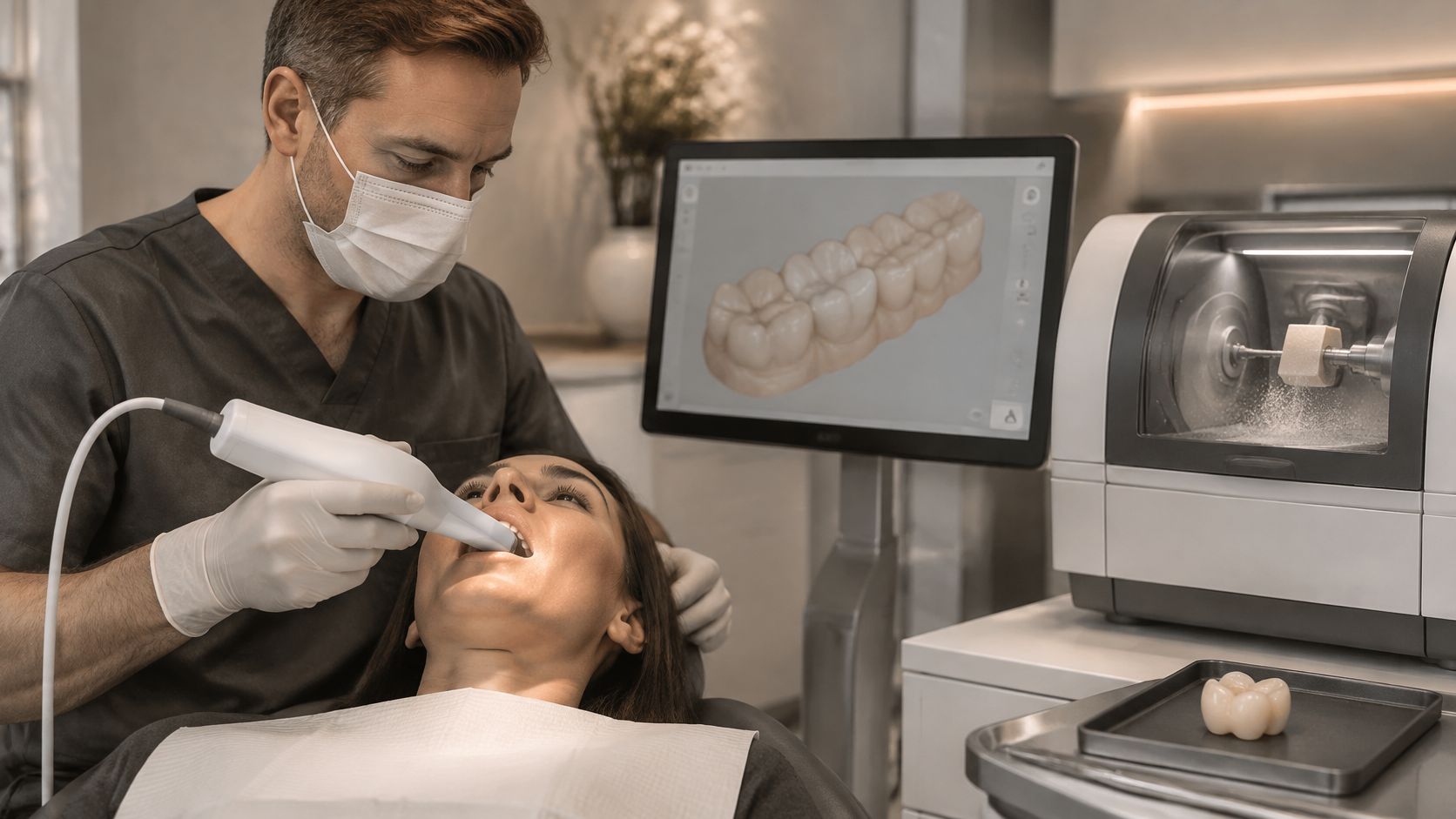
You're sitting in the parking lot in Cleveland or Chattanooga, holding the steering wheel and wondering whether you should go inside. Maybe you're worried the cleaning will hurt, concerned someone will lecture you about how long it's been, or unsure what a new patient visit will cost. Those worries can keep people away from care, especially after years without a dental appointment.
A new patient dental cleaning is more than a quick polish. It's usually a diagnostic-first visit that helps the dental team understand your teeth, gums, medical history, and comfort needs before deciding what care is appropriate. The Centers for Disease Control and Prevention reports that 65.5% of U.S. adults age 18 and older had a dental exam or cleaning in 2023, meaning roughly one-third didn't receive even a basic annual preventive visit. You can review that benchmark through the CDC adult dental health data.
Whether you searched for a dentist near me, a dentist in Cleveland, TN, or a dentist in Chattanooga, TN, the first visit should feel like a conversation, not a conveyor belt. Here's what typically happens, from the first form to the next appointment.
Walking Through Your First Cleaning Visit
A patient may pull into a Cleveland parking lot, check the clock, and rehearse how to explain the gap since their last visit. Another may arrive in Chattanooga with a sensitive tooth, a fear of dental instruments, or a concern that a routine appointment will uncover expensive treatment. Those reactions are common, and they're useful information for the team.
The first cleaning visit usually begins with listening. Before a polisher touches your teeth, the staff needs to review your health history, understand your concerns, examine your mouth, and decide whether a routine cleaning is suitable. That approach protects your comfort and helps prevent the team from treating a more serious gum problem as though it were ordinary buildup.
Eight calm moments to expect
You'll move through several connected steps:
- Forms and check-in, where the practice confirms your identity, contact information, insurance details, and health history.
- A conversation about your goals, including sensitivity, bleeding, cosmetic concerns, bad breath, or a specific tooth that bothers you.
- An examination, including your teeth, gums, existing dental work, and soft tissues.
- Periodontal charting, which helps identify gum inflammation and pocketing.
- Individualized dental x-rays, when images are expected to add diagnostic information.
- The cleaning, if the findings support routine prophylaxis.
- Comfort planning, including breaks, a stop signal, music, sunglasses, or sedation when appropriate.
- Follow-up, with home-care guidance, treatment recommendations, and a recall plan.
You can ask the hygienist to explain an instrument before using it, request a pause, or tell the team which sensations make you nervous. A stop-sign hand signal is especially helpful because you don't need to speak while the chair is reclined.
A useful expectation: You aren't being graded on your past dental habits. The team is gathering information so the next decision fits your mouth today.
The appointment may include general dental care, periodontal care, restorative dentistry, or a referral into services such as tooth extraction, emergency dentistry, cosmetic dentistry, or dental implants near me if those needs arise. None of those possibilities means you've failed. It means the exam is doing its job.
Paperwork and Insurance to Prepare Before You Arrive
A little preparation can make check-in smoother and give the clinical team information it needs before treatment begins. Gather these items before leaving home:
- Photo identification: Bring a current photo ID so the front desk can confirm your patient record.
- Insurance card: Have the policy number and group number available. If you're covered through a family plan, the office may also need the subscriber's date of birth.
- Medication list: Write down prescription medicines, vitamins, supplements, and over-the-counter drugs. A written list is more reliable than trying to remember everything from the dental chair.
- Medical details: Note allergies, heart conditions, joint replacements, pregnancy, recent surgeries, and any condition your medical providers are monitoring.
- Dental information: If you've had recent x-rays or treatment at another office, tell the practice. The team may ask whether records can be transferred.
Medical history questions aren't busywork. Your answers can affect which instruments or treatments are appropriate that day, whether the dentist needs additional information, and how the hygienist plans around your health. A medication list can help the team avoid problematic combinations or recognize factors that contribute to dry mouth, bleeding, or sensitivity.
Complete forms before the appointment
Many practices serving Cleveland and Chattanooga send forms by email or text before a new patient visit. Completing them at home gives you time to check medication names, find your insurance information, and answer sensitive health questions privately instead of rushing at the front desk.
Digital forms can also reduce repeated data entry when a practice uses an organized intake process. If you're helping a family member prepare paperwork or you're interested in how dental offices structure patient intake, these Orbit AI form builder tips offer useful context about creating clearer online forms.
Call the practice if a form asks about something you don't understand. It's better to leave a question open than to guess, particularly when it concerns medications, allergies, or a past procedure.
What happens at check-in
When you arrive, the front-desk team will typically greet you, confirm your contact details, collect your photo ID and insurance card, and review emergency-contact information. They may also verify your preferred phone number, email address, and appointment reason.
The team will look over your medical history and flag information such as high blood pressure or recent surgery. That doesn't automatically mean your appointment must change. Rescheduling should be considered only when the clinical team believes it's necessary for safe care or when the planned procedure needs a different appointment format.
A new patient visit often has more time reserved than a routine cleaning because it includes an examination, charting, and treatment planning. You may still wait briefly, but the extra appointment time allows the team to gather a proper baseline instead of rushing through the visit.
Make the room familiar
A comfort-focused office may offer a quick tour, introduce you to the hygienist, and answer last-minute questions before you sit down. You can ask where the restroom is, how to signal for a break, and what will happen first.
Small choices can make the room feel less clinical. Ask about sunglasses to soften the operatory light, a blanket, or a neck pillow before the chair reclines. Once the dental bib goes on and the hygienist explains the first step, the unfamiliar appointment becomes a sequence of manageable moments.
The Exam, Charting, and X-Ray Decisions
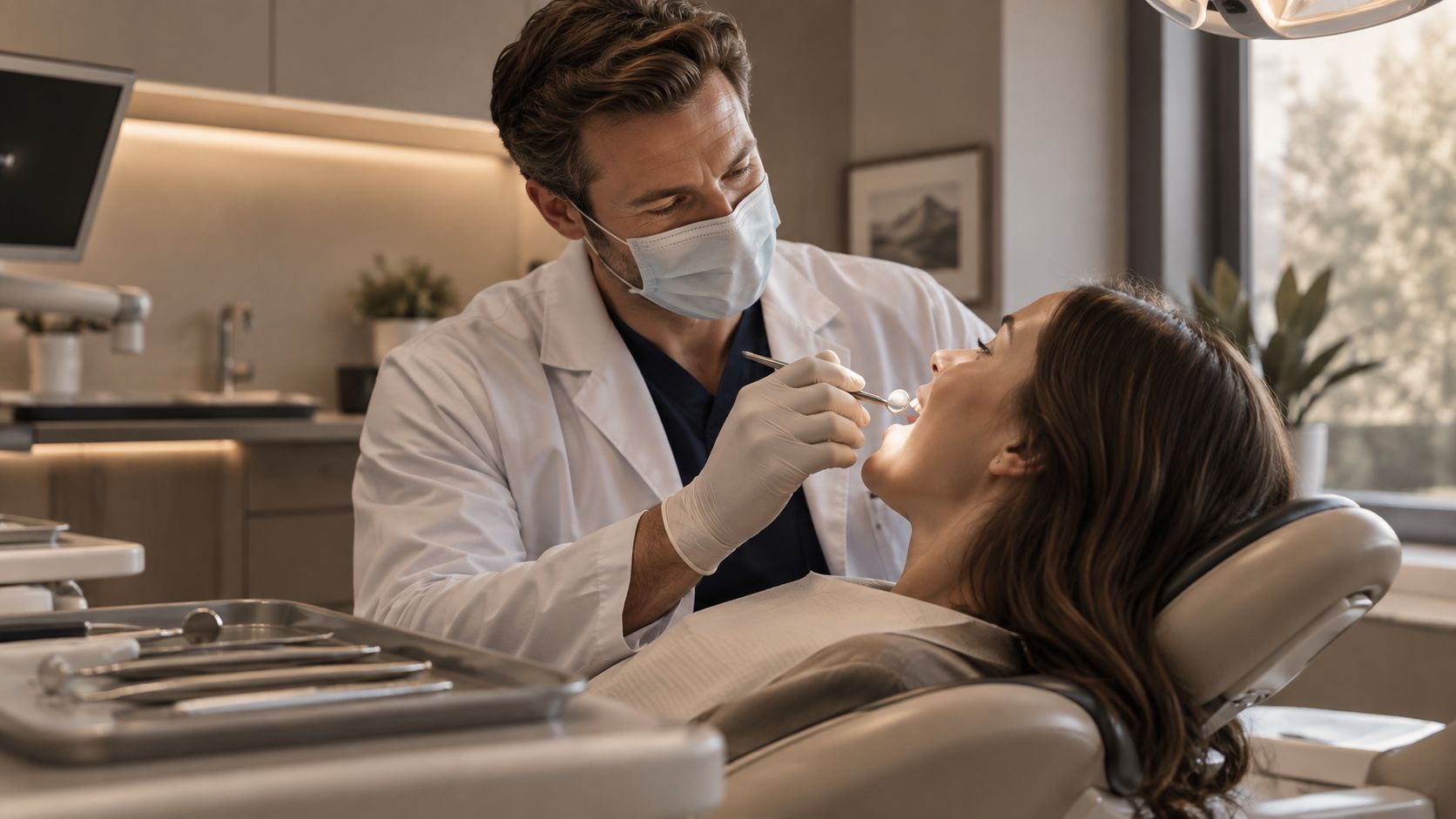
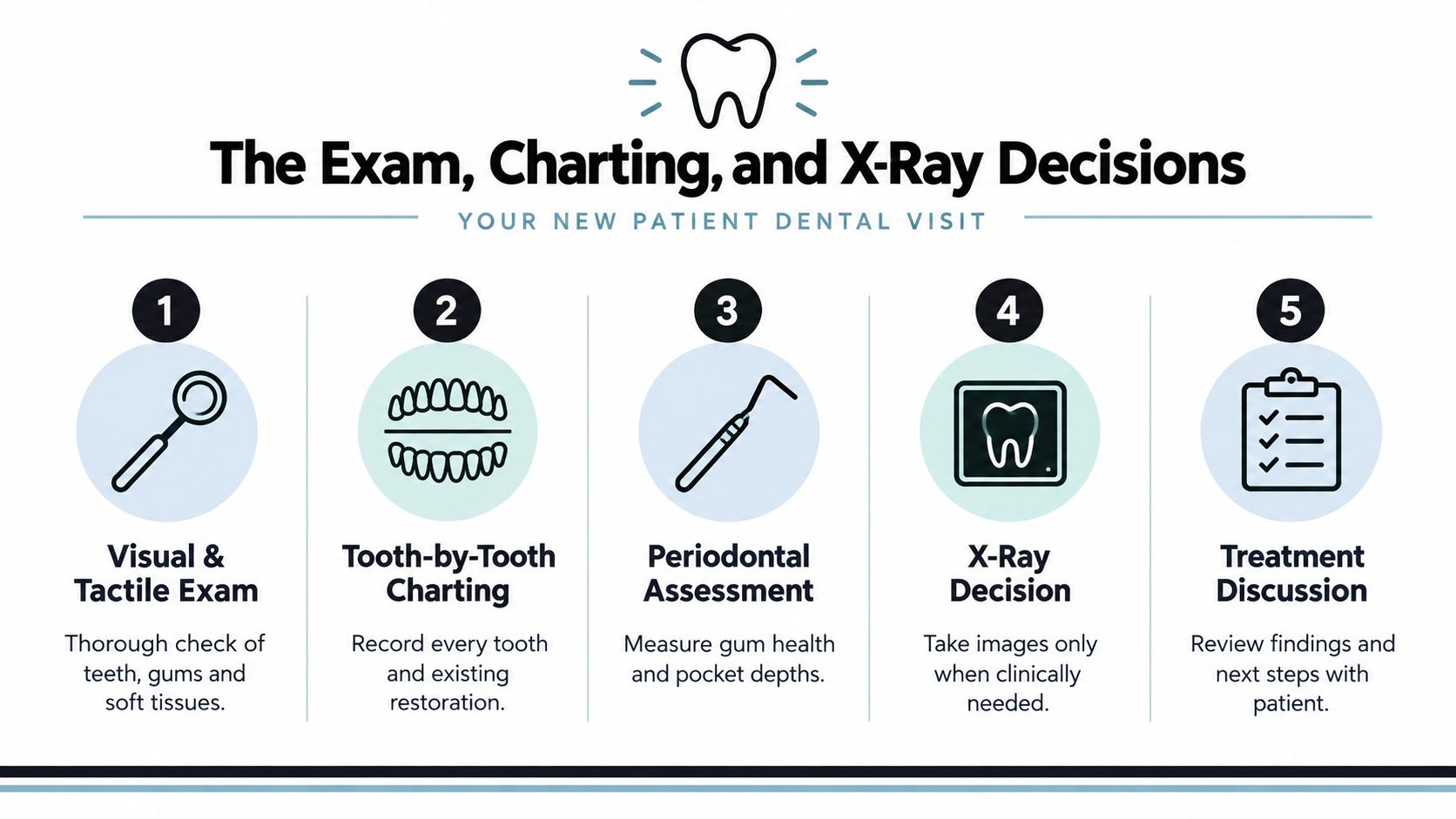
After you're settled, the hygienist examines the teeth, gums, and soft tissues using a mirror, light, and periodontal probe. The chart may record existing fillings or crowns, recession, bleeding points, loose teeth, worn restorations, and other findings that help the dentist understand your current oral health.
Periodontal charting can include pocket depths, bleeding, plaque, attachment levels, furcation involvement, and mobility. Those details help distinguish a routine cleaning from periodontal treatment. A new patient dental cleaning should start with that decision, not assume every patient needs the same procedure.
Why x-rays aren't automatic
The FDA recommends an individualized approach to dental radiographs. A dentist may select periapical, occlusal, or posterior bitewing views when the clinical examination suggests they could reveal disease that can't be seen or probed directly. Patients without evidence of disease and with open contacts may not need radiographs at that visit. The FDA guidance on selecting patients for dental radiographs explains that decision-making principle.
The ADA also notes that new patients may be advised to have x-rays to establish a baseline, while emphasizing that images should be taken only when they're expected to provide needed diagnostic information. You can read the ADA guidance on dental x-rays and radiographs for more detail.
The dentist then reviews the findings with you. If an image is recommended, ask what question it will answer. If it isn't recommended, ask what the visual exam showed and what changes would make imaging useful later.
The Cleaning Itself From Scaling to Polish
Once the exam shows that routine prophylaxis is appropriate, the hygienist begins removing plaque and calculus from the tooth surfaces. Scaling may involve a hand instrument, an ultrasonic scaler, or both.
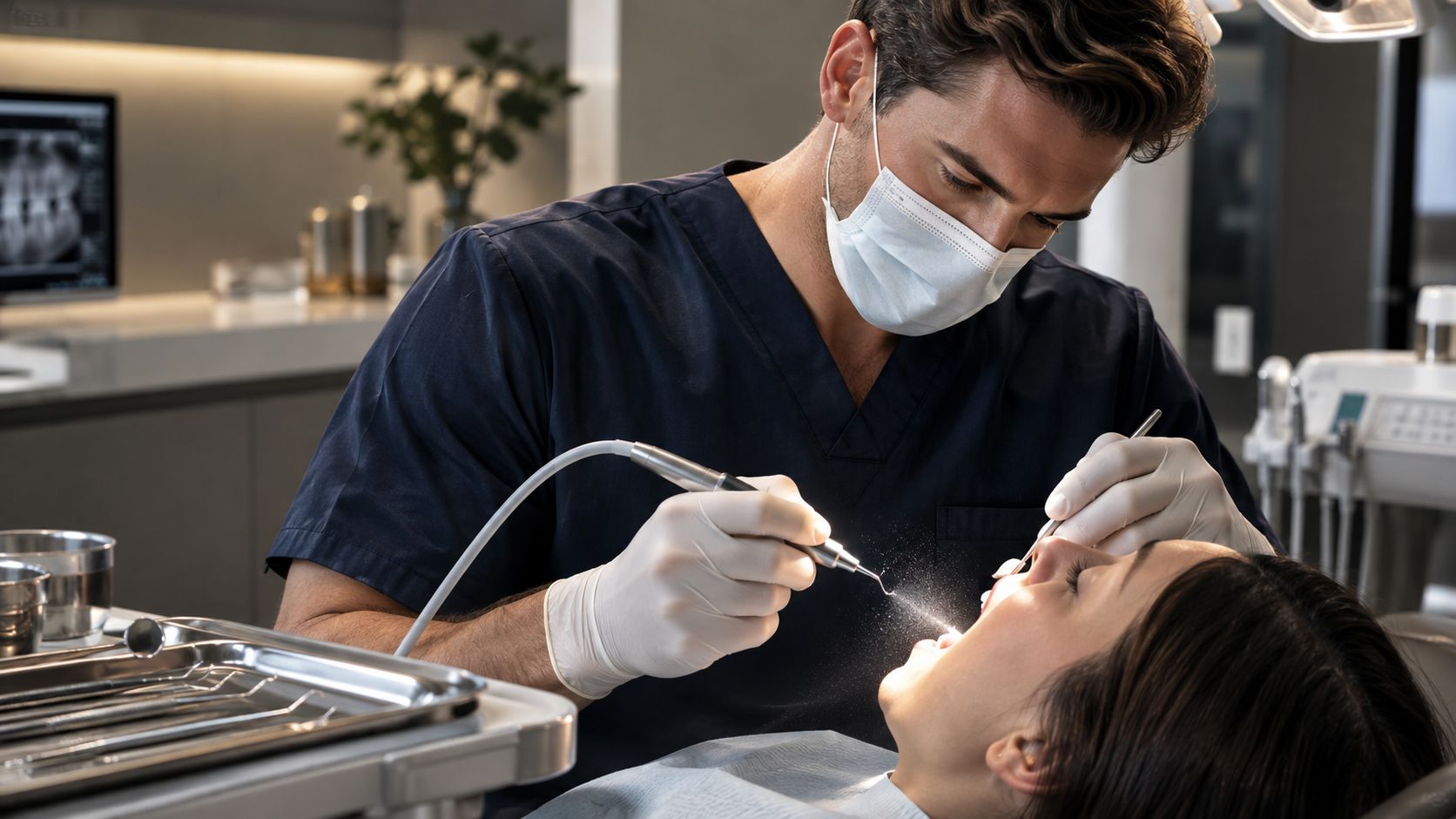
An ultrasonic scaler makes a soft hum and vibrates against the tooth while cool water washes away loosened debris. You may feel light pressure, a tickle near the front teeth, or a scraping sensation. It shouldn't feel sharp, and you can raise your hand if an area feels too sensitive.
The hygienist works above and, when appropriate for the diagnosis, just below the gumline. Prophylaxis is clinically defined around scaling and polishing, but the visit also includes attention to home-care habits. Professional mechanical plaque removal alone has limited gingival benefit when it isn't paired with oral hygiene instruction, so the team may demonstrate brushing angles, flossing, or tools that suit your hands and mouth. The periodontal clinic manual describes this diagnostic and cleaning workflow in technical detail.
The finishing steps
After scaling, the hygienist applies gritty prophy paste with a soft rubber cup. You'll hear a gentle spinning sound and feel vibration as the paste moves across each tooth, polishing away surface stain. The result is a smooth, slick feeling when you run your tongue over the enamel.
Flossing follows. The hygienist may use floss to clean tight contacts and show you where plaque tends to collect. A fluoride varnish or foam may be offered, particularly when you have sensitive teeth, dry mouth, or a higher risk of cavities. Ask about the flavor or how long to wait before eating if fluoride is applied.
You may notice water, paste, and suction throughout the visit. If you're nervous about gagging, tell the hygienist before starting so the team can adjust positioning, suction, and pacing.
Routine Cleaning Versus Periodontal Therapy
A routine prophylaxis is intended for a mouth with generally healthy gum tissue, little bone loss, and only minor, localized pocketing. A clinical guideline describes prophylaxis as appropriate when pocketing is below 3 mm, while deeper disease requires a more advanced approach. You can review the periodontal treatment guidance for that distinction.
When probing shows deeper pockets, bleeding, or substantial calculus beneath the gums, the recommendation may shift to periodontal therapy, often called scaling and root planing or a deep cleaning. That procedure targets deposits on root surfaces below the gumline and may use local anesthesia. The treatment is commonly divided by areas of the mouth, followed by a reassessment of healing and pocket changes.
| Feature | Routine Prophylaxis | Periodontal Therapy |
|---|---|---|
| Primary purpose | Remove routine plaque, calculus, and surface stain | Treat gum infection and deposits below the gumline |
| Typical finding | Healthy gums or limited inflammation with shallow pockets | Deeper pocketing, bleeding, inflammation, or significant subgingival calculus |
| Comfort approach | Often completed without local anesthesia | Local anesthesia may be used for comfort |
| Follow-up | Preventive recall based on individual risk | Reassessment followed by periodontal maintenance |
| Home-care focus | Brushing, interdental cleaning, and prevention | Daily plaque control is essential to protect healing tissues |
A high-risk patient may need more frequent maintenance than a low-risk patient. Delta Dental Institute materials state that adults at high risk for periodontal disease should have at least two cleanings per year, and report that 58% of U.S. adults age 30 and older at risk for periodontal disease received at least two cleanings in 2023. The same material reports that 77% of adults age 19 and older at risk for caries had at least one evaluation in 2023. Those figures appear in the Delta Dental Institute preventive care white paper.
For a patient-friendly explanation of the deeper treatment, see periodontal scaling and root planing.
Comfort Menu and Sedation Options for Anxious Patients
Comfort shouldn't be something you have to earn by appearing calm. A patient who grips the armrests, avoids eye contact, or says they're embarrassed about their teeth deserves the same clear explanations and choices as anyone else.
Think of the appointment as a menu. You can choose sensory supports, communication signals, and, when clinically appropriate, sedation. A Cleveland or Chattanooga patient can call before arrival and ask the team to prepare these options rather than trying to explain everything once the chair is reclined.
Choose the sensory supports first
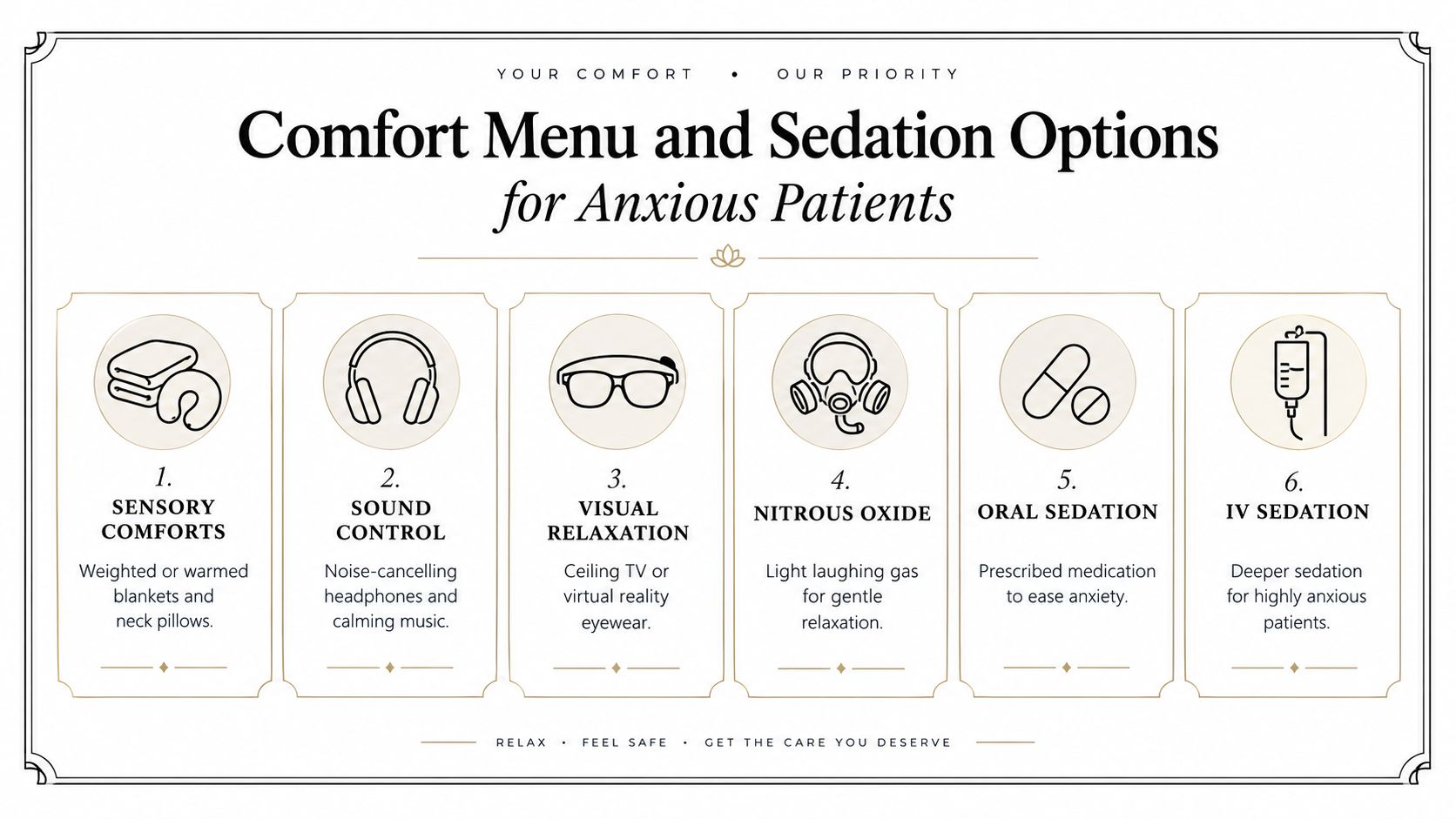
A comfort menu may include:
- Warmth and support: Ask for a weighted or warmed blanket, a neck pillow, or both.
- Sound control: Use noise-cancelling headphones with music that helps you settle.
- Softer lighting: Sunglasses can reduce the brightness of the operatory light.
- Taste choices: Ask which polish and fluoride flavors are available.
- A slower pace: Agree on breaks before scaling begins.
A walk-through of the operatory can also help. Seeing the chair, suction, instruments, and light while you're still standing gives your brain a chance to process the environment without immediate treatment.
Match sedation to the appointment
Nitrous oxide, often called laughing gas, can provide light relaxation for mild anxiety. Its effects wear off before driving home, but the dental team should still confirm whether it suits your health history and appointment.
Oral conscious sedation involves prescribed medication taken according to the dentist's instructions, commonly involving a dose the night before and another the morning of the appointment. You'll need an escort and shouldn't plan to drive yourself.
IV sedation provides a deeper level of sedation and is generally reserved for complex cases or severe dental phobia. It may require a separate appointment, additional preparation, and an escort.
A standard first cleaning may be possible with communication and sensory comforts alone, while moderate or severe anxiety can require a planning visit. The comfort menu at Winn Smiles describes how patients can discuss these preferences with the dental team.
Before you book: Tell the scheduler that you're anxious, how long it's been since your last visit, and whether you've had trouble with dental care in the past. That information helps the team prepare instead of guessing.
Follow-Up Plan and Booking Your Next Visit
When the chair comes upright, the appointment should end with a clear plan. The hygienist may review brushing technique, demonstrate floss picks if limited dexterity makes string floss difficult, recommend prescription fluoride toothpaste for cavity-prone patients, and provide a printed summary of findings.
Your recall interval should reflect your gum health and risk factors. Patients with healthy gums may be scheduled for preventive care every six months, while those with a periodontal history may need maintenance every three to four months. If bleeding or sensitivity continues after the visit, contact the practice rather than waiting for the next routine appointment.
Turn advice into a manageable routine
A useful home-care plan is specific:
- Brushing technique: Follow the angle and pressure demonstrated by the hygienist.
- Interdental cleaning: Choose floss picks or another aid that you can use consistently.
- Fluoride support: Use prescribed fluoride toothpaste as directed if cavity risk is a concern.
- Symptom tracking: Note ongoing bleeding, swelling, sensitivity, or pain and report changes.
The first visit may also identify related goals. You can ask about professional teeth whitening or take-home trays for surface stain, Invisalign or clear aligner consultations for crowded teeth, custom night guards for grinding, and sealants for molar grooves during family appointments.
A practice can also discuss restorative dentistry, root canals, same-day crowns, periodontal care, emergency dentistry, and dental implants when those services match your needs. If a damaged or missing tooth requires a broader plan, questions about dental implants near me or a future cosmetic dentist near me consultation can be addressed after the diagnostic findings are clear.
Before you leave, ask the front desk to print your recall card, confirm your insurance benefits for the next visit, and schedule the next appointment. Booking before you reach the parking lot removes the need to restart the search for a dentist near me later, and it turns preventive care into a routine part of life in Cleveland or Chattanooga.
Winn Smiles provides new patient cleanings, thorough exams, periodontal care, cosmetic dentistry, restorative treatment, emergency dental services, and comfort-focused sedation options for patients in Cleveland and Chattanooga. Visit Winn Smiles to request an appointment, discuss your concerns, and create a dental care plan that fits your needs.