You're slowly becoming aware in the dental chair. Voices sound muffled, your mouth feels dry, and you're not quite sure whether five minutes or an hour has passed. The first question is usually simple: when will I feel like myself again?
Sedation recovery time varies more than most patients expect. Nitrous oxide may wear off quickly, while oral or intravenous sedation can leave you drowsy or less coordinated long after you can hold a conversation. The procedure, medication, dose, health history, and your own response all matter.
For patients seeking a dentist near me in Cleveland, TN, or Chattanooga, TN, Winn Smiles provides sedation guidance from the first consultation through the recovery period. The practical aim is to help you plan transportation, meals, work, exercise, and the full safety window without unnecessary worry. For more background, see how sedation dentistry works.

Waking Up From Sedation and What Comes Next
The first minutes can feel unusual
Most patients wake gradually rather than switching instantly from asleep to completely alert. You may notice grogginess, dry mouth, mild disorientation, blurred awareness, or delayed responses. Those sensations are usually expected while the medication's effects are fading, but they're also why the dental team doesn't send you straight from the chair to the parking lot.
A clinician assesses your breathing, vital signs, consciousness, and movement before discharge. Modern guidance is generally criteria-based rather than controlled by a fixed clock. One hospital guideline allows discharge or transfer 30 minutes after the final medication administration when airway function, vital signs, motor function, and consciousness have returned to baseline, while it requires at least 12 apnea-free hours for certain very young or premature infants. That contrast shows why the right question isn't, “How many minutes does sedation last?” It's, “Have I met the safety criteria for leaving?”
Feeling better doesn't mean planning less carefully
A patient might be awake enough to answer questions but still need help walking, eating, or getting home. Arrange a responsible adult escort before your appointment, and plan for a quiet remainder of the day. Your dentist will give instructions based on the exact sedative and the treatment performed.
The practical rule: discharge readiness and full cognitive recovery are different endpoints.
The recovery plan should also account for whether you're having a filling, root canal, tooth extraction, dental implants, or another procedure. Patients comparing sedation options can review types of sedation dentistry with the team before booking.
Recovery Timelines for Different Types of Dental Sedation
The same dental appointment can produce very different recovery experiences depending on the medication. Published clinical results commonly fall from under 30 minutes to roughly 2 hours, although a patient's safe return to driving or normal responsibilities may take longer. A gastrointestinal endoscopy study reported a mean recovery time of 51.2 minutes, while one ketamine pathway reported average discharge times of 90 to 120 minutes in one setting and 100 to 140 minutes in another. A standardized intravenous technique involving 85 patients reported an average recovery time of 19 minutes. These figures come from clinical sedation research and aren't promises for an individual dental visit.
Sedation recovery timelines at a glance
| Sedation Type | Time to Alertness | Safe to Drive | Return to Work | Full Recovery |
|---|---|---|---|---|
| Nitrous oxide | Often clears within 15 to 30 minutes | Follow your dentist's instructions, and don't drive if you feel impaired | Usually after you're alert and your dentist approves | Often quick, but personal response varies |
| Oral conscious sedation | Alertness can return gradually, with full alertness commonly taking several hours | Avoid driving for 24 hours | Plan to rest for the day | Cognitive effects may last through the safety window |
| IV sedation | You may appear awake within about an hour, yet fogginess can remain | Avoid driving for 24 hours | Usually postpone work for the day | Residual effects can continue during the safety window |
| General anesthesia | Requires extended professional monitoring | No driving during the instructed recovery period | Often requires more time away from work | Recovery may extend beyond the appointment day and requires individualized instructions |
Nitrous oxide is the fastest-offset option because the inhaled gas clears relatively quickly. Dental studies have reported median clinical recovery of 40 minutes after nitrous oxide-oxygen sedation, 80 minutes after midazolam, and 52 minutes after propofol, as reported in this dental sedation study. Another published study found the same median recovery figures for those three approaches, reinforcing that the agent matters more than the procedure label alone.
Oral and IV sedation require more planning. You may eat only when your dental team says it's safe, start with light or soft foods, and avoid work, exercise, driving, and important responsibilities until you've recovered as instructed. General anesthesia is reserved for selected complex surgical situations and involves a more substantial monitoring and recovery plan.
Factors That Change How Long Recovery Takes
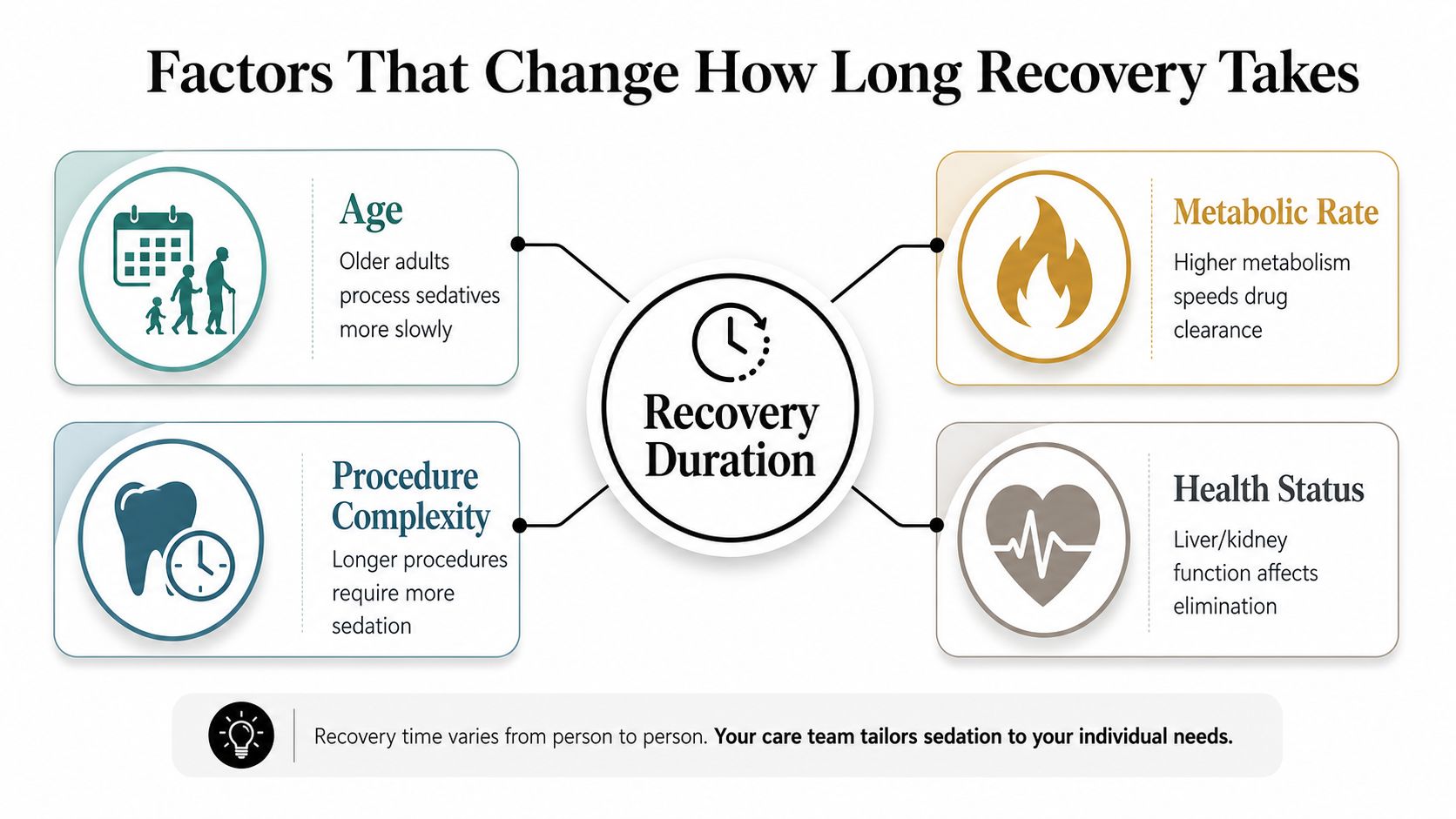
Published averages help with scheduling, but they can't predict exactly how you'll feel. Two patients receiving a similar sedation plan may recover at different rates because the body absorbs, distributes, and eliminates medication differently.
Personal factors matter
Age can influence clearance. Older adults may process sedatives more slowly because of changes in liver enzyme activity and lean body mass. Body weight and body-fat distribution can also affect where a medication travels and how long it remains active.
Your medical history deserves a careful review before treatment. Liver or kidney problems may delay elimination, while medications such as opioids, antidepressants, and antihistamines can add to drowsiness or impair coordination. Fasting and hydration also affect how you tolerate the appointment, particularly if you arrive depleted or nauseated.
The treatment plan changes the dose
A longer procedure may require more medication. Layering multiple sedatives can extend recovery compared with using one agent, and the total dose matters even when the dental procedure itself feels routine. Individual differences in drug-metabolizing enzymes, including CYP3A4, may also influence how quickly a patient clears certain medications.
One large study found that 2.8% of 30,003 patients experienced prolonged recovery, defined as 120 minutes or more, according to research on prolonged sedation recovery. The same research reported faster recovery with propofol than with midazolam in one pediatric emergency department trial, approximately 14.9 minutes versus 76.4 minutes. Those numbers aren't a personal forecast, but they demonstrate why a short average can hide a slower recovery pattern.
Tell the dentist about every prescription, over-the-counter medication, supplement, allergy, and medical condition. Accurate information lets the team choose safer dosing and give you a realistic aftercare plan.
What to Expect During the Recovery Period
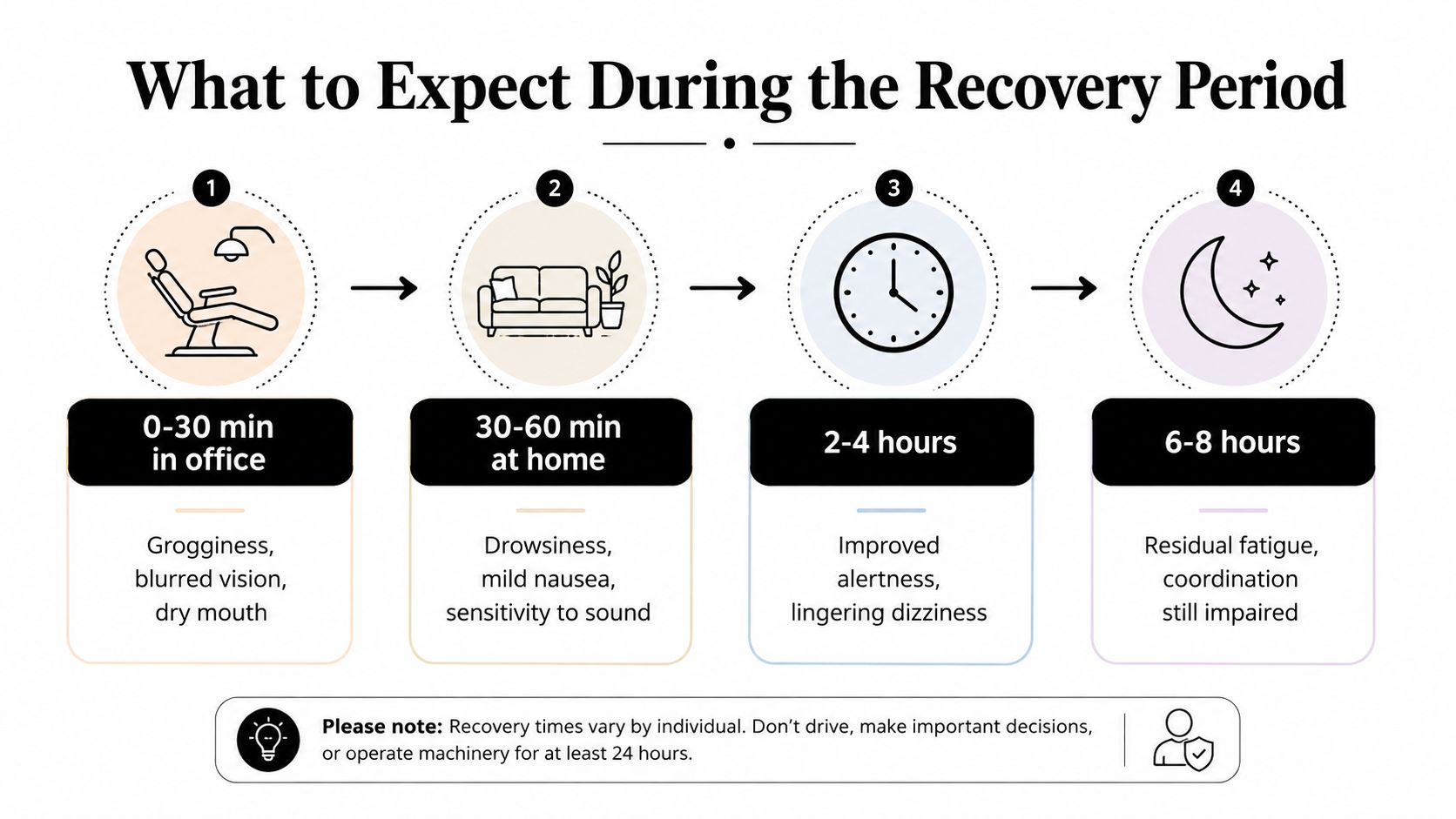
Recovery starts in the dental office. After treatment, you'll rest in a monitored area while the team checks your breathing, oxygen saturation, blood pressure, heart rate, alertness, and movement. The staff doesn't clear you just because you've opened your eyes. You need to show stable recovery according to the practice's discharge criteria.
You may feel sleepy, mildly dizzy, dry-mouthed, or slow to respond. Some patients notice mild nausea or sensitivity to sound. These effects tend to be most noticeable during the early hours, so arrange a calm ride home rather than trying to resume a normal schedule immediately.
Your escort has an active role
Your escort should take you from the recovery area to the car and remain available at home. You shouldn't drive yourself after moderate or deep sedation because reaction time, judgment, and coordination may still be affected. The Canadian Medical Association Driver's Guide advises people who undergo conscious sedation to avoid driving for 24 hours.
At home, rest in a comfortable position, sip fluids as allowed, and follow the instructions provided for your procedure. Contact the dental team if symptoms worsen, you have trouble breathing, you can't stay awake, or something feels significantly different from what you were told to expect.
A formal Cornwall NHS sedation discharge standard requires orientation, stable vital signs, addressed pain or discomfort, removal of the cannula when used, a responsible escort, and written and verbal aftercare instructions. Those criteria reflect the safety checks a thoughtful recovery process should include.
Practical Aftercare Tips for a Smooth Recovery
Your first day should be deliberately simple. Follow the instructions from your dentist first, especially when sedation is combined with tooth extraction, implant placement, periodontal treatment, or another surgical service.
- Start gently with fluids: Begin with clear liquids if your dental team permits them, then advance to soft foods. This approach is easier on a queasy stomach and helps you avoid chewing while coordination is still returning.
- Choose temperature carefully: Avoid hot foods and drinks until your dentist says they're safe, particularly after procedures that leave the mouth numb. Hot liquids can burn tissue you can't fully feel.
- Rest for the remainder of the day: Skip exercise, heavy lifting, and strenuous household tasks. Your body needs time to regain stable balance and concentration.
- Take medication only as directed: Ask when to restart regular prescriptions and which over-the-counter pain option is appropriate. Don't add alcohol, opioids, sleep aids, or antihistamines unless your clinician has specifically approved the combination.
- Resume oral hygiene gently: Follow procedure-specific instructions about brushing and rinsing. After surgical care, vigorous rinsing or brushing too soon can disturb the treatment site, so use the timing your dental team provides.
Keep the room cool and lighting soft if you're sensitive to sound or light. Have an adult nearby, keep your phone accessible, and avoid machinery, legal documents, major financial decisions, and other activities requiring sharp judgment for at least 24 hours, consistent with the guidance described in patient information on sedation safety.
The following video provides another practical reminder about planning for safe recovery:
Feeling Awake Versus Being Fully Recovered
A patient can be alert, conversational, and convinced the medication has worn off while still having slower judgment or coordination. That's the distinction many people miss. Feeling awake is a subjective experience. Full recovery is a safety assessment.
Residual sedative effects may affect memory, reaction time, balance, and decision-making after the obvious sleepiness has faded. That's why many clinical instructions use a 24-hour safety window for driving, alcohol, heavy equipment, legal documents, and other consequential tasks, even when a patient feels normal. The concern isn't whether you can answer a question. It's whether you can respond safely to an unexpected situation.
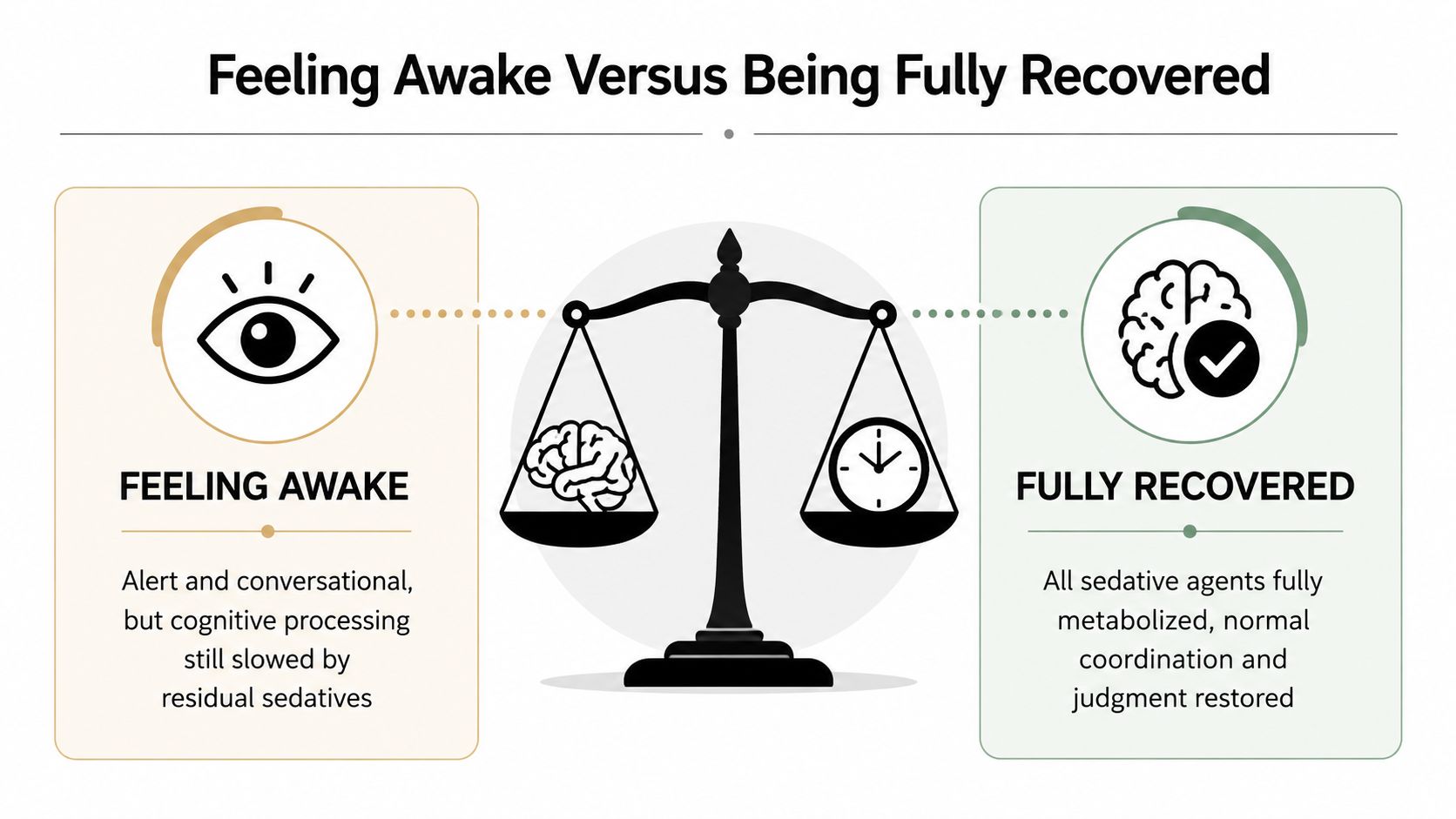
Feeling fine isn't clearance to drive. Keep your escort involved, follow the written instructions, and postpone anything that depends on quick judgment.
The traditional restriction can feel broader than the actual time spent in the recovery chair, particularly with newer sedative protocols. Still, the safest patient-facing advice separates discharge from complete cognitive recovery. Don't dismiss your escort early, and don't test your alertness by driving home or returning to demanding work.
How Winn Smiles Supports Your Comfort and Recovery
A comfortable sedation experience begins before medication is given. At Winn Smiles, the dental team reviews your medical history, current medications, treatment needs, and personal concerns before discussing a sedation plan. That conversation helps match the approach to services such as restorative dentistry, tooth extraction, dental implants, cosmetic dentistry, or emergency dental care.
During treatment and recovery, trained team members monitor you and use discharge criteria rather than relying only on elapsed time. A dedicated recovery area gives you space to become alert and stable before leaving, while clear instructions help your escort understand what to watch for at home.
Patients in Cleveland and Chattanooga can also discuss sedation as part of broader care, including new patient exams, cleanings and exams, dental X-rays, teeth whitening, same-day crowns, root canals, and implant consultations. The practice's comfort-focused setting and communication process are designed to make the experience easier to understand from consultation through aftercare.
Questions can arise after you arrive home, especially during the first 24 hours. Ask the team what is expected, which symptoms require a call, when to resume medications, and when normal activities are appropriate. Choosing a dental office that treats recovery as part of the appointment helps reduce uncertainty and supports safer planning.
Schedule a sedation consultation with Winn Smiles in Cleveland or Chattanooga to discuss your upcoming treatment, transportation needs, and realistic sedation recovery time. The team can explain your options and tailor the plan to your comfort, medical history, and safety.
Winn Smiles offers personalized sedation planning, monitored recovery, and clear aftercare guidance for patients receiving dental care in Cleveland and Chattanooga. Visit Winn Smiles to schedule a consultation and discuss how to plan your appointment and recovery with confidence.