A tooth that starts throbbing after dinner can make the rest of the night feel very long. By 2 a.m., even a quiet room in Chattanooga or Cleveland, TN, can seem to magnify every pulse, especially when biting, lying down, or drinking anything cold makes the pain sharper. If you're searching for root canal pain relief, you need practical steps for tonight and a clear answer about when temporary comfort isn't enough.
Root canal treatment is designed to remove the inflamed or infected pulp causing the problem, not merely cover up the symptoms. A 2014 National Dental PBRN study found that patients' mean worst pain fell from 5.3 before treatment to 3.0 afterward, while the share reporting severe pain fell from 50% to 19% (National Dental PBRN study). Winn Smiles helps patients in Chattanooga, Cleveland, and nearby communities understand what's happening, manage discomfort safely, and choose appropriate care.
When the Ache Hits and You Need Relief Tonight
At 2 a.m., the first challenge isn't deciding between a root canal and an extraction. It's finding a position where the tooth stops pounding long enough to rest. You may have already tried switching sides, rinsing your mouth, or avoiding the glass of water beside the bed because cold triggers another jolt.
That nighttime isolation can make dental pain feel more frightening than it is. The tooth may be inflamed, the surrounding ligament may be irritated, and lying flat can make the throbbing more noticeable. None of that means you should endure the pain until it becomes unbearable.
As a Chattanooga-area dentist, I've seen thousands of endodontic emergencies arrive after patients spent a night trying to manage a problem that needed diagnosis. Some needed root canal treatment. Others had a cracked tooth, a failing restoration, or an infection that required a different plan. Pain relief starts with identifying the source, because the same symptom can come from very different conditions.
What you can do while waiting for morning
Start with measures that reduce inflammation or limit pressure on the area. Use a cold compress outside the cheek, keep your head raised, and avoid chewing on the painful side. If you can safely take over-the-counter medication, follow the directions below rather than taking random products at close intervals.
A warm saltwater rinse can gently clean the area, but it won't remove infected pulp. You can also review Winn Smiles' guide to a home remedy for toothache while arranging professional care.
Practical rule: Relief that lets you sleep is useful. Relief that convinces you the tooth has healed can delay the treatment that actually resolves the problem.
The safe home toolkit is straightforward. It can buy time through the night, but persistent or escalating pain still deserves a dental appointment in Chattanooga or Cleveland.
Safe Home Remedies and OTC Options That Actually Help
The most useful home plan combines an anti-inflammatory medicine, a second pain-relief option when appropriate, cooling, positioning, and gentle eating. Medication isn't safe for everyone, so check the label and ask a dentist or physician before using it if you have stomach, kidney, liver, heart, bleeding, pregnancy, or medication-related concerns.
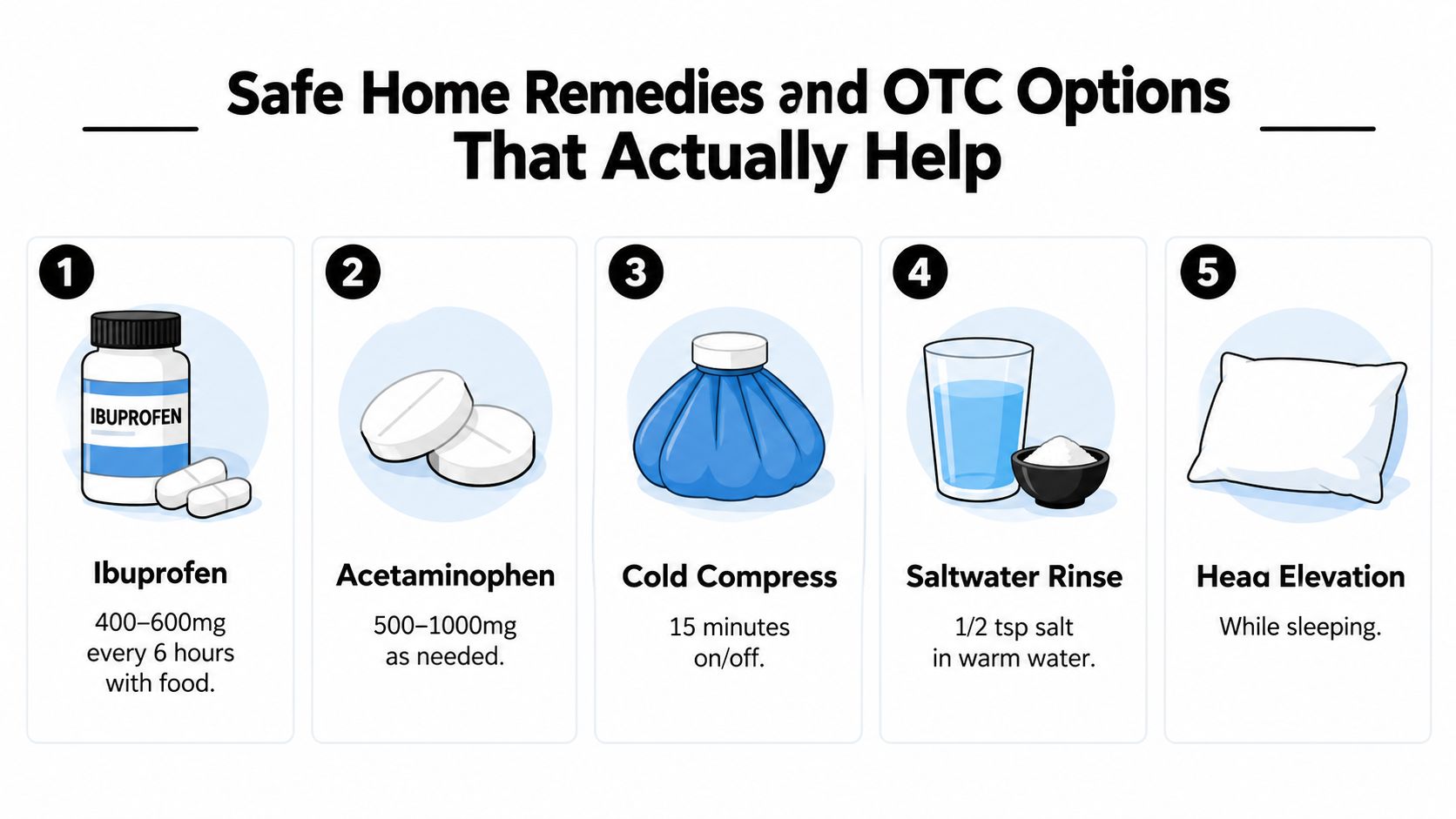
A practical overnight toolkit
- Ibuprofen: If it's medically appropriate for you, use 400 to 600 mg every 6 hours with food. Ibuprofen is an NSAID, so it helps address inflammation as well as pain, but it can irritate the stomach and may be unsuitable with certain medical conditions or medications.
- Acetaminophen: You may pair 500 to 1,000 mg every 6 hours, staying below 3,000 mg daily. Acetaminophen is often gentler on the stomach, but it doesn't reduce inflammation in the same way. Avoid exceeding the daily limit or combining products that also contain acetaminophen.
- Cold compress: Place a cold pack outside the cheek for 15 minutes, then leave it off for 15 minutes before repeating. Use a cloth barrier to protect your skin.
- Head elevation: Sleep with an extra pillow or raise your upper body. Keeping your head higher can make pressure feel less intense than lying completely flat.
- Soft foods: Choose room-temperature yogurt, scrambled eggs, mashed potatoes, or similar foods that don't require forceful chewing. Keep food away from the painful side.
A saltwater rinse after meals can soothe irritated tissues. Dissolve one-half teaspoon of salt in warm water, swish gently, and spit it out. Don't scrub an already tender gum or repeatedly rinse with very hot water.
Some people keep topical products available as part of our wellness pain relief picks. Clove oil may provide brief surface relief, but use it only as a short-term topical and never treat it as a substitute for dental care. Undiluted oil can irritate or burn gum tissue.
The evidence favors NSAIDs for endodontic pain when they aren't contraindicated. A systematic review of 27 randomized, placebo-controlled trials identified NSAIDs as the drugs of choice for endodontic pain relief, with combinations such as NSAIDs plus acetaminophen considered when NSAIDs alone aren't enough (systematic review of endodontic pain medicines). These steps manage symptoms. They don't disinfect a canal, repair a crack, or cure an abscess.
Warning Signs That Mean Call a Dentist Right Away
Not every sore tooth requires a hospital emergency department, but certain symptoms should move you from home care to a same-day dental call. Facial swelling, spreading infection, and problems with breathing or swallowing are not routine soreness.
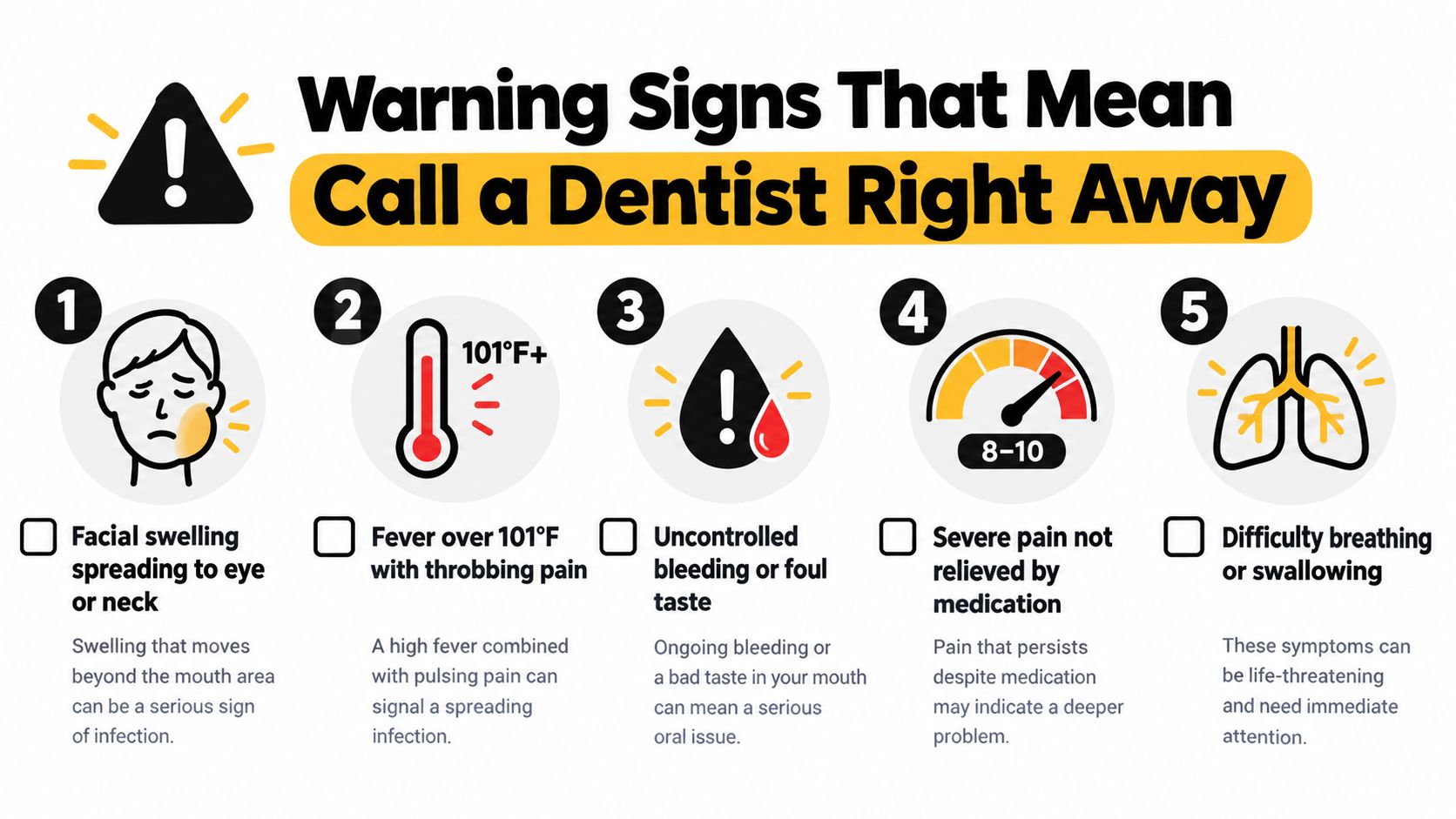
Contact Winn Smiles promptly if you notice:
- Spreading facial swelling: Swelling moving toward the eye or neck can signal an infection that needs urgent assessment.
- Trouble swallowing or opening your mouth: These symptoms can indicate that inflammation is affecting more than the tooth itself.
- Fever above 101°F: Fever combined with dental pain or swelling deserves prompt attention.
- Pus or a foul taste: Drainage or a persistent bad taste can point to an abscess.
- Severe, uncontrolled pain: Pain that wakes you from sleep despite appropriate OTC medication isn't a problem to keep escalating at home.
- Prolonged numbness: Numbness lasting more than a few hours after a procedure should be reported to the dental office.
Mild tenderness when biting, jaw stiffness, or soreness during the first couple of days can occur after treatment. Those symptoms should trend toward improvement rather than steadily worsen. Persistent pain after root canal therapy is possible, but long-lasting pain is uncommon. A PubMed Central review reports that about 5.3% of patients experience pain lasting six months or longer, while another summary places lingering pain at 4% to 6% of treated teeth (review of persistent pain after root canal therapy).
Chattanooga and Cleveland patients can call a dental office directly because an emergency room generally can't perform root canal treatment. Hospital staff may evaluate serious infection or provide urgent medical support, but dental treatment is needed to remove the source.
Call the dentist the same day when pain is severe despite medication, swelling is spreading, fever is present, or swallowing and breathing are affected.
What Happens During a Root Canal at Winn Smiles
Fear often grows when patients don't know what will happen next. Root canal treatment follows a controlled sequence, and comfort checks happen before the procedure begins.
The visit starts with local anesthesia, commonly articaine or lidocaine. The dentist confirms that the tooth is fully numb before placing instruments in the treatment area. You may feel the injection, pressure, or vibration, but sharp pain is a signal to pause and provide more anesthesia.
The treatment sequence
- Access: A small opening is made through the tooth to reach the pulp chamber.
- Isolation: A rubber dam keeps the tooth clean and dry while protecting the rest of your mouth.
- Cleaning and shaping: Rotary files remove infected pulp and shape the canals so they can be disinfected and sealed.
- Irrigation: Antimicrobial solutions, typically sodium hypochlorite and EDTA, flush bacteria from curved spaces that you can't see.
- Filling and protection: The cleaned canals are filled and sealed with gutta-percha, followed by a restoration such as a crown when the tooth needs protection.
Three-dimensional imaging or apex locators can help determine canal length and anatomy, reducing guesswork during treatment. Most single-rooted cases take 45 to 90 minutes, while molars average 90 to 120 minutes and may sometimes require two visits. These treatment-time figures are clinical planning estimates, and the actual appointment depends on the tooth, infection, anatomy, and restoration.
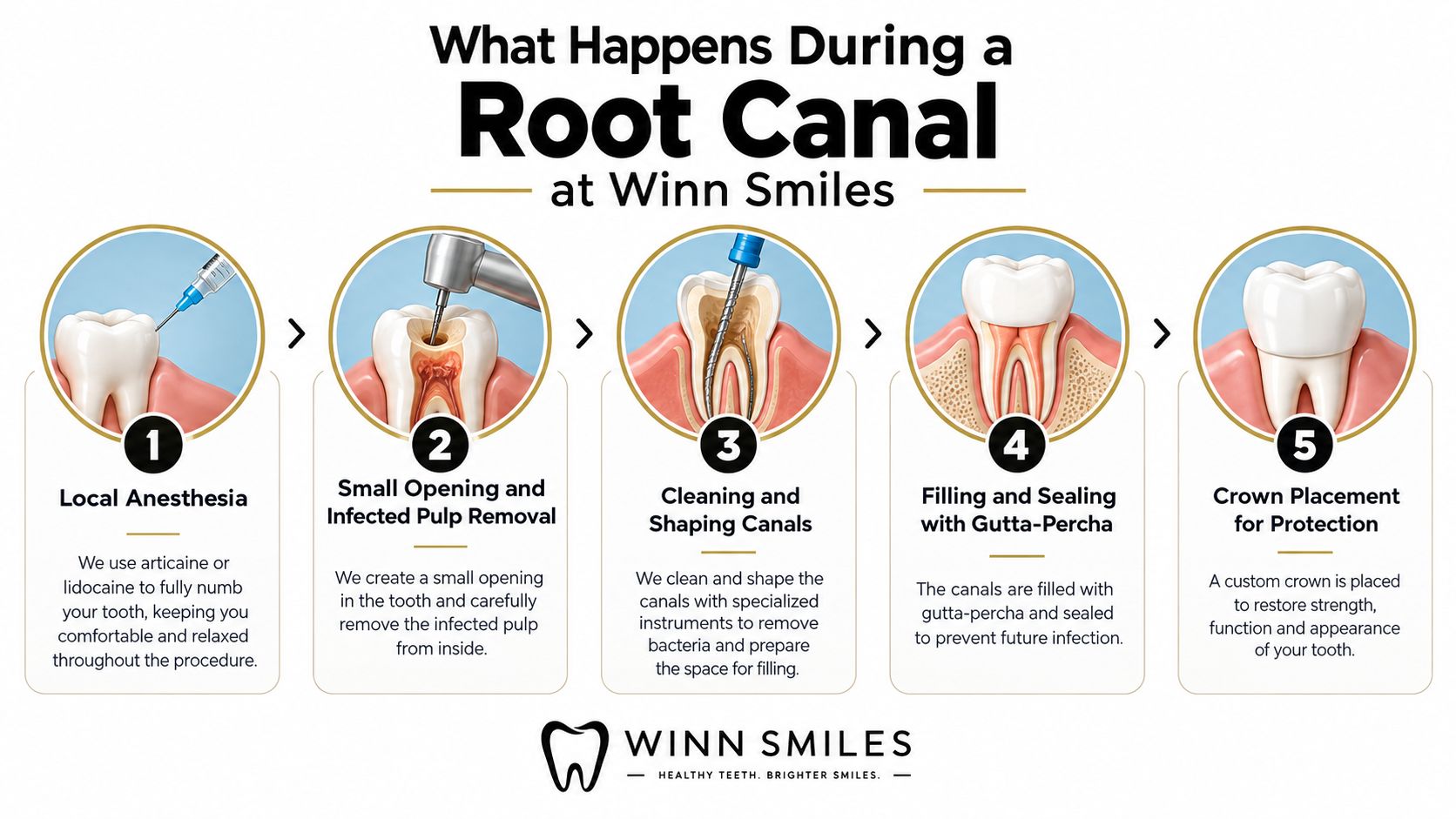
Modern root canal therapy is intended to relieve the pressure of pulpitis, not intensify it. Most patients feel pressure and vibration rather than pain, and the infected pulp is removed so the tooth can begin settling.
The First Week After Treatment and How Pain Really Fades
A tooth that feels sore the evening after treatment is often following a normal recovery pattern. The first 24 to 48 hours commonly bring the most tenderness, discomfort when biting, or jaw stiffness. Symptoms generally ease over the next two to five days, and many patients have little or no continuing pain within one to two weeks (post-root-canal recovery overview). The direction of change matters more than one uncomfortable moment.
The National Dental PBRN study found that treatment was followed by fewer days of pain, from 3.6 to 2.1, while pain-interference days changed from 0.5 to 0.4 (National Dental PBRN patient outcomes). Those findings explain why mild biting tenderness does not automatically signal a failed root canal. A tooth can remain sensitive while settling normally.
Early relief depends partly on what happened during treatment. A 2022 systematic review and meta-analysis reported lower postoperative pain with ultrasonic irrigation than with conventional irrigation at 6, 24, and 48 hours. The advantage was no longer significant at 72 hours or 7 days (ultrasonic irrigation review). In practical terms, ultrasonic irrigation may improve the first couple of days, but it does not guarantee a pain-free first week.
For same-day and first-week care, follow the instructions provided for your tooth, avoid chewing hard foods on it until the restoration is ready, and use recommended pain medicine as directed. A gradual decrease is reassuring. Severe pain that does not respond to medication, pain that worsens after initially improving, new or increasing swelling, fever, or trouble opening the mouth warrants a call to the dental office.
Rare lingering discomfort needs a different approach from routine soreness. The dentist may need to check the bite, restoration, remaining infection, or another tooth causing the symptoms. Do not keep increasing medication while waiting for pain to resolve without an assessment.
Winn Smiles' root canal recovery guide provides practical aftercare details. Recovery is usually measured by a steady downward trend, not by perfect comfort immediately after treatment.
Home Remedies Worth Skipping and What the Evidence Supports
Cleveland and Chattanooga patients regularly encounter confident home-remedy advice in social media groups. Some suggestions are harmless but ineffective. Others can injure the gum or make swelling worse.
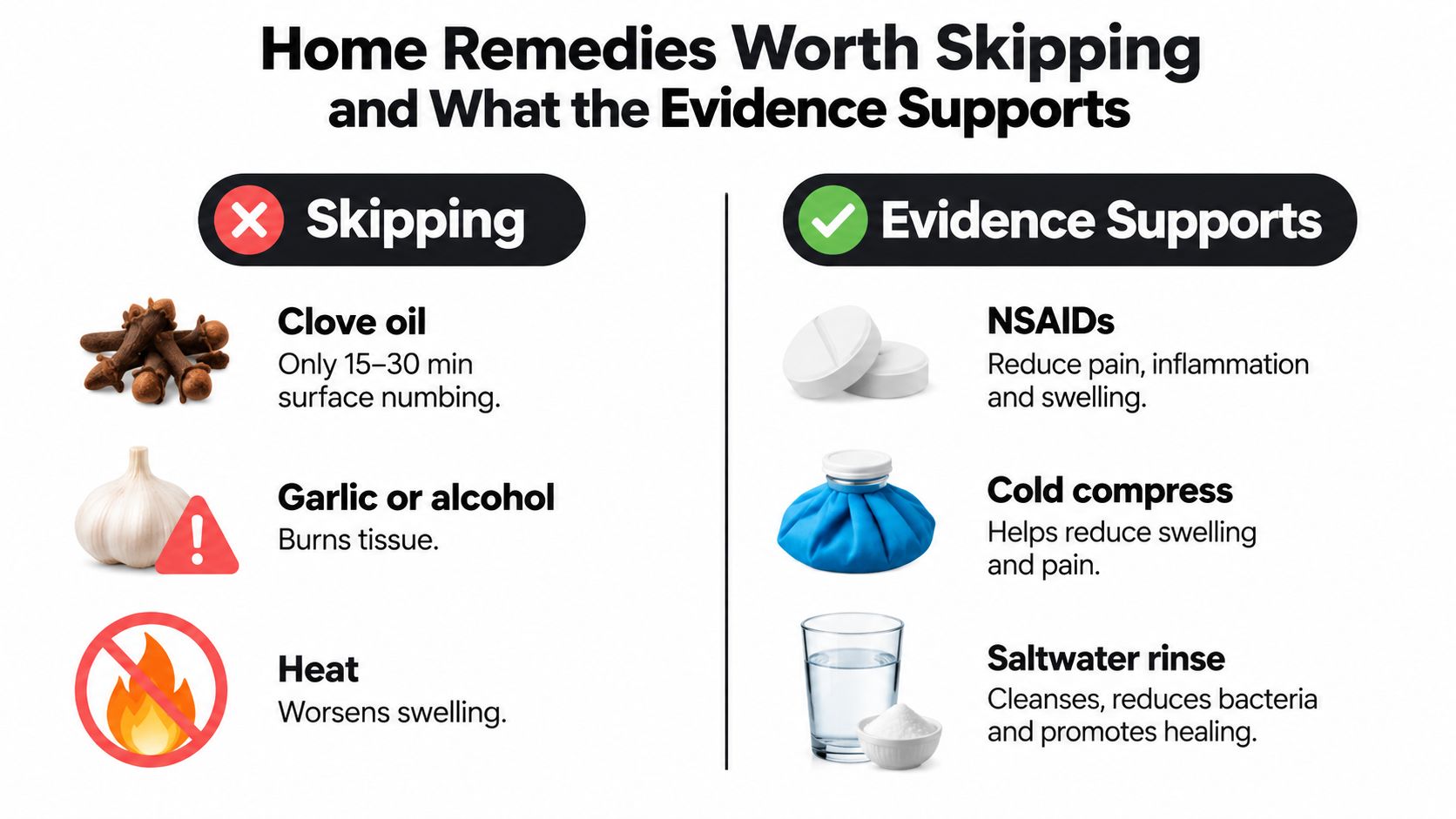
Clove oil illustrates the difference. Eugenol may create brief surface numbing, but it can't reach an infected canal. Undiluted clove oil can burn gingival tissue, so it shouldn't be treated as meaningful pulpitis therapy.
Common advice that creates problems
- Aspirin on the gum: Placing aspirin directly against the tooth or gum can cause a chemical burn. It doesn't deliver reliable pain relief to the infected pulp.
- Heat on a swollen tooth: Heat increases blood flow and can intensify swelling around an abscess. Cold is the more appropriate choice during the early period.
- Prolonged oil pulling: Oil pulling may be part of someone's routine, but it doesn't have endodontic evidence showing that it cleans an infected root canal.
- Garlic or alcohol: These substances can irritate or burn soft tissue without treating the source of dental pain.
What earns a place in the plan
The better-supported choices are practical rather than dramatic. When medically appropriate, take ibuprofen on a consistent schedule instead of waiting until pain peaks. Use a cold compress for 15 minutes on and 15 minutes off, sleep with your head raised, rinse gently with saltwater, and choose soft foods for the early recovery period.
Evidence also argues against treating every intervention as equally effective. A 2025 systematic review found low- to moderate-quality support for only eight of eleven identified pain-reduction factors, including NSAIDs with acetaminophen, corticosteroids, ultrasonic irrigation, lower sodium hypochlorite concentrations, intracanal cryotherapy, and some medicaments (systematic review of root canal pain-reduction factors). Occlusal reduction, often recommended online, didn't clearly reduce pain during the first two days and may help mainly in selected symptomatic cases.
For a busy Tennessee schedule, a simple medication and comfort routine is easier to follow than an elaborate collection of viral remedies. It still serves one purpose, keeping you comfortable until a dentist can diagnose and treat the cause.
Getting Lasting Relief With a Trusted Local Dentist
Temporary relief can get you through a workday or weekend, but it doesn't resolve pulpal necrosis, a cracked tooth, or a failing restoration. The lasting solution comes from matching the diagnosis to the treatment, whether that means root canal therapy, retreatment, a crown, or tooth extraction when the tooth can't be predictably saved.
At a first visit, Winn Smiles can evaluate the painful tooth with an examination, a periapical radiograph, sensitivity testing, and a direct conversation about your options. The goal isn't to push one procedure. It's to determine whether preserving the natural tooth makes sense and what restoration will protect it afterward.
A root canal can relieve pain while preserving a tooth. If extraction is necessary, restorative dentistry may later include a bridge or dental implants near me for tooth replacement. Patients also may ask about same-day crowns, general dental care, cleaning and exams, cosmetic dentistry, teeth whitening, or a cosmetic dentist near me when urgent treatment is complete.
A 2026 study of 1,059 patients found that mean worst pain declined from 5.3 before treatment to 2.6 after treatment, but 14% still reported severe pain at one week (2026 study of one-week post-treatment pain). That finding reinforces a point I make often: the first week and the longer recovery period require attention to the direction and character of pain, not just whether medication provides temporary relief.
Winn Smiles offers same-day emergency appointments in Cleveland and Chattanooga for concerns such as throbbing pain, facial swelling, or broken teeth, with clear cost discussions before care. If you're searching for an emergency dentist, a dentist near me, or a dentist in Chattanooga, TN, don't make surviving the weekend the finish line. Arrange an evaluation so the source can be treated.
Winn Smiles provides root canal treatment, emergency dental evaluations, restorative care, and tooth replacement options for patients in Chattanooga and Cleveland, TN. Visit Winn Smiles to request an appointment and take the next step toward lasting root canal pain relief.