You've had the root canal. The pressure is gone, the numbness is fading, and now the question is simple. What should you expect over the next few days?
Most patients in Chattanooga and Cleveland feel two things at once after treatment: relief that the infected tooth has been addressed, and uncertainty about what recovery should look like. That's normal. A smooth root canal recovery usually comes down to a few practical habits, a little observation, and knowing when something is healing as expected versus when it needs a quick call to the office.
Navigating Recovery with Your Trusted Chattanooga Dentist
A root canal has an unfair reputation. In day-to-day practice, what patients usually describe afterward is soreness, tenderness when biting, or a “bruised” feeling around the tooth, not the horror stories they feared beforehand. Modern treatment is reliable, and that matters when you're trying to feel confident on day one. Modern root canal procedures have a success rate consistently between 74.7% and 85.2%, with a 95% success rate cited by major health organizations, confirming that most patients experience positive outcomes without significant long-term complications, as noted in this review of root canal myths and success rates.
That high success rate doesn't mean recovery feels identical for everyone. A front tooth may settle down quickly. A molar that had significant inflammation before treatment may stay tender a bit longer. Your bite, the amount of infection present before care, and whether you have a temporary restoration all affect how the next few days feel.
What most patients are actually feeling
You might notice pressure when chewing. You may feel protective of that side of your mouth. Some patients also feel jaw fatigue from having their mouth open during treatment. None of that automatically means something is wrong.
Practical rule: If discomfort is gradually improving, that usually points toward normal healing.
The key is to stay ahead of irritation, protect the treated tooth, and follow the aftercare instructions you were given. If you're preparing for treatment and want a clear overview before your appointment, this guide on how to prepare for a root canal is a helpful place to start.
Why local follow-up matters
If you're searching for a dentist near me, an emergency dentist, or a dentist in Chattanooga, TN, recovery support matters just as much as the procedure itself. Patients often assume the appointment is the hard part. In reality, good post-op guidance is what keeps a manageable situation from turning into a painful one.
That same principle applies across dental care. Whether you need tooth extraction, restorative dentistry, dental implants near me, or a cosmetic dentist near me, clear instructions and responsive care make treatment easier and outcomes more predictable.
Your First 48 Hours After a Root Canal
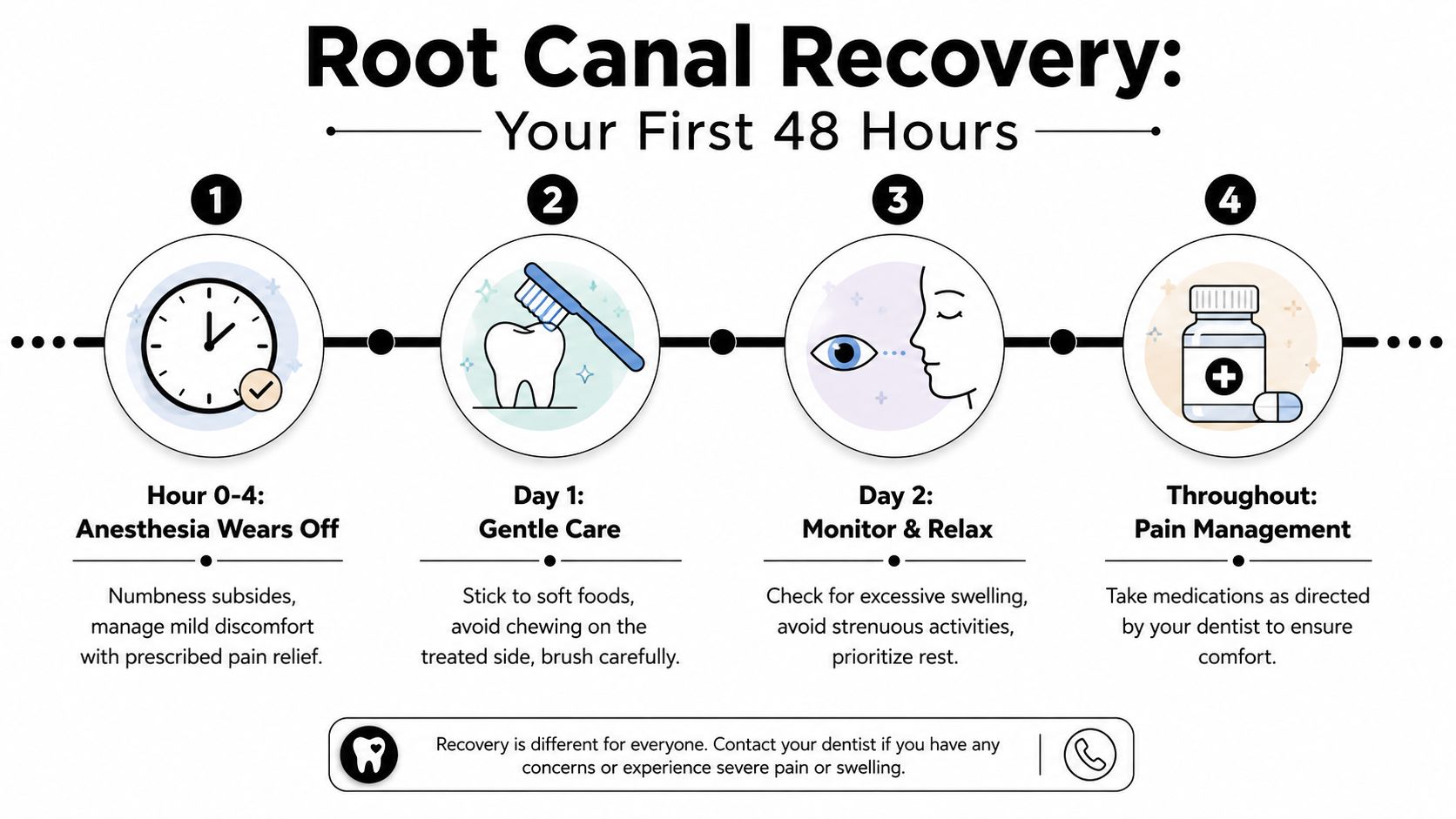
The first two days are about protecting the tooth and keeping inflammation calm. Recovery time after a root canal typically ranges from a few days to approximately one to two weeks for most patients, with mild discomfort or sensitivity common in the first two to three days before gradually subsiding, according to this overview of how long root canal recovery usually takes.
When you leave the office
If local anesthetic is still active, be careful. Patients sometimes bite the inside of the cheek or tongue without realizing it. Wait to eat until you can feel your lip, cheek, and tongue normally again, especially if you're hungry and tempted to grab something on the way home.
If your dentist prescribed medication, take it exactly as directed. If you were told an over-the-counter option is appropriate, use it according to the label and your dentist's instructions. Don't wait until discomfort is intense if your care plan advised early pain control.
What to do on day one
Keep food simple and soft. Soup that isn't too hot, yogurt, eggs, oatmeal, smoothies, or mashed foods are easier on a tooth that has just been treated. Avoid chewing on that side.
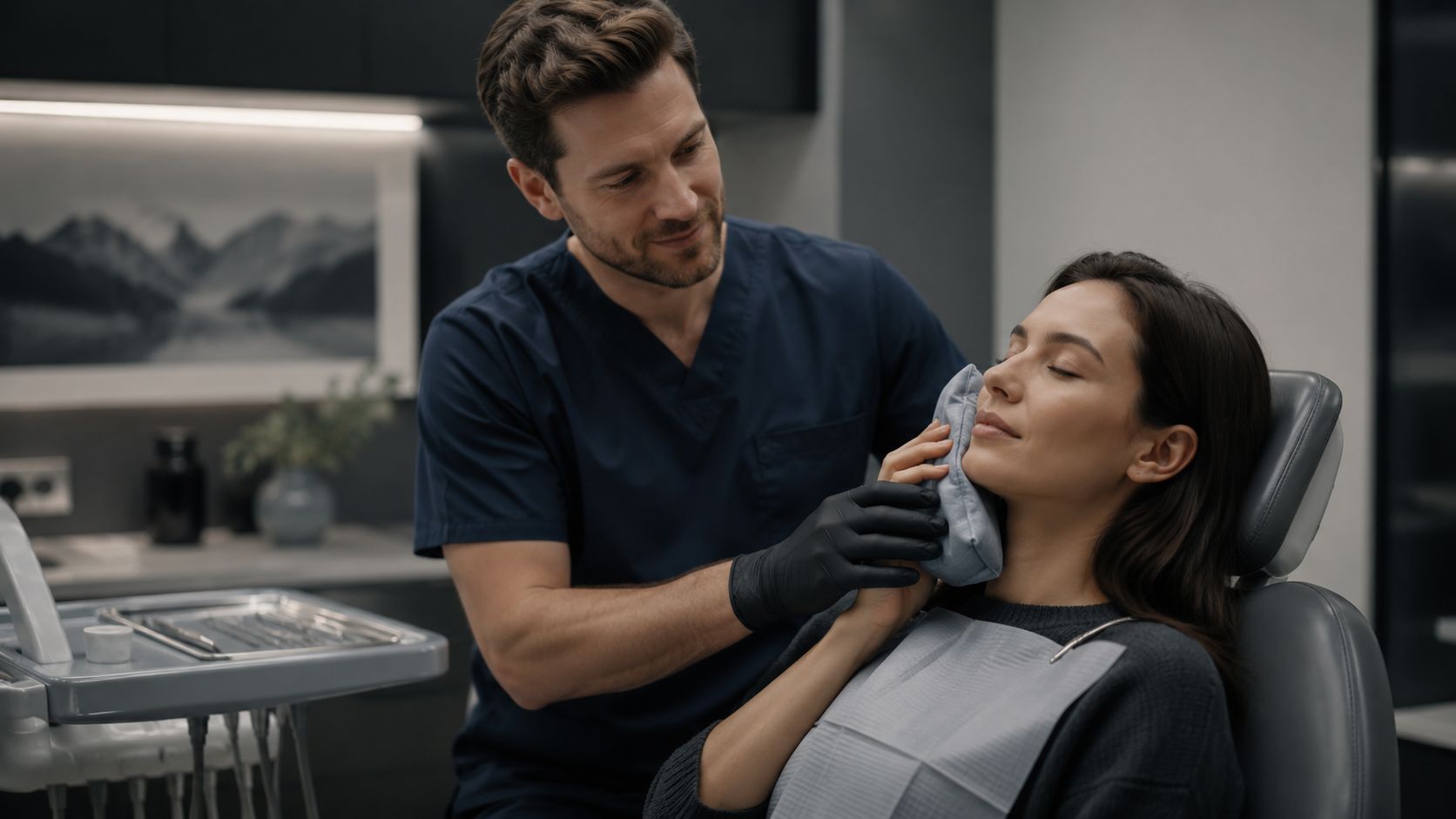
A cold compress on the outside of the face can help if the area feels irritated or slightly puffy. Use short intervals rather than leaving ice on continuously. Most patients don't need to stay in bed, but they do better when they take it easy.
- Rest your jaw: Keep talking, chewing, and clenching to a minimum if the area feels sore.
- Skip hard foods: Chips, nuts, crusty bread, and chewy candy can aggravate the tooth or damage a temporary filling.
- Stay hydrated: A dry mouth makes everything feel more irritated.
A root canal-treated tooth often feels better when you stop testing it. Don't keep tapping it, biting on it, or checking it every hour.
Day two expectations
By the second day, many patients notice the numbness is long gone and the tenderness is more specific. It may hurt a little when you bite down. That doesn't mean the treatment failed. It usually means the ligament around the tooth is still calming down.
Keep physical activity moderate if exertion seems to increase throbbing. If you go back to work, that's fine for many people, but listen to your body. The goal in these first 48 hours isn't to prove toughness. It's to make healing uneventful.
Gentle Diet and Oral Hygiene for Safe Healing
Once the immediate soreness settles, your daily habits matter more than anything else. Most setbacks during root canal recovery don't come from brushing too much. They come from chewing something hard too soon, ignoring the temporary restoration, or letting the area stay unclean because you're afraid to touch it.
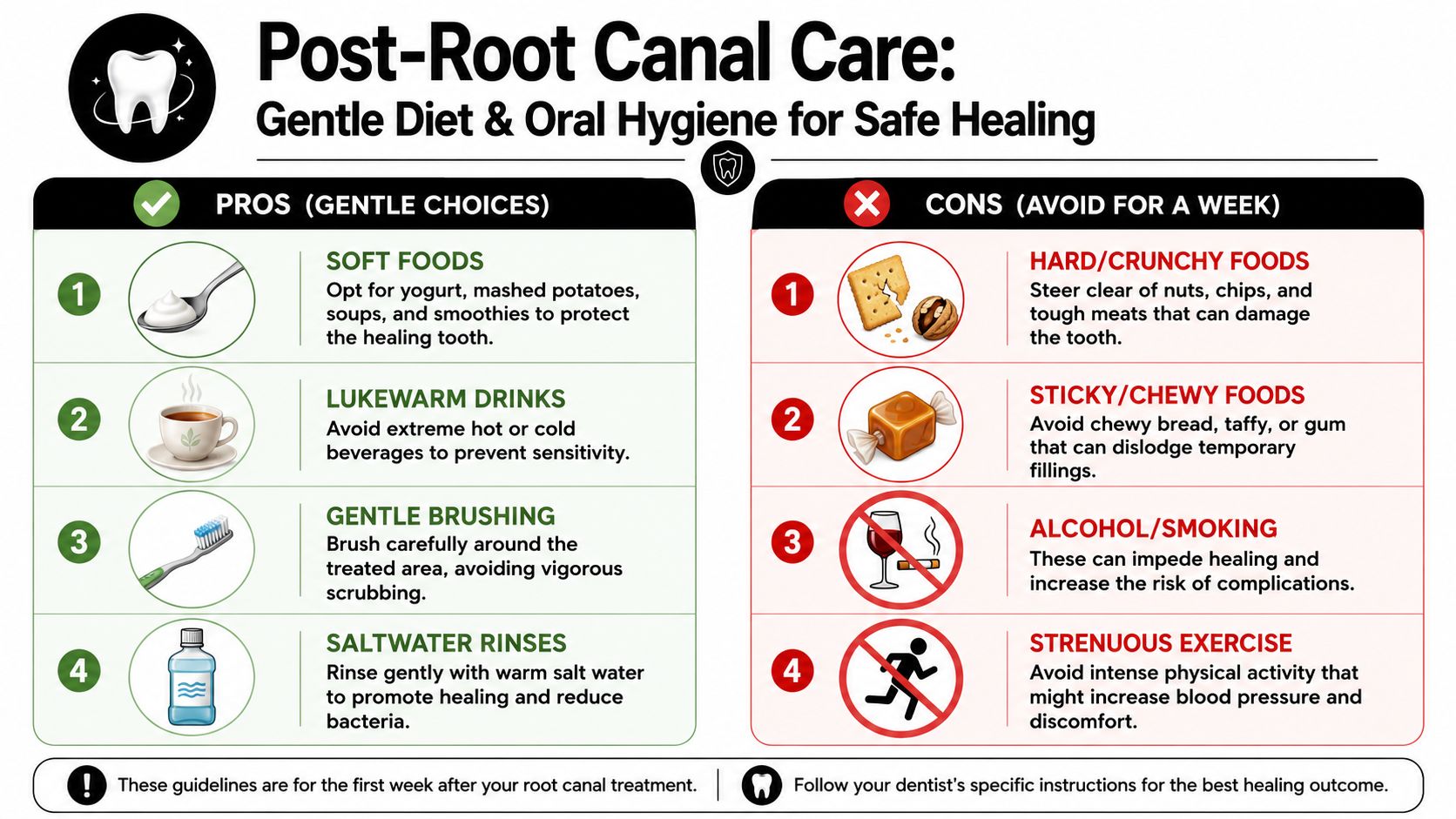
Eat this for the first week
Think soft, bland, and easy to chew. You want foods that nourish you without asking that tooth to do much work.
| Good choices | Why they help |
|---|---|
| Yogurt, scrambled eggs, oatmeal | Soft texture, low chewing force |
| Mashed potatoes, rice, pasta | Filling and easy on a sore bite |
| Smooth soups, soft cooked vegetables | Comfortable if served lukewarm |
| Smoothies with a spoon | Convenient when chewing feels annoying |
Hold off on these
Certain foods cause problems fast, especially if you have a temporary filling or temporary crown.
- Hard foods: Nuts, popcorn, ice, chips, and hard crackers can crack or stress the tooth.
- Sticky foods: Caramel, taffy, gum, and chewy granola bars can pull at a temporary restoration.
- Very hot or very cold drinks: Extreme temperatures can trigger sensitivity in the early phase.
- Smoking and alcohol: Both can interfere with healing and make the mouth feel more inflamed.
How to brush without irritating the area
Brush gently, but don't skip it. Use a soft-bristled toothbrush and take smaller strokes around the treated tooth. The goal is plaque control, not aggressive scrubbing.
Floss carefully. If the area has a temporary restoration and feels vulnerable, slide the floss through with control and avoid snapping it down into the gums. If your dentist gave you a specific instruction for that tooth, follow that first.
Warm salt water rinses are simple but useful. They help keep the area clean and make it easier to notice changes in the gums.
A good recovery routine is often part of a bigger oral health routine. If you're trying to achieve a healthy smile naturally, the best place to start is with steady brushing, gentle cleaning around dental work, and products that don't leave your mouth feeling irritated.
One habit that protects your temporary
Look at the tooth once a day in a mirror. You don't need to obsess over it. Just check whether the temporary filling or crown still looks intact and whether the gum nearby looks calm. A small visual check can catch problems before they become painful.
What to Watch For Normal Healing vs Warning Signs
A lot of patient anxiety comes from not knowing what “normal” means. Some tenderness is expected. A worsening problem follows a different pattern.
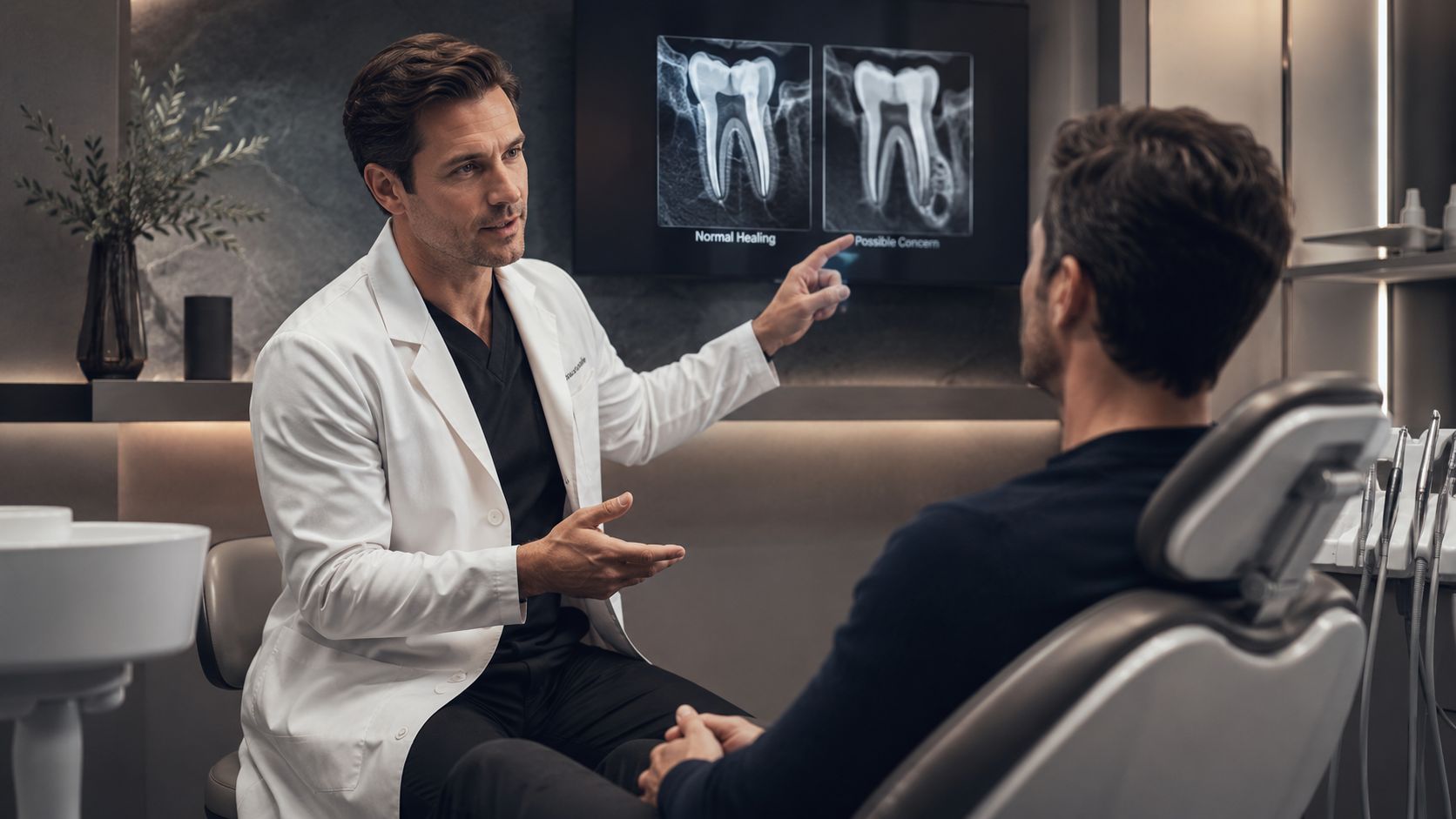
A critical gap in recovery is managing silent complications. Nearly 18% of root canal failures occur between days 4–10 due to unrecognized issues like micro-fractures in temporary fillings or bacterial re-entry, and this review notes that daily visual checks and warm salt water rinses are proactive diagnostic tools in root canal recovery monitoring.
What usually counts as normal
A healing tooth often feels tender to pressure. You may avoid chewing on that side for a few days without thinking about it. The gum can be mildly sore, and the area can feel “different” before it feels normal again.
Normal healing usually moves in one direction. Slowly better.
Warning signs patients miss
Some of the most important signs aren't dramatic. They're subtle.
- A pimple-like bump on the gum: Even if it doesn't hurt much, it can signal drainage from an infection.
- Swelling that increases instead of decreases: This matters even without fever.
- A cracked or loose temporary filling: If bacteria re-enter the tooth, the situation can change quickly.
- A bite that suddenly feels off: Sometimes patients protect the area for too long when a simple adjustment is what's needed.
- A bad taste or discharge: That deserves attention.
If pain is stable or improving, keep following instructions. If symptoms are intensifying or changing character, call your dental office.
This short video helps patients understand common recovery concerns and when to check in with the office.
A simple daily check
Stand in front of a mirror with good lighting. Look at the gum beside the treated tooth and the surface of the temporary. You're not trying to diagnose yourself. You're just asking three questions:
- Does the restoration still look complete?
- Is the gum becoming more swollen or developing a bump?
- Does the area seem better than yesterday, or worse?
If the answer trends worse, don't wait and hope it resolves on its own. That's the right time to call your dentist in Chattanooga or Cleveland, especially if you were already searching for an emergency dentist or had the procedure done because of significant pain or infection.
Securing Your Smile with Long-Term Follow-Up Care
The root canal removes infection from inside the tooth. It does not make the tooth fracture-proof afterward. That's why follow-up care matters so much.
The long-term numbers make the point clearly. The median survival time for a root canal-treated tooth is 11.1 years, but it rises to 20 years when the tooth receives a crown immediately after the procedure. Teeth with no restorative work after a root canal survive only about 6.5 years, according to this review of root canal treatment success and tooth preservation. If you want a deeper look at that outcome, this article on the root canal success rate is worth reading.
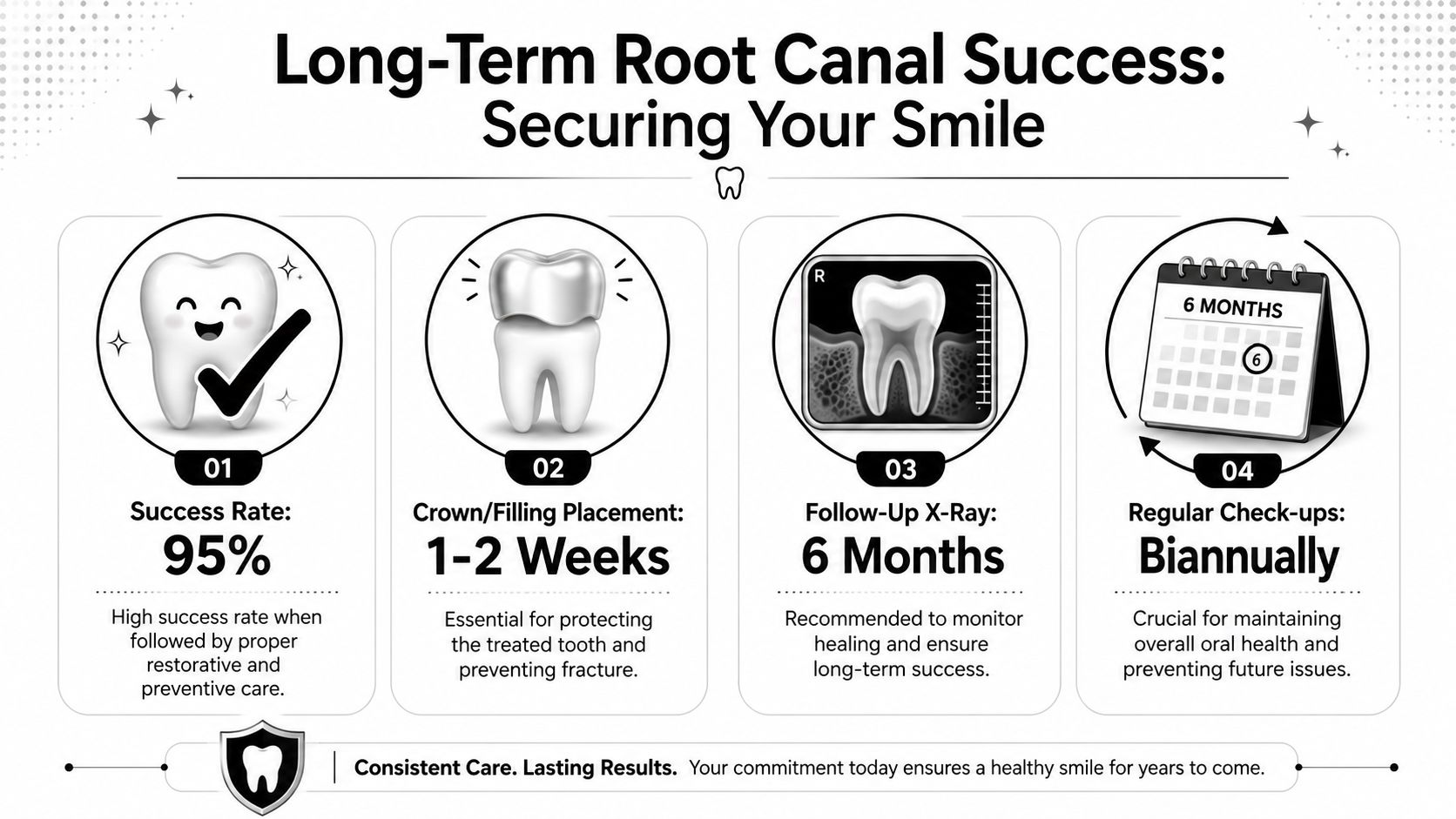
Why the final restoration matters
A root canal-treated tooth is often weaker because of prior decay, old fillings, or loss of tooth structure. Back teeth are especially vulnerable because they take heavy chewing force every day. Leaving that tooth with only a temporary restoration for too long creates unnecessary risk.
A well-fitted permanent restoration helps by:
- Protecting the tooth from fracture: This is the big one.
- Sealing out bacteria: A solid final restoration supports the work done inside the root.
- Restoring function: You can chew with more confidence once the tooth is fully protected.
What the follow-up visit should accomplish
This appointment isn't just a formality. Your dentist checks how the tooth is healing, whether the temporary held up well, and what type of final restoration gives the tooth the best future.
For some patients, that means a crown. For others, the treatment plan may fit into broader restorative dentistry, especially if there are neighboring worn teeth, older fillings, or bite issues. If the tooth can't be saved, then discussions may shift toward tooth extraction and replacement options such as dental implants near me. The right next step depends on the tooth's structure, not just on whether the infection was removed.
Experience Comfortable Dental Care at Winn Smiles
Comfort changes recovery. Patients who feel informed, supported, and physically at ease tend to follow instructions better and call sooner when something feels off. That's one reason care at Winn Smiles feels different for so many families in Chattanooga and Cleveland.
The practice is built around a comfort-first approach. Patients have access to a comfort menu, personalized sedation options, and advanced technology that supports gentler treatment. When laser dentistry is appropriate, it allows for precise care with less irritation to surrounding tissue. When a tooth needs final protection quickly, same-day crowns can simplify the process and reduce the window where a vulnerable tooth is waiting on its permanent restoration.
That matters whether you're dealing with root canal recovery, looking for a dentist near me, booking new patient exams, or comparing options for cleaning and exams, dental X-rays, cosmetic dentistry, teeth whitening, or implant care. Patients in Chattanooga, TN, Cleveland, TN, and nearby communities don't just want treatment. They want clarity, gentle hands, and a team that communicates well.
If you're healing from a recent procedure, the best next step is to stay observant, protect the tooth, and keep your follow-up appointment. If you're still in pain and haven't been seen yet, don't wait for the problem to settle on its own. Infected teeth rarely move in the right direction without treatment.
If you need follow-up after a root canal, want a second opinion, or you're looking for a trusted local dentist in Chattanooga or Cleveland, schedule a visit with Winn Smiles. The team offers comfortable, technology-forward care, including emergency dentistry, same-day crowns, cosmetic dentistry, restorative treatment, and dental implants, with a patient experience designed to make every step easier.