You notice pink in the sink after brushing, your gums bleed when you floss, or your breath stays unpleasant even after brushing. Then a dental exam reveals deeper gum pockets, and you hear a phrase that sounds more serious than a routine cleaning: root planing procedure, often called scaling and root planing or a deep cleaning.
For patients searching for a dentist near me in Cleveland, TN, or a dentist near me in Chattanooga, TN, understanding the reason behind that recommendation can make the next step feel much less intimidating. Root planing is a non-surgical periodontal treatment that removes harmful deposits below the gumline and smooths the tooth roots so inflamed gum tissue has a better chance to heal. Winn Smiles provides periodontal care alongside preventive, restorative, cosmetic, emergency, and implant dentistry for patients in Cleveland and Chattanooga.
When Gums Start Sending Warning Signs
A busy professional in Cleveland may first notice a faint pink color in the sink after brushing. It doesn't hurt, so the sign gets ignored for months. Then flossing starts causing bleeding, bad breath returns quickly, and chewing on one side feels tender. At a dental visit, the clinician measures gum pockets and finds areas at 5 mm.
That number isn't a diagnosis by itself, but it helps show why a routine cleaning may no longer be enough. Healthy-looking gum tissue can hide plaque and calculus below the gumline. As inflammation persists, the gums may recede, making teeth look longer, while tenderness, bleeding, and a shifting feeling can signal that the tissues supporting the teeth need attention.
Signs worth taking seriously
Common warning signs include:
- Bleeding during brushing or flossing: Healthy gums generally shouldn't bleed regularly during gentle cleaning.
- Persistent bad breath: Bacteria beneath the gumline can contribute to an odor that returns soon after brushing.
- Receding gums: Teeth may appear longer as inflamed tissue pulls away from the crown.
- Tender chewing: Sore or sensitive gum areas can make certain foods uncomfortable.
- Changes in tooth position: A loose or shifting tooth needs a prompt periodontal evaluation.
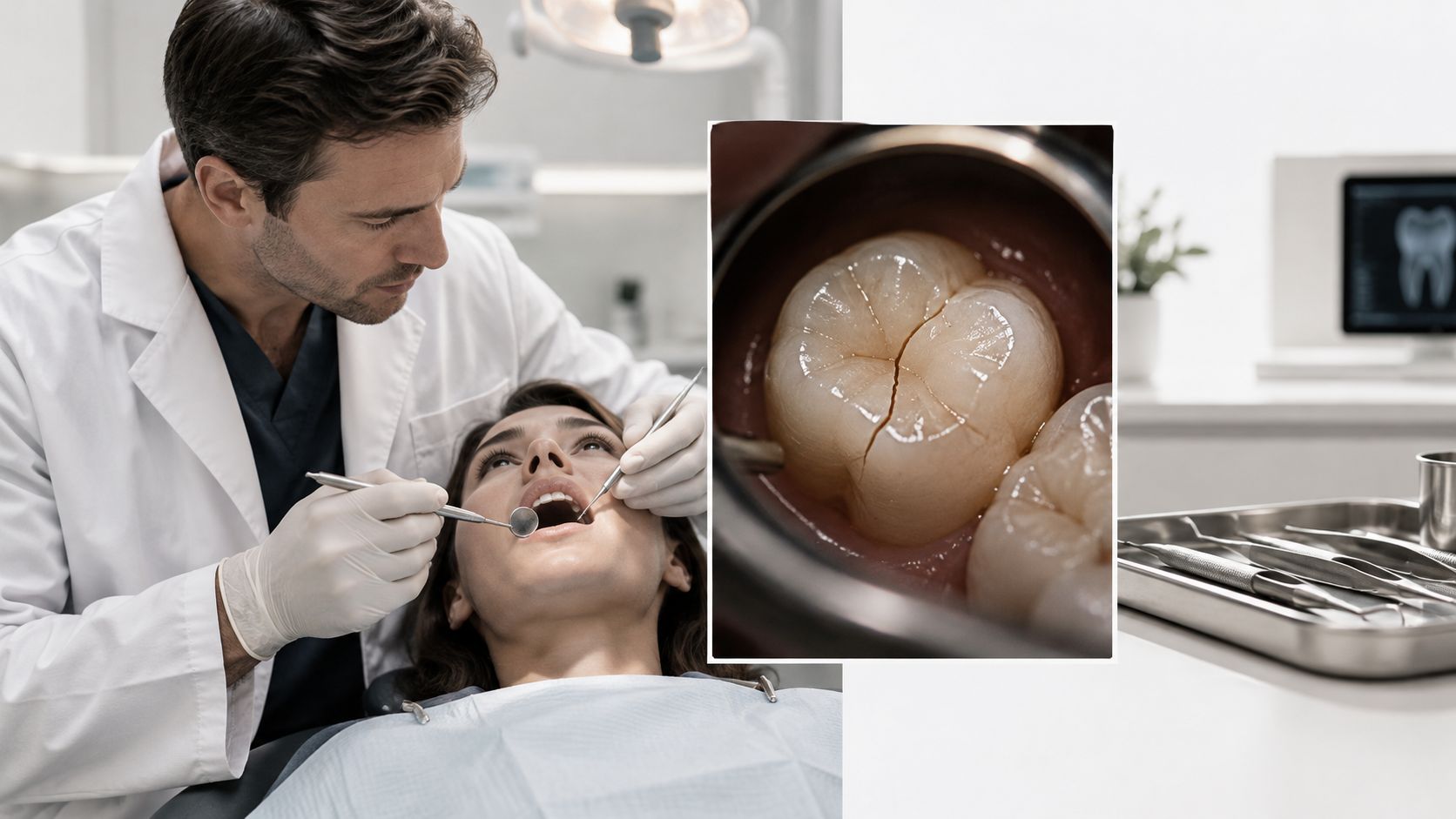
These signs don't mean you should panic. They do mean your mouth is giving you useful information before the condition becomes harder to manage. A full periodontal exam can include pocket measurements, bleeding assessment, dental X-rays, and a review of your home-care routine.
Practical rule: Bleeding gums are a reason to schedule an evaluation, not a reason to brush harder or wait for the problem to disappear.
A helpful starting point is Winn Smiles' guide to preventing gum disease. At a Cleveland or Chattanooga visit, the team can determine whether improved home care, periodontal maintenance, or a root planing procedure fits your current needs.
What Root Planing Actually Is
Root planing is the part of a deep cleaning that treats the tooth root beneath the gumline. A dental professional removes hardened calculus and bacterial biofilm, then smooths the root surface so the gum tissue can heal more effectively around the tooth.
Scaling removes plaque and tartar from tooth surfaces above and below the gumline. The ADA explains that scaling removes plaque and tartar, followed by root planing to smooth the roots beneath the gums in its explanation of scaling and root planing. A routine prophylaxis, by contrast, is a preventive cleaning focused mainly on maintaining otherwise healthy gums and polishing the visible crown surfaces.
The difference in simple terms
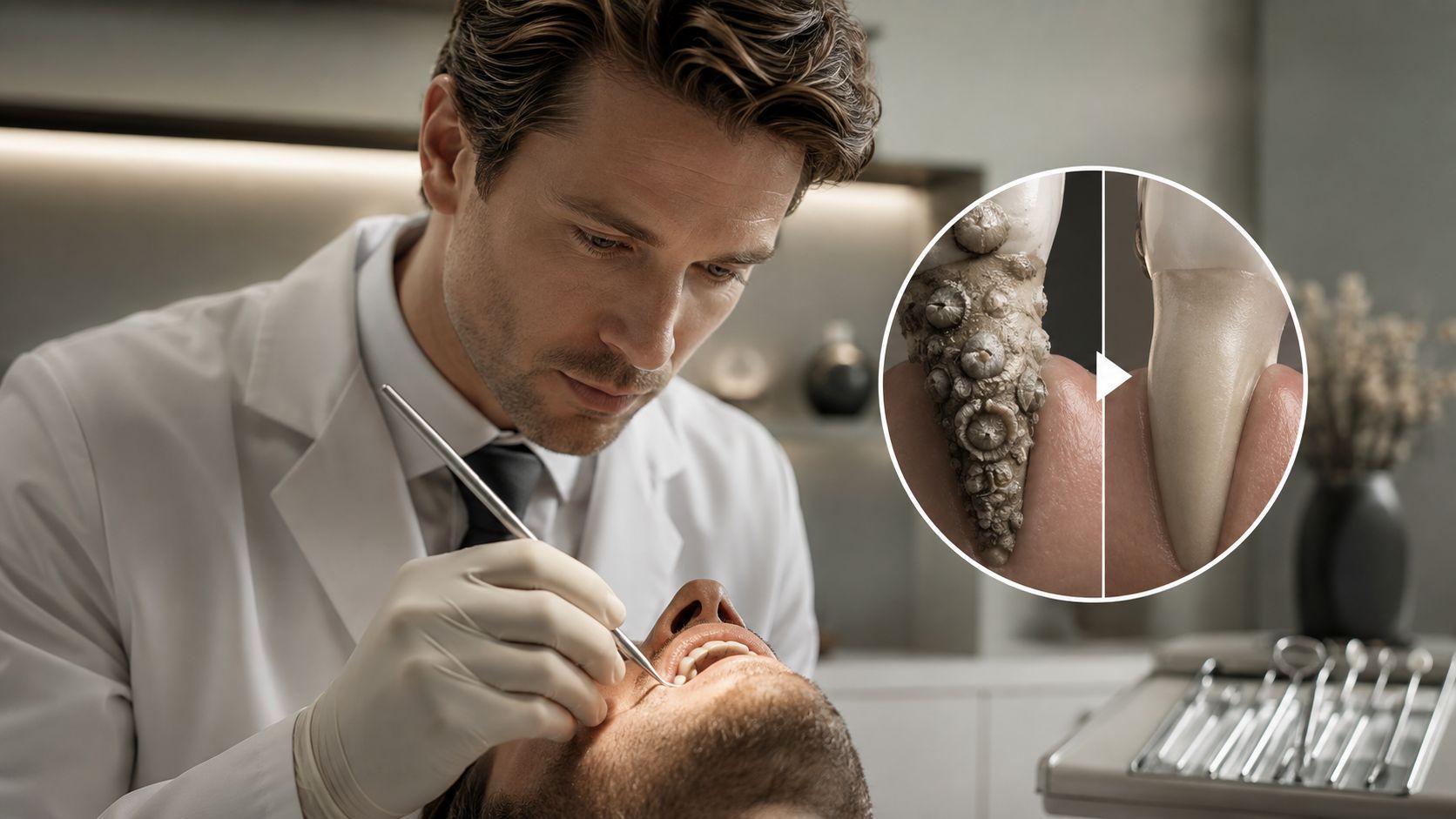
Think about barnacles attached to a boat hull. Scaling is like scraping away the hardened buildup. Root planing is like smoothing the surface underneath so rough areas are less likely to hold onto new deposits.
The clinician works on the cementum and dentin that cover the tooth root. When plaque hardens in an inflamed periodontal pocket, brushing can't reach the full depth, and the rough deposit can continue irritating the surrounding tissue. Removing the deposit and smoothing the root addresses the source of that irritation rather than just making the visible teeth feel clean.
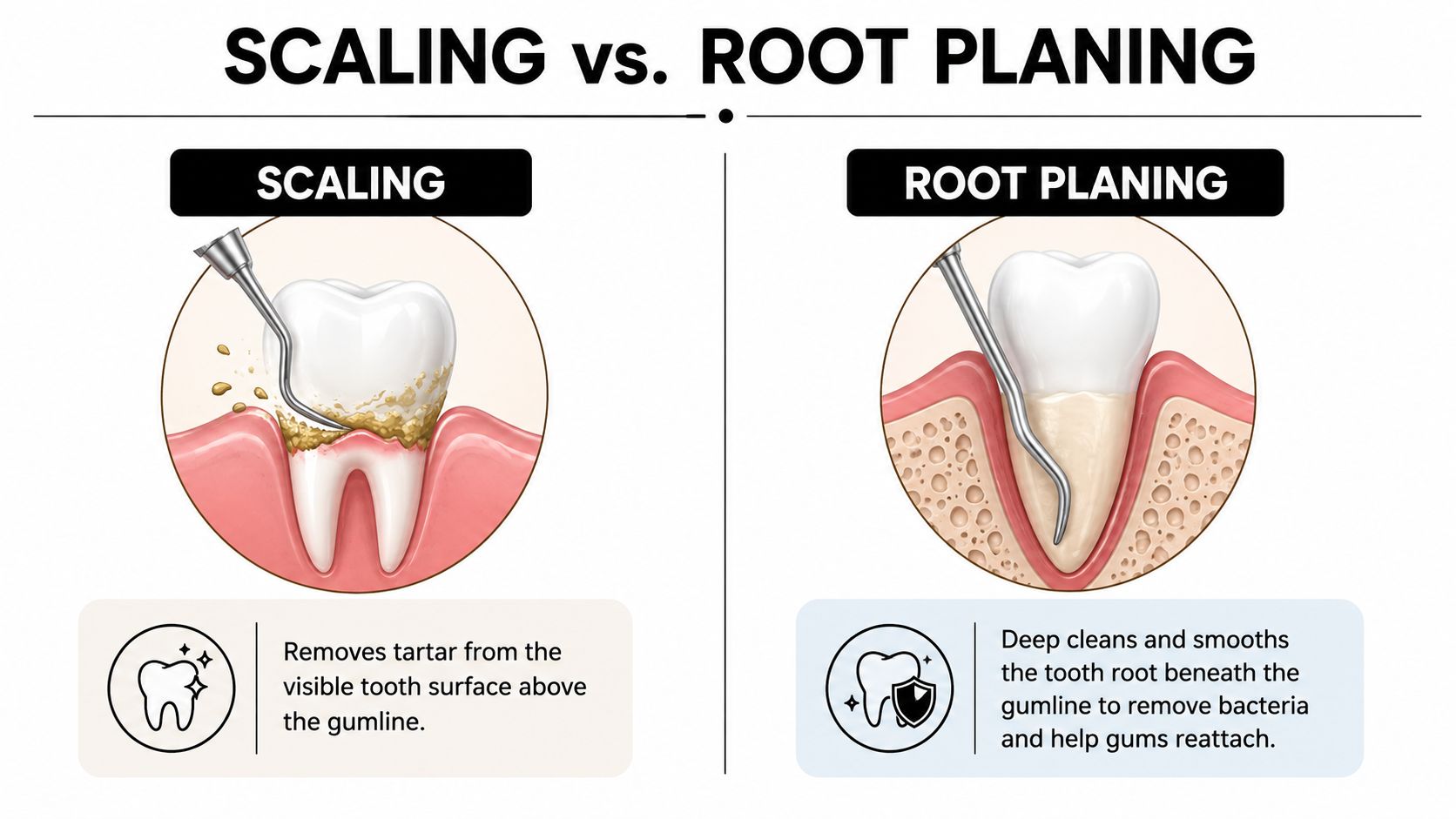
A root planing procedure is often performed together with scaling, sometimes across separate areas of the mouth. The purpose isn't only a smoother feeling after the appointment. The biological aim is to reduce the bacterial burden, calm inflammation, and create conditions that support periodontal healing.
Why a Dentist Recommends Root Planing for Gum Disease
Gum disease begins with plaque biofilm, a sticky layer of bacteria that collects around the teeth. The body's immune response reacts to that bacteria, and ongoing inflammation can damage the gum attachment and the bone that supports the teeth. As the gum separates from the tooth, a periodontal pocket creates more room for deposits to collect.
Pocket depth helps a dentist decide whether routine cleaning is appropriate. Clinical evidence shows that pockets under 3 mm are easiest to scale and root plane, pockets from 3 to 5 mm are more difficult, and pockets deeper than 5 mm are the most difficult to clean completely, as described in clinical research on pocket depth and residual calculus. Deeper pockets raise the possibility that deposits remain after instrumentation, which can allow inflammation to persist.
What the clinical findings mean to you
A dentist may recommend root planing when an exam shows a combination of:
- Pocket depths of at least 4 mm: This is a common clinical threshold for considering periodontal scaling and root planing, although the complete diagnosis depends on the overall exam.
- Bleeding on probing: Bleeding when the clinician gently measures the gumline can indicate active inflammation.
- Attachment changes: Loss of the normal connection between gum tissue and tooth can make pockets more significant.
- Radiographic bone changes: Dental X-rays can show whether supporting bone has been affected.
You may experience these findings as sore or swollen gums, bleeding while flossing, persistent halitosis, or teeth that feel less stable. Some patients have few symptoms, which is why regular exams matter.
SRP is a biologically effective first-line treatment for many non-surgical periodontal cases. Evidence from a randomized trial found significant reductions in plaque index and probing depth at 24 weeks, while a systematic review of 11 randomized controlled trials reported a mean clinical attachment gain of 0.49 mm compared with no treatment, with a 95% confidence interval of 0.36 to 0.62 mm, in the cited clinical evidence.
Root planing may be appropriate for moderate periodontitis or gingivitis that hasn't improved with routine care. It isn't automatically the final treatment for advanced disease. If pockets remain deep, teeth are mobile, or X-rays show substantial bone loss, your dentist may recommend closer monitoring, a periodontist consultation, or surgical care.
Inside the Root Planing Procedure Step by Step
A root planing visit usually begins with a review of your health history, medications, allergies, and any concerns about sensitivity or dental anxiety. The clinician may confirm periodontal charting, review dental X-rays, and identify which areas need treatment. Because scaling and root planing cleans below the gumline, the visit may take more than one appointment.
How the appointment unfolds
- Arrival and review: The team confirms your medical information and talks through the planned areas.
- Comfort preparation: A topical gel may be used before local anesthetic. Traditional injections or buffered anesthetic may also be discussed.
- Deep instrumentation: Hand scalers and ultrasonic devices remove calculus below the gumline. Ultrasonic instruments vibrate and irrigate as they break apart deposits.
- Root smoothing: The clinician carefully works along the root surfaces, often by quadrant, to remove rough areas where biofilm can cling.
- Final instructions: You receive guidance about eating, brushing, flossing, rinsing, sensitivity, and follow-up care.
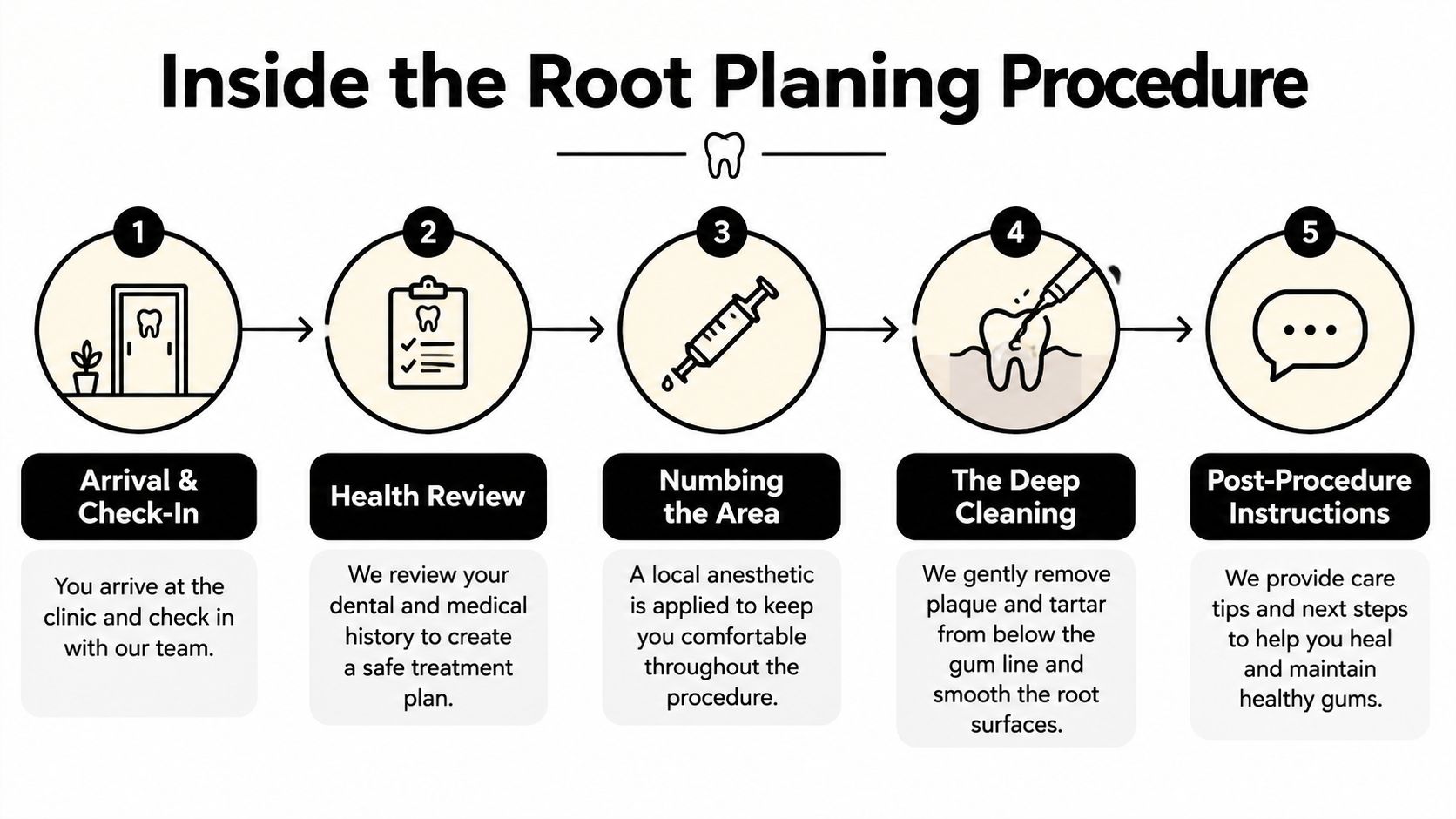
Patients commonly notice pressure, vibration, water, and occasional brief zings rather than sharp pain. The dental team checks your comfort throughout the procedure, and you should signal if you need a pause or more anesthetic. A local anesthetic is often used because the clinician is treating beneath the gumline and down to the bottom of the pocket, as described by the Canadian Dental Association.
The appointment length depends on the number and depth of the areas being treated. Some treatment plans use 60 to 90 minutes per side, often split into two appointments, but your clinician will explain the schedule based on your periodontal findings.
Some patients may also discuss an antimicrobial rinse or a locally applied antibiotic at the end of treatment. Those options aren't automatic, and the right choice depends on the sites being treated and your overall plan.
You can watch the following overview before your visit to become familiar with the general sequence:
Recovery and Aftercare in the Days That Follow
After treatment, your mouth may feel different from what you expected. The gums can be tender, mildly swollen, or slightly bloody during the first few days. Those sensations should gradually settle, but you should contact the office if bleeding is heavy, swelling worsens, pain becomes difficult to control, or you develop other symptoms that concern you.
The first few days
For the initial period, choose soft foods such as yogurt, smoothies, and scrambled eggs. Avoid hard, crunchy, or very hot foods that can irritate treated gum tissue. A gentle warm saltwater rinse may feel soothing, or Winn Smiles may recommend a prescribed antimicrobial rinse when appropriate.
Use a soft-bristled toothbrush and clean carefully around treated areas. Don't stop oral hygiene altogether, because plaque can rebuild quickly, but avoid aggressive scrubbing. Carefully floss as directed, and use interdental brushes if the team recommends them for the spaces between your teeth.
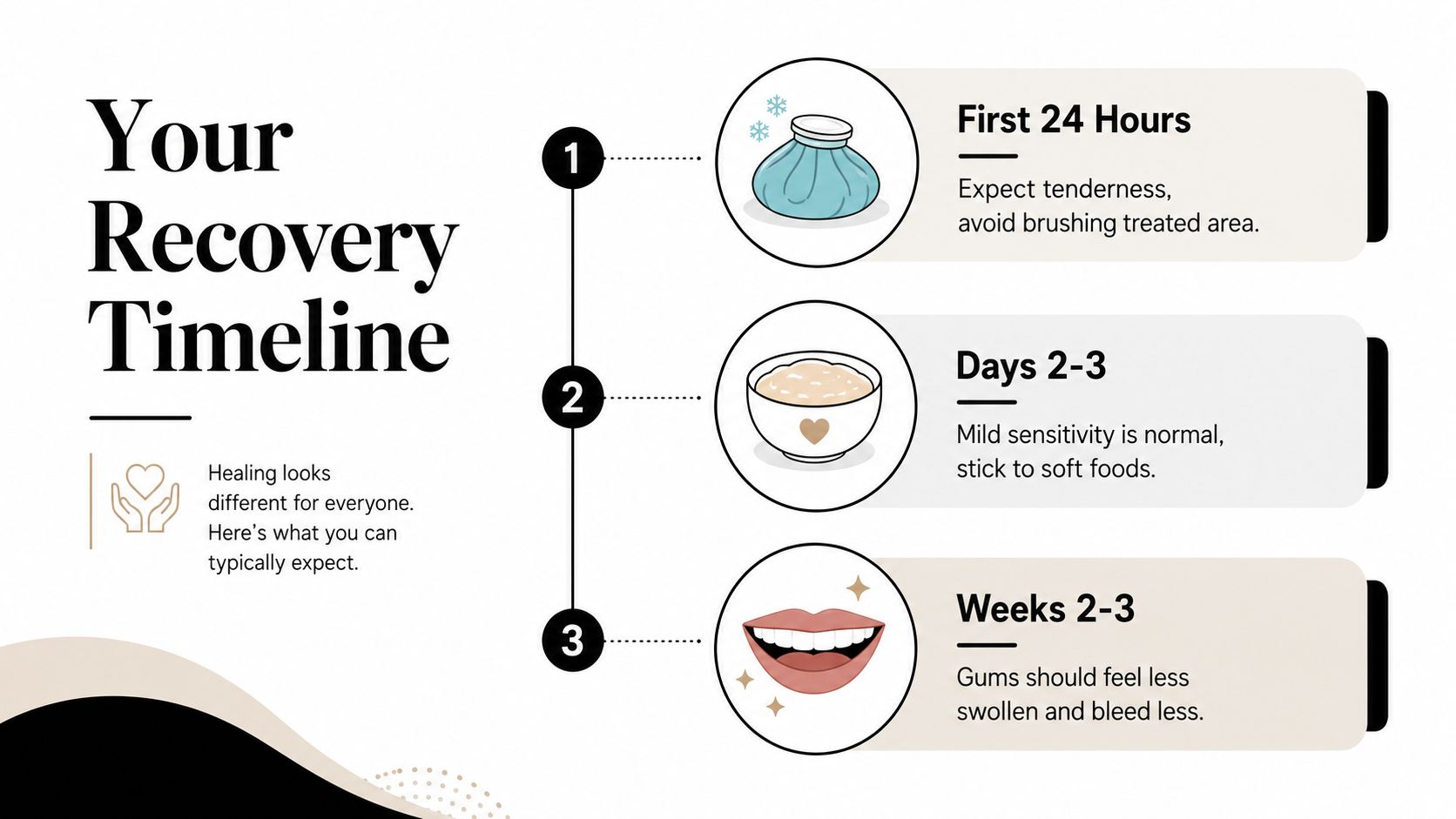
Sensitivity to cold often reaches its highest point around days three to five before improving, according to the patient-care guidance supplied for this procedure. If approved for you, an over-the-counter option such as ibuprofen may help with discomfort. Ask the dental team before taking it, especially if you have a medical condition, take blood thinners, or have been told to avoid anti-inflammatory medicines.
The following weeks
As the gums heal, they may feel firmer and bleed less. You might also notice that the teeth look slightly longer if swollen tissue settles or recedes. That change can be unsettling, but the dentist can explain whether it reflects reduced inflammation, existing recession, or another concern.
The follow-up re-evaluation matters. The clinician measures the periodontal pockets again, checks bleeding and tissue response, and decides whether the non-surgical treatment achieved the intended result. Winn Smiles can also answer questions between visits so you aren't left guessing about sensitivity or healing.
Benefits Risks and Realistic Outcomes
Root planing can reduce the inflammatory burden beneath the gums and give the tissue a healthier environment for healing. Clinical evidence reports reductions in plaque, gingivitis, and probing depth after SRP, and long-term follow-up data found pronounced probing-depth reduction at sites deeper than 3 mm, with plaque-control gains maintained at shallower sites, as shown in the periodontal follow-up research.
What patients may gain
Patients may notice:
- Shallower periodontal pockets: Healing can reduce the depth that collects plaque.
- Less bleeding: Reduced inflammation may make brushing and flossing more comfortable.
- Fresher breath: Removing deposits and bacterial biofilm can improve persistent oral odor.
- Better access for home care: Smoother roots and calmer tissue can make daily cleaning more effective.
- A chance to avoid surgery: Early to moderate disease may respond to non-surgical care when patients maintain consistent home care and follow-up.
A 2007 controlled study found that an endoscope-assisted approach produced a statistically significant overall improvement in calculus removal during SRP, with 2.14% more residual calculus at control sites than test sites. The benefit was most evident in deeper pockets, as reported in the PubMed study. This finding supports careful instrumentation, but it doesn't mean every patient needs endoscopic assistance or that a technology automatically changes the treatment decision.
What can go wrong
Temporary sensitivity and gum tenderness are common concerns. Gum recession may expose root surfaces, and infection is a rare possibility. Root planing may not resolve disease that has progressed beyond what non-surgical treatment can address.
A realistic expectation: Root planing can control the active infection and support healing, but it can't rebuild every structure that advanced periodontal disease has destroyed.
Persistent deep pockets, mobile teeth, or bone loss visible on dental X-rays may indicate the need for additional care. A periodontist referral, surgical pocket treatment, or another periodontal procedure may become appropriate. The follow-up exam provides the evidence needed to make that decision rather than guessing from symptoms alone.
Alternatives Adjuncts and Cost Considerations
Root planing usually sits near the beginning of active periodontal treatment, not at the end of every possible option. The right plan depends on pocket depth, bleeding, attachment levels, radiographic findings, home care, and how the gums respond after treatment.
How the options compare
| Approach | Where it fits |
|---|---|
| Periodontal maintenance cleanings | Ongoing monitoring and deposit removal after active periodontal treatment |
| Antimicrobial rinses | Additional bacterial control when prescribed or recommended |
| Locally delivered antibiotics | Medication placed into selected deeper pockets when the clinician believes it may help |
| Laser-assisted debridement | A technology-based adjunct that may be discussed for selected treatment plans |
| Flap surgery or bone grafting | Surgical options for advanced disease or areas that don't respond adequately to non-surgical care |
Adjuncts should be judged by the additional benefit they offer, not by how modern they sound. Evidence is mixed. A 2025 randomized trial evaluated 1% povidone-iodine mouthwash with SRP, while a 2026 systematic review reported that antimicrobial photodynamic therapy with SRP produced additional mean probing-depth reductions of about 1.05 mm at 1 month and 0.86 mm at 3 months, plus clinical attachment gains up to 0.80 mm at 6 months compared with SRP alone, as summarized in the cited PubMed record. A 2025 clinical comparison found guided biofilm therapy and SRP reached similar closed-pocket rates at follow-up, so newer technology doesn't always create a clinically meaningful advantage.
Pricing varies by the areas treated, the complexity of the deposits, anesthesia, adjuncts, and the office's billing structure. Rather than relying on a generic Tennessee estimate, ask about quadrant billing, your deductible, annual maximum, waiting periods, covered periodontal benefits, and the estimated out-of-pocket amount before scheduling.
Insurance policies can distinguish treatment by the number of affected teeth and pocket measurements. One policy describes partial-quadrant treatment at one tooth with pockets of 4 mm or more, and full-quadrant treatment at four teeth with pockets of 4 mm or more, as shown in the policy criteria. Your benefits aren't a diagnosis, so the clinical findings should guide care.
What Visiting Winn Smiles in Cleveland or Chattanooga Looks Like
At Winn Smiles, patients arriving at either Tennessee office can expect a warm greeting and a clear explanation of what happens next. A periodontal evaluation may include pocket-depth charting, bleeding assessment, dental X-rays when indicated, and a conversation about whether root planing is needed now, can be staged by quadrant, or should be followed by another form of periodontal care.
Comfort is part of the visit. Patients can ask about blankets, headphones, patient-controlled breaks, topical numbing, local anesthetic, and oral conscious sedation options for dental anxiety. The goal is to make it easier to communicate, pause, and stay informed throughout treatment.
Practical support before treatment
The team can also discuss:
- Paperwork: Complete health and dental information before care begins.
- Insurance coordination: Review benefits and help clarify the estimate.
- Financing options: Talk through available ways to plan for treatment costs.
- Family scheduling: Coordinate visits at the Cleveland and Chattanooga locations.
- Long-term planning: Connect periodontal care with preventive, restorative, cosmetic, implant, or emergency dental needs when appropriate.
Patients considering periodontal care can learn more about periodontal treatment in Chattanooga. The same patient-focused approach applies when someone is searching for a dentist in Cleveland, TN, an emergency dentist, a cosmetic dentist near me, dental implants near me, or care related to a tooth extraction.
Root planing isn't a one-size-fits-all endpoint. It may resolve the active problem in responsive shallow-to-moderate sites, while deeper or persistent disease may require closer follow-up and additional treatment. A careful exam gives you a clearer answer than symptoms or insurance language alone.
Winn Smiles offers periodontal evaluations and scaling and root planing for patients who need focused care below the gumline, with comfort options and clear treatment discussions in Cleveland and Chattanooga. Schedule a consultation with Winn Smiles to find out whether a root planing procedure is the right next step for your gums.