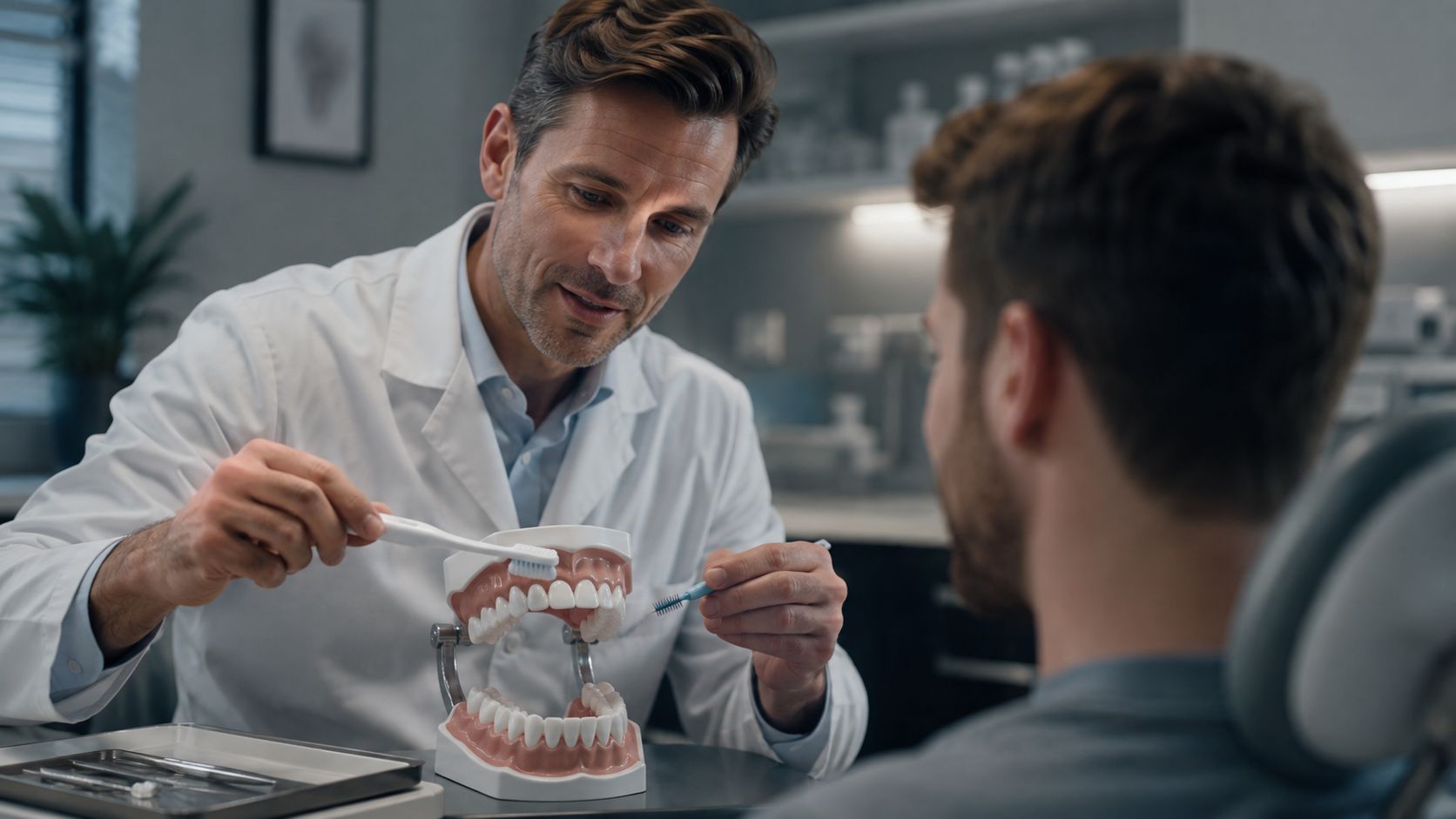
You notice a little pink in the sink after brushing, or your gums bleed when you floss, and you tell yourself you'll keep an eye on it. That reaction is common, but bleeding gums shouldn't be ignored. Gingivitis can often be prevented and reversed, while untreated periodontitis can damage the tissues supporting your teeth and become a leading cause of tooth loss, according to the CDC's guidance on gum disease.
For families looking for a dentist near me in Cleveland, TN, a dentist in Chattanooga, TN, or nearby care, prevention starts at home and continues with professional monitoring. This guide explains how to prevent gum disease with the right brushing technique, an interdental tool matched to your mouth, sensible lifestyle choices, and a maintenance schedule you can realistically follow.
Why Gum Disease Starts Between the Teeth
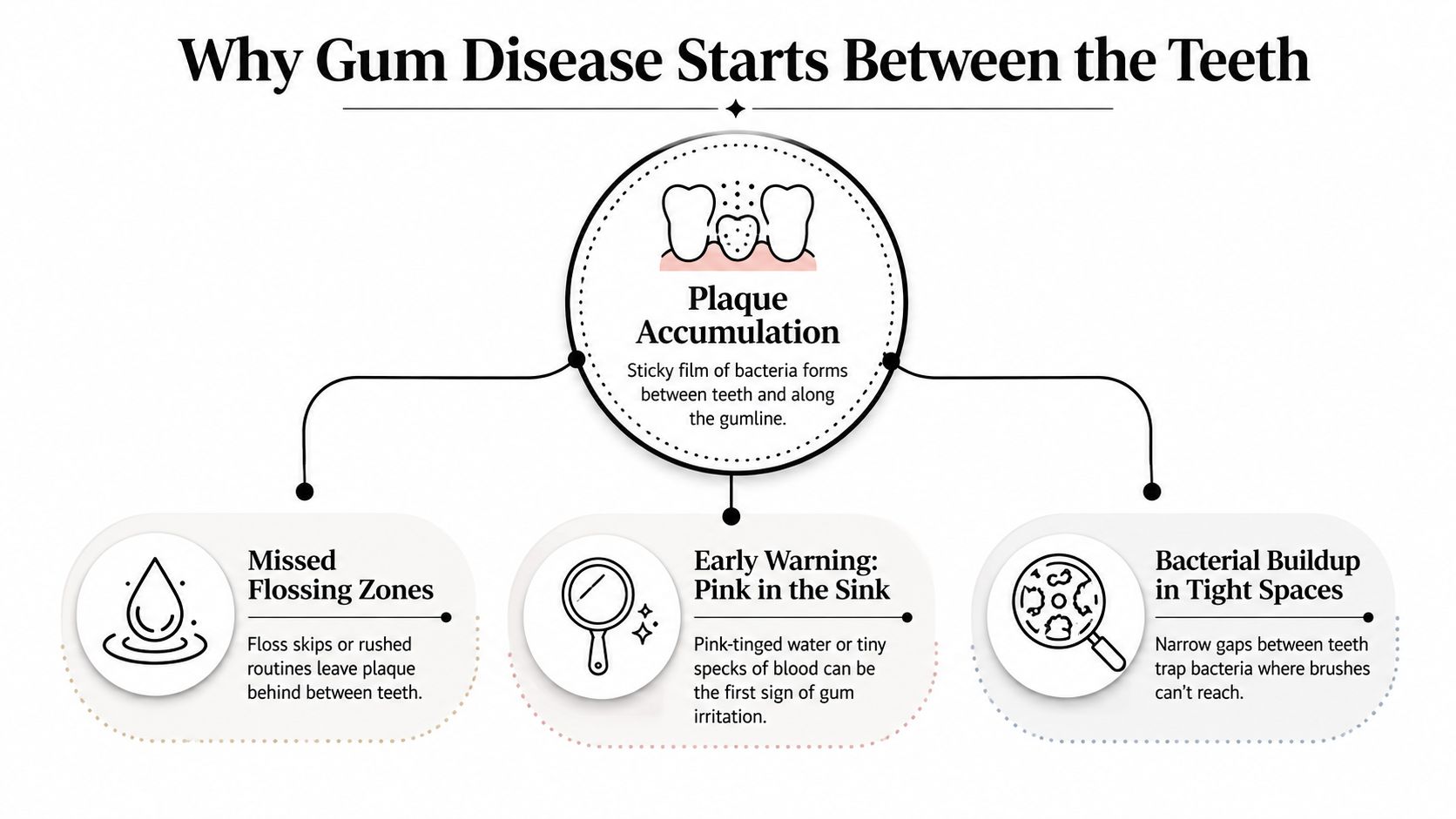
You brush before work, rinse, and notice a faint pink tint in the sink. Because the gums do not hurt, it is easy to blame brushing pressure. Bleeding often signals inflammation from plaque, a sticky bacterial film that collects along the gumline and between teeth.
A toothbrush handles broad, visible surfaces, but its bristles cannot fully clean narrow interdental spaces. Plaque can stay there undisturbed, especially around crowded teeth, bridges, or other areas that are difficult to reach. The NIDCR explains why interdental cleaning matters, since flossing disrupts plaque before it hardens into calculus, also called tartar.
Gingivitis is the early opportunity
Gingivitis is the earliest stage of gum disease. Gums may appear red or swollen, bleed during brushing, or feel tender. Consistent plaque removal, paired with professional removal of deposits that home care cannot reach, can often calm this inflammation.
Periodontitis is more advanced. Inflammation can damage the tissues and bone supporting the teeth, while symptoms remain mild enough to miss. The CDC reports that about 4 in 10 U.S. adults aged 30 and older had some level of periodontitis during 2009–2014, while severe periodontitis affected about 8% of adults.
Practical rule: Do not wait for pain. Bleeding, persistent bad breath, gum recession, or a change in how your teeth fit together deserves attention.
Prevention depends on daily plaque control and a maintenance schedule that fits real life. Brushing cleans accessible surfaces, an interdental tool reaches the spaces a brush misses, and professional visits remove hardened calculus while checking areas below the gumline. For a Cleveland or Chattanooga family, the workable plan is the one you can maintain between routine dental visits, with earlier review if warning signs continue. A single product cannot replace that layered approach.
Brushing and Daily Habits That Work
A rushed morning brush can leave plaque along the gumline and between teeth. The American Dental Association recommends brushing twice daily with fluoride toothpaste and cleaning between your teeth once daily. The schedule is straightforward, but the way you brush determines how much plaque you remove.
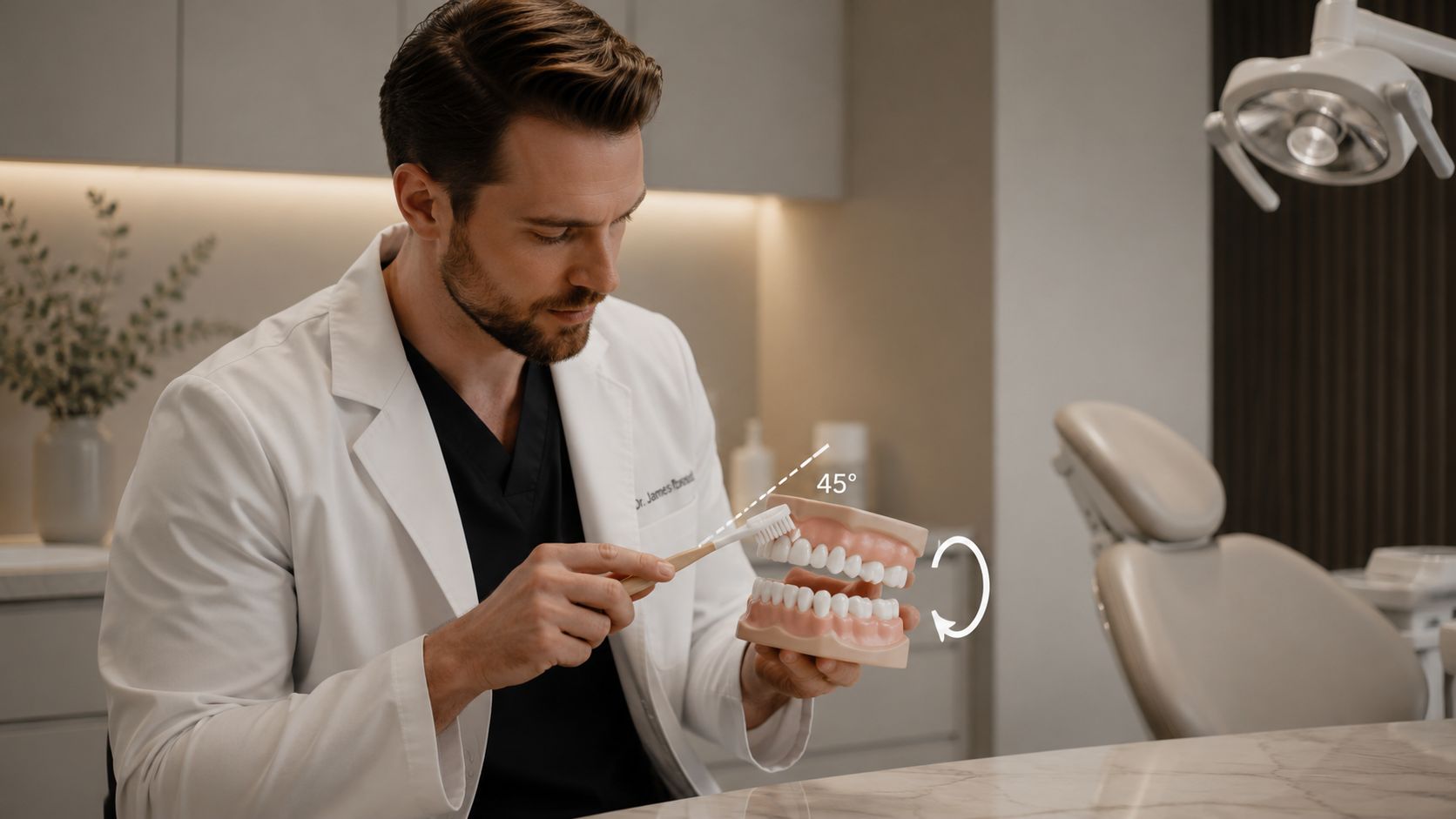
Choose a soft-bristled brush and angle it roughly 45 degrees toward the gumline. Use gentle, short movements instead of forceful back-and-forth scrubbing. Clean the outer, inner, and chewing surfaces of every tooth, then brush your tongue lightly to reduce buildup linked with unpleasant breath.
Small technique changes make brushing more useful
A manual toothbrush can clean well when you work methodically. An electric brush may suit patients who rush, press too hard, have limited hand mobility, or miss difficult areas. Timers and pressure sensors can support consistency, though every brush still needs help from an interdental tool.
A six-week randomized, examiner-blind clinical trial compared electric brushing with floss and 0.454% stannous fluoride toothpaste against a professional-prophylaxis control. The combination produced 86% fewer bleeding sites, and 68% of participants had no bleeding at week six, compared with 0% in the control group, according to the IADR clinical trial abstract. The practical point is narrower than replacing dental care: consistent home plaque control can address early inflammation between visits, while professional cleanings remain part of periodontal maintenance.
For a practical refresher, review Winn Smiles' guide to tooth brushing techniques. After brushing, spit out excess toothpaste instead of rinsing aggressively with water, allowing fluoride to remain on the teeth. Replace a manual brush or electric brush head when bristles become worn.
Pressure check: If bristles flatten quickly or your gums feel sore afterward, reduce the force.
Brush before bed every night. Morning brushing matters as well, but nighttime cleaning protects plaque control during the long period when eating, drinking, and natural saliva flow do less to clear debris. A routine that works on ordinary Cleveland or Chattanooga evenings is more useful than an elaborate plan you cannot maintain until your next dental visit.
Choosing the Right Interdental Tool for Your Mouth
Floss is useful, but it isn't automatically the best choice for every mouth. The correct tool depends on the size of the spaces between your teeth, your dexterity, and whether you have braces, bridges, implants, crowns, or periodontal tissue loss.
Match the tool to the space
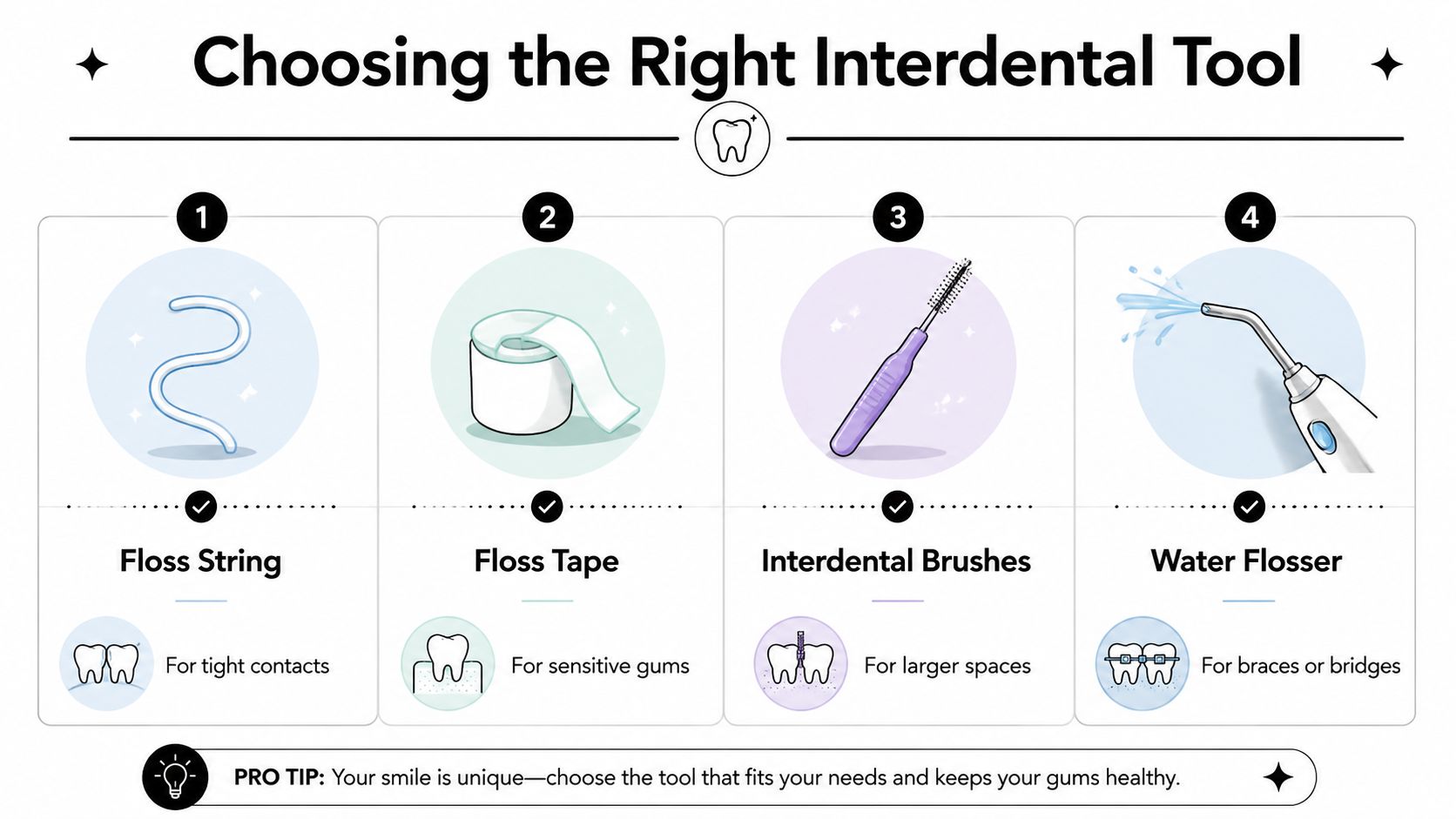
For tight contacts where teeth touch closely, floss or floss tape can slide between the teeth and curve around each tooth. Use a gentle sawing motion to pass the contact, then hug the side of one tooth in a C shape and move below the gumline without snapping the floss into the tissue.
When there's enough room, an interdental brush often provides better contact with the sides of the teeth. The brush should fit snugly, not forcefully. If it bends sharply or causes pain, the size or technique may be wrong.
A water flosser can be helpful around braces, bridges, and other areas where string floss is difficult to maneuver. It flushes around appliances and restorations, but it shouldn't be treated as a complete replacement for brushing or for the tool your dental team recommends. Soft picks may be easier for some people to use consistently, especially outside the home.
| Tool | Best For | Limitations |
|---|---|---|
| Floss string | Tight contacts between teeth | Can be difficult around braces or bridges |
| Floss tape | Tight spaces and people who prefer a wider surface | May not clean larger spaces as effectively as an interdental brush |
| Interdental brushes | Larger spaces, gum recession, bridges, and periodontal tissue loss | The brush must be sized correctly |
| Water flosser | Braces, bridges, and hard-to-reach areas | Water flow doesn't replace all forms of mechanical plaque removal |
Consistency matters more than brand loyalty
If your floss technique is good and you'll use it daily, traditional floss is a sound choice. If you stop using it because it's awkward, a floss pick or water flosser may be a more realistic option. Patients who want a portable option can shop Avistar floss picks, particularly for keeping interdental cleaning available at work or while traveling.
Patients with orthodontic appliances, dental implants, fixed bridges, or wider spaces should ask a dentist or hygienist to demonstrate the tool and size that fit their anatomy. At a Cleveland or Chattanooga new patient exam, bring the products you already use. A dental professional can often improve your results by adjusting the technique rather than asking you to start from scratch.
Mouthwash, Antimicrobial Rinses, and Adjuncts That Help
Mouthwash can support a prevention routine, but it can't compensate for missed brushing or interdental cleaning. A rinse reaches areas differently from a brush, yet it doesn't physically disrupt every plaque deposit along the gumline or between teeth.
Expert reviews describe chlorhexidine, cetylpyridinium chloride, and essential-oil mouthwashes as useful for reducing plaque and gingival inflammation when they're used alongside brushing and interdental cleaning, not instead of them. The American Dental Hygienists' Association review also explains why chlorhexidine is generally limited to short courses of about 2–4 weeks. Longer use can cause unwanted effects such as staining or taste changes, so it should be used when a dental professional recommends it.
Choose the rinse for the problem
A cosmetic rinse may freshen breath without meaningfully changing plaque or gum inflammation. An antimicrobial rinse is different, but the right product depends on your gum condition, medications, restorations, sensitivity, and risk of dry mouth.
Stannous fluoride toothpaste can be a useful part of a complete home routine. In the clinical trial cited earlier, it was used with electric brushing and floss as part of a tightly controlled regimen. That result supports the value of the complete routine, not the idea that toothpaste alone prevents gum disease.
Alcohol-free products may be more comfortable for people who experience dryness or irritation, but “alcohol-free” doesn't automatically mean “effective against gum disease.” Ask a dental professional to review the active ingredients and the reason for using the rinse.
At Winn Smiles, periodontal maintenance visits in Cleveland and Chattanooga can include a review of your home-care products and instructions for any recommended adjunct. The practical goal is to use a rinse as a targeted teammate, then return to daily mechanical plaque control.
Lifestyle and Health Conditions That Drive Gum Risk
A reliable brushing routine cannot remove every risk factor. Tobacco use, diet, diabetes, alcohol, stress, hormonal changes, and dry mouth all influence how gum tissue responds to plaque.
Smoking deserves particular attention because it is a major modifiable risk factor for serious gum disease. Tobacco can affect circulation and immune response, make inflammation harder to control, and interfere with healing. Quitting supports your overall health, and your dental team can discuss practical resources without turning the conversation into a lecture.
Diet matters too. The WHO's oral-health guidance recommends a well-balanced diet low in free sugars, stopping tobacco use, and reducing alcohol consumption as part of oral-health prevention. Frequent sugary drinks and snacks give plaque bacteria repeated access to fermentable sugars, so reducing how often you have them is a practical starting point.
Build protection beyond the bathroom
Recent reviews associate high-fiber eating patterns, including Mediterranean-style, DASH, and whole-food plant-based diets, with lower periodontitis prevalence, as summarized in the population-health research record. A particular diet does not guarantee healthy gums or replace dental care. It does show why prevention involves more than brushing alone.
Diabetes can increase vulnerability to gum inflammation, especially when blood sugar is difficult to manage. The CDC identifies diabetes, smoking, and poor oral hygiene as factors linked with serious gum disease. Pregnancy and other hormonal changes may make gum tissue more reactive. Medications that reduce saliva can also leave the mouth drier and less able to clear debris naturally.
Stress can disrupt sleep, eating patterns, brushing consistency, and other habits that support gum health. A useful overview of the mouth and body connection is available through Healtsy oral care insights.
Tell your dentist about diabetes, pregnancy, tobacco use, dry mouth, and regular medications. Those details help the team set a recall schedule that fits your risk, including the periodontal maintenance visits a Cleveland or Chattanooga family can realistically keep, and recommend products suited to your mouth.
Professional Cleanings, Periodontal Maintenance, and Early Warning Signs
You may brush carefully every day and still have calculus below the gumline. Once plaque hardens, home care cannot remove it. Professional cleanings give the dental team access to difficult areas and a chance to spot inflammation or changes in tooth support before they become harder to manage.
Recall timing should follow your examination findings. A generally healthy adult may need a routine cleaning and examination schedule based on current risk. A patient with previous periodontal disease may need every 3–4 months for periodontal maintenance, allowing the team to control deposits and monitor the tissues more closely. That interval is a clinical decision, not an automatic calendar rule, and it needs to fit a Cleveland or Chattanooga family's real schedule.
What the dental team checks
At an examination, the clinician may measure the space between each tooth and gum, record bleeding, assess recession, and compare the supporting tissues with earlier findings. Probing helps locate inflammation or possible loss of support. Dental X-rays can reveal bone changes that are not visible in a mirror or during a routine visual check.
Current guidance supports consistent screening. SDCEP's 2025 update states that all dentate patients should be screened for periodontal disease at every routine recall examination. Your dentist can use that screening to decide whether routine care is enough or whether the maintenance interval should change.
Arrange an earlier appointment if you notice:
- Persistent bleeding: Bleeding that continues after a week of careful, gentle cleaning deserves an examination.
- Ongoing bad breath: Persistent odor or a bad taste can occur with gum inflammation.
- Receding gums: Teeth may look longer, and exposed roots may become sensitive.
- Loose teeth or bite changes: These may indicate a more advanced problem with tooth support.
A standard cleaning is not enough for every patient. When deposits extend below the gumline, treatment may include periodontal scaling and root planing, explained in Winn Smiles' periodontal scaling and root planing guide. Winn Smiles also provides periodontal care that may include laser-assisted treatment and sedation options for anxious patients. Ask which approach matches your examination findings and how often maintenance should follow.
Building Your Personal Prevention Plan and Next Steps
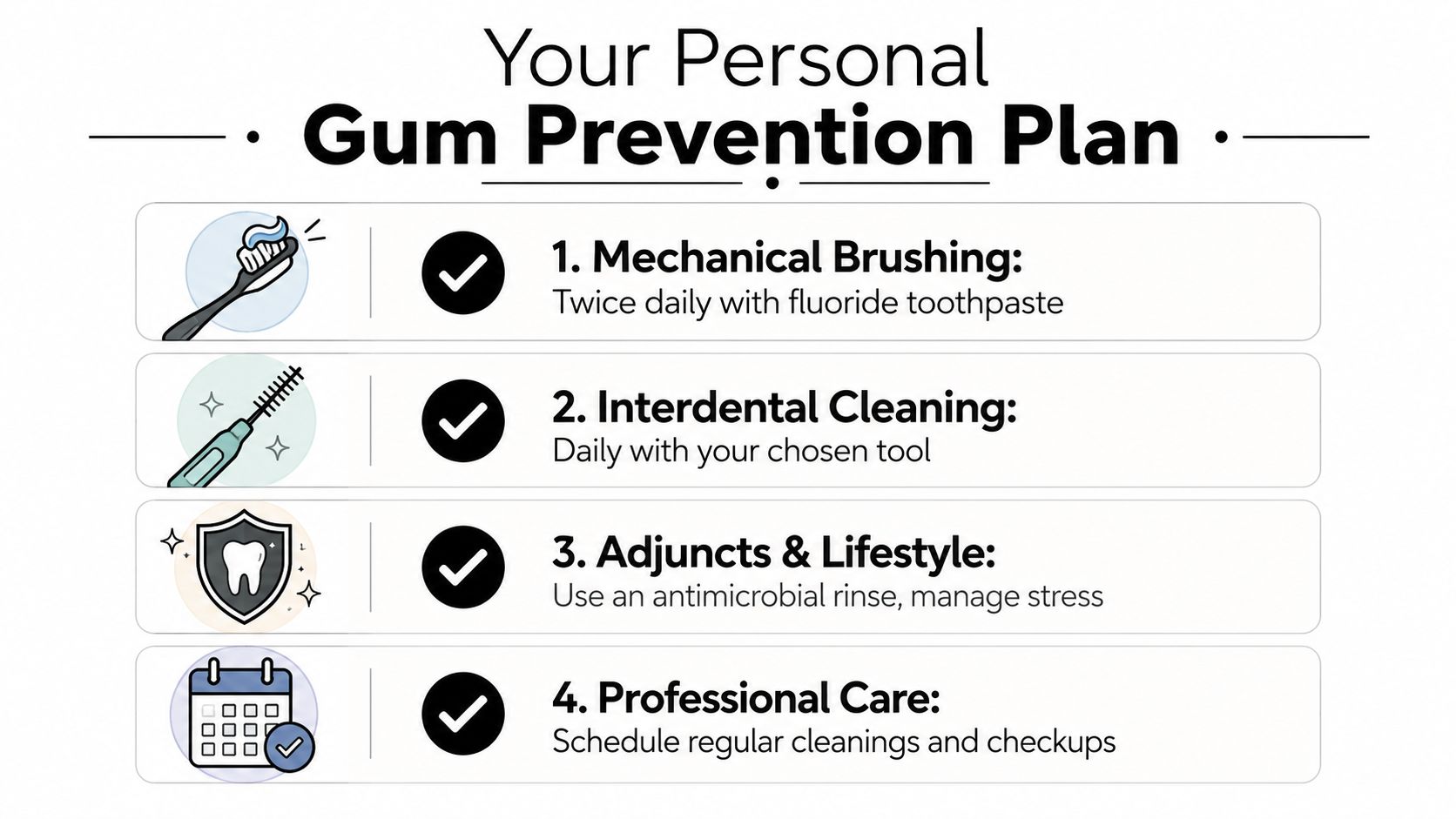
The most effective plan is one you can repeat without constant effort. Think of prevention as four connected layers: mechanical plaque removal, interdental cleaning, supportive lifestyle choices and adjuncts, and professional maintenance.
A routine you can keep
Every morning and evening, brush with fluoride toothpaste using a soft brush and gentle pressure. Once each day, clean between your teeth with floss, tape, an interdental brush, a soft pick, or a water flosser selected for your spacing and dental work.
During the week, pay attention to habits that affect your mouth. Reduce frequent free-sugar intake, avoid tobacco, manage alcohol consumption, and tell your dental team if medication causes dry mouth. If you have diabetes or another condition that affects healing or inflammation, include that information in your prevention plan.
At recall visits, ask the dental team to show you where plaque remains. A small technique adjustment can make the routine easier and more effective. If you've been away from dental care, don't wait until you've rebuilt a perfect home routine. A new patient exam can establish a baseline with cleaning, periodontal screening, and dental X-rays when appropriate.
Troubleshooting common setbacks
Bleeding can make people stop flossing, but avoiding the area often leaves the underlying plaque in place. Clean gently and arrange an exam if the bleeding persists. If a medication causes dry mouth, ask about comfort measures and products that won't irritate your tissues.
You also don't need to decide alone whether you need a routine cleaning, periodontal maintenance, tooth extraction, dental implants, restorative dentistry, cosmetic dentistry, or emergency dental services. A dentist can first identify the source of the problem, then explain the appropriate path. If you're searching for a cosmetic dentist near me, dental implants near me, or an emergency dentist in Cleveland or Chattanooga, gum health still matters because stable supporting tissues help protect future treatment.
Winn Smiles serves patients in Cleveland and Chattanooga with preventive, periodontal, restorative, cosmetic, implant, and emergency dental care. Schedule a periodontal maintenance visit or new patient exam at Winn Smiles to review your gum health, home-care tools, and next steps, and ask about free consultations or second opinions for select services.