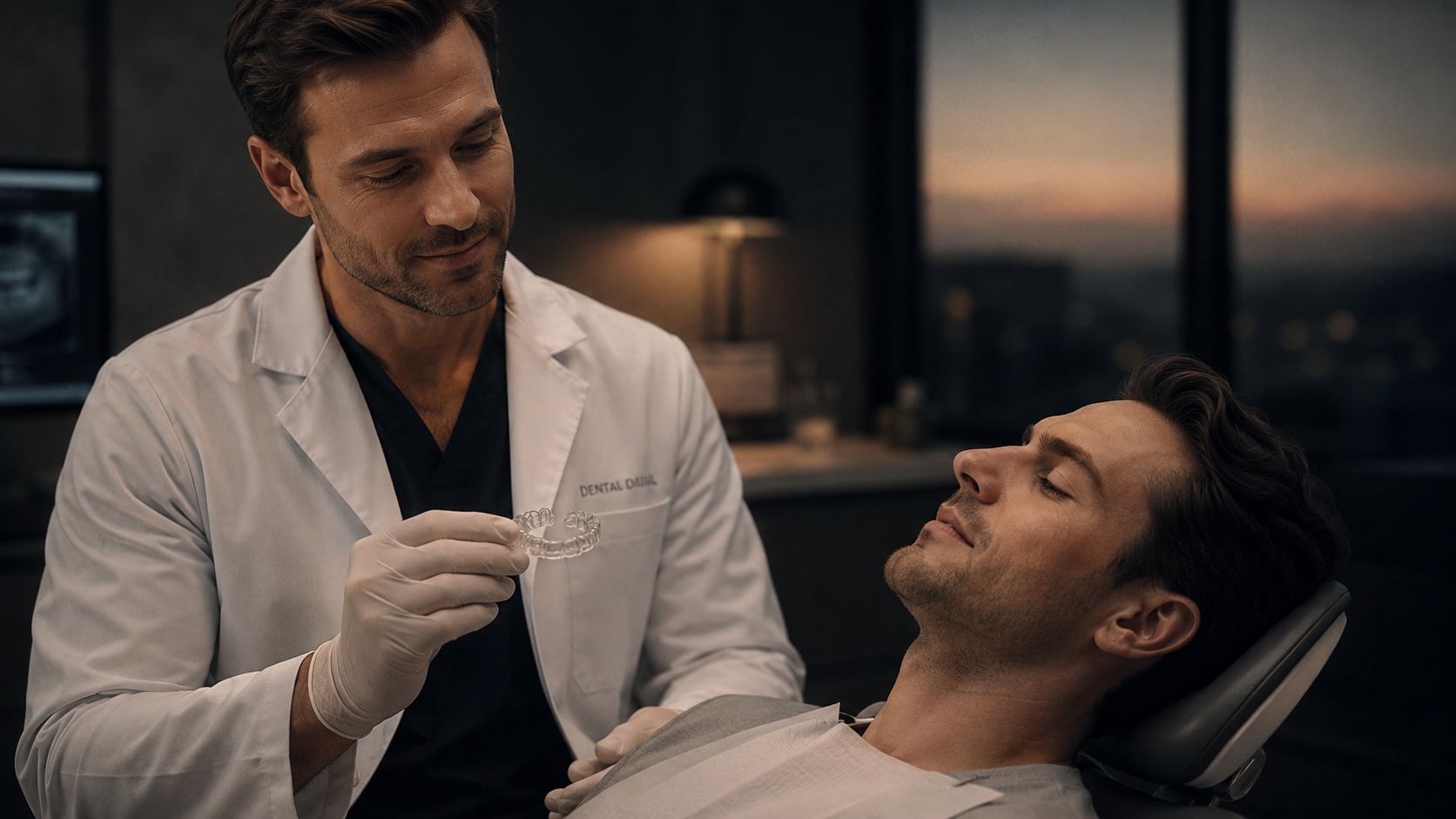
You went to bed at a reasonable hour. You thought you got a full night's sleep. Then morning hits, and you still feel like you barely slept at all. Maybe your partner keeps telling you that your snoring has gotten louder, or that you stop breathing for a moment and then gasp. Maybe you wake up with a dry mouth, a dull headache, or that foggy, heavy feeling that follows you through work, errands, and family time.
Those are the kinds of stories I hear from adults across Chattanooga and Cleveland, TN who start by searching for answers online, often the same way they'd search for a dentist near me, an emergency dentist, or a dentist in Chattanooga, TN when something feels off and they want real help close to home. Sleep problems don't always look dramatic. Sometimes they show up as fatigue, irritability, trouble focusing, or a partner saying, “Something isn't right when you're asleep.”
Sleep apnea can sit in the background for a long time. People assume they're stressed, aging, overworked, or just naturally “bad sleepers.” Sometimes that's part of the picture. Sometimes it isn't. When breathing repeatedly narrows or pauses during sleep, your body never gets the restful, steady recovery it needs.
Dental care can play an important role here. A dentist trained to screen for airway problems can help identify patterns, guide you toward proper diagnosis, and in many cases provide an oral appliance that supports easier nighttime breathing. For patients in Chattanooga, TN and Cleveland, TN, that local path matters. It means you don't have to keep guessing.
Tired of Being Tired? Your Sleep Questions Answered
A lot of people first notice the problem in small moments. They fall asleep on the couch every evening. They need more coffee just to function. They wake up annoyed, even after spending plenty of time in bed. Their spouse gets tired of the snoring before they get tired of feeling worn out.
When sleep looks full but doesn't feel restorative
That mismatch is one of the most common clues. You may be asleep for hours, but your body keeps getting pulled out of deeper rest because breathing keeps becoming difficult. Many people don't remember these interruptions at all. They just know they're exhausted.
Sometimes a partner notices first. They hear loud snoring, long quiet pauses, or sudden choking sounds. Other times the person sleeping is the first to notice something's wrong because they wake up with a racing heart or feel strangely tense first thing in the morning.
Sleep apnea often announces itself through everyday fatigue long before someone connects it to breathing.
Comfort can matter, too. Sleep position and support don't fix sleep apnea by themselves, but they can affect how well you rest overall. If you're also trying to improve your sleep setup at home, this guide to understanding adjustable base wellness essentials gives helpful context on how sleep environment and body positioning can influence nighttime comfort.
Why local answers matter
When you're looking for help, convenience matters. That's true whether you need cleaning and exams, dental x-rays, new patient exams, or guidance about a problem that extends beyond the teeth alone. People in Chattanooga and Cleveland often want one thing first: a clear next step nearby.
That's where a dental office can become more than a place for fillings, tooth extraction, restorative dentistry, or cosmetic dentist near me searches. It can also be a practical first stop for recognizing sleep-related airway issues and talking through what treatment might fit your life.
Understanding Sleep Apnea and Its Types
Sleep apnea is a condition where breathing repeatedly becomes restricted or stops for short periods during sleep. The body reacts by partially waking you so breathing can restart. You may not remember those moments, but your sleep quality pays the price.
One of the simplest ways to picture it is to think of a garden hose. If the hose gets kinked, water can't flow the way it should. With some forms of sleep apnea, the airway narrows or collapses in a similar way, and airflow becomes limited when the body relaxes during sleep.
Obstructive sleep apnea
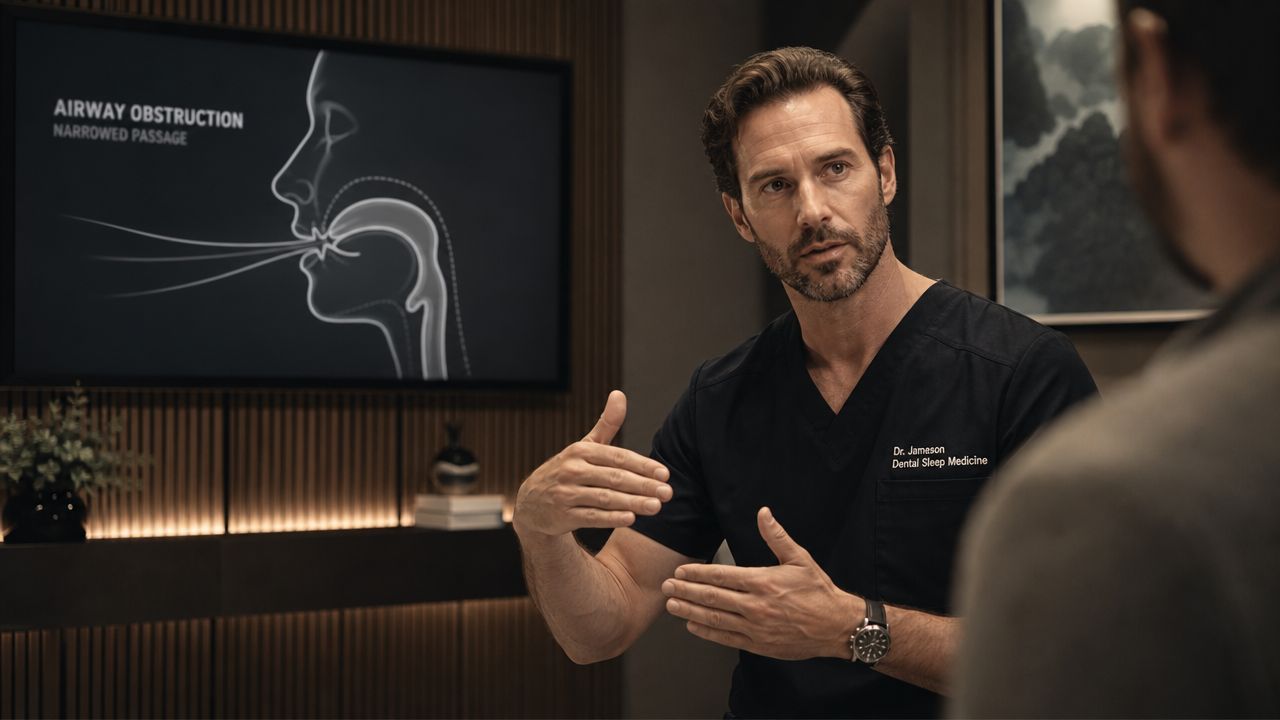
Obstructive sleep apnea, often shortened to OSA, is the type typically meant when sleep apnea symptoms are discussed. In OSA, the airway becomes physically blocked during sleep. That blockage may involve the tongue, soft palate, throat tissues, or jaw position.
From a dental standpoint, this matters because the mouth, jaw, tongue posture, and airway all interact. If the lower jaw falls backward during sleep or soft tissues crowd the airway, breathing can become noisy, strained, or interrupted. If you'd like a closer look at those contributing factors, this article on what causes sleep apnea in adults is a useful starting point.
Central sleep apnea
Central sleep apnea, or CSA, works differently. The issue isn't a physical blockage in the airway. The problem is that the brain doesn't consistently send the right signals to the muscles that control breathing.
That distinction matters because treatment pathways can differ. A dental oral appliance is commonly associated with obstructive patterns, not every form of central sleep apnea. If someone has symptoms that suggest a more complex sleep-breathing issue, physician evaluation becomes especially important.
Practical rule: Loud snoring points many people toward obstructive sleep apnea, but not every breathing-related sleep disorder is caused by the same mechanism.
Why understanding the type changes treatment
People often assume all sleep solutions work the same way. They don't. Some patients do well with position changes and habit adjustments as part of a larger plan. Some need a CPAP machine. Others do better with a custom oral appliance because it's simpler to wear and easier to keep using consistently.
Broader health tracking can also help people understand how sleep quality connects to the rest of the body. For readers interested in the larger picture, optimizing sleep health biomarkers offers a helpful overview of how sleep breathing disturbances fit into overall wellness.
Key Sleep Apnea Symptoms You Should Not Ignore
Sleep apnea symptoms rarely show up as just one thing. A cluster of signs typically builds over time. Looking at them by category makes it easier to connect the dots.

Symptoms that happen during the night
Nighttime symptoms are often the ones a spouse or family member notices first. They include:
- Loud snoring: Not every person who snores has sleep apnea, but loud, persistent snoring deserves attention, especially when it's paired with other symptoms.
- Gasping or choking awake: This can happen when the body briefly wakes itself to reopen the airway.
- Frequent waking: Some people don't realize how often they wake because the interruptions are short, but the pattern leaves sleep fragmented.
- Restless sleep: Tossing, turning, or waking up in odd positions can happen when the body keeps trying to find a more open airway.
- Dry mouth or sore throat on waking: Mouth breathing overnight often leaves the mouth and throat feeling dry and irritated by morning.
A common misunderstanding is thinking that if you don't fully remember waking up, it didn't happen. In sleep medicine, brief arousals still matter because they break up the deeper stages of sleep that help you feel restored the next day.
Symptoms that show up during the day
Daytime symptoms are what usually push people to finally seek help.
- Constant fatigue: You may feel tired no matter how long you stayed in bed.
- Morning headaches: These can be linked to poor nighttime breathing and disrupted sleep.
- Difficulty concentrating: People describe brain fog, slower thinking, or trouble staying on task.
- Irritability: Poor sleep makes patience shorter and stress harder to manage.
- Falling asleep too easily: If you doze off while reading, watching TV, or sitting still, that can be a red flag.
Here's a quick way to think about it:
| Time of day | What you may notice | Why it matters |
|---|---|---|
| Night | Snoring, choking, waking, dry mouth | These signs point to disrupted breathing |
| Morning | Headache, unrefreshed sleep, grogginess | The body may not be getting steady rest |
| Day | Sleepiness, poor focus, mood changes | Sleep disruption follows you into daily life |
This short overview can help you visualize the pattern further:
Signs a bed partner may notice before you do
A bed partner often becomes the first witness to sleep apnea symptoms because they hear and see what the sleeper doesn't. They may notice pauses in breathing, sudden snorts, or a cycle of silence followed by gasping. They may also notice that the snoring is worse when you sleep on your back.
If someone who sleeps near you says, “You stop breathing sometimes,” take that seriously, even if you feel skeptical.
What doesn't work well as a self-diagnosis shortcut
People often try to simplify the issue. They assume, “I'm just a snorer,” or “I'm only tired because life is busy.” That kind of guesswork delays proper evaluation. Snoring alone isn't enough to confirm sleep apnea, and fatigue alone isn't enough to explain it away.
What does help is looking at the full pattern. If loud snoring, daytime exhaustion, dry mouth, headaches, poor focus, or witnessed breathing pauses are showing up together, it's time for a real conversation with a healthcare professional.
Who Is at Risk and Identifying Red Flag Symptoms
Some people are more likely to develop sleep apnea than others, but risk doesn't mean certainty. I've seen adults who fit the “classic” picture and adults who don't. That's why symptoms and proper evaluation matter more than assumptions.
Common risk factors
Several factors can make sleep apnea more likely:
- Body weight and neck tissue: Extra tissue around the neck can contribute to airway narrowing during sleep.
- Jaw shape and anatomy: A smaller jaw, a retruded lower jaw, or a crowded airway can make nighttime obstruction more likely.
- Age: Sleep-related breathing problems become more common as tissues lose tone over time.
- Sex: Men are often considered at higher risk, though women can absolutely have sleep apnea and are sometimes diagnosed later because symptoms are missed.
- Nasal congestion or airway resistance: If airflow is already limited through the nose, nighttime breathing can become harder.
- Certain medications or medical conditions: Some conditions and medications can affect breathing control, especially when central sleep apnea is part of the picture.
Red flags that should not wait
Some symptoms call for prompt medical attention from a physician, not a wait-and-see approach.
- Falling asleep while driving: This is a safety issue.
- Severe choking episodes at night: Especially if they feel intense or frightening.
- Observed long breathing pauses: If a partner sees repeated breathing stops, that needs evaluation.
- Waking with chest discomfort, severe shortness of breath, or a pounding heartbeat: Those signs deserve medical review.
- Sudden worsening in someone with heart or neurologic concerns: This can point beyond a simple snoring problem.
Don't try to “push through” dangerous daytime sleepiness. If you're drowsy behind the wheel, the problem has already moved beyond inconvenience.
A calm way to respond
The right response isn't panic. It's action. If symptoms are concerning but not urgent, schedule an evaluation. If symptoms feel severe or unsafe, contact a physician promptly. A good dental team can help with screening and airway-focused guidance, but red flag symptoms always deserve appropriate medical attention first.
How Your Chattanooga Dentist Can Help Treat Sleep Apnea
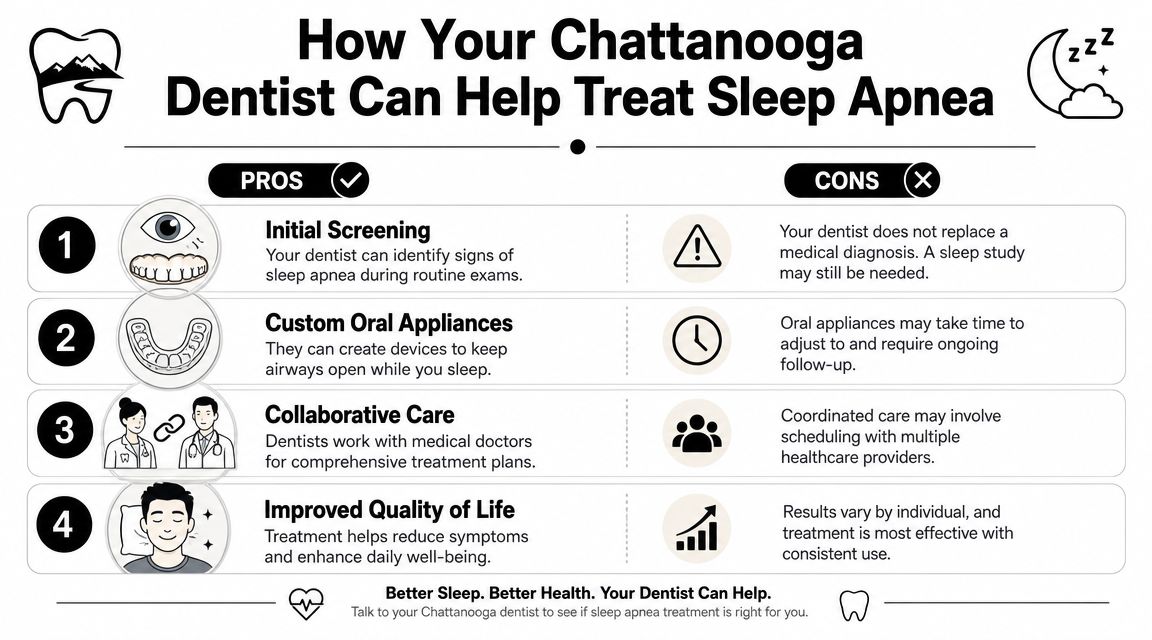
A dentist's role in sleep apnea care is practical and often underappreciated. We're in a position to see the mouth, jaw, bite, tongue space, wear patterns, and soft tissue relationships that can hint at an airway problem. During routine care, whether you came in for dental care, cleaning and exams, dental x-rays, restorative dentistry, or even a new patient exam, those clues can become part of a larger conversation.
The dentist's role in the sleep care team
Dentists don't replace physicians in diagnosing every form of sleep apnea. What we do is screen, identify patterns, and help manage appropriate cases through oral appliance therapy. That usually means working as part of a broader care team.
A physician may confirm the diagnosis through a sleep study or other medical evaluation. Once obstructive sleep apnea is identified and oral appliance therapy is appropriate, a dentist can design and adjust a custom device that helps keep the airway more open during sleep.
How oral appliance therapy works
A sleep apnea oral appliance fits over the teeth, somewhat like a protective dental device, but its purpose is different. It gently supports the lower jaw in a more forward position so the airway is less likely to collapse during sleep.
That small shift can make a meaningful difference for the right patient. The device is compact, quiet, and easy to travel with. For people who struggle with bulkier equipment, that convenience matters because treatment only works when you'll use it.
For patients comparing options, sleep apnea treatment through a custom dental appliance is one approach used for selected cases, including care available through Winn Smiles.
Some patients don't fail treatment because the treatment is ineffective. They fail because the treatment doesn't fit their daily life well enough to stay consistent.
What tends to work and what tends not to
Here's the practical trade-off discussion I'd want any neighbor to hear clearly:
| Option | What it can help with | Common challenge |
|---|---|---|
| Oral appliance therapy | Mild to moderate obstructive patterns and some CPAP-intolerant patients | It must be custom-fit and adjusted properly |
| CPAP | A standard option for many diagnosed patients | Some people struggle with comfort, noise, or keeping it on |
| Position changes | Helpful for some people as part of a larger plan | Usually not enough on its own when symptoms are ongoing |
| Waiting and hoping | Nothing meaningful | Symptoms usually continue |
Oral appliances are not magic. They need proper fitting, follow-up, and the right diagnosis. Store-bought mouthpieces usually don't give the same level of precision, comfort, or jaw support. In practice, that's where people get frustrated. They try a shortcut, dislike it, and assume all oral appliance therapy is the same. It isn't.
Why this matters for local patients
For adults searching dentist in Chattanooga, TN, dentist near me, or even services like dental implants near me, cosmetic dentist near me, and emergency dentist, it helps to know that a dental office can address more than visible tooth concerns. Airway-focused treatment can be part of modern dental care when the training and workflow are in place.
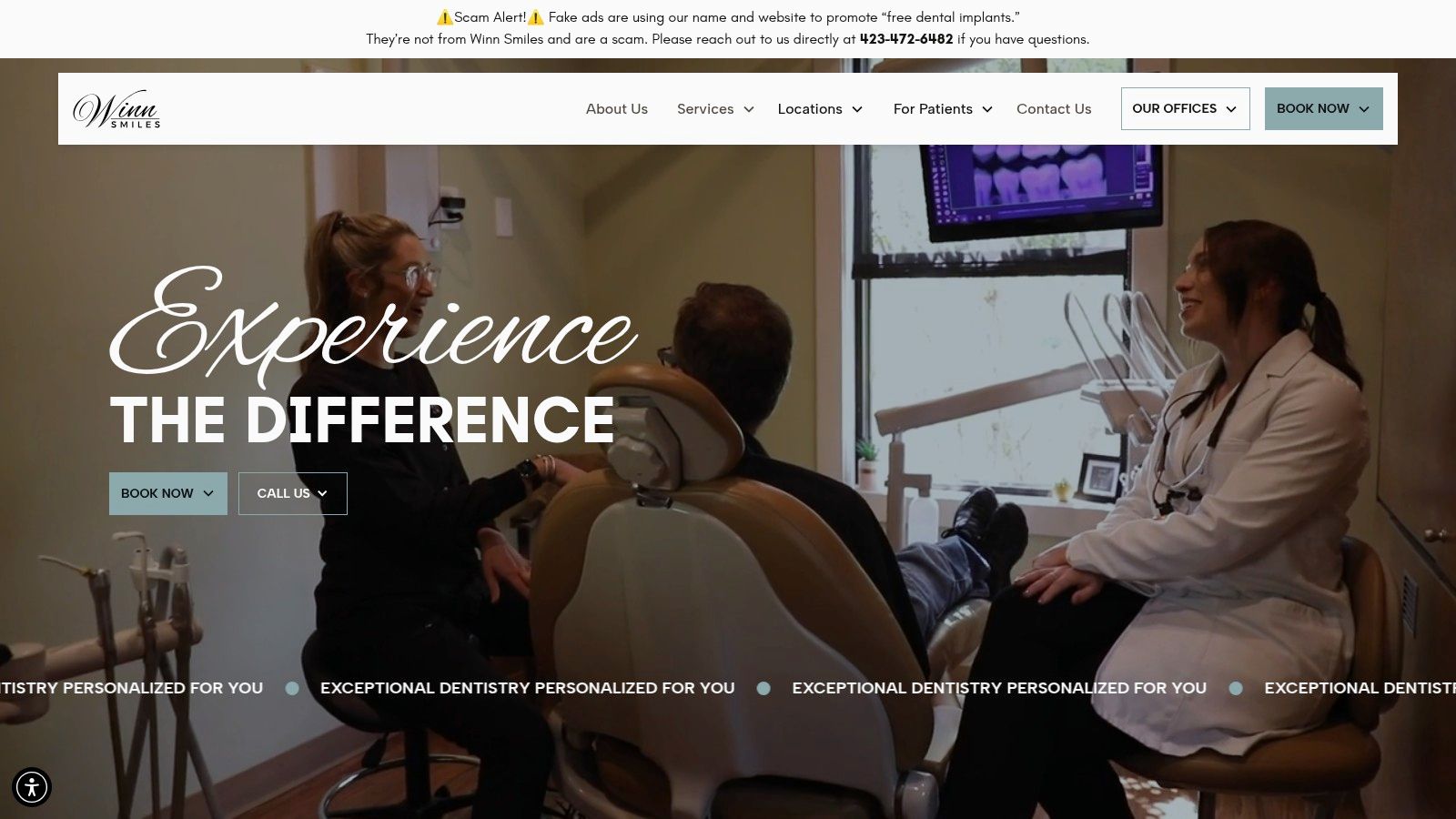
What to Expect During Your Visit at Winn Smiles
The first visit should feel clear, not intimidating. If you're concerned about sleep apnea symptoms, you shouldn't have to guess what happens next or wonder whether you'll be rushed through the appointment.
The first conversation
It starts with listening. You'll talk about what's been happening at night and during the day. Snoring, choking awake, dry mouth, morning headaches, daytime fatigue, concentration problems, and anything your sleep partner has noticed all matter.
That conversation helps determine whether your symptoms fit an airway-related pattern and whether a dental screening makes sense. If you've also been looking for a practice for broader needs like teeth whitening, cosmetic dentistry, same-day crowns, or ongoing family dental care, that can be part of the same relationship, but the sleep concern gets its own focused attention.
The exam and screening process
The exam may include an evaluation of your bite, jaw position, tooth wear, soft tissues, and oral structures that influence airway space. Dentists who work with sleep-related cases pay close attention to features that can contribute to obstruction during sleep.
You may also discuss medical history, medications, and any past sleep testing. If a formal diagnosis has not yet been made, collaboration with a physician may be needed before treatment is finalized. That step is important because the device has to match the diagnosis and the patient.
Creating the appliance and refining the fit
If oral appliance therapy is appropriate, the next step is creating a custom-fit device. Modern dental technology helps make this process more precise and more comfortable than older, one-size-fits-all approaches.
Patients often ask what adjustment feels like. The honest answer is that there can be a short adaptation period. Any device that changes jaw posture during sleep takes getting used to. The difference with a properly fitted appliance is that it can be adjusted carefully over time so comfort and effectiveness stay aligned.
The right fit matters as much as the right diagnosis. A poorly fitted device can make a good treatment feel like a bad one.
The environment matters too
For many adults, especially those with dental anxiety, comfort changes everything. A light, calm office, a friendly team, clear cost discussions, and options that support relaxation make it easier to move forward. That's true whether you're visiting for airway concerns, a damaged tooth, tooth extraction, restorative dentistry, or routine preventive care.
When patients know what to expect, they're more likely to follow through. And with sleep-related care, follow-through is what turns concern into relief.
Take the First Step Toward Better Sleep and Health
Sleep apnea affects more than the night. It can shape your mornings, your focus, your mood, your work, and your safety. The frustrating part is that many people live with the symptoms for far too long because they think being tired has become normal.
It doesn't have to stay that way. If your sleep feels broken, if your partner hears worrying sounds at night, or if your days keep getting dragged down by fatigue and brain fog, it makes sense to get evaluated. Real answers are more useful than guesswork.
Home comfort changes can support rest, even though they aren't a substitute for diagnosis or treatment. If you're also reviewing your bedroom setup, this sleep apnea mattress guide for Southern Oregon offers general ideas on sleep surface considerations that some readers may find useful.
The main point is simple. Don't ignore sleep apnea symptoms that keep repeating. If you're in Chattanooga, TN, Cleveland, TN, or nearby service areas and you've been searching for a dentist near me, a dentist in Chattanooga, TN, or a practice that can help with both oral health and airway-related concerns, a consultation can give you a practical next step.
If you're ready to stop wondering and start getting answers, contact Winn Smiles to schedule a consultation and talk through your sleep apnea symptoms, treatment options, and next steps for care in Chattanooga or Cleveland, TN.