If you're searching for how to whiten teeth naturally, you've probably seen advice involving charcoal, lemon juice, coconut oil, or homemade scrubs. The appealing promise is that anything labeled natural must be gentle and effective. It isn't that simple. Some habits can remove surface stains and help your smile stay brighter, while other popular remedies can roughen or weaken enamel without producing dependable whitening.
For patients looking for a dentist in Cleveland, TN, a dentist in Chattanooga, TN, or a cosmetic dentist near me, the most useful starting point is an honest distinction between stain removal and bleaching. Natural care can improve the appearance of discoloration on the outside of a tooth. It generally can't change the tooth's underlying color the way peroxide-based whitening can. Winn Smiles provides local guidance for Cleveland and Chattanooga patients who want practical answers before choosing home care or professional treatment.
Why Most Natural Whitening Advice Falls Short
The assumption that natural whitening methods are automatically safe is one of the most persistent problems in cosmetic dentistry. Charcoal powders, oil pulling, lemon juice, and fruit-based mixtures are widely promoted online, but popularity doesn't establish either effectiveness or enamel safety.
The American Dental Association says evidence for DIY and natural whitening is limited. Its guidance notes that oil pulling hasn't produced documented whitening, while evidence remains insufficient for charcoal-based products. A controlled review also found that popular natural agents used for bleaching didn't show whitening efficacy, regardless of how long people used them. You can read the ADA's guidance on teeth whitening and DIY methods for the broader clinical context.
Surface stains versus tooth color
Coffee, tea, tobacco, and plaque can leave deposits on the outer surface of enamel. Removing those deposits may make teeth look cleaner and somewhat brighter. That's stain removal, not necessarily true bleaching.
Intrinsic color comes from within the tooth. Aging, enamel thinning, certain medications, trauma, and natural tooth structure can all affect that deeper shade. Brushing or rinsing can't reliably change it because those steps clean the surface rather than alter the internal color.
Practical rule: If a method claims to bleach teeth without a bleaching ingredient, be skeptical about dramatic results.
Hydrogen peroxide and carbamide peroxide are the ingredients with genuine bleaching action. An expert review explains that they can whiten teeth safely and effectively when used according to manufacturer instructions, while baking soda helps clean surface stains but doesn't change intrinsic tooth color. The distinction is important because it prevents patients from scrubbing harder when the underlying issue requires a dental evaluation.
Natural care still has value. Consistent brushing, flossing, professional cleanings and exams, and sensible stain prevention can preserve your natural brightness. But if you want a predictable shade change, a consultation with a local dental practice is more realistic than relying on an aggressive DIY routine.
Daily Habits That Keep Teeth Bright Naturally
The safest natural whitening routine begins with prevention. Teeth tend to look dull when plaque remains on the enamel, stains sit undisturbed, or dark drinks repeatedly contact the same surfaces. A steady routine does more for your smile than rotating through harsh home remedies.
Start with a soft-bristled toothbrush and fluoride dentifrice. Use gentle pressure and small movements along the gumline rather than scrubbing back and forth. Brush all tooth surfaces and clean between teeth with floss or another dentist-recommended interdental tool. Patients who want to refine their technique can review these tooth-brushing techniques from Winn Smiles.
Make stain prevention part of your day
After coffee, tea, berries, or other strongly colored foods, rinse with water. Water helps clear residue without adding another abrasive product to your routine. A straw can also reduce contact between dark beverages and the front teeth, although it won't eliminate exposure completely.
Don't brush immediately after acidic foods or drinks. Acid temporarily softens the enamel surface, so brushing right away can increase mechanical wear. Waiting about 30 minutes before brushing is a commonly recommended protective measure in routine dental advice, but patients with sensitivity, erosion, or reflux should ask their dentist for individualized guidance.
Saliva also supports the mouth's natural cleaning and buffering processes. Staying hydrated and limiting frequent sipping of sugary or acidic drinks gives saliva more opportunity to protect the oral environment. These habits won't transform a naturally darker tooth shade, but they can help prevent new discoloration and support healthier enamel.
A routine cleaning and exam matters when buildup has already hardened. A hygienist can remove deposits that home brushing can't, while the dentist can check for cavities, gum problems, enamel wear, or restorations that may affect the appearance of your smile.
Natural Whitening Ingredients Backed by Evidence
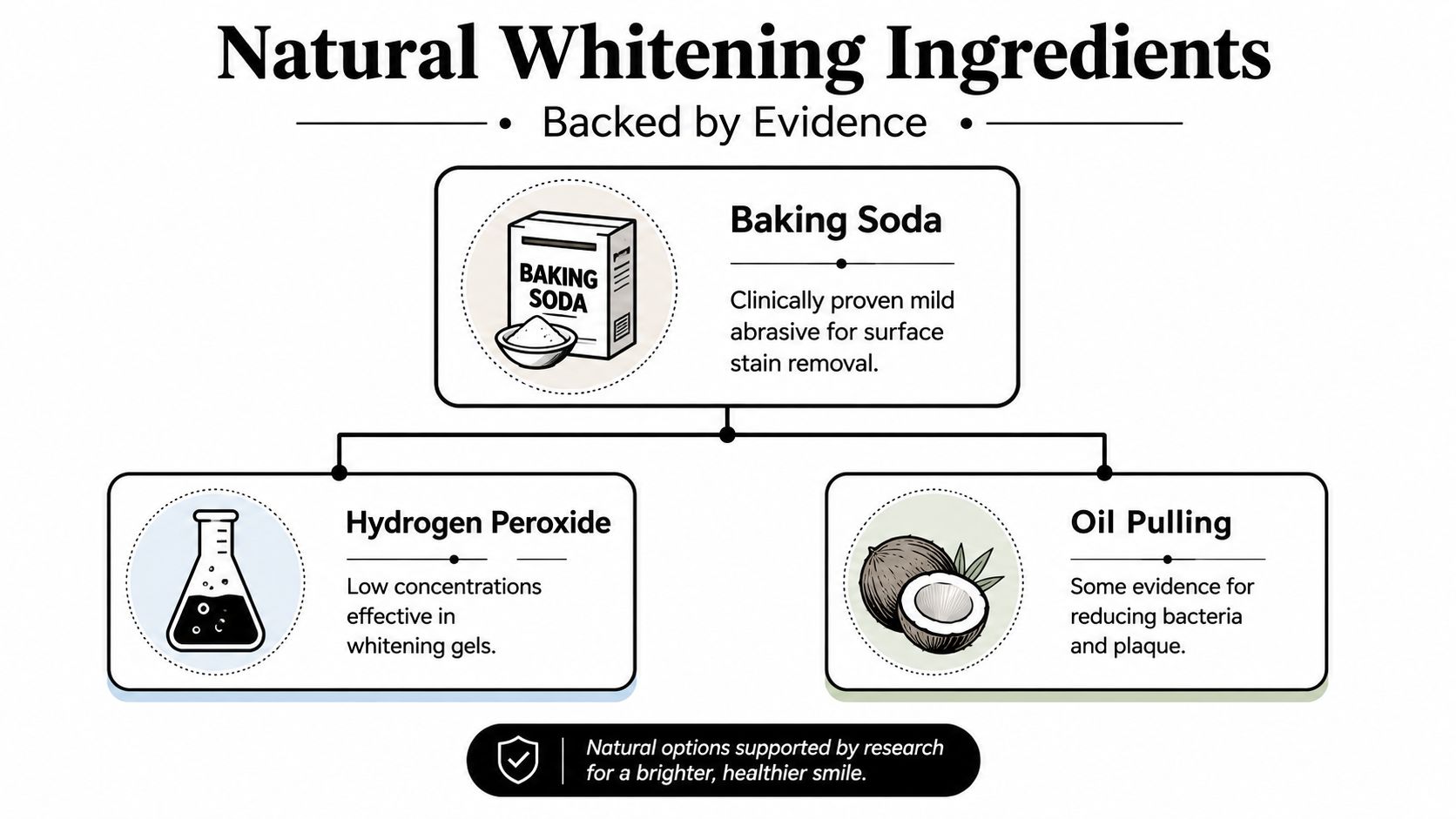
Baking soda is the clearest evidence-backed option for people seeking a gentler approach to surface stains. A literature review found that baking soda-containing dentifrices are effective and safe for stain removal and whitening. Clinical studies included in that review also reported that some baking soda formulas outperformed non-baking-soda toothpastes with higher abrasivity, suggesting that controlled cleaning doesn't require aggressive enamel wear. See the review of baking soda dentifrices and stain removal for the supporting evidence.
Baking soda works mechanically. It can help lift external discoloration, but it won't bleach the inner tooth. That makes a baking soda-containing toothpaste a more sensible daily option than brushing with a rough homemade powder. Avoid treating baking soda as a stronger product just because it's available in the kitchen. More pressure and more frequent use can still irritate gums or wear dental surfaces.
Where peroxide fits
Hydrogen peroxide and carbamide peroxide are different from baking soda because they can produce a chemical bleaching effect. They're used in professional whitening systems and some home products. The European Commission's scientific opinion states that products containing or releasing up to 6% hydrogen peroxide can be used safely at home when they provide clear instructions. Reported adverse effects are usually mild gum irritation or tooth sensitivity, which often resolve within one to two days after stopping use. Review the European Commission opinion on hydrogen peroxide tooth-whitening products before treating an online product as harmless.
Sensitivity isn't a reason to ignore symptoms. If pain lingers, gums turn white or sore, or the product causes sharp discomfort, stop using it and contact a dental professional. Existing cavities, gum recession, cracked enamel, and exposed root surfaces can make whitening more uncomfortable.
For readers interested in the difference between ingredients and oral bacteria, a useful supplementary resource is BacteriaFAQ.com's guide to S. aureus transmission and control. It isn't a teeth-whitening guide, but it provides broader context for why oral products should be evaluated for their actual effects rather than their marketing language.
Popular DIY Whitening Trends to Avoid
Activated charcoal is a good example of a product that looks persuasive but performs poorly under closer examination. A 2024 randomized clinical study found that activated charcoal-based whitening products produced only a minor and unsatisfactory whitening effect. Conventional carbamide peroxide produced the optimal whitening outcome and the highest volunteer satisfaction, while sensitivity risk became high after 7 and 14 days, with greater sensitivity prevalence in the carbamide peroxide group. The lesson isn't that every peroxide product is appropriate for every person. It's that “natural” doesn't guarantee either comfort or results. See the 2024 clinical study of charcoal and carbamide peroxide whitening.
A 2022 systematic review of 11 studies found mixed whitening results for activated charcoal toothpastes, alongside a consistent concern about abrasivity. Most studies reported higher abrasive potential, and the review concluded that charcoal toothpastes had a lower whitening effect than products containing traditional agents such as hydrogen peroxide or carbamide peroxide. The systematic review of activated charcoal toothpastes is especially relevant for anyone using charcoal every day.
Why acids are a poor trade
Lemon juice, vinegar, and fruit-acid mixtures can create a temporarily clean or slippery sensation, but acid can soften enamel. Repeated exposure followed by brushing may increase wear and sensitivity. As enamel becomes thinner, the naturally yellow dentin underneath may show more clearly, making the smile look darker rather than brighter.
Oil pulling is less abrasive, but the whitening claim still isn't established. A 2026 evidence review found that available studies were limited and inconsistent and didn't prove whitening as a benefit. Read the evidence review of oil pulling if you're considering it. Swishing oil may be a personal hygiene preference, but it shouldn't replace brushing, interdental cleaning, professional exams, or treatment for gum disease.
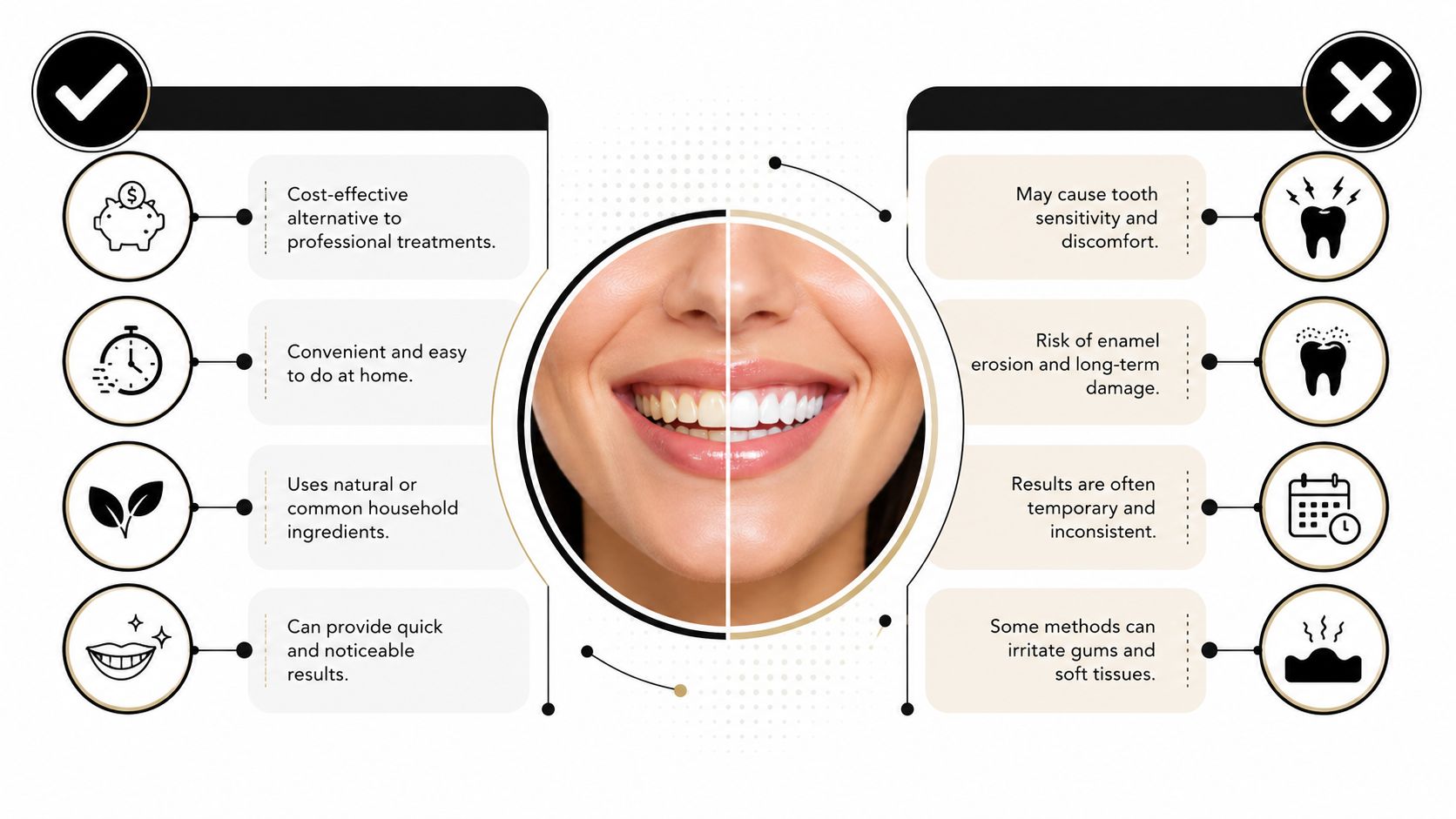
Watch for warning signs: increasing sensitivity, rough tooth surfaces, gum irritation, visible erosion near the gumline, or a product that leaves a gritty coating. Those signs call for stopping the remedy, not increasing frequency.
When to Choose Professional Teeth Whitening
Natural care reaches its limit when the discoloration lies beneath the surface. If brushing, flossing, stain prevention, and a baking soda-containing dentifrice have improved cleanliness but not the shade you want, professional evaluation can identify the reason.
Professional whitening may be the better choice when you have deep or uneven staining, a time-sensitive cosmetic goal, sensitivity concerns, or restorations that need to be considered. Crowns, veneers, and fillings don't respond to bleaching in the same way natural enamel does. Whitening before evaluating those restorations can create a mismatch rather than a uniform smile.
Predictability matters
A cosmetic dentist can examine your enamel and gums, determine whether whitening is appropriate, and discuss custom-fitted trays or in-office treatment. Winn Smiles offers professional whitening options designed to lift deeper stains, including in-office treatment and take-home kits with custom-fitted trays and professional-strength gel. Patients can compare teeth-whitening products and options from Winn Smiles before deciding which approach fits their goals.
The safety advantage isn't just that professional products are stronger. It's that a dental team can protect the gums, check for disease, adjust treatment for sensitivity, and avoid whitening teeth that need restorative care first. If a cavity, cracked tooth, gum recession, or enamel erosion is contributing to discomfort or discoloration, whitening alone won't solve the problem.
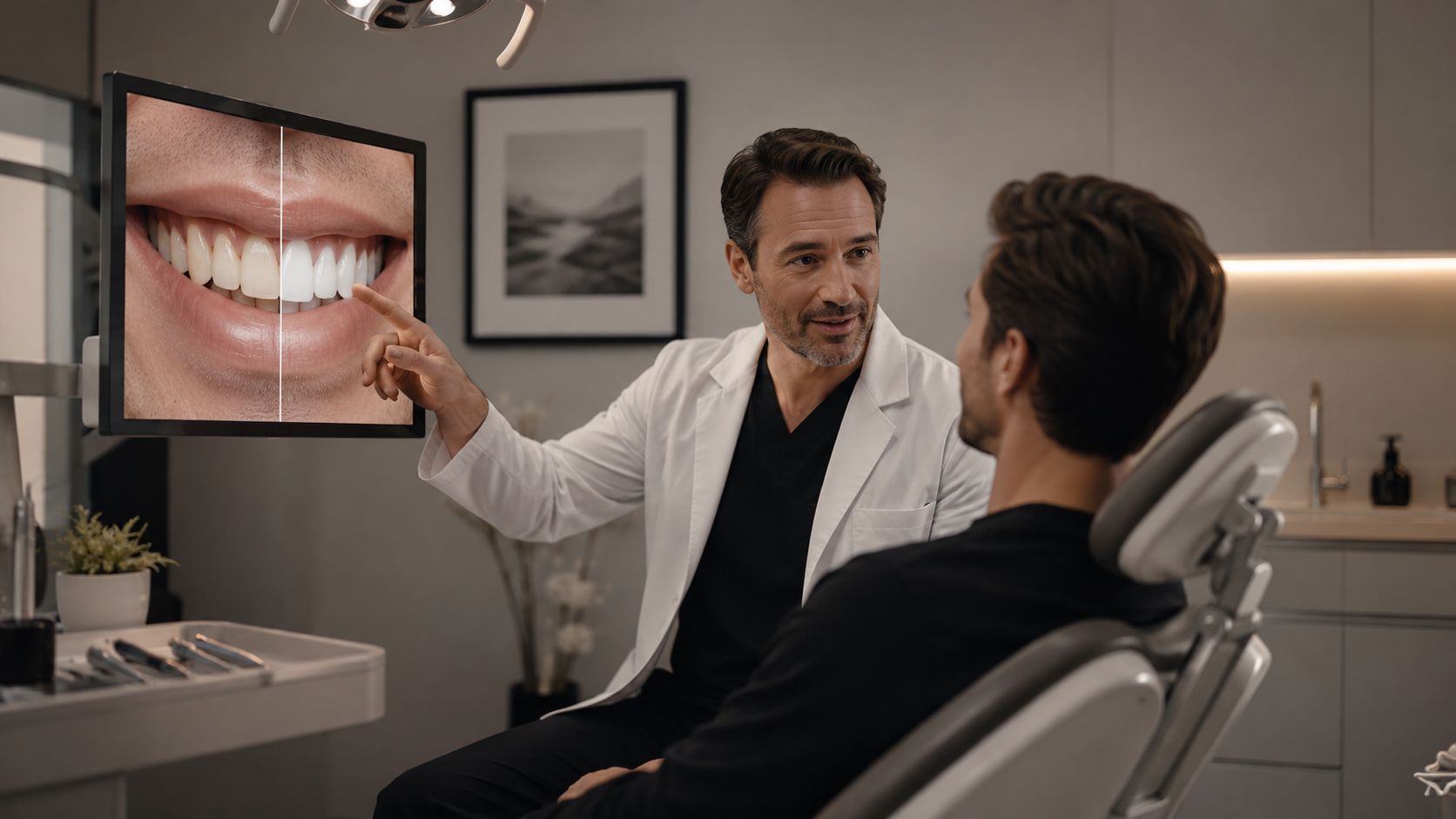
For Cleveland and Chattanooga patients, a consultation can also connect cosmetic concerns with broader care. A cleaning and exam may be all you need, or the dentist may recommend restorative dentistry, veneers, or another treatment for a result that whitening can't provide. Patients searching for a cosmetic dentist near me often benefit from that whole-mouth assessment rather than choosing a product in isolation.
What to Expect at Your Whitening Consultation with Winn Smiles
A whitening visit begins with an examination, not a sales pitch. The team reviews your goals, assesses the current shade of your teeth, and looks for surface stains, enamel wear, cavities, gum recession, or existing dental work that could affect the outcome. Dental x-rays may be recommended when symptoms or clinical findings suggest that a deeper issue needs attention.
Patients can discuss whether an in-office treatment or custom take-home trays make more sense for their timeline and comfort. The conversation should include expected changes, sensitivity precautions, the effect of crowns or veneers, and transparent cost information. A personalized plan is more useful than a generic promise because every smile starts with different enamel, restorations, and stain patterns.
Winn Smiles serves patients in Cleveland and Chattanooga, Tennessee, with light, airy offices, a comfort menu, and sedation options for people who feel anxious about dental care. The practice also provides general, cosmetic, restorative, periodontal, implant, and emergency dental services, so whitening concerns can be addressed alongside the rest of your oral health when necessary.
You don't need to arrive with a perfect routine or a clear treatment decision. Bring the products you've tried, mention any sensitivity, and explain the result you want. The team can help you decide whether natural stain management is enough or whether professional whitening, veneers, restorative care, or another option is more appropriate.
If you're ready to stop guessing about how to whiten teeth naturally, schedule a consultation with Winn Smiles in Cleveland or Chattanooga. The team can evaluate your smile, explain safe whitening choices, and create a plan that supports both a brighter appearance and healthier teeth.