You've just left the dental office with a numb lip, a temporary crown in place, and a list of instructions you only partly remember. The crown feels unfamiliar, chewing feels cautious, and you may be wondering whether mild sensitivity is expected or whether something has gone wrong.
Good temporary crown care protects the prepared tooth, keeps the gums calm, and gives your dentist the best chance of placing the permanent crown cleanly. Whether you're searching for a dentist near me in Cleveland, TN, a dentist in Chattanooga, TN, an emergency dentist, or help with restorative dentistry, Winn Smiles supports patients through the days between appointments.
Walking Through the First Days With a Temporary Crown
The first evening
Once the anesthetic wears off, the temporary crown may feel bulky or slightly strange against your tongue. That sensation doesn't necessarily mean the crown is poorly made. Temporary restorations often have a different texture and shade from finished ceramic, and they're designed to protect the prepared tooth only until the permanent crown is ready.
Avoid chewing until feeling has returned. Numb lips and cheeks make it easy to bite yourself or place too much pressure on the crown without realizing it. When you do eat, choose something soft and chew on the opposite side.
The next day
Mild gum tenderness, slight pressure, or brief sensitivity to hot and cold can occur after the tooth has been prepared. The gum may also feel irritated where the temporary crown meets the tissue. These symptoms should be manageable and should trend in the right direction rather than intensify with every meal.
The critical issue is whether the crown feels stable and whether your bite feels balanced. A temporary crown that contacts too early can make the tooth feel bruised and may leave your jaw sore because you unconsciously shift how you chew.
Practical rule: A temporary crown should feel secure, even if it doesn't feel identical to your natural tooth.
The first two to three days
Treat the interim period as a short protection window, not a chance to test the crown's strength. A retrospective study of provisional crowns in dental school clinics reported an 18.75% overall failure rate, with a median time to failure of 12 days and an interquartile range of 6 to 26 days (clinical study of provisional crown failures). Molars were identified as a significant risk factor, which helps explain why chewing habits and crown location matter.
At Winn Smiles, patients in Cleveland and Chattanooga can contact the practice when a temporary feels high, loose, or uncomfortable. Same-week adjustments and direct communication can prevent a small bite or fit issue from becoming a larger interruption.
Why Temporary Crowns Need a Different Care Mindset
A permanent crown is bonded for long-term function. A provisional crown protects the prepared tooth, maintains its space, and lets you chew while the laboratory or digital workflow produces the final restoration. It must also be removable without harming the prepared tooth, so temporary cement is designed to release more readily.
Many provisionals use acrylic or composite-based materials, and their cement seal is less resistant than the bond of a definitive crown. Treat the temporary as a short-term restoration, not an indestructible natural tooth. Sticky foods can pull it loose, hard foods can fracture it, and forceful flossing can lift it at the margin.
Bite balance deserves equal attention. A temporary crown that contacts too early can make the tooth feel bruised and encourage you to shift how you chew. That extra pressure may leave the jaw sore and can turn a small fit problem into a reason to contact the dental office.
The biological side matters just as much. A randomized clinical trial found that temporary crowns and fixed partial dentures increased plaque adherence compared with untreated reference teeth, and it linked temporary restorations with measurable periodontal differences (randomized clinical trial on plaque and provisional restorations). Plaque can gather quickly at the crown edge, especially when the gum is already tender after preparation.
Why the gumline affects the final crown
Inflamed or bleeding gums can make the final appointment harder. The dentist needs to assess the prepared tooth and surrounding tissue, confirm the fit, and maintain a clean, dry field for final cementation. Swelling at the margin can obscure the finish line and make the area more difficult to clean.
Gentle brushing and careful flossing protect the tissue around the permanent crown. A short daily routine is safer and more effective than trying to correct irritation with forceful brushing later.
Why cement placement matters
Temporary crown retention depends on cement chemistry and preparation design. Laboratory testing found the best balance of adaptation and retention when cement was placed along the axial walls and cervical third of the crown's inner surface. Full bulk filling increased adaptation discrepancies, while vent holes improved fit without sacrificing the best possible retention (a study of provisional crown cement placement techniques).
Patients do not control the cement technique, but they do control the forces placed on the restoration afterward. Careful chewing, cleaning, and prompt attention to a high or loose crown help protect the temporary during this limited window.
Eating, Chewing, and Cleaning Without Trouble
The safest routine is simple, but each step has a reason.
Eating with less stress on the provisional
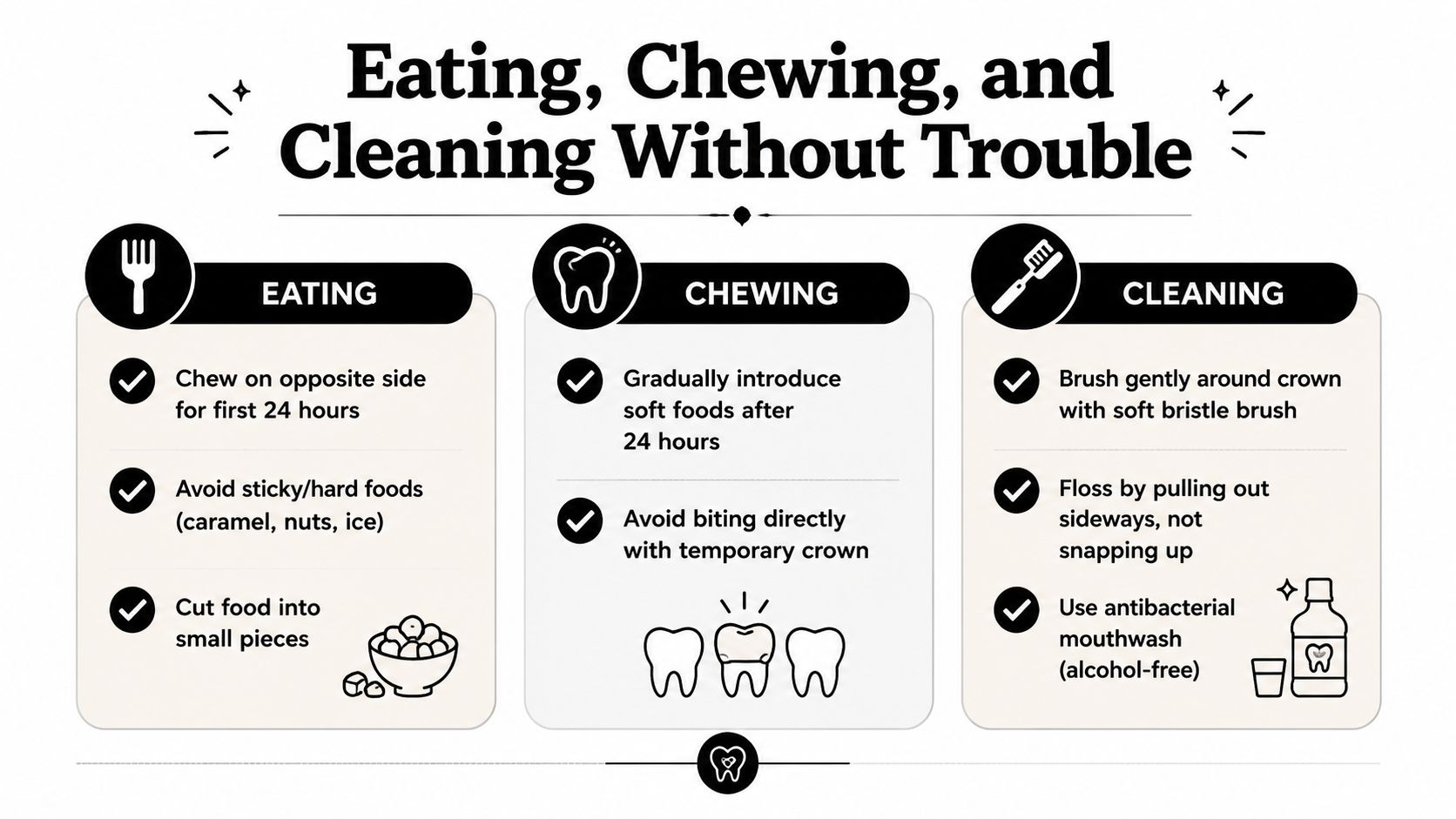
For the first 24 hours, chew on the side opposite the temporary crown. Cut food into small pieces rather than using the crowned tooth to bite through an apple, crusty bread, raw vegetables, or other firm foods.
Avoid foods that can pull or crack the restoration:
- Sticky foods: Skip caramel, taffy, chewing gum, and similar foods that cling to the crown and tug at the cement.
- Hard foods: Avoid nuts, ice, hard candy, and anything you might instinctively use the crowned tooth to break.
- Large bites: Smaller pieces reduce sudden pressure and make it easier to chew on the unaffected side.
- Extreme temperatures: Hot and cold sensitivity is common after treatment, and extreme temperatures may make the temporary cement bond feel less comfortable.
After the first day, you can gradually introduce softer foods as comfort allows. Don't use the temporary crown to open packages, crack shells, or test whether it has “settled.”
Cleaning around the margin
Brush gently with a soft-bristled toothbrush. Angle the bristles toward the gumline and use controlled strokes around the crown's edges instead of scrubbing back and forth with force.
Flossing is important, but the direction matters. Slide the floss between the teeth, clean the sides, and pull it out sideways. Snapping the floss upward can catch the temporary crown's edge and dislodge it. A floss threader or interdental cleaner can help when access is tight.
An alcohol-free fluoride rinse may reduce bacterial load without irritating the margin. Swish gently rather than forcefully. If food repeatedly catches on one side, or the crown feels as though it hits before the other teeth, call the office for a bite check.
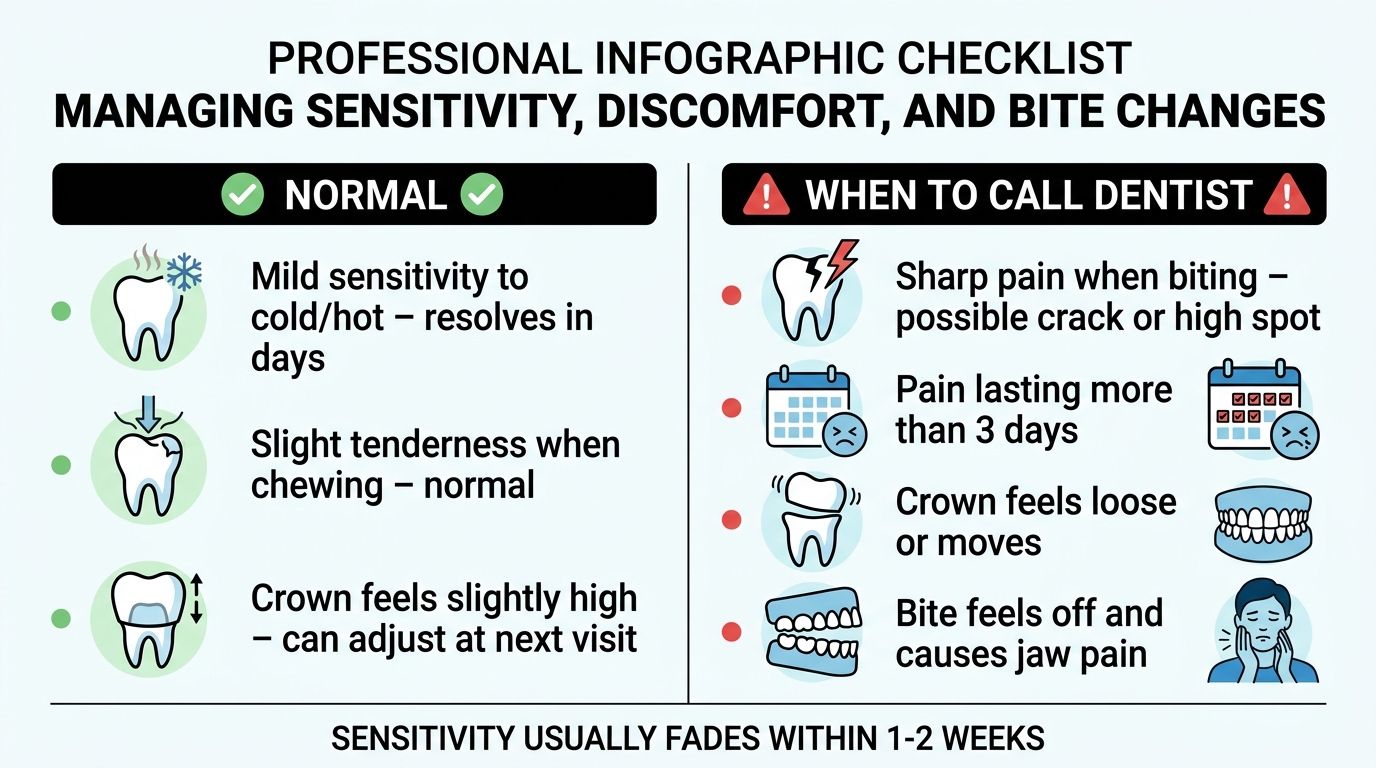
A short visual guide can help you remember which sensations are usually manageable and which deserve a call.
Managing Sensitivity, Discomfort, and Bite Changes
Patients often expect the tooth to feel completely normal as soon as they leave the chair. In practice, a prepared tooth can remain sensitive while the nerve and surrounding tissues settle.
Brief sensitivity to cold or hot that fades quickly is usually less concerning than pain that lingers after the temperature is gone. Slight tenderness when chewing can also occur. The pattern matters most. Symptoms that gradually ease are different from pain that becomes sharper, lasts longer, or starts waking you at night.
Comfort measures that make sense
Use a soft-food pace for the first few meals and avoid extreme temperatures on the treated side. A desensitizing toothpaste can be applied gently at the gumline, and an over-the-counter pain reliever may help if you can safely take it. Follow the medication label and check with a medical professional or pharmacist if you have allergies, take other medications, or have a condition that affects pain-reliever use.
A high temporary crown creates a different experience. You may feel one tooth meet first, notice pressure in a specific spot, or develop jaw soreness because you're avoiding that side. Don't try to correct the bite at home. Your dentist can identify the contact with clinical tools and make a controlled adjustment.
Call sooner rather than later when: the crown moves, pain continues to intensify, swelling appears, or your bite remains unbalanced after the initial adjustment period.
Sensitivity that lasts more than two weeks, pain that wakes you at night, or a bite that still feels wrong after 48 hours warrants an appointment rather than continued waiting. For additional background on nerve-related discomfort after dental treatment, see this resource on expert trigeminal nerve relief from Pain and. You can also review Winn Smiles' guidance on tooth sensitivity relief.
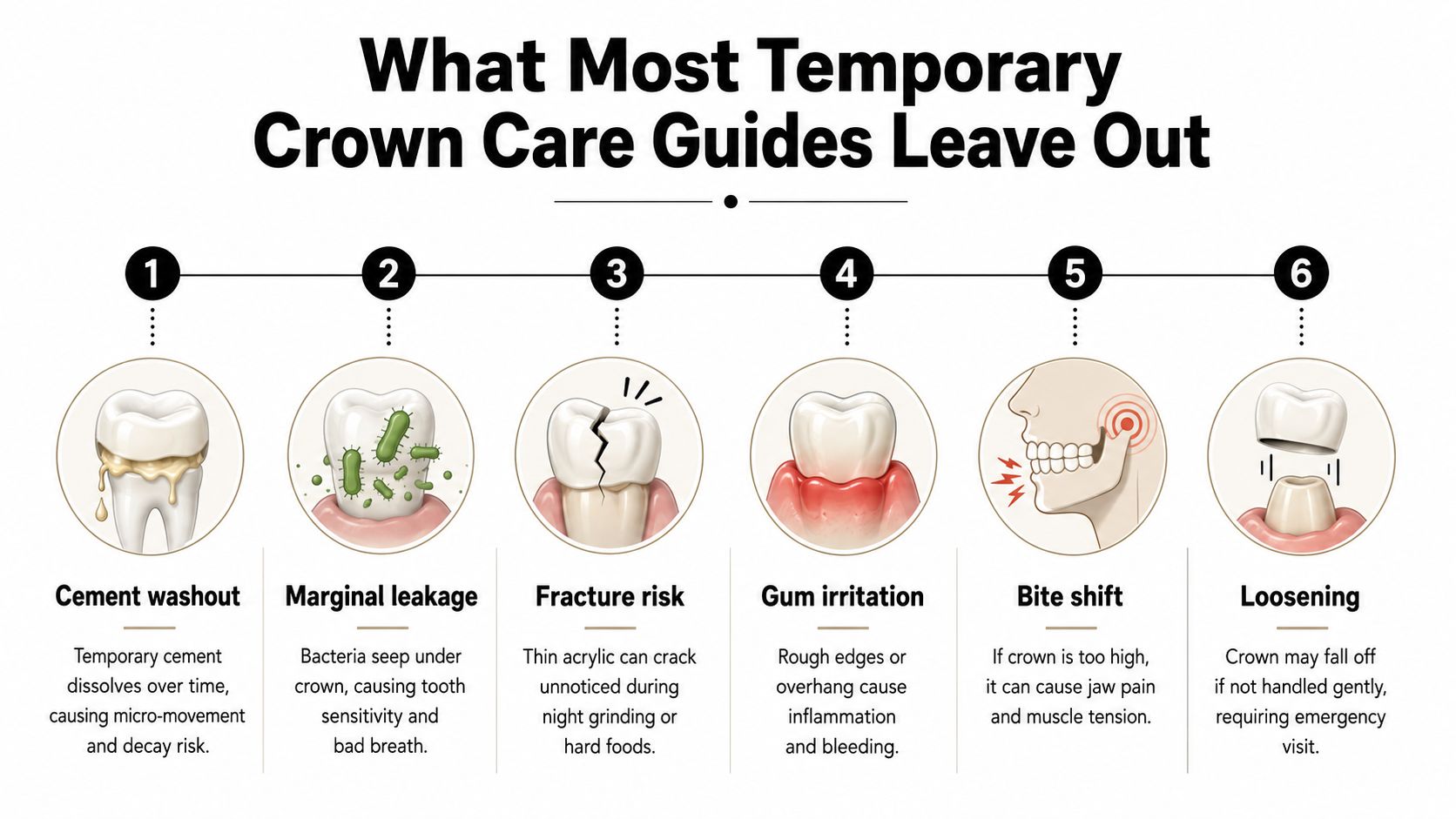
Some complications aren't obvious from the outside. A temporary can look intact while cement washes out, bacteria leak at the margin, acrylic fractures, or the gum becomes irritated. Those changes are reasons to contact your dentist, particularly when they're accompanied by bad taste, bleeding, movement, or increasing sensitivity.
What Most Temporary Crown Care Guides Leave Out
“Don't eat sticky foods” is useful, but it misses several problems that bring patients back between appointments. The hidden failure window often starts with a bite that is slightly wrong, an irritated gum, or cement beginning to break down while the crown still looks intact.
A bite that feels slightly high
A temporary crown should meet the opposing teeth evenly. If it touches first, patients may keep testing it or shift chewing to the other side. Repeated pressure can leave the tooth, jaw muscles, or surrounding teeth sore.
Do not try to find the contact with household objects or grind the crown yourself. Dental teams use articulating paper and other clinical checks to locate a high spot accurately. Food that repeatedly catches on one side, or a bruised feeling whenever you close, is a reason to request an adjustment.
Irritation from the material
Acrylic resins and cement components can cause gum irritation, burning, or an unusual taste in some patients. A clinical evaluation of provisional cements for managing postoperative sensitivity used a non-eugenol TempBond NE formulation to avoid eugenol's obtundant effect on postoperative sensitivity (clinical evaluation of provisional cements for managing postoperative sensitivity). This does not mean every cement will cause a reaction, but new burning, persistent redness, or worsening tissue discomfort should be assessed.
Cement chemistry also affects how well a temporary stays seated. Comparative evidence found that adding stannous fluoride to some non-eugenol temporary cements increased retentive strength by 27 to 48%, while sodium fluoride decreased it by 14 to 23% (comparative study of temporary cement retention). Do not add products or substances to dental cement at home. The dentist must choose and mix the material according to the crown and clinical situation.
The short maintenance window
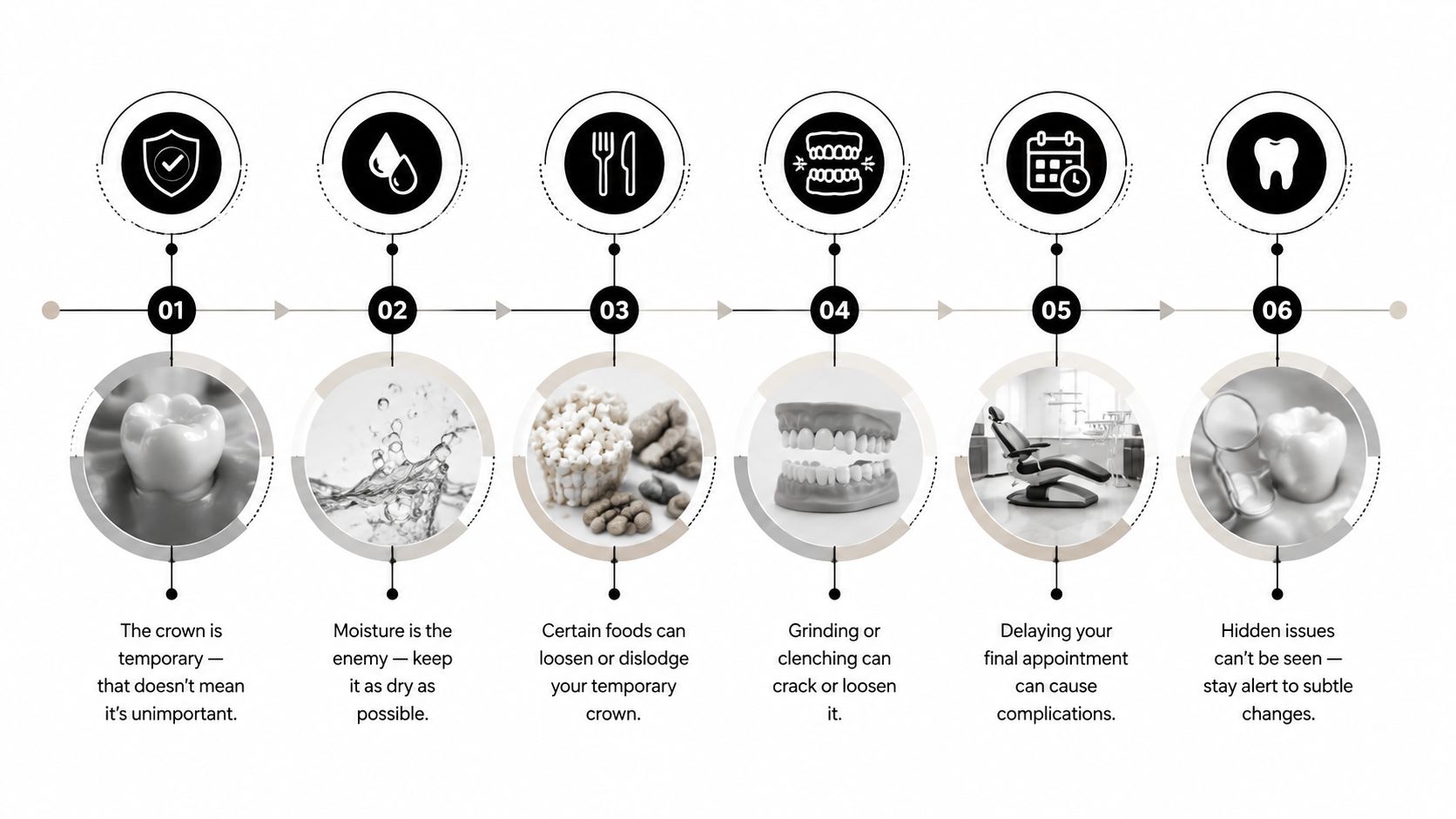
Temporary crowns are made for interim use, yet scheduling delays can extend that period. A crown that has remained in place may still have a problem developing underneath or around its margins. During brushing, check for movement, rough edges, gum swelling, or a change in how the teeth meet.
Call the practice if the final appointment is delayed instead of waiting for symptoms. A brief review may confirm that the crown remains stable, or catch cement loss and irritation before the prepared tooth becomes more vulnerable.
Troubleshooting a Loose or Dislodged Crown
A patient often notices the problem while eating. The crown may wobble, feel taller, or come out in a piece of food. The first rule is don't use household glue. Superglue, Vaseline, and chewing gum can contaminate the crown, irritate tissue, and make professional re-cementation more difficult.
If the crown has fallen out, pick it up, rinse it gently with water, and inspect it for obvious debris or remaining cement. Don't scrape the inside aggressively. Store it in a small clean container, not a tissue, because tissue is easy to throw away accidentally.
Avoid chewing on the exposed tooth and keep the area clean with gentle brushing. Pharmacy temporary dental cement may be a stopgap in some situations, but it isn't a substitute for examination, especially if the crown doesn't seat fully or your bite feels different. If you're uncertain what to do before reaching the office, Winn Smiles' dental emergency tips can help you organize the next step.
A minor wobble without pain may be appropriate for a call on the next business day, but contact the office the same day when the crown is off a front tooth, bleeding continues, severe sensitivity develops, or the tooth appears to have exposed nerve tissue. Temporary crown loss usually doesn't cause lasting damage when you protect the tooth from pressure and arrange prompt dental care, but leaving it unattended creates avoidable risk.
Schedule Your Next Visit With Winn Smiles
The permanent crown appointment isn't just a formality. Your dentist needs to reassess the prepared tooth, check the gums, confirm the final restoration's fit, and verify that the bite is comfortable before cementing it.
Delaying care can allow plaque, leakage, shifting, or repeated pressure to compromise the tooth. If your temporary crown loosens, pain persists, or the gum swells, call Winn Smiles instead of waiting for the scheduled visit.
Patients in Cleveland and Chattanooga can schedule restorative dentistry, same-day crown consultations, emergency dental services, dental implants, tooth extraction, cosmetic dentistry, teeth whitening, cleaning and exams, and dental x-rays through the practice. If you're comparing local options after searching for a cosmetic dentist near me, dental implants near me, or an emergency dentist, you can also review the Winn Smiles SEO success story for background on the practice's local presence.
Bring your questions about sensitivity, flossing, bite pressure, or material reactions to your visit. Winn Smiles is available in Cleveland and Chattanooga as a long-term restorative care partner, not only for the procedure that placed your temporary crown.
Schedule your temporary crown follow-up with Winn Smiles in Cleveland or Chattanooga for a careful fit check, bite adjustment, and permanent crown consultation. Call the office if your crown feels loose, your pain persists, or your gums swell, and let the team help protect your tooth before a small issue becomes an emergency.