Most noticeable veneer sensitivity usually settles in the first 24 to 48 hours, many people get back to normal routines the same day or within 1 to 2 days, and bite and speech often feel natural within 1 to 2 weeks. If you're looking up a dentist near me because you want a better smile but don't want a long recovery, the good news is that veneers recovery time is usually measured in days, not months.
A lot of adults in Cleveland, TN and Chattanooga, TN start in the same place. They want to fix worn edges, discoloration, or uneven teeth, but then one practical question takes over: “How long am I going to feel off after this?” That concern is reasonable. You may be thinking about work, social plans, family routines, or whether you'll be able to eat and talk comfortably.
Veneers recovery can feel confusing because people use words like healing, settling, and adjusting as if they mean the same thing. They don't. With veneers, the bigger issue is often comfort and adaptation. Your teeth, gums, and bite are getting used to a new surface and shape. That's very different from the kind of recovery you might imagine after surgery.
For a cosmetic dentist near me, a dentist in Cleveland TN, or a dentist in Chattanooga TN, it helps to know what the timeline really looks like before you book. Some patients notice brief cold sensitivity. Others are more aware of their bite than they expected. Some speak normally right away, while others need a few days for certain words to feel easy again. All of that can still fall within a normal veneers recovery time.
Introduction to Veneers Recovery Time in Cleveland and Chattanooga
A common story in our area goes like this. Someone has been thinking about cosmetic dentistry for a while, maybe after years of hiding one darker tooth in photos or feeling bothered by small chips on the front teeth. They finally search dentist near me late at night, then pause when they realize they don't know how much downtime veneers involve.
That hesitation makes sense. Many people worry about three things at once:
- Sensitivity at work: Will coffee, water, or air feel uncomfortable?
- Speech changes: Will people notice if certain sounds feel awkward at first?
- Time off: Will this interfere with daily life longer than expected?
Why recovery feels bigger in your mind than it usually is
Porcelain veneer treatment often moves faster than patients expect. One patient guide notes that the full consultation-to-final-bonding process commonly takes about 3 to 4 weeks, while the noticeable recovery after placement is usually much shorter, with many patients returning to normal daily routines the same day or within 1 to 2 days and adapting more fully over 1 to 2 weeks (veneer timing and healing overview).
That distinction matters. The process of planning your smile takes longer than the physical adjustment after the veneers are bonded.
Practical rule: Plan for a short comfort adjustment, not a long shutdown of your life.
What local patients usually want to know first
In Cleveland and Chattanooga, veneer questions often overlap with other treatment goals. Someone looking for cosmetic dentist near me may also ask about teeth whitening, cleaning and exams, or whether old dental work affects veneer planning. Another person may be comparing veneers with restorative dentistry, dental implants near me, or even a needed tooth extraction before cosmetic work.
That's why a good consultation matters. Your recovery experience depends partly on how much tooth preparation is needed, how your bite comes together, and how your gums respond around the edges of the veneers. Those details shape comfort more than many realize.
If you're weighing veneers in Chattanooga or Cleveland, the useful question isn't just “How long is recovery?” It's “What should I expect day by day, and when should I call if something doesn't feel right?” That's where clear guidance makes the whole decision easier.
Understanding What Recovery Feels Like After Veneers
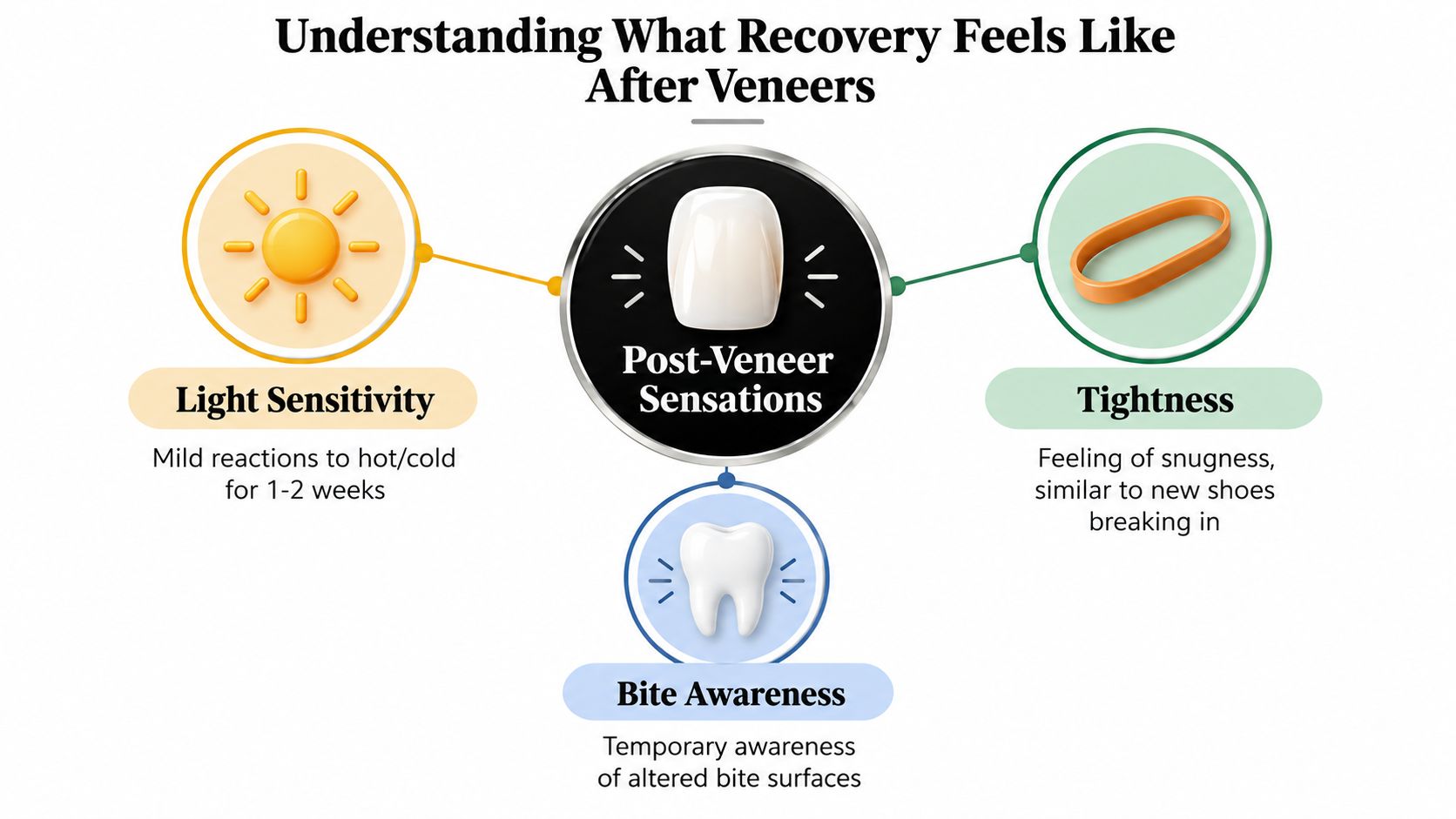
Right after veneers are placed, patients don't describe the feeling as pain. They describe it as different. Teeth may feel a little slicker. The bite may seem more noticeable. The gums may feel mildly aware around the edges where the new surfaces meet the natural tooth.
Why your mouth notices veneers at first
Think about wearing a new pair of shoes. They may fit well from the start, but you still notice them until your body stops paying attention. Veneers can feel similar. Even when they're beautifully shaped and bonded, your lips, tongue, bite, and gums need a little time to treat them as normal.
A few common reasons for that early awareness:
- Surface change: Veneers create a refined outer layer on the front of the teeth, so your tongue notices the difference.
- Bonding and preparation: If enamel was lightly reshaped, teeth can be more reactive to hot and cold for a short period.
- Gum response: The gum tissue around the teeth may be slightly irritated from the appointment and placement process.
- Bite attention: Your jaw is very good at sensing tiny changes. Even small contour differences can feel surprisingly obvious at first.
What recovery is and what it isn't
With veneers, recovery usually isn't about an open wound healing. It's more about adaptation. You're adjusting to a new tooth contour, a new edge position, and sometimes a slightly different way your upper and lower teeth meet.
Many patients get concerned because the veneers feel “high” or “thick” at first. Often, the veneers haven't changed. Your mouth is just noticing a new shape.
That's also why speech can feel strange for a few days. Sounds made with the tongue against the back of the front teeth may need a little recalibration. Patients settle into this naturally as they talk, eat, and go through normal daily routines.
Why some people feel more sensitivity than others
Not every veneer case feels the same. Traditional prep veneers may leave teeth more temperature-aware at first because of the enamel reshaping involved. Minimal-prep or no-prep cases can feel easier early on, but they can still create a temporary “something's different” sensation in your bite or speech.
A local patient who's already prone to sensitivity may also notice cold air or chilled drinks more than someone who normally never does. That doesn't automatically mean anything is wrong. It usually means your teeth are responding to a recent change and need a short settling period.
Your Day by Day Veneers Recovery Timeline
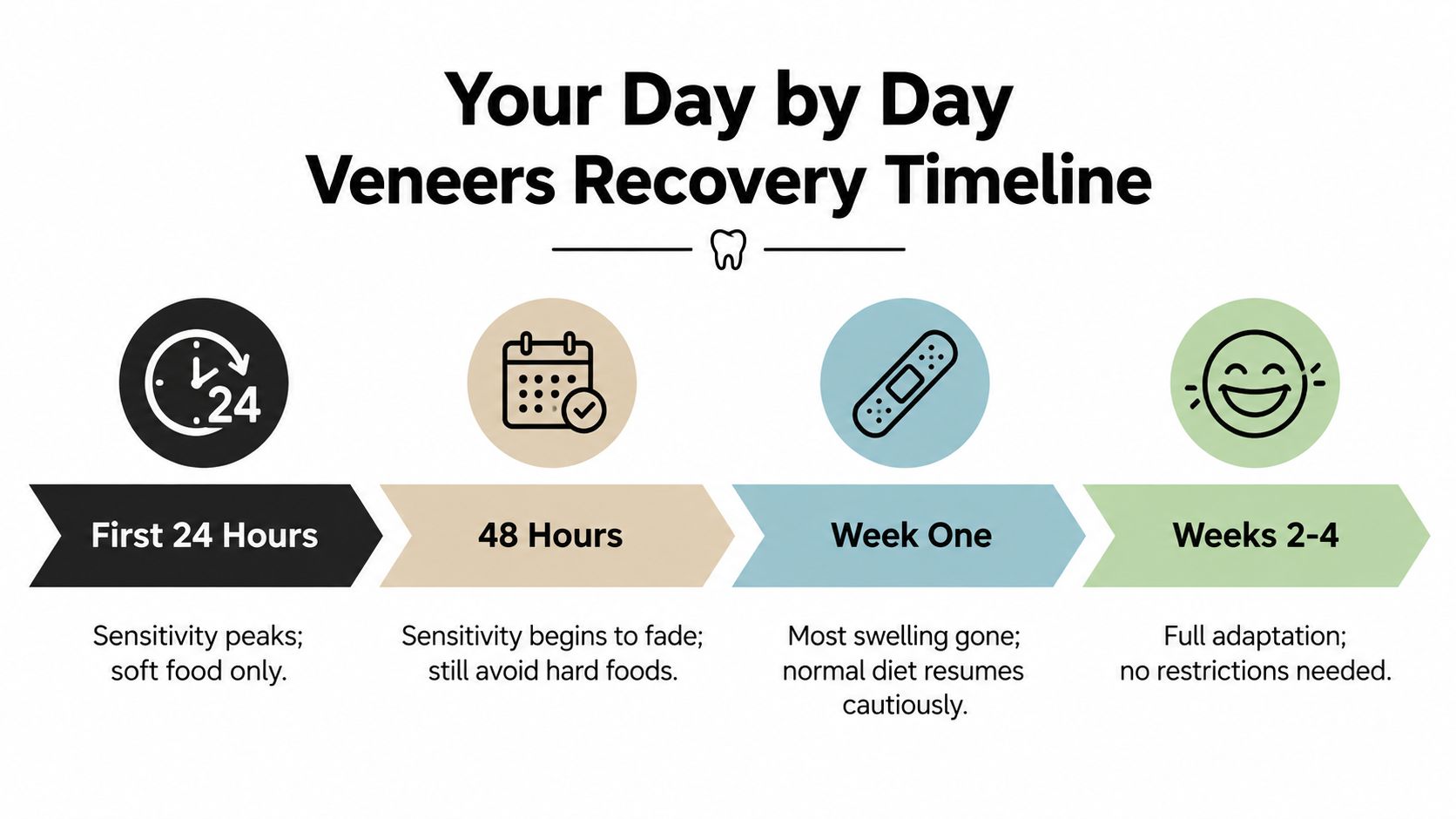
You leave your appointment feeling excited, then later that evening you take a sip of cold water and notice your front teeth right away. The next morning, your bite feels a little unfamiliar, like a new pair of shoes that fit but still need a day or two to feel natural. That pattern is common after veneers, and a day by day timeline helps you know what is settling normally and what deserves a quick call.
Day 0 to Day 2
The first 24 to 48 hours are usually the most noticeable part of recovery. Your teeth, gums, tongue, and jaw are all getting used to a new surface and edge position. If your veneers involved tooth preparation, cold sensitivity may stand out more during this window. If they were no-prep or minimal-prep, you may feel less temperature reactivity but still notice that your bite and speech feel different.
Patients often describe three early sensations:
- Cold sensitivity: Chilled drinks or cool air can feel sharper than usual.
- Bite awareness: One tooth may seem to touch first, even if the change is very small.
- Speech adjustment: Sounds like “s” or “f” may feel off for a short time.
Soft foods help during this stage, and many dentists recommend avoiding hard, crunchy, or sticky foods right away, as outlined in this veneers aftercare guide.
If you like to set up a comfortable recovery space at home, ideas from practical comfort gifts after an operation can translate well to dental recovery too, especially simple things like supportive pillows, easy meals, and low-effort comfort items.
Days 3 to 7
This is the stretch where many patients stop checking their veneers with their tongue every few minutes. Eating gets easier. Talking feels less deliberate. You may still notice brief flashes of sensitivity, especially with cold drinks, but the trend should be toward less awareness each day.
A useful way to judge this week is by pattern, not perfection. Small improvements count. If Monday feels slightly easier than Saturday, that is usually a good sign.
| Time period | What often feels normal |
|---|---|
| First 24 hours | Mild sensitivity, careful eating, strong awareness of the veneers |
| 48 hours | Less intense sensitivity, easier talking, more confidence eating soft foods |
| Days 3 to 7 | Better comfort during meals, less tongue-checking, more natural smile movement |
Your gums and bite can still be settling during this period, even if the veneers already look and feel secure. A clinical overview of veneer aftercare from Practcom notes that soft tissue comfort and occlusion may continue normalizing after the first few days.
A helpful visual overview can make this easier to picture:
Weeks 2 to 4
By this stage, veneers should start feeling like part of your own smile instead of something new sitting on your teeth. Speech usually feels normal again. Chewing should feel more confident. Day to day sensitivity should be fading, not growing.
This is also the point where a true bite issue becomes easier to spot. If you consistently feel one tooth hitting first, if you avoid biting in one area, or if your jaw feels tired every time you chew, that is worth an adjustment visit. Veneers are very precise, and sometimes a tiny polishing change is all it takes to make the bite feel balanced.
A good rule of thumb is simple. Sensitivity that gradually improves is usually part of normal adaptation. Sensitivity that stays the same, gets stronger, or is focused on one specific tooth after the early recovery period should be checked. The same goes for a bite that still feels “high” after your mouth has had time to settle.
How Prep and No Prep Veneers Change Recovery Time
Not all veneer cases feel the same afterward because not all veneers are prepared the same way. The big difference is whether the tooth needs light enamel reshaping before the veneer is bonded.
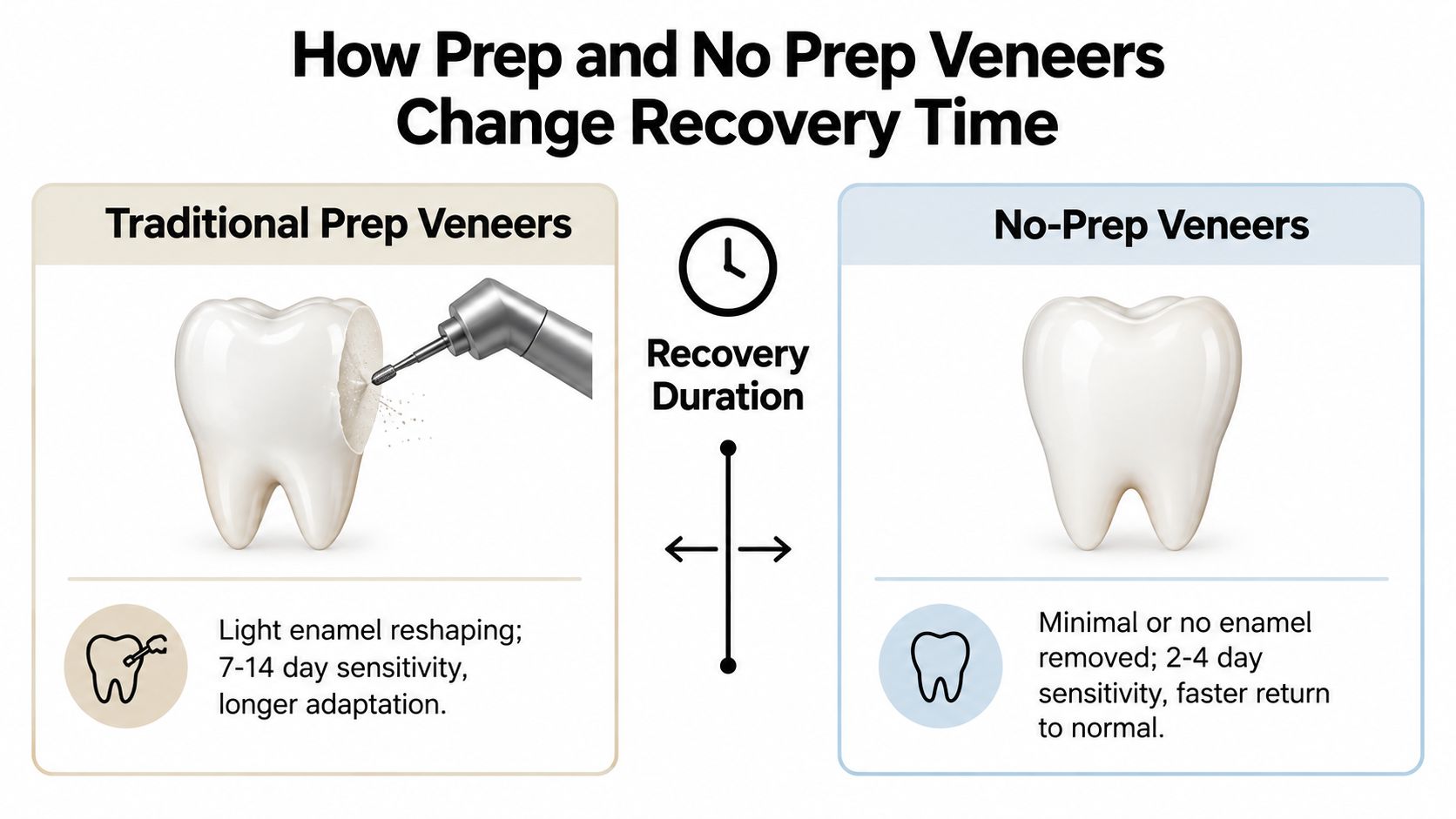
Side by side comfort differences
Traditional prep veneers usually involve removing a small amount of enamel so the final result fits naturally and doesn't look bulky. No-prep or minimal-prep veneers preserve more of the original enamel and often involve less initial reactivity.
That doesn't make one option universally better. It means the recovery experience can feel different.
| Type | What often influences recovery | What patients commonly notice |
|---|---|---|
| Traditional prep veneers | Enamel reshaping, edge refinement, gum response | More early temperature sensitivity, slightly longer settling feel |
| No-prep or minimal-prep veneers | Less enamel removal, contour adaptation | Faster early comfort for some people, but bite awareness can still happen |
Why a faster-feeling start isn't the whole story
No-prep veneers can seem easier at first because the tooth surface is less disturbed. But the mouth can still react to any change in thickness, length, and contact between teeth. In other words, less prep doesn't guarantee zero adjustment.
Traditional prep veneers may ask for a little more patience in the first days, especially if you're already sensitive to temperature. On the other hand, they may be the better design choice when the dentist needs more control over shape, alignment, or overall facial balance.
A veneer that feels slightly more noticeable at first can still be the more precise long-term fit for your smile.
If you're curious about what that shaping process looks like, this guide on how teeth are prepared for veneers gives a practical look at what preparation can involve before final placement.
How your cosmetic dentist decides
A cosmetic dentist near me isn't just choosing between “more drilling” and “less drilling.” The decision is based on tooth position, enamel condition, bite pattern, and the smile design you're trying to achieve. That's especially important if you're also discussing related options like teeth whitening, replacing older restorations, or combining cosmetic care with broader restorative dentistry.
For adults in Cleveland and Chattanooga, the most useful mindset is this: ask which veneer design gives the healthiest fit and the most predictable comfort for your specific mouth, not which one sounds easiest on paper.
Essential Care Tips for Comfortable Healing at Home
The first couple of days after veneer bonding are mostly about lowering irritation and avoiding habits that make a sensitive tooth more noticeable. Small choices matter here.
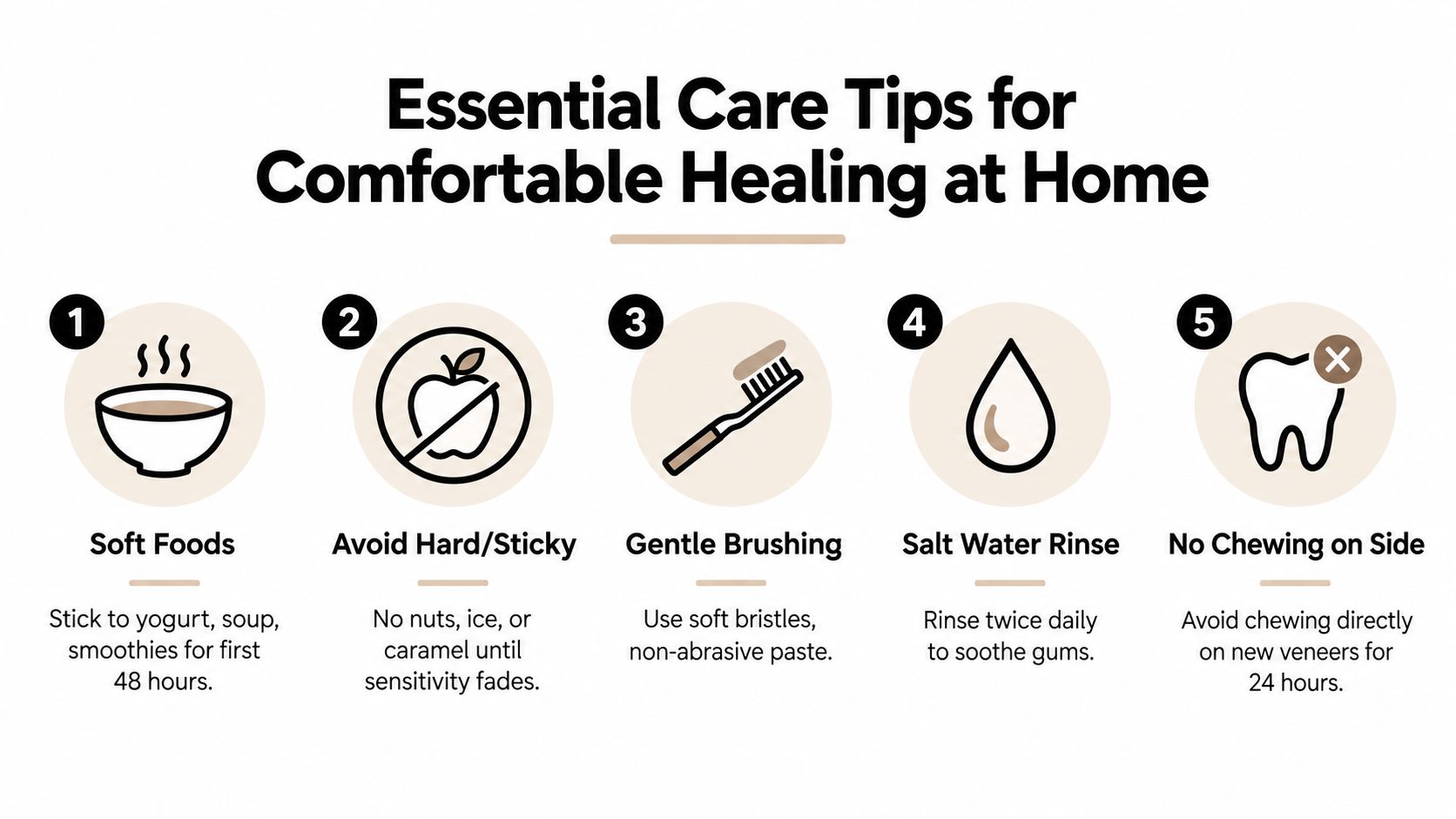
What to eat and what to skip early on
Aftercare guidance commonly recommends a soft-food approach for the first 48 hours after bonding, and some sources advise avoiding hard, sticky, or highly staining foods and drinks for the first 24 to 48 hours, with the highest caution period extending through the first 72 hours while the restoration stabilizes (food and drink precautions after veneers).
That usually means choosing convenience over challenge for a few days.
- Go softer first: Yogurt, soup, eggs, oatmeal, smoothies, pasta, mashed potatoes, and tender fish are easier on newly bonded veneers.
- Skip the crunch test: Ice, hard candy, nuts, crusty bread edges, and sticky caramel can wait.
- Be selective with drinks: If a beverage is very hot, very cold, or staining, it's smart to be cautious during that early window.
Daily habits that help comfort
Brushing and flossing still matter. In fact, they matter more because plaque sitting around the gumline can make tender tissue feel worse.
A few practical rules help:
- Use a soft-bristled toothbrush.
- Brush gently near the gums instead of scrubbing.
- Take smaller bites with front teeth at first if those edges feel new or sensitive.
- Avoid chewing ice, pen caps, or fingernails.
If your gums feel mildly irritated, a gentle rinse can be soothing. If your teeth are more temperature-sensitive than expected, room-temperature foods and drinks are often easier than extremes.
For people who like reading broadly about dental recovery habits, some ideas in post-root canal infection recovery tips from BacteriaFAQ.com can also reinforce good common-sense habits like watching for worsening symptoms and being consistent with follow-up care, even though veneers and root canal recovery are different situations.
Long-term care starts right away
The early recovery period is short, but the care habits you establish now protect the appearance and margins of the veneers over time. That includes regular cleaning and exams, updated dental x-rays when needed, and everyday home care that protects both the veneers and the natural teeth underneath.
If you want a simple practice-specific reference for maintenance, this guide on how to care for veneers covers the basics in a straightforward way.
Some patients also ask whether they can continue whitening products. That depends on what product you use and where the whitening would affect natural enamel versus restorations, so it's worth asking before restarting anything aggressive.
When to Call Your Dentist and What Follow Up Visits Include
Most veneer recovery follows a steady, reassuring pattern. But patients are often told only to “give it time,” and that can be frustrating when something still feels off. The better approach is to know what counts as ordinary settling and what deserves a closer look.

What can still be normal
Several guides note that mild sensitivity usually fades within 1 to 2 weeks, while 4 to 8 weeks of gradual settling can still be normal in more complex cases. They also note that worsening pain or sensitivity beyond about 6 weeks should trigger a dental evaluation (veneer healing thresholds and follow-up timing).
That can be reassuring if you're in the gray zone where things are improving, just more slowly than you expected.
Examples of slower but still potentially normal adaptation include:
- A lingering awareness of one front tooth in cool air
- Mild speech awkwardness that steadily improves
- A bite that feels unusual but not painful and becomes less noticeable over time
Signs it's time to call
Some symptoms deserve attention sooner, especially if they're getting worse instead of better.
- Worsening pain: discomfort that increases instead of easing
- A bite that hits one spot first every time: this can strain the tooth and jaw
- Persistent sharp sensitivity: especially if it doesn't calm down with time
- A rough edge or irritating margin: your tongue often catches this before your eyes do
- Any concern that feels urgent: trust that instinct and call
Slow recovery doesn't always mean veneer failure. Often, it points to an occlusion issue, which simply means the bite may need adjustment, or to a margin area that needs smoothing.
What a follow-up visit usually checks
A veneer follow-up is often very practical. The dentist may look at how the upper and lower teeth meet, whether one edge contacts too soon, how the gums are reacting, and whether floss passes cleanly around the veneer margins.
You may also have:
- A bite check using marking paper
- Minor contour polishing if an edge feels sharp
- Review of home care habits if the gums are irritated
- Discussion of comfort patterns so the team can tell whether you're adapting on schedule
This is also where broader dental care comes back into focus. If your smile plan includes other cosmetic work, old fillings, or future restorative treatment, those pieces can affect how your bite settles after veneers.
Plan Your Confident Smile Visit With Winn Smiles
You might be sitting at home a few days after veneers, running your tongue along the front teeth and wondering, “Does this feel normal, or do I need a quick adjustment?” That question is a good reason to plan your visit carefully from the start. A veneers consultation should cover more than shade and shape. It should also set clear expectations for comfort, recovery, and what happens if your bite feels off once the veneers are in place.
Veneers are usually chosen for looks and longevity together. The recovery period is short for many patients, but the bigger goal is a smile that feels natural in daily life and continues to function well for years with good care, as noted earlier in this article.
What that means for local patients
For adults in Cleveland and Chattanooga, a good consultation should translate the process into plain language. That includes whether you are likely to have a lighter recovery with no-prep veneers or a slightly longer adjustment period with prep veneers, and what signs would justify a small bite refinement after placement.
Comfort matters too. Patients who feel nervous in the chair, dislike dental sounds, or tend to have sensitive teeth often do better when the office explains comfort options ahead of time. Sedation choices, cost discussions, and a clear follow-up plan can make the whole experience feel more manageable.
What a visit can include
A smile visit may involve more than veneers alone, especially if the teeth need a stable foundation first. Depending on your needs, the appointment may connect with:
- New patient exams to check oral health before cosmetic treatment
- Cleaning and exams to reduce inflammation and get the mouth ready
- Dental x-rays if the dentist needs a clearer view of the teeth and roots
- Cosmetic dentistry such as veneers or teeth whitening
- Restorative dentistry if older dental work or tooth damage should be addressed first
- Dental implants near me if missing teeth are part of the larger smile plan
Some patients also ask how the area around the smile affects the final look. If that is part of your planning, the Skin Perfection guide to smile lines offers a broader aesthetic perspective outside dentistry.
For a dentist in Chattanooga TN or a dentist in Cleveland TN, the visit should feel clear and unhurried. You should leave knowing what your first few days may feel like, how prep versus no-prep veneers may change that timeline, and when sensitivity or a bite change crosses the line from normal adjustment to something worth checking.
If you're thinking about veneers, cosmetic dentistry, or related care, Winn Smiles offers consultations, new patient exams, and personalized treatment planning for adults in Cleveland and Chattanooga. You can talk through recovery expectations, comfort options, and whether veneers, teeth whitening, restorative care, or dental implants fit your goals before making a decision.