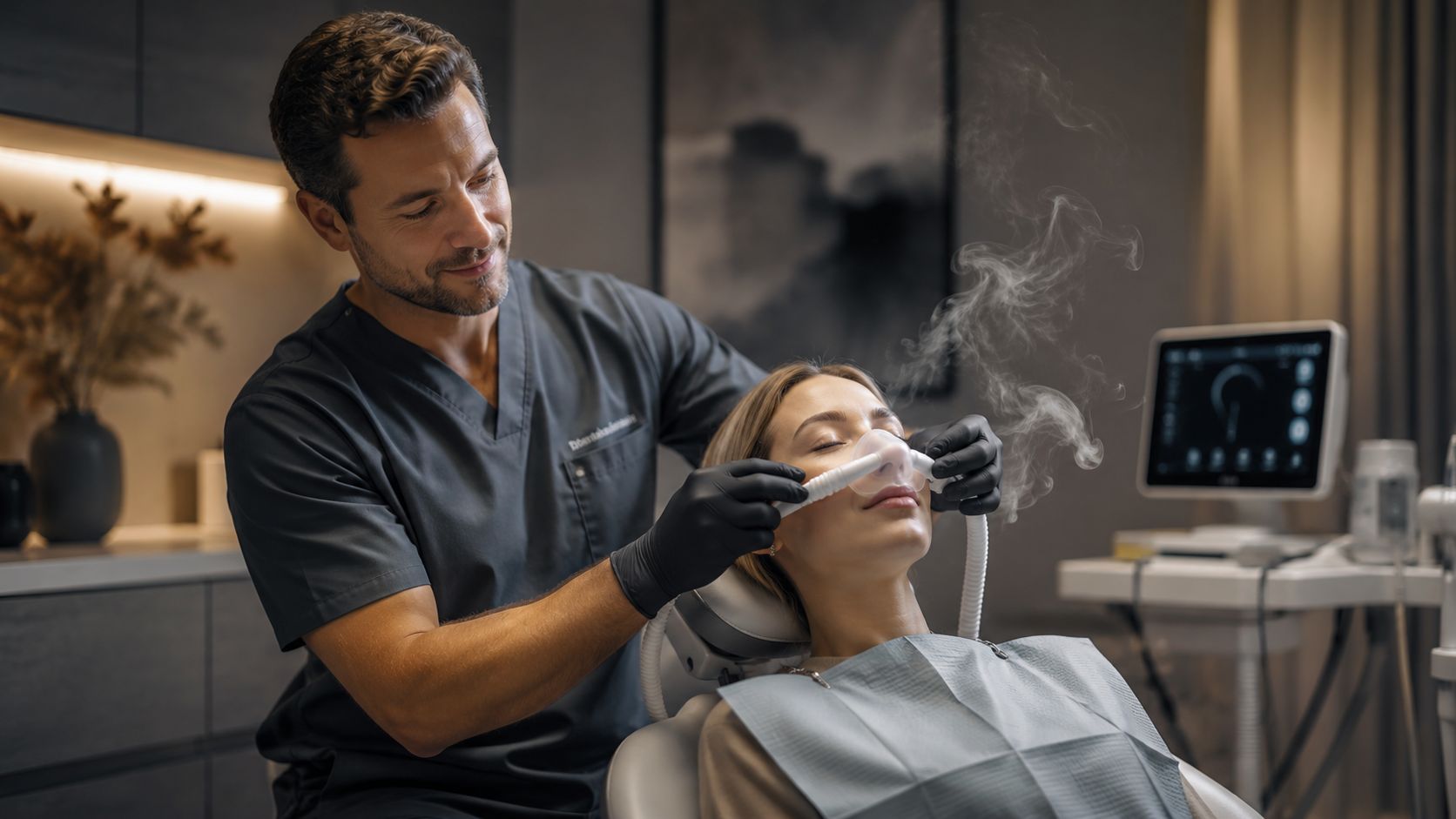
You may be reading this because you know you need dental care, but anxiety keeps getting in the way. Maybe it's a cleaning and exam you've delayed for too long. Maybe you've been searching for a dentist near me in Chattanooga, TN or dentist in Cleveland, TN because a tooth is hurting and you can't put it off anymore. Or maybe you've had a hard dental visit in the past, and now even the thought of sitting in the chair makes your stomach tighten.
That feeling is more common than generally understood. Patients often tell me they aren't afraid of dentistry itself as much as they're afraid of losing control, feeling pain, hearing sounds they don't like, or not knowing what's about to happen. When you're already nervous, even a simple visit for dental x-rays, a new patient exam, or a tooth extraction can feel much bigger than it is.
One comfort option people ask about often is nitrous oxide, also known as laughing gas. If you've ever wondered, what is nitrous oxide, how does it feel, and is it safe, the short answer is simple: it's a gentle form of sedation that helps many patients relax during dental care while staying awake and able to communicate.
Anxiety-Free Dentistry in Chattanooga and Cleveland
If you've ever sat in your car outside a dental office and thought about leaving, you're not alone. Many people put off care for months or even years because anxiety builds each time they think about making an appointment. What starts as avoiding a routine cleaning can turn into needing restorative dentistry, an emergency dentist visit, or treatment for a painful broken tooth.
When fear keeps dental problems going
A common pattern looks like this:
- You notice a small problem: Maybe your gums bleed when you brush, or you feel a little sensitivity.
- You wait and hope it passes: You tell yourself you'll schedule after work calms down or after the holidays.
- The worry grows: Now you're not just concerned about the tooth. You're also worried about being judged for waiting.
- You search for help carefully: Terms like dentist near me, emergency dentist, tooth extraction, or cosmetic dentist near me start showing up in your search history because you want someone who understands.
That cycle is exhausting. It also keeps people from getting the care that would bring relief.
You don't have to “push through” dental anxiety on your own. A good dental visit starts with feeling heard.
In Chattanooga and Cleveland, many patients are looking for a dental office that feels calmer, kinder, and easier to trust. They want clear explanations. They want someone to slow down. They want options that make treatment manageable, whether they need cleaning and exams, cosmetic dentistry, restorative work, dental implants, or urgent care for pain.
A gentler path forward
That's where nitrous oxide often helps. Instead of feeling like dentistry is something happening to you, nitrous oxide can make the visit feel more comfortable and more predictable. You stay awake. You can still answer questions. You can still let the team know if you need a break. But the edge comes off the fear.
For some patients, that's the difference between canceling and finally getting treatment done.
If you've been looking for a dentist in Chattanooga, TN or dentist in Cleveland, TN because fear has made dental care hard, it helps to know sedation isn't only for major procedures. Some people use nitrous oxide for a filling. Others use it for dental x-rays, new patient exams, or care after a long gap between visits. It's one of the ways a patient-first dental experience can feel more doable from the very start.
Understanding Nitrous Oxide or Laughing Gas
You're in the dental chair, your hands are tense, and your mind is already racing ahead to every sound and sensation. In that moment, individuals are not wondering about the science of nitrous oxide. They want to know whether it will help them feel calmer and still stay in control.
Nitrous oxide is a mild sedative gas that you breathe through a small mask over your nose. It is mixed with oxygen and used to help you relax during dental treatment. You remain awake, aware, and able to respond to the dental team.
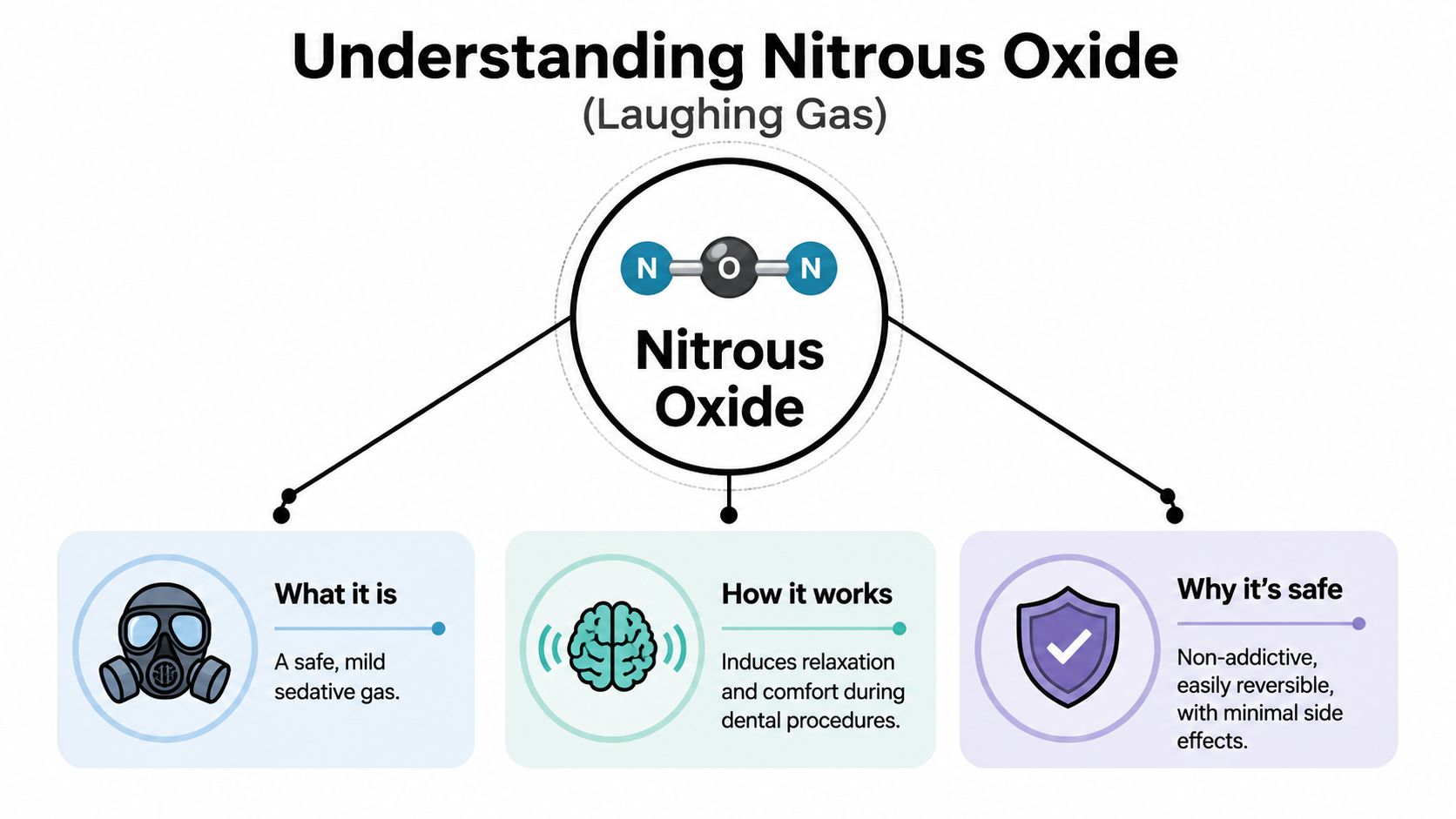
Why people call it laughing gas
The name laughing gas gives some patients the wrong picture. It usually does not cause dramatic laughter or make you act unlike yourself. More often, it creates a lighter, calmer feeling. Some patients describe it as warm, floaty, peaceful, or less intense.
A helpful way to picture it is as a volume knob for stress. If anxiety makes every sound, smell, or thought feel louder, nitrous oxide helps turn that volume down.
What's happening while you breathe it in
Once the mask is in place, you breathe normally through your nose for a few minutes. Many anxious patients notice their body starting to loosen up first. Their shoulders drop. Their breathing gets easier. The room feels less overwhelming.
It works like a buffer between you and the stress response. The procedure is still happening, but your body is less likely to react as if something is wrong.
Here's what nitrous oxide does not do:
- It doesn't put you to sleep: You stay awake.
- It doesn't take away your ability to speak: You can answer questions and tell the team how you're doing.
- It doesn't replace numbing medicine by itself: Local anesthetic may still be used to prevent pain during treatment.
- It doesn't take away your control: You remain aware and involved throughout the visit.
For many patients at Winn Smiles in Chattanooga and Cleveland, that balance is the whole point. They want help with anxiety, not the feeling of being disconnected from what is happening.
Why this feels reassuring to anxious patients
A lot of dental fear comes from not knowing what the experience will feel like. Once nitrous oxide is explained in plain language, many patients feel a real sense of relief. It is a breathing aid for relaxation, not a dramatic loss of consciousness.
That can make a big difference for adults returning after years away, patients who feel nervous about restorative or cosmetic treatment, or anyone who starts to panic in the chair. If you can tolerate a small nose mask and want a mild option, Winn Smiles may use nitrous oxide as part of a patient-first plan for mild to moderate dental anxiety.
What you still control during treatment
Many nervous patients worry they will feel too foggy to respond. The goal with nitrous oxide is comfort with awareness.
You can still:
| During your appointment | What that means for you |
|---|---|
| Respond to questions | You can tell the team how you're feeling |
| Ask for a break | You're not stuck once treatment starts |
| Understand instructions | You can follow simple directions |
| Stay aware | You know where you are and what's happening |
For an anxious patient, that sense of control often makes dental care feel possible again.
Key Benefits of Nitrous Oxide Sedation
For anxious patients, the value of nitrous oxide isn't abstract. It's practical. It helps make dental care feel manageable again.
Comfort without losing awareness
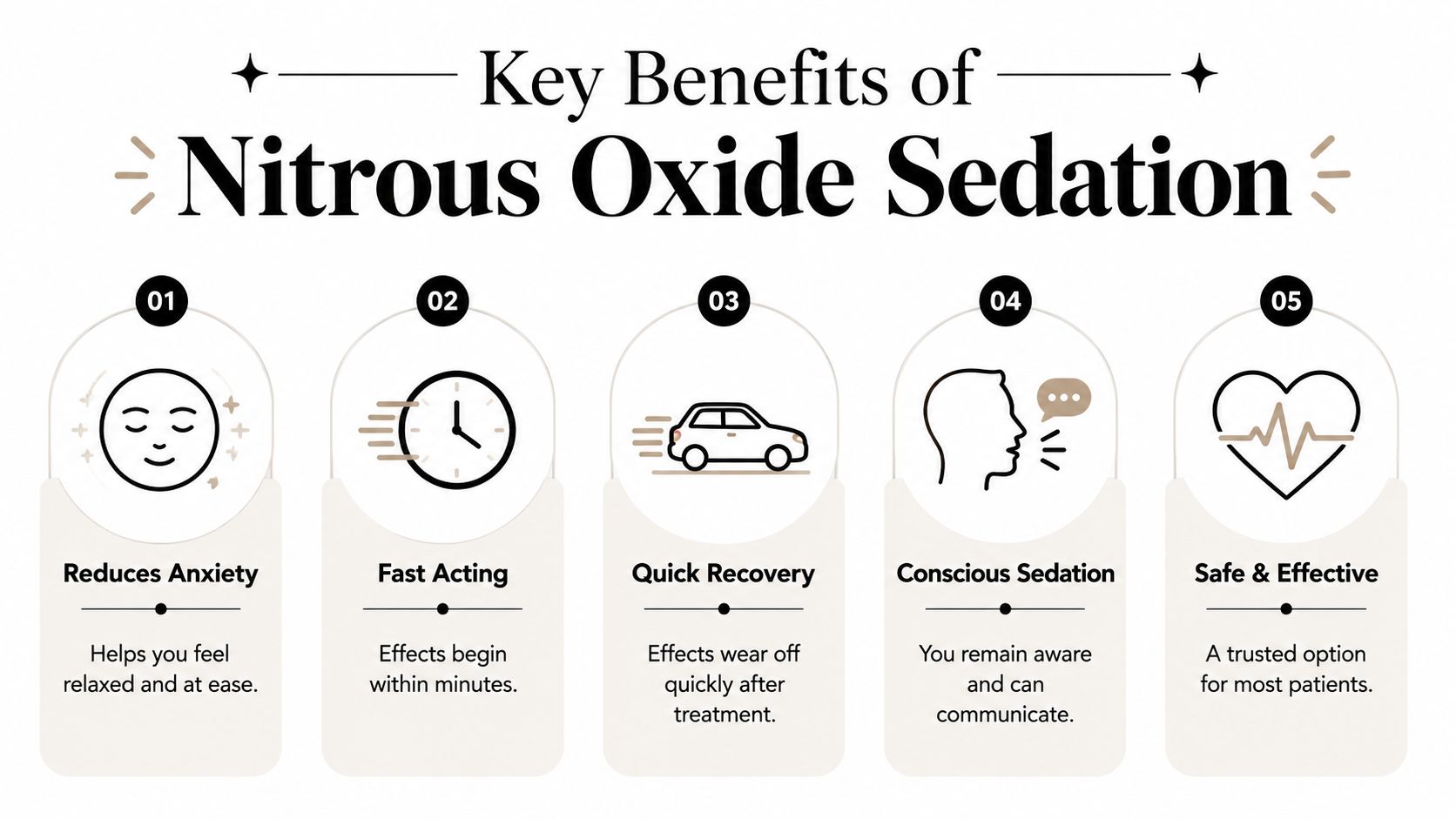
One of the biggest benefits is that you can relax without being fully sedated. Many people don't want to feel heavily medicated. They just want the visit to stop feeling so intense. Nitrous oxide fits that need well because it softens anxiety while letting you stay awake and communicative.
That matters whether you're coming in for a filling, a crown, dental x-rays, or a tooth extraction. It can also help if you've been avoiding cosmetic dentistry because even elective care feels stressful when anxiety is involved.
It starts quickly and can be adjusted
Nitrous oxide is appealing because it doesn't involve a long wait to settle in. Once you begin breathing through the nose mask, the calming effect usually comes on quickly. The dental team can also fine-tune the level to help you stay comfortable during the appointment.
Patients tend to appreciate that flexibility. Some need only a little help taking the edge off. Others want a deeper sense of calm while still remaining alert.
Recovery is usually simple
For many adults, this is the benefit that stands out most. Nitrous oxide wears off quickly after the mask is removed and oxygen is given at the end of the visit. That means patients are often able to return to the rest of their day without the lingering groggy feeling associated with deeper forms of sedation.
A lot of people choose nitrous oxide because they want support during treatment, but they also want life to feel normal again soon after the appointment.
It supports many kinds of dental care
Nitrous oxide isn't only for major procedures. It can help during a wide range of visits, including:
- Preventive care: Cleanings and exams can feel easier for patients with strong gag reflexes or general nervousness.
- Restorative treatment: Fillings, crowns, and other restorative dentistry procedures often feel less intimidating with relaxation support.
- Urgent visits: If you need an emergency dentist in Chattanooga or Cleveland, nitrous oxide can help reduce panic when you're already dealing with pain.
- Family appointments: It's also commonly used for patients who need extra reassurance during treatment.
Why so many patients see it as a good middle ground
Some people don't need oral sedation or IV sedation, but they also know white-knuckling through treatment isn't working anymore. Nitrous oxide fills that middle space well. It offers calm, preserves communication, and keeps the appointment from feeling overwhelming.
If you've been searching for a dentist near me, cosmetic dentist near me, or help with delayed dental care in Chattanooga, TN, or Cleveland, TN, nitrous oxide is often one of the easiest sedation options to understand and accept.
Your Sedation Appointment at Winn Smiles
For many anxious patients, the hardest part isn't the treatment itself. It's not knowing what will happen. A predictable visit often feels much less frightening than a mysterious one.

The conversation before treatment
Your visit starts with a real conversation. If anxiety is part of your dental history, say so. You don't need to minimize it. You also don't need to feel embarrassed if you've postponed cleanings, skipped new patient exams, or only came in now because something hurts.
The team reviews your health history, talks through your concerns, and decides whether nitrous oxide makes sense for your visit. If you want a broader overview of sedation choices, how sedation dentistry works gives a helpful introduction.
Getting settled in the chair
Once you're in the treatment room, everything is kept simple. The mask used for nitrous oxide is small and soft, and it rests over your nose. You breathe normally. There's no special trick to it.
The first few moments are usually the most important. Patients often expect something dramatic, but the change is more gentle than that. You may notice your breathing feels easier. Your muscles may unclench a bit. The racing thoughts may slow down.
Most patients don't say, “I felt strange.” They say, “I felt like I could finally relax.”
During the procedure
When the nitrous oxide is doing its job, you're still present. You can answer questions. You can open wider when asked. You can signal if you need to pause. That's true whether you're having a simple filling, restorative dentistry, cosmetic dentistry, or a procedure like a tooth extraction.
This is often the turning point for people who thought they could never tolerate dental treatment. The appointment becomes something they can move through rather than something they have to endure minute by minute.
A typical experience often feels like this:
- Arrival feels tense: Your hands may be cold, and your thoughts may be busy.
- Breathing through the mask feels easy: There's no need to force anything.
- Your body starts to soften: The room may feel less sharp and less stressful.
- Treatment begins: You remain aware, but the fear isn't in charge anymore.
- You realize it's going better than expected: That moment can rebuild a lot of confidence.
After the treatment ends
At the end of the appointment, the nitrous oxide is stopped and you breathe oxygen for a short period. The relaxed feeling lifts quickly for most patients. Instead of feeling heavily sedated, many people feel clear-headed and relieved that the visit is already over.
That quick return is one reason nitrous oxide works well for adults who need practical dental care that fits into real life. You can come in for treatment, handle what needs to be done, and move on with your day without feeling like the entire day has been lost to the appointment.
For patients in Chattanooga and Cleveland, that can make a big difference. Dental care becomes something approachable again, whether you need preventive services, restorative dentistry, emergency treatment, or you're exploring longer-term options like dental implants after tooth loss.
Comparing Nitrous Oxide to Other Sedation Options
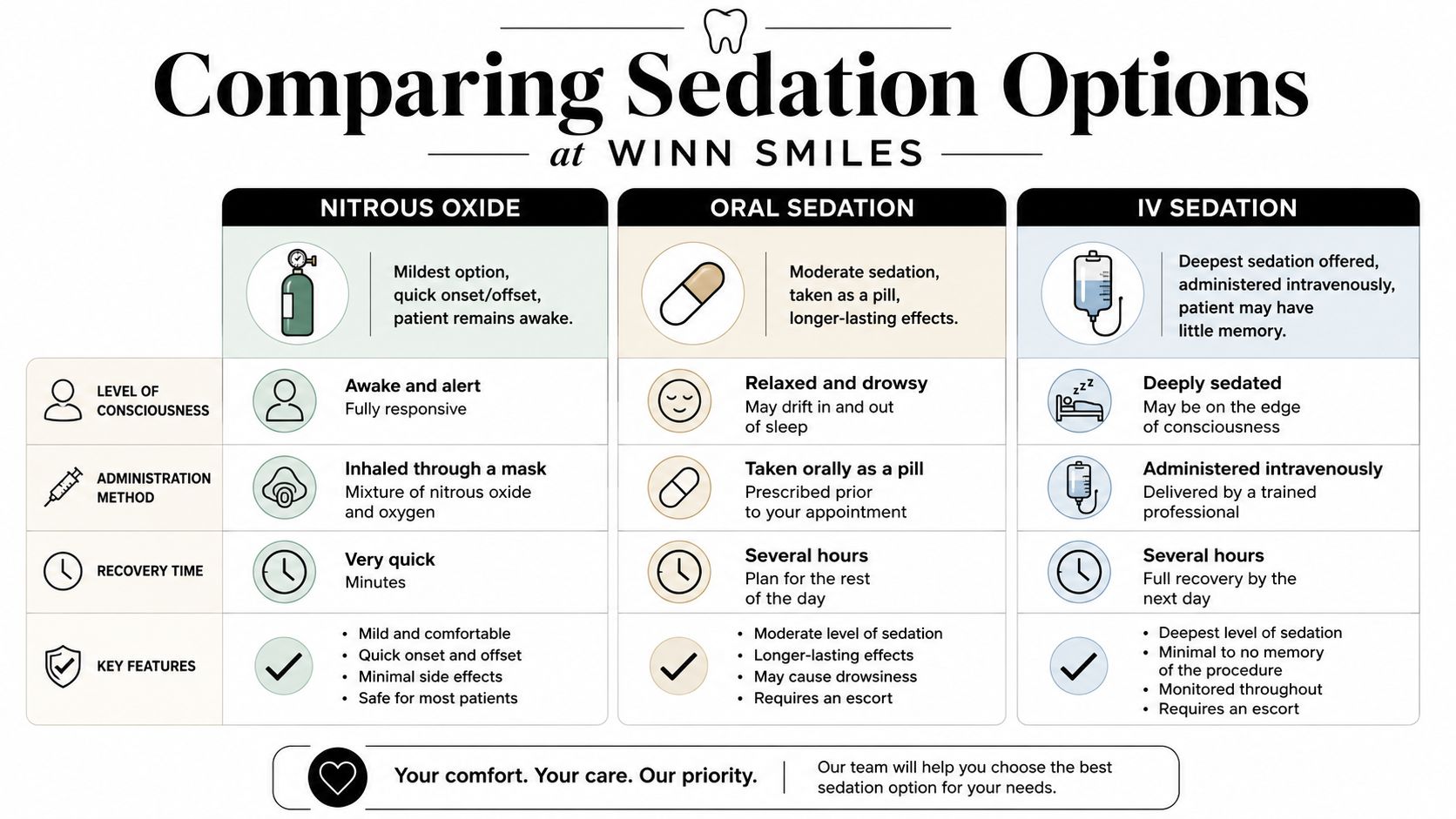
Not every anxious patient needs the same kind of support. One person may only want help getting through a cleaning. Another may need a deeper level of relaxation for a complex procedure. That's why it helps to compare sedation choices side by side.
A simple comparison by patient need
| Sedation option | Often a good fit for | What patients usually like about it | What to keep in mind |
|---|---|---|---|
| Nitrous oxide | Mild to moderate anxiety, shorter visits, patients who want to stay awake | Gentle relaxation, fast recovery, ongoing communication | You need to tolerate a nose mask |
| Oral sedation | Moderate to stronger anxiety, patients who want a deeper calming effect | More relaxation before and during treatment | Effects last longer, so you'll need a ride |
| IV sedation | Severe dental fear, longer or more complex procedures | Deeper sedation with less awareness of the procedure | Requires more planning and recovery support |
When nitrous oxide makes the most sense
Nitrous oxide is often the easiest entry point into sedation dentistry. It's a good option for patients who want help with anxiety but don't want to feel heavily sedated. It also fits people who need practical flexibility, such as parents, professionals, or anyone trying to fit treatment into a normal day.
If your concern sounds like, “I can do this, but I need something to calm me down,” nitrous oxide may be the right level.
When oral or IV sedation may be better
Some patients need more than a mild calming effect. If you have strong dental fear, struggle to sit through treatment, or are planning more involved care such as full-arch dental implants or extensive restorative work, oral sedation or IV sedation may be more appropriate.
Those options create a deeper level of relaxation, but they also involve more preparation. Recovery can take longer, and you'll need someone to drive you home. If you want a more detailed overview of the differences, what sedation dentists use explains how these options compare.
The right question isn't “Which sedation is strongest?” It's “Which one matches my anxiety level, procedure, and recovery needs?”
Choosing the option that fits your visit
A patient coming in for cleaning and exams may need a very different plan than someone preparing for tooth replacement or oral surgery. The same goes for someone searching Dental implants near me versus someone looking for a cosmetic dentist near me for veneers or teeth whitening.
Sedation should fit the person and the procedure. That's what makes the experience feel safer and more manageable.
Your Questions About Nitrous Oxide Answered
Is nitrous oxide safe for my children
Nitrous oxide is commonly used to help children feel calmer during dental treatment, but the decision is always based on the individual child, their health history, and whether they can comfortably wear the nose mask. Parents should expect a careful review before treatment so the dental team can decide if it's an appropriate option.
If your child gets nervous during cleanings, dental x-rays, or restorative care, it's worth asking whether nitrous oxide is a good fit.
Will I feel any pain with laughing gas
Nitrous oxide helps with anxiety and relaxation. It doesn't replace local anesthetic when numbing is needed for pain control. If you're having a filling, tooth extraction, or other procedure that normally requires numbing, the dentist may still use local anesthetic so the area is comfortable.
That combination is often what patients need most. The anesthetic addresses pain, and nitrous oxide helps your body stay calmer during the visit.
Can I really drive myself home afterwards
Many patients can drive themselves home after nitrous oxide because the effects usually wear off quickly once the gas is stopped and oxygen is given. Still, your dentist will guide you based on your response that day and your overall health.
If being able to return to work, errands, or family responsibilities matters to you, this is one of the reasons nitrous oxide is appealing.
What does it feel like, really
Most patients describe it as light relaxation rather than heavy sedation. You may feel warm, less tense, less worried, or slightly floaty. Some people notice that time seems to pass more easily. Others just feel less focused on the sounds and sensations that usually trigger anxiety.
What you usually won't feel is trapped, asleep, or disconnected from what's happening around you.
How much does nitrous oxide cost
The cost can vary depending on the type of visit, the length of the appointment, and your treatment plan. The most helpful approach is to ask for a clear cost discussion before treatment so you know what to expect.
That same conversation is a good time to ask about the full plan for your care, whether you're coming in for preventive dental care, restorative dentistry, cosmetic services, emergency treatment, or longer-term solutions like dental implants.
If you've been putting off treatment because fear keeps getting in the way, you don't have to keep managing dental problems alone. Patients in Chattanooga, TN, Cleveland, TN, and nearby communities often feel more comfortable once they learn that a gentler visit is possible.
If you're looking for a calm, clear approach to dental care in Chattanooga or Cleveland, Winn Smiles can help you talk through your concerns, discuss sedation options, and plan your next visit with confidence. Whether you need a cleaning, help from an emergency dentist, restorative treatment, or want to explore cosmetic dentistry or dental implants, reaching out is a good first step.