You notice a little blood when brushing around a dental implant in Cleveland or Chattanooga. Maybe the gum feels tender, swollen, or different when you bite, but the implant still looks secure. It's easy to dismiss these changes, especially if there isn't much pain. That delay can give inflammation time to affect the bone supporting the implant.
If you're searching for a dentist near me, dental implants near me, or an emergency dentist because of bleeding or swelling, an implant-focused examination can clarify what's happening. Peri-implantitis is common and manageable when identified early, but it requires more than a quick look or routine cleaning.
Understanding What Peri-Implantitis Actually Is
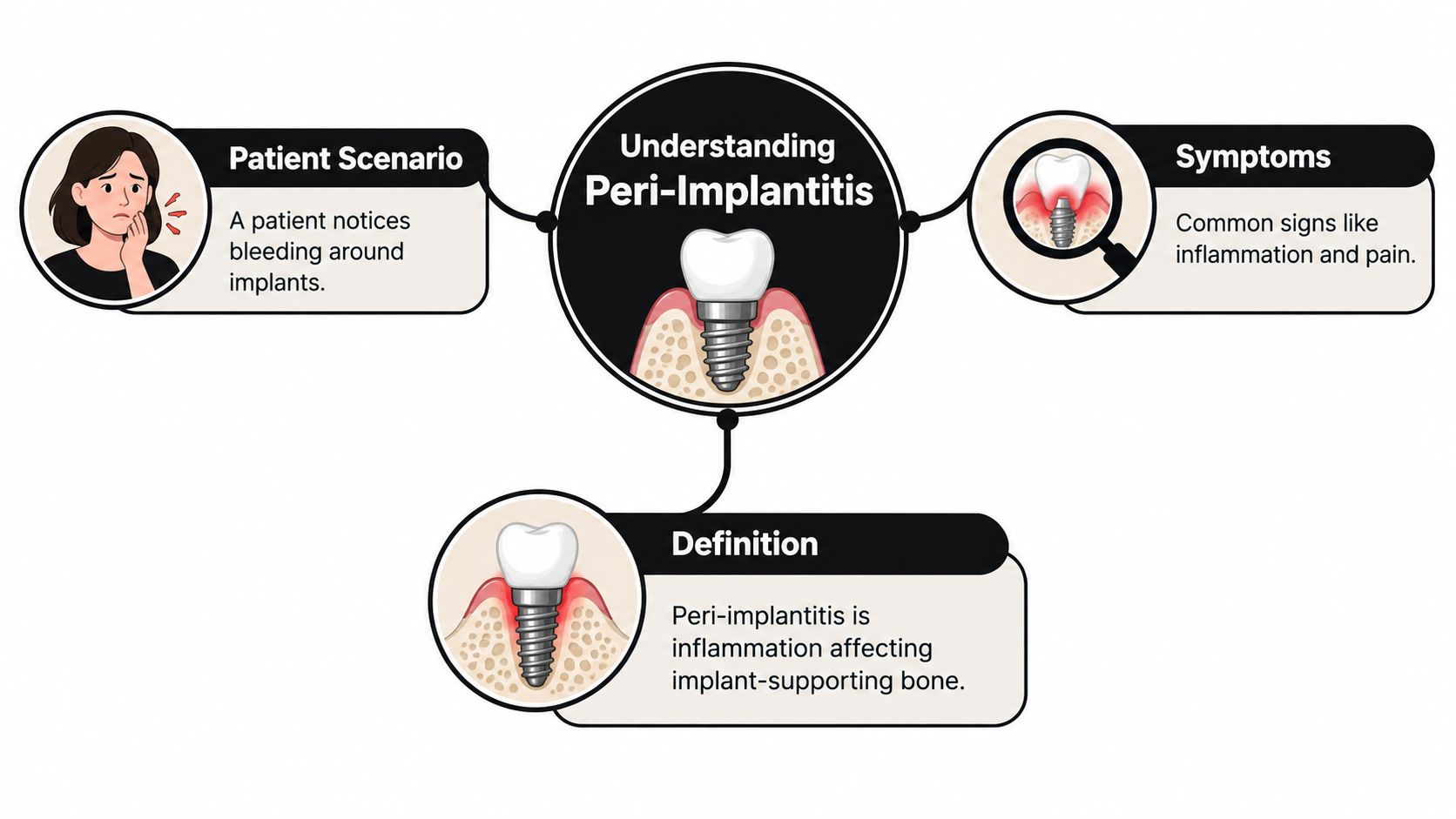
A patient with a dental implant may notice bleeding during brushing, tenderness while chewing, or a bad taste near the restoration. The implant crown might look normal, and the discomfort may come and go. These signs don't automatically prove peri-implantitis, but they do indicate that the surrounding tissues deserve professional attention.
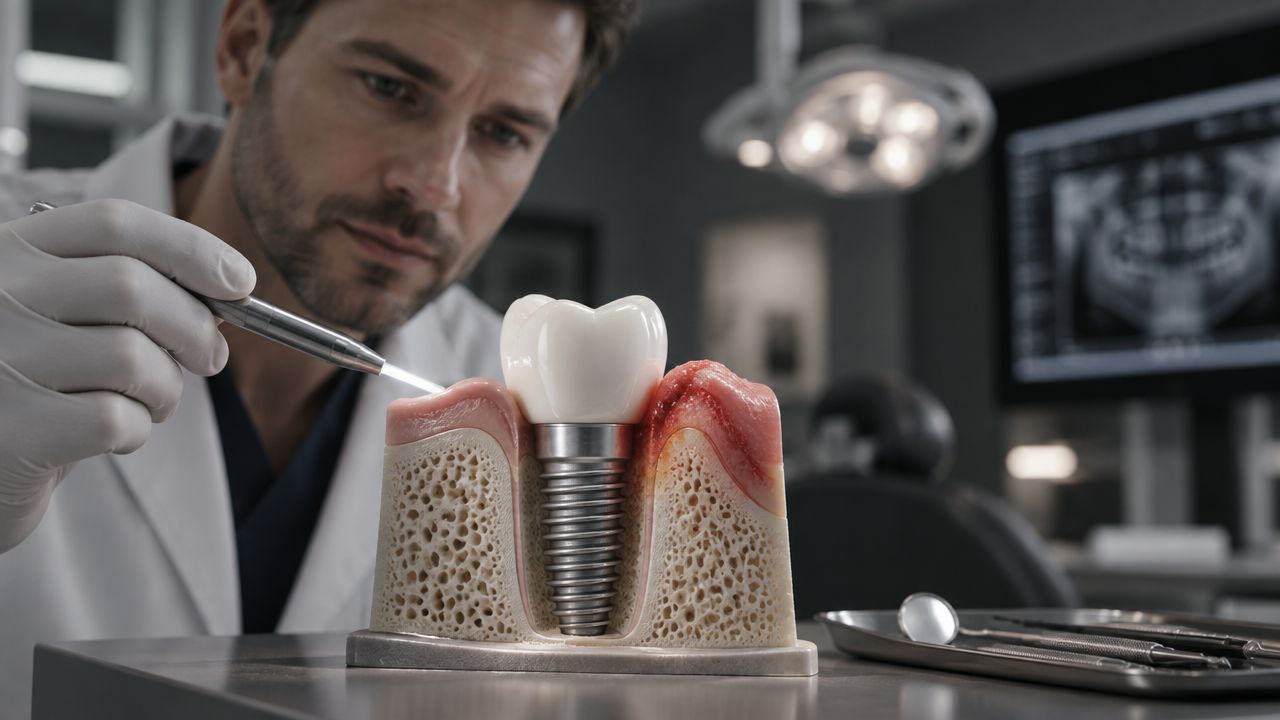
Peri-implantitis is a biofilm-driven inflammatory disease affecting the gum and bone around a dental implant. Biofilm is the sticky layer of bacteria that forms on teeth and implant restorations. If inflammation persists, the supporting bone can begin to recede around the implant fixture. That makes peri-implantitis different from temporary gum irritation and potentially threatening to the implant's stability.
Why the condition matters
Inflammation around an implant can begin in the soft tissue, but peri-implantitis includes loss of supporting bone. The clinical picture commonly includes:
- Bleeding on probing: The tissue bleeds when a dental professional gently checks it.
- Suppuration: Pus appears around the implant during examination.
- Deeper probing depth: The space between the gum and implant becomes deeper than expected.
- Radiographic bone loss: Dental X-rays show supporting bone loss beyond normal remodeling after placement.
Peri-implantitis isn't a rare edge case. A systematic review estimated a weighted mean prevalence of 21.7% at the implant level, while peri-implant mucositis, inflammation without the defining bone loss, had a weighted mean prevalence of 42.9% in the reviewed clinical populations (systematic review of peri-implant diseases). More recent reviews have reported peri-implantitis in about 19.5% of patients and 12.5% of implants, while another analysis reported 25.0% of patients and 18.0% of implants, depending on the diagnostic definition and population studied (evidence on prevalence and case definitions).
A practical point: Bleeding around an implant isn't something to monitor indefinitely at home. It's a reason to arrange an examination, particularly if it continues or appears with swelling, pus, or bite changes.
Key Signs and How Dentists Diagnose It
Diagnosis depends on both the condition of the soft tissue and the amount of supporting bone. A deep measurement alone doesn't establish peri-implantitis, and bleeding alone doesn't show how far inflammation has progressed. Your dentist compares current findings with earlier examinations whenever those records are available.
What the examination checks
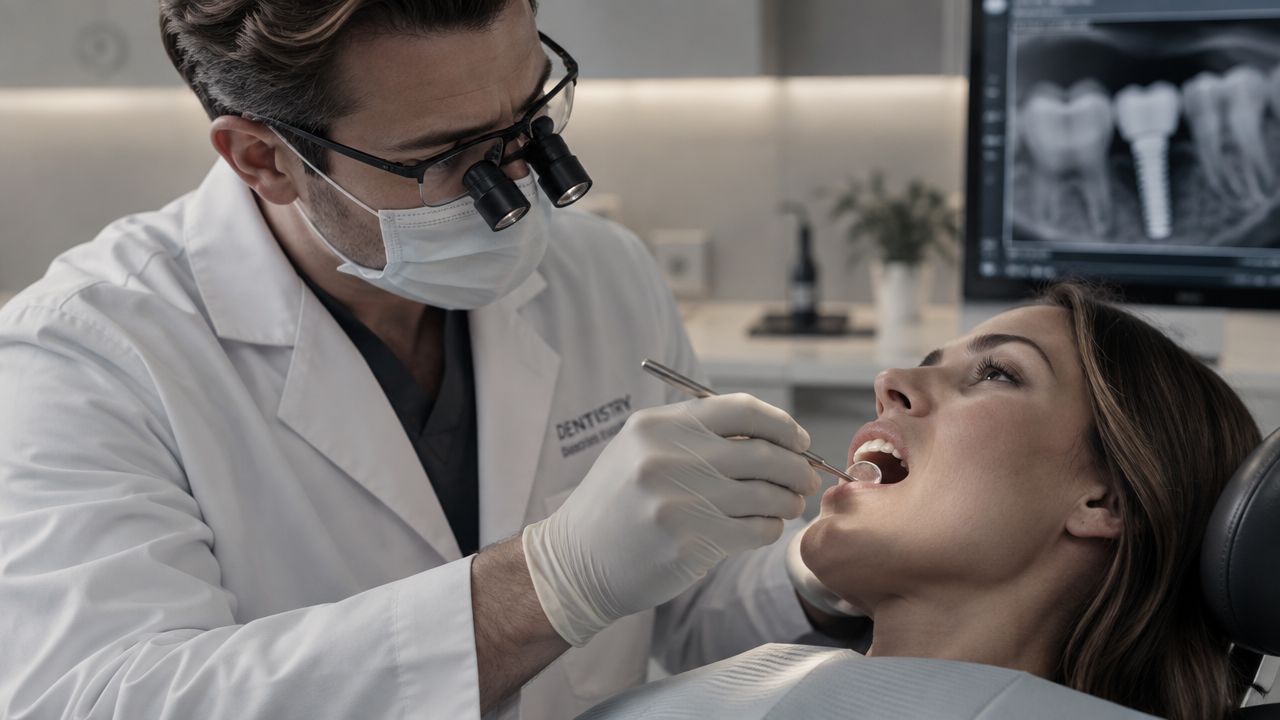
A clinician gently examines the tissue around the implant and records probing depths at several sites. A rigid plastic probe is commonly used because metal instruments can scratch or damage an implant surface. The examination looks for bleeding, suppuration, increased pocket depth, gum recession, and tenderness.
Peri-implant radiographs provide the hard-tissue evidence. They help the dental team assess the crestal bone around the implant and compare current bone levels with baseline images taken after the restoration was loaded. The clinical approach to peri-implantitis diagnosis emphasizes combining clinical signs with radiographic bone loss rather than relying on probing alone.
When previous records aren't available, commonly used criteria include bleeding and/or suppuration on probing, probing depths of at least 6 mm, and radiographic bone loss of at least 3 mm (diagnostic criteria for peri-implantitis). The 2017 World Workshop helped standardize this approach, making research findings and clinical communication more consistent (2017 World Workshop case definition).
Why estimates can look so different
Patients sometimes see very different prevalence figures online and assume one source must be wrong. Diagnostic thresholds explain much of that variation. One review found prevalence of 1% when marginal bone loss greater than 5 mm was required, compared with 47% when the threshold was only 0.4 mm (review of diagnostic thresholds and prevalence).
That doesn't mean a patient needs to interpret the numbers alone. It means the clinician should document the implant's starting bone level, monitor changes over time, and explain which criteria apply to the individual case. A new patient exam, periodontal evaluation, and dental X-rays can provide that missing context.
For more background on possible problems affecting an implant restoration, patients can review Winn Smiles' guide to dental implant complications.
Common Risk Factors and Causes
Peri-implantitis usually develops through several connected factors rather than one isolated mistake. Bacteria provide the inflammatory trigger, but the host's response, daily plaque control, implant design, restoration shape, and professional maintenance all influence what happens next.
A history of periodontitis matters because previous gum disease indicates a tendency toward destructive inflammation. Smoking, diabetes mellitus, inadequate plaque control, and missed professional prophylaxis can also increase risk. Systematic review evidence has reported an odds ratio of 1.7 for smoking and 2.5 for diabetes mellitus in medium-to-high evidence syntheses (review of peri-implantitis risk factors).
Factors you can influence
Daily care removes biofilm before it remains around the implant margin. Brushing alone may not clean the area beneath a bridge or around a full-arch restoration, so your dental team may recommend implant-specific floss, interdental brushes, or an oral irrigator based on the shape of your restoration.
Smoking cessation and good blood sugar management are also meaningful parts of implant care. If you have diabetes, share your medical history and treatment plan with your dentist so the team can coordinate practical maintenance advice with your medical care.
Factors your dental team evaluates
Some risks relate to the restoration or implant environment. Excess cement can remain below the gum and irritate tissue. A prosthetic misfit may make plaque control harder, while an overcontoured or poorly cleansable crown can create sheltered areas where biofilm persists. Insufficient keratinized mucosa may also affect comfort and cleaning access.
This is why peri-implantitis shouldn't be reduced to “an infection caused by poor brushing.” Recent reviews describe it as a multifactorial condition involving host response, biofilm, implant design, and treatment history (multifactorial review of peri-implantitis). A careful evaluation asks not only whether inflammation is present, but also why the area remains difficult to keep healthy.
Non-Surgical and Surgical Treatment Options
Treatment is selected according to the inflammation, bone defect, implant surface, restoration design, and access for cleaning. A small, accessible problem may respond to non-surgical care, while a deeper or irregular defect may need surgery to reach contaminated surfaces and reshape or rebuild supporting tissues.
Non-surgical care
Non-surgical therapy focuses on reducing the bacterial load and controlling inflammation. The clinician may use mechanical debridement with instruments designed for implant surfaces, along with antiseptic measures when appropriate. The restoration may also need adjustment if its shape prevents effective home care.
The goals are practical: decontaminate the implant surface, reduce inflammation, and bring the peri-implant pocket depth to 5 mm or less. Consensus guidance recommends considering surgical treatment when endpoints such as a probing depth of 5 mm or less and no more than one bleeding-on-probing site aren't reached (European Federation of Periodontology guideline).
Surgical care
Surgery can provide direct access to deeper defects. Depending on the defect morphology, treatment may involve opening the gum, cleaning the implant surface, reshaping the surrounding area, or using regenerative techniques to address lost bone. Severe cases may require discussion of implant removal, but that decision depends on stability, remaining support, restorability, and the overall treatment plan.
Antibiotics aren't automatically appropriate for every patient. A 2026 systematic review reported that antibiotics can improve clinical outcomes compared with mechanical debridement alone, with the strongest findings varying between surgical and non-surgical settings, while also emphasizing substantial microbiological variability and the need for standardized protocols (systematic review of antibiotics and peri-implantitis treatment). Your dentist should weigh medical history, disease severity, and the procedure before recommending them.
Lasers and regenerative approaches are being explored, but evidence remains mixed. They may have a role in selected cases, yet no technique should be presented as a guaranteed cure.
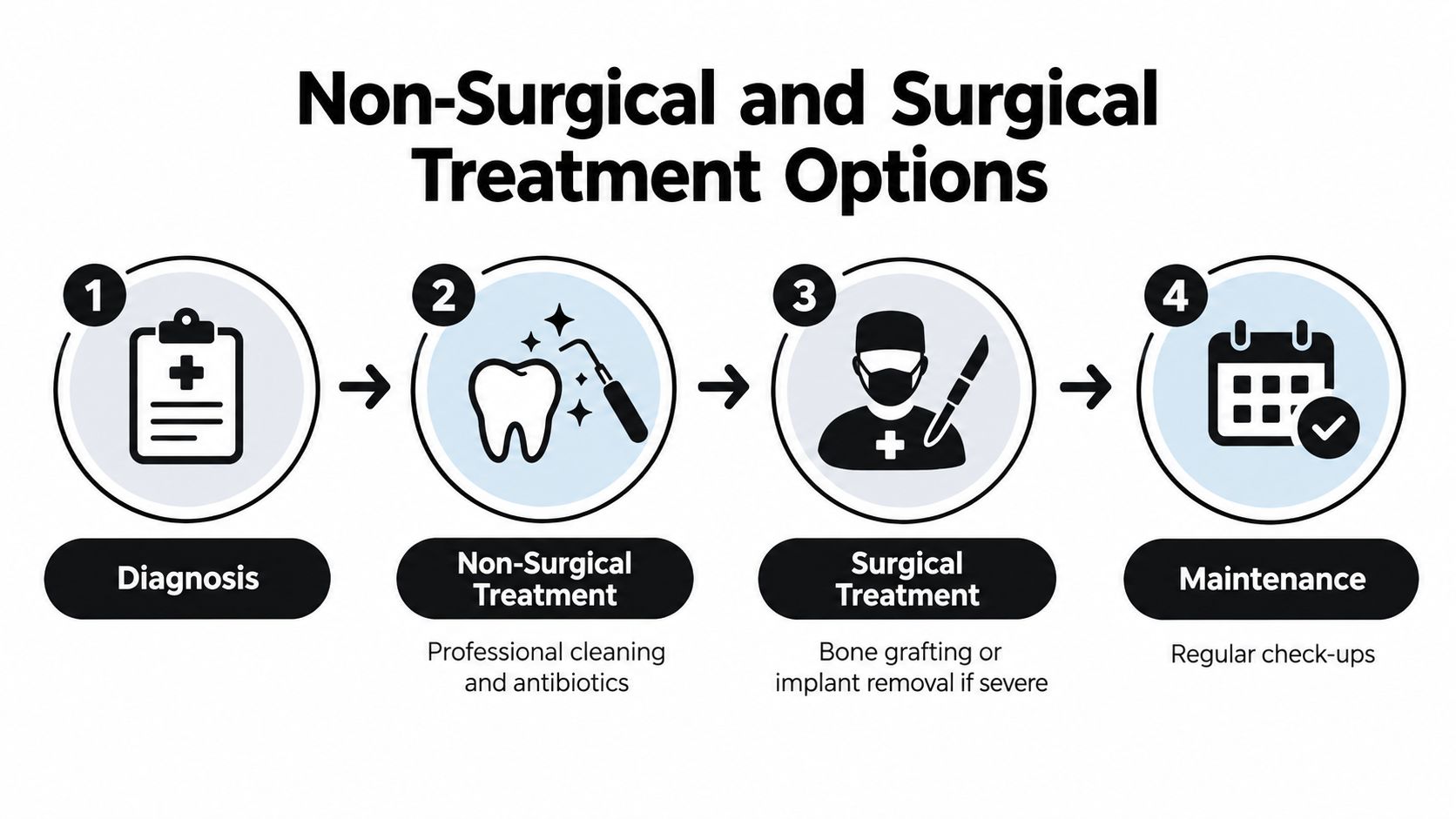
A treatment discussion may also include this visual explanation of the peri-implantitis treatment process.
Winn Smiles provides implant care, periodontal treatment, and maintenance planning in Cleveland and Chattanooga, allowing the clinical team to match care to the condition rather than treating every implant problem the same way.
Prevention and Long-Term Maintenance Strategies
The most reliable prevention plan combines home care, professional monitoring, and attention to the factors that make plaque difficult to control. An implant may feel like a replacement tooth, but the surrounding gum and bone still need regular assessment. The restoration's design can also change which hygiene tools work best.
Build a routine that fits the restoration
Brush around the implant crown and gumline with the technique your dental professional demonstrates. Clean between implants and beneath bridges with an appropriate interdental tool. Full-arch implant patients may need a more specific routine because areas beneath the prosthesis can be hard to reach with ordinary floss.
Professional cleanings and periodontal exams give the dental team a chance to detect bleeding, deeper pockets, changes in the restoration, and radiographic bone changes. Winn Smiles' implant maintenance guidance also emphasizes baseline probing, radiographs after prosthetic loading, reinforcement of home care, and continuing cleanings and exams (guidance on caring for dental implants).

Reduce preventable stress on implant tissues
If you smoke, ask your healthcare and dental teams for support with stopping. If you have diabetes, keeping blood sugar medically managed can support a more predictable maintenance plan. Tell your dentist about new medications, changes in health, or difficulty cleaning around the implant.
For people looking to support daily oral care, a dentist can also explain options such as strong enamel treatment at home. That type of product shouldn't replace implant examinations or professional treatment, and the right choice depends on your teeth, gums, restorations, and medical history.
Maintenance principle: The best cleaning schedule is the one that catches inflammation before it becomes bone loss and gives you tools you can use consistently at home.
Routine care is also an opportunity to check whether the crown is loose, the bite has changed, or the restoration has become difficult to clean. Those practical observations can lead to a small adjustment instead of a more complicated implant problem.
When to See a Dentist in Cleveland or Chattanooga
Don't wait for severe pain before contacting a dental office. Peri-implantitis can progress while symptoms remain mild, and some patients notice bleeding or swelling before they feel significant discomfort.
Arrange an evaluation if you have:
- Persistent bleeding: The gum bleeds repeatedly around the implant during brushing or gentle cleaning.
- Swelling or redness: The tissue looks puffy, irritated, or increasingly tender.
- Pus or a bad taste: Drainage near the implant can indicate active inflammation.
- A loose restoration or implant: Movement needs prompt assessment because it may involve the crown, abutment, or implant support.
- A changed bite: New pressure, discomfort, or a feeling that the teeth meet differently can signal a restoration or support problem.
These symptoms don't all mean implant failure. They do mean you need a clinical examination rather than a guess based on online photographs. A Cleveland or Chattanooga dental practice can evaluate the tissue, take appropriate dental X-rays, review your implant history, and discuss periodontal cleaning, restorative dentistry, or another treatment path based on the findings.
The same appointment can address related concerns, including a needed tooth extraction, a damaged restoration, cosmetic dentistry planning, or an urgent dental problem. If pain or swelling is sudden, contact an emergency dentist promptly. If you're comparing options for a dentist in Cleveland, TN, or a dentist in Chattanooga, TN, choose a practice that can explain both the immediate problem and the maintenance plan that follows.
Winn Smiles provides dental implant evaluations, periodontal care, cleanings, restorative dentistry, and emergency dental services for patients in Cleveland and Chattanooga. Schedule an appointment through Winn Smiles to have bleeding, swelling, discomfort, or implant changes assessed and receive a clear plan for protecting your oral health.