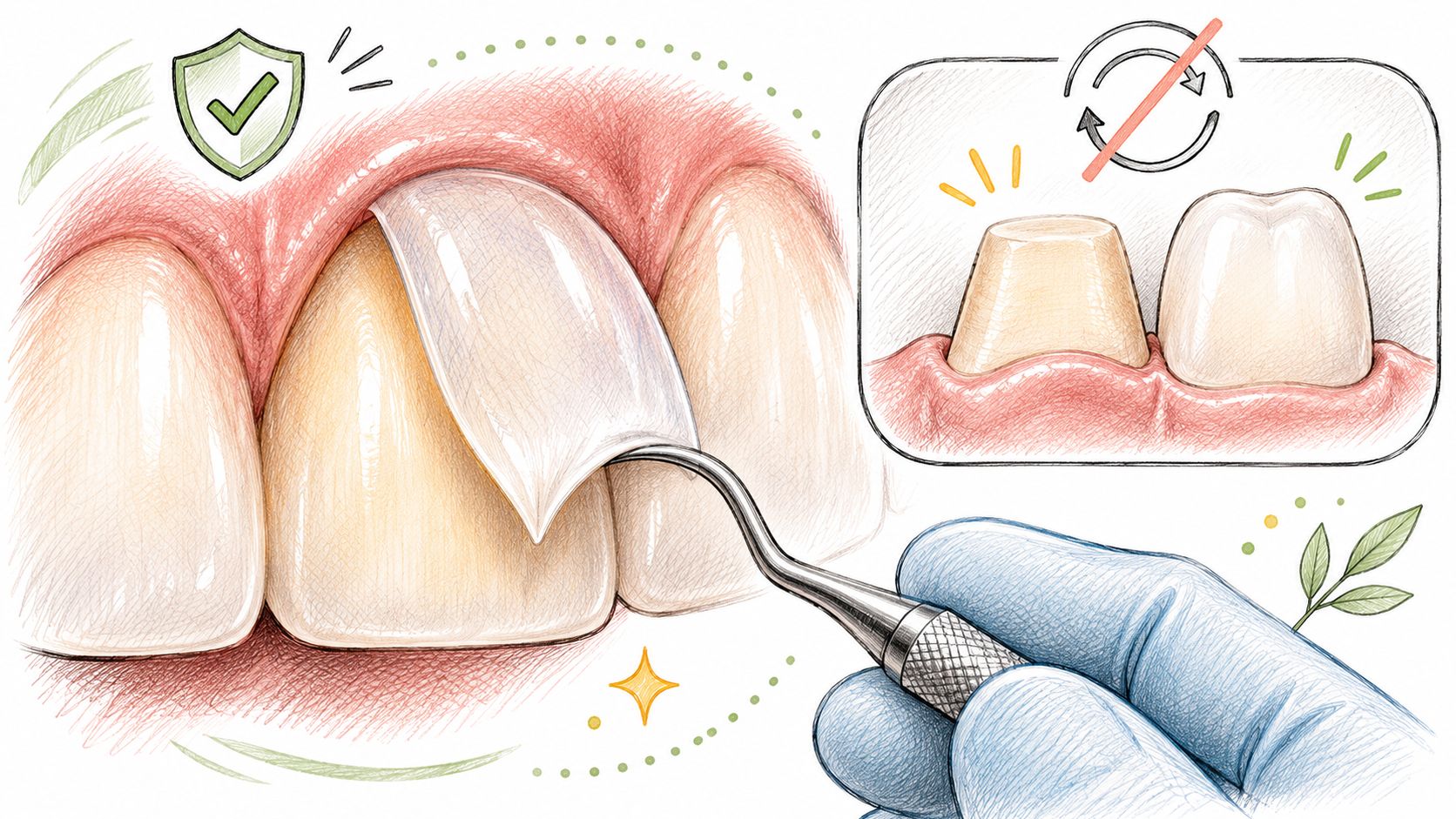
Yes, a dentist can remove veneers, but removal isn't the same as reversibility because enamel that was prepared does not grow back.
If the veneer comes off, what will your tooth need underneath it? That's the question to answer before treatment, especially if you're dealing with a chip, sensitivity, irritated gums, or a smile that no longer feels like yours.
For patients looking for a dentist in Chattanooga, TN, or Cleveland, TN, a veneer evaluation at Winn Smiles starts with understanding the existing dental work and your concerns. The safest plan addresses both what comes off and what protects your teeth afterward.
Can Veneers Be Removed? The Honest Answer by Type
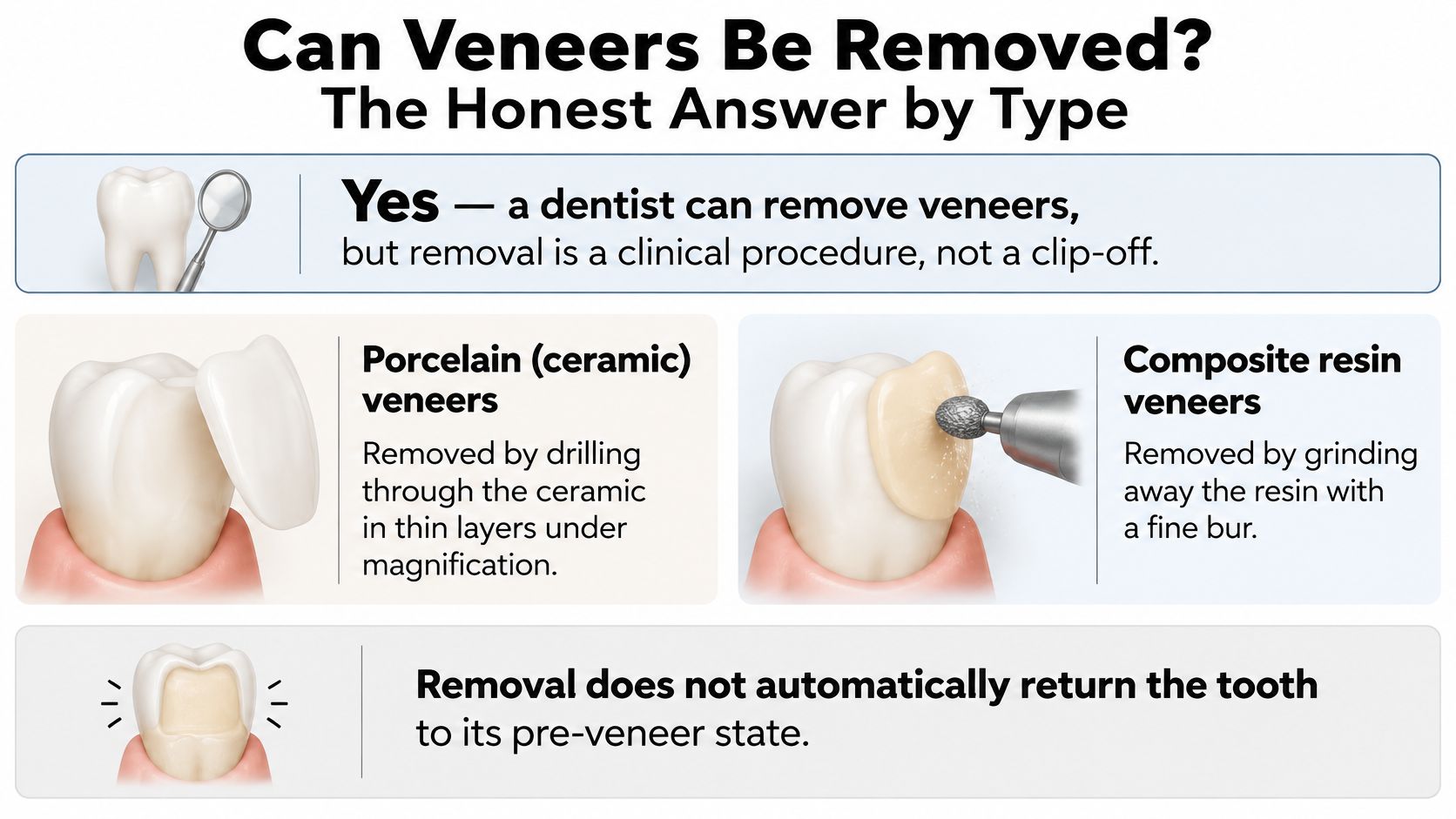
Veneers are removable restorations, not removable appliances. A dentist can take away the ceramic or composite, but this is a clinical procedure rather than something that clips off. Whether you can comfortably leave the tooth without another restoration is a separate decision.
The distinction is straightforward: removability describes taking off the restoration; reversibility describes returning the tooth to its original condition. The American Dental Association's veneer guidance explains that treatment involving enamel removal cannot be reversed because the tooth has been permanently altered.
That doesn't mean every prepared tooth needs a crown. It means the dentist must determine whether the remaining tooth needs a new veneer, composite bonding, or more extensive protection.
What determines whether treatment can be reversed?
The outcome rests on three clinical details:
- Original preparation: How much enamel was removed, and whether any dentin, the layer beneath enamel, was exposed.
- Restoration and adhesive: Which ceramic or composite was used, how thick it is, and what cement holds it in place.
- Current tooth health: Whether the tooth has decay, cracks, sensitivity, gum inflammation, or an unfavorable bite.
A systematic review of ceramic veneer debonding supports the potential for conservative removal, including laser-assisted techniques, but the original preparation and bonding procedure still affect the outcome. Preserving the enamel that remains isn't the same as replacing enamel that was removed before placement.
Patients searching for a cosmetic dentist near me in Chattanooga or Cleveland, TN, may be asking this question after a shade change, a chipped edge, gum irritation, or a move to a new dental office. Those concerns don't all require the same solution. A surface stain might need polishing, while decay beneath a margin may require removal and a new restoration.
The illustration below shows why the removal method must match the material.
Veneer types compared by preparation, removability and reversibility
Find your veneer type in the first column, then check whether enamel was reduced. These are planning categories, not a diagnosis of an individual tooth.
| Veneer type | Typical preparation | Can a dentist remove it? | Reversible to natural enamel? | What may remain |
|---|---|---|---|---|
| Conventional porcelain laminate | Enamel reduced from the front and sometimes the sides | Yes, by grinding through the ceramic | No; enamel does not regenerate | Prepared enamel or dentin; may need a new veneer, bonding, or crown |
| Minimal-prep porcelain | Limited enamel reduction | Yes | Sometimes suitable for a natural-looking result if enough enamel remains, but removed enamel is not restored | A thin prepared surface; sensitivity or replacement may need attention |
| No-prep porcelain | No enamel removal on the facial surface in a true no-prep case | Yes | Often more reversible when tooth shape allows and cleanup preserves enamel | Bonding cement and possible margin cleanup; tooth structure mostly intact |
| Composite bonding, not porcelain | None to slight surface roughening in conservative cases | Yes, by polishing or removing composite | More reversible than prepared porcelain when enamel was preserved | Natural enamel, possibly with minor surface texture changes |
The label minimal-prep isn't proof that treatment can be completely undone. Even slight reduction changes the surface, and the amount may differ from tooth to tooth in the same smile. Likewise, a no-prep label should be checked against treatment records rather than accepted as a guarantee.
Composite deserves its own discussion because it isn't a ceramic shell. A dentist removes the resin selectively, taking care to distinguish it from enamel. Our comparison of composite veneers versus porcelain helps explain the material differences that matter when planning future repairs.
Why records matter more than the veneer's name
Ask for the original preparation photographs, treatment notes, material information, and any records of later repairs. Before-and-after smile photographs are useful, but they don't reliably show how much enamel was reduced beneath a bonded restoration.
For background on what veneer treatment is designed to change, Kettering Dental & Implant Clinic's explanation of veneers for a more confident smile provides context for discussing shape, shade, and coverage. Your own records remain the more useful guide to whether those changes can be undone.
Practical rule: Don't agree to removal without understanding what the tooth may need immediately afterward.
Veneers aren't permanent forever, but they don't pop off either. A records-based examination turns a broad yes-or-no question into a plan for each tooth, including whether removal is necessary at all.
When Removal Becomes the Right Choice
A twelve-year-old veneer that still fits, still seals, and still looks right is usually a veneer worth keeping. Age alone is a weak reason for removal. The questions that matter are whether the restoration still functions, whether the tooth beneath it is healthy, and whether a conservative repair would solve whatever brought you in.
Long-term survival data backs that patience. The systematic review of porcelain laminate veneer survival reports cumulative survival of 94.4% at five years, 93.5% at ten years, 85.74% at fifteen years, and 82.93% at twenty years, alongside a pooled estimate of 89% after a median nine years. Figures like these support planning for long-term care, not automatic replacement on a schedule.
Reported survival of ceramic veneers
| Follow-up | Reported survival | What it tells patients |
|---|---|---|
| Five years | 94.4% | Most veneers are still functioning |
| Ten years | 93.5% | Removal usually isn't routine at this point |
| Fifteen years | 85.74% | Repair or replacement becomes more likely over longer follow-up |
| Twenty years | 82.93% | Many veneers still survive, but replacement planning is reasonable |
| Median nine years, pooled feldspathic and glass-ceramic | 89% | Glass-ceramic 94%; feldspathic porcelain 87% |
| Ten years, all-ceramic meta-analysis of 2,849 veneers | Roughly nine in ten | About one in ten had not survived and may have required repair, replacement, or removal |
| Up to fifteen years, 672 veneers in a retrospective study | 98.4% | Most stayed in place during follow-up in the Journal of Esthetic and Restorative Dentistry study |
Each row describes a different study population, so none of them predicts your smile directly. Survival also doesn't mean untouched: a veneer can count as surviving while still needing polish, rebonding, or margin repair along the way. That distinction matters, because needing maintenance and needing removal are two different conversations.
Problems that justify an evaluation
Removal earns its place when there is fracture, significant chipping, repeated debonding, decay at the margin, persistent gum inflammation, bite interference, or sensitivity that can't be managed conservatively. Dislike of the shape or shade can also justify replacement, provided the improvement is worth further treatment of the tooth.
The threshold is the difference between fixing a veneer and sacrificing one. Say an upper front veneer chips after twelve years. If the chip is small and the bond and tooth underneath are sound, smoothing the edge or placing a small bonded repair may be all it needs. If the crack runs through the ceramic or the bond has failed, replacement is the more honest fix.
A stained margin looks cosmetic, and sometimes it is. When it hides confirmed decay, polishing removes the stain without touching the cavity, so the veneer has to come off for the dentist to reach the tooth, clear the decay, and reseal it with a new restoration.
There is one more reason to be deliberate here. Removal is easy to do and impossible to undo. A veneer can always be taken off a tooth, but enamel reduced during the original preparation cannot be put back, and the tooth will need coverage from that point on. That is why a removal request should start a conversation rather than a procedure. The right target is a failing restoration or a failing tooth. Sound dentistry with some years on it deserves to stay.
How Veneers Are Removed Step by Step
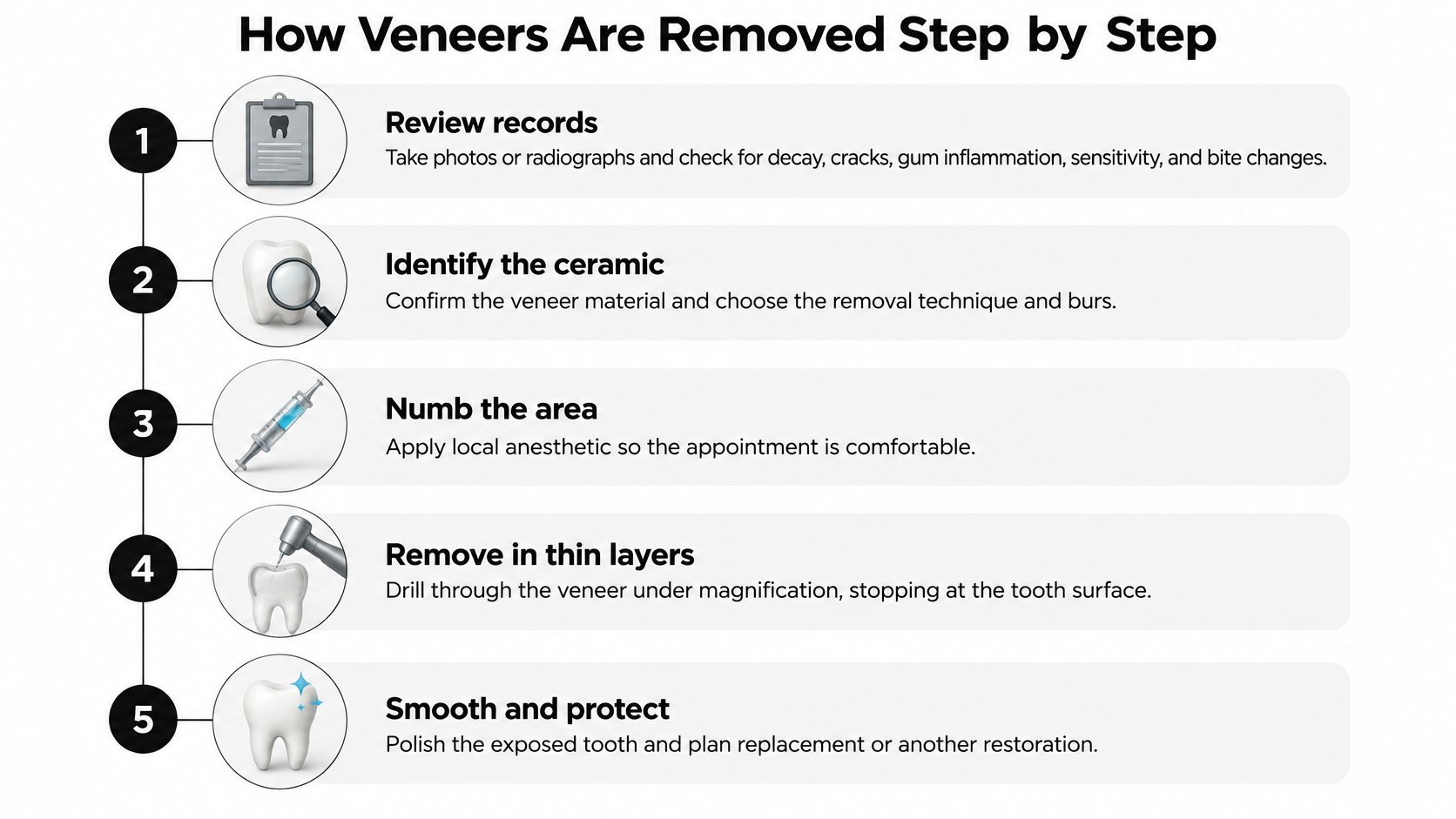
The goal is controlled removal with as little disturbance to healthy tooth structure as possible. Your dentist should explain the likely method and the backup plan before starting. Records matter here because removal and reversibility are different questions. A veneer can sometimes come off, while the prepared tooth underneath cannot be returned to its original state.
This overview shows the main stages of a professional removal appointment.
The clinical sequence
Review records and examine the tooth. The dentist checks photographs and previous treatment notes, takes new images or dental x-rays when indicated, and evaluates margins, gums, bite, and symptoms. This helps distinguish a restoration problem from disease beneath it. The records also guide the choice between preserving the veneer and cutting it away.
Identify the ceramic and cement if possible. Lithium disilicate, feldspathic porcelain, and different resin cements don't respond identically to removal. Missing records may limit how confidently the dentist can predict intact debonding. That uncertainty is a practical reason to avoid promising reuse before the veneer is off.
Numb and isolate the area. Local anesthetic helps keep treatment comfortable, while isolation improves visibility and protects surrounding tissues. Tell the team if you still feel discomfort before removal continues. Good access also reduces the chance of slipping near the gum or neighboring tooth.
Remove the restoration using the selected technique. Conventional removal uses a dental bur to reduce or section the ceramic in controlled layers under magnification. Laser-assisted removal may weaken the cement interface through suitable ceramics instead. The method depends on the material, the bond, and what the dentist needs to preserve.
Clean away residual cement conservatively. The dentist distinguishes adhesive from tooth structure and checks the surface repeatedly. Aggressive cleanup can undermine an otherwise careful removal. This part is slow because cement left behind can affect the fit and bond of the next restoration.
Assess the exposed tooth. Remaining enamel, exposed dentin, cracks, decay, and symptoms from the tooth's nerve determine the next restoration. Unexpected findings may change the original plan. That is why the clinical decision should follow what is found after removal, not only what was expected beforehand.
Smooth and protect the surface. Polishing, a desensitizing agent, fluoride, or a provisional restoration may be appropriate. Before you leave, you should know how the tooth is protected and what happens next.
Can the original veneer be reused?
Conventional removal usually sacrifices the veneer. Ceramic is reduced or separated into pieces to gain access to the bonding layer, so the expectation should be replacement rather than reuse. If records show the veneer type, cement, and preparation, the dentist can plan more precisely, but the final call still happens after the restoration is off.
A randomized clinical study comparing conventional and laser-assisted removal reported successful removal with both approaches, faster removal in the laser group, and some restorations retrieved intact. Whether an intact veneer is suitable for repair or recementation still requires inspection of both the restoration and the tooth.
Laser-assisted debonding is a specialized option, not a promise of damage-free removal. Ceramic thickness, light transmission, cement, cooling, and laser settings all matter. Having laser equipment doesn't by itself establish that a particular veneer is suitable for this approach. I would treat reuse as a possible outcome, never the starting assumption.
The video below provides additional visual context for a conversation about professional veneer treatment.
Don't try to loosen a veneer at home. Pulling, prying, abrasive tools, and household chemicals can injure the tooth or gums without addressing the bond safely. Scheduling and fees should account for the removal, any necessary treatment beneath it, and the intended replacement.
What Happens After Removal and Your Replacement Options
The exposed tooth may feel different from the smooth veneer you were used to. You might notice temperature sensitivity, a duller surface, a changed color, gum tenderness, or a bite that feels unfamiliar.
Those findings need assessment rather than reassurance alone. The dentist should distinguish mild surface sensitivity from symptoms associated with decay, cracks, or inflammation inside the tooth.
A systematic review of laser-assisted ceramic restoration removal describes encouraging preservation outcomes but emphasizes material- and technique-dependent evidence, much of it laboratory-based. For patients, the important endpoint is a tooth that is comfortable, functional, and adequately protected, not merely a veneer that has been removed.
Options after veneer removal
| Option | Best for | What it involves | Main trade-off |
|---|---|---|---|
| New porcelain veneers | Someone who wants the same shape, shade, or smile design | New impressions or scans, try-in, and bonding; mild re-preparation may be needed | Another set of restorations and associated cost |
| Composite bonding | Smaller chips, gaps, or a budget-conscious repair | Tooth-colored resin applied and shaped directly | More susceptible to staining and chipping; needs polishing or replacement |
| Crown | Substantial tooth loss, certain cracks, or a tooth needing structural coverage | A full-coverage restoration after preparation | Removes more tooth structure than bonding or a veneer |
| Orthodontic treatment | Spacing or alignment is the main concern, rather than color | Aligners or braces move teeth through a staged treatment plan | Requires ongoing treatment and doesn't restore lost enamel |
| Polish and monitor | A stable tooth with mild sensitivity and no decay | Clean margins, smooth the surface, and review at intervals | Doesn't replace missing structure or change the underlying color |
Treatment timing follows the condition of the tooth and the chosen restoration. Direct bonding or polishing may be completed during a suitable treatment visit, while new porcelain involves design and fabrication stages. Orthodontics requires a sequence of visits rather than a replacement appointment.
Our explanation of dental veneers versus bonding can help you compare surface coverage with a more localized resin repair. The least expensive immediate option isn't necessarily the best choice if it leaves a weakened tooth inadequately protected.
Protecting comfort and oral health
A desensitizing agent or fluoride varnish may help with temperature sensitivity. Where dentin needs coverage, provisional composite or another temporary restoration can protect the tooth while the definitive plan is completed.
Keep brushing gently around the gumline and follow the cleaning instructions for any provisional restoration. Avoid testing an exposed or temporarily restored tooth by biting hard foods with it.
A cosmetic result is only useful if you can comfortably bite, clean, and live with it.
Active decay, significant cracks, and symptoms from the tooth's nerve need attention before elective cosmetic work. Persistent spontaneous pain, worsening pain on biting, swelling, or a temporary restoration that comes loose warrants a call to the dental office.
Monitoring isn't neglect when the tooth is stable and properly assessed. It can be the most conservative choice when additional coverage would remove healthy structure without a clear benefit.
Choose the goal first: repair, replace, or return to a more natural appearance. Then select the treatment that accomplishes that goal while protecting the most remaining tooth structure.
What Veneer Removal Costs and How Long It Takes
There isn't a useful removal price without knowing what's bonded to the tooth and what needs to happen afterward. The number of veneers, ceramic thickness, cement, removal method, and condition beneath the restoration all affect the work involved.
A removal-only estimate isn't equivalent to a removal-and-replacement estimate. Comparing only the first appointment can hide the larger cost of getting the tooth comfortable and functional again.
Ask for a staged written estimate
The estimate should distinguish these parts of care:
- Removal visit: Taking off the restoration, cleaning the bonding interface, and assessing the exposed tooth.
- Protection and reassessment: Any provisional coverage, sensitivity management, or gum care needed before definitive treatment.
- Repair or replacement: Bonding, impressions or scans, laboratory work, try-in, and final placement where applicable.
Some stages can be combined; others need separate appointments. Gum inflammation or an unexpected cavity can also change the sequence, so the estimate should explain what could require revision.
For context on the restorative work involved, The Dental Cafe's overview of cosmetic dentistry with veneers can help you frame questions about preparation and replacement. It isn't a local fee guide, and your treatment estimate should reflect your own clinical findings.
Chair time, comfort, and coverage
Laser-assisted removal may shorten the removal portion of a suitable case, but less chair time doesn't automatically mean a lower price. Equipment, planning, protection, and the next restoration remain separate considerations.
Local anesthetic is used as appropriate, and you can ask the team to pause if you need a break. Tell us about dental anxiety before treatment so comfort planning happens before you're in the middle of the procedure.
Insurance may treat elective cosmetic replacement differently from treatment for decay or fracture. Have benefits and exclusions checked before work begins, while recognizing that an estimate of benefits isn't a guarantee of payment.
Before deciding: Compare the complete removal-only pathway with the repair-or-replacement pathway, including how each leaves the tooth protected.
Book a Veneer Consultation in Chattanooga or Cleveland, TN
If you're unhappy with a veneer, you don't have to choose between tolerating it and immediately replacing it. A focused evaluation can identify whether the problem is cosmetic, structural, related to the gums, or caused by the bite.
At Winn Smiles in Chattanooga and Cleveland, TN, the consultation should focus on your existing restorations and what you want to change. That includes reviewing dental history and available veneer records, examining the margins, taking photographs, using radiographs when needed, and checking how the teeth meet.
What a useful consultation should answer
The first question is whether removal will solve the problem you're experiencing. An uncomfortable bite may need adjustment, while a leaking margin with decay calls for a different treatment plan.
The examination also helps identify problems before they become more difficult to treat. Checking for cracks and decay, protecting remaining enamel, assessing gum health, and investigating sensitivity are practical health benefits of restorative dental care, even when your initial concern is appearance.
Ask for an explanation of the likely findings beneath each veneer and how those findings could change the plan. A good discussion separates what can be established before removal from what may only become clear after the ceramic is off.
Bring the information that makes that assessment more specific:
- Previous dental records: Preparation notes, material details, x-rays, and records of repairs or replacements.
- Original smile photographs: Images taken before treatment, if available.
- A symptom list: Which tooth hurts, what triggers it, whether pain lingers, and when the concern began.
- Insurance information: Details needed to review potential benefits and out-of-pocket responsibilities.
Choose a veneer evaluation rather than a general cleaning
When requesting an appointment, explain that you want an existing veneer assessed for possible removal or replacement. That gives the team a clearer starting point than booking routine cleaning and exams.
If you're searching for an emergency dentist because a veneer has fractured and the tooth is painful, describe those symptoms when you call. Severe pain or swelling needs timely evaluation rather than a cosmetic consultation alone.
Veneer removal doesn't ordinarily mean losing the tooth. Tooth extraction and dental implants belong to a different decision, considered when a tooth cannot reasonably be retained, not because its cosmetic covering needs changing.
Winn Smiles offers veneers, porcelain veneers, and dental bonding in both Chattanooga and Cleveland, along with free consultations and second opinions for veneers, Invisalign, dentures, implants, and sleep apnea therapy. For this concern, request a veneer evaluation so the conversation stays focused on the restoration, your symptoms, and your preferred outcome.
Removal is possible, but the right choice rests on the remaining enamel, the restoration, and the health of the tooth. Call the office or request an appointment online in Chattanooga or Cleveland, TN, and ask to discuss the treatment plan and cost before proceeding.
Winn Smiles offers veneer consultations and second opinions to help you understand whether an existing veneer needs repair, removal, or replacement. Visit Winn Smiles to request a veneer evaluation in Chattanooga or Cleveland, TN, and discuss a plan that protects your teeth and fits your goals.