You've probably noticed it in photos first. You smile with your lips closed, turn your face slightly, or avoid showing your teeth at work and with friends. Perhaps you're also concerned about brushing around crowded teeth, uneven wear, or what treatment might mean for your enamel. If you're searching for a dentist near me or a cosmetic dentist near me in Cleveland or Chattanooga, you're not alone, and you don't have to choose a treatment based on appearance alone.
A Straighter More Confident Smile Starts Near You
A crooked smile can affect small moments that add up. You might hold back during family photos, feel self-conscious when meeting someone new, or wonder whether a crowded area is getting clean enough despite careful brushing. Those concerns are valid. Seeking advice isn't vain, and it doesn't mean you're unhappy with yourself. It means you're looking after your comfort, oral health, and confidence.
The right treatment depends on what's happening beneath the visible smile. Clear aligners can move teeth, while bonding and veneers camouflage the visible shape. In some cases, a small adjustment is enough. In others, aligning the teeth first may preserve more natural enamel and create a healthier long-term result.
Winn Smiles serves patients in Cleveland, TN, and Chattanooga, TN, with local continuity that matters when a treatment includes regular reviews, digital scans, refinements, or follow-up care. Patients can discuss cosmetic dentistry in a light, modern office and ask about comfort options, including a comfort menu and sedation choices. That gives anxious patients room to talk before deciding anything.
Start with a conversation, not a commitment
A consultation should answer practical questions:
- What is causing the uneven appearance? Crowding, spacing, tooth shape, wear, or a bite concern can look similar in a mirror but need different solutions.
- Can the treatment preserve enamel? This is often more important than choosing the quickest-looking option.
- Will the result improve function as well as appearance? A confident smile should also be comfortable to clean, bite, and maintain.
- What happens if the first plan needs refinement? Clear communication about maintenance and future repairs helps you make an informed choice.
You may be considering Invisalign, veneers, bonding, or another cosmetic service. The most useful first step is an examination that connects your smile goals with your long-term dental health.
How Crooked Teeth Affect Your Health and Daily Life
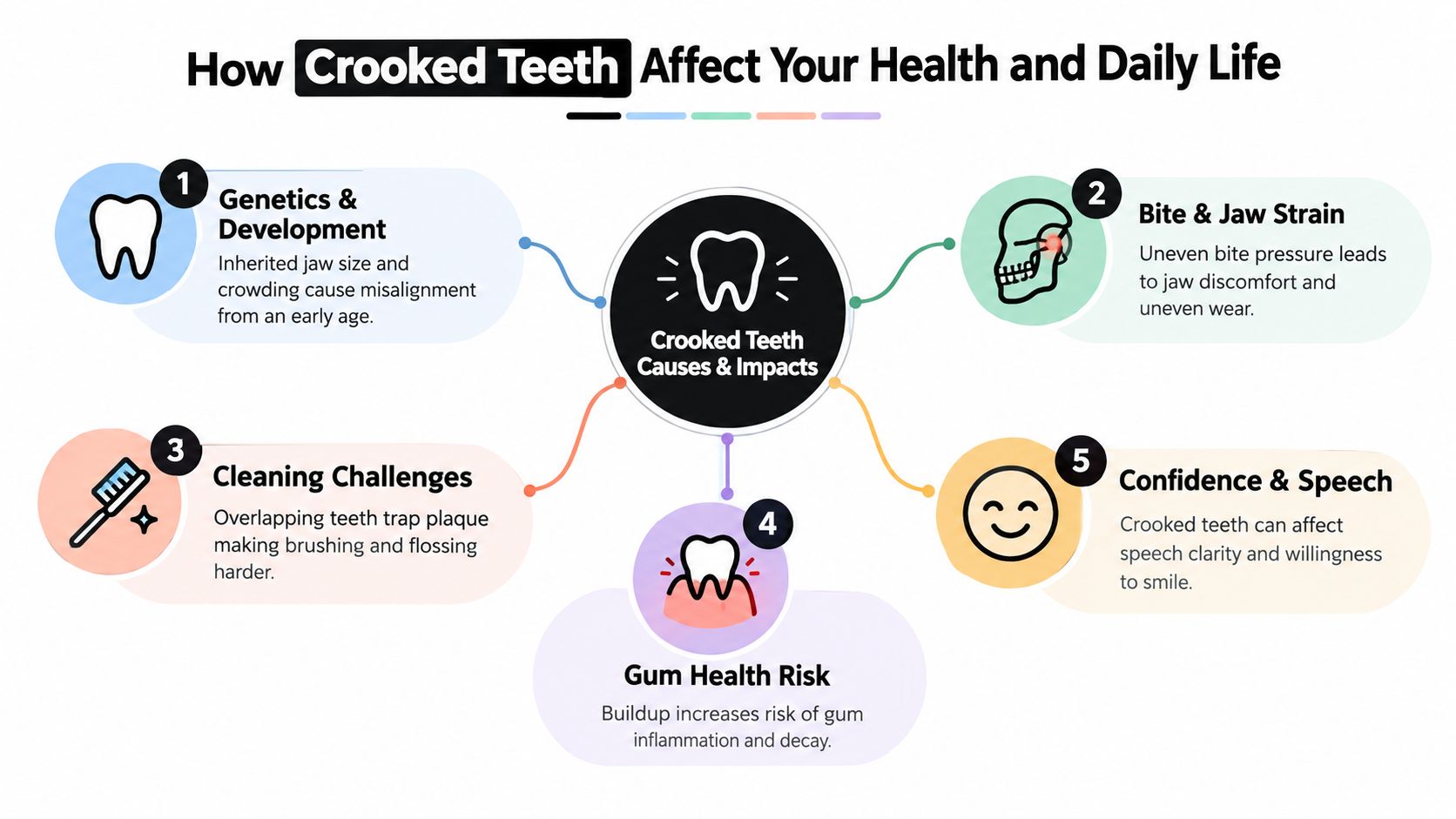
Teeth don't become crowded for just one reason. Jaw development, inherited tooth and jaw proportions, previous orthodontic changes, tooth loss, and shifting over time can all contribute. A useful comparison is a bookshelf. When the books are too large for the available space, they lean, overlap, and make it harder to reach the pages between them. Crowded teeth behave in a similar way.
The visible issue is alignment, but the effects can involve several parts of your mouth:
Cleaning becomes less predictable
Overlapping teeth can create narrow spaces where a toothbrush or floss has difficulty reaching. Plaque may remain in those areas even when you're making a genuine effort. That can make regular cleaning and exams especially important, along with dental x-rays when your dentist needs to assess areas that aren't visible during a routine look.
Crooked teeth don't automatically mean you'll develop decay or gum problems. They can, however, make daily plaque control more demanding. A treatment plan should account for your hygiene routine, existing fillings, gum condition, and the way your teeth meet.
Your bite can distribute pressure unevenly
When teeth don't contact evenly, some areas may take more force than others. That can contribute to uneven wear, small chips, chewing discomfort, or tension around the jaw. Not every patient with crooked teeth has jaw symptoms, and cosmetic correction isn't a substitute for evaluating pain, clicking, or limited movement.
Speech can also feel different when teeth, lips, and tongue don't work together comfortably. Some patients mainly want a more even smile, while others want help with cleaning, chewing, or the way their teeth come together.
A helpful rule: Cosmetic treatment should improve the smile you see without ignoring the teeth, gums, bite, and enamel supporting it.
Your examination may identify a small cosmetic irregularity, a broader orthodontic concern, or a damaged tooth that needs restorative dentistry. If a tooth is painful, badly broken, infected, or impossible to restore, the appropriate discussion may include a tooth extraction, followed by options such as a dental implant. That's why a full assessment comes before choosing a cosmetic shortcut.
Complete Guide to Cosmetic Dentistry Options for Crooked Teeth
The main distinction is simple: some treatments move teeth, and others change how teeth look. A dentist may also combine approaches, such as limited orthodontic preparation followed by cosmetic reshaping or veneers.
Small changes with tooth reshaping
Cosmetic contouring removes a small amount of enamel to adjust a tooth's edge, length, or contour. It may suit a slightly uneven tooth or a minor shape discrepancy. Because enamel is removed, even a conservative adjustment should be planned carefully, especially if the tooth is already thin, worn, or sensitive.
Dental bonding for minor irregularities
Bonding adds tooth-colored composite resin to change the visible shape of a tooth. It can help with a small gap, a short edge, or a minor appearance concern without moving the tooth. The process is usually more conservative than a veneer, but composite can stain, chip, or need maintenance over time.
Porcelain veneers for camouflage
A porcelain veneer covers the front surface of a tooth. It can make mildly crooked teeth, small gaps, and irregular shapes look more uniform, but it doesn't move teeth or correct the underlying bite. Expert guidance places veneers most appropriately with slight rotations or minor crowding involving a small number of teeth, while more significant misalignment generally calls for orthodontics first (guidance on veneers for crooked teeth).
Long-term outcomes vary by case and study. One ten-year study in England and Wales found 53% of porcelain veneers survived without re-intervention at 10 years (the ten-year clinical outcome study). More recent systematic evidence reports veneer survival generally above 90% beyond 10 years, and a 2025 study of 672 veneers observed 98.4% survival with an estimated 15-year survival of 96%, also through the same PubMed source. Veneers can be durable, but fracture, debonding, replacement, and the enamel involved in preparation deserve clear discussion.
Clear aligners and Invisalign
Clear aligners use a series of custom trays to apply controlled forces and gradually move teeth. Most systems use a maximum linear displacement of 0.25 mm per aligner, and attachments help retain the trays and support movements such as rotation and extrusion (the 2026 clear aligner review).
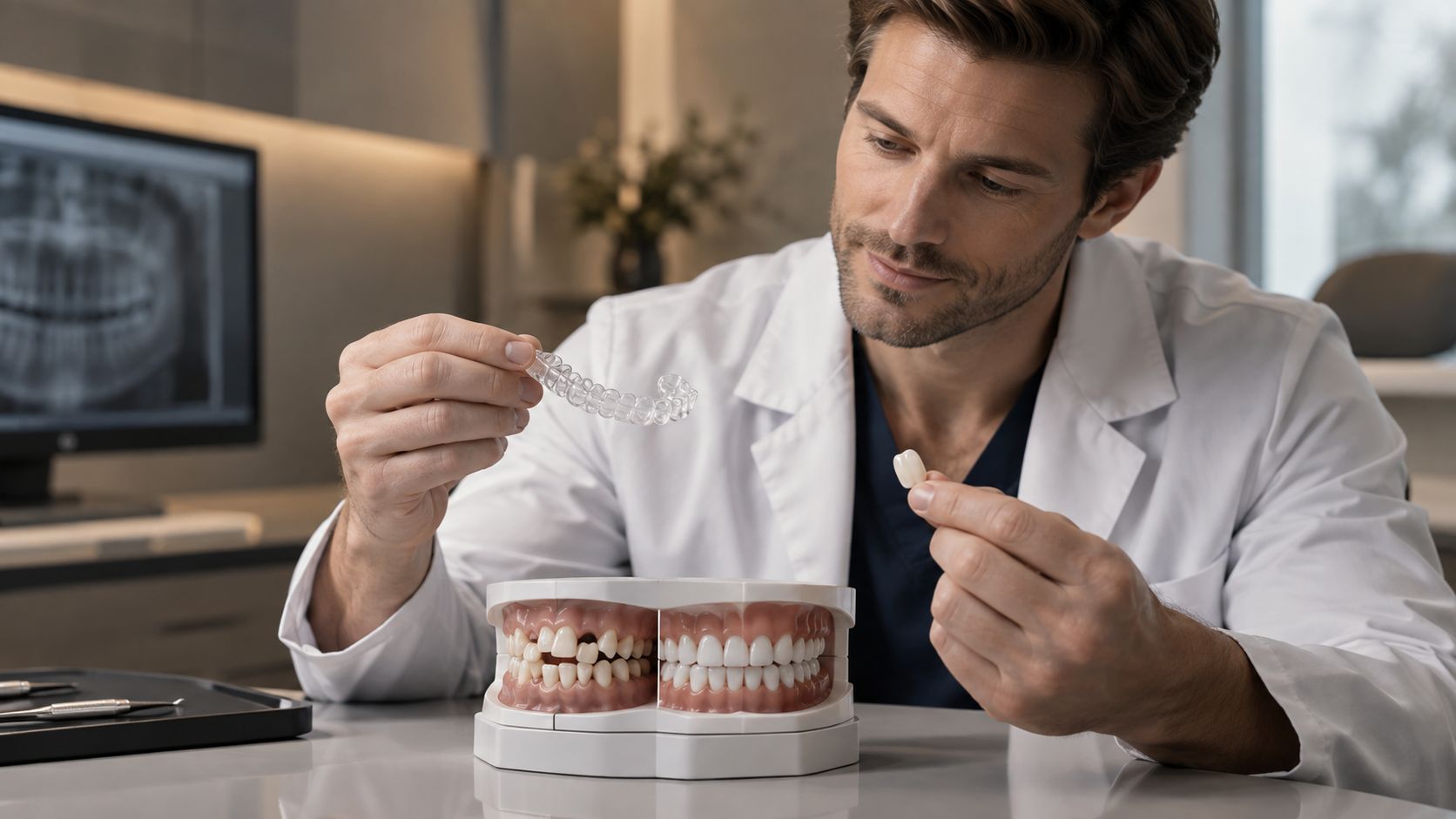
They're often suitable for adults with mild-to-moderate crowding, spacing, or limited rotations. Patients generally need to wear each tray for 20 to 22 hours per day, or about 400 hours per aligner before changing to the next tray (the clear aligner review on wear schedules). For a plain-language explanation, see how Invisalign works.
Traditional braces for broader movement
Fixed braces use brackets and wires to move teeth and manage more complex alignment or bite concerns. They're more visible and can make brushing and flossing more involved, but they don't depend on remembering to insert trays. Your dentist or orthodontic provider will determine whether this approach is appropriate for the movement required.
Crowns when a tooth also needs restoration
A crown covers the tooth rather than changing a small area of its front surface. It may be considered when a crooked tooth is also severely weakened, fractured, heavily restored, or worn. Crowns aren't a first-choice alignment treatment for healthy teeth because they require substantial preparation, but they can restore appearance and function when full coverage is clinically justified.
Implants and implant-supported restorations
A missing tooth can create an uneven smile and affect nearby tooth positions. A dental implant replaces the missing tooth root and supports a restoration, while full-arch implant solutions may help patients with extensive tooth loss. Implants don't straighten existing teeth, but they can form part of a restorative plan when a severely compromised tooth can't be predictably saved.
For readers comparing cosmetic treatment costs internationally, this guide to the cost of teeth whitening in South Africa offers useful context about how pricing discussions can vary by service and location. Your Cleveland or Chattanooga treatment estimate still needs to come from an examination and personalized plan.
| Treatment | Best For | Typical Timeline | Enamel Impact |
|---|---|---|---|
| Reshaping | Very small contour changes | Short, case-dependent | Removes a small amount |
| Bonding | Minor gaps, chips, or shape concerns | Often a short visit | Usually preserves most natural enamel |
| Porcelain veneers | Mild cosmetic misalignment and shape changes | Planned over consultation and design visits | Requires preparation |
| Clear aligners | Mild-to-moderate crowding or spacing | Depends on movement and adherence | Preserves the tooth surface |
| Traditional braces | Complex movement or bite correction | Case-dependent | Preserves enamel, with hygiene demands |
| Crowns | Damaged or severely compromised teeth | Case-dependent | Requires full-coverage preparation |
| Implants | Missing or non-restorable teeth | Multi-stage, case-dependent | Replaces the missing tooth, not natural enamel |
How to Choose the Right Option for Your Smile Goals
The best choice isn't automatically the fastest or the least visible. Start with one question: Can the desired appearance be achieved while preserving as much healthy enamel as possible?
Decide whether teeth need to move
Veneers and bonding can make a tooth look straighter, but they don't correct its position or bite. Veneers may suit slight rotations, minor crowding, or small gaps. Moderate or severe crookedness often needs orthodontic treatment first because placing veneers over significantly misaligned teeth may require more enamel removal and can be less predictable over time (the alignment-first discussion).
Clear aligners can produce outcomes comparable to fixed appliances in mild-to-moderate malocclusions, but movement accuracy varies. A systematic review found average individual tooth-movement accuracy of about 59% compared with the digital treatment plan, and some comparisons showed less favorable occlusal outcomes than fixed appliances (the systematic aligner review). That doesn't mean aligners won't work. It means your plan may require attachments, refinements, or a different appliance when exact root control, torque, or finishing matters.
Weigh lifestyle against responsibility
Aligners are removable, which can make meals and brushing easier. That convenience comes with daily responsibility. You'll need to wear the trays consistently, clean them appropriately, manage food and drinks, and keep up with dental hygiene. Reviews also describe a nuanced oral-health picture. Aligners may support plaque control compared with fixed appliances in some situations, but hygiene, diet, adherence, and biofilm management still matter, and the material can support biofilm growth under certain conditions (the clinical summary of aligner hygiene considerations).
Ask yourself:
- Enamel: Would moving the tooth avoid unnecessary preparation?
- Severity: Is the concern a small rotation, broad crowding, or a bite problem?
- Time: Do you want gradual movement or a quicker visible change?
- Maintenance: Can you commit to aligner wear and follow-up care?
- Longevity: What happens if a veneer chips or bonding needs repair?
- Budget: What is included in the quoted plan, such as scans, refinements, retainers, repairs, or replacement?
Ask at your consultation: “Which plan meets my smile goals while leaving the most healthy tooth structure untouched?”
Your dentist should also review gum health, existing restorations, tooth color, facial balance, and any jaw symptoms. If you're comparing dental veneers and bonding, the key issue isn't only the immediate appearance. It's whether the material, preparation, bite, and maintenance plan fit your mouth.
A combined plan can sometimes balance appearance and preservation. For example, limited alignment may create more room for a conservative veneer design, but case selection is essential. A personalized scan and examination can show whether that approach is appropriate or whether natural tooth movement alone can meet your goals.
What to Expect When You Visit Winn Smiles in Cleveland and Chattanooga
Your first visit should give you clarity, not pressure. At Winn Smiles, the process can begin with a new patient exam, dental x-rays when clinically indicated, photographs, and digital scans. These records help the team assess tooth position, bite relationships, enamel condition, existing dental work, and gum health before recommending cosmetic care.
Your visit follows a practical sequence
First, talk through your goals. You might want teeth that look straighter in photographs, an easier cleaning routine, improved chewing comfort, or a solution for one tooth that has always looked out of place. Sharing what bothers you helps the team distinguish an appearance concern from a functional concern.
Next, review the choices. The conversation may include Invisalign clear aligners, porcelain veneers, bonding, traditional braces, crowns, or restorative options. If a missing or severely damaged tooth is part of the problem, dental implants may be discussed. Free consultations and second opinions are available for select services, giving you an opportunity to understand alternatives before proceeding.
Then, receive a personal plan. The plan should explain the recommended sequence, expected appointments, maintenance, and transparent costs. Aligner treatment includes tray wear and review appointments. Veneer treatment includes design, shade selection, tooth preparation when needed, and fit checks. Same-day crowns may restore function and appearance in one visit when the case is suitable.
Comfort is part of the clinical plan
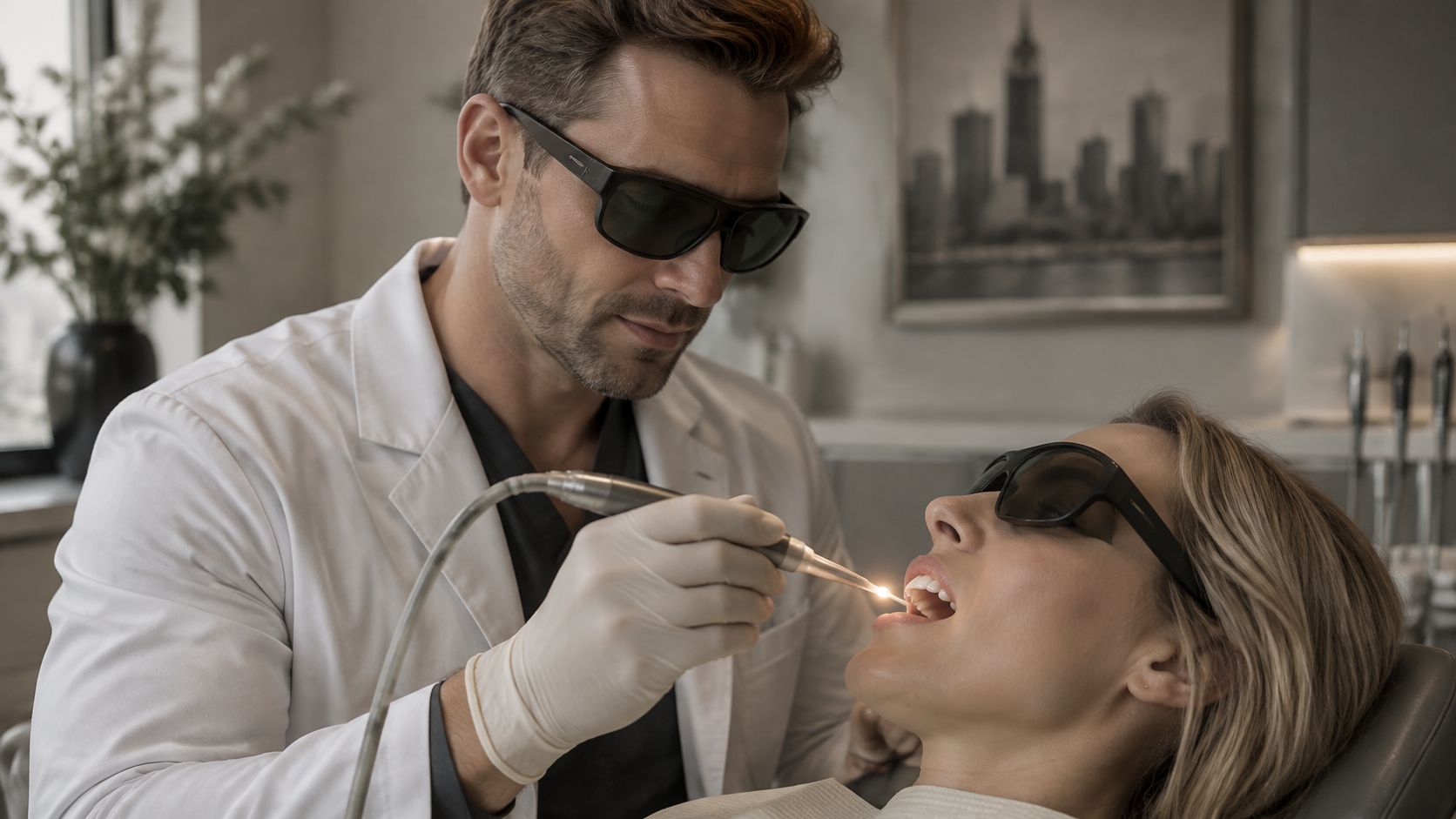
Dental anxiety can make even a needed consultation feel difficult. Winn Smiles offers a comfort menu and sedation options, while laser dentistry may support gentler, precise procedures in appropriate cases. Tell the team if you're worried about needles, sounds, sensitivity, gagging, or a previous dental experience. Specific concerns allow the team to plan support rather than asking you to tolerate discomfort.
Patients in Cleveland, Chattanooga, and nearby service areas can also discuss general dental care during the same process. That may include cleanings and exams, periodontal care, teeth whitening, restorative dentistry, emergency dental services, or a tooth extraction when clinically necessary. The purpose is to create a coordinated plan that protects your health while improving your smile.
Benefits of Straightening Your Smile With Cosmetic Dentistry
A more even smile can make daily care easier. When teeth no longer overlap as heavily, brushing and flossing may feel more manageable, and your dentist may have better access during cleanings and exams. The value isn't only visual. A well-planned result can support gum care, balanced chewing, and more even contact between teeth.
Patients may also notice practical changes in how they speak, eat, and smile for photos. Correcting a shape issue with bonding or veneers can improve appearance, while aligners or braces can address tooth position. Restorative dentistry may protect a weakened tooth, and dental implants can replace missing teeth when tooth loss is part of the overall concern.
A complete smile plan may include professional teeth whitening after alignment or restorative work, periodontal care before cosmetic treatment, or emergency dentistry when pain or damage needs attention first. These services work together. A brighter shade won't correct crowding, and a veneer shouldn't cover an untreated infection or unstable gum condition.
Long-term perspective: The strongest cosmetic result is one you can clean, use comfortably, and maintain for years.
Schedule Your Free Consultation With Winn Smiles Today
The right cosmetic dentistry option for crooked teeth depends on your smile goals, bite, tooth condition, and the amount of healthy enamel you want to preserve. Bonding or veneers may suit a mild appearance concern, while clear aligners or braces may be the safer route when teeth need to move. A damaged or missing tooth may call for restorative treatment, such as a crown or dental implant, before cosmetic finishing.
Winn Smiles offers care for patients in Cleveland, TN, and Chattanooga, TN, with convenient hours, two accessible locations, modern technology, comfort-focused support, and clear treatment discussions. Whether you're looking for a dentist near me, a cosmetic dentist, an emergency dentist, or help understanding dental implants near me, a consultation can turn uncertainty into a practical plan.
Schedule your free consultation or request an appointment to discuss your crooked teeth, enamel-preservation goals, and preferred treatment path. Contact the Cleveland or Chattanooga office if you need cosmetic guidance, restorative care, or urgent dental attention.
Winn Smiles provides personalized cosmetic, restorative, and general dental care, including Invisalign, veneers, bonding, same-day crowns, dental implants, and comfort-focused treatment for patients in Cleveland and Chattanooga. Visit Winn Smiles to request your consultation and take the next step toward a healthier, more confident smile.