A dentist-made custom mouth guard in the Cleveland and Chattanooga area generally runs about $300 to $800, depending on purpose. The final number depends on whether the guard is for sports, grinding, or sleep apnea and what the quoted fee includes.
You may be searching for a dentist near me after waking with a sore jaw, noticing worn teeth, or watching your child take the field for a contact sport. You may also be comparing a pharmacy guard with a custom option and wondering why the prices seem so far apart. The answer is that a custom mouth guard isn't priced like a piece of plastic. You're paying for the examination, design, scan or impression, fabrication, fitting, adjustments, and clinical judgment behind the appliance.
For patients in Cleveland, Chattanooga, and nearby Tennessee communities, the right question isn't just, “How much is a mouth guard?” Ask instead, “What will I pay for the complete treatment, and what protection am I getting for that cost?”
What Custom Mouth Guard Cost Looks Like in Cleveland and Chattanooga
A Cleveland shift worker may wake with jaw pain after a night of clenching. A Chattanooga high-school quarterback may need protection after losing a tooth during practice. Their treatment costs can differ because the appliances serve different purposes. One may require a therapeutic guard for grinding and bite stability. The other needs a sports guard that absorbs impact and stays secure during play.
A dentist-made custom night guard commonly costs $300 to $800 or more, based on published consumer comparisons of dentist-made, mail-order, and over-the-counter appliances (custom mouth guard cost ranges and included services). Treat that figure as a starting range, not the complete amount you will automatically pay.
What the quoted fee may include
Ask the Cleveland or Chattanooga office to show the full treatment cost, not only the plastic appliance fee. A written estimate should identify:
- Clinical examination: The dentist checks tooth wear, fillings, crowns, jaw symptoms, bite contacts, and the reason for treatment.
- Digital scan or impression: The office records your tooth contours and the relationship between your upper and lower arches.
- Appliance fabrication: A laboratory or in-office system forms the guard from the selected material and design.
- Delivery and fitting: The dentist confirms that the guard seats fully, feels stable, and contacts the opposing teeth correctly.
- Occlusal adjustments: Minor bite refinements can determine whether you comfortably wear the guard through the night.
- Follow-up or remake terms: The estimate should state what happens if the appliance needs adjustment or does not fit as expected.
A public benchmark helps explain why a custom guard is a dental procedure rather than an ordinary retail purchase. The American Dental Association 2026 New York Medicaid fee schedule lists $146.45 for several full-arch and partial-arch occlusal guard procedures, subject to a one-year frequency limitation. Those are Medicaid reimbursement amounts in one market, not universal private-pay prices.
Practical rule: Never compare a device-only price with a treatment-inclusive quote.
A low appliance fee can become a higher total after adding the examination, scan, delivery, bite adjustment, or replacement. Before scheduling treatment, ask for the anticipated total in writing and confirm which services are included. That single request gives you a clearer basis for comparing mouth guard costs at dental offices in Cleveland, Chattanooga, and nearby communities.
What a Custom Mouth Guard Actually Is and How It Gets Made
You may walk into a Cleveland or Chattanooga dental office expecting to pay for a piece of molded plastic. The actual treatment cost can include an exam, bite assessment, scan or impression, laboratory fabrication, delivery, adjustments, and a remake policy. The appliance fee is only one part of the quote.
A custom mouth guard starts with your dental condition and its purpose. The dentist first determines whether you need protection during sports, a nighttime grinding appliance, jaw-joint support, or another design. A guard built to absorb impact during a game has different requirements from an occlusal appliance that manages tooth contact for hours during sleep.
The clinical workflow
The first appointment includes an examination and bite assessment. The dentist checks for flattened or chipped enamel, jaw-muscle tenderness, cracks, worn fillings, crowns, veneers, missing teeth, and changes in your bite. Headaches, morning jaw soreness, and tooth sensitivity also matter. These findings help determine whether a straightforward protective guard fits your needs or whether the appliance requires a more controlled occlusal design.
The office then captures your teeth with a digital intraoral scan or traditional impression. That record lets the appliance follow your tooth contours and maintain the planned thickness in areas that need protection. For sports guards, clinical evidence identifies ethylene-vinyl acetate, or EVA, as the dominant material. It describes thicknesses of about 3 to 4 millimeters over labial surfaces and approximately 2 to 3 millimeters over posterior occlusal surfaces (sports mouth guard materials and thickness considerations).
The record goes to fabrication. Depending on the design, a laboratory technician may pressure-form or process the material, or the office may complete the work with digital equipment. At delivery, the dentist checks retention, speech, comfort, coverage, and bite contacts.
Why the fitting appointment matters
A store-bought guard can be softened and molded at home. It cannot assess your bite or identify a dental problem that may affect the design. A custom appliance gives the dentist more control over coverage, thickness, stability, and contact distribution. That control matters more if you have braces, crowns, implants, a history of grinding, or jaw symptoms.
Ask for the full treatment cost in writing. Confirm whether the quote includes the diagnostic exam, scan or impression, laboratory work, delivery, adjustments, and remake terms. A clear breakdown lets you compare what Cleveland and Chattanooga offices provide, not just the headline appliance price.
The Main Factors That Change Your Final Price
A Cleveland or Chattanooga patient may hear one appliance fee and still face separate charges for the exam, scan, adjustments, insurance processing, or a later replacement. Ask for the total treatment cost, not only the price of the plastic. The design, bite, appointments, and follow-up work often affect the final bill more than the raw material.
Purpose comes first
A sports guard is built for impact protection. A grinding guard manages repeated nighttime contact and the bite forces that come with it. An appliance for sleep apnea therapy serves a different clinical purpose, so its fee and evaluation should not be compared with a routine sports guard.
Clinical literature identifies material, thickness, coverage, and stability as design factors. As noted earlier, increasing EVA thickness generally improves impact absorption up to approximately 4 millimeters, while extra bulk can reduce comfort and acceptance (evidence on custom guard design and thickness). For bruxism or temporomandibular-joint management, the dentist may choose a rigid or multilayer construction and adjust the occlusal surface to spread contact across the teeth (clinical distinctions between sports and therapeutic appliances).
Material, coverage, and fabrication
Soft material can suit selected patients with lighter grinding or sports needs. A rigid or multilayer design may make more sense when durability, stability, or controlled contact matters. Hard acrylic stabilization splints are a separate category from routine sports guards, and published estimates for these more involved appliances can reach approximately $500 to $1,800 (custom mouth guard fees and hard acrylic splint distinctions).
Coverage affects both design and fee. Many patients need one arch. Others need a different coverage pattern or a therapeutic appliance after a detailed evaluation. The quote should also distinguish the appliance fee from the diagnostic exam, scan or impression, laboratory work, delivery, adjustments, insurance contribution, and remake or replacement terms.
| Factor | Lower-cost option | Higher-cost option | Typical price impact |
|---|---|---|---|
| Purpose | Basic sports protection | Therapeutic grinding or jaw-management design | A clinical appliance can cost more than a simple protective guard |
| Material | Simpler soft construction | Rigid or multilayer construction | Material choice changes fabrication and adjustment needs |
| Coverage | Single-arch design when appropriate | More complex coverage based on clinical need | More material and design work can increase the fee |
| Fabrication | Standard laboratory workflow | Specialized laboratory or in-office digital workflow | Equipment, technician time, and turnaround affect the quote |
| Follow-up | Straightforward delivery | Multiple bite adjustments or remakes | Additional visits can raise total treatment cost |
More fittings mean more chair time. A transparent office should explain these costs before fabrication, including what insurance may cover and what remains your responsibility. You should know whether “custom” includes diagnosis, scanning, laboratory work, delivery, adjustments, and replacement terms, or only the finished appliance.
Custom Guards Compared to Store-Bought and Mail-Order Options
A patient with occasional sports use has different needs from someone waking with jaw pain or damaging dental work. Paying for the most expensive guard is unnecessary in the first case, while choosing the cheapest tray can create added treatment and replacement costs in the second. Match the appliance to the problem, expected wear, and need for a dental evaluation.
An over-the-counter guard generally costs about $15 to $100. Mail-order or direct-to-consumer custom guards commonly fall around $100 to $300, while dentist-made custom night guards are often about $300 to $800 or more (consumer pricing comparison for OTC, mail-order, and dentist-made guards). Treat those figures as appliance price tiers, not automatically as your total treatment cost. Ask whether the quote also includes the examination, scan or impression, delivery, adjustments, insurance contribution, and replacement terms.
| Feature | OTC boil-and-bite | Mail-order impression kit | Dentist-made custom |
|---|---|---|---|
| Price tier | Lowest | Intermediate | Highest |
| Impression or scan | Home molding | At-home impression sent to a laboratory | Digital scan or impression taken in a dental office |
| Clinical examination | Generally not included | Generally limited or separate | Included when part of the treatment plan |
| Fit correction | Limited to remolding or replacement | Depends on the provider's remake policy | Dentist can adjust fit and bite |
| Best use | Short-term or occasional protection | Budget-conscious users seeking a custom-manufactured option | Chronic grinding, jaw symptoms, complex dental needs, or prescribed therapy |
| Main limitation | Can be bulky or unstable | Home impression quality can affect the result | Requires an appointment and a higher upfront fee |
A pharmacy guard can work as a short-term stopgap for an occasional athlete, especially when a child's teeth or bite are changing and the guard will need replacement soon. It is a poor long-term choice for frequent grinding, morning jaw pain, heavy wear, extensive dental work, or a therapeutic need.
Mail-order guards sit between generic trays and dentist-made appliances. They may fit better than a standard tray, but an impression kit does not replace an examination when symptoms point to bruxism, tooth wear, a cracked restoration, or a jaw-joint problem. An inaccurate impression or changing bite can also trigger remake costs.
If you grind frequently or have symptoms, review how a night guard can help with teeth grinding before choosing. Use the least expensive option that safely matches the problem, then compare the full treatment cost, not just the plastic appliance price.
Insurance, HSA, and Financing for Mouth Guards
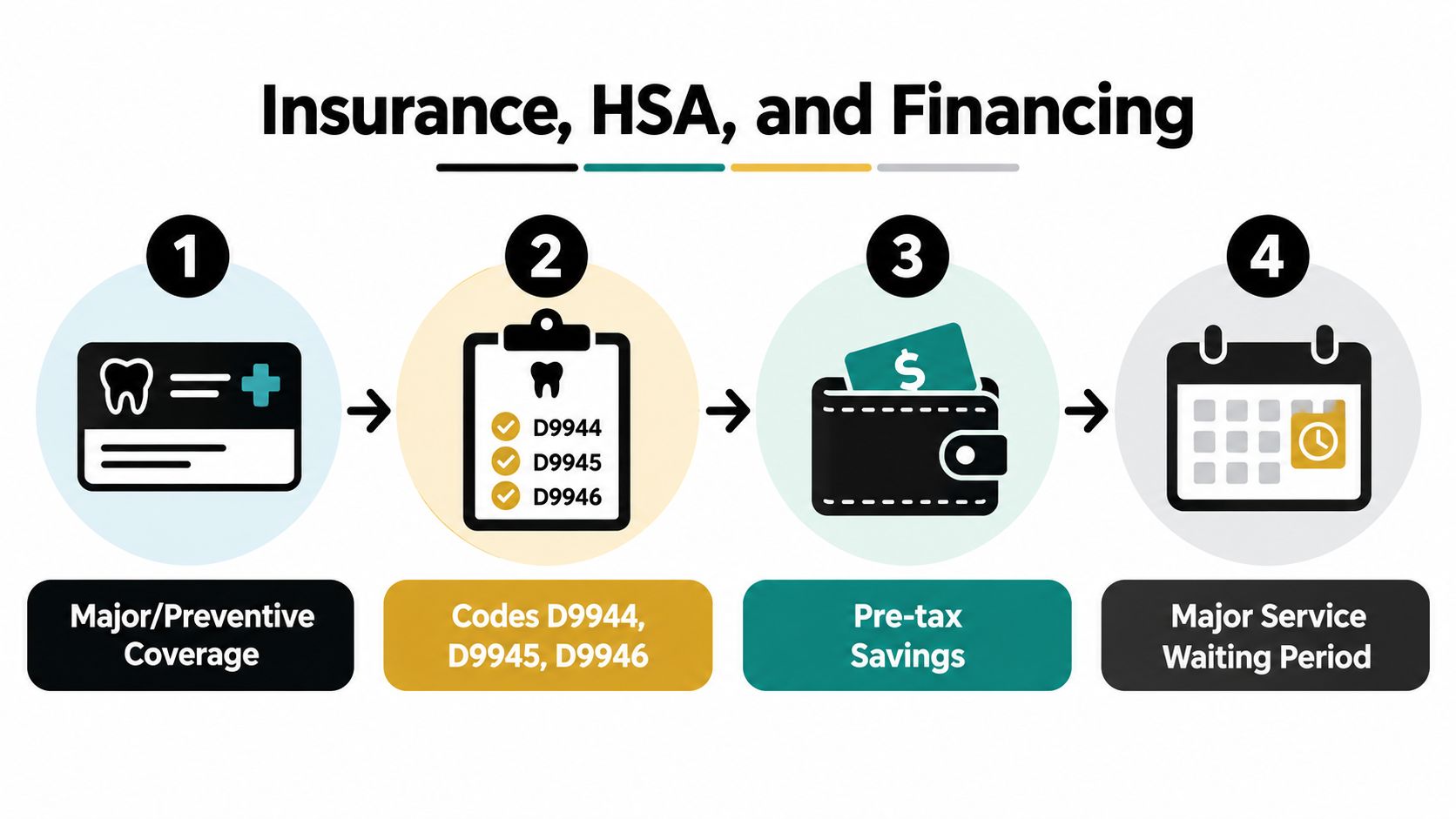
Coverage depends on the reason for the appliance and the rules of your plan. Sports mouth guards are often treated as preventive or elective purchases, while a night guard may receive limited or plan-specific reimbursement when a dentist documents bruxism, tooth wear, jaw symptoms, or another clinical reason (insurance considerations for mouth guards).
Start by asking the dental office for the procedure category it expects to submit. Then contact your insurer and request a pre-treatment estimate. Ask whether the plan covers custom guards, whether a deductible applies, whether the benefit has an annual maximum, and whether replacement is restricted. Coverage should never be assumed just because the appliance was recommended by a dentist.
Questions to ask before scheduling
- Request the diagnosis: Ask whether the guard is being prescribed for sports protection, grinding, jaw symptoms, or sleep apnea therapy.
- Request the estimate: Confirm whether the exam, scan or impression, fabrication, delivery, adjustments, and replacement terms are included.
- Check the account type: Ask whether HSA or FSA funds may be used under your plan rules and whether documentation is required.
- Ask about payment options: If insurance leaves a patient portion, ask what financing or payment arrangements the office offers before treatment begins.
Sleep apnea appliances can involve a separate medical evaluation and insurance process. A useful overview of whether sleep apnea dental appliances may be covered by insurance can help you prepare questions, but your insurer must confirm the applicable benefit for your specific plan.
A front-desk team should be able to provide an itemized breakdown rather than a single unexplained total. If you have dental anxiety, ask whether the office offers comfort measures or sedation options for the examination and fitting.
What to Expect at a Winn Smiles Visit
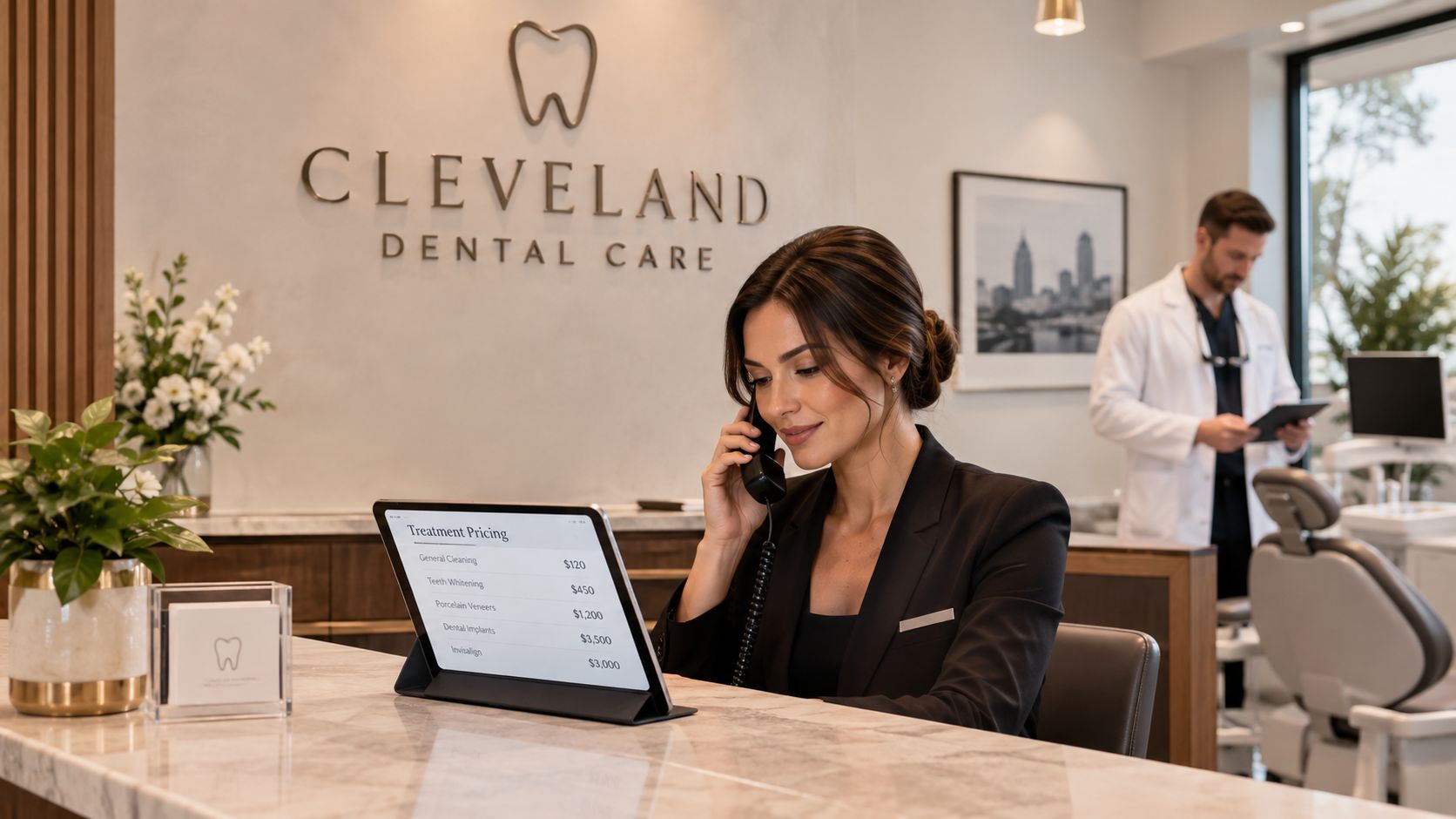
The process should feel clear from the first phone call. You can begin by asking about the reason for the guard, the expected appointment sequence, insurance verification, and what information the office needs to prepare an estimate. A free consultation or second opinion may help you compare options before you authorize fabrication, depending on the service.
At the diagnostic visit, the dentist reviews your symptoms, dental history, restorations, tooth wear, and bite. Digital photographs and a 3D intraoral scan can record your teeth without the discomfort of traditional impression material. The dentist then discusses the guard's intended use, thickness, coverage, material, and any adjustments that may be needed.
A visit built around comfort and clarity
Patients can ask about the comfort menu and personalized sedation options, especially if dental visits cause anxiety. Those services should be discussed openly before the appointment so you understand whether they affect the total estimate.
After the scan, the appliance may be sent for laboratory fabrication or produced through an in-office digital workflow. The timing depends on the design and fabrication route, so ask the team for the expected delivery date rather than relying on a generic promise. At the delivery visit, the dentist checks retention, pressure points, speech, and bite contact, then makes the necessary refinements.
The follow-up conversation matters just as much as the initial quote. Ask how to clean and store the guard, what signs indicate wear, when to bring it to a routine cleaning and exam, and what happens if your bite or dental work changes. The practice serves patients through locations in Cleveland and Chattanooga, with local communication, convenient scheduling, and a same-day emergency line available for urgent concerns.
A custom guard appointment can also identify problems that need separate care. If the examination finds a damaged tooth, you may need restorative dentistry or a tooth extraction. If you have missing teeth, a discussion about dental implants may be appropriate. Patients seeking a broader smile plan can also ask about teeth whitening, veneers, or cosmetic dentistry, while those with urgent pain can request an emergency dentist visit.
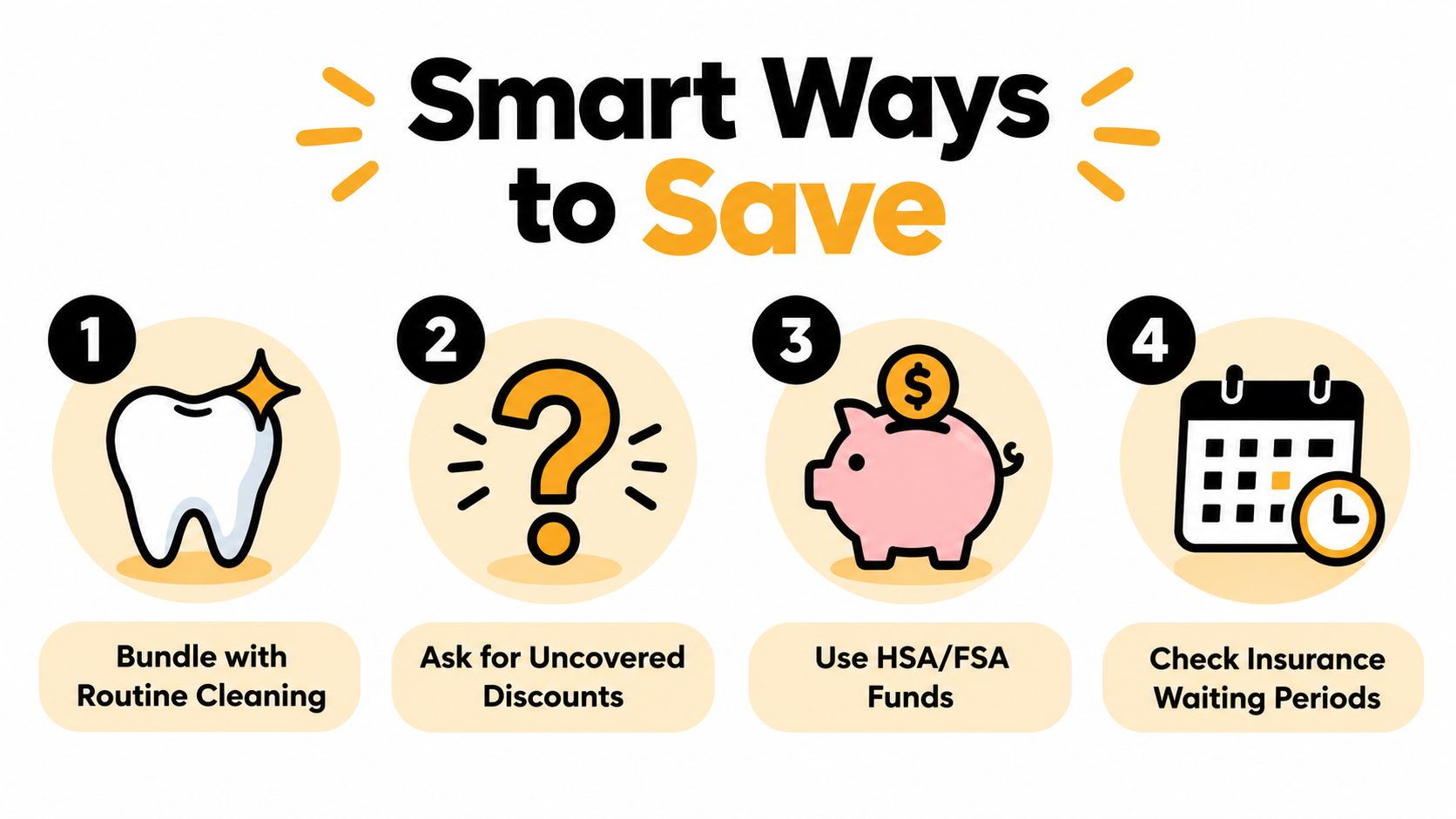
Smart Ways to Save and Your Next Step
You can reduce unnecessary mouth guard cost without choosing an appliance that fails to address the problem.
- Bundle when appropriate: Ask whether the scan or examination can be coordinated with a scheduled cleaning and exam, provided the timing and clinical purpose make sense.
- Choose the simplest safe design: If your dentist determines that your grinding is mild, ask whether an in-office printed or simpler guard is appropriate instead of a more complex laboratory design.
- Avoid unnecessary coverage: Don't pay for dual-arch protection unless the dentist explains why you need it.
- Get the plan in writing: Request the guard type, material, coverage, included visits, procedure categories, insurance submission details, and remake terms.
- Use available account funds: Ask whether HSA or FSA funds can be used for your clinically indicated appliance under the account administrator's rules.
- Review replacement terms: A low initial price may not be economical if the guard wears quickly, fits poorly, or requires repeated remakes.
- Ask about uninsured options: If you don't have dental insurance, ask whether a membership plan or payment arrangement applies to the services you need.
A boil-and-bite guard can make sense as a temporary measure for occasional sports use or a short delay before a dental appointment. It becomes a false economy when you have persistent jaw pain, significant tooth wear, a history of cracked restorations, braces, or a guard that won't stay seated.
The strongest money-saving move is a proper diagnosis before fabrication. It prevents you from paying for the wrong material, the wrong coverage, or a replacement after an appliance fails to fit.
Winn Smiles offers custom night guards, sports mouth guards, sleep apnea appliance evaluations, transparent cost discussions, and financing conversations for patients in Cleveland and Chattanooga. Visit Winn Smiles to request a free consultation, book online, or review your specific treatment estimate before committing.