You take your blood pressure medicine because you should. Then a few days or weeks later, your mouth starts feeling sticky, your tongue seems dry by midday, and water never seems to last. Many patients in Chattanooga and Cleveland tell me the same thing. They're trying to protect their heart, but now their mouth feels uncomfortable all day.
That concern is valid. Dry mouth after starting or changing a blood pressure medication is a real pattern, not something you're imagining. It can show up as thirst, trouble swallowing dry foods, bad breath, a burning feeling, sore tissues, or a sudden increase in cavities even when your brushing habits haven't changed.
The good news is that you usually don't have to choose between heart health and oral health. You do need to recognize the side effect early, protect your teeth and gums, and make sure your dentist and prescribing physician are looking at the same problem from both sides.
A Chattanooga Dentist Explains Medication-Related Dry Mouth
A common story in our area goes like this. Someone has a routine medical visit, gets started on a blood pressure medication, and feels relieved to be taking care of an important health issue. Soon after, they notice they need water at night, their lips feel dry, and crackers or bread suddenly seem harder to eat.
They often wonder if it's just aging, the weather, allergies, or not drinking enough water. Sometimes it is one of those things. But sometimes the timing points strongly to medication-related dry mouth.
When the symptom starts to affect daily life
Dry mouth can seem minor at first. Patients will say they can live with it. Then the side effects start stacking up. Their mouth feels uncomfortable during sleep. Coffee makes it worse. Their breath changes. Their gums feel irritated. A crown margin or old filling starts trapping plaque more easily because the mouth doesn't feel naturally rinsed by saliva anymore.
That's where dental care becomes practical, not optional. A dry mouth problem often becomes a cavity problem, a gum irritation problem, or a denture comfort problem if nobody steps in early.
Many people don't connect a heart medication with a mouth symptom. The connection is common enough that it deserves attention.
Why patients in Chattanooga and Cleveland often ask this question
People searching for a dentist near me, a dentist in Chattanooga, TN, or a family dental office in Cleveland usually aren't looking for a lecture. They want to know two things. Is this normal, and what can I do about it?
The answer is yes, blood pressure medication can cause dry mouth. It doesn't happen to everyone, and it doesn't affect every drug the same way, but it's a credible and well-recognized side effect. If you've noticed the change after starting a medicine or after a dose adjustment, that timing matters.
A local dental exam helps sort out what's happening in your mouth. We look for the signs dryness leaves behind, including irritated tissues, plaque buildup in unusual places, early enamel changes, and areas where decay can begin faster when saliva isn't doing its normal job.
Why Your Blood Pressure Medication May Cause Dry Mouth
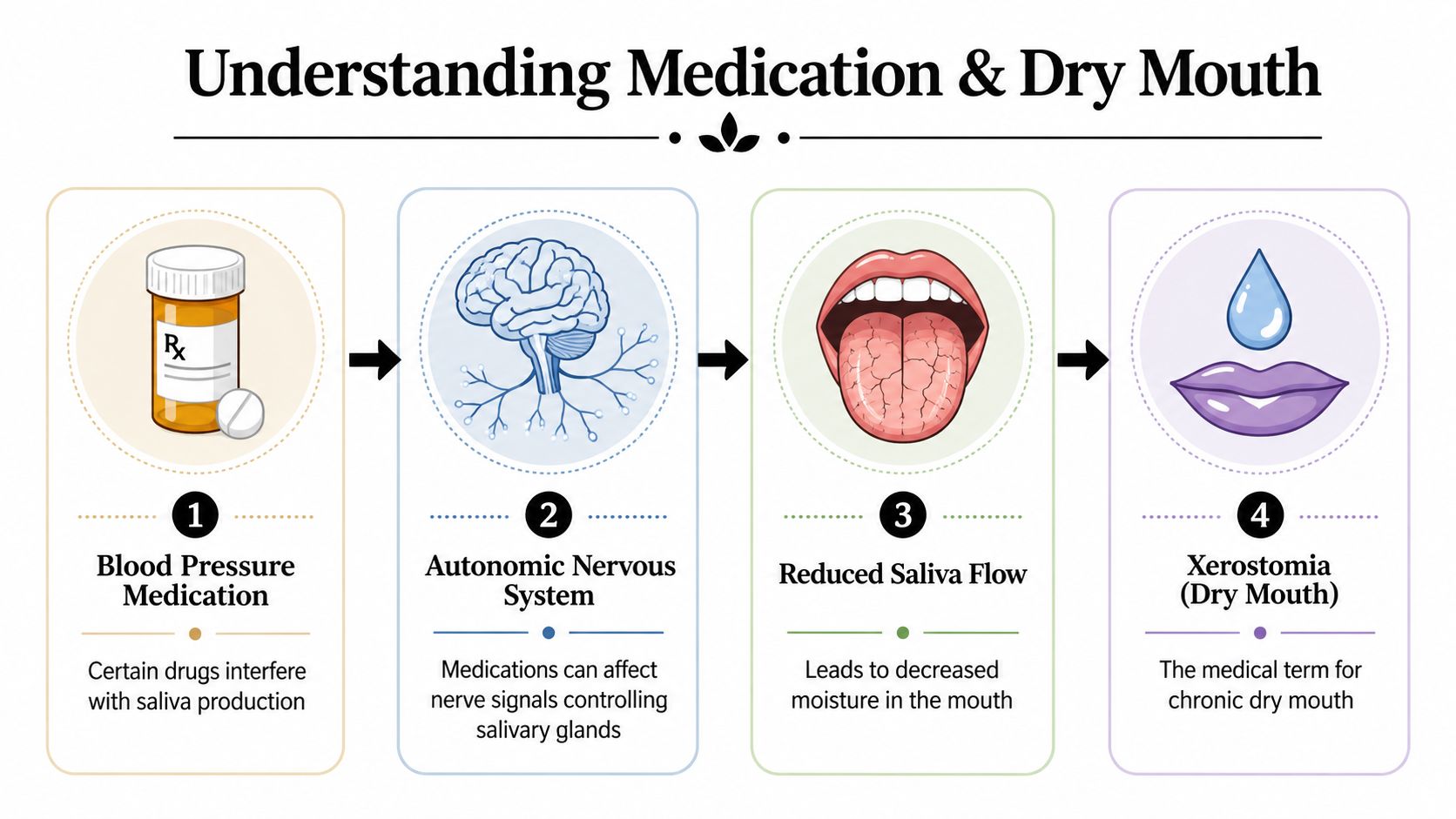
Saliva is your mouth's built-in protection system. It helps wash away food debris, buffers acids, protects enamel, and keeps oral tissues comfortable. When blood pressure medication reduces saliva, the easiest way to think about it is this. The faucet is still on, but it's been turned down.
Some antihypertensive drugs appear to affect the nerve signals and gland activity that help produce saliva. Others can contribute through fluid shifts or related mechanisms. The result is the same for the patient. Less moisture, less protection, and a mouth that feels dry even when you're trying to stay hydrated.
What the evidence actually shows
A 2020 systematic review in Clinical Oral Investigations found that the evidence base is real but uneven. The review identified 6 studies measuring unstimulated salivary flow, and in all 6, people taking antihypertensive drugs had lower salivary flow than control groups. 3 of those 6 studies reached statistical significance.
That matters because it tells patients two important things. First, the association has been repeatedly observed. Second, not every drug class and not every study shows the effect with the same strength.
Practical rule: If dry mouth begins after starting or changing a blood pressure medicine, the medication belongs on the list of likely causes.
The same review also noted that more than 1,000 drugs have been reported to be associated with xerostomia, which is the clinical term for dry mouth. Blood pressure medication sits within that larger medication-related pattern, not as a rare exception.
Why dentists take this seriously
Dry mouth isn't only about comfort. Reduced saliva makes the mouth more vulnerable to irritation, swallowing difficulty, and tooth damage. That's especially relevant for older adults and for people taking several medications at the same time.
If you want a plain-language overview to review blood pressure medication side effects before talking with your physician, that can help you prepare better questions. The key is not to stop a prescribed medication on your own. Instead, identify the pattern and bring it into a coordinated medical and dental conversation.
Common Antihypertensive Drugs and Their Oral Health Impact
Not all blood pressure medications carry the same dry-mouth risk. That's one reason generic advice often falls short. The exact drug class, and sometimes the exact medication, matters.
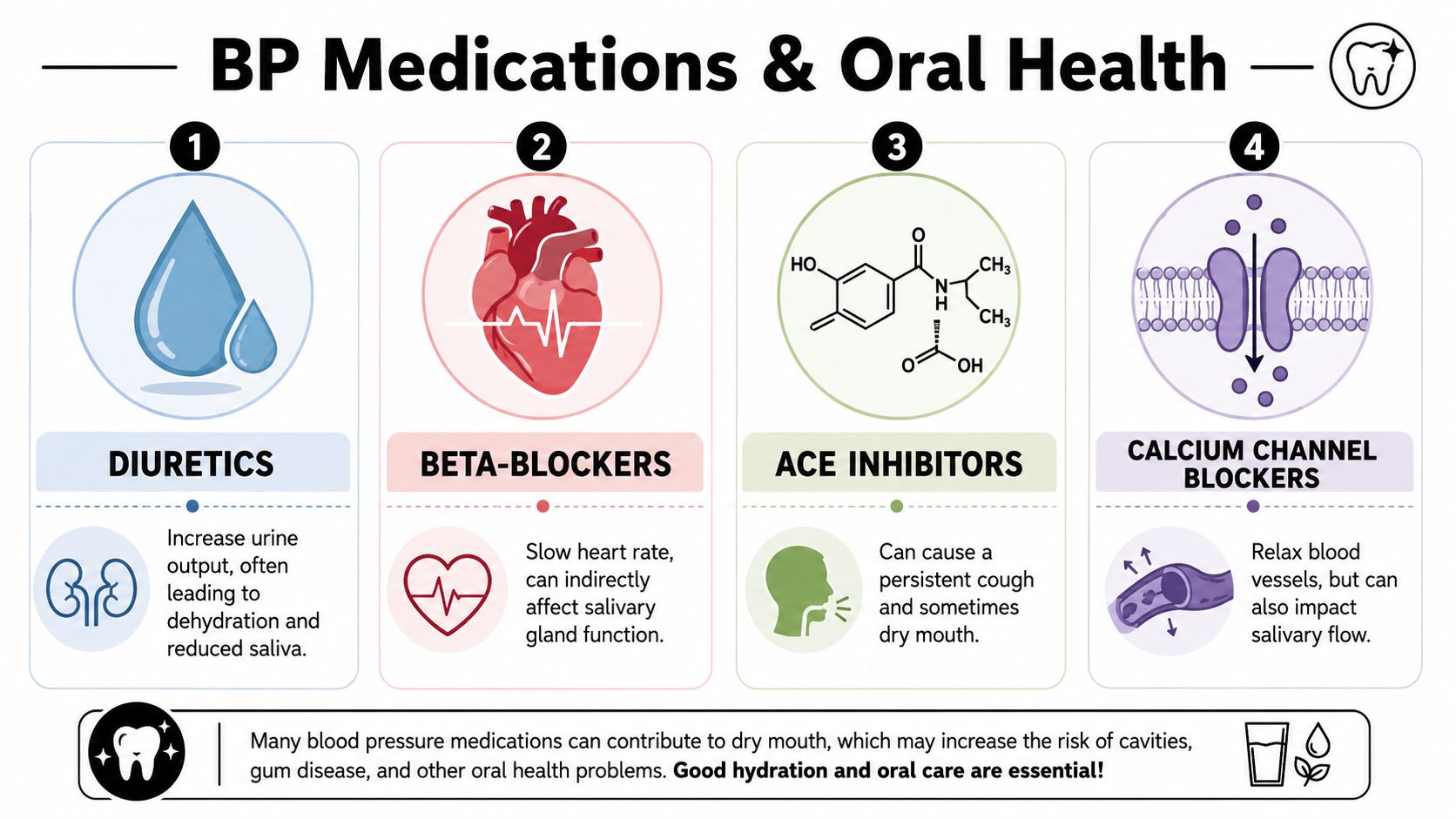
A pharmacology overview notes that clonidine is well known to cause dry mouth as a common adverse effect. ACE inhibitors such as captopril, enalapril, and lisinopril have been reported to cause xerostomia. ARBs like losartan and eprosartan can do so less commonly, and diuretics are repeatedly linked to dry mouth as well (pharmacology reference on oral toxicity of cardiovascular drugs).
Which classes show up most often
In an older-adult oral health study, reported xerostomia was highest with calcium channel blockers at 31.1%, followed by diuretics at 26.8% and beta-blockers at 23.1%. The same report identified amlodipine, furosemide, and propranolol as drugs associated with a higher percentage of dry mouth (older adult xerostomia study).
Here's a simple breakdown:
| Drug class | Oral health note |
|---|---|
| Calcium channel blockers | Showed the highest reported xerostomia rate in the study above |
| Diuretics | Often contribute to a drier mouth and can make tissues feel less lubricated |
| Beta-blockers | Also associated with dry mouth in a meaningful share of patients |
| ACE inhibitors and clonidine | Recognized in pharmacology references as possible causes of xerostomia |
What dry mouth can do to your teeth and dental work
Once saliva drops, the mouth changes quickly. Plaque can cling more easily. Acids aren't buffered as well. Soft tissues get irritated faster. Patients with existing fillings, crowns, bridges, or high cavity risk often feel the effect sooner because those surfaces already need careful maintenance.
Dry mouth can also complicate restorative and replacement dentistry. Dentures may feel less comfortable because there's less natural lubrication. Patients with implants need healthy surrounding tissue and a stable oral environment. If you've dealt with medication-related gum changes too, this related guide on what medications cause gum problems adds useful context.
Some patients expect mouthwash alone to fix the issue. It usually won't. If the cause is medication-related saliva reduction, relief products may help symptoms, but your teeth and gums still need active protection.
How Professional Dental Care Protects Your Smile
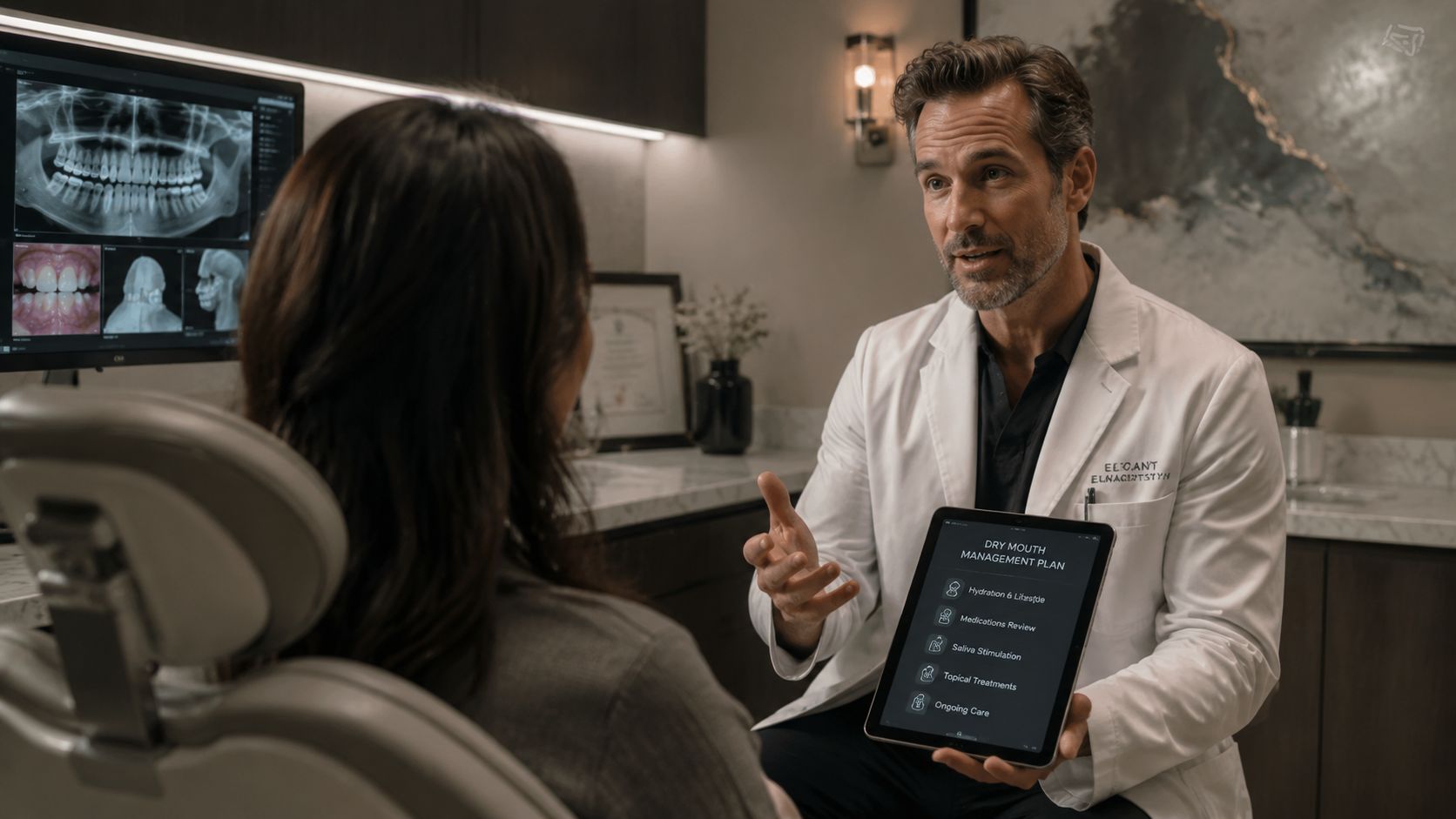
Once dry mouth becomes chronic, home care by itself usually isn't enough. You can sip water all day and still develop decay along the gumline or around older dental work. That's why professional monitoring matters.
Penn Medicine emphasizes that chronic dry mouth can lead to tooth decay and gum irritation and recommends regular dental visits, fluoride toothpaste, saliva substitutes, and medication adjustment when appropriate (Penn Medicine dry mouth guidance). That lines up with what works in day-to-day practice. Protect the enamel, reduce the bacterial burden, and catch tissue changes early.
What helps and what usually doesn't
Professional care helps because it targets the consequences of low saliva, not just the sensation.
- More frequent exams and cleanings help us catch early decay, inflamed gums, and irritated tissues before they become expensive problems.
- Fluoride support matters because enamel needs extra protection when saliva isn't buffering acids normally.
- Product recommendations can be individualized. Some patients do well with fluoride toothpaste and saliva substitutes. Others need changes in rinse choice or brushing timing.
- Medical coordination is often part of the plan. Your dentist can document the oral effects and help you prepare for a conversation with your physician.
What doesn't usually work well? Relying on mints, sugary lozenges, or frequent sipping of acidic drinks. Those choices can make the cavity risk worse.
A dry mouth complaint is often the first warning. The damage usually shows up later.
Why this matters for long-term dental work
If you've invested in crowns, fillings, cosmetic dentistry, or implant care, dry mouth changes the maintenance picture. Teeth with exposed root surfaces are at higher risk. Dental implants still need healthy surrounding tissue, and a dry mouth can make plaque control less forgiving.
For patients comparing insurance or caregiver support options, practical coverage questions often come up at the same time as treatment planning. This overview from the Family Caregiving Kit on Medicaid may help you organize those questions before your visit.
At the clinical level, we also look at decay patterns. If you want to understand why dry mouth shifts cavity risk so quickly, this article on what causes tooth decay in adults is a useful companion.
At Winn Smiles, that usually means pairing preventive visits with a simple, realistic home plan instead of waiting until sensitivity or breakage forces an emergency appointment.
Practical At-Home Tips for Managing Dry Mouth
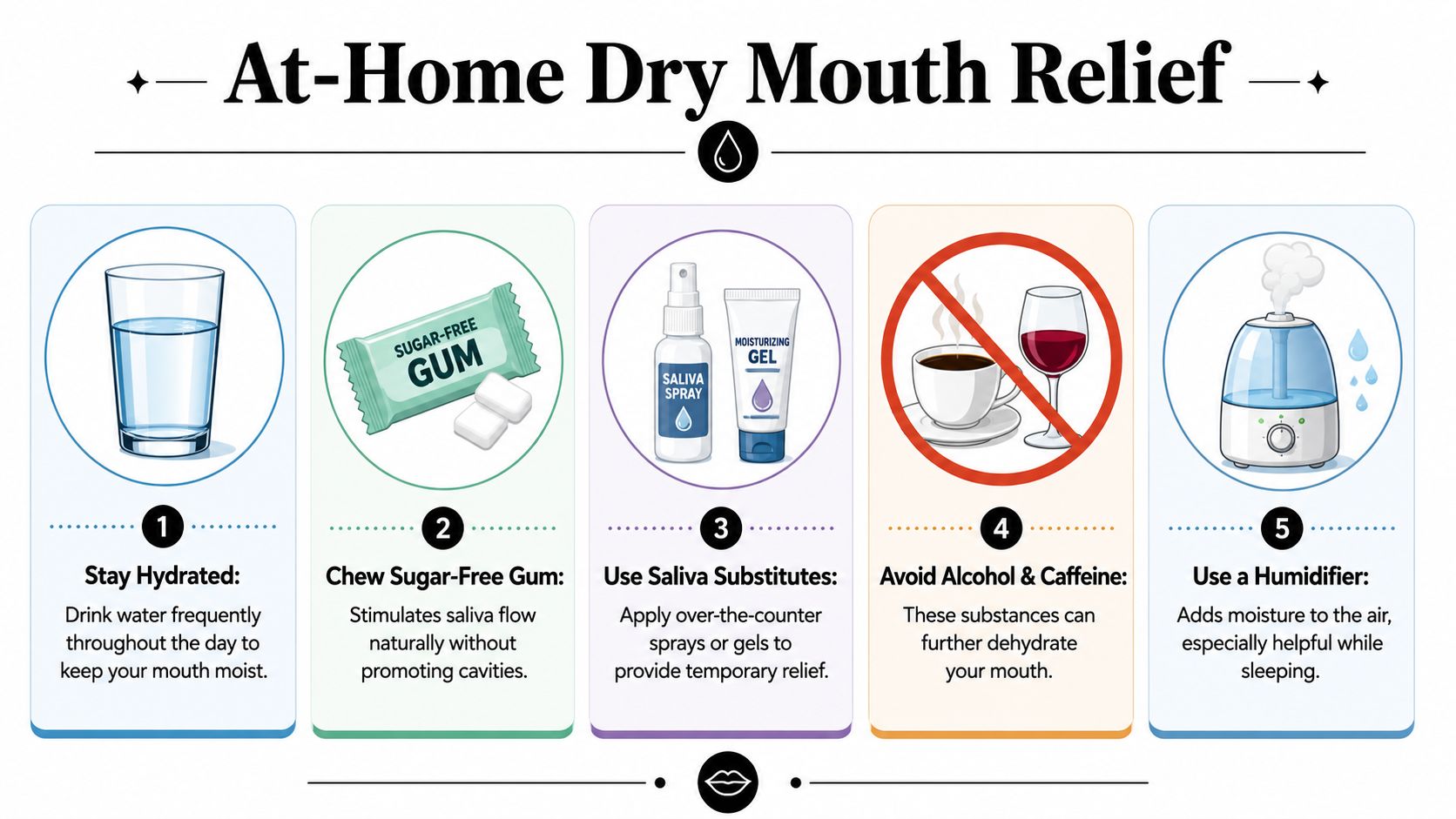
Dry mouth is common enough that it deserves practical daily habits, not guesswork. Harvard Health reports that about 20% of adults experience dry mouth overall, and the rate rises substantially in older adults, with some studies finding it in more than 70% of older patients who take multiple medications. Harvard also lists blood pressure medicines among common causes and recommends simple lifestyle adjustments as a first line of defense (Harvard Health on oral side effects of common medications).
Simple habits that usually help
- Sip water often instead of trying to catch up later. Small, frequent sips usually feel better than drinking a large amount only a few times a day.
- Chew sugar-free gum or use xylitol lozenges if your physician says they're appropriate for you. The goal is to stimulate whatever saliva flow you still have.
- Use saliva substitutes at night or during long conversations when dryness gets most noticeable.
- Avoid alcohol-based mouthwashes because they can make a dry mouth feel harsher.
- Limit caffeine, tobacco, and alcohol if you notice they worsen the problem.
A few adjustments patients often overlook
Nighttime dryness is often the most frustrating. Sleeping with your mouth open can make a manageable problem feel much worse by morning. A humidifier can help some people sleep more comfortably, and if you already use one with oxygen equipment, this guide to caring for your oxygen humidifier may be useful for keeping the setup clean and working properly.
Food choices matter too. Dry crackers, chips, toast, and spicy foods can irritate tissues when saliva is low. Softer foods, added moisture, and rinsing with water after meals often make eating easier.
Don't judge your hydration only by thirst. Many people with medication-related dry mouth still feel uncomfortable even when they're drinking enough water.
What you should avoid is self-adjusting your prescription. If the medicine is helping control blood pressure, changing the dose on your own can create a much bigger problem than dry mouth.
What to Expect at Your Winn Smiles Dental Appointment
Many patients arrive expecting a quick look and a generic recommendation to drink more water. A good dry mouth visit should be much more specific than that.
The first step is listening. You'll be asked when the dryness started, whether it changed after a new medication or dose adjustment, what time of day it feels worst, and whether you've noticed cavities, soreness, bad breath, swallowing trouble, or denture discomfort. That timeline often tells us a lot.

What the exam usually focuses on
A dry mouth exam isn't only about whether your mouth feels dry in the chair. We look for the patterns low saliva leaves behind.
- Tooth surfaces at risk such as exposed roots, edges of existing fillings, and areas where plaque sticks easily
- Soft tissue condition including redness, irritation, friction spots, and signs that the tissues aren't staying comfortably lubricated
- Current home care routine so recommendations fit your daily life rather than sounding good on paper only
- Dental history including crowns, bridges, implants, dentures, cosmetic work, and any recent sensitivity
How the treatment plan gets personalized
Some patients need preventive fluoride support and closer follow-up. Others need evaluation for active decay, replacement of failing restorations, or help making dentures more comfortable. If you've been putting off a cleaning and exam because the dryness felt like a medical issue instead of a dental one, this is usually the visit where those pieces finally connect.
The experience also matters. Patients looking for a dentist in Chattanooga, TN, an emergency dentist, or even dental implants near me often want a practice that can handle both prevention and repair in one place. That makes dry mouth management easier because the plan doesn't stop at symptom advice. It includes protecting the work you already have and addressing any damage the dryness has started.
Take Control of Your Oral Health in Chattanooga and Cleveland
If you've been asking, does blood pressure medication cause dry mouth, the short answer is yes. Different antihypertensive classes have different dry-mouth risks, from clonidine to ACE inhibitors like lisinopril, so the exact medication matters when you're trying to manage symptoms well.
That detail is one reason a dental visit helps. Your dentist can identify how the dryness is affecting your teeth and gums, help protect your enamel and existing dental work, and give you clear information to bring back to your physician if a medication review makes sense.
You don't have to ignore the symptom, and you don't have to guess your way through it. If you're in Chattanooga, Cleveland, or nearby communities and your mouth has felt dry since starting blood pressure treatment, getting examined now is the safer move than waiting for pain, decay, or irritation to build.
If medication-related dry mouth is affecting your comfort, sleep, or dental health, schedule a visit with Winn Smiles. A focused exam can identify the oral effects early, help protect your teeth and gums, and give you practical next steps you can use at home and discuss with your physician.