You may be searching for a dentist near me after losing a tooth, living with a failing one, or avoiding photos because your smile no longer feels like yours. You may also be wondering whether an implant can be placed immediately, how long the full process takes, or what the quoted price includes. Those are practical questions, and you deserve clear answers before treatment begins.
For patients looking for dental implants near me in Chattanooga, TN, or Cleveland, TN, the right starting point is a careful evaluation, not a rushed promise. Winn Smiles provides implant placement, restorations, full-arch solutions, and maintenance with a comfort-focused approach for patients who feel nervous about dental care. The process can restore chewing function, support a healthier bite, and help you smile without covering your mouth.
Reclaiming Your Smile with Dental Implants
A missing tooth affects more than appearance. Many people first notice the small daily inconveniences: food catches in the space, chewing shifts to one side, or certain foods become difficult to manage. Some patients stop laughing freely because they're focused on what others might see. Others arrive after years of adapting to a loose bridge, an uncomfortable denture, or a tooth that has been painful for too long.
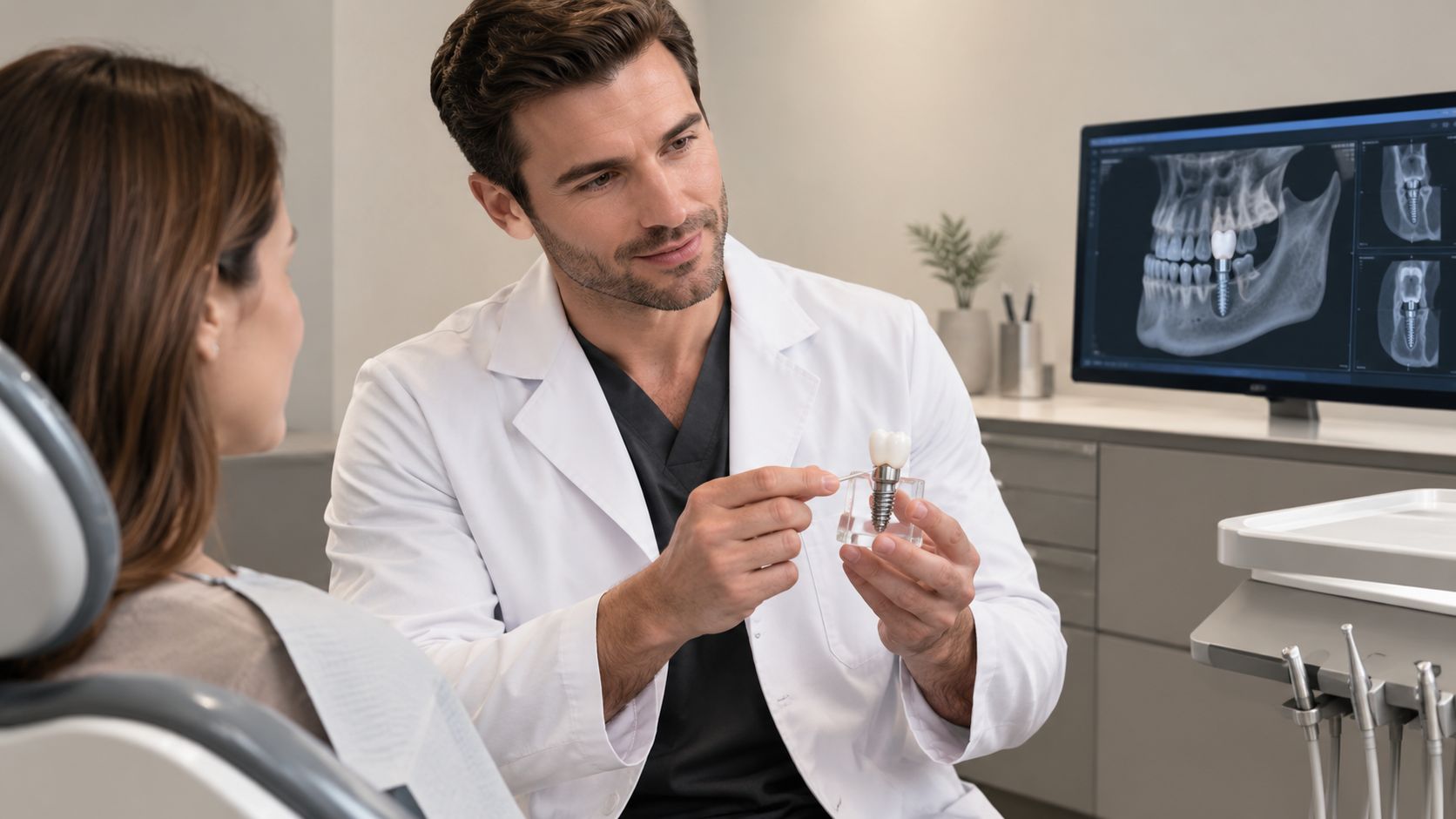
A dental implant replaces the tooth from the root upward. The implant fixture sits in the jawbone, while an abutment connects it to a custom crown. Unlike a removable appliance, the completed restoration is designed to stay in place and function as part of your bite.
A missing tooth deserves a treatment plan, not a rushed decision.
Modern implant dentistry has a long clinical history. In 1965, Per-Ingvar Brånemark placed titanium implants in an edentulous patient named Gösta Larsson, marking the first successful human use of osseointegrated dental implants. That case demonstrated direct bone-to-implant healing without intervening fibrous tissue and became a foundation of modern implant dentistry. The concept was later formalized as osseointegration in the 1970s. Read the documented Brånemark milestone.
More than a replacement tooth
A well-planned implant can help stabilize the bite and provide a firm foundation for a crown or prosthesis. It can also support a broader restorative dentistry plan when several teeth are missing or no longer healthy enough to preserve. Depending on your needs, care may include tooth extraction, periodontal treatment, bone preparation, a single implant, or a full-arch solution.
That doesn't mean every patient needs the same pathway. Some people have enough healthy bone for placement after an extraction. Others need time for the gum or bone to heal before an implant can be placed safely. The decision should follow an examination and imaging, not a generic timeline found online.
Patients searching for a cosmetic dentist near me may also be concerned about the final appearance. The crown is shaped and shaded to coordinate with the surrounding teeth, so the result should look intentional rather than artificial. Patients with dental anxiety can ask about sedation and comfort options before treatment. Feeling informed and in control is part of good care.
Your Initial Consultation and 3D Imaging
The first appointment should answer three questions: Can an implant work for you, what preparation is required, and what will the complete treatment involve? At a Chattanooga or Cleveland office, that evaluation begins with your health history, concerns, dental examination, and discussion of your goals.
What the evaluation looks for
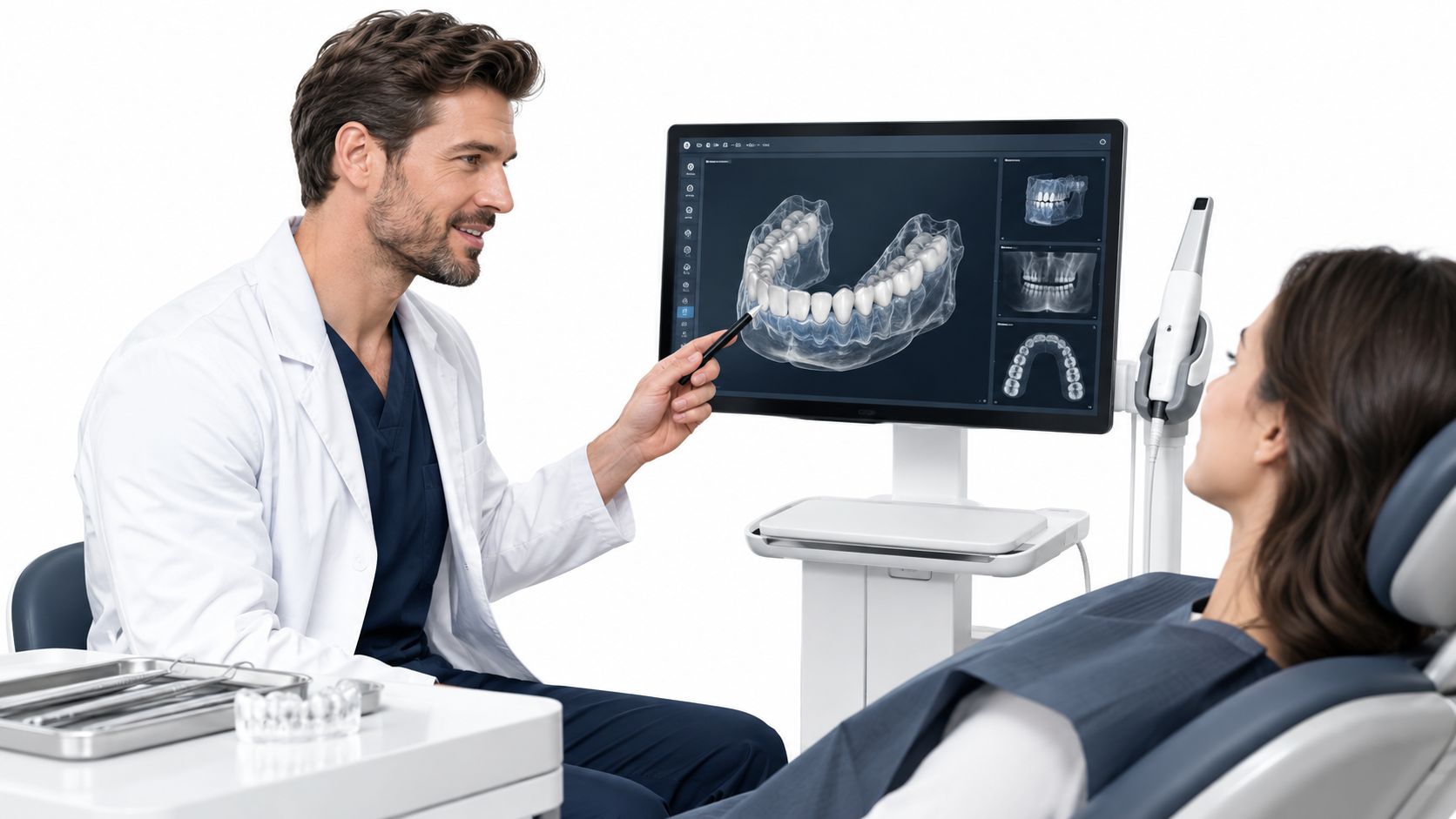
The dentist examines the proposed implant site and the surrounding teeth and gums. Periodontal health matters because inflammation and untreated gum disease can compromise the tissue that supports both natural teeth and implants. The team also evaluates available bone, the bite, adjacent roots, and any infection associated with a failing tooth.
Dental x-rays provide important information, while 3D imaging can show the jaw in greater detail. It helps the care team assess bone dimensions and map relevant anatomy, including nerve pathways. That information supports precise planning and helps identify whether an extraction, grafting procedure, or staged healing period should come first.
You can also review the difference between a straightforward case and a more involved one in this guide to dental implant candidacy. A candidacy discussion should include your medical history, smoking status, periodontal condition, hygiene routine, and ability to attend follow-up visits.
Why planning changes the experience
A rushed placement can create avoidable surprises. By contrast, detailed planning gives you a clearer sequence of appointments and a more realistic idea of the time between surgery and the final crown. It also allows the dentist to plan the implant position with the future restoration in mind, rather than treating the fixture as an isolated surgical step.
Bring a list of medications, medical conditions, previous dental experiences, and questions about sedation. Tell the team if you've had a difficult extraction or if dental anxiety has kept you from care. An emergency dentist may first need to relieve pain or control infection, but urgent treatment and implant planning can often be coordinated as part of a broader restorative plan.
The following video offers a visual overview of implant treatment and can help you prepare for the conversation:
Before leaving the consultation, ask for a written outline that separates immediate treatment from later restoration. You should know which services are included, which are optional or conditional, and when the team expects each phase to occur.
Implant Placement and the Healing Timeline
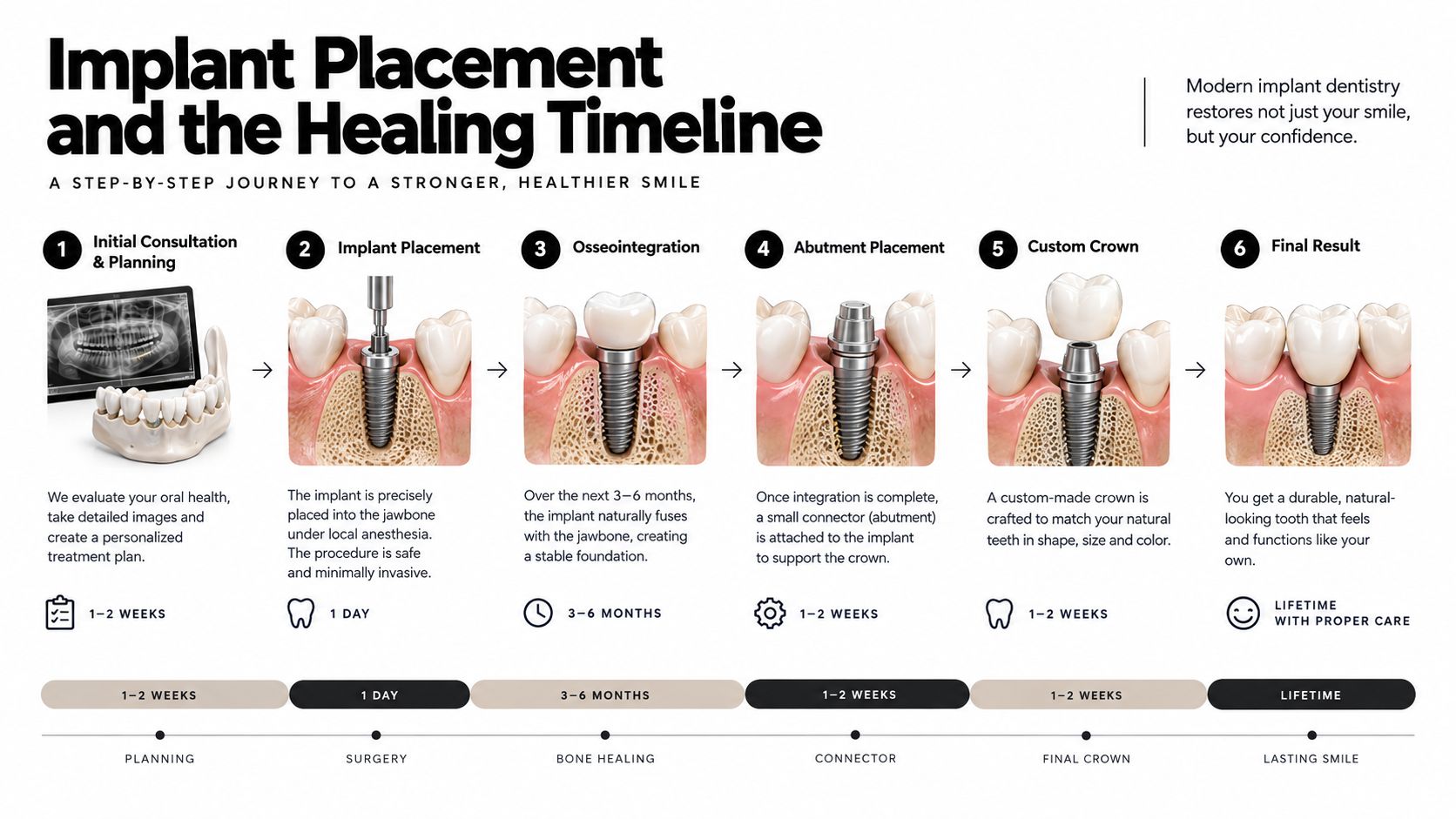
Implant surgery is often less mysterious once the steps are explained. After the site is prepared, the dentist creates a controlled opening in the bone and places the titanium fixture. The gum may be closed over the fixture during a two-stage approach, or the implant may be left accessible for a later restoration depending on the clinical plan.
Sedation can be discussed in advance for patients who feel tense about injections, sounds, or the length of the appointment. Laser dentistry may also be used when appropriate to support gentle, precise soft-tissue care. Your dentist should explain what you'll feel, what you'll hear, how the area will be numbed, and what instructions you'll follow afterward.
The healing phase is part of the treatment
The key biological process is osseointegration, when bone heals directly around the implant. The implant usually needs to remain undisturbed while that bond develops. Depending on the jaw and the individual case, healing commonly requires about 3 to 4 months in the mandible and 6 to 8 months in the maxilla. Review the clinical discussion of osseointegration.
A two-stage procedure may involve placing the implant beneath the gum first, allowing healing, and then exposing it for the abutment. StatPearls describes bone healing in this approach as usually taking 2 to 3 months in the mandible and 3 to 6 months in the maxilla. See the two-stage implant overview. The difference between published ranges reflects variations in anatomy, treatment design, bone quality, and clinical judgment.
Immediate placement versus staged care
Some patients can receive an implant at the time of tooth extraction. That option depends on the condition of the socket, the presence of infection, the available bone, and whether the implant can achieve adequate initial stability. An immediate approach may reduce the number of separate surgical appointments, but it isn't automatically the safest or fastest choice.
A delayed plan may be preferable when infection, bone loss, or weak bone is present. The dentist may extract the tooth, preserve or rebuild the site, and allow healing before placement. Healing commonly takes 3 to 6 months in cases where the site needs more preparation, as outlined in this patient-focused discussion of implant timing. Learn about staged implant treatment after extraction.
A widely cited 10-year systematic review reported a pooled implant-level survival rate of 96.4%, with a 95% confidence interval of 95.2% to 97.5% and a prediction interval of 91.5% to 99.4%. A sensitivity analysis showed 93.2% survival, which supports the durability of well-planned treatment while also showing that results vary among populations and study designs. Review the systematic evidence on long-term implant survival.
The practical lesson is simple: a same-day promise shouldn't replace biological planning. You may have several visits for evaluation, surgery, healing checks, and restoration. Waiting during osseointegration protects the foundation that the final crown depends on.
Abutment and Crown Placement for a Natural Look
Once the implant has healed and the dentist confirms that it's stable, the restorative phase begins. The abutment is the connector between the implant fixture and the crown. Depending on the surgical design, the dentist may uncover the implant first, place the abutment, and allow the surrounding gum tissue to settle before the final crown is fitted.
The crown is made to restore the visible portion of the tooth. Your dentist considers the space, bite, gumline, neighboring teeth, and smile display when choosing its shape. Color matching matters, but so does contour. A crown that looks attractive but interferes with the bite can create unnecessary strain, so function and appearance must be planned together.
Why the final design matters
Patients often judge an implant by how natural it looks, yet comfort while chewing is equally important. The crown should feel secure without creating a high spot when you close your teeth. Your dentist may make adjustments during the fitting appointment and review how to clean around the restoration.
Same-day crowns can be convenient for certain cases. Winn Smiles offers same-day crown treatment when the case is appropriate, allowing some patients to complete a restoration in one visit. That option doesn't eliminate the healing period required for an implant fixture, because the crown and implant are separate parts of the treatment. It refers to the speed of creating and placing an eligible crown restoration.
Replacing several teeth
A single implant isn't the only solution. If you're missing multiple teeth, implant-supported bridges can replace a section of the smile without using a removable appliance for every tooth. Patients with extensive tooth loss may also discuss a full-arch implant prosthesis, which uses strategically planned implant support for a complete row of replacement teeth.
Full-arch care requires its own examination, bite analysis, imaging, and restorative design. Some treatment plans include a temporary set of teeth while the tissues heal, followed by a final prosthesis. The right choice depends on the health of your remaining teeth, bone anatomy, hygiene ability, and long-term goals.
A thoughtful restoration should look at home in your smile. It should also be easy for you to maintain, because the final appointment isn't the end of implant care. Your daily cleaning habits and professional recall schedule help protect the gums around the restoration.
Understanding the True Cost and Payment Options
The price of a dental implant isn't always the price of a complete new tooth. A headline implant fee may refer only to the fixture, while the finished treatment also requires diagnosis, preparation, an abutment, and a crown. Before you compare estimates from a dentist in Chattanooga, TN or dentist in Cleveland, TN, ask whether the quote covers the entire pathway.
A 2025 comparative analysis placed the U.S. median cost of a complete dental implant at $4,000. Review the patient-focused discussion of complete implant pricing. That figure is a median, not a guaranteed local fee. Your total can vary according to the number of teeth involved, the need for extraction or grafting, the type of restoration, and the complexity of the bite.
Dental Implant Cost Factors
| Treatment Phase | What It Includes | Cost Impact |
|---|---|---|
| Evaluation and planning | Examination, dental x-rays, 3D imaging, and treatment discussion | Adds diagnostic fees and establishes the treatment scope |
| Site preparation | Tooth extraction, infection management, or bone grafting when indicated | Raises the total when the implant site needs additional care |
| Implant placement | Surgical placement of the implant fixture | Represents the surgical portion of treatment |
| Abutment | Connector between the fixture and crown | May be quoted separately from the fixture |
| Final crown or prosthesis | Custom single crown, bridge, or full-arch restoration | Often makes up a substantial part of the complete-tooth cost |
| Maintenance | Cleanings, exams, radiographs, and professional monitoring | Protects the restoration over time |
Questions to ask before accepting an estimate
Ask for the complete treatment estimate in writing. Confirm whether the consultation, imaging, extraction, grafting, implant, abutment, crown, temporary restoration, and follow-up visits are included or billed separately. If you're comparing a single implant with a full-arch option, request an explanation of what each restoration provides and what future maintenance it may require.
Insurance may contribute to some portions of care, but coverage differs by plan and may not apply uniformly to surgery, prosthetic work, or diagnostic services. The office team can help you understand how benefits may apply, but your insurer makes the final determination.
Financing can divide the expense into scheduled payments, subject to approval and the terms of the provider. If you use financial software or want to review subscription-based budgeting tools separately, Fintrack's paid tiers provide a resource for comparing its available plans. That resource isn't a substitute for a dental treatment estimate, insurance verification, or financing disclosure.
For a more focused explanation of dental financing, review Winn Smiles' implant payment plan information. The most useful financial conversation is specific. You should leave knowing the expected total, what could change it, and which payment paths are available before treatment starts.
Your Comfort and Long-Term Aftercare at Winn Smiles
Comfort starts before the procedure. A patient who understands the sequence, knows the available sedation choices, and has a team willing to answer questions is better positioned to move through treatment with less uncertainty. Winn Smiles serves patients in Chattanooga and Cleveland with light-filled offices, a comfort menu, and sedation options designed for individual anxiety and treatment needs.
Tell the team what makes dental visits difficult for you. It may be the sound of instruments, a previous painful experience, difficulty keeping your mouth open, or fear of not being heard. A calm explanation, agreed-upon signals, topical numbing, local anesthetic, and appropriate sedation can make the appointment feel more manageable. Patients who need an urgent evaluation can also contact an emergency dentist for pain, swelling, or a damaged tooth before discussing replacement.
A welcoming administrative experience matters, too. Practices often rely on a capable dental receptionist to coordinate appointments, gather records, answer initial questions, and help patients understand what to bring. Dental teams interested in improving front-office coordination can review this resource about a dental receptionist, while patients should expect clear communication from the first call.
Implants still need gum care
An implant can't develop a cavity, but the gum and bone around it can become inflamed. Peri-implant disease is therefore a major long-term concern, especially when plaque control and professional maintenance are inconsistent.
A systematic review reported peri-implantitis prevalence of about 19.5% at the patient level and 12.5% at the implant level. Another meta-analysis found peri-implant mucositis in roughly 63% of patients. Review the evidence on peri-implant disease and maintenance.
Your maintenance plan should include baseline probing and radiographs after prosthetic loading, reinforcement of home care, and regular cleanings and exams. Use the brush, interdental cleaner, or other tools recommended for your restoration. Contact the office if you notice bleeding, swelling, tenderness, a bad taste, or movement around the implant.
The crown is the visible result. The maintenance plan protects the investment.
Long-term implant success also depends on measurable clinical health. A 10-year prospective cohort study used thresholds including pocket probing depth of 5 millimeters or less, no bleeding on probing, and annual bone loss under 0.2 millimeters. Using those criteria, reported success rates ranged from 61% to 74%, depending on implant type. Review the cohort study criteria.
When you're ready to discuss how to get an implant, Winn Smiles offers dental implant evaluations, restorative options, full-arch treatment, same-day crowns for eligible cases, sedation-supported care, and ongoing maintenance in Chattanooga and Cleveland.
Schedule a consultation with Winn Smiles to review your implant candidacy, 3D imaging, treatment timeline, and complete cost estimate. The team can also discuss tooth extraction, grafting, sedation, single-tooth replacement, or full-arch solutions so you can move forward with a clear and comfortable plan.