For severe dental anxiety, long procedures, or a strong gag reflex, sedation dentistry is usually worth it because it can convert avoided care into completed care. For mild anxiety, the value depends on cost, insurance, and whether shorter visits or other comfort strategies would be enough.
You may be searching for a dentist near me after postponing a filling, root canal, tooth extraction, or dental cleaning because you already know how stressful the appointment will feel. Maybe the drill sound makes your heart race, or you gag during dental x-rays and worry that a longer procedure will feel impossible. If you're looking for a dentist in Cleveland, TN or dentist in Chattanooga, TN, the right answer isn't just “yes” or “no.” Sedation is worth considering when it helps you receive care you'd otherwise avoid, but it shouldn't be treated as the only path to comfort.
When Fear Keeps You Out of the Chair
A working parent in Cleveland may postpone a root canal because a previous extraction was frightening enough to replay in their dreams. The tooth eventually cracks, the infection becomes harder to manage, and a problem that might have been handled with restorative dentistry now requires an emergency dentist, a tooth extraction, or more extensive treatment. That pattern is common in anxious patients, and guilt doesn't make it easier to break.
The important question is practical: Are you missing care because fear is stronger than your intention to protect your teeth? A peer-reviewed Canadian survey found that 49.2% of people with high dental fear had avoided a dental appointment because of fear or anxiety, compared with 5.2% of people with low or no fear. The survey also reported that 12.4% of adults were definitely interested in sedation or general anesthesia, while another 42.3% were interested depending on cost. You can review the full findings in the Canadian survey on dental fear, avoidance, and sedation interest.
A simple self-check
Sedation deserves a serious conversation if you:
- Skip appointments: You cancel cleanings and exams even when you know you need them.
- Avoid specific treatments: You delay a root canal, dental implants, gum therapy, or tooth extraction until pain forces you to act.
- Struggle with physical reactions: Gagging, shaking, sweating, or panic makes treatment difficult.
- Fear the memory: You're less concerned about pain than remembering the sounds, pressure, or length of the appointment.
Sedation can reduce the stress response enough for your dental team to work efficiently and for you to cooperate without feeling overwhelmed. It may also make it possible to complete multiple needs in fewer visits, which matters when work, childcare, transportation, or past trauma has made dental care difficult to maintain.
Practical rule: If fear is stopping you from receiving necessary treatment, the value of sedation begins with access to care, not luxury.
Anxiety can affect more than dental treatment. If fear is part of a broader pattern affecting daily life, this overview of therapy signs and symptoms may help you recognize when additional support could be useful. For dental care itself, the next step is a calm consultation that identifies the lightest effective option.
The Four Levels of Sedation Explained
Sedation isn't one medication or one experience. It's a spectrum, and the safest choice is the least intense level that gives you enough comfort to complete treatment. The American Society of Anesthesiologists describes four levels, from minimal sedation to general anesthesia, based on awareness, responsiveness, breathing, and cardiovascular function. This overview of sedation options at Winn Smiles can help you compare the choices before your consultation.
Four Levels of Dental Sedation at a Glance
| Sedation Level | Common Method | Awareness | Best For | Recovery |
|---|---|---|---|---|
| Minimal sedation | Nitrous oxide | Awake, calm, and responsive | Mild anxiety, cleanings, exams, and shorter care | Usually brief once the gas is stopped |
| Moderate sedation | Oral medication or IV medication | Responsive to verbal commands, often drowsy | Moderate to severe anxiety or longer procedures | Requires individualized instructions and a responsible adult for oral or IV care |
| Deep sedation | Carefully controlled deeper medication | May require help maintaining the airway | Selected complex procedures under qualified supervision | Longer recovery and close monitoring |
| General anesthesia | Anesthesia delivered in an appropriate surgical setting | Unarousable and unconscious | Certain major surgeries or special clinical circumstances | Requires formal recovery monitoring |
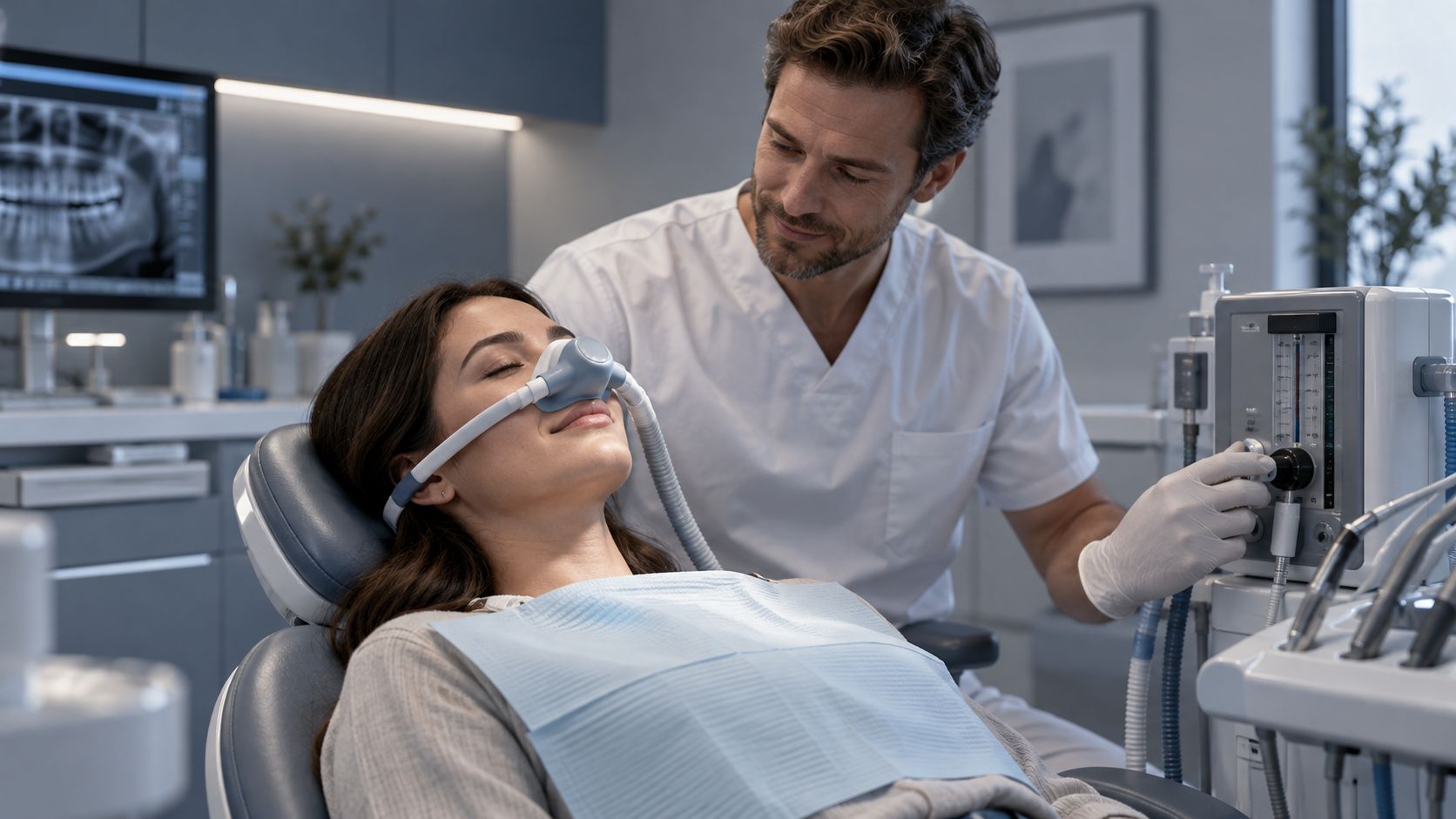
Minimal sedation is often delivered with nitrous oxide, commonly called laughing gas. You remain awake and can communicate, while the medication helps take the edge off. It's a reasonable starting point for a nervous patient who can still attend routine care.
Moderate sedation may involve an oral medication or IV midazolam. You can generally respond to instructions, but you may feel sleepy, speak differently, and remember little of the visit. Oral sedation research in adults found reduced anxiety with alprazolam at 0.5 to 0.75 mg, while patients reported good satisfaction with midazolam at 7.5 mg and clonidine at 150 µg in the reviewed trials. Those findings are detailed in this systematic review of oral sedation in adults.
Deep sedation can move you close to unconsciousness and may require airway assistance. General anesthesia produces an unarousable loss of consciousness and should never be confused with feeling relaxed. If you're considering medication for pain or anxiety around dental treatment, it's sensible to talk to a provider about alternatives rather than assuming the deepest option is the best one.
Real Benefits That Go Beyond Numbing
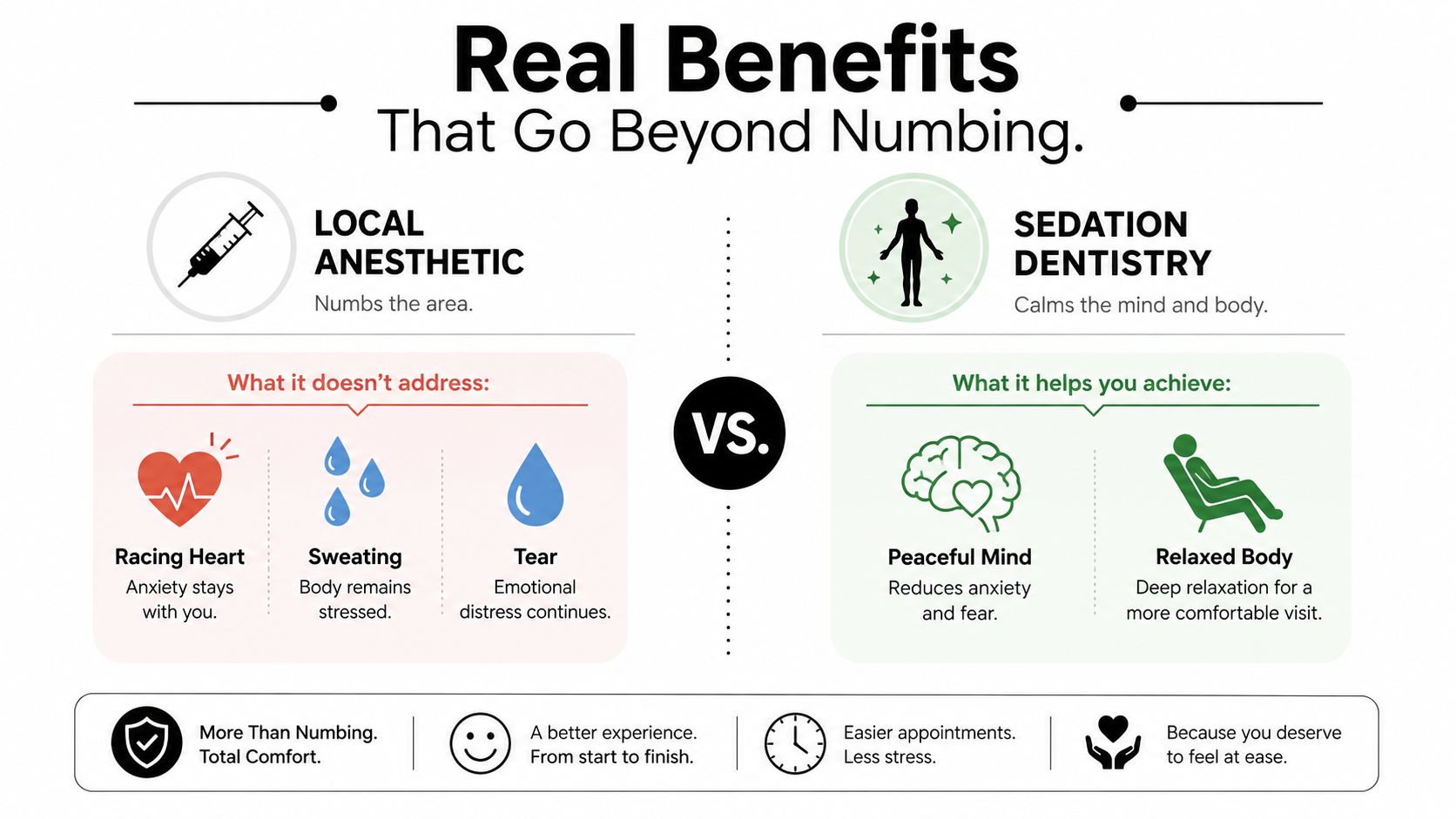
Local anesthetic blocks pain signals in the treatment area. It doesn't necessarily stop the racing heart, tense muscles, sweaty palms, or dread that begins before the injection. Sedation addresses the mental and physical stress of treatment, which is why it can be clinically useful for patients whose main barrier is fear rather than pain.
A systematic review of dental sedation methods selected 21 studies covering 10,003 patients. It found that midazolam was the most frequently used medication for successful sedation in dental surgical procedures, with propofol and nitrous oxide also identified as effective options. The historical review describing that clinical development is available through this review of sedation dentistry methods and history.
Where sedation creates real value
Sedation can help in several distinct ways:
- Anxiety control: Adult randomized trials found reduced anxiety with alprazolam and good satisfaction with selected oral sedation approaches, particularly when fear is the main obstacle.
- Treatment cooperation: A calmer patient can keep their jaw open, follow instructions, and remain still during technically demanding care.
- Gag reflex management: Reduced gagging can make impressions, x-rays, restorative work, and longer appointments more manageable.
- Procedure tolerance: Patients who struggle with dental sounds, pressure, or the feeling of time passing may tolerate treatment far better with an appropriate sedation level.
- Access to necessary care: The greatest benefit may be completing treatment that would otherwise remain postponed.
Sedation doesn't replace local anesthetic. You'll still need appropriate numbing for procedures that could cause pain, but sedation can make the whole appointment feel less threatening. That distinction matters for dental implants, multiple restorations, gum treatment, complex extractions, and full-mouth care.
The value is also logistical. If sedation allows your dentist to coordinate several treatment needs in fewer visits, you may spend less time arranging transportation, taking time away from work, or repeatedly preparing yourself for an appointment. That doesn't mean every patient should combine treatments or choose deeper sedation. It means the treatment plan should account for your anxiety, procedure type, health history, and ability to return.
Risks, Side Effects, and Who Should Pause
Sedation is not risk-free, and a responsible dental office won't present it as a casual add-on. A properly monitored appointment includes a review of your medical history, medications, allergies, fasting or medication instructions when applicable, vital signs, airway awareness, and recovery criteria.
Common side effects can include dry mouth, headaches, nausea, vomiting, bruising at an IV site, and prolonged drowsiness. Cleveland Clinic information summarized by a dental patient resource notes that most of these effects resolve within a day. Your reaction depends on the medication, the depth of sedation, your health, and how your body processes the drug.
What the safety data says
A retrospective study of dental sedation adverse events reported emesis in 1.3% of sedations, respiratory events in 0.7%, cardiovascular events in 0.6%, and agitation in 47.5%. The study of adverse events associated with dental sedation shows why monitoring matters. Agitation was the most frequently recorded event in that dataset, while respiratory and cardiovascular events were less frequent but potentially more serious.
The four sedation levels also carry different responsibilities. Minimal sedation generally preserves airway reflexes and ventilatory and cardiovascular function. Moderate sedation usually leaves patients responsive to verbal commands. Deep sedation can require airway assistance, and general anesthesia produces unconsciousness. A clear explanation of these distinctions appears in this patient guide to sedation dentistry safety risks.
Sedation candidacy by ASA physical status
| ASA Class | Patient Profile | Sedation Candidacy |
|---|---|---|
| ASA I | Healthy patient without significant systemic disease | Generally appropriate after a complete evaluation |
| ASA II | Patient with mild, controlled systemic disease | May be appropriate with careful planning and monitoring |
| Higher-risk status | More significant or unstable medical conditions | Requires additional evaluation and may need a different setting |
A peer-reviewed dental surgery review states that patients treated outside a hospital should meet ASA Grade I or II criteria for sedation. The same source says pediatric patients should generally be limited to ASA Grade I in an outpatient setting. You can read the review discussing ASA criteria and the four sedation levels.
Pause and disclose everything if you have sleep apnea, obesity, cardiovascular disease, significant respiratory disease, pregnancy, a recent heart attack or stroke, medication interactions, or difficulty giving informed consent. These conditions don't automatically decide the outcome, but they change the risk assessment. Ask who administers the sedation, who monitors you, what emergency equipment is available, and how recovery is assessed before discharge.
Costs, Insurance, and the Mild Anxiety Question
The financial answer is where many patients need the most honesty. Sedation may be worthwhile for severe fear or a complex procedure, but the added fee can be difficult to justify for mild anxiety and a straightforward filling. Insurance coverage can also change the calculation because dental plans may not pay for sedation itself, even when the treatment is covered.
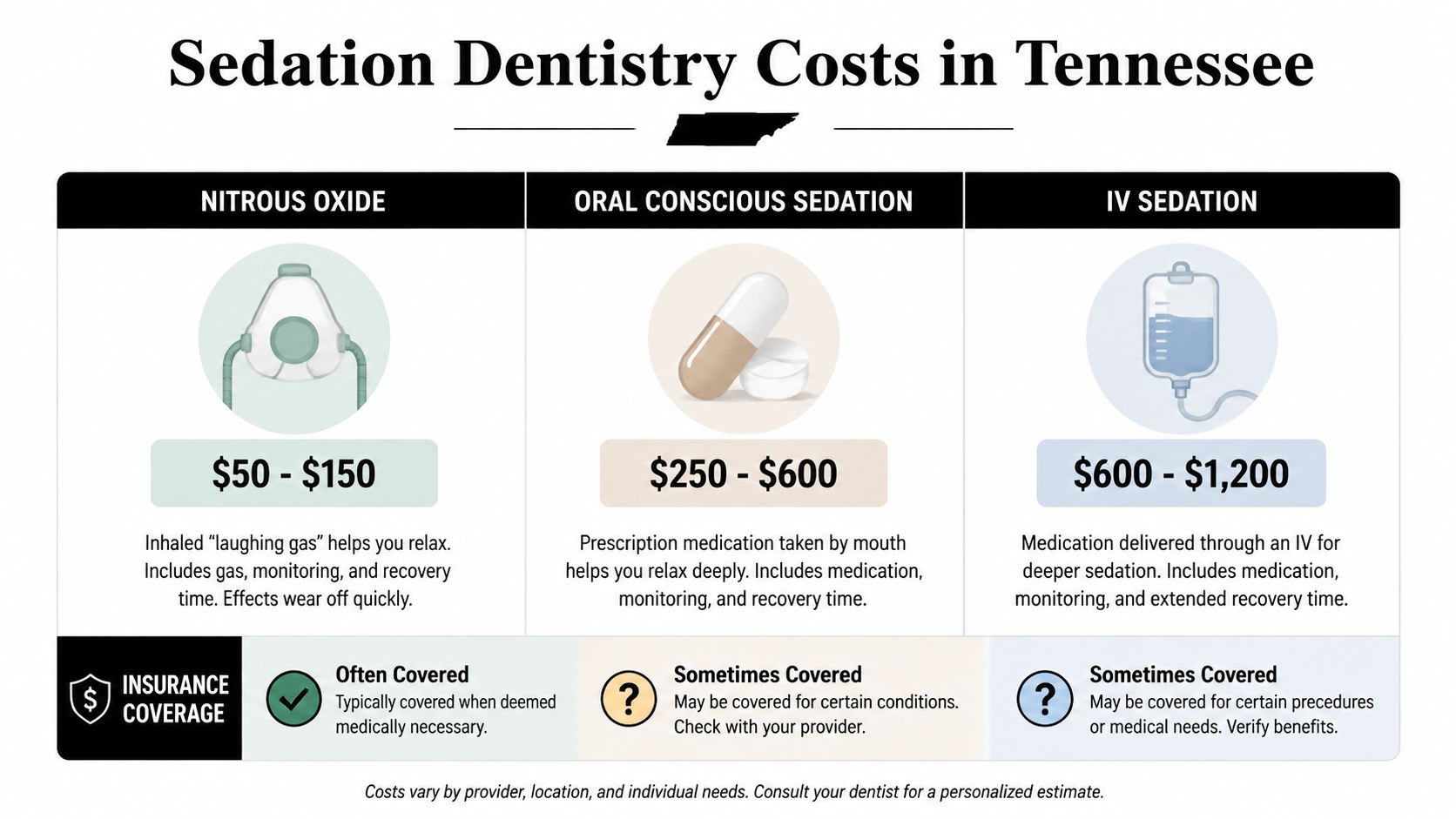
Typical Tennessee price ranges are:
- Nitrous oxide: Often $50 to $150 per visit.
- Oral conscious sedation: Roughly $250 to $500 per appointment.
- IV moderate sedation: Commonly $500 to $1,000 or more per session, depending on visit length and provider credentials.
These ranges come from the provided Tennessee sedation cost information, and you should confirm the exact fee with the office because treatment plans differ. This guide to dental sedation costs can help you prepare questions about fees and payment expectations.
Compare the fee with the consequence
Ask the office whether the sedation charge is bundled with treatment, whether a pre-treatment estimate is available, and whether payment plans apply. Dental insurance rarely covers sedation directly, although medical insurance may contribute when sedation is medically necessary for documented anxiety, special needs, or a surgical procedure. Coverage depends on the policy and documentation, so don't rely on an assumption.
For mild anxiety, try lower-cost strategies first if your dentist agrees:
- Shorter appointments: Break a lengthy plan into smaller visits.
- Behavior coaching: Agree on hand signals, pauses, and a step-by-step explanation.
- Timing changes: Choose an early appointment if waiting increases your worry.
- Sensory comfort: Use noise-canceling headphones, a weighted blanket, or another approved comfort measure.
- Gradual desensitization: Start with a new patient exam, conversation, and dental x-rays before committing to more involved treatment.
- Local comfort measures: Topical numbing and careful injection technique can make the anesthetic step easier.
If you're comparing sedation with alternatives, the accompanying video about dental sedation offers another way to think through the experience.
Sedation is worth the cost when it converts avoided care into completed care or allows complex treatment to happen with fewer disruptive visits. For a single filling and mild nerves, a shorter appointment and a clear comfort plan may deliver better value.
What a Sedation Visit Feels Like at Winn Smiles
A first sedation appointment should begin before you sit in the treatment chair. The team reviews your medical history, current medications, allergies, previous reactions, anxiety triggers, and the procedure planned. That conversation determines whether nitrous oxide, oral conscious sedation, or another approach is suitable.
At Winn Smiles, patients in Cleveland and Chattanooga can discuss a comfort menu that includes blankets, neck pillows, noise-canceling headphones, ceiling-mounted screens, and aroma options. These details don't replace clinical monitoring, but they can reduce sensory triggers that make dental treatment harder. A calm environment also gives you a chance to tell the team what you need before treatment starts.
The clinical flow
Your visit generally follows a clear sequence:
- Health review: The dental team confirms your medical history and medications.
- Baseline check: Staff assess vital signs before treatment.
- Sedation delivery: The selected method may be nitrous oxide, an oral medication, or IV sedation when appropriate.
- Continuous observation: The team monitors blood pressure, pulse, oxygen saturation, responsiveness, and recovery.
- Dental treatment: Local anesthetic is used when needed, while the sedation supports relaxation and cooperation.
- Discharge: You leave only after meeting the office's recovery criteria.
Oral and IV sedation require a responsible adult to accompany you. You shouldn't drive, return to demanding work, or make important decisions while medication is still affecting your alertness. Follow the office's written instructions rather than judging recovery by how awake you feel immediately afterward.
Sedation may make the appointment seem shorter, and many patients remember very little of the treatment. That memory effect can be helpful for someone whose fear centers on the experience itself, but it also means you need a trusted adult and clear post-treatment instructions.
Winn Smiles also offers same-day crowns through CEREC technology and laser-assisted soft-tissue care. When clinically appropriate, these capabilities may reduce the number of visits or the amount of chair time, which can strengthen the value of sedation for patients who have postponed restorative dentistry, dental implants, periodontal treatment, or emergency dental services.
The comfort protocol is designed for patients visiting either the Cleveland or Chattanooga location. Whether you're looking for a cosmetic dentist near me, dental implants near me, preventive cleaning and exams, or help with an urgent tooth, tell the team about your anxiety at the beginning.
Questions to Ask and Your Next Step
A sedation consultation should be informative, not a commitment. Bring a written medication list and ask direct questions before choosing a method.
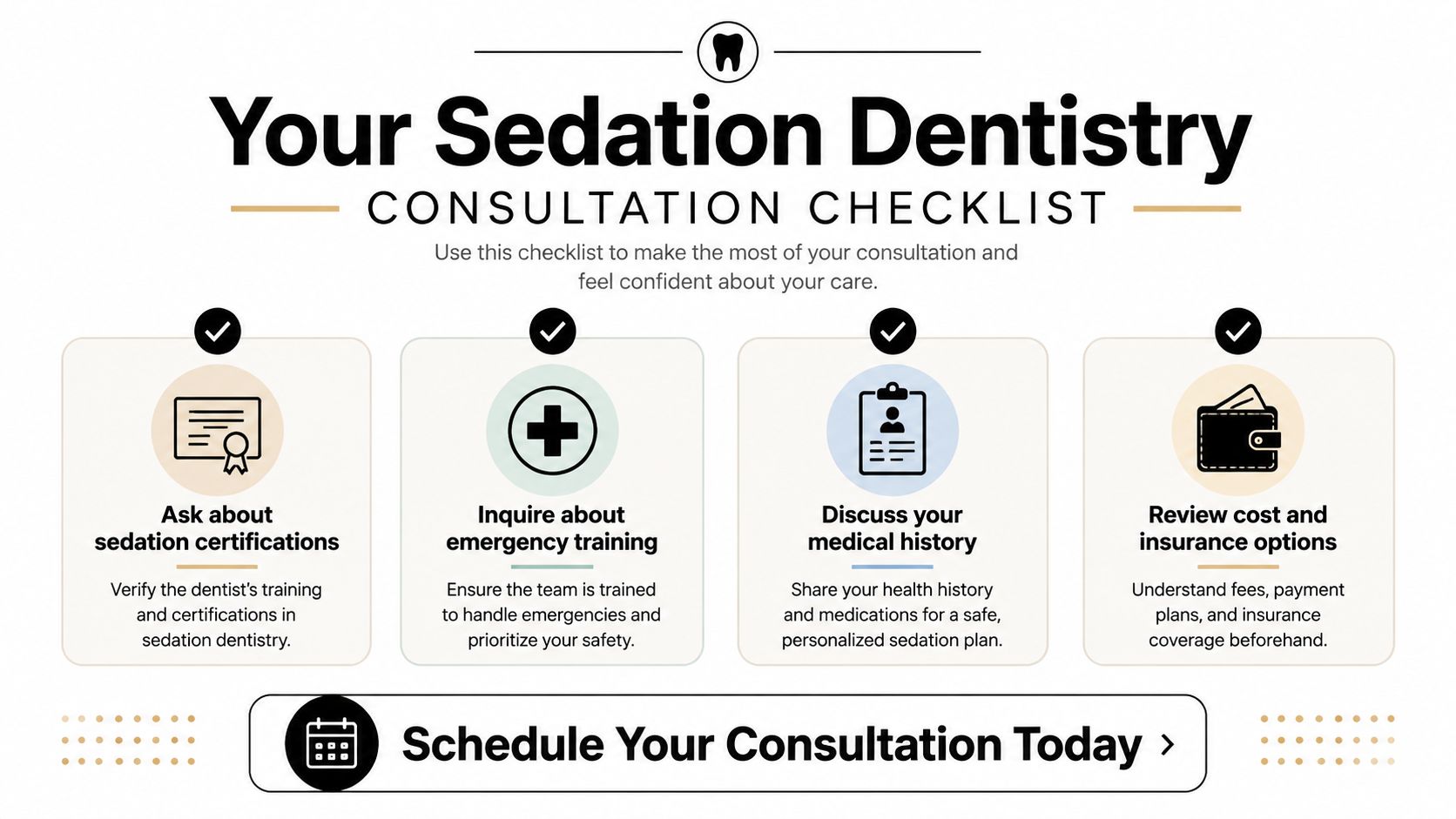
Use this consultation checklist
- Credentials: What sedation training and certifications does the administering clinician hold?
- Emergency readiness: What emergency training and equipment are available in the office?
- Monitoring: Who watches my breathing, pulse, blood pressure, and oxygen saturation during treatment?
- Recovery: How long should I plan to remain at the office, and when can I return to work or school?
- Transportation: Do I need a responsible adult to drive me home and stay with me afterward?
- Medical conditions: How do sleep apnea, heart disease, respiratory problems, pregnancy, or current medications affect my options?
- Alternatives: Could shorter visits, behavior coaching, nitrous oxide, or another comfort plan work instead?
- Costs: Is sedation billed separately, and can the office help with insurance pre-authorization or a pre-treatment estimate?
The dentist should connect the recommendation to your actual procedure. A routine cleaning, a tooth extraction, a root canal, a same-day crown, and full-arch dental implants don't place the same demands on you or the clinical team. Your anxiety level matters just as much as the treatment itself.
If you're in Cleveland, Chattanooga, or a nearby service area, schedule a comfort consultation with Winn Smiles. The team can review your health history, explain options from nitrous oxide to IV sedation, and help you decide whether sedation fits your treatment needs, comfort goals, and budget.
Winn Smiles provides comfort-focused sedation options, modern restorative care, cosmetic dentistry, dental implants, same-day crowns, and emergency dental services for patients in Cleveland and Chattanooga. Visit Winn Smiles to request a consultation and take the next step toward dental care that feels manageable.