IV sedation dentistry usually costs $500 to $1,000 per hour, and some offices bill $150 to $250 for each 15-minute increment after the first hour. If you're looking up the cost because you need an extraction, a dental implant, or another longer procedure but anxiety keeps stopping you, that range is the starting point you need.
A lot of people in Chattanooga and Cleveland reach this point after putting off treatment for months or even years. The tooth still hurts. The broken crown still needs attention. You may be searching for an emergency dentist, a dentist near me, or dental implants near me, but the main obstacle isn't only the dental work. It's the fear of sitting through it.
IV sedation can make care feel manageable again. It also brings more moving parts than a standard visit, which is why the price can feel confusing at first. The biggest source of frustration for patients isn't usually the idea of paying for comfort and safety. It's not knowing what the total bill includes.
Anxious About Dental Work Find Your Calm in Chattanooga
Needing dental care while feeling afraid is more common than many patients realize. Someone may need a tooth extraction after weeks of pain. Another person may want to replace missing teeth with dental implants but keeps canceling consultations because the thought of treatment feels overwhelming. Searching for IV sedation dentistry cost is often the first practical step toward getting unstuck.
In Chattanooga and nearby Cleveland, many adults aren't only looking for information. They're trying to solve a real problem today. They want a dentist in Chattanooga, TN who can explain options clearly, protect their comfort, and respect the fact that anxiety changes how they make decisions.
What anxious patients are usually trying to figure out
People asking about sedation are weighing several concerns at once:
- Fear of pain: They want to know whether treatment will feel easier than a standard appointment.
- Fear of loss of control: They worry about being too awake, too sleepy, or unable to communicate.
- Fear of cost surprises: They don't want to commit to care and learn later that the final fee is much higher than expected.
- Fear of delay: They know avoiding treatment can turn a filling into a root canal, or a failing tooth into an extraction.
Dental anxiety rarely stays limited to one appointment. It often delays cleanings and exams, new patient exams, dental X-rays, restorative dentistry, and even emergency dental services.
A helpful part of choosing any local healthcare provider is learning how service businesses communicate pricing and trust. Patients who want to compare how transparent companies present complex services may find this guide to service company marketing useful because it highlights what clear communication should look like before you ever book.
Why transparent answers matter
Choosing a cosmetic dentist near me or dentist near me involves more than comparing procedures. Patients are also deciding who offers a clear explanation of treatment. That matters even more with sedation because comfort and safety depend on planning.
A clear conversation about sedation should connect the cost to the reason it exists. IV sedation involves deeper relaxation, active monitoring, and specialized oversight during treatment. Patients deserve to hear that in plain language, especially when they're already stressed.
What Exactly Is IV Sedation Dentistry
IV sedation is a form of conscious sedation delivered through a vein so the provider can adjust it in real time during your appointment. You stay very relaxed and able to respond, but most patients feel detached from the procedure itself and remember little afterward.
That's different from taking a pill before the visit. It's also different from general anesthesia, where a patient is fully unconscious. With IV sedation, the goal is comfort, calm, and controlled dosing during treatment.

How it feels during treatment
Patients often describe the experience as a twilight state. You're not “out” in the way people usually imagine with hospital anesthesia. Instead, you're very calm, physically loose, and far less aware of time passing.
That matters for longer appointments. For extensive procedures like full-arch implant solutions or multiple crown restorations, the total IV sedation cost often exceeds the hourly base rate and can reach $2,000 or more because of the cumulative time needed for administration and recovery, according to this sedation dentistry ROI analysis.
What you're paying for clinically
The medication is only one part of the service. IV sedation also involves:
- Continuous adjustment: The dose can be modified during the appointment instead of being fixed in advance.
- Ongoing monitoring: Your team tracks your response throughout treatment.
- Safety readiness: The appointment requires the right training, equipment, and recovery process.
Practical rule: If a sedation quote sounds simple, ask whether it covers monitoring, recovery, and the provider's sedation time, not just the drug itself.
That's one reason IV sedation is often chosen for patients with strong dental anxiety, complex restorative dentistry, surgical tooth extraction, or longer visits that would be difficult to tolerate comfortably while fully alert.
The Complete Breakdown of IV Sedation Costs
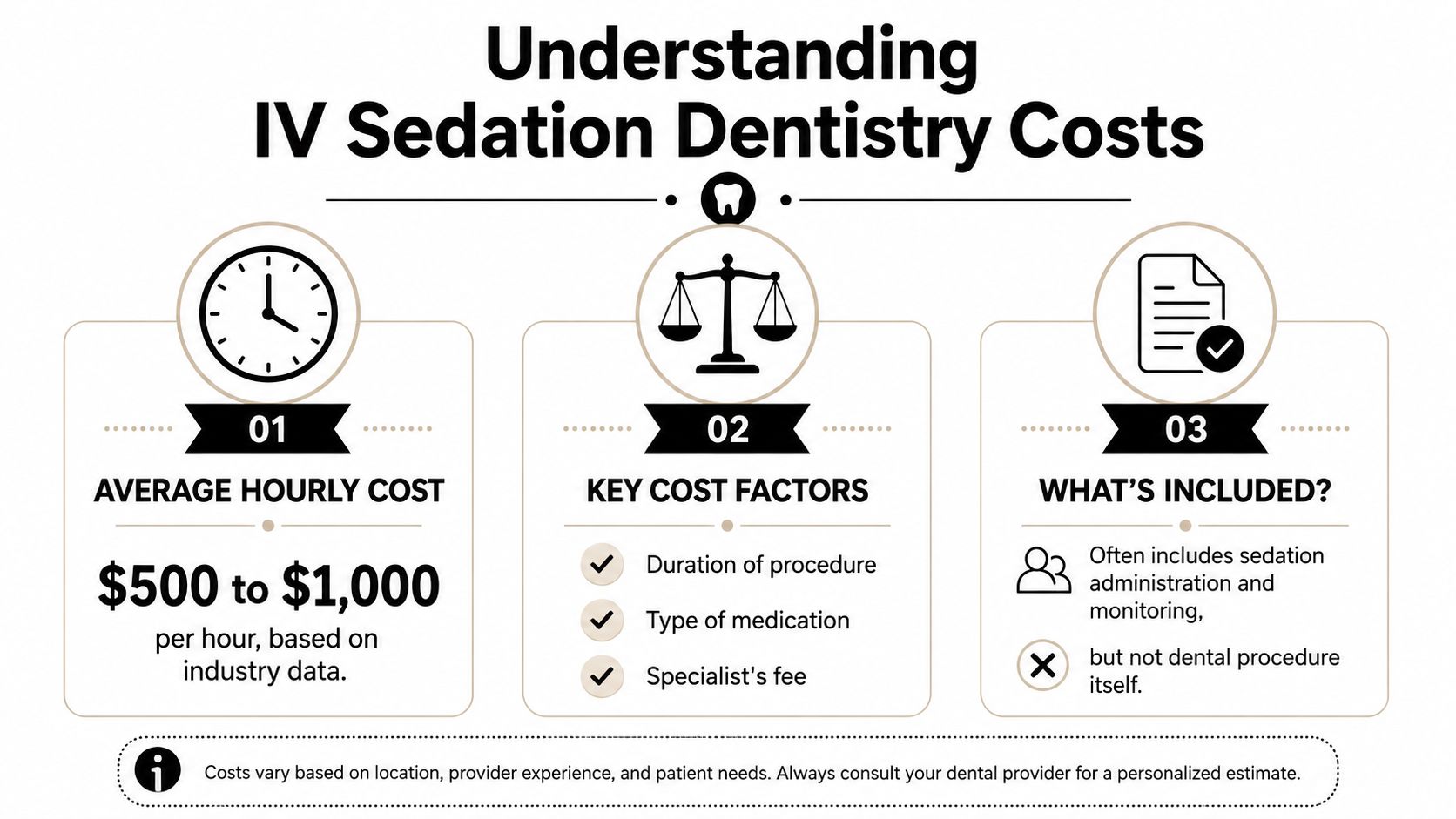
The most reliable starting point is this: IV sedation dentistry typically costs $500 to $1,000 per hour, and some offices bill $150 to $250 for every 15-minute increment after the first hour, as outlined in this South Carolina sedation cost guide. That same source also notes that IV sedation is significantly more expensive than nitrous oxide at $50 to $150 per visit and oral sedation at $150 to $500.
What the sedation fee may include
A sedation charge often reflects several services bundled together:
- Medication and administration: The sedative itself and the trained professional delivering it.
- Monitoring during treatment: Tracking vital signs and patient response throughout the procedure.
- Specialized equipment: The infrastructure required for deeper sedation and patient safety.
- Recovery oversight: Observation after the procedure until it's safe to discharge the patient.
What it may not include is the dental procedure itself. A tooth extraction, implant placement, same-day crown, root canal, or cosmetic dentistry treatment is often billed separately from the sedation fee.
Where hidden costs usually appear
The most common surprise isn't the first-hour quote. It's what happens after that.
Some practices use an all-in clinic fee. Others separate the dental treatment fee from the anesthesia or sedation provider's time. The least understood detail is quarter-hour billing after the first hour. That structure can make a long visit cost much more than patients expect, especially when the clinical time includes sedation start, procedure time, and recovery.
This matters in the same way transportation costs can change when time-based add-ons kick in. If you've ever looked at a guide to corporate travel limo expenses, you've seen the same principle at work. The base rate may sound straightforward, but duration and add-on billing are what shape the final total.
Before moving forward, ask these direct questions:
| Cost question | Why it matters |
|---|---|
| Is the quoted fee hourly or per appointment? | Some offices price shorter and longer cases very differently. |
| Does the quote include the sedation provider's full time? | Separate billing can increase the final charge. |
| Are quarter-hour increments billed after the first hour? | Longer procedures often trigger these add-ons. |
| Is recovery time part of the sedation fee? | Recovery supervision may affect total cost. |
A short video can also help patients understand how sedation appointments are typically structured.
Ask for the estimate in writing and have the office spell out whether the figure is all-inclusive or itemized. That one step prevents most cost misunderstandings.
Key Factors That Influence Your Final Bill
No honest office can give every patient one flat sedation number and have it fit every case. The final bill depends on the kind of visit you're having and how much active sedation support that visit requires.
Procedure length changes everything
A straightforward appointment usually takes less sedation time than a more involved one. If you need a simple tooth extraction, the sedation window may be shorter than it would be for a full-arch implant case, multiple restorations, or a longer restorative dentistry appointment.
That's why patients looking for dental implants near me or same-day dentistry often hear a broader estimate range than patients booking a shorter visit. Time drives sedation cost because the team must continue administration, monitoring, and recovery support for the full duration.
Clinical complexity affects staffing and pacing
Two appointments can last a similar amount of time and still be priced differently. A case involving surgical access, multiple treatment steps, or a more delicate medical history may require slower pacing and closer observation.
Factors that often shape the final number include:
- The treatment itself: Implant surgery, multiple crowns, and more involved extraction cases usually demand more than a brief filling visit.
- Your response to sedation: Some patients need careful titration and a slower start or recovery.
- Safety planning: Medical history, medication review, and perioperative monitoring all influence the resources required.
The quote should match the treatment plan
A meaningful estimate comes after a real exam, not from a generic phone number pulled from a broad online range. Dental X-rays, your treatment goals, your anxiety level, and whether you're combining services all affect the care plan.
Someone searching for an emergency dentist in Chattanooga or Cleveland may need relief first and a bigger restorative plan later. Another patient may come in for a new patient exam and discover they can complete several needed procedures in fewer visits with sedation support. Both situations are valid, but the cost structure won't look the same.
Comparing Sedation Options at Winn Smiles
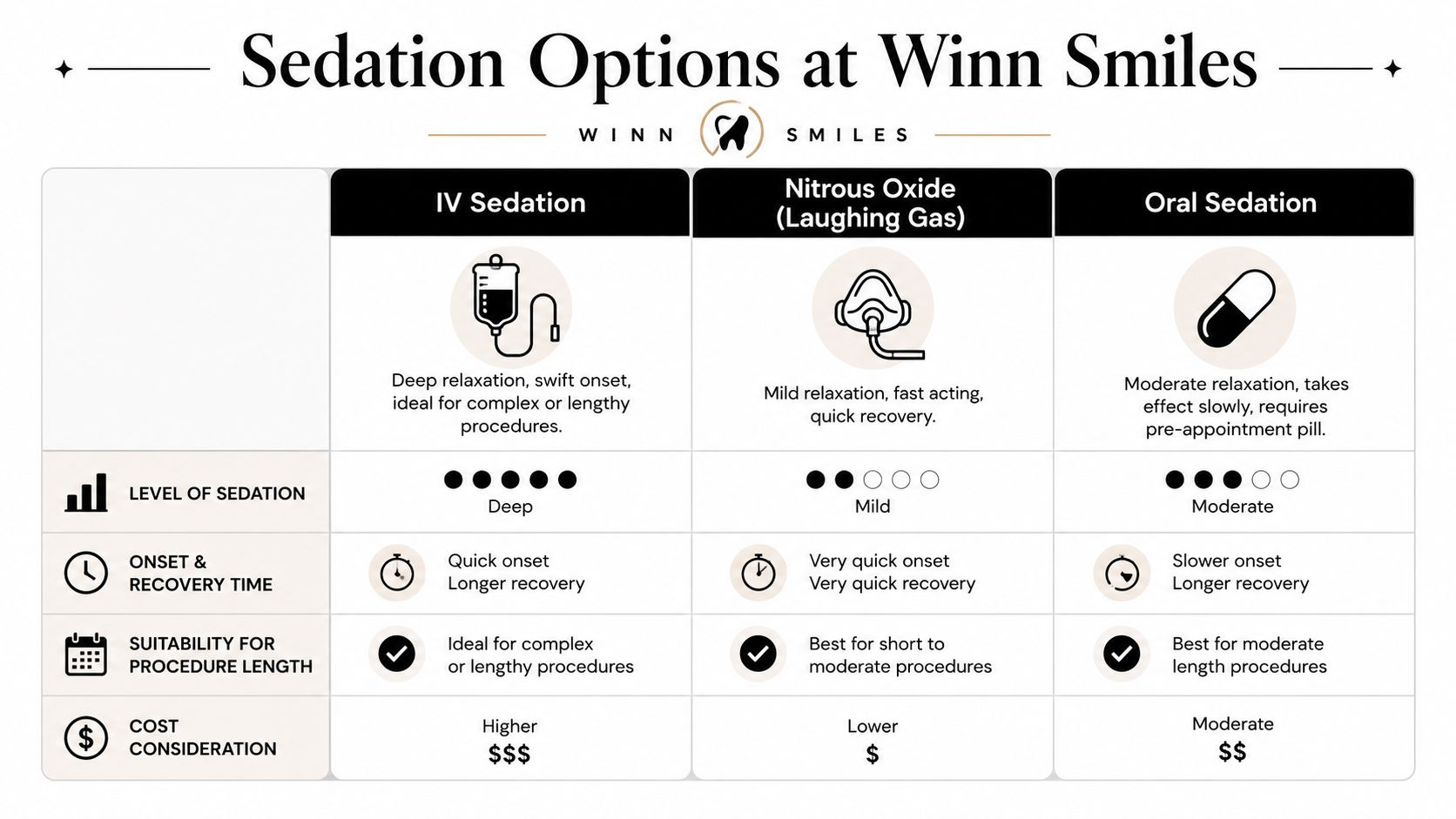
Not every patient needs IV sedation. The right choice depends on your anxiety level, the length of the procedure, how quickly you want the sedative to work, and how much support you'll need after the appointment.
Sedation dentistry options compared
| Sedation Type | Typical Cost | Level of Sedation | Best For |
|---|---|---|---|
| IV Sedation | Higher cost than lighter options, often time-based | Deep relaxation while still responsive | Longer procedures, stronger anxiety, complex treatment |
| Nitrous Oxide | $50 to $150 per visit | Mild relaxation | Cleanings and exams, shorter restorative visits, mild nerves |
| Oral Sedation | $150 to $500 | Moderate relaxation | Patients who want more help than nitrous oxide but don't need IV dosing |
How the choices differ in real life
Nitrous oxide works well for patients who feel tense but can still tolerate routine care. It's often a practical option during cleanings, exams, or shorter restorative appointments because recovery is fast.
Oral sedation is more helpful for moderate anxiety. You take medication before the visit, which can make the appointment feel much easier, but it doesn't offer the same minute-by-minute adjustment as IV sedation.
IV sedation fits patients who need a deeper level of relaxation, especially for oral surgery, multiple procedures in one sitting, full-arch implant care, or severe anxiety. The main trade-off is cost and planning. It's more involved, and that's exactly why many anxious patients prefer it.
For patients who want a broader overview of comfort options, this types of sedation dentistry resource gives a helpful breakdown of how these methods compare.
The right sedation choice isn't “the strongest one.” It's the one that matches the procedure, the patient's anxiety level, and the recovery plan.
A practical way to think about it is this:
- Choose nitrous oxide when you want light, fast-on and fast-off relaxation.
- Consider oral sedation when anxiety is moderate and the appointment isn't highly complex.
- Ask about IV sedation when fear, procedure length, or treatment intensity would make staying comfortable difficult.
Navigating Insurance and Financing in Cleveland TN
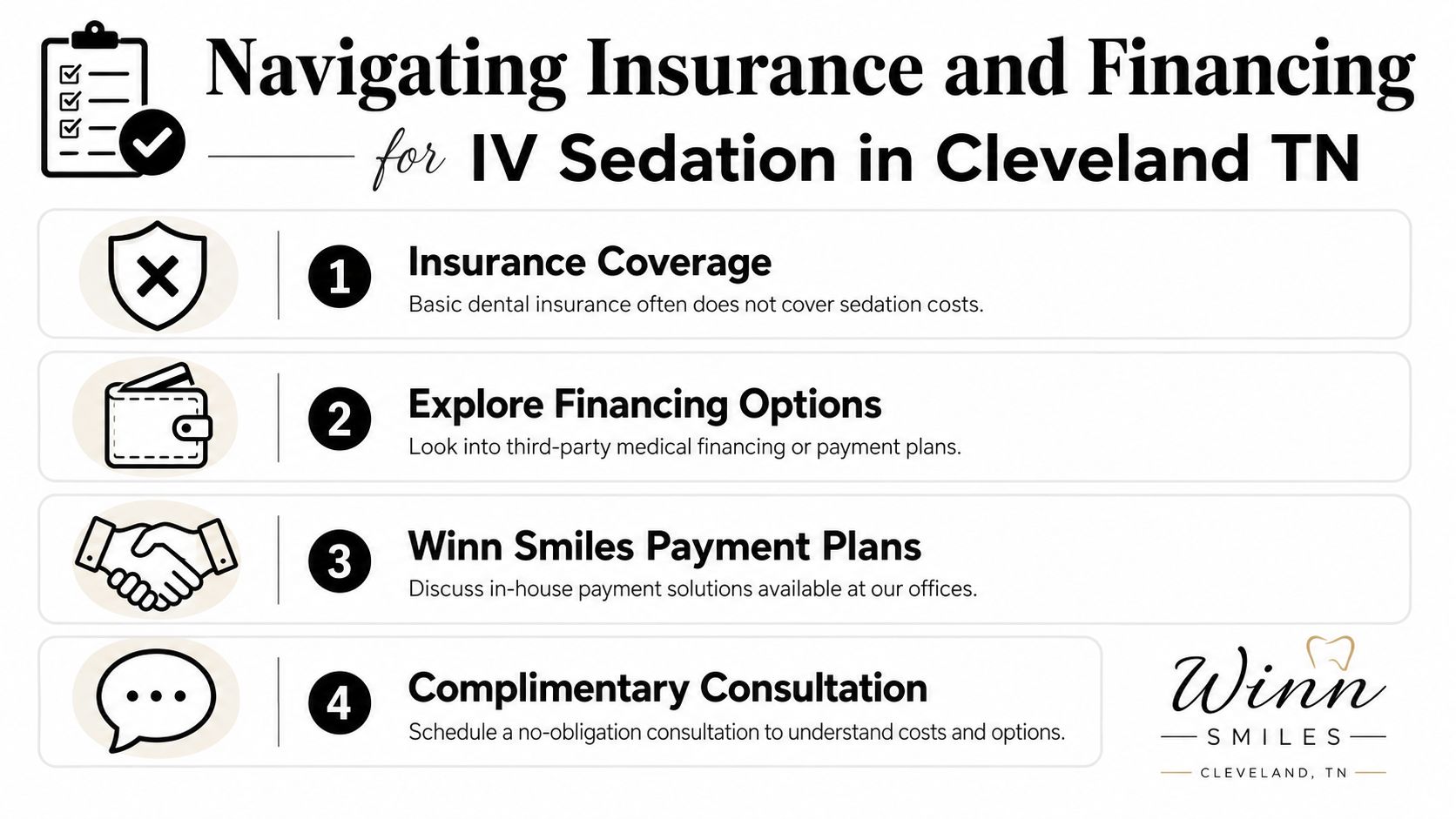
Insurance is where many patients feel discouraged too early. Basic dental plans often don't cover sedation costs, especially when sedation is treated as an elective comfort service rather than a medical necessity.
When coverage may be possible
There is an important exception. Recent policy shifts show that insurers are increasingly recognizing severe anxiety as a valid medical condition for coverage, not only sedation tied to oral surgery, as discussed in this sedation insurance overview. That same source notes patients may need specific documentation, such as a psychologist's letter, to help access coverage.
That means the conversation shouldn't stop at “insurance doesn't cover it.” It should move to “what documentation would your plan require?”
A strong checklist to discuss with your insurer includes:
- Medical necessity language: Ask whether severe dental anxiety, panic disorder, PTSD, or a severe gag reflex can support review.
- Required paperwork: Find out whether the insurer wants chart notes, diagnosis documentation, or a letter from a behavioral health provider.
- Coding questions: Ask how the office should submit sedation-related claims or preauthorization requests.
- Benefit coordination: If medical and dental benefits both exist, ask whether crossover review is available.
Patients who want background on how practices handle claims across dental and medical systems may also find it useful to explore dental medical billing, especially when sedation relates to documented health conditions.
Practical payment planning
If insurance won't contribute, financing becomes the next tool. Payment plans, third-party medical financing, and phased treatment can help patients move forward without waiting for conditions to worsen.
Winn Smiles provides sedation options, transparent cost discussions, and consultations that help patients understand the difference between the procedure fee and the sedation fee before treatment begins. Patients can also review this page on whether sedation dentistry is covered by insurance to prepare better questions before calling their carrier.
For families in Cleveland, TN and Chattanooga, the most useful next step is often a treatment consultation focused on both care and budgeting. A written estimate, a benefits review, and a financing discussion can make a stressful decision feel far more manageable.
Your IV Sedation Journey at Winn Smiles
The first appointment is usually not the procedure. It's a conversation. You come in, discuss the dental problem, review health history, and talk through whether sedation fits your treatment and comfort level.
That visit may also include diagnostic steps such as an exam or dental X-rays, depending on what's needed. If the issue involves a painful tooth, missing teeth, cosmetic concerns, or a larger restorative plan, the treatment outline should connect the clinical work to a realistic timeline and fee estimate.

What the appointment day usually looks like
By the time treatment day arrives, the important decisions should already be settled. You should know the procedure plan, the expected sedation method, what you'll need for transportation, and what recovery support will look like at home.
A comfort-focused office experience matters here. Light, airy surroundings, a communicative team, and clear step-by-step guidance can lower stress before the sedation even begins.
Common parts of the process include:
- Pre-visit instructions: Eating, drinking, medications, and arrival timing.
- Treatment preparation: Final review of consent, questions, and medical updates.
- Sedation and procedure care: Continuous supervision while the dental treatment is completed.
- Recovery and discharge: Monitoring until you're ready to go home with your escort.
Why the full experience matters
Sedation isn't just a way to get through one procedure. For many people, it breaks a long cycle of avoidance. After one comfortable experience, patients are often more willing to return for cleanings and exams, cosmetic dentistry, restorative care, or follow-up treatment they once avoided.
That's especially meaningful for adults who have delayed a tooth extraction, ignored signs they may need emergency dentistry, or postponed replacing missing teeth. A thoughtful sedation process can protect oral health and reduce the emotional burden that has been attached to dental visits for years.
If fear has kept you from booking the care you need in Chattanooga or Cleveland, the most useful next step is a consultation where the treatment plan, sedation options, and costs are laid out clearly and calmly.
If you're looking for compassionate, transparent dental care in Chattanooga or Cleveland, Winn Smiles can help you talk through sedation options, treatment timing, and expected costs in a clear, no-pressure setting. Schedule a consultation to get answers about your procedure, your comfort choices, and what it will take to move forward confidently.