You're sitting in the dental chair expecting a routine cleaning, then hear a new term: periodontal maintenance. If you're searching for a dentist near me, a dentist in Cleveland, TN, or periodontal care in Chattanooga, TN, it's reasonable to ask why your appointment has changed and whether you still need a standard cleaning instead.
The difference isn't just the length of the visit or the instruments used. Routine cleaning is generally preventive care for healthy gums. Periodontal maintenance is a structured follow-up program for patients who've had periodontitis, with closer monitoring and cleaning that reaches into gum pockets. At Winn Smiles, patients in Cleveland, Chattanooga, and nearby communities can discuss the reasoning behind their treatment plan before care begins.
Finding Clarity in Your Dental Treatment Plan
A patient may arrive for a familiar cleaning and learn that bleeding, pocket measurements, or older dental records point to a different need. The change can feel unsettling, especially when the teeth look clean and there isn't much pain. Gum disease often develops with few obvious signs, so how your gums feel isn't enough to decide which service is appropriate.
The more useful question is, what has happened beneath the gumline? A patient with healthy gum tissue and no history of periodontitis may need routine prophylaxis. Someone who has previously received scaling and root planing, experienced bone loss, or still has areas of inflammation may need periodontal maintenance instead.
Practical rule: The label on the appointment should follow your gum health history and current findings, not only the appearance of your teeth.
Winn Smiles serves patients looking for a dentist in Cleveland, TN, a dentist in Chattanooga, TN, and care in surrounding areas. The practice's approach is to explain what the dental team sees, why a particular service is recommended, and how home care fits into the plan. That conversation matters because periodontal maintenance isn't a punishment or a sign that you've failed at brushing. It's a way to protect the support around your teeth after gum disease has already changed it.
The central difference
Routine cleaning aims to prevent disease in a mouth that is generally stable. Periodontal maintenance aims to manage the risk of recurrence after active periodontal treatment.
The two services can overlap in basic tasks, such as removing plaque and calculus and polishing tooth surfaces. The clinical purpose is different, however, and that purpose determines how the dental team evaluates your gums and where they focus cleaning.
A clear diagnosis also helps you make better decisions about related treatment. Whether you're considering cosmetic dentistry, restorative dentistry, or dental implants near me, your gums provide the foundation. Understanding your current periodontal status is an important first step toward a stable, comfortable smile.
The Purpose and Process of Routine Dental Cleanings
A routine dental cleaning, also called prophylaxis, is preventive care for patients whose gums are healthy or stable without a history of treated periodontitis. The appointment focuses mainly on removing plaque, tartar, and surface stain from visible tooth surfaces and around the gumline.
That doesn't mean the cleaning is superficial or unimportant. Plaque left near the gums can irritate tissue and contribute to early inflammation. Removing deposits, polishing rough surfaces, and reinforcing daily habits helps keep small problems from becoming larger ones.
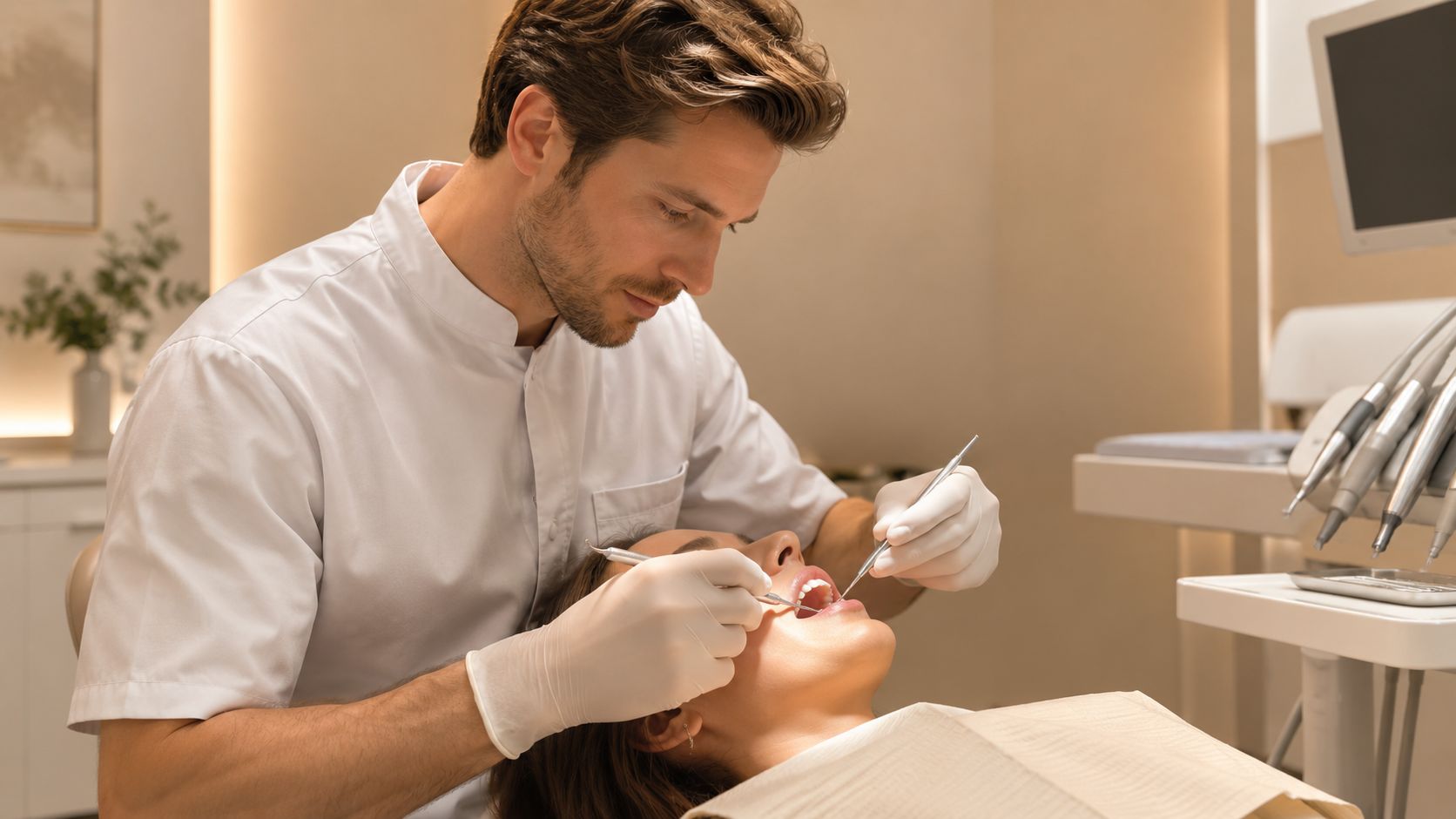
What happens during a standard cleaning
A typical visit follows a straightforward sequence:
Review and examination: The team updates relevant medical and dental information and looks for changes in the teeth, gums, and surrounding tissues. Depending on your situation, the visit may also include dental x-rays, a new patient exam, or oral cancer screening.
Deposit removal: Hand instruments or an ultrasonic scaler may remove calculus from above the gumline and from the shallow area just beneath it. The objective is to clean areas that daily brushing and flossing can't fully reach.
Polishing: A polishing cup and professional paste smooth the tooth surfaces and lift some surface stain. Polishing doesn't replace brushing, flossing, or treatment for active gum disease.
Home-care guidance: Your hygienist may discuss brushing technique, interdental cleaning, fluoride, or other preventive steps based on what they observe.
For many patients, routine cleanings are arranged on a regular preventive schedule, often every six months, but the appropriate interval depends on individual findings. A new patient dental cleaning guide can help you understand what to bring up during your first appointment.
Routine cleaning works well when the gums don't have disease-related changes that require deeper access. It isn't designed to manage established periodontal pockets or serve as the sole follow-up after active periodontitis treatment.
Understanding Periodontal Maintenance and Gum Health
Periodontal maintenance is ongoing disease management after active periodontal therapy. The American Dental Association describes the D4910 procedure as care performed after active periodontal treatment, continuing for the life of the dentition. That doesn't mean every patient needs the same appointment forever. It means the maintenance phase remains part of long-term care for a patient with a history of periodontitis.
The clinical decision depends on findings such as residual pocketing, bleeding, bone loss, gum recession, previous scaling and root planing, medical conditions, home-care consistency, and the prognosis of individual teeth. A patient who has had periodontitis may feel well while inflammation is returning below the gumline, so periodic evaluation is more reliable than symptoms alone.
Why prior treatment changes the plan
Active therapy addresses existing infection and deposits. The maintenance phase then checks whether the gums remain stable and removes new bacterial deposits before they contribute to renewed inflammation.
The American Academy of Periodontology review describes published periodontal recall intervals ranging from 2 weeks to 18 months. Its position paper states that many patients with a history of periodontitis may initially require visits every 3 months to reduce the likelihood of progressive disease compared with less frequent care. The 2023 Scottish guideline places supportive periodontal care between 3 and 12 months, adjusted to risk, and recommends three-monthly visits when patients move from active therapy into maintenance.
These ranges show why “every three months forever” is too simple, but “a regular cleaning is enough” can also be unsafe for someone with previous disease. Your dental team should adjust the plan as your measurements and risk profile change.
A partnership, not a penalty
Periodontal maintenance may involve more time and closer attention, but its purpose is protective. The team monitors pocket areas, checks for bleeding and inflammation, reinforces interdental cleaning, and removes deposits above and below the gumline.
Home care remains part of the treatment. Toothbrushing cleans accessible surfaces, while floss, interdental brushes, or another recommended device helps reach between teeth. The right tool depends on your spacing, restorations, dexterity, and gum anatomy. A stable result comes from combining professional maintenance with a daily routine you can sustain.
Comparing the Procedures and Depth of Care
The practical difference in periodontal maintenance vs cleaning becomes clearer when you compare the target areas and clinical goals. Routine prophylaxis is intended for preventive care in a generally healthy mouth. Periodontal maintenance follows active gum-disease treatment and includes evaluation for recurrence.
The American Academy of Pediatric Dentistry describes periodontal follow-up as including updated medical and dental histories, evaluation of extraoral, intraoral, and periodontal tissues, oral-hygiene assessment with reinstruction when necessary, and mechanical cleaning to remove plaque, biofilm, stain, and calculus. The ADA describes D4910 as including bacterial-flora removal from crevicular and pocket areas, scaling and polishing, periodontal evaluation, and review of plaque-control effectiveness, as outlined in its periodontal maintenance coding guidance.
Routine Cleaning vs Periodontal Maintenance
| Feature | Routine Cleaning (Prophylaxis) | Periodontal Maintenance |
|---|---|---|
| Primary purpose | Preventive care for generally healthy gums | Ongoing control after periodontitis treatment |
| Main target | Visible tooth surfaces, gumline, and shallow areas | Teeth, gumline, crevicular areas, and periodontal pockets |
| Clinical review | General oral evaluation and preventive assessment | Periodontal tissue evaluation, medical history review, and monitoring for recurrence |
| Cleaning focus | Plaque, calculus, and stain accessible during preventive care | Biofilm and calculus above and below the gumline in areas affected by periodontal disease |
| Home-care support | General brushing and interdental-care guidance | Risk-based instruction and reinforcement for disease control |
| Long-term goal | Maintain healthy gums and prevent new problems | Stabilize treated disease and protect the supporting tissues and teeth |
The difference isn't that one appointment uses a “good” tool and the other uses a “better” tool. It's that periodontal maintenance is guided by the anatomy and history of a mouth affected by gum disease.
Maintenance is not the same as active treatment
A patient with untreated deposits and active periodontitis may first need scaling and root planing. The ADA describes scaling and root planing without adjuncts as the treatment of choice for patients with periodontitis, while maintenance follows that active phase. You can read more about periodontal scaling and root planing to understand how treatment and follow-up fit together.
Routine cleaning also isn't a substitute for a periodontal evaluation when gums bleed regularly, pockets remain deep, or bone loss appears on x-rays. The correct service follows the diagnosis, not the desire for the shorter or more familiar appointment.
Recommended Frequency and Long-Term Benefits
The right recall interval depends on how well the disease is controlled, how consistently home care is performed, and what your examinations show over time. Many patients enter periodontal maintenance at 3-month intervals after active therapy. That schedule gives the dental team more opportunities to detect returning inflammation before it threatens the supporting tissues.
A 2024 study reported disease recurrence of 8% among patients seen every 3 months, compared with 12% at 6-month intervals and 20% at annual intervals. It also reported a 40% reduction in recurrence for the three-month group compared with the six-month group, as documented in the published clinical study.
Why timing matters
Long gaps can allow inflammation to return before it is measured. More frequent visits do not remove every risk, but they allow earlier changes to professional care, interdental cleaning, and other parts of your treatment plan.
A separate 2026 analysis found that maintenance scheduled at about 4.5 months produced better inflammatory control, including a two-fold greater reduction in annual bleeding-on-probing scores than a 5.5-month schedule. A separate 2026 cohort reported 15 teeth lost over roughly 60 months, an annual tooth-loss rate of 0.048 teeth per patient-year, while 76.19% of patients lost no teeth during follow-up. These findings are reported in the clinical criteria for periodontal maintenance.
The evidence supports consistent maintenance, not one universal calendar.
The schedule should be earned by stability, not assumed from comfort or convenience.
Some patients with stable findings and excellent home care may eventually be considered for intervals between 6 and 12 months, depending on their risk and clinical results. Lower-certainty primary-care evidence has found that less frequent calculus removal can be as effective as standard care for plaque and gingival bleeding over 2 to 3 years.
A patient in Cleveland or Chattanooga should not receive a fixed schedule without review. Your dental team should consider current bleeding, pocket findings, bone levels, systemic factors, and daily-care habits when choosing whether the next visit belongs closer to three months, around four and a half months, or farther apart.
Navigating Insurance Coverage and Cost Considerations
Insurance often treats routine prophylaxis and periodontal maintenance as different categories because their clinical purposes differ. Routine cleaning is preventive care for a generally healthy mouth. D4910 is associated with ongoing care after active periodontal therapy.
What to check before treatment
Ask your insurance carrier and dental office to clarify:
- Procedure classification: Find out whether the proposed visit is submitted as routine preventive cleaning or periodontal maintenance under D4910.
- Waiting period: Many payers expect a waiting period of 8 to 12 weeks after active periodontal therapy before periodontal maintenance begins, according to the ADA's D4910 guidance.
- Benefit category: Confirm whether maintenance is processed under preventive benefits or another category in your plan.
- Visit limitations: Ask how often the plan considers maintenance eligible and whether limitations apply across the benefit year.
- Patient responsibility: Request an estimate of deductibles, coinsurance, and any amount not covered before the appointment.
Coverage varies by plan, diagnosis, documentation, and frequency. A dental office can explain the planned procedure and submit appropriate information, but your insurer makes the final benefit determination.
Why the code matters
The code reflects the reason for care, not merely the sound of the word “cleaning.” If your mouth has a history of periodontitis, asking the office to submit a routine cleaning only because it may be categorized as preventive can create an inaccurate record and may not provide the treatment your gums need.
Transparent cost discussions should include what the appointment involves, what insurance may consider eligible, and which questions remain for the carrier. That clarity helps you make a decision based on both clinical need and your financial plan.
Your Comfort and Next Steps at Winn Smiles
A periodontal maintenance visit should feel organized and understandable. At Winn Smiles, patients in Cleveland, Chattanooga, and nearby communities can expect a discussion of their gum history, current concerns, home-care routine, and treatment priorities before the team proceeds.
The practice's light, airy offices, comfort menu, and personalized sedation options are relevant for patients who feel nervous about deeper cleaning. Local anesthetic may be discussed when areas are sensitive, and the team can explain what will happen before instruments are used. Comfort isn't separate from good periodontal care. Patients are more likely to follow through when they know what to expect and can communicate during the visit.
Protecting the foundation for future dentistry
Healthy gum support matters beyond maintenance appointments. It supports restorative work, cosmetic dentistry, veneers, crowns, and dental implants near me. If a tooth can't be saved, planning may involve tooth extraction followed by replacement options such as an implant or full-arch solution, but the surrounding tissues still need careful evaluation.
Patients may also contact the practice for teeth whitening, Invisalign, same-day crowns, root canal care, or an emergency dentist visit. A bleeding or painful gum area shouldn't be covered up with cosmetic treatment alone. The first step is determining whether inflammation, infection, decay, or another problem is present.
What to bring to your appointment
Bring a list of medications and health conditions, information about previous periodontal treatment, and any questions about sensitivity or insurance. Tell the team if you've noticed bleeding, persistent bad breath, gum recession, loose teeth, or discomfort, even if the symptoms seem minor.
The aim is a plan that matches your mouth rather than a generic schedule. Some patients need routine preventive care. Others need periodontal maintenance, additional active treatment, or a referral for specialized evaluation. A careful examination makes that distinction clear.
Winn Smiles offers periodontal care, preventive cleaning and exams, dental x-rays, restorative dentistry, cosmetic services, emergency dental services, and implant consultations for patients seeking care in Cleveland, Chattanooga, and surrounding areas. Schedule an appointment to have your gums evaluated, review your treatment options, and build a maintenance plan that protects your natural teeth.
Winn Smiles provides patient-focused periodontal evaluations and maintenance care for adults in Cleveland, Chattanooga, and nearby communities, along with preventive, restorative, cosmetic, emergency, and implant dentistry. Visit Winn Smiles to schedule an appointment or request a consultation about the cleaning or periodontal treatment your smile needs.