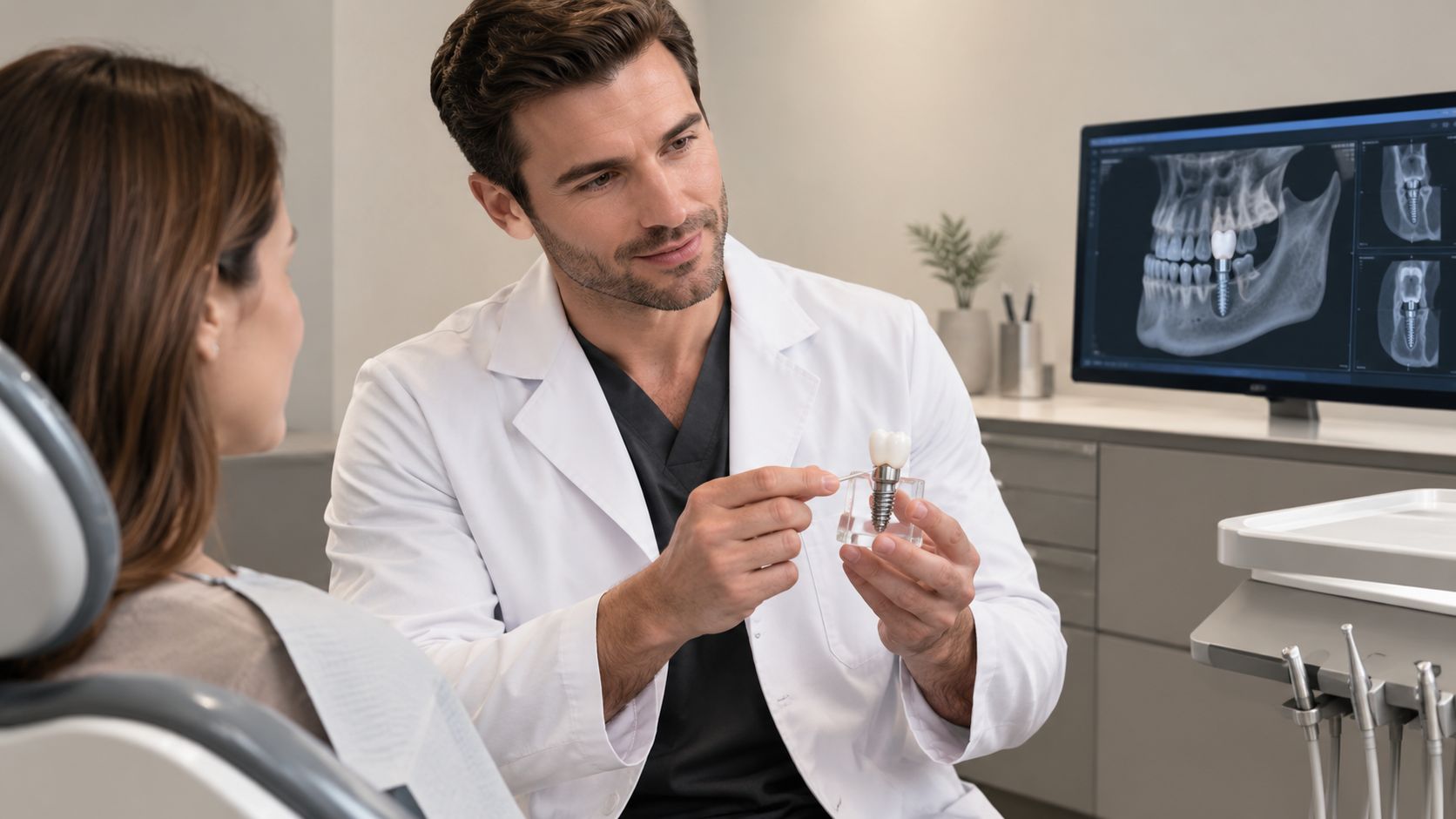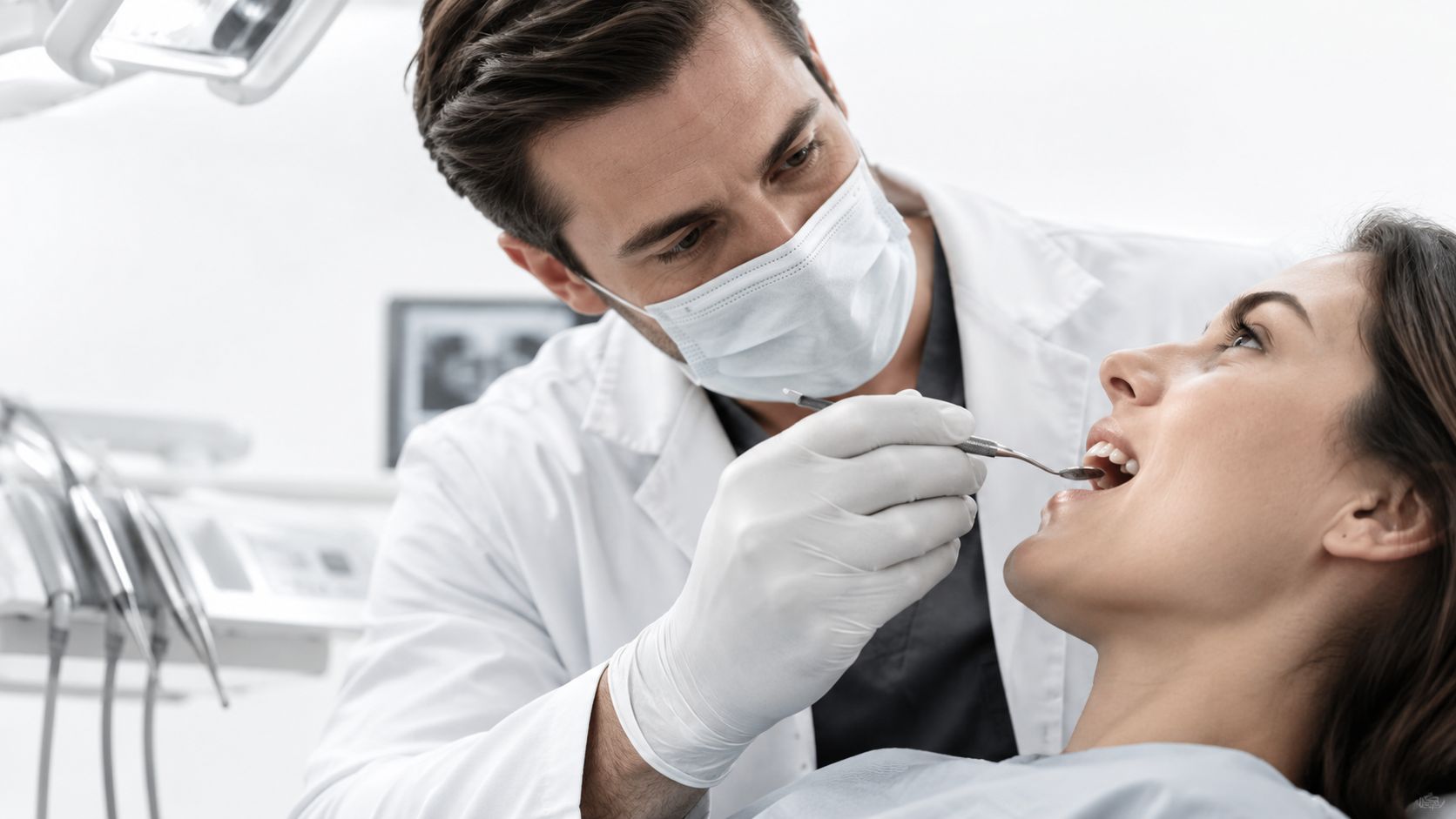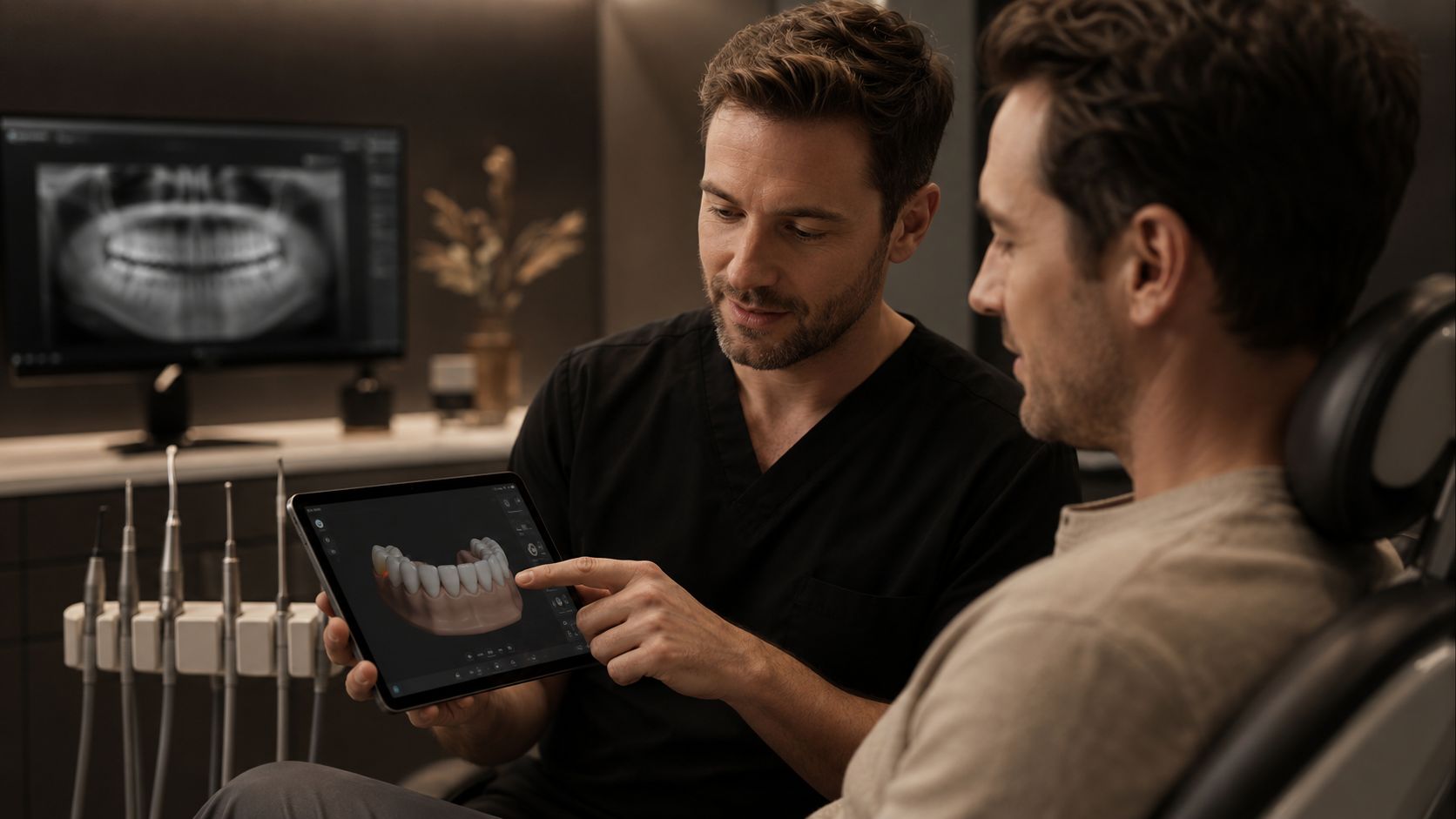
When looking for a dentist near me in Chattanooga or Cleveland, TN, you're probably not just looking for someone to clean your teeth. You want a plan that makes sense for your pain, your schedule, your budget, and your comfort level. That matters whether you need a routine exam, a same-day crown, help with dental anxiety, or a solution for missing teeth.
A lot of people come in carrying the same frustration. They've had dental visits where the recommendation felt generic, rushed, or hard to understand. When that happens, it's easy to put treatment off. The problem is that delaying care often turns a small issue into a bigger one, especially when you're dealing with a cracked tooth, bite changes, gum problems, or an implant decision.
Good dentistry shouldn't feel like assembly-line medicine. It should feel like a conversation, a clear diagnosis, and a plan that fits your life.
More Than a Patient A Partner in Your Dental Health
A patient finds an emergency dentist after a weekend toothache. Another is comparing options for dental implants near me after living with a missing tooth for years. Someone else wants a cosmetic dentist near me but feels nervous about being pushed into treatment they don't fully understand. Different reasons. Same concern. They don't want to feel like just another appointment slot.
That concern is valid. In healthcare, people often feel reduced to a symptom or a procedure. Dentistry can fall into that trap too when the focus stays only on the tooth and not on the person attached to it.
A personalized approach starts somewhere simpler. It starts with listening.
What partnership looks like in a dental office
Partnership means your concerns are part of the treatment decision, not an afterthought after the exam. If you're worried about pain, embarrassed about the condition of your teeth, short on time, or trying to compare options for restorative dentistry, those factors change what a good plan looks like.
For one patient, the right next step might be a conservative repair and close monitoring. For another, the smarter path may be extraction and replacement because the tooth no longer offers a predictable long-term outcome. Neither option is automatically right for everyone.
A good treatment plan answers more than “What do you need?” It also answers “What matters most to you?”
This is one reason clear conversation matters so much. Patients make better decisions when they understand the trade-offs, the timeline, and what to expect at each stage. If you want a useful outside perspective on that topic, this guide to effective patient communication in dentistry explains why communication quality shapes trust, comfort, and follow-through.
Why this matters in Chattanooga and Cleveland
In Chattanooga and Cleveland, TN, patients are often balancing work, family, school schedules, and long-postponed dental needs. They don't need a lecture. They need clarity. They need to know whether a problem is urgent, what their options are, and how care can move forward without unnecessary surprises.
That's the difference between being treated as a case and being treated as a partner in your dental health.
What Are Personalized Treatment Plans in Dentistry
A personalized treatment plan in dentistry is an individualized roadmap for your care. It is built from your exam findings, medical history, symptoms, priorities, and the life limits that affect treatment decisions.
In day-to-day dental practice, that can change almost everything. Two patients may both need a crown, an implant, or sedation, but the right plan can still look very different. One patient may need the fastest path back to chewing comfortably before a work trip. Another may care most about long-term durability, even if that means more appointments or a higher upfront cost.
According to American Pharmaceutical Review, global precision medicine treatment spending was almost $32 billion in 2022 and is projected to exceed $124 billion by 2027. Dentistry reflects that same shift toward using patient-specific information instead of a one-size-fits-all model.
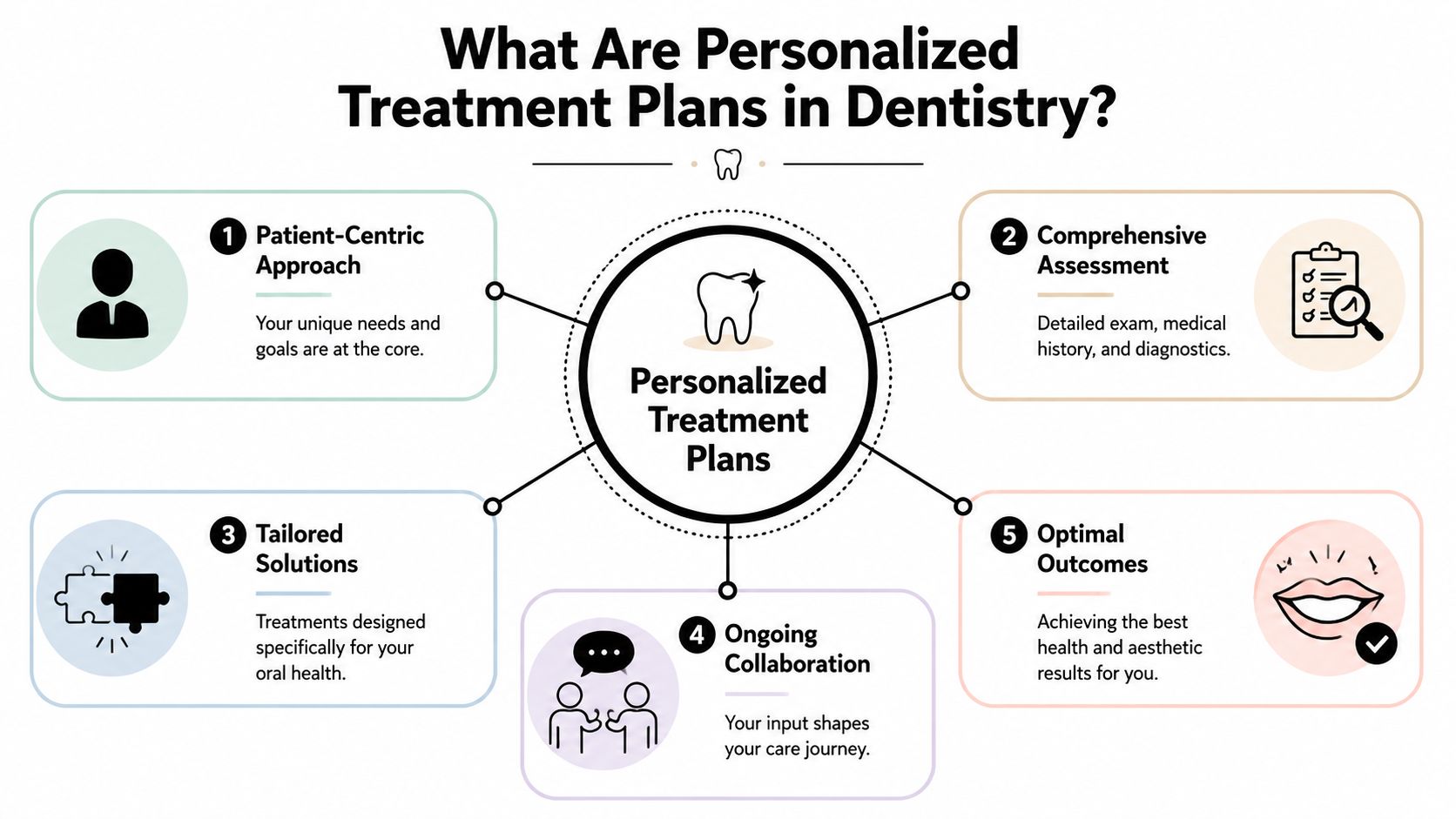
It goes beyond the tooth
A tooth never exists in isolation. The condition of the surrounding gum tissue, the way you bite, the strength of your chewing forces, your healing history, and your comfort level all affect what makes sense.
Take a common example in Chattanooga or Cleveland. A missing tooth in the back of the mouth might be restored with an implant for one patient. For another, the better choice may be a bridge or a phased plan that starts with stabilizing gum health first. The diagnosis may sound similar. The sequence, timing, and goals are not.
A personalized plan usually accounts for:
- Your current dental findings: decay, cracks, infection, bone support, gum health, missing teeth, and wear
- Your medical background: medications, diabetes, autoimmune conditions, smoking history, sleep or airway concerns, and healing risks
- Your priorities: relief from pain, appearance, function, durability, or finishing treatment on a tighter schedule
- Your comfort needs: anxiety, gag reflex, past experiences, and whether sedation would help
- Your practical constraints: insurance, budget, time away from work, and recovery expectations
What generic planning misses
Procedure-only planning tends to focus on what can be done. Personalized planning focuses on what should be done first, what can wait, and which option gives you the best chance of a good result.
That distinction matters. A lower-cost fix may solve a short-term problem but fail sooner under heavy grinding. A cosmetic upgrade may need bite correction or periodontal treatment first. Sedation may make treatment much more manageable for one patient, while another does well with shorter visits and local anesthetic alone.
The goal is not to make care more complicated. The goal is to make it more accurate, more comfortable, and more realistic for the person sitting in the chair.
A good plan should explain the trade-offs clearly. It should tell you what problem is being treated, which options are reasonable, what each option asks of you, and how those choices fit your health and daily life.
How We Build Your Custom Dental Care Blueprint
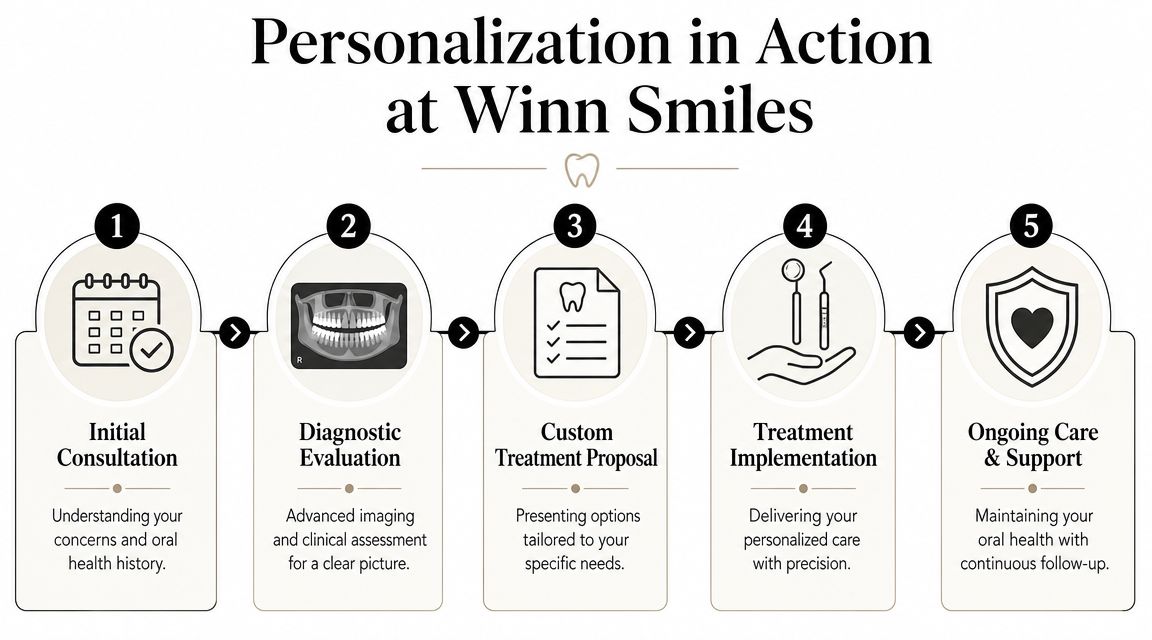
You come in because a crown broke before a work trip, a front tooth has started to shift, or an implant consult left you with more questions than answers. In that first visit, the goal is to sort out what is happening, what matters most to you, and what path makes sense for your health, schedule, and comfort.
Step one is the conversation
Treatment planning starts with listening. Patients in Chattanooga and Cleveland often arrive with a specific concern, but the concern behind it is not always obvious until we talk through it. A patient asking about a missing tooth may really be worried about chewing on one side. Someone requesting sedation may be reacting to a difficult dental experience years ago.
Those details shape the plan. They affect timing, sequencing, and whether the right next step is immediate treatment, stabilization, or a second visit focused on answers.
I also want to know what a successful result looks like to you. For one patient, success means getting out of pain fast. For another, it means choosing the longest-lasting option even if it takes more visits.
The exam and imaging phase
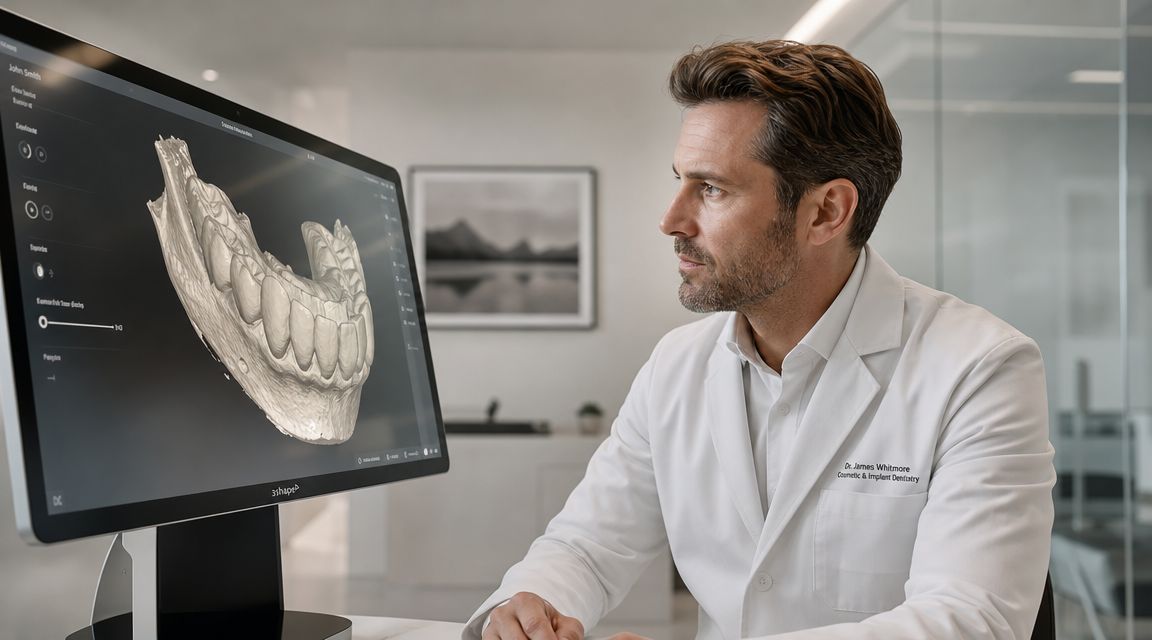
After that, we gather the clinical information needed to plan with confidence. That may include a visual exam, periodontal measurements, bite analysis, and dental X-rays. For implants, complex extractions, or full-mouth concerns, 3D imaging such as CBCT can show bone shape, root position, sinus location, and other details that change treatment decisions.
The images matter, but interpretation matters more.
A scan may show enough bone for an implant. The plan still has to account for bite force, gum contours, healing expectations, and whether the final tooth will be easy to clean and maintain. A same-day crown may be possible, but if the tooth is inflamed or the bite is unstable, a staged approach may protect the result better.
The tools we commonly use during planning include:
- Digital X-rays to check for decay, bone loss, infection, and problems below the gumline
- 3D CBCT imaging for cases where bone, nerves, root anatomy, or implant positioning need a closer look
- Photos and digital scans to study wear, symmetry, tooth position, and how the bite comes together
Digital systems can also help clinicians review images and patterns more efficiently. An NIH PMC review on AI in personalized medicine notes that AI is being applied to images, scans, and clinical records to support more individualized care, and the same review reports 950 FDA AI/ML device authorizations as of August 2024 and 65% of U.S. hospitals using AI models. In a dental office, technology is useful when it helps us explain findings clearly and make better decisions, not when it adds complexity for its own sake.
Turning findings into choices
Once we have the full picture, we map out the choices in plain language. Patients should understand what problem we are treating first, which steps can be combined, which ones should be staged, and what may happen if treatment is delayed.
That is where a custom blueprint becomes practical.
A patient considering tooth replacement may compare an implant, a bridge, or a removable option. Each choice carries trade-offs in cost, time, maintenance, and impact on nearby teeth. Patients who want to understand that process in more detail can review this treatment plan for dental implants.
Here's a helpful look at the kind of technology patients often find reassuring during planning and diagnosis.
What works and what doesn't
Clear sequencing works. So does honesty about trade-offs. If a faster option is reasonable, I will say so. If the stronger long-term choice takes more time, healing, or cost, that needs to be said clearly too.
Confusion starts when a patient gets a large treatment estimate without a diagnosis, a sequence, or a reason behind each recommendation. Good planning reduces that confusion. It gives you a roadmap, explains the decisions, and makes the next step feel manageable.
Personalization in Action at Winn Smiles
You chip a tooth before work, or you finally decide to replace a tooth you lost years ago. The treatment may sound straightforward at first, but the right next step depends on details that matter in real life. How you bite, how you heal, how much time you have, how anxious you feel in the chair, and what result you want all shape the plan.
That is what personalized care looks like in a local dental office. It is not a buzzword. It is the difference between receiving the same recommendation as everyone else and getting a plan that fits your mouth, your goals, and your schedule here in Chattanooga or Cleveland.
Dental implants and the planning difference
Replacing a missing tooth starts with diagnosis, not assumptions. I look at bone support, gum health, neighboring teeth, bite forces, and whether you want a fixed replacement or are open to other options.
Some patients are ready for a direct implant sequence after imaging and exam. Others need an extraction site to heal first, or they need bone grafting to create a more predictable foundation. The final tooth matters as much as the implant itself. It needs to look natural, clean easily, and hold up under daily function. Patients who want to see how those decisions are usually organized can review this dental implant treatment plan overview.
Same-day crowns for fit and efficiency
A same-day crown works well when the tooth, bite, and surrounding tissue support that approach. In those cases, digital planning can shorten treatment and reduce the hassle of temporary crowns and a second visit.
There are times when I recommend slowing down. If a tooth has lingering sensitivity, if the gums are irritated, or if the bite is unstable, staging treatment can produce a better result than rushing to the final crown in one appointment. Faster is helpful only when it still serves the tooth long term.
Sedation dentistry for anxious patients
Sedation planning should match the person, not just the procedure. A patient coming in for a crown may need little more than breaks, clear communication, and a calm pace. Another patient with severe anxiety, a strong gag reflex, or a difficult past dental experience may need a different comfort strategy from the start.
Comfort changes what is possible.
For some patients, the first win involves getting through an exam without feeling overwhelmed. Once that barrier is addressed, larger treatment becomes much more manageable.
Sleep apnea therapy and custom oral appliances
Oral appliance therapy also depends on fit and follow-through. A device has to be comfortable enough to wear, stable enough to stay in place, and adjusted carefully enough to support the jaw without creating new problems.
That matters for patients in Chattanooga and Cleveland who want an alternative to CPAP or need another option that fits their nightly routine better. Good planning includes how the appliance feels, how it affects the jaw joints, and whether it is realistic for long-term use.
Cosmetic dentistry that reflects the person
Cosmetic dentistry makes personalization easy to see. Two patients may both ask for a better smile and need very different plans. One wants subtle whitening and minor bonding that preserves the character of the natural teeth. Another wants to change shape, proportion, alignment, and overall brightness.
Those choices affect materials, sequencing, temporary mock-ups, and budget. At Winn Smiles, cosmetic planning is part of the same patient-specific approach we use for implants, crowns, sedation, and sleep-related oral appliance therapy.
The Benefits of a Dental Plan Made Just for You
The biggest benefit of personalized treatment plans is simple. They make care more usable. A plan only helps if it fits your mouth and your life.
Better decisions with fewer surprises
When patients understand their options upfront, they're more likely to choose care they can follow through on. That includes knowing whether a tooth can be predictably restored, whether a replacement option makes more sense, and what trade-offs come with each path.
That kind of clarity reduces a common problem in dentistry. People start treatment without fully understanding the sequence, then feel stuck when the next step arrives.
More comfort during treatment
Comfort isn't a side benefit. For many patients, it's the reason they finally move forward. If anxiety, gagging, jaw fatigue, or fear of pain has kept you away from the dentist, a personalized plan can remove barriers that a generic plan ignores.
That may involve sedation choices, shorter visits, same-day options, or pacing treatment over time. The details depend on the person.
Stronger long-term value
A custom plan often leads to better function because it looks at bite forces, habits, healing, and maintenance from the start. That matters for crowns, implants, cosmetic work, periodontal care, and emergency repairs.
Financial confidence matters too. Reviewing options clearly can help patients compare timing, priority, and affordability. For patients concerned about cost, this overview of payment plan dental work can help frame questions to ask before starting treatment.
Why this improves daily life
Dental care affects more than teeth. It affects chewing, sleep, speech, confidence, and whether you're constantly thinking about discomfort.
A good plan supports everyday function in practical ways:
- Eating comfortably: stable teeth and restorations make meals easier and more predictable
- Speaking confidently: replacing missing or damaged teeth can improve clarity and comfort
- Smiling without hesitation: cosmetic and restorative care often changes how willing people are to show their teeth
- Preventing escalation: addressing problems early can limit the need for more involved treatment later
Questions to Ask About Your Treatment Plan
Patients don't need to know dental terminology to ask smart questions. They just need to know what helps reveal whether a plan is thoughtful, flexible, and realistic.
Start with the essentials
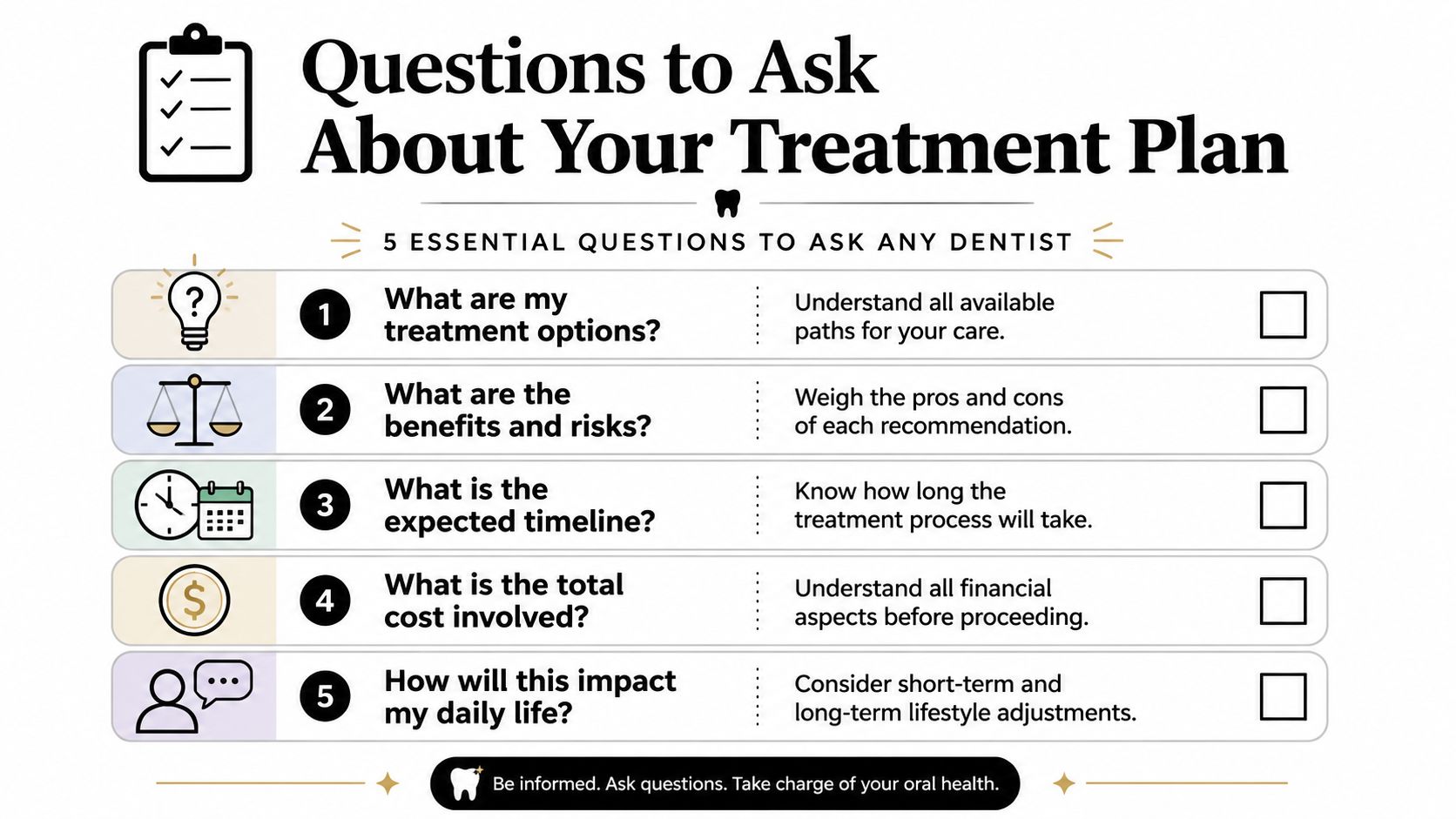
If a dentist recommends treatment, ask questions that clarify both the clinical reason and the life impact. Useful questions include:
- What are my alternatives: Is there a conservative option, a complete option, and an option if I choose to wait?
- What outcome is realistic: Should I expect pain relief, cosmetic improvement, better chewing, longer stability, or some combination?
- How many visits will this take: Is this one appointment, a staged process, or something that may change after healing?
- What is the total scope of cost: What am I paying for now, and what future steps might be part of the full plan?
- How will this affect normal life: Will I need downtime, diet changes, temporary restorations, or time off work?
Ask how changes are handled
One of the most important questions is often missed. Ask how the plan will be reviewed and adjusted over time.
That matters because personalized treatment plans shouldn't be static. As noted by the Longevity Health Institute discussion of personalized treatment plans, good plans should adapt when new information appears through healing, imaging, or changes in goals or budget.
A useful version of that question sounds like this:
“If healing, imaging, comfort, or cost changes along the way, how do we revisit the plan?”
Questions that reveal transparency
Some offices explain recommendations well. Others rush. A few direct questions can tell you a lot about the quality of the planning process.
| Question | Why it matters |
|---|---|
| Will you show me what you're seeing on the X-rays or scans? | Visual explanation builds understanding and trust |
| What happens if I do nothing right now? | Helps you judge urgency instead of guessing |
| Which part is most urgent and which part can wait? | Useful when timing or budget is a concern |
| What maintenance will this require? | Restorations and appliances only succeed if upkeep is realistic |
A thoughtful dental team won't be bothered by these questions. They should welcome them.
Why informed patients do better
Patients who ask good questions usually make steadier decisions. They're less likely to agree to something they don't understand, and less likely to avoid care out of uncertainty.
That matters for everyone, but especially for patients who've felt dismissed in healthcare before. Access to personalized care isn't always equal in every setting, so asking direct questions helps you understand your real options, including second opinions and phased treatment when appropriate.
Begin Your Personalized Journey at Winn Smiles
If you've been putting off dental care because you felt overwhelmed, rushed, or unsure what you need, a personalized consultation is the right place to start. The first step shouldn't feel high pressure. It should feel clear.
In Chattanooga and Cleveland, TN, patients often come in for very different reasons. Some need urgent help from an emergency dentist. Some want cleaning and exams after time away from the dentist. Others are actively searching for dental implants near me, tooth extraction, teeth whitening, or a cosmetic dentist near me and want a plan they can trust before committing.
What to expect when you visit
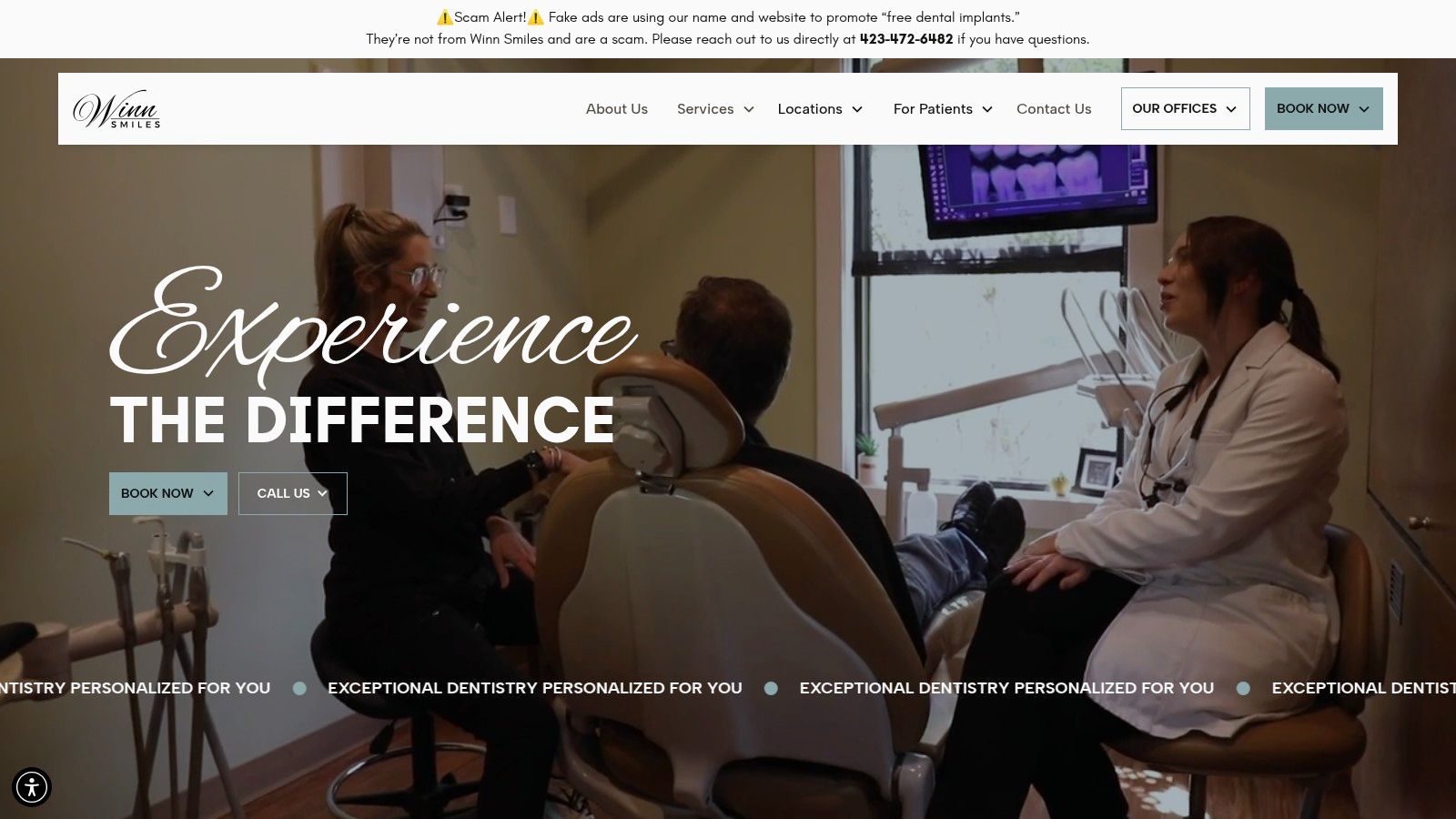
A strong first visit usually includes listening, diagnosis, and a practical discussion of options. That may involve a new patient exam, imaging, and a conversation about what you want to solve first. For some people, that's pain. For others, it's confidence, function, or replacing missing teeth.
The office environment matters too. Comfortable surroundings, a communicative team, and clear next steps make it easier to move from uncertainty to action.
A no-pressure next step
Free consultations or second opinions for select services can be helpful when you're comparing options and don't want to feel boxed into a decision. That kind of visit gives you room to ask questions, understand sequencing, and decide what fits your goals.
If you're looking for a dentist in Chattanooga, TN or dentist in Cleveland, TN who approaches care with comfort, clarity, and individualized planning, the next move is simple. Schedule a consultation and get a treatment plan built around your needs, not a template.
If you're ready to take the next step, contact Winn Smiles to request a consultation, ask about a second opinion, or schedule your visit in Chattanooga or Cleveland, TN. A clear, personalized path to better dental health starts with one conversation.