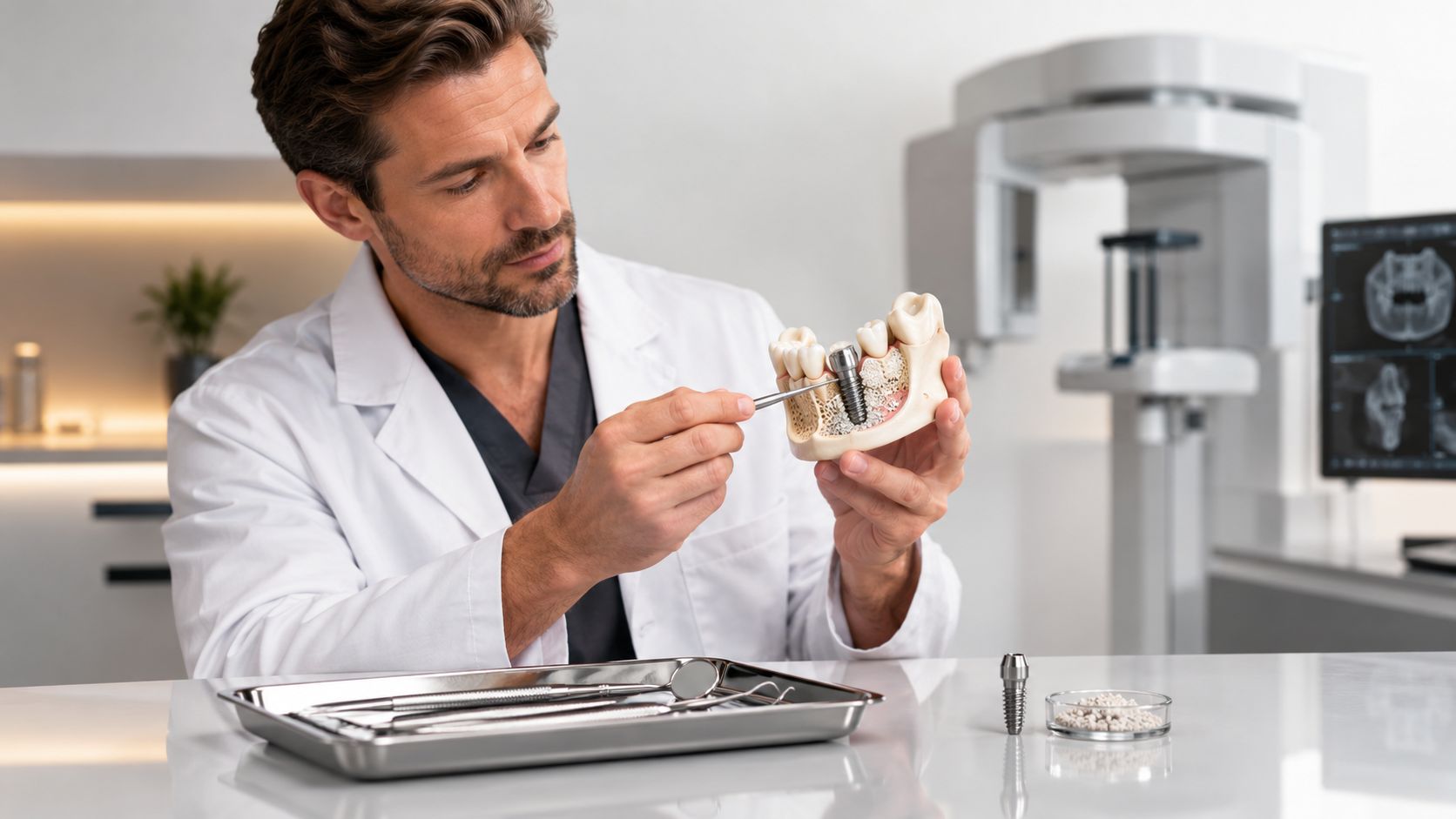
You're sitting in the exam chair because a tooth feels slightly loose, your gums seem to be receding, or chewing has become less comfortable. These changes can feel alarming, but they don't always mean the same thing. Age-related bone remodeling, tooth loss, and infection-driven periodontal disease require different prevention strategies, which is why a careful examination matters.
For patients searching for a dentist near me in Cleveland, TN, or a trusted dental office serving Chattanooga, TN, Winn Smiles provides periodontal evaluations, dental x-rays, preventive care, restorative dentistry, dental implants, tooth extraction, and emergency dental services. The right plan starts by identifying whether your supporting bone is changing gradually or being actively damaged by inflammation.
Why Your Jawbone Health Matters More Than You Think
A patient in their 50s may notice that a tooth feels different before seeing anything unusual in the mirror. The gums might look lower, food may catch between teeth, or a familiar bite may no longer feel even. These observations deserve attention because the alveolar bone, the specialized ridge surrounding and anchoring each tooth, can change before severe pain appears.

The alveolar bone does more than hold teeth in place. It supports chewing, contributes to speech clarity, and helps maintain the natural contours of the face. It also affects future restorative planning. If a tooth is lost, the surrounding ridge can shrink because it no longer receives stimulation from the tooth and its supporting structures. That may complicate later treatment with dental implants near me, although the exact options depend on the site and the amount of remaining bone.
A long-term study of adults followed for 10 years found a mean loss of 3.8 teeth, while the mean annual reduction in alveolar bone height ranged from 0.07 to 0.14 mm among people ages 25 to 65. In the oldest group, initially age 70, the annual bone-loss rate reached 0.28 mm. Tooth mortality ranged from 2.9% to 28.5% of teeth present at baseline, establishing that periodontal decline can develop over years rather than days (long-term study of tooth loss and alveolar bone change).
Practical point: Healthy-looking gums don't prove that the supporting bone is stable. Dental examinations and appropriate x-rays provide information you can't obtain at home.
Winn Smiles serves patients in Cleveland and Chattanooga, TN, with a comfort-focused approach to exams, periodontal care, and treatment planning. Patients who want broader background on bone health can also explore this resource on osteoporosis and its possible effects on teeth. For readers interested in wider wellness foundations, aerobic foundation with Telomyx offers additional context outside the dental setting.
Understanding What Causes Dental Bone Loss
Dental bone loss usually follows one of two broad pathways. The first is gradual bone remodeling, which occurs as the body continually breaks down and rebuilds bone. The second is disease-driven destruction, most often associated with plaque-induced periodontitis. These pathways can overlap, but they aren't interchangeable.
Age-related remodeling may be subtle and manageable through routine dental care, systemic health support, and monitoring. Active periodontitis is different. Plaque biofilm collects around the gumline and below it, triggering an inflammatory response. As the disease progresses, the immune response damages the attachment between the gum and tooth and contributes to resorption of the bone that supports the tooth.
How inflammation changes the supporting bone
Dental plaque can increase the signaling molecule RANKL while reducing osteoprotegerin. That shift raises the RANKL-to-osteoprotegerin balance and promotes osteoclast activity, the process through which bone is broken down. Experimental work found that added osteoprotegerin suppressed osteoclast formation and reduced periodontal bone loss in rodent models, reinforcing that periodontal bone loss is an active biologic process rather than simple wear (periodontal inflammation and bone-regulating pathways).
Periodontitis staging relies on objective measurements. When clinical attachment loss isn't available, clinicians use radiographic bone loss to help determine severity. The extent is also classified by how many teeth are affected. Localized periodontitis involves less than 30% of teeth, while generalized periodontitis involves more than 30% (periodontitis diagnosis and extent).
Factors that can raise risk
Smoking, poorly controlled diabetes, hormonal changes, teeth grinding, poor nutrition, and genetic susceptibility can make periodontal problems harder to control. A missing tooth creates a separate local concern because the bone at the extraction site no longer receives normal stimulation, allowing ridge resorption over time.
Systemic bone health also matters. A randomized trial and follow-up study associated calcium and vitamin D supplementation with better tooth retention. During the trial, 13% of participants taking supplements lost one or more teeth compared with 27% taking placebo. Over two years, 40% of people consuming at least 1000 mg per day of total calcium lost one or more teeth, compared with 59% consuming less (calcium, vitamin D, and tooth retention evidence). A general osteoporosis guide from Vitamin Planet can provide additional background, but it shouldn't replace a dental or medical assessment.
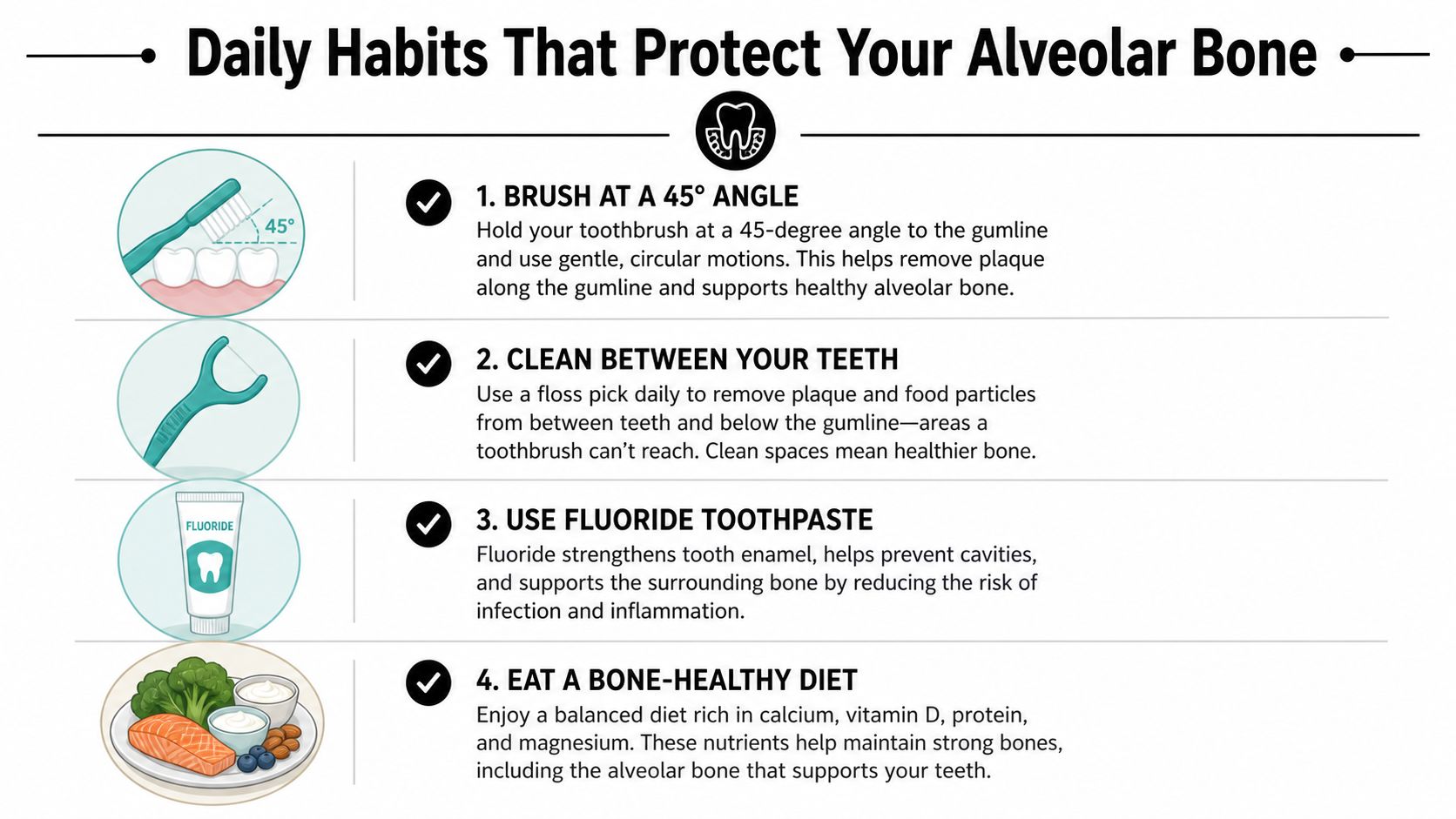
Daily Habits That Protect Your Alveolar Bone
Home care won't rebuild bone that has already been lost, but it can reduce the bacterial burden that drives inflammation and help protect the support you still have. A practical routine should be consistent, gentle, and easy enough to maintain every day.
Use the right technique
Hold a soft-bristled toothbrush at roughly a 45-degree angle to the gumline. Use short, gentle movements rather than aggressive scrubbing, concentrating on the area where teeth and gums meet. Fluoride toothpaste helps protect enamel from decay, while brushing alone can't reliably clean the spaces between teeth.
Clean between teeth every day with floss, interdental brushes, or a water flosser. Choose the tool that fits your spaces and that you'll use. If the gums bleed regularly, don't stop cleaning the area. Arrange an examination so a dental professional can determine whether inflammation, plaque retention, or another issue is present.
Support the mouth through everyday choices
An antimicrobial rinse may help reduce bacteria, but it isn't a substitute for brushing or interdental cleaning. Hydration supports saliva flow, which helps the mouth clear food debris and buffer acids.
Nutrition supports the broader bone environment. Aim for a balanced eating pattern that includes sources of calcium, vitamin D, vitamin K2, and phosphorus, while limiting frequent sugary or acidic foods and drinks. If you have diabetes, work with your medical team to manage blood glucose, since systemic health can influence periodontal stability.
Smoking cessation is one of the most useful changes for gum health and healing. If you grind or clench your teeth, ask about a professionally fitted night guard. A guard won't treat infection, but it can reduce mechanical stress while periodontal concerns are assessed.
Daily checklist: Brush carefully, clean between teeth, use fluoride toothpaste, drink water, choose nourishing foods, avoid tobacco, and address grinding rather than ignoring it.
This short video provides a visual reminder of practical oral hygiene habits:
Professional Treatments for Bone Loss Prevention
Professional care depends on the cause, location, and severity of bone change. A new patient exam may include gum measurements, assessment of recession and bleeding, dental x-rays, and a review of medical factors such as diabetes, smoking, medications, and possible osteoporosis. Those findings help determine whether routine preventive care, periodontal treatment, or restorative planning is appropriate.
Scaling and root planing is often used when tartar and bacterial deposits extend below the gumline. The clinician cleans those surfaces and smooths the roots so inflammation has a better chance to settle. Patients who want more detail can read about periodontal scaling and root planing. Antimicrobial medications may supplement mechanical cleaning in selected cases, but medication can't replace removal of the deposits that sustain infection.
For deeper or more advanced defects, a dentist or periodontist may discuss flap surgery, guided tissue regeneration, or bone grafting. These procedures can address specific defects, but they aren't automatic solutions for every type of bone loss. Laser treatment may also be considered in some practices and situations. The appropriate choice depends on the examination rather than the popularity of a technique.
| Treatment Type | Best For | Recovery Time | Effectiveness |
|---|---|---|---|
| Scaling and root planing | Bacterial deposits and inflammation below the gumline | Varies by treatment area and response | Can control active periodontal inflammation when paired with maintenance |
| Local or systemic antimicrobials | Selected infection-related cases alongside cleaning | Depends on the medication and patient | Supportive, not a replacement for mechanical treatment |
| Flap surgery | Areas that remain difficult to access or clean | Varies by procedure and site | May improve access to diseased surfaces |
| Guided tissue regeneration or bone grafting | Selected defects and pre-implant bone support | Varies by site and healing response | May support reconstruction, but results depend on the defect and material |
| Alveolar ridge preservation | Extraction sites at higher risk of ridge collapse | Varies by extraction and grafting plan | Reduces, but doesn't eliminate, post-extraction dimensional change |
Evidence synthesis on alveolar ridge preservation found that, compared with extraction alone, average dimensional change favored preservation by about 1.18 mm horizontally and 1.35 mm vertically. The same review found that many substitute materials didn't improve new bone formation and could delay it, while the clinical effect on implant outcomes remained unproven and evidence certainty was low to very low (evidence on alveolar ridge preservation). That makes realistic counseling essential. Ridge preservation can limit collapse, but it shouldn't be sold as a guarantee of implant-ready bone.
Warning Signs That Require Immediate Dental Care
Certain changes deserve a prompt call to Winn Smiles rather than watchful waiting. Loose or shifting teeth, gums pulling away from teeth, persistent bad breath, pus near the gumline, and new pain when chewing can indicate active periodontal disease or another urgent dental problem.
Bleeding during brushing or flossing also warrants attention when it persists. The symptom itself doesn't reveal how much bone has changed, but it signals that the gum tissues may be inflamed. A dental team can measure pocket depths, examine the attachment around each tooth, and use dental x-rays when bone levels need evaluation.
Know what makes delay risky
Age-related changes may progress without obvious signs, but infection-driven bone loss can continue while symptoms remain mild. Waiting until a tooth becomes very loose may leave fewer conservative options and may lead to more complex periodontal treatment, tooth extraction, or replacement planning.
A prompt appointment is especially important if swelling, pus, fever, severe pain, facial swelling, or difficulty swallowing accompanies gum or tooth symptoms. Those signs may require urgent dental or medical attention. An emergency dentist can help determine whether the problem involves a periodontal infection, a damaged tooth, an abscess, or another condition.
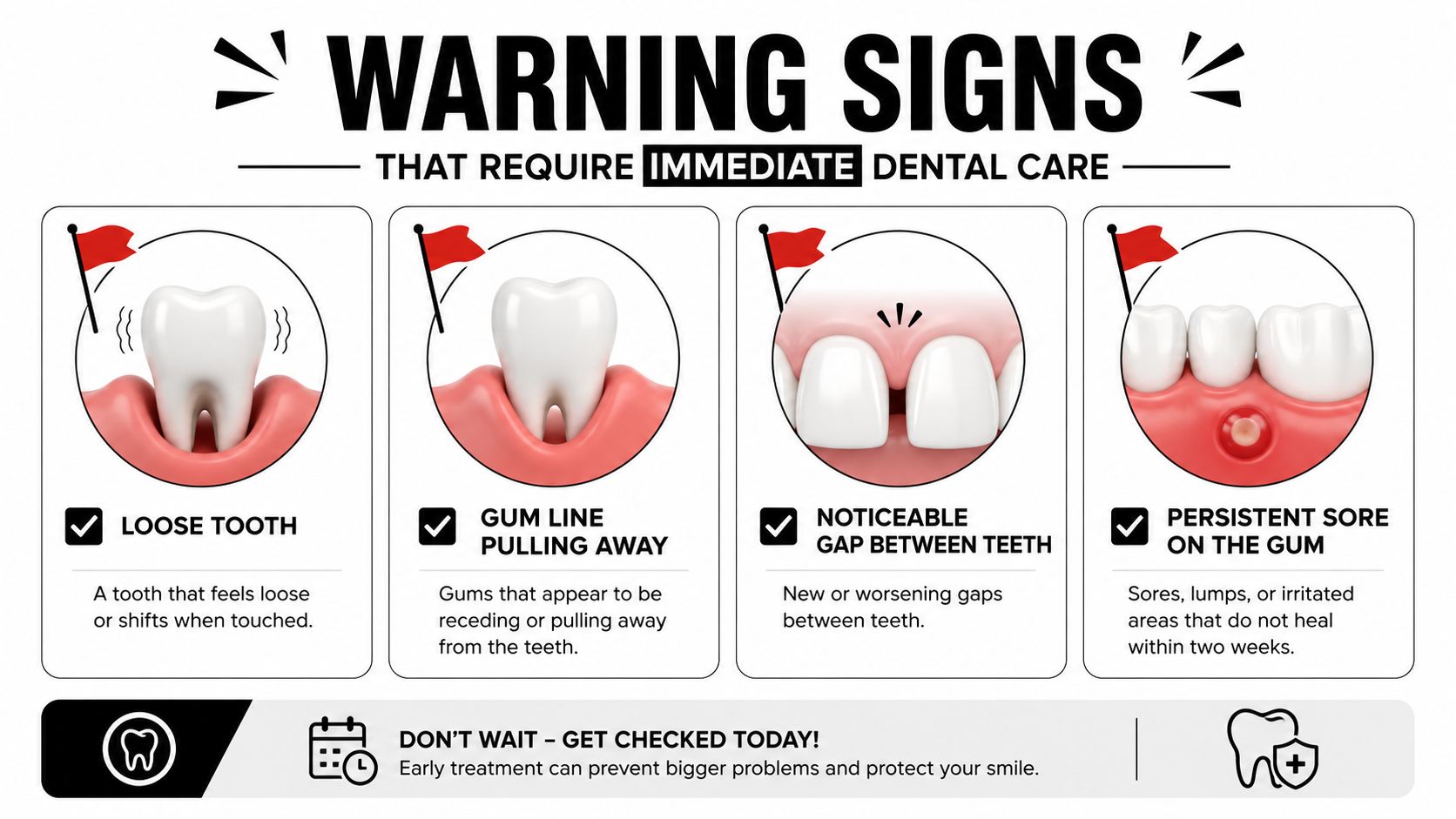
New looseness, drainage, or pain with chewing isn't something to manage with mouthwash alone. Contact a dental office so the cause can be identified before the supporting structures deteriorate further.
Your Path to Stronger Teeth and Healthier Gums
Preventing bone loss in teeth starts with the habits you control. Brush gently along the gumline, clean between teeth daily, use fluoride toothpaste, choose a balanced diet, drink water, avoid tobacco, and address grinding. These steps protect the mouth's environment, but they can't identify hidden bone changes or remove hardened deposits below the gumline.
Professional monitoring completes the plan. Regular cleanings and exams, periodontal measurements, and dental x-rays when appropriate allow a local team to establish a baseline and recognize changes early. If a tooth can't be saved, timely tooth extraction and discussion of dental implants can help protect function and guide future restorative care. Winn Smiles serves patients in Cleveland and Chattanooga, TN, with periodontal care, general dentistry, cosmetic dentistry, restorative services, and implant consultations.
Schedule a periodontal evaluation if your gums bleed, your teeth feel loose, or your bite has changed. Early assessment gives you clearer choices and a prevention plan matched to the cause of your bone loss.
Winn Smiles offers periodontal evaluations, preventive cleanings, dental x-rays, tooth replacement planning, and dental implant consultations for patients in Cleveland and Chattanooga, TN. Visit Winn Smiles to request an appointment and discuss a personalized plan for protecting your teeth and the bone that supports them.