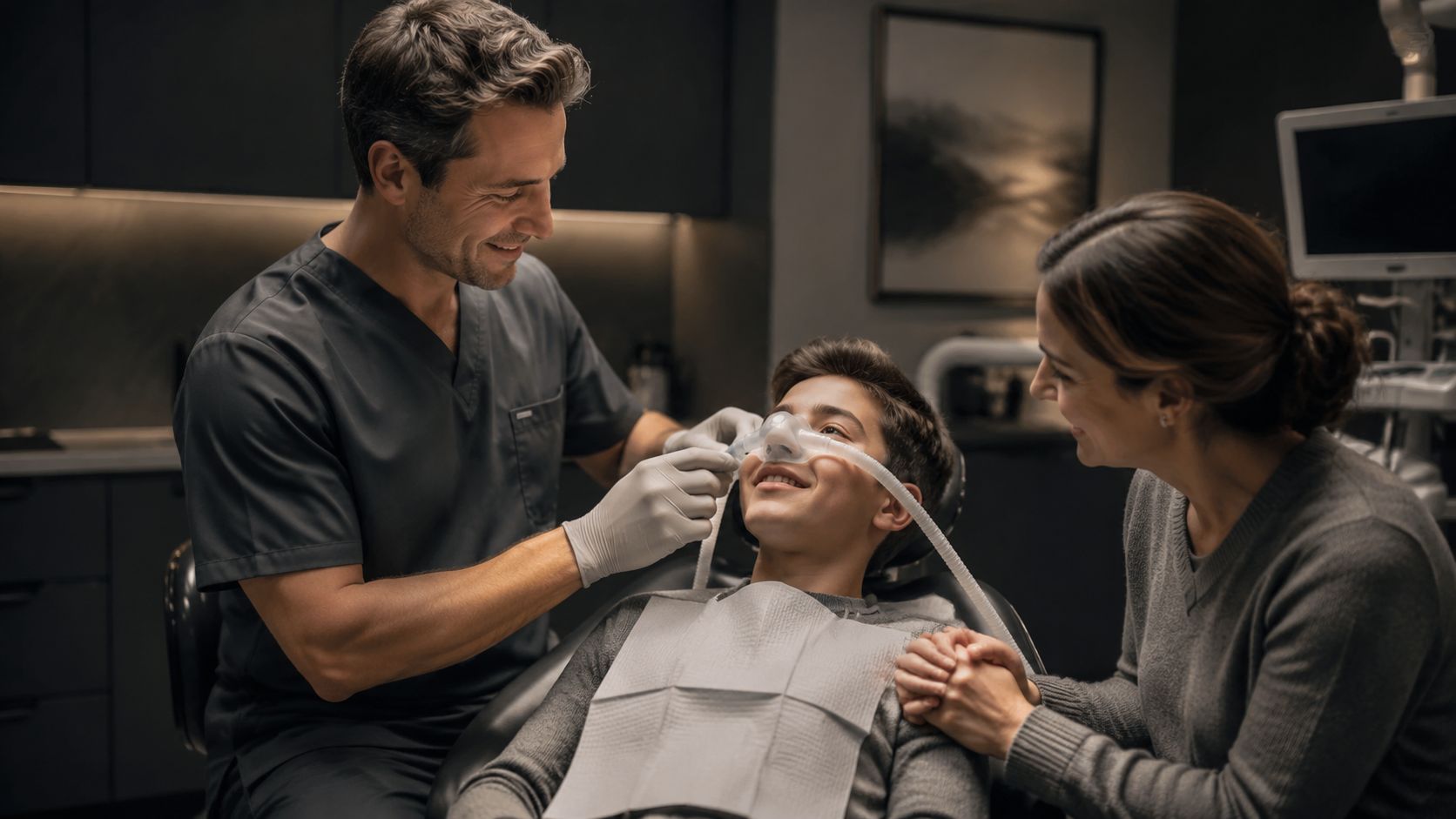
When a loved one has sensory sensitivities, severe dental anxiety, limited mobility, or difficulty communicating discomfort, even a routine cleaning can feel impossible. Many caregivers in Chattanooga and Cleveland know this cycle well. You want to protect your family member's health, but the thought of a difficult visit, a rushed team, or a traumatic experience makes it hard to take the next step.
That's where sedation dentistry for special needs can change the entire experience. The right approach isn't just about helping someone sit through treatment. It's about building a care plan that respects the person in the chair and the person supporting them at home.
A Compassionate Dentist for Your Loved One in Chattanooga TN
A caregiver might spend days preparing for a dental appointment. They may practice opening wide at home, pack headphones, bring a favorite object, and repeat the plan all morning. Then the lights feel too bright. The sounds feel too sharp. Someone reaches in too quickly, and the visit ends before the exam even begins.
For many families in Chattanooga, TN, and nearby Cleveland, that story isn't unusual. The stress doesn't come from a lack of effort. It comes from trying to fit a unique patient into a standard dental visit that was never designed around their needs.

Some patients need more time before anyone looks in their mouth. Others do better with fewer words, slower movements, or a caregiver close by. Some can handle an exam but not X-rays. Others may need support for anything beyond a brief visual check. None of that means dental care isn't possible. It means the care plan has to match the person.
What caregivers are really looking for
For a dentist near me or a dentist in Chattanooga, TN, patients are often looking for more than a location. They want a team that won't dismiss concerns or treat accommodations as an inconvenience.
That's especially true when a patient may also need ongoing dental care such as:
- Cleaning and exams to prevent small issues from becoming painful problems
- Dental X-rays when they can be completed comfortably and safely
- Restorative dentistry for cavities, broken teeth, or worn restorations
- Emergency dentist care if pain, swelling, or injury happens unexpectedly
- Tooth extraction when a damaged or infected tooth can't be saved
The best special needs dental visit often starts long before the patient sits in the chair. It starts when the caregiver feels heard.
Good sedation planning can make care more accessible, calmer, and more predictable. For many families, that's the first moment dental treatment begins to feel realistic again.
Understanding the Barriers to Traditional Dental Care
A traditional dental office asks a lot from a patient. Sit still. Tolerate bright overhead lights. Accept new smells and sounds. Follow verbal directions. Stay calm while someone works inches from your face. For many people, that's manageable. For some patients with special needs, it's too much at once.
Why the environment can feel overwhelming
Sensory overload is one of the biggest reasons routine dental care breaks down. The vibration of tools, the taste of polishing paste, the sound of suction, and the feel of gloves can all trigger distress. A patient may not be “refusing care” in the way others assume. They may be reacting to a body and brain that are already over capacity.
If sensory concerns are part of daily life for your loved one, it can help to better understand the broader pattern. Some caregivers find it useful to read about how to diagnose sensory processing difficulties so they can describe triggers more clearly before a dental visit.
Other barriers families deal with
Sensory issues are only one part of the picture. Many caregivers are also managing challenges like these:
- Communication differences that make it hard for the patient to say what hurts, what feels scary, or when they need a break
- Motor or physical limitations that can make positioning difficult during treatment
- High anxiety or past trauma related to medical or dental settings
- Difficulty with transitions such as entering a new room, changing routines, or meeting new staff
- Limited tolerance for chair time even when the patient wants to cooperate
A caregiver may also worry that the patient will be misunderstood. A loud vocalization might be a sign of fear. Pulling away might mean pain, not defiance. A sudden movement may happen even when the patient is trying hard to cooperate.
Practical rule: If a visit has gone badly before, that doesn't mean future dental care will go badly too. It usually means the approach needs to change.
Why standard pacing often fails
Many offices move quickly because that works for the average patient. Special needs care often requires the opposite. It may call for previewing each step, adjusting the pace, simplifying instructions, or splitting decisions into smaller parts.
That's why families often feel relief when they learn there are options beyond “try harder” or “hold off on treatment.” Sedation can become part of a more respectful plan, not as a shortcut, but as a way to reduce distress and make care possible.
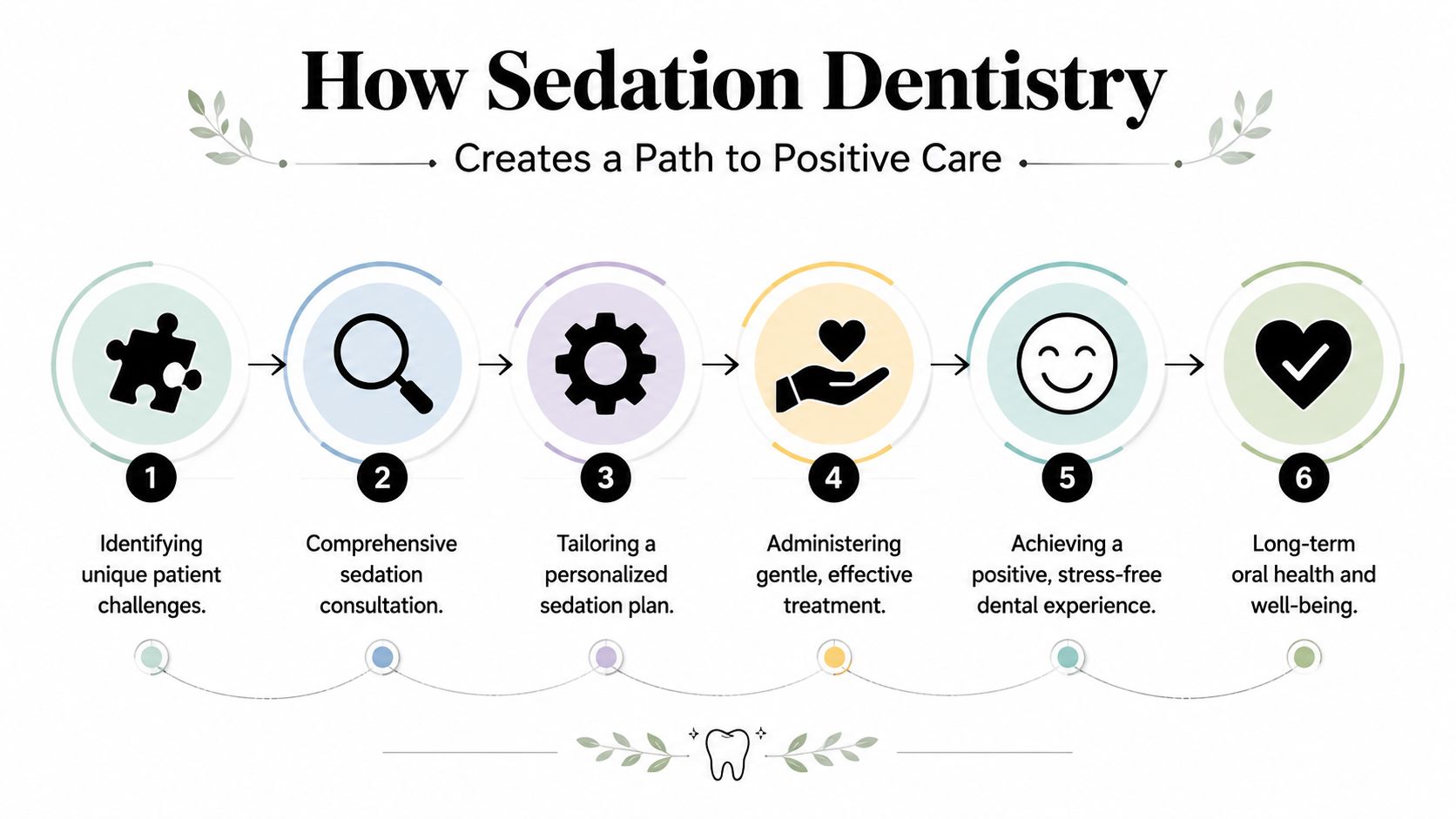
How Sedation Dentistry Creates a Path to Positive Care
Sedation dentistry for special needs should be understood as an access tool. It helps patients receive care that might otherwise remain out of reach because the usual path is too overwhelming, too painful, or too unsafe.
The American Academy of Pediatric Dentistry states in its policy on patients with special health care needs that providing integrated care to these patients, including the use of sedation, is an integral part of dentistry, which places sedation within access-oriented care rather than as a niche extra (AAPD policy on special health care needs).
It changes the goal of the visit
Without the right support, a dental appointment can become a test of endurance. With sedation, the goal shifts. The team can focus on comfort, safety, and treatment instead of managing escalating fear.
That matters for simple visits and complex ones. A patient may need preventive care, fillings, a crown, or other restorative dentistry. If every attempt ends early, those needs build up over time. Sedation can create a calmer setting where necessary care is more likely to happen successfully.
It can protect future dental experiences
A bad appointment can make the next one harder. A more comfortable visit can do the opposite. When patients experience dental care with less distress, caregivers often find that future planning becomes easier too.
That doesn't mean sedation is right for every person or every appointment. It means it belongs in the conversation early, especially when the patient's barriers are already clear.
Here's a simple way to think about it:
| Situation | Traditional visit may feel like | Sedation-supported visit may offer |
|---|---|---|
| Sensory sensitivity | Too many triggers at once | A calmer, more controlled experience |
| Severe anxiety | Escalating fear before treatment starts | Greater relaxation and tolerance |
| Limited cooperation | Incomplete care and repeated attempts | A more realistic path to completed treatment |
| Extensive needs | Multiple stressful appointments | More efficient care planning |
It supports inclusion, not avoidance
Some caregivers worry that choosing sedation means giving up on helping their loved one adapt. In reality, the opposite is often true. Sedation can keep oral health from declining while the team and family continue building trust, routines, and communication strategies around care.
Sedation isn't about forcing treatment. It's about removing barriers that make treatment inaccessible in the first place.
For many patients, that's the difference between delayed care and a workable long-term plan.
A Gentle Approach A Look at Our Sedation Options
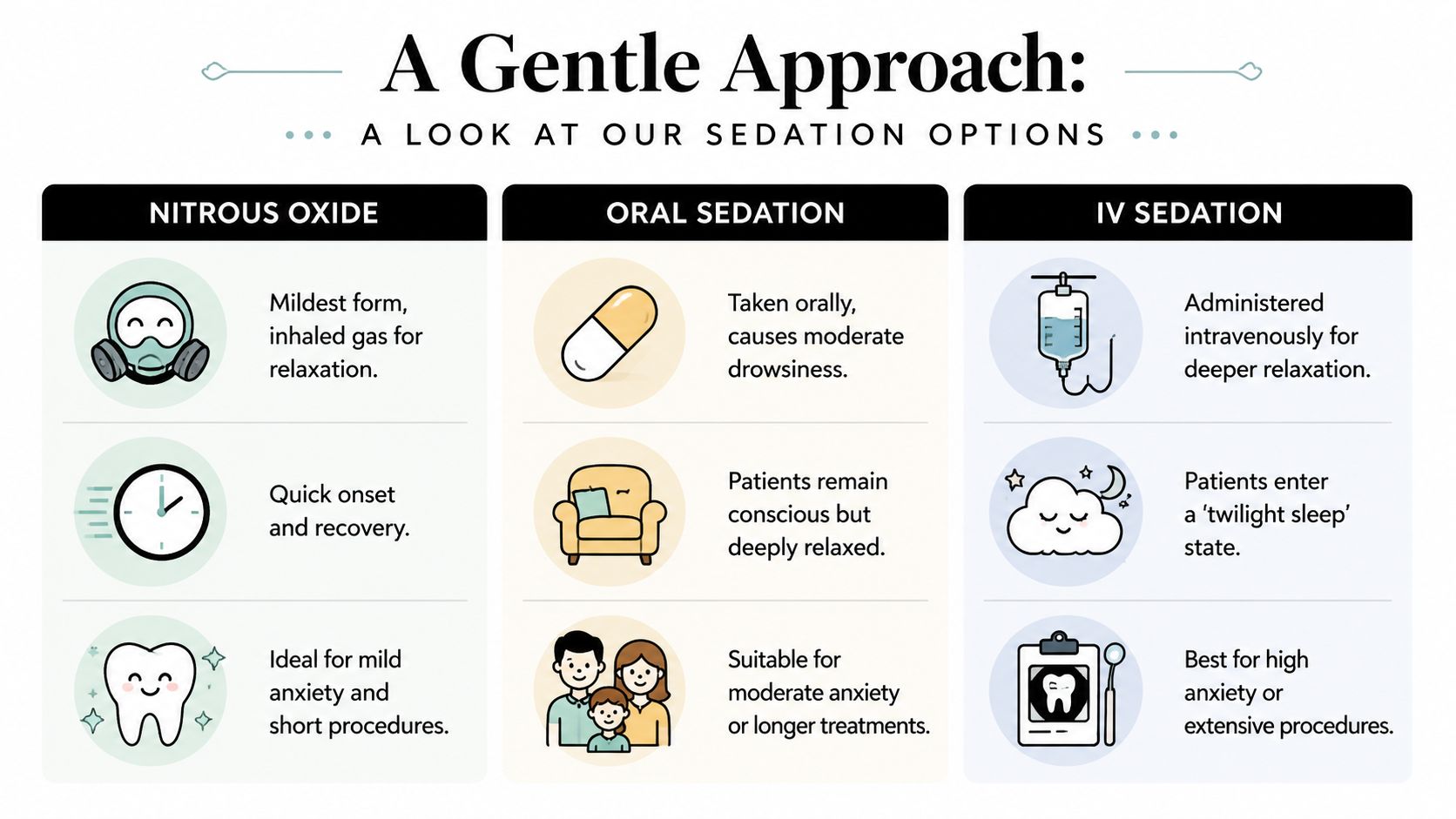
The phrase “sedation” can sound bigger and scarier than it is. In practice, sedation exists on a spectrum. Some options provide mild relaxation. Others offer a deeper level of calm for patients who need more support.
Nitrous oxide
Nitrous oxide is often called laughing gas. It's inhaled through a small nose mask and is usually the lightest sedation option discussed in dentistry. Patients remain awake, but many feel less tense and more able to tolerate the visit.
A 2023 systematic review of conscious sedation in patients with intellectual disability found that nitrous oxide appears to be the best choice for conscious dental sedation in this group. Across nine papers, sedation success was at least 80%, while reported side effects ranged from 3% to 40%. That tells caregivers two important things. Nitrous oxide is often effective, and planning still needs to be individualized.
Nitrous oxide is often a good fit when the patient has mild to moderate anxiety, can usually tolerate a mask, and is coming in for shorter or less invasive treatment.
Oral conscious sedation
Oral sedation is taken by mouth before treatment. It usually produces a deeper level of relaxation than nitrous oxide, though the patient remains conscious. Some people become drowsy. Others remain responsive but much less reactive to the environment.
This option can be useful when a patient struggles with anticipation, transitions, or prolonged chair time. It may also help when the patient is unlikely to tolerate enough treatment with mild relaxation alone.
Caregivers often ask what this feels like. The simplest answer is that the patient is still present, but the sharp edges of the experience are reduced.
IV sedation
IV sedation is delivered through a vein and allows for a deeper and more controlled level of sedation. This may be considered when anxiety is high, treatment is extensive, or previous approaches haven't been enough.
It's common for caregivers to hear “twilight sleep” and assume the patient is under full anesthesia. That isn't the same thing. IV sedation and general anesthesia are different, and that distinction becomes especially important for medically complex patients.
For a broader overview of how these approaches compare, this guide to types of sedation dentistry can help families get familiar with the language before a consultation.
How the choice is made
The best sedation option depends on several factors, including:
- Medical history and current diagnoses
- Medication use and possible interactions
- Anxiety level during prior healthcare visits
- Ability to cooperate with masks, instructions, or positioning
- Treatment complexity and expected appointment length
No single method is “best” for every patient. The right choice is the one that balances comfort, safety, and practical treatment needs.
Your Family's Safety Is Our Highest Priority
Caregivers usually ask the same question first, even if they phrase it differently. Is this safe for my loved one? That question deserves a direct answer and a careful process, not a rushed reassurance.

Safety in sedation dentistry for special needs starts before treatment day. It begins with a full review of medical history, current medications, behavioral needs, previous reactions to dental or medical care, and the practical reality of how the patient tolerates touch, sound, and positioning. A plan that ignores those details isn't a safe plan.
Why individualized screening matters
Patients with disabilities may have conditions that affect airway management, mobility, communication, or medication response. They may also take multiple prescriptions, which makes review of drug interactions especially important. Those details can change both the recommended sedation option and the safest setting for care.
That's why thoughtful evaluation matters more than blanket promises. A strong plan asks not only, “What procedure is needed?” but also, “What environment and level of support make this safest?”
Safety also means efficiency
There's another side of safety that families feel immediately. Fewer stressful repeat visits can reduce the emotional and physical burden on the patient.
One practice article notes that with sedation, a single appointment can allow care from two or three providers, such as restorative dentists, specialists, and hygienists, depending on the treatment needed (sedation dentistry for patients with special needs). For a patient who struggles with repeated exposure to dental settings, completing more care in one planned visit can be a major advantage.
A safer dental experience isn't only about monitoring equipment. It's also about reducing chaos, reducing repeated distress, and making the visit more predictable.
A helpful overview of clinical support and patient comfort is below.
What caregivers should expect from a careful team
A strong sedation process usually includes:
- Pre-visit review of diagnoses, medications, allergies, and prior treatment experiences
- Clear instructions for eating, drinking, medication timing, and transportation
- Continuous monitoring during the procedure
- Team coordination so assistants, hygienists, and the dentist are working from the same plan
- Recovery guidance that reflects the patient's communication style and support needs at home
When those parts are handled well, caregivers often feel the difference right away. The appointment feels less like a gamble and more like a plan.
Preparing for a Successful Visit at Winn Smiles
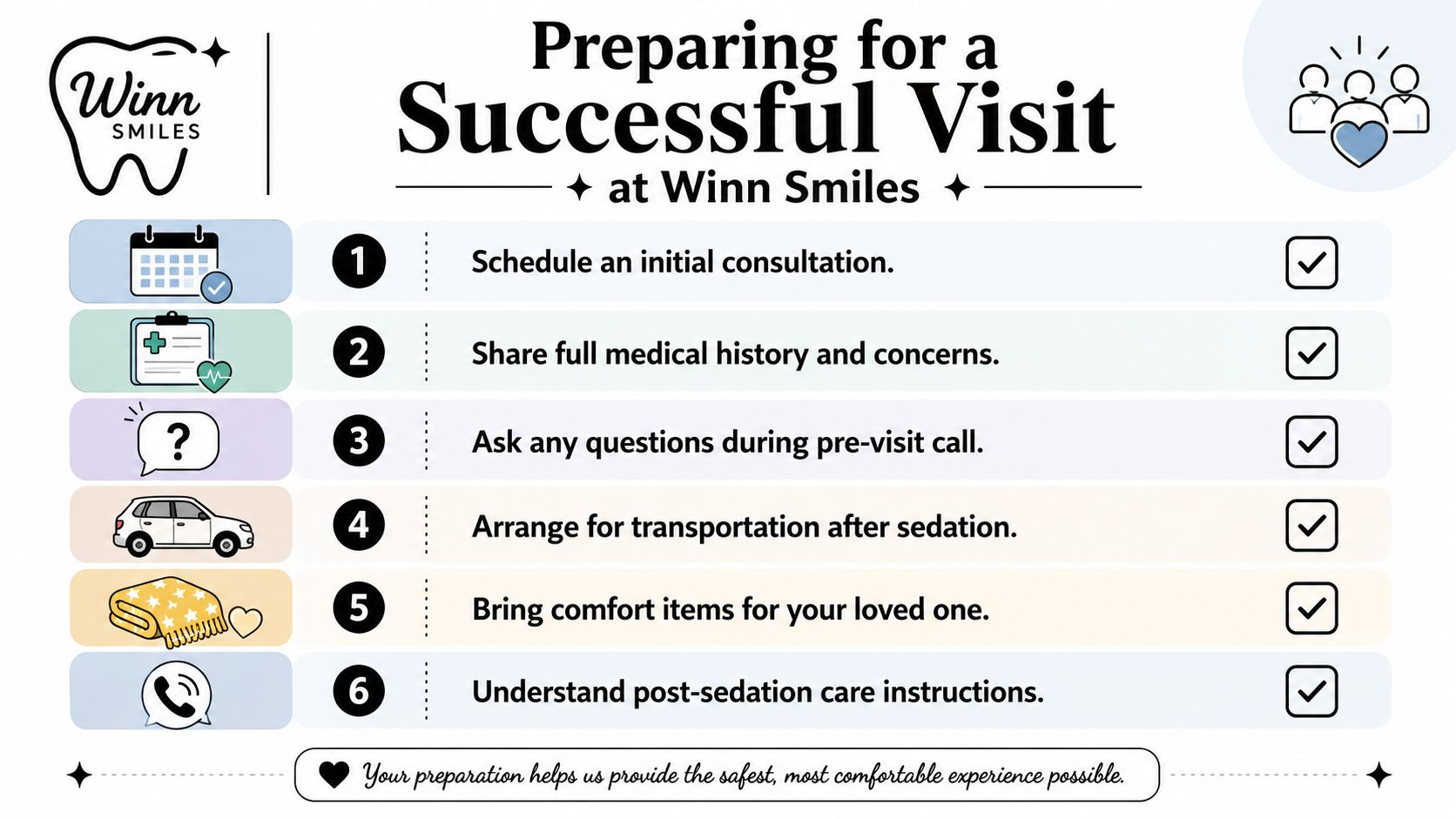
The most successful sedation visits usually have something in common. The caregiver, patient, and dental team all know their roles ahead of time. That shared preparation lowers stress and makes the day feel more manageable.
Before the appointment
The first step is usually a conversation, not a procedure. Caregivers should be ready to explain what has and hasn't worked in the past. The details matter. Did the patient tolerate a cleaning but panic during X-rays? Do they do better with visual cues than verbal instructions? Is touch around the face especially difficult?
Bring a full medication list and be ready to discuss supplements, seizure history, breathing issues, allergies, and previous sedation experiences. If your loved one doesn't reliably report pain, nausea, or dizziness, say that early. That changes how the team plans recovery instructions.
If you're also trying to understand the financial side, a practical place to start is this page about whether sedation dentistry is covered by insurance.
What to arrange at home
Sedation day is easier when the logistics are settled in advance.
- Transportation: If the sedation plan requires it, arrange for a responsible adult to drive and stay with the patient afterward.
- Comfort supports: Bring items that help regulate the patient, such as headphones, a familiar blanket, a communication device, or preferred sensory tools.
- Clothing: Choose soft, comfortable clothes that won't add irritation.
- Schedule protection: Keep the rest of the day as quiet as possible so the patient can recover without extra demands.
Questions worth asking before treatment
Not every caregiver knows what to ask, especially the first time. These questions are useful:
- What should the patient eat or drink before the visit, and when should they stop?
- Should any regular medications be adjusted that day?
- What behaviors might look normal as the sedation wears off?
- What signs would mean we should call the office?
- How should we manage discomfort if the patient can't clearly describe it?
Caregiver reminder: Write these answers down. Sedation instructions are harder to remember when you're already stressed.
After the procedure
Many families often need the most support at this juncture. Public information often focuses on the procedure itself, but recovery involves caregivers' primary efforts.
A practice resource on special needs sedation emphasizes that effective care planning extends beyond the procedure and requires detailed caregiver guidance on monitoring, behavior changes, and medication interactions (sedation dentistry for special needs patients).
Here's a practical recovery checklist:
| After-care need | What to watch for |
|---|---|
| Alertness | Extra sleepiness, slower responses, or temporary imbalance |
| Eating and drinking | Start with what the office recommends, often simple and easy-to-tolerate options |
| Communication | Nonverbal signs of pain such as guarding the face, agitation, refusal to eat, or unusual withdrawal |
| Medication timing | Follow instructions carefully, especially if the patient takes multiple regular medications |
| Supervision | Stay close until the patient is clearly steady and back to their usual level of awareness |
For patients who may not describe symptoms clearly
Some patients won't say “my mouth hurts” or “I feel nauseated.” Caregivers may need to watch for behavior instead of words. Pacing, crying, pushing away food, sudden irritability, or unusual quietness can all carry meaning.
That's why post-sedation planning works best as a partnership. The dental team knows the treatment. The caregiver knows the patient's normal baseline. Both are needed for a safe recovery.
Your Questions About Special Needs Dentistry Answered
How is consent handled for an adult who can't consent independently
Consent should never be treated casually. The dental team needs to understand who has legal authority to make healthcare decisions and what documentation may be required. If your family is navigating broader planning questions around guardianship or decision-making support, resources like Law Office of Bryan Fagan, PLLC may help you think through the larger legal picture outside the dental office.
Bring any relevant paperwork early so there's time to review it before treatment day.
How do you decide between office sedation and hospital-based general anesthesia
This is one of the most important questions for medically complex patients. A review on dental treatment for patients with special needs notes that these patients often require sedation or general anesthesia because of cooperation problems, and that anesthesia-related complications can be more likely because of underlying medical conditions and possible drug interactions. The same review also notes that sedation can be difficult when severe cooperation problems make airway maintenance challenging (special care dentistry and anesthesia considerations).
In plain language, the decision often comes down to three issues:
- Can the patient cooperate enough for the planned treatment?
- Are there medical conditions that increase risk in an office setting?
- Would airway or behavioral challenges make deeper hospital-based support more appropriate?
That's why some patients are good candidates for in-office sedation, while others are safer with general anesthesia in a hospital environment.
Will one visit take care of everything
Sometimes it can. Sometimes it shouldn't. The answer depends on treatment needs, the sedation plan, and how the patient tolerates care. Families often hope to “get it all done,” but the safest plan is the one built around the patient's limits, not the calendar.
Can sedation help with emergency dental problems too
Yes, it may be part of the plan when urgent treatment is needed and the patient can't tolerate standard care. If your loved one has swelling, significant pain, or a broken tooth, tell the office exactly what's happening so the team can guide next steps and urgency.
What if I'm nervous about making the wrong decision
That feeling is normal. Most caregivers aren't choosing between a good option and a bad one. They're choosing between several imperfect options while trying to protect someone they love. The best first step is a careful consultation where you can discuss medical history, communication needs, behavior patterns, treatment priorities, and practical recovery support.
A good plan should leave you feeling informed, not pressured.
If you're looking for a calm, respectful path forward for a loved one in Chattanooga or Cleveland, Winn Smiles offers patient-centered dental care with comfort-focused options, modern technology, and a team that understands how much trust this process requires. If your family needs a dentist near me, a dentist in Chattanooga, TN, help with tooth extraction, emergency dentist care, or a long-term home for preventive, restorative, or cosmetic treatment, reach out to schedule a consultation and talk through the next step with clarity.