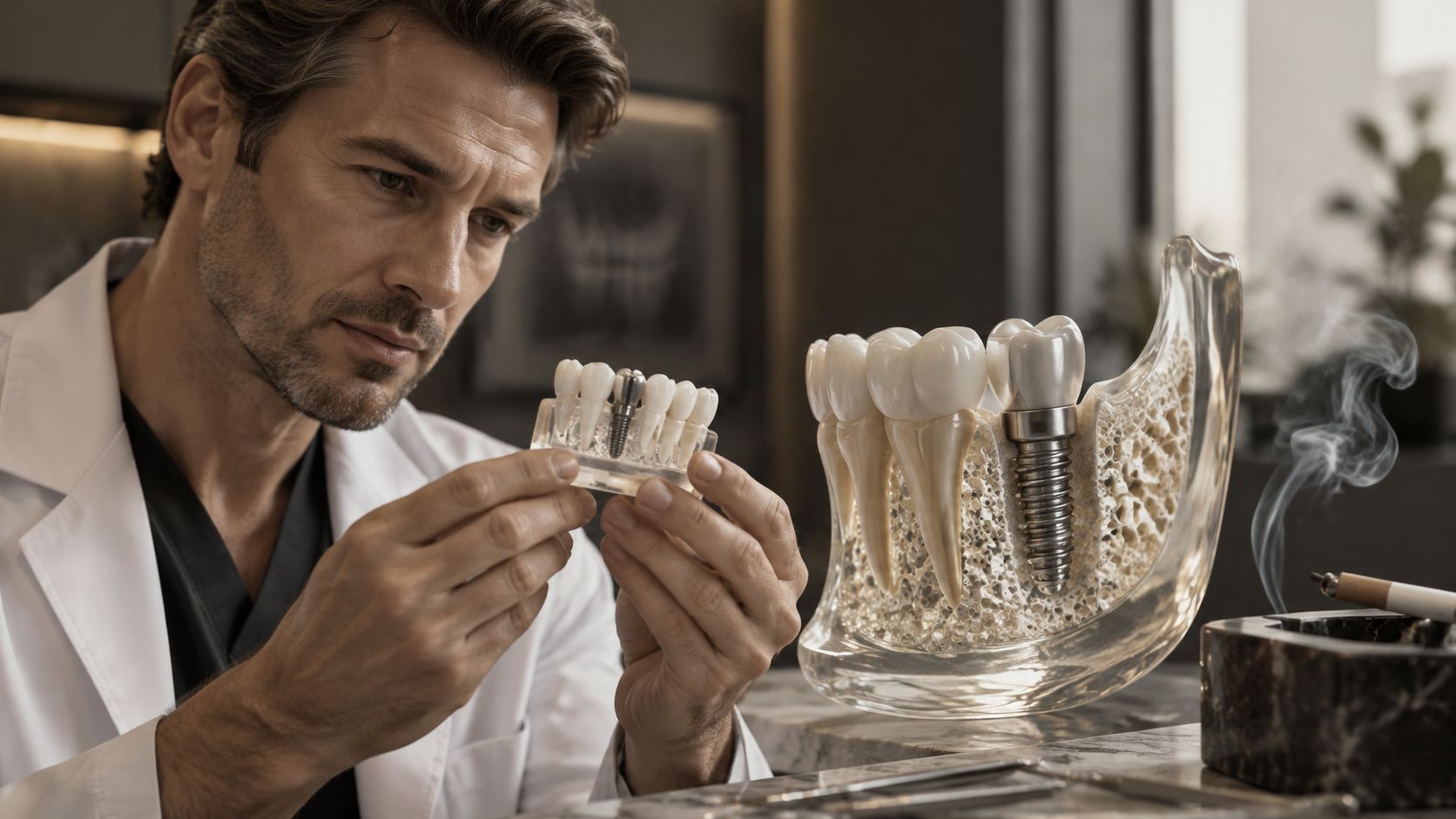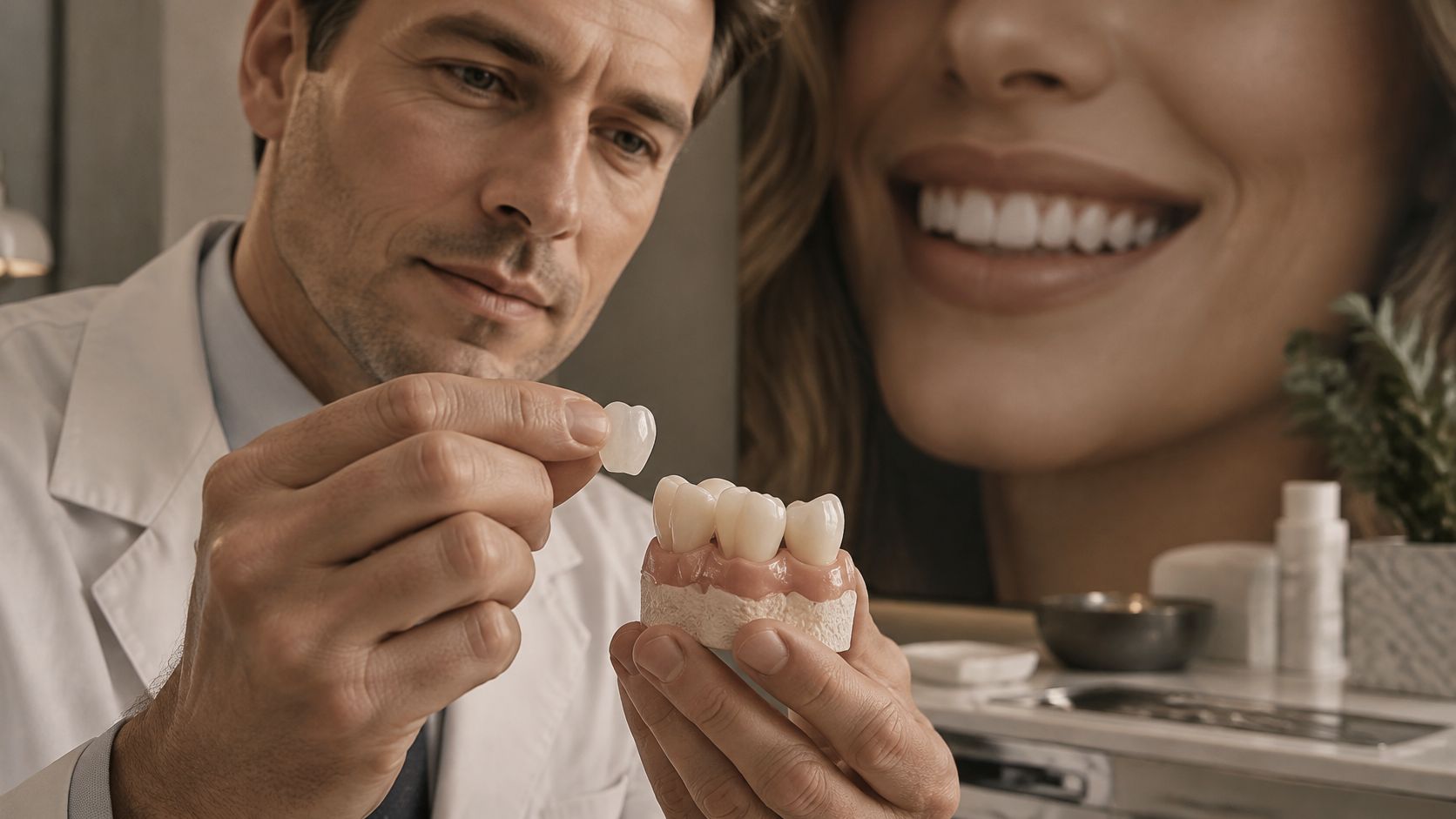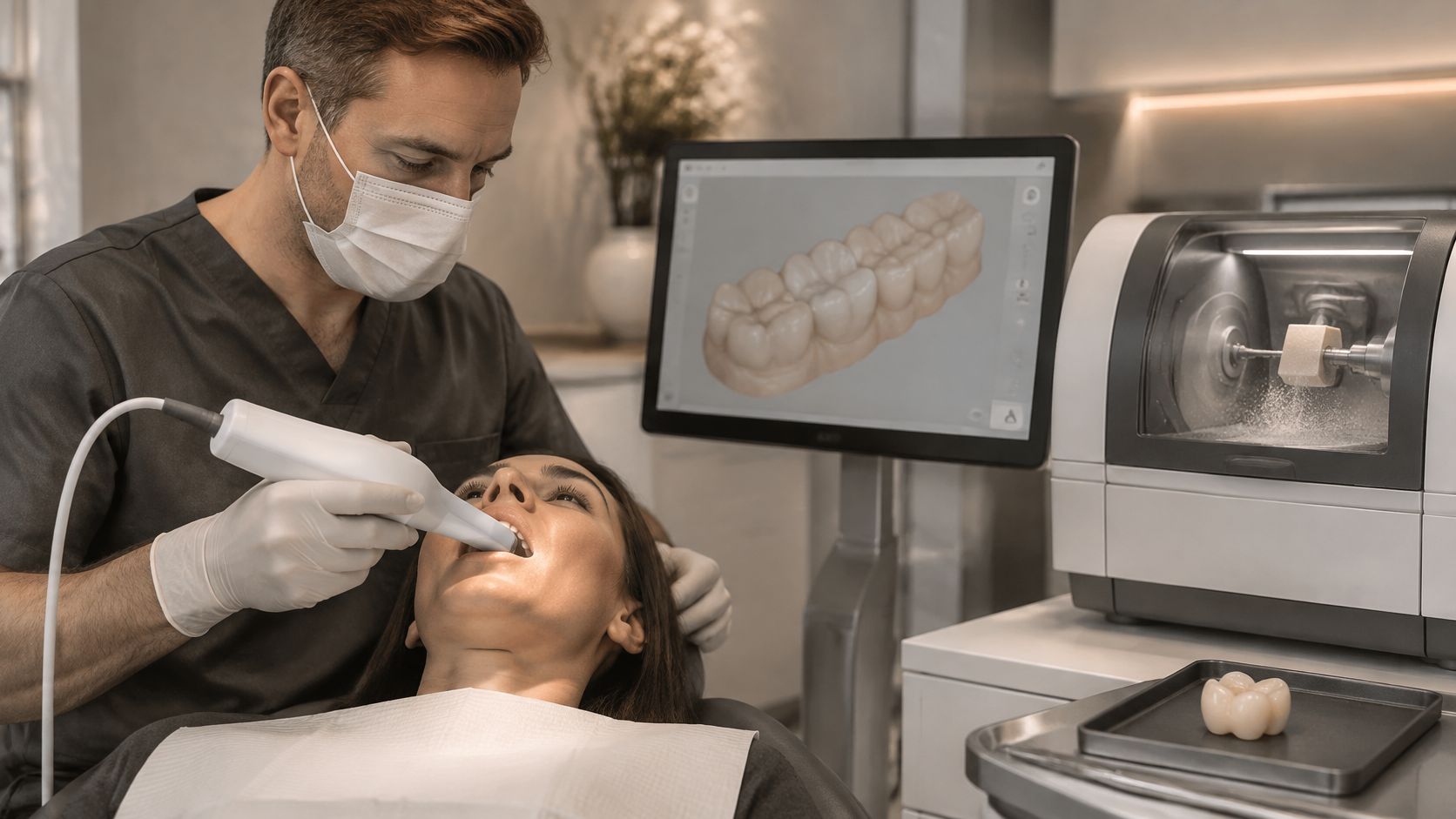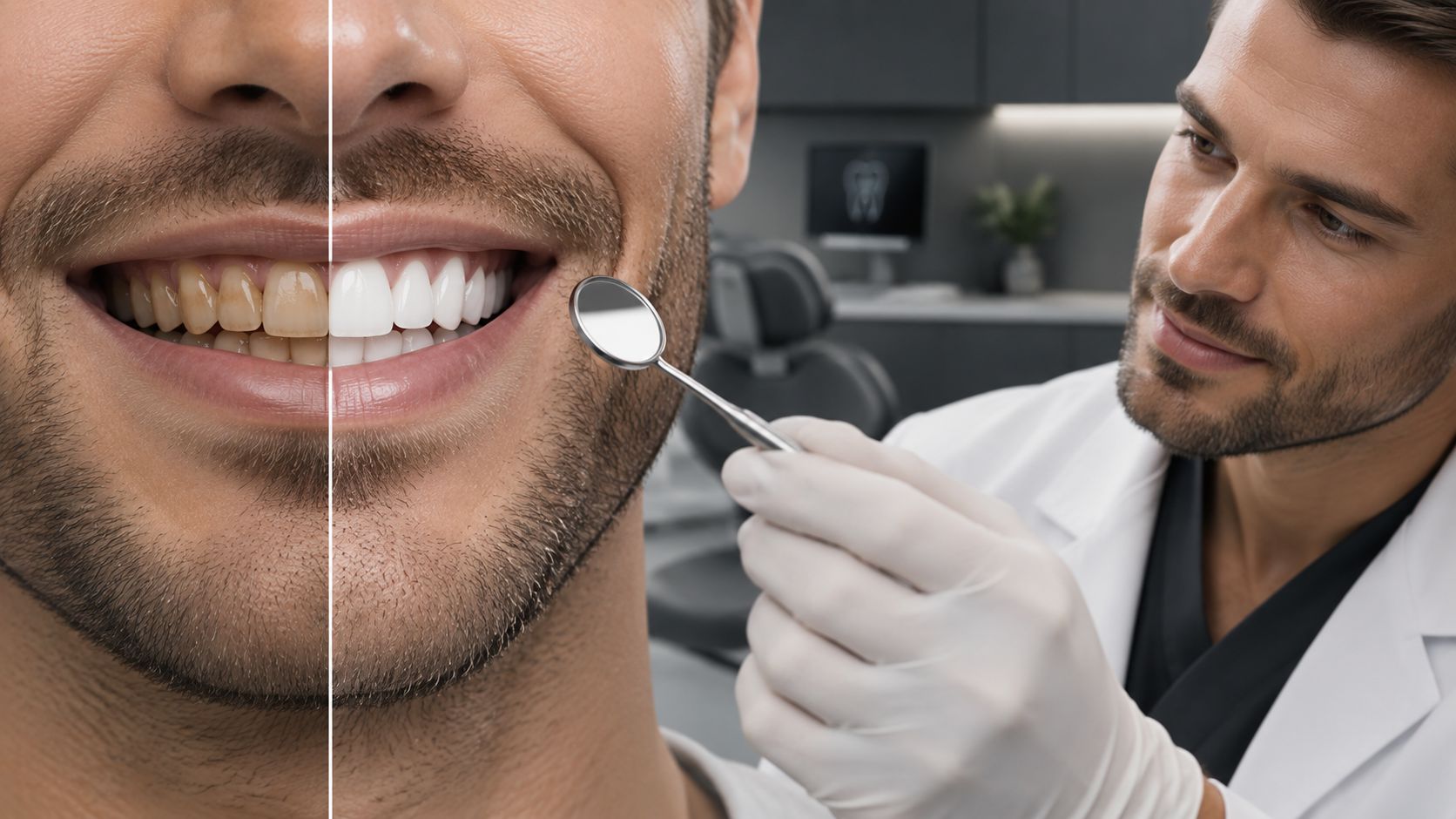
You're standing in front of the mirror before a wedding, reunion, or job interview, wondering whether teeth whitening for smokers is worth doing if you're still smoking. The honest answer is yes, whitening can improve tobacco staining, but it isn't a permanent shield against new discoloration. Your result depends on the type of stain, the health of your teeth and gums, and what happens after treatment.
At Winn Smiles, patients in Chattanooga, Cleveland, and nearby Tennessee communities can discuss professional whitening, take-home trays, veneers, and other cosmetic dentistry options during a personalized consultation. The right plan may also include a dental cleaning, dental x-rays, treatment for cavities or gum inflammation, or a conversation about quitting or changing nicotine use.
Why Smokers Notice Stains First
A smoker often notices a change before anyone else does. The yellowing may appear near the gumline, between the front teeth, or across the smile. Someone who drinks coffee every day may seem to avoid the same level of discoloration, which can make tobacco staining feel unusually personal. It isn't a failure of hygiene. Smoke repeatedly delivers staining compounds directly across the teeth.
Tobacco exposure creates a different pattern from occasional dietary staining because cigarettes bring smoke into the mouth again and again. Tar and nicotine leave residue on enamel, while plaque and tartar create rough areas where pigments can collect. A dry mouth can make the problem more noticeable because saliva normally helps rinse the tooth surface.
A large national survey measured this difference clearly. Moderate or severe tooth discoloration was reported by 28% of smokers compared with 15% of non-smokers, while severe discoloration affected 9.2% of smokers versus 4.3% of non-smokers. These findings are reported in the PubMed study on smoking and tooth discoloration.
Why the difference feels larger over time
Surface staining often builds gradually. A smoker may first see a warm yellow tone, then darker areas around the gumline and in spaces that are difficult to clean. Brushing can remove some loose residue, but it won't remove every pigment that has attached to the enamel pellicle, the thin protein coating that naturally forms over teeth.
Practical rule: Whitening works best when a dentist first determines whether the visible color is removable surface stain, deeper tooth discoloration, or a combination of both.
The central trade-off is straightforward. Professional whitening can lift tobacco-related staining, and clinical evidence indicates that smokers can respond comparably to non-smokers. However, continued smoke exposure can make the shade drift back sooner, so treatment should be planned as part of ongoing dental care rather than treated as a one-time cosmetic reset.
How Tobacco Actually Discolors Teeth
Tobacco discoloration usually has two layers. The first is extrinsic staining, which sits on or near the enamel surface. Tar and other smoke residues deposit chromogens, meaning colored molecules, onto the tooth. Those molecules settle into microscopic irregularities and along plaque or tartar.
The second layer is deeper. Over time, discoloration can influence the appearance of the tooth beneath the enamel, including the dentin. Bleaching can improve many teeth with internal yellowing, but it may not completely erase long-standing, localized, or unusually dark discoloration.
Tar, nicotine, and the gumline pattern
Tar is dark and sticky. Nicotine starts out colorless, but it can turn yellow as it oxidizes in the mouth. Together, these substances help create the yellow, brown, or nearly black areas many smokers recognize around the gumline and between teeth. The clinical review of tobacco-related oral effects describes how cigarette smoke contributes to both surface staining and deeper discoloration.
A toothbrush and floss remain essential, but they have a limited job. They disrupt plaque and remove loose deposits. Whitening toothpaste may polish some external discoloration, but it doesn't replace peroxide bleaching when chromogens have bonded to or entered the tooth structure.
Professional cleaning comes first when tar film, tartar, or plaque hides the natural shade. Once the surface is clean, a dentist can judge whether peroxide whitening is likely to meet your goal. A study of at-home bleaching found that 10% carbamide peroxide remained effective in smokers for one year, but professional prophylaxis was needed to remove new external stains from cigarette smoke and diet, as reported in this clinical study indexed by PubMed.
| Stain Layer | Source | Typical Color | Bleaching Response |
|---|---|---|---|
| Surface stain | Tar, nicotine residue, plaque, and tartar | Yellow to brown | Often responds well after cleaning and peroxide whitening |
| Enamel-associated stain | Chromogens settled into surface irregularities | Brown to dark brown | May improve with professional-strength bleaching |
| Deeper discoloration | Long-term changes within the tooth | Yellow, gray, or uneven dark areas | May improve, but can remain partly visible |
| Localized dark tooth | Previous dental injury or root canal treatment | Gray or brown | Often needs a targeted cosmetic or restorative solution |
The key is diagnosis, not the label “smoker's teeth.” A dentist in Chattanooga or Cleveland can identify where the color sits and recommend cleaning, bleaching, microabrasion, bonding, veneers, or restorative care when appropriate.
Comparing In-Office Take-Home and OTC Whitening
Smokers don't all need the same whitening format. A person who smokes socially and has light surface staining may prefer a gradual approach. Someone who smokes throughout the day and has a major event approaching may value speed, while a patient trying to quit may want a lower-commitment starting point.
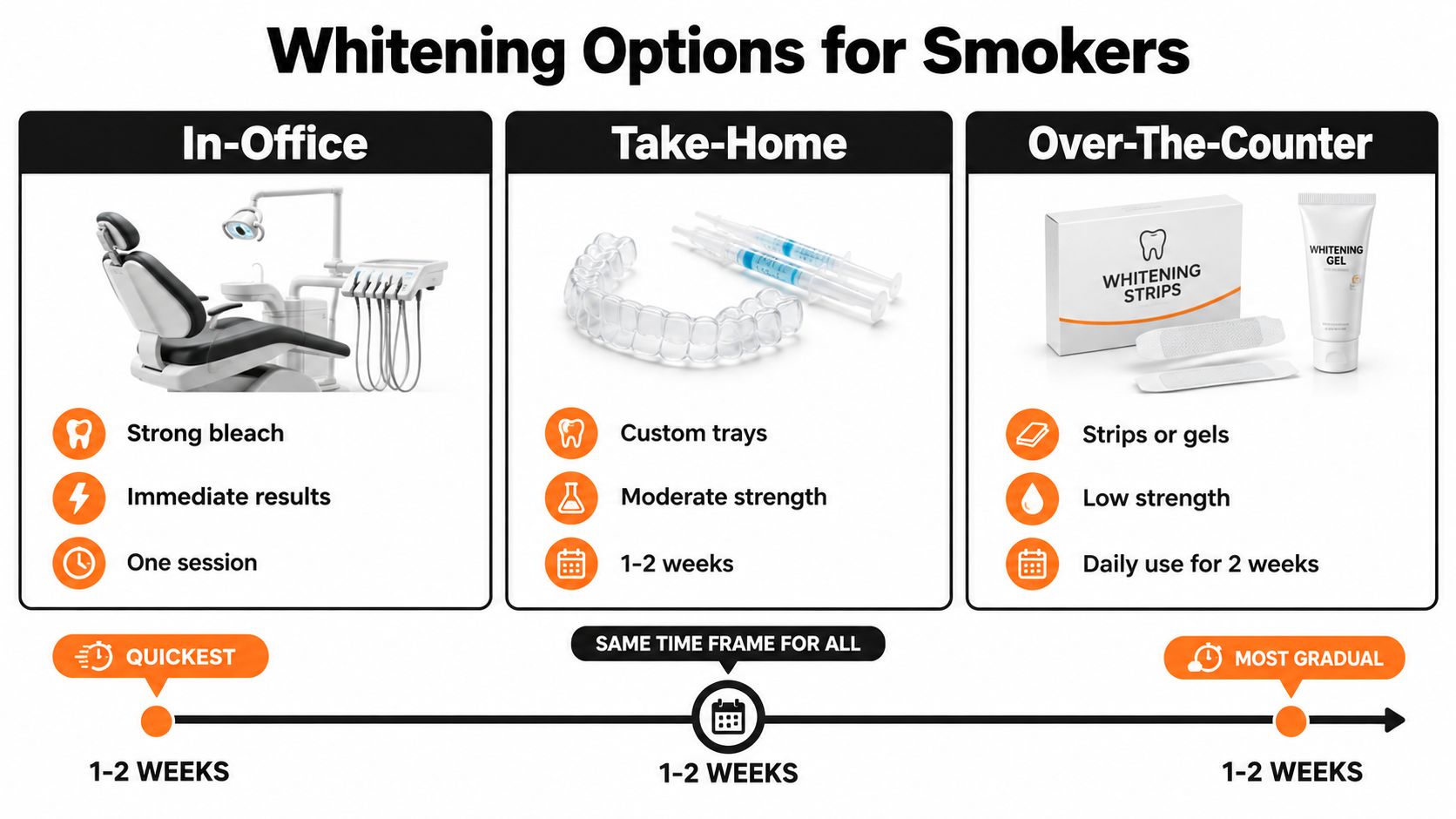
The three common paths have different strengths:
- In-office whitening: A dentist controls the application, protects the gums, and monitors sensitivity while using professional-strength peroxide. This is usually the most time-efficient choice for heavier staining.
- Dentist-supervised take-home trays: Custom trays hold whitening gel evenly against the teeth and let you control the pace. They're useful for gradual treatment and later maintenance.
- Over-the-counter products: Strips, pens, and gels are accessible and may help with lighter external staining. Their fit and concentration vary, so results can be less even.
A 2023 review concluded that whitening effectiveness was comparable in smokers and non-smokers, and a prospective at-home bleaching study found treatment effective in both groups. Smoking affected color stability after treatment, however, which is why the best option isn't the strongest product. It's the option that fits your stain pattern, sensitivity, budget, and smoking or cessation plan. The evidence is summarized in this review abstract on whitening in smokers.
Matching the method to your situation
A heavy daily smoker often benefits from cleaning followed by in-office whitening and a custom take-home plan. That combination addresses existing staining and gives the patient a controlled way to refresh the shade later.
A social smoker may do well with custom trays alone, particularly when the enamel is healthy and the discoloration is mostly external. Someone working toward cessation might begin with an over-the-counter product, then move to professional treatment after establishing a realistic maintenance routine.
Whitening won't change the color of porcelain crowns, veneers, fillings, or bonding. It also can't reliably erase every area of tobacco-stained dentin. Before buying a kit, review the difference between treatment stages in this guide to teeth whitening before and after.
For gentle daily surface-stain control between appointments, some patients also explore Living Air bamboo toothpaste. It should be viewed as an adjunct to brushing and professional care, not as a replacement for an examination or peroxide whitening.
Pre and Post Whitening Care That Protects Results
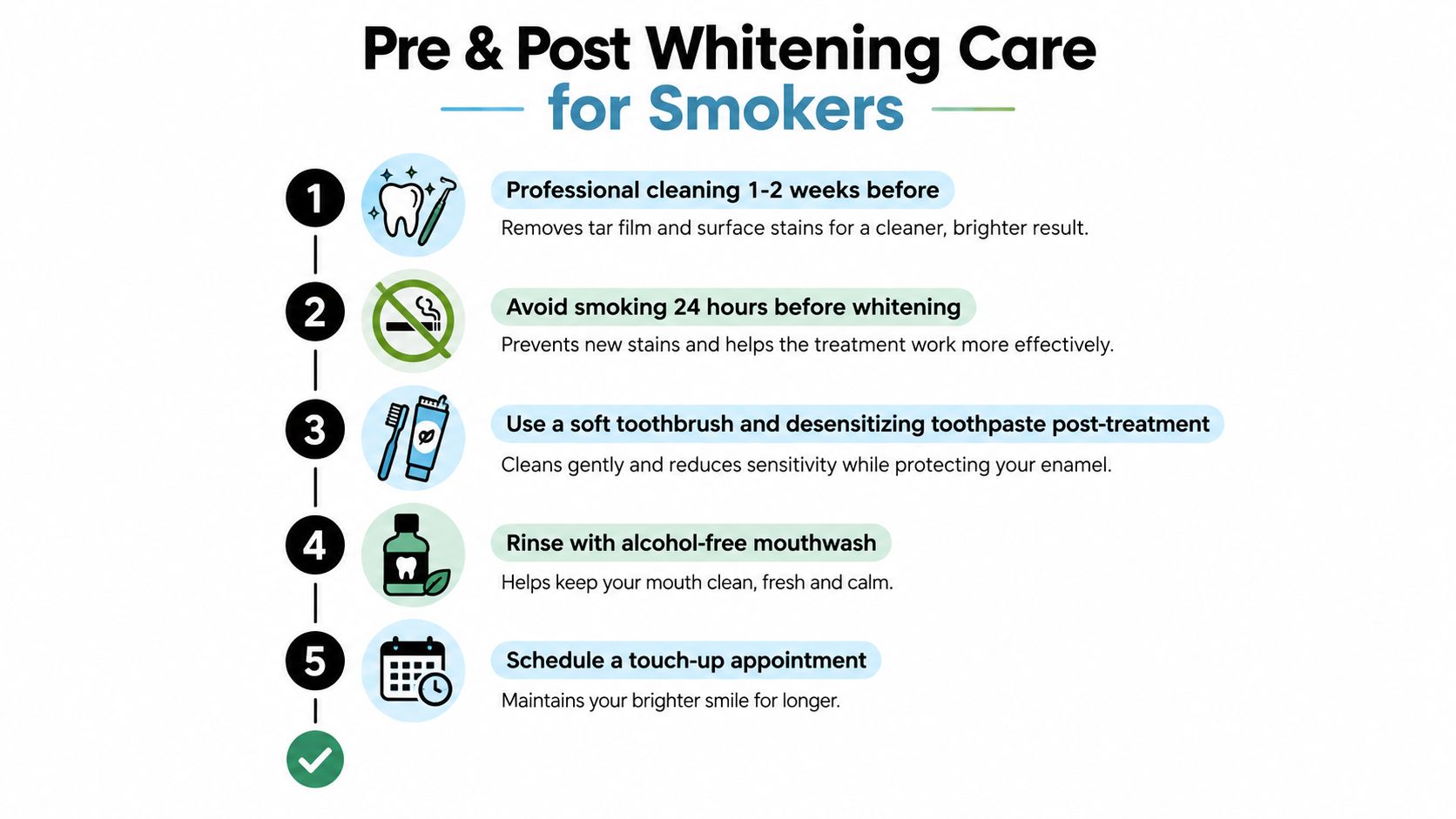
The most predictable whitening results come from preparation. A professional cleaning before treatment removes deposits that can mask your starting shade and prevent the whitening gel from contacting enamel evenly. Your dentist should also check for cavities, leaking restorations, gum inflammation, cracks, and sensitivity risks before bleaching.
A practical preparation checklist
Schedule the cleaning early enough for your gums to settle before whitening. Many patients find that cleaning one to two weeks before treatment gives the dentist a clearer baseline and gives irritated tissues time to recover.
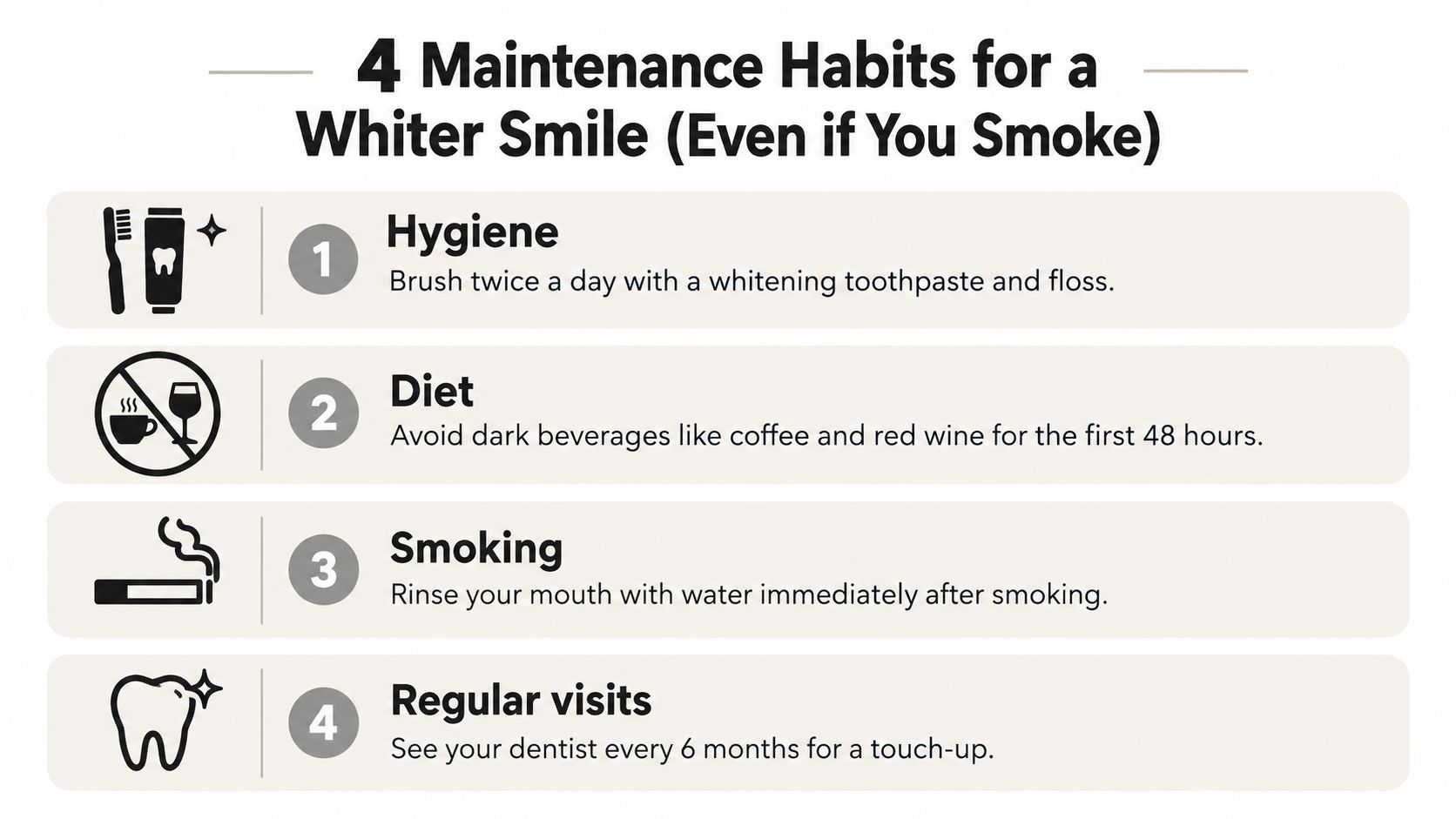
During the 48 hours after bleaching, limit dark foods and drinks, including coffee, tea, red wine, dark sodas, tomato sauces, soy sauce, and dark berries. Freshly treated teeth can pick up pigment more readily, and ongoing smoking adds another source of stain.
Protecting enamel and managing sensitivity
If you know your teeth react to cold, begin a desensitizing toothpaste about a week before treatment. A dentist may recommend fluoride gel for patients with higher sensitivity risk. If you commonly experience discomfort, ask whether taking ibuprofen before treatment is appropriate for you, based on your medical history and other medicines.
Smoking pauses matter. Avoid cigarettes for at least 24 hours after in-office whitening and for at least two hours after using take-home trays. Heat, smoke, and fresh pigment exposure can worsen discomfort and encourage rapid re-staining.
Use a soft-bristle toothbrush during the first week. Choose an alcohol-free mouthwash during the first 48 hours, and avoid abrasive charcoal toothpaste while the enamel surface is recovering. Charcoal may polish external residue, but aggressive scrubbing can irritate gums and wear enamel.
The most important habit is simple: rinse with water after smoking when you can't stop immediately. It won't cancel the exposure, but it reduces the amount of residue left sitting on the teeth.
When Veneers Make More Sense Than Bleaching
Bleaching isn't always the right first or final answer. Peroxide whitening tends to underperform when discoloration comes from tetracycline banding, fluorosis spots, embedded color after years of heavy smoking, chips that have collected tar, or a single dark tooth after root canal treatment.
In those situations, porcelain veneers or bonded restorations can cover the color that bleaching can't lift. Ceramic surfaces are less absorbent than natural enamel, but veneers still require careful hygiene and professional planning. They also involve removing some enamel, so they aren't a casual substitute for cleaning or whitening.
Keep healthy enamel in the decision
A younger adult with intact enamel and mild discoloration may be taking an irreversible step for a reversible concern. If whitening can reach the desired shade, preserving natural tooth structure is usually the more conservative choice. A dentist should also assess bite forces, gum position, cavities, and the condition of existing restorations before recommending veneers.
The comparison of veneers and teeth whitening can help you understand why the treatments solve different problems.
| Factor | Whitening | Veneers |
|---|---|---|
| Main purpose | Lightens natural tooth color | Covers selected discoloration and changes tooth shape |
| Best for | General external or bleach-responsive yellowing | Stubborn intrinsic color, chips, or uneven individual teeth |
| Effect on restorations | Doesn't change crown, filling, or bonding color | Can replace or cover selected visible surfaces |
| Tooth structure | Usually preserves natural enamel when supervised | Requires preparation of the tooth |
| Maintenance | May need future whitening and stain removal | Requires careful hygiene and eventual evaluation |
My usual approach is conservative. Bleaching should generally be considered before veneers when the teeth are healthy, while veneers become more reasonable when the stain pattern remains unacceptable after appropriate whitening or when shape and structural problems need correction too. A clinical study concluded that 10% carbamide peroxide was safe for dental bleaching in smokers, and that cigarette-smoke stains could be removed without permanent enamel changes when treatment was used appropriately, as reported in this study from Revista Brasileira de Odontologia.
Maintenance Habits That Keep a Whiter Smile
Whitening while continuing to smoke means managing a moving target. You can improve the existing shade, but every new exposure gives staining compounds another opportunity to collect. The most useful plan combines home care, stain removal, and an honest conversation about reducing or ending combustion exposure.
Start with consistent mechanical cleaning. Brush twice daily with a soft electric toothbrush, clean between teeth nightly with floss, interdental brushes, or a Waterpik, and gently clean the tongue. Biofilm and tartar make enamel rougher, which gives smoke residue more places to cling.
Use whitening toothpaste with fluoride selectively rather than scrubbing aggressively every day. A dentist may suggest using it two to three times weekly and using a regular fluoride toothpaste at other times, particularly if you have sensitivity or enamel wear.
Let your smoking plan influence your whitening plan
Active smokers may need professional cleaning more often than patients without ongoing tobacco exposure. Your dentist can set the interval based on tartar, gum health, stain return, and how often you smoke. Don't wait for the teeth to become dark again before asking for maintenance.
A lower-strength take-home touch-up may be appropriate after the initial treatment. Daily smokers often need more frequent refreshers than social smokers, while patients who quit may find that their shade becomes easier to maintain. The 2024 review of dental whiteness data reported a lower whiteness index among current smokers than never-smokers, 13.38 WID compared with 19.96 WID, supporting the practical observation that tobacco exposure continues to affect color after cosmetic treatment.
Research summarized by COEHAR on tooth whiteness among different nicotine users also described meaningful differences between cigarette smokers, former smokers, and exclusive users of e-cigarettes or heated tobacco products. That doesn't make non-combustion products harmless, and switching isn't a substitute for cessation counseling. It does show why your dentist should ask about your actual nicotine pattern instead of treating “smoker” as a fixed category.
Planning Your Visit at a Chattanooga or Cleveland Dentist
A useful consultation starts with accurate information. Tell the dental team how often you smoke, whether you also use e-cigarettes or heated tobacco, whether you've tried strips or trays, and whether cold drinks trigger sensitivity. Mention upcoming events, because the desired timeline can influence whether cleaning, in-office whitening, take-home trays, or restorative treatment makes the most sense.
At the first visit, the dentist may record your starting shade, examine the gums and enamel, map staining around the gumline and between teeth, and take intraoral photographs for comparison. Dental x-rays may be recommended when symptoms, restorations, or suspected decay need further evaluation. The discussion should also distinguish bleaching from microabrasion, bonding, veneers, crowns, tooth extraction, or dental implants when a tooth has a structural problem rather than a cosmetic stain.
Insurance often doesn't cover elective cosmetic whitening, so ask for a clear cost discussion before treatment. If you're comparing practices or trying to reach a busy office, this guide to compare dental phone answering options explains why responsive communication matters when patients need appointments, follow-up questions, or emergency dental services.
A Chattanooga or Cleveland consultation is also the right time to discuss smoking cessation support or nicotine changes. A randomized cessation trial found that nicotine-replacement gum produced statistically significant stain reduction and shade lightening compared with a control tablet, adding another reason to consider whitening alongside, rather than separately from, a broader cessation plan.
For a dentist near me, a cosmetic dentist near me, an emergency dentist, or dental implants near me in Chattanooga or Cleveland, choose an office that can evaluate your whole mouth before promising a shade. Winn Smiles provides professional teeth whitening, cosmetic and restorative dentistry, dental implants, same-day crowns, periodontal care, and emergency dental services, with comfort-focused options for patients who feel anxious about treatment.
Schedule a whitening consultation with Winn Smiles in Chattanooga or Cleveland, TN, so your dentist can identify the stain type and match you with a practical treatment plan. Bring your questions about sensitivity, smoking, quitting, take-home trays, veneers, or long-term maintenance, and let the team help you pursue a brighter smile without pretending whitening works the same way for everyone.